


Europe Underactive Bladder Market Overview
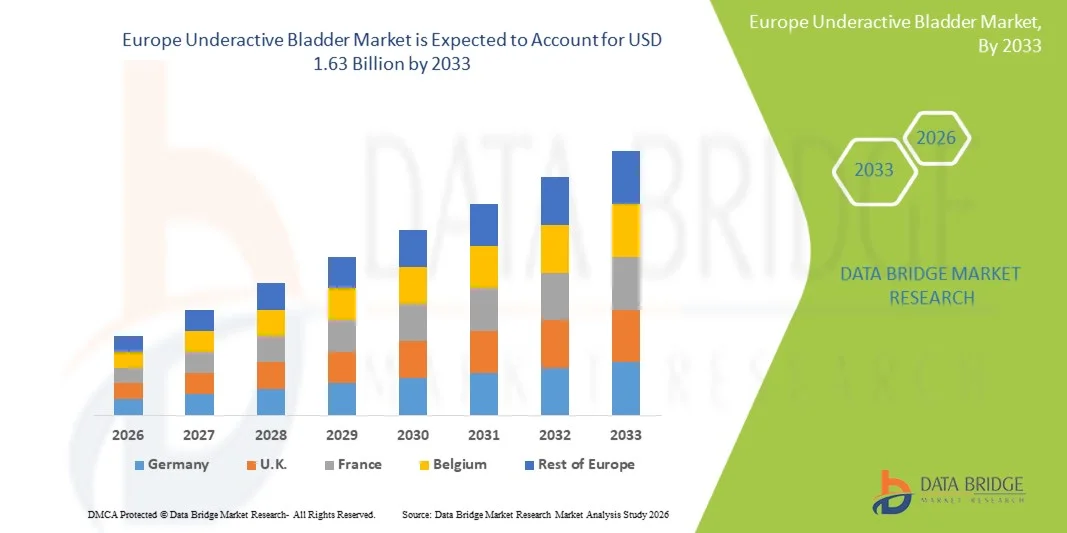
The Europe underactive bladder market was valued at USD 1.15 billion in 2025 and is projected to reach USD 1.63 billion by 2033, growing at a CAGR of 4.5% from 2026 to 2033. The The market is experiencing steady growth driven by the rising prevalence of urinary retention disorders among the aging population, increasing awareness regarding lower urinary tract dysfunctions, and advancements in urology diagnostics and treatment technologies.
The growing burden of neurological disorders, diabetes, and age-related bladder dysfunction across European countries, combined with improving access to specialized urology care, is encouraging healthcare providers to adopt advanced therapeutic and diagnostic solutions. In addition, increasing investments in minimally invasive treatments, catheter technologies, neuromodulation therapies, and rehabilitation programs are supporting market expansion. Favorable healthcare infrastructure, rising healthcare expenditure, and ongoing clinical research in bladder dysfunction management are further contributing to the adoption of innovative underactive bladder treatment solutions across the region
Key Market Trends & Insights
- Germany dominated the Europe underactive bladder market with the largest revenue share of 28.46% in 2025, supported by advanced urology care infrastructure, high healthcare expenditure, and increasing adoption of bladder dysfunction treatment therapies.
- The Pharmacotherapy segment led the market with a 38.74% share in 2025, driven by the widespread use of cholinergic agents, bladder relaxants, and supportive medications for managing urinary retention and bladder contractility disorders.
- The United Kingdom is expected to be the fastest-growing country market at a CAGR of 5.1% from 2026 to 2033, fueled by rising awareness of urinary disorders, increasing geriatric population, and expanding investments in urology treatment services.
- Stem Cell and Gene Therapies are the fastest-growing type, projected to register a CAGR of 5.8%, reflecting the surge in research activities focused on regenerative bladder treatment approaches.
- The Oral segment dominated the route of administration category with a 56.21% revenue share in 2025, led by the high prescription rate of oral medications for chronic bladder dysfunction management.
- Neurogenic Underactive Bladder accounted for 61.42% of the market, preferred by the high prevalence of neurological disorders such as spinal cord injuries, Parkinson’s disease, multiple sclerosis, and diabetes-related nerve damage.
- The Parenteral segment is the fastest-growing route of administration category, with a CAGR of 5.3%, driven by increasing adoption of injectable neuromodulation agents and advanced biologic therapies for severe bladder dysfunction cases.
Market Size & Forecast
- Global Market Value (2025): USD 1.15 Billion
- Expected Market Value (2033): USD 1.63 Billion
- Forecast CAGR (2026–2033): 4.5%
- Leading Country in 2025: Germany
- Fastest Growing Country: United Kingdom
Report Scope and Europe Underactive Bladder Market Segmentation
|
Attributes |
Europe Underactive Bladder Key Market Insights |
|
Segments Covered |
|
|
Countries Covered |
Europe · Germany · France · U.K. · Netherlands · Switzerland · Belgium · Russia · Italy · Spain · Turkey · Rest of Europe |
|
Key Market Players |
· Astellas Pharma Inc. (Japan) · Boston Scientific Corporation (U.S.) · Coloplast Corp (Denmark) · Convatec Group PLC (U.K.) · Cook (U.S.) · Hollister Incorporated (U.S.) · B. Braun SE (Germany) · Medtronic (Ireland) · Teleflex Incorporated (U.S.) · Wellspect HealthCare (Sweden) · Laborie Medical Technologies Corp. (Canada) · Pfizer Inc. (U.S.) · AbbVie Inc. (U.S.) · UroMems (France) · Axonics, Inc. (U.S.) · C. R. Bard, Inc. (U.S.) · Olympus Corporation (Japan) · Fresenius Medical Care AG (Germany) · Cogentix Medical, Inc. (U.S.) · BD (U.S.) |
|
Market Opportunities |
· Growing adoption of sacral neuromodulation and implantable bladder stimulation devices · Increasing clinical research on regenerative medicine and stem cell-based bladder therapies · Expansion of home-based catheterization products and remote urology monitoring solutions |
|
Value Added Data Infosets |
In addition to the insights on market scenarios such as market value, growth rate, segmentation, geographical coverage, and major players, the market reports curated by the Data Bridge Market Research also include in-depth expert analysis, patient epidemiology, pipeline analysis, pricing analysis, and regulatory framework. |
Europe Underactive Bladder Market Trends
Trend: Rising Adoption of Minimally Invasive Neuromodulation Therapies
Healthcare providers across Europe are increasingly adopting minimally invasive neuromodulation therapies to improve long-term management of underactive bladder disorders and chronic urinary retention conditions. Technologies such as sacral nerve stimulation and implantable bladder control systems are gaining traction due to their ability to improve patient outcomes while reducing dependency on long-term catheterization. Hospitals and specialized urology centers are also integrating advanced diagnostic monitoring and rehabilitation programs that support personalized treatment planning, while growing awareness among aging populations is accelerating acceptance of innovative bladder dysfunction therapies.
For instance, in March 2024, researchers at the European Association of Urology highlighted growing clinical adoption of sacral neuromodulation therapies for chronic urinary retention and underactive bladder management across multiple European healthcare centers.
Europe Underactive Bladder Market Dynamics
Key Market Driver: Increasing Prevalence of Age-Related and Neurogenic Bladder Disorders
The growing prevalence of neurological diseases, diabetes, spinal cord injuries, and age-related bladder dysfunction across Europe is significantly driving demand for underactive bladder diagnostics and treatment solutions. Aging populations are increasingly susceptible to chronic urinary retention and impaired bladder contractility, encouraging hospitals and urology clinics to expand specialized care services. In addition, improvements in diagnostic technologies, reimbursement policies, and awareness campaigns are supporting earlier diagnosis and long-term disease management, thereby contributing to sustained market growth across major European healthcare systems.
For instance, in January 2025, the National Health Service expanded specialized continence and neuro-urology support programs aimed at improving treatment access for elderly patients suffering from chronic bladder dysfunction conditions.
Key Restraint/Challenge: : Limited Awareness and Underdiagnosis of Underactive Bladder Conditions
A major restraint in the Europe underactive bladder market is the limited public awareness and frequent underdiagnosis associated with chronic bladder dysfunction disorders. Symptoms often overlap with other lower urinary tract conditions, resulting in delayed clinical evaluation and reduced treatment adoption rates. In addition, inadequate screening practices and social stigma related to urinary disorders discourage patients from seeking timely medical consultation. Variability in access to advanced urodynamic testing and specialist urology services across certain European countries further restricts early detection and comprehensive disease management.
For instance, in September 2024, the European Society for Clinical and Economic Aspects of Osteoporosis, Osteoarthritis and Musculoskeletal Diseases reported that lower urinary tract disorders among elderly patients remain substantially underreported and undertreated across several European healthcare systems.
Key Market Opportunity: Expansion of Regenerative Medicine and Smart Catheter Technologies
The advancement of regenerative medicine and next-generation smart catheter technologies presents significant growth opportunities for the Europe underactive bladder market. Ongoing research involving stem cell therapy, bioengineered tissue repair, and wearable bladder monitoring systems is supporting the development of more effective long-term treatment approaches. In addition, increasing investment in connected healthcare platforms and home-based patient management solutions is enabling continuous monitoring and personalized care delivery for elderly and mobility-limited populations across Europe.
For instance, in June 2024, Coloplast announced expanded investment in advanced continence care technologies and digital patient-support solutions targeting chronic urinary retention and bladder dysfunction management in Europe.
Europe Underactive Bladder Market Scope
The Europe underactive bladder market is segmented on the basis of type, route of administration, disease type, and distribution channel.
- By Type
On the basis of type, the Europe underactive bladder market is segmented into pharmacotherapy, surgical methods, urethral assist device, and stem cell and gene therapies. The Pharmacotherapy segment dominated the market with a 38.74% share in 2025, owing to the widespread use of cholinergic agents, bladder relaxants, and supportive medications for managing urinary retention and bladder contractility disorders. These therapies are commonly prescribed as first-line treatment due to their non-invasive nature and broad accessibility across hospitals and outpatient clinics. Increasing diagnosis of age-related bladder dysfunction and neurogenic bladder disorders is supporting demand for long-term pharmacological management. Physicians also prefer drug-based therapies for elderly patients unsuitable for surgery or invasive procedures. Favorable reimbursement support and strong availability of generic medications across European healthcare systems continue to strengthen segment growth. However, limited long-term efficacy in severe underactive bladder conditions remains a clinical challenge for this segment.
The Stem Cell and Gene Therapies segment is projected to register the fastest growth at a CAGR of 5.8% from 2026 to 2033, driven by increasing research activities focused on regenerative bladder treatment approaches. These advanced therapies aim to restore bladder muscle function and nerve signaling through cellular regeneration and targeted genetic intervention. Growing investment in precision medicine and regenerative urology is supporting the development of innovative clinical-stage therapies across Europe. Academic institutions and biotechnology companies are increasingly collaborating to accelerate treatment commercialization. Rising demand for long-term therapeutic alternatives beyond catheterization and symptomatic management is further contributing to market expansion. In addition, favorable advancements in tissue engineering and personalized medicine are expected to create strong future opportunities for this segment.
- By Route of Administration
On the basis of route of administration, the Europe underactive bladder market is segmented into oral, parenteral, and others. The Oral segment dominated the market with a 56.21% share in 2025 due to the high prescription rate of oral medications for chronic bladder dysfunction management. Oral administration offers greater convenience, ease of compliance, and cost-effectiveness compared to injectable therapies, particularly among elderly patients requiring long-term treatment. Healthcare providers widely prefer oral drugs for initial disease management because they can be easily integrated into outpatient care settings. The availability of multiple branded and generic therapeutic options is also supporting segment growth across Europe. In addition, oral medications reduce the need for hospital visits and procedural interventions, improving treatment accessibility for aging populations. Strong distribution through retail and hospital pharmacies further contributes to the dominance of this segment.
The Parenteral segment is expected to witness the fastest growth at a CAGR of 5.3% from 2026 to 2033, driven by increasing adoption of injectable neuromodulation agents and advanced biologic therapies for severe bladder dysfunction cases. Parenteral administration enables faster therapeutic action and improved drug bioavailability, making it suitable for patients with complex neurogenic bladder disorders. Hospitals and specialty urology centers are increasingly utilizing injectable therapies alongside minimally invasive treatment procedures. Growth in regenerative medicine research and biologic product development is further supporting segment expansion. In addition, rising preference for targeted therapies and specialized bladder rehabilitation programs is accelerating demand for advanced injectable treatment solutions. Increasing clinical trials involving novel biologic compounds are also expected to strengthen long-term growth prospects.
- By Disease Type
On the basis of disease type, the Europe underactive bladder market is segmented into neurogenic underactive bladder and non-neurogenic underactive bladder. The Neurogenic Underactive Bladder segment dominated the market with a 61.42% share in 2025, driven by the high prevalence of neurological disorders such as spinal cord injuries, Parkinson’s disease, multiple sclerosis, and diabetes-related nerve damage. Patients with neurogenic bladder dysfunction often require long-term catheterization, neuromodulation therapy, and continuous urology monitoring, contributing to higher treatment demand. Increasing geriatric population and rising incidence of chronic neurological conditions across Europe are further supporting segment growth. Healthcare providers are also expanding access to advanced diagnostic testing and rehabilitation programs for neurogenic urinary disorders. Strong adoption of minimally invasive therapies and specialized continence care services continues to strengthen the dominance of this segment. In addition, growing awareness regarding neuro-urology management is supporting earlier diagnosis and treatment adoption.
The Non-Neurogenic Underactive Bladder segment is projected to register the fastest growth at a CAGR of 5.0% from 2026 to 2033, driven by increasing diagnosis of age-related bladder dysfunction and chronic urinary retention disorders unrelated to neurological disease. Rising awareness regarding lower urinary tract symptoms and expanding access to specialized urology care are contributing to improved disease detection rates across Europe. Healthcare providers are increasingly adopting minimally invasive treatment approaches and advanced diagnostic technologies for non-neurogenic bladder conditions. In addition, lifestyle-related risk factors, pelvic floor disorders, and post-surgical bladder complications are supporting segment expansion. Increasing availability of rehabilitation programs and outpatient bladder management services is also accelerating treatment adoption. Growing focus on early intervention and personalized patient care is expected to further support long-term segment growth.
- By Distribution Channel
On the basis of distribution channel, the Europe underactive bladder market is segmented into hospital pharmacy, retail pharmacy, and others. The Hospital Pharmacy segment dominated the market with a 47.18% share in 2025 due to the large volume of prescription medications, catheter products, and specialized bladder management therapies dispensed through hospital networks. Hospital pharmacies play a critical role in supporting inpatient and outpatient urology treatment programs, particularly for elderly and neurogenic bladder patients requiring continuous clinical monitoring. The availability of specialized prescription products and reimbursement-supported therapies further contributes to segment dominance. In addition, hospitals maintain strong coordination between physicians, pharmacists, and continence care specialists to ensure optimized treatment management. Rising adoption of advanced injectable therapies and neuromodulation-related medications is also increasing dependence on hospital pharmacy distribution. Strong integration with public healthcare systems across Europe continues to support market leadership.
The Retail Pharmacy segment is expected to witness the fastest growth at a CAGR of 5.2% from 2026 to 2033, driven by increasing demand for accessible long-term bladder management medications and home-based continence care products. Retail pharmacies offer convenient access to prescription refills, catheter supplies, and supportive bladder care products for patients managing chronic urinary disorders outside hospital settings. The expansion of community pharmacy services and digital prescription platforms is further improving treatment accessibility across Europe. Growing preference for outpatient care and home healthcare management among aging populations is accelerating segment growth. In addition, pharmacists are increasingly involved in patient counseling and chronic disease management programs related to urinary dysfunction conditions. Rising availability of online pharmacy services and home delivery options is also supporting the rapid expansion of this segment.
Europe Underactive Bladder Market Regional Analysis
Germany dominated the Europe underactive bladder market with the largest revenue share of 28.46% in 2025, supported by advanced urology care infrastructure, high healthcare expenditure, and increasing adoption of bladder dysfunction treatment therapies. The country also benefits from increasing diagnosis rates of chronic urinary retention disorders, high adoption of minimally invasive neuromodulation therapies, and growing availability of specialized bladder dysfunction treatment centers. Rising elderly population, expanding clinical research activities, and increasing use of advanced diagnostic technologies across hospitals and urology clinics continue to strengthen Germany’s leadership position in the Europe underactive bladder market.
The Germany Underactive Bladder Market Insight
The Germany underactive bladder market is witnessing steady growth due to rising prevalence of chronic urinary retention disorders, advanced healthcare infrastructure, and increasing adoption of minimally invasive bladder dysfunction therapies. The country’s strong urology care network, along with growing use of neuromodulation devices, catheter-based management solutions, and advanced diagnostic technologies, is driving demand across hospitals and specialty clinics. In addition, increasing geriatric population and growing awareness regarding lower urinary tract disorders are accelerating treatment adoption and supporting long-term market expansion throughout Germany.
U.K. Underactive Bladder Market Insight
The U.K. underactive bladder market is experiencing stable growth, supported by increasing awareness regarding urinary retention disorders, rising healthcare expenditure, and growing adoption of minimally invasive treatment procedures. Expanding availability of continence care programs and specialized neuro-urology services is contributing to market development across hospitals and outpatient care centers. Furthermore, integration of advanced diagnostic imaging, bladder monitoring technologies, and rehabilitation programs is improving treatment outcomes and positioning the U.K. as a key market for bladder dysfunction management solutions.
France Underactive Bladder Market Insight
The France underactive bladder market is expanding steadily due to the country’s well-established healthcare infrastructure, increasing diagnosis of neurogenic bladder disorders, and growing demand for long-term continence care solutions. Hospitals and urology clinics are increasingly adopting advanced catheterization systems, pharmacological therapies, and bladder rehabilitation programs to improve patient care. Continuous advancements in minimally invasive procedures and increasing investment in urology research, along with strong government healthcare support, are further driving market growth in France.
Italy Underactive Bladder Market Insight
The Italy underactive bladder market is witnessing notable growth due to increasing aging population, rising incidence of chronic urinary dysfunction disorders, and expanding access to specialized urology care services. Healthcare providers are increasingly utilizing advanced diagnostic technologies, catheter-based management systems, and neuromodulation therapies to improve treatment outcomes for bladder dysfunction patients. In addition, growing awareness regarding continence care and increasing healthcare investments are supporting the adoption of innovative bladder management solutions across hospitals and rehabilitation centers in Italy.
Europe Underactive Bladder Market Share
The Europe underactive bladder industry is primarily led by well-established companies, including:
- Astellas Pharma Inc. (Japan)
- Boston Scientific Corporation (U.S.)
- Coloplast Corp (Denmark)
- Convatec Group PLC (U.K.)
- Cook (U.S.)
- Hollister Incorporated (U.S.)
- Braun SE (Germany)
- Medtronic (Ireland)
- Teleflex Incorporated (U.S.)
- Wellspect HealthCare (Sweden)
- Laborie Medical Technologies Corp. (Canada)
- Pfizer Inc. (U.S.)
- AbbVie Inc. (U.S.)
- UroMems (France)
- Axonics, Inc. (U.S.)
- R. Bard, Inc. (U.S.)
- Olympus Corporation (Japan)
- Fresenius Medical Care AG (Germany)
- Cogentix Medical, Inc. (U.S.)
- BD (U.S.)
Latest Developments in Europe Underactive Bladder Market
- In August 2025, Coloplast reported ongoing expansion of its continence care business in Europe, supported by strong uptake of Luja™ and SpeediCath® catheter solutions used in chronic urinary retention and bladder dysfunction management. The company also noted growing reimbursement support and increasing adoption of home-based continence care products across several European healthcare markets
- In May 2025, Coloplast announced further expansion of its continence care portfolio across Europe through wider commercialization of Luja™ products for both male and female users. The company stated that growth in European markets, particularly the U.K., France, and Germany, was driven by rising adoption of advanced intermittent catheter technologies for chronic bladder dysfunction management
- In February 2025, Coloplast reported continued growth in its continence care segment during Q1 2024/25, driven largely by the expansion of Luja™ catheter technologies across European markets. The company highlighted increasing demand for advanced bladder emptying solutions and home-based continence management products among patients with urinary retention and neurogenic bladder disorders
- In November 2024, Coloplast announced strong growth in its Continence Care business across Europe, supported by increasing adoption of the Luja™ intermittent catheter platform and Peristeen® Plus bowel care solutions. The company reported rising demand for advanced continence and bladder management products in countries including France and the U.K., reflecting expanding treatment adoption for chronic urinary dysfunction conditions
- In April 2024, the European Association of Urology published updated clinical guidance and a summary paper focused on underactive bladder management and non-neurogenic lower urinary tract symptoms. The publication highlighted growing emphasis on early diagnosis, improved urodynamic testing, and personalized treatment approaches for chronic urinary retention disorders. The updated recommendations are expected to support wider adoption of advanced diagnostic and therapeutic technologies across European healthcare systems

- Interactive Data Analysis Dashboard
- Company Analysis Dashboard for high growth potential opportunities
- Research Analyst Access for customization & queries
- Competitor Analysis with Interactive dashboard
- Latest News, Updates & Trend analysis
- Harness the Power of Benchmark Analysis for Comprehensive Competitor Tracking
Data collection and base year analysis are done using data collection modules with large sample sizes. The stage includes obtaining market information or related data through various sources and strategies. It includes examining and planning all the data acquired from the past in advance. It likewise envelops the examination of information inconsistencies seen across different information sources. The market data is analysed and estimated using market statistical and coherent models. Also, market share analysis and key trend analysis are the major success factors in the market report. To know more, please request an analyst call or drop down your inquiry.
The key research methodology used by DBMR research team is data triangulation which involves data mining, analysis of the impact of data variables on the market and primary (industry expert) validation. Data models include Vendor Positioning Grid, Market Time Line Analysis, Market Overview and Guide, Company Positioning Grid, Patent Analysis, Pricing Analysis, Company Market Share Analysis, Standards of Measurement, Global versus Regional and Vendor Share Analysis. To know more about the research methodology, drop in an inquiry to speak to our industry experts.
Data Bridge Market Research is a leader in advanced formative research. We take pride in servicing our existing and new customers with data and analysis that match and suits their goal. The report can be customized to include price trend analysis of target brands understanding the market for additional countries (ask for the list of countries), clinical trial results data, literature review, refurbished market and product base analysis. Market analysis of target competitors can be analyzed from technology-based analysis to market portfolio strategies. We can add as many competitors that you require data about in the format and data style you are looking for. Our team of analysts can also provide you data in crude raw excel files pivot tables (Fact book) or can assist you in creating presentations from the data sets available in the report.












