




Global Aesthetic Services Market
Market Size in USD Billion
CAGR :
% 
 USD
19.65 Billion
USD
45.77 Billion
2025
2033
USD
19.65 Billion
USD
45.77 Billion
2025
2033
 Forecast Period Forecast Period |
2026 –2033 |
 Market Size (Base Year) Market Size (Base Year) |
USD 19.65 Billion |
 Market Size (Forecast Year) Market Size (Forecast Year) |
USD 45.77 Billion |
 CAGR CAGR |
% |
| Major Markets Players |
|
Aesthetic Services Market Size
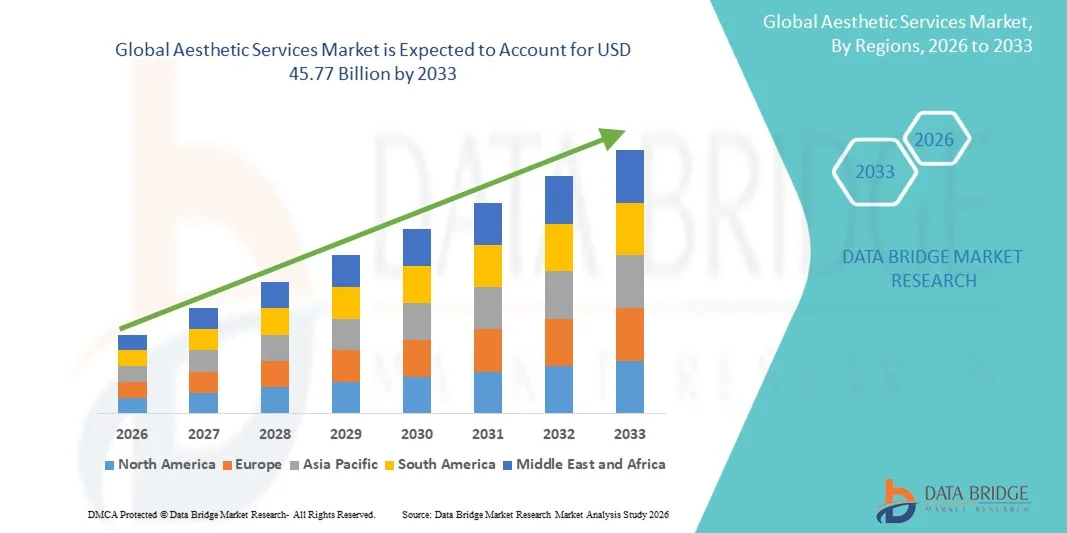
- The global aesthetic services market size was valued at USD 19.65 billion in 2025 and is expected to reach USD 45.77 billion by 2033, at a CAGR of 11.15% during the forecast period
- The market growth is largely fueled by the increasing awareness and demand for cosmetic and aesthetic procedures, coupled with advancements in minimally invasive technologies, leading to broader adoption in both clinics and specialized aesthetic centers
- Furthermore, rising consumer preference for personalized treatments, non-surgical interventions, and technologically advanced solutions is driving the uptake of Aesthetic Services, thereby significantly boosting the industry's growth
Aesthetic Services Market Analysis
- Aesthetic Services, encompassing cosmetic and non-invasive procedures, are increasingly becoming essential offerings in clinics and specialized aesthetic centers due to rising consumer focus on appearance, wellness, and minimally invasive treatments
- The escalating demand for aesthetic services is primarily fueled by growing awareness of advanced cosmetic technologies, rising disposable incomes, and a preference for personalized, safe, and effective procedures, with trends toward non-surgical interventions, tele-aesthetic consultations, and integration of AI-based treatment planning driving market expansion
- North America dominated the aesthetic services market with the largest revenue share of 42.5% in 2025, characterized by high adoption of advanced aesthetic technologies, strong presence of leading service providers, and growing consumer inclination toward minimally invasive procedures, with the U.S. experiencing substantial growth in clinics and specialized aesthetic centers
- Asia-Pacific is expected to be the fastest growing region in the aesthetic services market during the forecast period, driven by increasing urbanization, rising disposable incomes, expanding medical tourism, and growing awareness of cosmetic and aesthetic solutions in countries like India, China, and South Korea
- Facial Aesthetic Services dominated the market with a revenue share of 41.5% in 2025, driven by rising demand for anti-aging treatments, minimally invasive procedures, and increased adoption among both men and women
Report Scope and Aesthetic Services Market Segmentation
|
Attributes |
Aesthetic Services Key Market Insights |
|
Segments Covered |
|
|
Countries Covered |
North America
Europe
Asia-Pacific
Middle East and Africa
South America
|
|
Key Market Players |
• Cutera (U.S.) |
|
Market Opportunities |
|
|
Value Added Data Infosets |
In addition to the insights on market scenarios such as market value, growth rate, segmentation, geographical coverage, and major players, the market reports curated by the Data Bridge Market Research also include in-depth expert analysis, patient epidemiology, pipeline analysis, pricing analysis, and regulatory framework. |
Aesthetic Services Market Trends
“Enhanced Convenience Through Technological Advancements”
- A significant and accelerating trend in the global aesthetic services market is the integration of advanced treatment technologies and digital platforms to improve patient experience and clinical outcomes. Modern aesthetic clinics are increasingly adopting minimally invasive procedures, image-guided treatments, and patient management software, allowing for safer and more efficient procedures
- For instance, clinics offering non-surgical facial rejuvenation now utilize precise laser systems and high-resolution imaging to customize treatments for individual patients, enhancing results and reducing recovery times. Similarly, some dermatology centers employ virtual consultation platforms to guide patients through pre- and post-treatment care, improving convenience and accessibility
- The trend toward personalized treatment planning is also evident, as providers increasingly combine multiple modalities, such as dermal fillers with skin resurfacing or hair restoration with PRP therapy, to meet unique patient needs. These integrated approaches are redefining patient expectations, offering faster, safer, and more tailored results
- Furthermore, mobile booking and digital follow-up systems are being integrated into aesthetic service workflows, enabling patients to manage appointments, access treatment records, and receive reminders, which increases satisfaction and adherence to treatment plans
- As a result, the market is witnessing a move toward more patient-centric, data-driven, and technologically enabled aesthetic services, with clinics emphasizing safety, efficiency, and personalization to stay competitive
Aesthetic Services Market Dynamics
Driver
“Growing Demand for Advanced Cosmetic Procedures and Awareness”
- The increasing prevalence of skin conditions, aging populations, and rising consumer interest in cosmetic enhancements are major drivers for the global Aesthetic Services market. Patients are seeking procedures that offer effective results with minimal downtime and reduced side effects
- For instance, the popularity of non-invasive procedures like laser hair removal, chemical peels, and botulinum toxin injections has surged, as reported by leading dermatology clinics in North America and Europe, reflecting increased awareness and acceptance
- Furthermore, rising disposable incomes, increased urbanization, and improved access to high-quality clinics are expanding the target patient base, particularly in emerging markets. Consumers are also becoming more informed about treatment options through digital channels, social media, and healthcare campaigns, further driving adoption
- Innovations in treatment techniques, combined with the ability to deliver visible and long-lasting results, continue to encourage more patients to explore aesthetic services, increasing overall market demand
Restraint/Challenge
“Concerns About Cost, Safety, and Regulatory Compliance”
- High treatment costs, particularly for advanced procedures and combination therapies, can be a barrier to adoption, especially in price-sensitive markets and developing regions. Many patients may defer treatments due to affordability concerns or limited insurance coverage
- For instance, premium treatments such as laser skin resurfacing or thread lifts remain out of reach for a large portion of the population, despite growing demand for minimally invasive procedures
- In addition, safety concerns and potential side effects, such as scarring, infection, or allergic reactions, require clinics to maintain rigorous standards, limiting the speed of market expansion. Ensuring trained personnel and adherence to regulatory protocols is critical, yet can be resource-intensive
- Market growth may also be constrained by varying regulatory frameworks across regions, which affect the approval and availability of new technologies and treatment devices
- Addressing these challenges requires ongoing patient education, development of safer and cost-effective procedures, and adherence to standardized clinical protocols to build trust and facilitate sustainable growth in the Aesthetic Services market
Aesthetic Services Market Scope
The market is segmented on the basis of type, application, and end user.
• By Type
On the basis of type, the Aesthetic Services market is segmented into Facial Aesthetic Services, Skin Lightening, Body Contouring Devices, and Aesthetic Implantation. Facial Aesthetic Services dominated the market with a revenue share of 41.5% in 2025, driven by rising demand for anti-aging treatments, minimally invasive procedures, and increased adoption among both men and women. Clinics and dermatology centers are increasingly offering Botox, fillers, and facial sculpting services. Awareness campaigns, social media influence, and celebrity endorsements are driving patient preference. High disposable income in urban regions supports market growth. Technological advancements in non-surgical facial treatments further boost adoption. Strong marketing strategies and seasonal promotions contribute to segment dominance. Integration with wellness packages and personalized treatment plans is also encouraging uptake. High repeat procedures maintain consistent revenue flow. Clinics offering advanced facial treatments report higher patient satisfaction and retention. Regulatory approvals for innovative devices support segment expansion.
Skin Lightening is expected to witness the fastest CAGR of 10.8% from 2026 to 2033, fueled by growing awareness of skin tone treatments, cultural preferences, and increasing availability of clinic-based and at-home options. Rising disposable income and urbanization drive adoption in emerging markets. Innovations in non-invasive and safer formulations encourage consumer trust. Social media trends and influencer marketing amplify demand. Dermatology clinics and cosmetic chains are expanding services to capture a broader audience. Increasing awareness of pigmentation disorders, melasma, and uneven skin tone treatments supports growth. Home-based kits complement clinic offerings. Regulatory approvals for topical and device-based treatments further accelerate adoption.
• By Application
On the basis of application, the market is segmented into Anti-aging and Wrinkles, Facial and Skin Rejuvenation, Vascular Lesions, Body Shaping and Cellulite, Breast Enhancement, Scars, Pigment Lesions, Reconstructive, Tattoo Removal, and Psoriasis/Vitiligo. Anti-aging and Wrinkles dominated with a revenue share of 38.7% in 2025, driven by increasing demand for Botox, dermal fillers, and laser-based treatments. Aging populations and growing awareness of preventive aesthetic procedures encourage adoption. Dermatology clinics and spa chains are offering bundled anti-aging packages. Celebrity influence and social media campaigns boost awareness. Technological innovations in injectable and device-based treatments enhance safety and efficacy. Repeat procedures and combination therapies sustain revenue. Accessibility in urban regions and rising disposable income fuel growth. Insurance coverage for certain procedures in some regions adds adoption. Seasonal promotions and loyalty programs encourage patient retention.
Body Shaping and Cellulite segment is expected to witness the fastest CAGR of 11.5% from 2026 to 2033, fueled by rising obesity, fitness awareness, and increasing preference for non-invasive body contouring devices. Demand for minimally invasive fat reduction and cellulite treatment procedures is increasing globally. Clinics are integrating these services with wellness and nutrition programs. Technological advancements in radiofrequency, cryolipolysis, and laser-based devices enhance treatment efficiency. Growing penetration of spa chains and dermatology centers in emerging regions supports growth. Marketing campaigns emphasizing body positivity and aesthetics amplify demand.
• By End User
On the basis of end user, the market is segmented into Dermatology Clinics, Hospitals, Spa Chains, and Dermatology Centres. Dermatology Clinics dominated with a revenue share of 44.5% in 2025, driven by specialization in skin care, anti-aging, and aesthetic procedures. Clinics provide personalized consultations, advanced equipment, and follow-up care. High patient footfall, repeat treatments, and loyalty programs contribute to dominance. Urban centers with higher disposable income report maximum adoption. Regulatory approvals for devices and drugs ensure patient safety. Marketing campaigns and digital outreach drive patient engagement. Integration of multi-service offerings increases clinic profitability. Advanced training for dermatologists ensures high-quality outcomes.
Spa Chains are expected to witness the fastest CAGR of 12.1% from 2026 to 2033, supported by growing demand for wellness-aesthetic convergence, luxury services, and non-invasive treatments. Expansion of chains into tier-2 and tier-3 cities drives penetration. Bundled packages combining aesthetic, body shaping, and skin rejuvenation services boost revenue. Collaboration with dermatologists and wellness professionals enhances service credibility. Marketing through social media, influencer collaborations, and loyalty programs accelerates growth. Rising health-conscious populations and disposable income in emerging economies fuel adoption.
Aesthetic Services Market Regional Analysis
- North America dominated the aesthetic services market with the largest revenue share of 42.5% in 2025, characterized by high adoption of advanced aesthetic technologies, strong presence of leading service providers, and growing consumer inclination toward minimally invasive procedures
- Consumers in the region are increasingly seeking non-invasive treatments, such as laser therapies, injectables, and body contouring, which offer quicker recovery and improved outcomes
- The widespread adoption is further supported by high healthcare spending, the availability of specialized clinics, and a growing trend toward preventive and cosmetic dermatology procedures
U.S. Aesthetic Services Market Insight
The U.S. aesthetic services market captured the largest revenue share within North America, driven by substantial growth in clinics and specialized aesthetic centers. The market expansion is fueled by a strong preference for minimally invasive procedures, availability of advanced treatment technologies, and rising awareness of cosmetic solutions among urban populations. For instance, leading dermatology clinics in metropolitan areas have reported a surge in demand for non-surgical facial rejuvenation and body sculpting procedures. Furthermore, increasing consumer focus on wellness and appearance is encouraging more frequent visits to aesthetic service providers, boosting overall market revenue.
Europe Aesthetic Services Market Insight
The Europe aesthetic services market is projected to expand at a substantial CAGR throughout the forecast period, driven by high standards of dermatological care, rising disposable incomes, and growing awareness of aesthetic treatments. Consumers are attracted to clinics offering innovative technologies such as fractional lasers, microneedling, and advanced chemical peels. The region is witnessing steady growth across urban centers, with countries like France, Germany, and Italy investing in expanding clinic networks and promoting aesthetic healthcare awareness. In addition, the increasing trend toward minimally invasive procedures in multi-family and corporate wellness programs is contributing to sustained market growth.
U.K. Aesthetic Services Market Insight
The U.K. aesthetic services market is anticipated to grow at a noteworthy CAGR during the forecast period, fueled by rising interest in cosmetic treatments and non-surgical interventions. Concerns regarding aging, appearance, and self-care are motivating both male and female consumers to explore aesthetic solutions, ranging from anti-aging injectables to skin rejuvenation therapies. Furthermore, the robust healthcare infrastructure and the presence of specialized aesthetic clinics across major cities are supporting increased adoption of advanced procedures. The growing acceptance of cosmetic procedures in corporate wellness and spa facilities is also driving market growth.
Germany Aesthetic Services Market Insight
The Germany aesthetic services market is expected to expand at a considerable CAGR during the forecast period, driven by increasing consumer awareness about dermatological and cosmetic treatments. Germany’s well-developed healthcare infrastructure and emphasis on innovation enable clinics to offer advanced aesthetic technologies, including laser-based therapies and precision injectables. Moreover, the rising focus on eco-conscious and minimally invasive procedures aligns with patient preferences, promoting the adoption of high-quality aesthetic services across urban and suburban areas.
Asia-Pacific Aesthetic Services Market Insight
The Asia-Pacific aesthetic services market is poised to grow at the fastest CAGR during the forecast period, driven by increasing urbanization, rising disposable incomes, expanding medical tourism, and growing awareness of cosmetic and aesthetic solutions in countries such as India, China, and South Korea. Consumers are increasingly seeking advanced treatments, including skin tightening, fat reduction therapies, and non-surgical facial rejuvenation, facilitated by the growing number of specialized clinics. In addition, the proliferation of wellness centers and cosmetic hospitals is making advanced aesthetic procedures more accessible, further accelerating market expansion.
Japan Aesthetic Services Market Insight
The Japan aesthetic services market is gaining momentum due to the country’s advanced healthcare infrastructure, aging population, and emphasis on personal wellness and appearance. Rising demand for anti-aging solutions, skin rejuvenation treatments, and non-invasive body contouring is driving the market. Japanese consumers prioritize safe, effective, and technologically advanced procedures, encouraging clinics to adopt state-of-the-art equipment and treatment protocols. Furthermore, the strong culture of preventive healthcare and aesthetic maintenance supports consistent growth across both residential and commercial service providers.
China Aesthetic Services Market Insight
The China aesthetic services market accounted for the largest market revenue share in Asia-Pacific in 2025, attributed to the country’s growing middle class, high healthcare expenditure, and increasing interest in cosmetic and dermatological treatments. Rapid urbanization and rising disposable incomes are encouraging more consumers to pursue advanced aesthetic procedures. For example, urban clinics in Beijing and Shanghai report high demand for non-surgical facial treatments and body contouring services. In addition, the expansion of medical tourism, particularly for cosmetic procedures, is further boosting market growth, while domestic providers continue to invest in innovative technologies and specialized clinics.
Aesthetic Services Market Share
The Aesthetic Services industry is primarily led by well-established companies, including:
• Cutera (U.S.)
• Cynosure (U.S.)
• Lumenis (Israel)
• Hologic (U.S.)
• Mentor Worldwide (U.S.)
• Alma Lasers (Israel)
• Revance Therapeutics (U.S.)
• Venus Concept (Canada)
• InMode (Israel)
• Bioform Medical (U.S.)
• Apyx Medical (U.S.)
• Merz Aesthetics (Germany)
• Sciton (U.S.)
• Fotona (Slovenia)
• Jeisys Medical (South Korea)
• Lutronic (South Korea)
• Medytox (South Korea)
• Promedon (Argentina)
Latest Developments in Global Aesthetic Services Market
- In March 2023, Galderma S.A., a leading dermatology and aesthetic solutions company, introduced FACE by Galderma, an augmented reality (AR) technology platform that allows patients and clinicians to visualize potential outcomes of injectable treatments before procedures. This innovation helps personalize treatment plans and increases patient confidence in aesthetic services
- In September 2024, Perfect Corp. launched the Skincare Pro Aesthetic Simulator, a cutting‑edge AI and deep‑learning tool designed for dermatologists and aesthetic professionals to simulate up to 27 types of non‑surgical facial treatments. This development enhances treatment visualization and supports tailored service recommendations in aesthetic clinics globally
- In June 2025, Aestiva Plastic Surgery in Delhi launched a scarless facial contouring procedure, offering patients defined jawlines and chin contouring with minimal downtime and no visible scarring. This launch reflects rising demand for advanced, minimally invasive aesthetic services in key emerging markets
- In February 2025, Joya Health rolled out an innovative employee benefits program covering aesthetic treatments including facials, Botox, acne care, and laser procedures as part of preventive skin health offerings—enhancing accessibility and affordability of aesthetic services for consumers
- In August 2025, six leading aesthetic clinics in the Netherlands formed the Leading Aesthetics Group, a doctor‑led platform focused on delivering personalized, high‑quality minimally invasive treatments and long‑term outcomes, marking increased consolidation and standardization in European aesthetic service offerings
SKU-
Get online access to the report on the World's First Market Intelligence Cloud

- Interactive Data Analysis Dashboard
- Company Analysis Dashboard for high growth potential opportunities
- Research Analyst Access for customization & queries
- Competitor Analysis with Interactive dashboard
- Latest News, Updates & Trend analysis
- Harness the Power of Benchmark Analysis for Comprehensive Competitor Tracking
Research Methodology
Data collection and base year analysis are done using data collection modules with large sample sizes. The stage includes obtaining market information or related data through various sources and strategies. It includes examining and planning all the data acquired from the past in advance. It likewise envelops the examination of information inconsistencies seen across different information sources. The market data is analysed and estimated using market statistical and coherent models. Also, market share analysis and key trend analysis are the major success factors in the market report. To know more, please request an analyst call or drop down your inquiry.
The key research methodology used by DBMR research team is data triangulation which involves data mining, analysis of the impact of data variables on the market and primary (industry expert) validation. Data models include Vendor Positioning Grid, Market Time Line Analysis, Market Overview and Guide, Company Positioning Grid, Patent Analysis, Pricing Analysis, Company Market Share Analysis, Standards of Measurement, Global versus Regional and Vendor Share Analysis. To know more about the research methodology, drop in an inquiry to speak to our industry experts.
Customization Available
Data Bridge Market Research is a leader in advanced formative research. We take pride in servicing our existing and new customers with data and analysis that match and suits their goal. The report can be customized to include price trend analysis of target brands understanding the market for additional countries (ask for the list of countries), clinical trial results data, literature review, refurbished market and product base analysis. Market analysis of target competitors can be analyzed from technology-based analysis to market portfolio strategies. We can add as many competitors that you require data about in the format and data style you are looking for. Our team of analysts can also provide you data in crude raw excel files pivot tables (Fact book) or can assist you in creating presentations from the data sets available in the report.












