Global Antibiotics Market
Market Size in USD Billion

 USD
50.75 Billion
USD
73.84 Billion
2025
2033
USD
50.75 Billion
USD
73.84 Billion
2025
2033
 Forecast Period Forecast Period |
2026 - 2033 |
 Market Size (Base Year) Market Size (Base Year) |
USD 50.75 Billion |
 Market Size (Forecast Year) Market Size (Forecast Year) |
USD 73.84 Billion |
 CAGR CAGR |
% |
| Major Markets Players |
|
Antibiotics Market Size
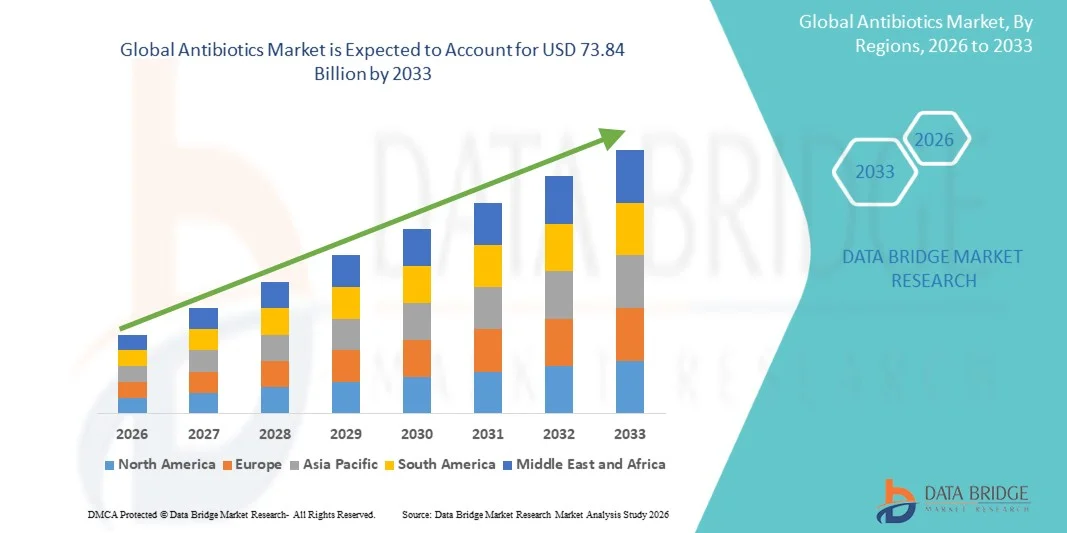
- The global antibiotics market size was valued at USD 50.75 billion in 2025 and is expected to reach USD 73.84 billion by 2033, at a CAGR of 4.80% during the forecast period
- The market growth is largely fueled by the rising prevalence of bacterial infections and increasing incidence of infectious diseases, which is driving the demand for effective antibiotic therapies across hospitals, clinics, and community healthcare settings
- Furthermore, growing investments in antibiotic research and development along with increasing awareness regarding antimicrobial resistance and the need for effective treatment options are accelerating the adoption of antibiotics, thereby significantly boosting the market’s growth
Antibiotics Market Analysis
- Antibiotics, which are medications used to treat bacterial infections by killing or inhibiting the growth of bacteria, remain essential components of modern healthcare systems across hospitals, clinics, and community healthcare settings due to their critical role in treating life-threatening infections and preventing complications during medical procedures
- The growing demand for antibiotics is primarily driven by the rising prevalence of infectious diseases, increasing cases of hospital-acquired infections, expanding global population, and the growing need for effective antimicrobial therapies in both developed and developing healthcare systems
- North America dominated the Antibiotics market with the largest revenue share of 36.8% in 2025, supported by advanced healthcare infrastructure, high healthcare expenditure, strong presence of major pharmaceutical companies, and significant investments in research and development for next-generation antimicrobial therapies, with the U.S. accounting for the majority of regional demand due to widespread prescription use and strong pharmaceutical distribution networks
- Asia-Pacific is expected to be the fastest-growing region in the Antibiotics market during the forecast period, driven by increasing population, rising incidence of infectious diseases, improving healthcare access, expanding pharmaceutical manufacturing capabilities, and growing government initiatives to strengthen healthcare infrastructure across countries such as China and India antibiotics market
- The broad-spectrum antibiotics segment dominated the largest market revenue share of 63.4% in 2025, owing to their ability to treat a wide variety of bacterial infections
Report Scope and Antibiotics Market Segmentation
|
Attributes |
Antibiotics Key Market Insights |
|
Segments Covered |
|
|
Countries Covered |
North America
Europe
Asia-Pacific
Middle East and Africa
South America
|
|
Key Market Players |
• Pfizer Inc. (U.S.) |
|
Market Opportunities |
|
|
Value Added Data Infosets |
In addition to the insights on market scenarios such as market value, growth rate, segmentation, geographical coverage, and major players, the market reports curated by the Data Bridge Market Research also include in-depth expert analysis, patient epidemiology, pipeline analysis, pricing analysis, and regulatory framework. |
Antibiotics Market Trends
“Rising Development of Novel Antibiotics to Combat Antimicrobial Resistance”
- A significant and accelerating trend in the global Antibiotics market is the increasing focus on the research and development of novel antibiotics aimed at addressing the growing challenge of antimicrobial resistance (AMR). As traditional antibiotics lose effectiveness against evolving bacterial strains, pharmaceutical companies and research institutions are prioritizing the discovery of new drug classes, advanced formulations, and targeted antimicrobial therapies
- For instance, in April 2024, GSK plc received U.S. FDA approval for gepotidacin, a novel oral antibiotic designed to treat uncomplicated urinary tract infections (uUTIs). This approval represents one of the first new classes of oral antibiotics for uUTIs in decades and highlights the industry's renewed efforts to address resistant bacterial infections
- In addition, advancements in molecular biology, genomics, and artificial intelligence are accelerating antibiotic discovery by enabling researchers to identify new bacterial targets and design more effective antimicrobial compounds. These technologies help streamline drug discovery processes and improve the success rate of identifying potential antibiotic candidates
- Another emerging trend is the development of narrow-spectrum antibiotics, which specifically target certain bacteria rather than broadly affecting multiple bacterial species. This approach helps preserve beneficial microbiota while reducing the risk of antibiotic resistance development
- Furthermore, increasing collaboration between pharmaceutical companies, biotechnology firms, academic institutions, and global health organizations is supporting innovation in antibiotic development. Programs such as public-private partnerships and global AMR initiatives are encouraging the discovery of next-generation antibiotics
- The growing demand for effective treatments against multidrug-resistant infections, along with supportive regulatory frameworks and funding initiatives, is expected to continue driving innovation and expansion in the antibiotics market during the forecast period
Antibiotics Market Dynamics
Driver
“Increasing Prevalence of Bacterial Infections and Rising Healthcare Demand”
- The rising prevalence of bacterial infections worldwide, combined with increasing healthcare access and growing awareness regarding effective infection management, is a major driver of the global Antibiotics market. Antibiotics remain essential therapeutic agents for treating a wide range of bacterial diseases, including respiratory infections, urinary tract infections, skin infections, and bloodstream infections
- For instance, in October 2024, Pfizer Inc. announced expanded clinical research and global distribution initiatives for its antibiotic portfolio, aimed at improving treatment access for severe hospital-acquired infections. Such initiatives by key pharmaceutical companies are expected to contribute significantly to the growth of the antibiotics industry during the forecast period
- The increasing incidence of hospital-acquired infections (HAIs) and community-acquired bacterial infections is also fueling the demand for effective antimicrobial therapies. Hospitals and healthcare providers rely heavily on antibiotics for both treatment and prophylactic purposes to prevent infection complications
- Furthermore, the growing global burden of infectious diseases, particularly in developing regions with expanding healthcare infrastructure, is driving the demand for affordable and accessible antibiotic therapies. Improved diagnostic capabilities and early disease detection are also increasing antibiotic prescription rates for targeted treatment
- Government initiatives aimed at strengthening healthcare systems, improving infection control programs, and supporting antimicrobial stewardship strategies are further encouraging the appropriate use and development of antibiotics worldwide
Restraint/Challenge
“Antimicrobial Resistance and Strict Regulatory Requirements”
- The increasing prevalence of antimicrobial resistance (AMR) represents one of the most significant challenges to the global Antibiotics market. Overuse and misuse of antibiotics in human healthcare, agriculture, and livestock production have accelerated the emergence of resistant bacterial strains, reducing the effectiveness of existing antibiotic therapies
- For instance, global health organizations have repeatedly warned that antibiotic-resistant infections are rising rapidly worldwide, leading to increased treatment failures and higher healthcare costs. This situation has created significant pressure on healthcare systems to develop new antimicrobial drugs while promoting responsible antibiotic use
- In addition, the development of new antibiotics is a complex, time-consuming, and expensive process that often involves extensive clinical trials and strict regulatory approvals. Pharmaceutical companies may face financial risks due to the relatively limited commercial returns associated with antibiotic treatments compared to chronic disease therapies
- Another challenge is the implementation of antimicrobial stewardship programs, which encourage careful and restricted use of antibiotics to prevent resistance. While these programs are essential for preserving drug effectiveness, they can limit antibiotic consumption and potentially affect market growth
- Furthermore, the availability of generic antibiotics and price pressures in several regions may reduce profit margins for manufacturers, making it less attractive for companies to invest heavily in antibiotic development
- Addressing these challenges will require coordinated global efforts involving improved antibiotic stewardship, enhanced surveillance systems, increased research funding, and incentives for pharmaceutical companies to develop innovative antimicrobial therapies
Antibiotics Market Scope
The market is segmented on the basis of indication, drug class, drug origin, spectrum of activity, route of administration, end users, and distribution channel.
• By Indication
On the basis of indication, the Antibiotics market is segmented into urinary tract infections, intra-abdominal infections, bloodstream infections, Clostridium difficile infections, and others. The urinary tract infection (UTI) segment dominated the largest market revenue share of 34.8% in 2025, driven by the high global prevalence of UTIs among women, elderly populations, and hospitalized patients. UTIs are among the most commonly treated bacterial infections, leading to frequent antibiotic prescriptions across hospitals and outpatient settings. The availability of effective oral and intravenous antibiotics further supports treatment accessibility. Increasing cases of catheter-associated infections in healthcare facilities also contribute to the strong demand for antibiotics in UTI treatment. Rising awareness regarding early diagnosis and treatment further strengthens segment growth. Physicians commonly prescribe antibiotics such as fluoroquinolones, beta-lactams, and nitrofurantoin for UTIs. The growing elderly population globally, which is more susceptible to urinary infections, is another key driver. Hospitals and diagnostic laboratories are increasingly implementing screening programs for bacterial infections. The availability of generic antibiotics also enhances treatment affordability and accessibility worldwide.
The bloodstream infections segment is expected to witness the fastest CAGR of 6.8% from 2026 to 2033, driven by the rising incidence of sepsis, hospital-acquired infections, and antimicrobial-resistant bacteria. Bloodstream infections require immediate and aggressive antibiotic therapy, leading to significant demand for advanced broad-spectrum antibiotics. Hospitals and intensive care units increasingly rely on powerful antimicrobial agents to prevent complications and mortality. Increasing awareness about early detection of sepsis and bacteremia is encouraging rapid antibiotic treatment protocols. Technological advancements in diagnostic testing allow faster identification of pathogens, enabling targeted antibiotic therapy. The rising number of surgical procedures and invasive medical interventions also increases the risk of bloodstream infections. Pharmaceutical companies are actively investing in the development of next-generation antibiotics to address antimicrobial resistance. Government initiatives and global health programs targeting infection control also support market growth. Increasing hospital admissions and critical care treatments further accelerate antibiotic usage in this segment.
• By Drug Class
On the basis of drug class, the Antibiotics market is segmented into beta-lactam and beta-lactamase inhibitors, quinolones, macrolides, and others. The beta-lactam and beta-lactamase inhibitors segment dominated the largest market revenue share of 41.6% in 2025, owing to their broad therapeutic applications and strong clinical efficacy against a wide range of bacterial infections. These antibiotics are widely used to treat respiratory tract infections, urinary tract infections, skin infections, and bloodstream infections. Hospitals rely heavily on this drug class due to its proven safety profile and effectiveness. The increasing prevalence of bacterial infections worldwide further drives demand. Combination therapies including beta-lactamase inhibitors help overcome antibiotic resistance, improving treatment outcomes. Pharmaceutical companies are also developing enhanced formulations to address resistant bacterial strains. Their availability in both oral and injectable forms further supports widespread use. Government healthcare systems frequently include these drugs in essential medicine lists. Clinical guidelines from global health organizations recommend beta-lactam antibiotics as first-line treatment for many infections.
The quinolones segment is projected to register the fastest CAGR of 6.5% from 2026 to 2033, supported by their strong bactericidal activity and broad spectrum coverage. Quinolones are widely prescribed for respiratory infections, gastrointestinal infections, and urinary tract infections. Their high tissue penetration and convenient oral dosing improve patient compliance. Hospitals and outpatient clinics increasingly utilize quinolones for treating complicated bacterial infections. Rising cases of antimicrobial resistance also encourage the development of advanced fluoroquinolone formulations. Pharmaceutical companies continue to invest in research to improve safety profiles and reduce side effects. Increasing demand in emerging markets due to expanding healthcare infrastructure further accelerates adoption. Improved diagnostic technologies enabling targeted antibiotic therapy also support quinolone usage. Healthcare providers increasingly prefer these antibiotics due to their rapid therapeutic effects.
• By Drug Origin
On the basis of drug origin, the market is segmented into natural, semisynthetic, and synthetic antibiotics. The semisynthetic segment dominated the largest market revenue share of 46.9% in 2025, driven by their enhanced efficacy, improved stability, and broader antibacterial spectrum compared to natural antibiotics. Semisynthetic antibiotics are chemically modified derivatives of natural antibiotics, designed to overcome resistance mechanisms and improve pharmacological performance. These antibiotics are widely used to treat respiratory infections, skin infections, and urinary tract infections. Pharmaceutical companies favor semisynthetic antibiotics due to their adaptability and improved safety profiles. Their ability to target both gram-positive and gram-negative bacteria strengthens their clinical utility. Hospitals and healthcare providers frequently prescribe these antibiotics because of their reliability and therapeutic effectiveness. Advances in pharmaceutical research continue to expand the development of new semisynthetic formulations. Regulatory approvals and clinical guidelines also support their use in first-line treatments.
The synthetic antibiotics segment is expected to witness the fastest CAGR of 7.1% from 2026 to 2033, fueled by growing research into novel antimicrobial agents to combat antibiotic resistance. Synthetic antibiotics are developed entirely through chemical processes, allowing researchers to design molecules targeting specific bacterial mechanisms. Pharmaceutical companies are investing heavily in the development of innovative synthetic antibiotics capable of overcoming multidrug-resistant pathogens. Rising cases of antimicrobial resistance worldwide further drive research and commercialization. Synthetic antibiotics also offer improved pharmacokinetic properties and targeted therapeutic activity. Increasing collaboration between biotechnology firms and pharmaceutical companies accelerates innovation. Government funding and regulatory incentives for antimicrobial drug development also support segment growth.
• By Spectrum of Activity
On the basis of spectrum of activity, the market is segmented into broad-spectrum antibiotics and narrow-spectrum antibiotics. The broad-spectrum antibiotics segment dominated the largest market revenue share of 63.4% in 2025, owing to their ability to treat a wide variety of bacterial infections. These antibiotics are frequently used when the exact pathogen causing infection is unknown, particularly in emergency and hospital settings. Physicians often prescribe broad-spectrum antibiotics for severe infections requiring immediate treatment. Hospitals rely heavily on these drugs in intensive care units to prevent complications from bacterial infections. Their versatility and effectiveness make them essential in treating respiratory infections, sepsis, and urinary tract infections. Pharmaceutical companies continue to develop advanced formulations with improved safety and reduced resistance risk. Their availability across oral and injectable forms further strengthens market adoption.
The narrow-spectrum antibiotics segment is expected to witness the fastest CAGR of 6.3% from 2026 to 2033, driven by increasing emphasis on targeted antibiotic therapy and antimicrobial stewardship programs. Narrow-spectrum antibiotics are designed to treat specific bacterial strains, reducing the risk of antibiotic resistance and minimizing side effects. Healthcare professionals increasingly prefer targeted therapy after pathogen identification through advanced diagnostics. Hospitals and research institutions are promoting responsible antibiotic usage to combat antimicrobial resistance. The growing availability of rapid diagnostic technologies enables precise bacterial identification, encouraging the use of narrow-spectrum antibiotics.
• By Route of Administration
On the basis of route of administration, the market is segmented into oral, parenteral, topical, and others. The oral segment dominated the largest market revenue share of 52.7% in 2025, driven by ease of administration, convenience, and strong patient compliance. Oral antibiotics are widely prescribed for outpatient treatment of bacterial infections such as respiratory infections, urinary tract infections, and gastrointestinal infections. Their availability in tablet, capsule, and liquid formulations makes them highly suitable for both adult and pediatric populations. Physicians often prefer oral antibiotics for mild to moderate infections because they eliminate the need for hospital admission or clinical supervision. The affordability of oral medications compared with injectable alternatives further supports their widespread adoption across developed and emerging economies. Pharmaceutical companies continue to introduce improved oral antibiotic formulations with enhanced bioavailability and longer dosing intervals. The expansion of retail pharmacy networks and improved access to healthcare services also contribute to strong segment demand. In addition, oral antibiotics are commonly used in homecare settings, supporting treatment adherence and convenience. Their role in early infection management further strengthens their dominance in the global antibiotics market.
The parenteral segment is projected to witness the fastest CAGR of 6.9% from 2026 to 2033, fueled by increasing hospitalizations and the need for rapid antibiotic action in severe infections. Parenteral antibiotics, administered through intravenous or intramuscular routes, are widely used in hospitals and intensive care units for treating critical bacterial infections. These drugs offer faster therapeutic effects and higher bioavailability compared with oral medications. Healthcare providers often rely on parenteral antibiotics for managing severe infections such as sepsis, bloodstream infections, and complicated intra-abdominal infections. The rising prevalence of hospital-acquired infections and antimicrobial-resistant pathogens further drives the demand for injectable antibiotics. Increasing numbers of surgical procedures and intensive care admissions also contribute to segment growth. Pharmaceutical companies are developing advanced injectable antibiotic formulations with improved pharmacokinetic properties and reduced toxicity. In addition, hospital treatment protocols frequently recommend parenteral antibiotics for patients unable to tolerate oral medications. The growing healthcare infrastructure in emerging markets and expanding hospital networks further support the rapid adoption of parenteral antibiotics globally.
• By End Users
On the basis of end users, the market is segmented into hospitals, homecare, specialty clinics, and others. The hospitals segment dominated the largest market revenue share of 58.3% in 2025, supported by the high number of patient admissions and treatment of severe bacterial infections. Hospitals are primary healthcare centers for diagnosing and managing complex infections that require immediate antibiotic intervention. The availability of advanced diagnostic facilities enables physicians to identify pathogens and administer targeted antibiotic therapy. Hospitals also treat a large number of surgical patients who require prophylactic antibiotics to prevent postoperative infections. Intensive care units rely heavily on antibiotics for treating life-threatening bacterial infections and sepsis. The presence of trained healthcare professionals and standardized treatment protocols further supports antibiotic usage in hospital settings. In addition, hospitals maintain large antibiotic inventories to manage emergency cases and infectious disease outbreaks. The growing prevalence of chronic diseases and rising hospitalization rates further strengthen demand in this segment. Government healthcare programs and increasing healthcare spending globally also contribute to the dominance of hospitals as the primary end users of antibiotics.
The homecare segment is expected to register the fastest CAGR of 6.6% from 2026 to 2033, driven by growing demand for outpatient treatments and home-based healthcare services. Patients increasingly prefer homecare solutions for managing mild to moderate bacterial infections due to convenience and cost-effectiveness. The rising adoption of telemedicine and digital health platforms allows physicians to monitor patients remotely while prescribing antibiotic treatments. Oral antibiotic therapies are particularly well suited for homecare settings, improving patient adherence and reducing hospital visits. Aging populations and individuals with chronic conditions also benefit from home-based infection management. Healthcare providers are increasingly promoting homecare services to reduce hospital overcrowding and lower treatment costs. Pharmaceutical companies are also focusing on patient-friendly antibiotic formulations suitable for home administration. The expansion of home healthcare providers and nursing services further supports this trend. In addition, increasing awareness regarding early infection management encourages patients to seek treatment outside hospital environments.
• By Distribution Channel
On the basis of distribution channel, the market is segmented into hospital pharmacy, online pharmacy, retail pharmacy, and others. The hospital pharmacy segment dominated the largest market revenue share of 44.9% in 2025, as hospitals are primary centers for antibiotic administration, especially for severe infections requiring prescription-based drugs. Hospital pharmacies ensure the availability of a wide range of antibiotics required for emergency treatments and inpatient care. Physicians frequently prescribe antibiotics through hospital pharmacies to maintain accurate dosing and treatment supervision. Hospitals also follow strict antimicrobial stewardship programs that regulate antibiotic usage to reduce resistance risks. The presence of trained pharmacists and healthcare professionals ensures proper medication dispensing and patient guidance. Hospital pharmacies play a critical role in managing injectable antibiotics used in intensive care units and surgical procedures. Increasing hospital admissions due to infectious diseases further drive demand through this distribution channel. Government hospitals and private healthcare institutions maintain significant antibiotic stocks to manage infection outbreaks and critical care cases. This structured supply system strengthens the dominance of hospital pharmacies in the antibiotics market.
The online pharmacy segment is expected to witness the fastest CAGR of 7.4% from 2026 to 2033, driven by the rapid growth of e-commerce healthcare platforms and improved digital healthcare infrastructure. Consumers increasingly prefer online pharmacies due to convenience, competitive pricing, and home delivery services. The expansion of internet penetration and smartphone usage has significantly accelerated the adoption of digital pharmacy platforms. Online pharmacies also offer easy prescription uploads and digital consultations, making antibiotic access more convenient for patients. Many platforms provide discounts and subscription-based medicine delivery services, encouraging repeat purchases. In addition, the COVID-19 pandemic accelerated consumer trust in digital healthcare and online medication ordering. Governments in many countries are also introducing regulatory frameworks to support safe online pharmaceutical distribution. Pharmaceutical companies and pharmacy chains are investing in digital supply chains to expand their online presence. The growing demand for home-based healthcare and telemedicine services further supports the rapid expansion of online antibiotic sales globally.
Antibiotics Market Regional Analysis
- North America dominated the antibiotics market with the largest revenue share of 36.8% in 2025, supported by advanced healthcare infrastructure, high healthcare expenditure, strong presence of major pharmaceutical companies, and significant investments in research and development for next-generation antimicrobial therapies
- The region benefits from a well-established pharmaceutical ecosystem, efficient drug distribution networks, and strong regulatory frameworks that facilitate rapid approval and commercialization of new antibiotic formulations. In addition, the growing burden of hospital-acquired infections and antimicrobial-resistant bacteria is prompting healthcare providers to adopt more advanced and targeted antibiotic therapies
- Increasing awareness among healthcare professionals regarding appropriate antibiotic stewardship programs and improved diagnostic capabilities also contributes to sustained demand across hospitals, clinics, and outpatient care settings
U.S. Antibiotics Market Insight
The U.S. antibiotics market captured the largest revenue share in 2025 within North America, driven by widespread prescription use, a strong pharmaceutical manufacturing base, and extensive research activities focused on combating antimicrobial resistance. The presence of major pharmaceutical companies, advanced clinical research infrastructure, and continuous government support for antibiotic development programs are further strengthening market growth. In addition, the increasing prevalence of infectious diseases such as respiratory tract infections, urinary tract infections, and bloodstream infections continues to fuel demand for effective antibiotic treatments. The country also benefits from a well-structured healthcare reimbursement system and efficient pharmaceutical supply chains, enabling rapid availability of both branded and generic antibiotic drugs across hospitals, retail pharmacies, and online pharmacy platforms.
Europe Antibiotics Market Insight
The Europe antibiotics market is projected to expand at a substantial CAGR throughout the forecast period, primarily driven by strong government initiatives to combat antimicrobial resistance and improve infection management across healthcare systems. Several European countries have implemented strict antibiotic stewardship programs to ensure responsible antibiotic usage while still maintaining adequate treatment availability for serious infections. The presence of leading pharmaceutical manufacturers, growing investments in biotechnology research, and rising collaborations between academic institutions and pharmaceutical companies are also contributing to market expansion. Furthermore, the increasing incidence of bacterial infections in aging populations and the growing need for effective therapies for hospital-acquired infections are expected to continue driving demand for antibiotics across hospitals and specialty clinics.
U.K. Antibiotics Market Insight
The U.K. antibiotics market is anticipated to grow at a noteworthy CAGR during the forecast period, driven by strong national strategies aimed at reducing antimicrobial resistance and improving infection prevention and control practices. Government health agencies and research institutions are actively supporting the development of innovative antibiotic therapies and alternative antimicrobial solutions. In addition, the rising prevalence of respiratory infections, skin infections, and urinary tract infections is contributing to consistent demand for antibiotic medications. The country’s well-established healthcare system, extensive pharmaceutical research activities, and increasing public awareness regarding appropriate antibiotic use further support market growth across hospital and retail pharmacy channels.
Germany Antibiotics Market Insight
The Germany antibiotics market is expected to expand at a considerable CAGR during the forecast period, supported by the country’s advanced healthcare infrastructure, strong pharmaceutical manufacturing capabilities, and significant investment in medical research. Germany serves as one of Europe’s leading hubs for pharmaceutical innovation, with numerous biotechnology companies and research institutions actively engaged in the development of novel antimicrobial therapies. Rising concerns regarding antimicrobial resistance and hospital-acquired infections are encouraging healthcare providers to adopt newer and more effective antibiotic formulations. In addition, increasing collaborations between government bodies and pharmaceutical companies to promote research in infectious disease treatment are expected to further accelerate market growth.
Asia-Pacific Antibiotics Market Insight
The Asia-Pacific antibiotics market is poised to grow at the fastest CAGR during the forecast period, driven by the region’s rapidly expanding population, rising incidence of infectious diseases, and improving access to healthcare services. Increasing healthcare investments, expanding pharmaceutical manufacturing capabilities, and supportive government initiatives aimed at strengthening healthcare infrastructure are significantly contributing to market growth. Countries across the region are also witnessing increased demand for affordable and accessible antibiotic medications to address a wide range of bacterial infections. In addition, the growing presence of local pharmaceutical manufacturers and the expansion of generic drug production are helping improve antibiotic availability across both urban and rural healthcare systems.
Japan Antibiotics Market Insight
The Japan antibiotics market is gaining steady momentum due to the country’s advanced healthcare system, strong pharmaceutical research sector, and increasing focus on combating antimicrobial resistance. Japan places a high emphasis on infection prevention and effective disease management, leading to consistent demand for high-quality antibiotic therapies across hospitals and clinics. The country’s aging population, which is more susceptible to bacterial infections and chronic health conditions, further contributes to the growing need for effective antimicrobial treatments. Moreover, continuous investment in biomedical research and collaborations between pharmaceutical companies and academic institutions are supporting the development of innovative antibiotics and improved treatment strategies.
China Antibiotics Market Insight
The China antibiotics market accounted for the largest market revenue share in the Asia-Pacific region in 2025, attributed to the country’s large population base, rising prevalence of infectious diseases, and expanding healthcare infrastructure. China has emerged as one of the leading pharmaceutical manufacturing hubs globally, with extensive production capacity for both active pharmaceutical ingredients (APIs) and finished antibiotic drugs. The increasing accessibility of healthcare services, growing government initiatives to strengthen infection control programs, and the rising adoption of modern diagnostic technologies are further driving antibiotic demand. In addition, continuous investments in pharmaceutical research and the presence of numerous domestic manufacturers are enabling the development and large-scale production of affordable antibiotic medications for both domestic and international markets.
Antibiotics Market Share
The Antibiotics industry is primarily led by well-established companies, including:
• Pfizer Inc. (U.S.)
• GlaxoSmithKline plc (U.K.)
• Merck & Co., Inc. (U.S.)
• Johnson & Johnson (U.S.)
• Abbott (U.S.)
• Bayer AG (Germany)
• Novartis AG (Switzerland)
• Sanofi S.A. (France)
• F. Hoffmann-La Roche Ltd (Switzerland)
• AstraZeneca plc (U.K.)
• Bristol-Myers Squibb Company (U.S.)
• Teva Pharmaceutical Industries Ltd. (Israel)
• Sun Pharmaceutical Industries Ltd. (India)
• Cipla Limited (India)
• Dr. Reddy’s Laboratories Ltd. (India)
• Lupin Limited (India)
• Aurobindo Pharma Limited (India)
• Mylan N.V. (U.S.)
• Takeda Pharmaceutical Company Limited (Japan)
• Shionogi & Co., Ltd. (Japan)
Latest Developments in Global Antibiotics Market
- In April 2024, AbbVie and Pfizer announced that the European Commission approved Emblaveo (aztreonam/avibactam), a novel combination antibiotic for the treatment of serious Gram-negative bacterial infections, including those caused by multidrug-resistant pathogens. The therapy combines the monobactam antibiotic aztreonam with the beta-lactamase inhibitor avibactam, helping overcome resistance mechanisms in bacteria
- In June 2024, Pfizer confirmed that Emblaveo (aztreonam/avibactam) received regulatory approval in the United Kingdom for the treatment of severe infections caused by Gram-negative bacteria, particularly those resistant to multiple existing antibiotics. The approval marked a key step in expanding treatment options for antimicrobial-resistant infections
- In March 2025, GSK (GlaxoSmithKline) announced that the U.S. Food and Drug Administration (FDA) approved Blujepa (gepotidacin), a first-in-class oral antibiotic for the treatment of uncomplicated urinary tract infections (uUTIs) in female adults and adolescents. The drug works by inhibiting bacterial DNA replication through a novel mechanism and represents the first new class of oral antibiotics for UTIs in nearly three decades
- In December 2025, Innoviva Specialty Therapeutics, in collaboration with the Global Antibiotic Research and Development Partnership (GARDP), received FDA approval for Nuzolvence (zoliflodacin), a first-in-class oral antibiotic for the treatment of uncomplicated urogenital gonorrhea. The drug targets bacterial DNA synthesis using a novel mechanism and is designed to address increasing antimicrobial resistance in Neisseria gonorrhoeae
- In December 2025, the U.S. Food and Drug Administration (FDA) approved Augmentin XR (amoxicillin-clavulanate potassium) under the Commissioner’s National Priority Voucher fast-track program, accelerating the review timeline to address antibiotic supply and treatment needs for bacterial infections such as pneumonia and sinusitis. The approval highlighted regulatory efforts to strengthen antibiotic availability and domestic pharmaceutical production
SKU-

- Interactive Data Analysis Dashboard
- Company Analysis Dashboard for high growth potential opportunities
- Research Analyst Access for customization & queries
- Competitor Analysis with Interactive dashboard
- Latest News, Updates & Trend analysis
- Harness the Power of Benchmark Analysis for Comprehensive Competitor Tracking
Data collection and base year analysis are done using data collection modules with large sample sizes. The stage includes obtaining market information or related data through various sources and strategies. It includes examining and planning all the data acquired from the past in advance. It likewise envelops the examination of information inconsistencies seen across different information sources. The market data is analysed and estimated using market statistical and coherent models. Also, market share analysis and key trend analysis are the major success factors in the market report. To know more, please request an analyst call or drop down your inquiry.
The key research methodology used by DBMR research team is data triangulation which involves data mining, analysis of the impact of data variables on the market and primary (industry expert) validation. Data models include Vendor Positioning Grid, Market Time Line Analysis, Market Overview and Guide, Company Positioning Grid, Patent Analysis, Pricing Analysis, Company Market Share Analysis, Standards of Measurement, Global versus Regional and Vendor Share Analysis. To know more about the research methodology, drop in an inquiry to speak to our industry experts.
Data Bridge Market Research is a leader in advanced formative research. We take pride in servicing our existing and new customers with data and analysis that match and suits their goal. The report can be customized to include price trend analysis of target brands understanding the market for additional countries (ask for the list of countries), clinical trial results data, literature review, refurbished market and product base analysis. Market analysis of target competitors can be analyzed from technology-based analysis to market portfolio strategies. We can add as many competitors that you require data about in the format and data style you are looking for. Our team of analysts can also provide you data in crude raw excel files pivot tables (Fact book) or can assist you in creating presentations from the data sets available in the report.