


Global Aromatase Inhibitors Market
Market Size in USD Billion
CAGR :
% 
 USD
5.39 Billion
USD
7.81 Billion
2025
2033
USD
5.39 Billion
USD
7.81 Billion
2025
2033
 Forecast Period Forecast Period |
2026 –2033 |
 Market Size (Base Year) Market Size (Base Year) |
USD 5.39 Billion |
 Market Size (Forecast Year) Market Size (Forecast Year) |
USD 7.81 Billion |
 CAGR CAGR |
% |
| Major Markets Players |
|
Aromatase Inhibitors Market Size
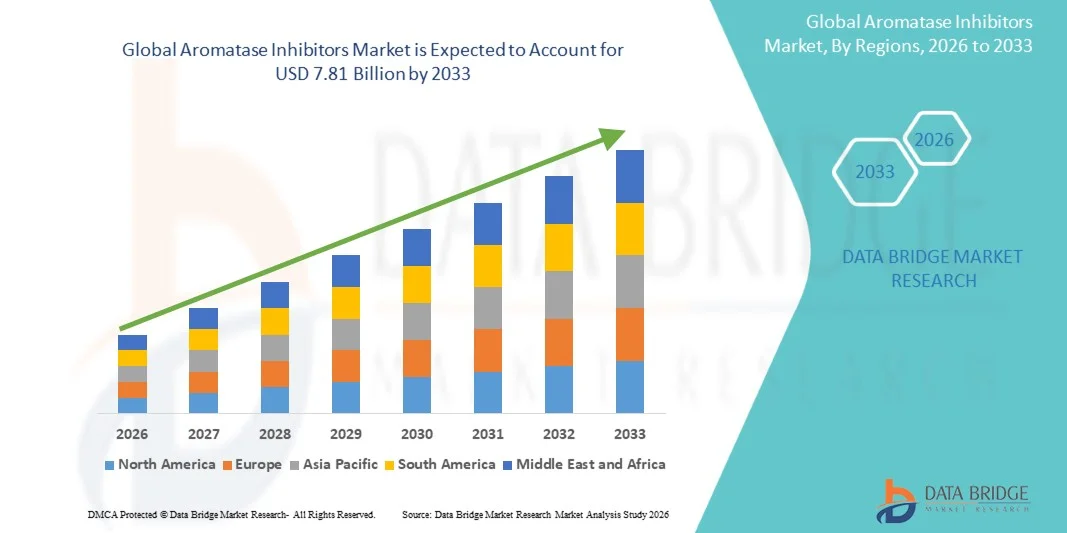
- The global aromatase inhibitors market size was valued at USD 5.39 billion in 2025 and is expected to reach USD 7.81 billion by 2033, at a CAGR of 4.75% during the forecast period
- The market growth is largely fueled by the increasing prevalence of hormone-dependent cancers, particularly breast cancer, along with the rising adoption of targeted hormonal therapies, leading to greater utilization of aromatase inhibitors in oncology treatment across hospitals and specialty clinics
- Furthermore, growing awareness regarding early cancer diagnosis, continuous advancements in oncology drug development, and increasing demand for effective long-term hormone therapy solutions are establishing aromatase inhibitors as a key component of breast cancer treatment. These converging factors are accelerating the uptake of Aromatase Inhibitors therapies, thereby significantly boosting the market’s growth
Aromatase Inhibitors Market Analysis
- Aromatase inhibitors, which are hormonal therapy drugs used to reduce estrogen levels in the body, are increasingly becoming essential in the treatment of hormone receptor-positive breast cancer, particularly among postmenopausal women, due to their effectiveness in preventing cancer recurrence and improving survival outcomes
- The escalating demand for aromatase inhibitors is primarily driven by the rising global prevalence of breast cancer, increasing awareness regarding hormone-based cancer therapies, and growing adoption of targeted treatment approaches that provide improved clinical outcomes with reduced systemic side effects
- North America dominated the aromatase inhibitors market with the largest revenue share of 41.8% in 2025, supported by advanced healthcare infrastructure, strong presence of leading pharmaceutical companies, and high adoption of innovative oncology therapies, with the U.S. witnessing significant usage of aromatase inhibitors in breast cancer management programs and long-term hormone therapy regimens
- Asia-Pacific is expected to be the fastest growing region in the aromatase inhibitors market during the forecast period due to rising breast cancer incidence, improving healthcare infrastructure, increasing healthcare expenditure, and expanding access to cancer treatment across emerging economies such as China and India
- The oral segment dominated the largest market revenue share of 88.4% in 2025, owing to the convenience, ease of administration, and high patient compliance associated with oral medications
Report Scope and Aromatase Inhibitors Market Segmentation
|
Attributes |
Aromatase Inhibitors Key Market Insights |
|
Segments Covered |
|
|
Countries Covered |
North America
Europe
Asia-Pacific
Middle East and Africa
South America
|
|
Key Market Players |
• F. Hoffmann-La Roche Ltd. (Switzerland) |
|
Market Opportunities |
|
|
Value Added Data Infosets |
In addition to the insights on market scenarios such as market value, growth rate, segmentation, geographical coverage, and major players, the market reports curated by the Data Bridge Market Research also include in-depth expert analysis, patient epidemiology, pipeline analysis, pricing analysis, and regulatory framework. |
Aromatase Inhibitors Market Trends
“Increasing Focus on Targeted Hormonal Cancer Therapies”
- A significant and accelerating trend in the global Aromatase Inhibitors market is the growing focus on targeted hormonal therapies for the treatment of hormone-receptor-positive breast cancer, particularly among postmenopausal women. Aromatase inhibitors work by blocking the aromatase enzyme responsible for converting androgens into estrogen, thereby reducing estrogen levels that can stimulate the growth of certain breast cancers
- For instance, widely used aromatase inhibitors such as anastrozole, letrozole, and exemestane are increasingly being incorporated into long-term treatment protocols for estrogen receptor-positive breast cancer due to their demonstrated ability to reduce recurrence rates and improve patient outcomes
- Advances in oncology research and clinical trials are further expanding the therapeutic applications of aromatase inhibitors, including their use in adjuvant therapy, neoadjuvant therapy, and metastatic breast cancer treatment. These developments are improving treatment effectiveness while minimizing systemic side effects compared to some traditional chemotherapy approaches
- Furthermore, the increasing adoption of personalized medicine is enabling healthcare providers to tailor hormonal therapies based on tumor biology and patient-specific factors. This approach enhances treatment efficacy and supports the growing demand for precision oncology therapies
- Pharmaceutical companies are also investing heavily in the development of improved formulations and combination therapies involving aromatase inhibitors to enhance therapeutic outcomes and patient adherence
- As cancer treatment strategies increasingly emphasize targeted and less invasive therapies, the demand for aromatase inhibitors continues to rise across hospitals, oncology centers, and specialized cancer treatment facilities worldwide
Aromatase Inhibitors Market Dynamics
Driver
“Rising Prevalence of Breast Cancer and Increasing Awareness of Hormone Therapy”
- The increasing global prevalence of breast cancer, particularly hormone receptor-positive breast cancer, is a major driver supporting the growth of the aromatase inhibitors market. Breast cancer remains one of the most commonly diagnosed cancers among women worldwide, significantly increasing the demand for effective hormonal treatment options
- For instance, the growing number of breast cancer screening programs and early detection initiatives has led to a higher number of diagnosed cases that require long-term hormone therapy, including aromatase inhibitors. Such developments are expected to contribute to the growth of the Aromatase Inhibitors industry during the forecast period
- Aromatase inhibitors are widely recommended in clinical treatment guidelines as a first-line hormonal therapy for postmenopausal women with hormone-receptor-positive breast cancer, further strengthening their adoption in oncology practice
- In addition, improvements in healthcare infrastructure and increased access to cancer treatment services are enabling more patients to receive appropriate hormone therapies across both developed and emerging economies
- The increasing emphasis on improving long-term survival rates and reducing cancer recurrence is encouraging oncologists to prescribe aromatase inhibitors as part of comprehensive breast cancer treatment plans, further driving market expansion
Restraint/Challenge
“Side Effects Associated with Long-Term Use and Availability of Alternative Therapies”
- One of the major challenges affecting the aromatase inhibitors market is the occurrence of side effects associated with long-term therapy, which may impact patient adherence to treatment. Common side effects include joint pain, bone density loss, fatigue, and increased risk of osteoporosis
- For instance, prolonged use of aromatase inhibitors can lead to decreased bone mineral density in some patients, requiring additional monitoring and supportive treatments such as calcium supplementation or bone-strengthening medications
- Managing these adverse effects requires careful patient monitoring and supportive therapies, which may increase overall treatment costs and complexity
- In addition, the availability of alternative hormone therapies and combination treatment approaches in breast cancer management may limit the exclusive use of aromatase inhibitors in certain patient populations
- Variations in treatment response and the need for personalized therapy regimens also pose challenges in determining the most effective treatment strategies for individual patients
- Addressing these challenges through improved patient management strategies, ongoing clinical research, and the development of safer and more effective therapeutic options will be essential for sustaining long-term growth in the Aromatase Inhibitors market
Aromatase Inhibitors Market Scope
The market is segmented on the basis of drug, mode of action, route of administration, end users, and distribution channel.
• By Drug
On the basis of drug, the Aromatase Inhibitors market is segmented into formestane, fadrozole, exemestane, anastrozole, letrozole, and others. The letrozole segment dominated the largest market revenue share of 34.6% in 2025, driven by its widespread use as a first-line therapy for hormone receptor-positive breast cancer in postmenopausal women. Letrozole is widely preferred due to its strong efficacy in suppressing estrogen production, which plays a key role in slowing or stopping the growth of hormone-dependent tumors. Healthcare providers frequently prescribe letrozole because of its favorable clinical outcomes, long-term safety profile, and strong support from clinical guidelines. In addition, the availability of generic versions has increased affordability and accessibility for patients across both developed and emerging markets. Growing awareness regarding early breast cancer diagnosis and treatment further supports the increasing adoption of letrozole-based therapies. Moreover, rising breast cancer prevalence globally and the increasing number of hormone-therapy prescriptions continue to strengthen the demand for this drug segment.
The anastrozole segment is expected to witness the fastest CAGR of 8.7% from 2026 to 2033, supported by increasing adoption in adjuvant therapy for early-stage breast cancer. Anastrozole is widely used because it effectively lowers estrogen levels and helps reduce cancer recurrence in hormone-sensitive patients. Physicians often recommend it as a long-term treatment option due to its proven clinical benefits and tolerability. Increasing clinical research supporting its effectiveness and improved patient outcomes further contributes to its growth. The growing number of breast cancer treatment programs and expanding oncology care infrastructure in emerging markets are also supporting the adoption of anastrozole therapies. In addition, the drug’s established role in combination treatment strategies and its availability in cost-effective generic forms are driving its rapid uptake across hospitals and specialty oncology clinics worldwide.
• By Mode of Action
On the basis of mode of action, the Aromatase Inhibitors market is segmented into selective inhibitors and non-selective inhibitors. The selective inhibitors segment accounted for the largest market revenue share of 71.3% in 2025, primarily due to their higher specificity and improved safety profile compared with non-selective alternatives. Selective aromatase inhibitors work by specifically blocking the aromatase enzyme responsible for estrogen synthesis without significantly affecting other steroid pathways. This targeted mechanism helps reduce unwanted hormonal side effects while maintaining therapeutic effectiveness in hormone-dependent breast cancer treatment. Drugs such as anastrozole, letrozole, and exemestane fall under this category and are widely recommended in clinical oncology guidelines. Increasing physician preference for targeted hormonal therapies, along with growing awareness among patients regarding personalized treatment options, continues to support the strong adoption of selective inhibitors. Furthermore, improvements in oncology treatment protocols and increasing research investments in hormone-dependent cancer therapies further strengthen the market dominance of this segment.
The non-selective inhibitors segment is expected to witness the fastest CAGR of 7.9% from 2026 to 2033, supported by ongoing research exploring alternative hormonal treatment approaches. Non-selective inhibitors block multiple enzymes involved in steroid synthesis, which can help suppress estrogen production through broader biochemical pathways. Although their usage is relatively limited compared with selective inhibitors, they are gaining attention in specific clinical scenarios where alternative hormonal strategies are required. Increasing pharmaceutical research activities and experimental therapies are contributing to the development of improved non-selective inhibitor formulations. In addition, advancements in drug delivery technologies and combination therapy approaches are expected to expand their therapeutic potential in the coming years. Growing oncology research funding and clinical trials evaluating new hormone-modulating therapies are likely to support the future growth of this segment.
• By Route of Administration
On the basis of route of administration, the Aromatase Inhibitors market is segmented into oral and parenteral. The oral segment dominated the largest market revenue share of 88.4% in 2025, owing to the convenience, ease of administration, and high patient compliance associated with oral medications. Aromatase inhibitors are most commonly prescribed as oral tablets, allowing patients to manage long-term hormone therapy conveniently at home without the need for frequent clinical visits. This route of administration significantly improves treatment adherence, especially for patients undergoing extended therapy for breast cancer prevention or recurrence reduction. In addition, oral drugs reduce hospital resource utilization and offer cost-effective treatment options for healthcare systems. The widespread availability of oral formulations of leading aromatase inhibitors such as letrozole, anastrozole, and exemestane further supports the strong market share of this segment. Growing patient preference for self-administered therapies and increasing accessibility of oral oncology medications continue to strengthen its dominance.
The parenteral segment is expected to witness the fastest CAGR of 7.5% from 2026 to 2033, driven by increasing research into advanced drug delivery systems and injectable hormone therapies. Parenteral administration allows for direct drug delivery into the bloodstream, ensuring faster therapeutic action and improved bioavailability in certain clinical cases. This route may be particularly beneficial for patients who experience difficulties with oral medications or require specialized treatment protocols. Advances in injectable drug technologies and controlled-release formulations are expected to expand the potential of parenteral aromatase inhibitor therapies. In addition, increasing hospital-based oncology treatments and growing interest in personalized cancer therapies are expected to support the gradual adoption of injectable hormonal treatments over the forecast period.
• By End Users
On the basis of end users, the Aromatase Inhibitors market is segmented into hospitals, homecare, specialty clinics, and others. The hospitals segment held the largest market revenue share of 52.8% in 2025, driven by the high volume of cancer diagnosis, treatment, and follow-up care conducted in hospital settings. Hospitals serve as primary centers for oncology treatment, offering access to multidisciplinary healthcare teams, advanced diagnostic technologies, and specialized cancer treatment programs. Many breast cancer patients receive their initial diagnosis and treatment planning in hospitals, which contributes to the high prescription rates of aromatase inhibitors in these facilities. In addition, hospital pharmacies ensure reliable access to oncology medications and support patient monitoring during treatment. Increasing investments in hospital oncology departments and expanding cancer care infrastructure globally continue to strengthen the dominance of the hospital segment in the aromatase inhibitors market.
The homecare segment is projected to witness the fastest CAGR of 8.2% from 2026 to 2033, supported by the growing preference for home-based treatment and long-term medication management. Aromatase inhibitors are often prescribed for extended treatment durations, making homecare an ideal setting for therapy adherence and patient comfort. The increasing availability of oral formulations allows patients to continue their hormone therapy conveniently outside clinical environments. In addition, the rising adoption of telemedicine, remote patient monitoring, and digital health platforms is enabling better treatment supervision for home-based cancer care. Healthcare systems are also promoting home-based treatment models to reduce hospital burden and improve patient quality of life. These factors are expected to drive significant growth in the homecare segment over the forecast period.
• By Distribution Channel
On the basis of distribution channel, the Aromatase Inhibitors market is segmented into hospital pharmacy, online pharmacy, retail pharmacy, and others. The hospital pharmacy segment accounted for the largest market revenue share of 46.9% in 2025, largely due to the centralized role hospitals play in cancer diagnosis and treatment. Many oncology medications, including aromatase inhibitors, are initially dispensed through hospital pharmacies following physician prescriptions during cancer treatment programs. Hospital pharmacies ensure proper medication management, dosage guidance, and patient counseling, which is essential for hormone therapy compliance. In addition, hospitals often maintain consistent drug supply chains and specialized oncology pharmaceutical services, making them a trusted distribution channel for patients undergoing cancer treatment. Increasing hospital admissions related to breast cancer treatment and the expansion of oncology care centers continue to support the strong market presence of this segment.
The online pharmacy segment is expected to witness the fastest CAGR of 9.1% from 2026 to 2033, driven by the rapid growth of digital healthcare platforms and e-commerce pharmaceutical services. Online pharmacies offer patients convenient access to prescription medications, competitive pricing, and home delivery services, which significantly improves accessibility for individuals undergoing long-term treatment. The increasing use of telehealth consultations and digital prescription systems further supports the expansion of online pharmaceutical distribution. In addition, growing internet penetration and smartphone adoption across emerging economies are encouraging patients to purchase medications through online platforms. These factors are expected to drive substantial growth in the online pharmacy segment during the forecast period.
Aromatase Inhibitors Market Regional Analysis
- North America dominated the aromatase inhibitors market with the largest revenue share of 41.8% in 2025, supported by advanced healthcare infrastructure, a strong presence of leading pharmaceutical companies, and high adoption of innovative oncology therapies. The region benefits from well-established cancer screening programs, early diagnosis initiatives, and strong reimbursement systems that enable wider access to breast cancer treatments
- Healthcare providers in the region widely prescribe aromatase inhibitors as part of hormone therapy for postmenopausal women diagnosed with hormone receptor-positive breast cancer, contributing significantly to market demand
- This widespread adoption is further strengthened by strong clinical research activity, increasing awareness of breast cancer treatment options, and the availability of well-developed pharmaceutical distribution networks across hospitals, oncology centers, and specialty clinics
U.S. Aromatase Inhibitors Market Insight
The U.S. aromatase inhibitors market captured the largest revenue share within North America in 2025, driven by the high prevalence of breast cancer and strong adoption of hormone therapy treatments. The presence of leading pharmaceutical companies, extensive clinical research programs, and advanced oncology care infrastructure supports the widespread use of aromatase inhibitors in breast cancer management. In addition, favorable reimbursement policies and strong physician awareness regarding long-term hormone therapy regimens continue to drive the growth of the Aromatase Inhibitors industry in the country.
Europe Aromatase Inhibitors Market Insight
The Europe aromatase inhibitors market is projected to expand at a substantial CAGR throughout the forecast period, primarily driven by increasing breast cancer incidence and the growing focus on improving cancer treatment outcomes. Countries across Europe are strengthening cancer screening programs and investing in advanced oncology treatments, which is encouraging the adoption of hormone therapy drugs such as aromatase inhibitors. Furthermore, strong regulatory frameworks, rising healthcare spending, and expanding access to specialized oncology care are supporting market growth in the region.
U.K. Aromatase Inhibitors Market Insight
The U.K. aromatase inhibitors market is anticipated to grow at a noteworthy CAGR during the forecast period, supported by rising breast cancer awareness and the increasing implementation of national screening programs. The country’s well-established healthcare system and growing emphasis on evidence-based cancer treatment protocols are contributing to the wider use of aromatase inhibitors in long-term hormone therapy for breast cancer patients. In addition, ongoing research initiatives and improved patient access to advanced oncology treatments are expected to further stimulate market expansion.
Germany Aromatase Inhibitors Market Insight
The Germany aromatase inhibitors market is expected to expand at a considerable CAGR during the forecast period, fueled by the country’s strong healthcare infrastructure and significant investments in oncology research. Germany has a well-developed pharmaceutical industry and a high level of healthcare expenditure, which supports the availability and adoption of advanced breast cancer therapies. Increasing awareness regarding early diagnosis and effective hormone therapy options is also contributing to the growing demand for aromatase inhibitors in both hospital and outpatient care settings.
Asia-Pacific Aromatase Inhibitors Market Insight
The Asia-Pacific aromatase inhibitors market is expected to grow at the fastest CAGR during the forecast period, driven by rising breast cancer incidence, improving healthcare infrastructure, and increasing healthcare expenditure across emerging economies. Governments across the region are investing in expanding healthcare access and strengthening cancer treatment facilities, which is increasing the availability of hormone therapy drugs such as aromatase inhibitors. In addition, growing awareness regarding breast cancer screening and treatment options is contributing to the expansion of the Aromatase Inhibitors market across Asia-Pacific.
Japan Aromatase Inhibitors Market Insight
The Japan aromatase inhibitors market is gaining momentum due to the country’s advanced healthcare system and strong focus on cancer research and treatment. Japan has implemented comprehensive breast cancer screening programs and maintains a high standard of oncology care, which supports the use of aromatase inhibitors in hormone-based cancer therapy. Furthermore, increasing clinical research activities and the availability of advanced pharmaceutical treatments are expected to further drive market growth in the country.
China Aromatase Inhibitors Market Insight
The China aromatase inhibitors market accounted for the largest market revenue share in Asia Pacific in 2025, attributed to the country’s large patient population, rising cancer incidence, and expanding healthcare infrastructure. China is increasingly investing in oncology treatment facilities and improving access to advanced pharmaceutical therapies. In addition, growing government initiatives aimed at strengthening cancer care services, along with increasing awareness of breast cancer diagnosis and treatment, are key factors supporting the growth of the Aromatase Inhibitors market in the country.
Aromatase Inhibitors Market Share
The Aromatase Inhibitors industry is primarily led by well-established companies, including:
• F. Hoffmann-La Roche Ltd. (Switzerland)
• Novartis AG (Switzerland)
• Pfizer Inc. (U.S.)
• AstraZeneca (U.K.)
• Eli Lilly and Company (U.S.)
• Merck & Co., Inc. (U.S.)
• Sanofi (France)
• Bristol-Myers Squibb Company (U.S.)
• Teva Pharmaceutical Industries Ltd. (Israel)
• Mylan N.V. (U.S.)
• Sun Pharmaceutical Industries Ltd. (India)
• Cipla Limited (India)
• Dr. Reddy’s Laboratories Ltd. (India)
• Lupin Limited (India)
• Zydus Lifesciences Ltd. (India)
• Apotex Inc. (Canada)
• Amneal Pharmaceuticals LLC (U.S.)
• Hikma Pharmaceuticals PLC (U.K.)
• Torrent Pharmaceuticals Ltd. (India)
• Aurobindo Pharma Limited (India)
Latest Developments in Global Aromatase Inhibitors Market
- In November 2023, AstraZeneca, a leading global biopharmaceutical company, received U.S. FDA approval for capivasertib (TRUQAP) in combination with fulvestrant for HR-positive, HER2-negative advanced breast cancer with specific biomarker alterations. Although not an aromatase inhibitor itself, the therapy expands endocrine treatment strategies that often include aromatase inhibitors as first-line therapy in hormone-receptor-positive breast cancer management
- In September 2024, Novartis, a global pharmaceutical company, announced that the U.S. Food and Drug Administration (FDA) approved ribociclib (Kisqali) in combination with an aromatase inhibitor for the adjuvant treatment of adults with hormone receptor-positive (HR+), HER2-negative early breast cancer at high risk of recurrence. The approval was based on results from the Phase III NATALEE clinical trial and also included approval of the Kisqali Femara Co-Pack (ribociclib with letrozole). This development expands treatment options for early-stage breast cancer patients and strengthens the role of aromatase inhibitors in combination endocrine therapy
- In November 2024, the European Commission, following positive regulatory review, approved ribociclib in combination with an aromatase inhibitor for the adjuvant treatment of adults with HR-positive, HER2-negative early breast cancer at high risk of recurrence. The decision broadened the availability of CDK4/6 inhibitor therapy used alongside aromatase inhibitors across the European Union, supporting improved treatment outcomes for patients with hormone-driven breast cancer
- In June 2024, Novartis presented Phase III NATALEE trial results at the American Society of Clinical Oncology (ASCO) Annual Meeting, demonstrating that ribociclib combined with endocrine therapy including aromatase inhibitors significantly reduced the risk of breast cancer recurrence compared with endocrine therapy alone. The results reinforced the clinical value of aromatase inhibitor-based combination therapies in early HR-positive breast cancer treatment
- In April 2025, the National Institute for Health and Care Excellence (NICE) in the United Kingdom approved the use of ribociclib in combination with hormone therapy including aromatase inhibitors for certain patients with early HR-positive, HER2-negative breast cancer. The approval enables broader access to combination endocrine therapy aimed at reducing the risk of cancer recurrence among high-risk patients
SKU-
Get online access to the report on the World's First Market Intelligence Cloud

- Interactive Data Analysis Dashboard
- Company Analysis Dashboard for high growth potential opportunities
- Research Analyst Access for customization & queries
- Competitor Analysis with Interactive dashboard
- Latest News, Updates & Trend analysis
- Harness the Power of Benchmark Analysis for Comprehensive Competitor Tracking
Research Methodology
Data collection and base year analysis are done using data collection modules with large sample sizes. The stage includes obtaining market information or related data through various sources and strategies. It includes examining and planning all the data acquired from the past in advance. It likewise envelops the examination of information inconsistencies seen across different information sources. The market data is analysed and estimated using market statistical and coherent models. Also, market share analysis and key trend analysis are the major success factors in the market report. To know more, please request an analyst call or drop down your inquiry.
The key research methodology used by DBMR research team is data triangulation which involves data mining, analysis of the impact of data variables on the market and primary (industry expert) validation. Data models include Vendor Positioning Grid, Market Time Line Analysis, Market Overview and Guide, Company Positioning Grid, Patent Analysis, Pricing Analysis, Company Market Share Analysis, Standards of Measurement, Global versus Regional and Vendor Share Analysis. To know more about the research methodology, drop in an inquiry to speak to our industry experts.
Customization Available
Data Bridge Market Research is a leader in advanced formative research. We take pride in servicing our existing and new customers with data and analysis that match and suits their goal. The report can be customized to include price trend analysis of target brands understanding the market for additional countries (ask for the list of countries), clinical trial results data, literature review, refurbished market and product base analysis. Market analysis of target competitors can be analyzed from technology-based analysis to market portfolio strategies. We can add as many competitors that you require data about in the format and data style you are looking for. Our team of analysts can also provide you data in crude raw excel files pivot tables (Fact book) or can assist you in creating presentations from the data sets available in the report.












