Global Autoimmune Lymphoproliferative Syndrome Alps Market
Market Size in USD Billion
CAGR :
% 
 USD
1.33 Billion
USD
2.63 Billion
2025
2033
USD
1.33 Billion
USD
2.63 Billion
2025
2033
 Forecast Period Forecast Period |
2026 –2033 |
 Market Size (Base Year) Market Size (Base Year) |
USD 1.33 Billion |
 Market Size (Forecast Year) Market Size (Forecast Year) |
USD 2.63 Billion |
 CAGR CAGR |
% |
| Major Markets Players |
|
Autoimmune Lymphoproliferative Syndrome (ALPS) Market Size
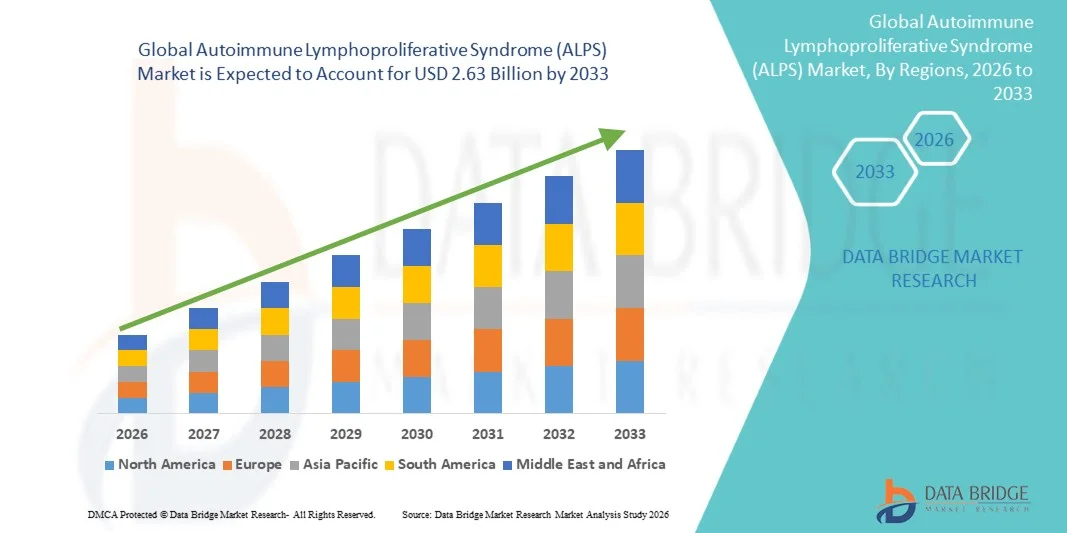
- The global Autoimmune Lymphoproliferative Syndrome (ALPS) market size was valued at USD 1.33 billion in 2025 and is expected to reach USD 2.63 billion by 2033, at a CAGR of 8.9% during the forecast period
- The market growth is largely influenced by the increasing focus on rare disease diagnosis, immunological disorder research, and advancements in targeted immunotherapies, which are improving clinical understanding and detection of ALPS cases globally
- Furthermore, rising adoption of precision medicine approaches, expanded genetic testing capabilities, and growing awareness of primary immune dysregulation disorders is supporting early diagnosis and better disease management, thereby gradually contributing to market development
Autoimmune Lymphoproliferative Syndrome (ALPS) Market Analysis
- Autoimmune Lymphoproliferative Syndrome (ALPS), a rare genetic immune disorder characterized by defective lymphocyte apoptosis leading to chronic lymphoproliferation and autoimmune complications, is increasingly gaining clinical attention due to advancements in rare disease diagnostics and expanding access to genetic and immunological testing across global healthcare systems
- The market growth is primarily driven by rising adoption of advanced diagnostic techniques such as lymphocyte apoptosis assays, genetic sequencing, and lymph node pathology evaluation, which are improving early detection rates and enabling more accurate disease classification and management strategies
- North America is expected to dominated the ALPS market accounting for the largest share of 45.2% in 2025, due to strong healthcare infrastructure, high penetration of rare disease testing, and active clinical research programs
- Asia-Pacific is expected to be the fastest growing region in the ALPS market during the forecast period, driven by increasing healthcare expenditure, improving diagnostic capabilities, and expanding access to genetic testing
- The defective lymphocyte apoptosis segment dominated the ALPS market, accounting for the largest share of 60.3%, as it represents the fundamental pathological mechanism of the disease and remains the primary focus of diagnostic confirmation, clinical research, and targeted therapeutic development strategies
Report Scope and Autoimmune Lymphoproliferative Syndrome (ALPS) Market Segmentation
|
Attributes |
Autoimmune Lymphoproliferative Syndrome (ALPS) Key Market Insights |
|
Segments Covered |
|
|
Countries Covered |
North America
Europe
Asia-Pacific
Middle East and Africa
South America
|
|
Key Market Players |
|
|
Market Opportunities |
|
|
Value Added Data Infosets |
In addition to the insights on market scenarios such as market value, growth rate, segmentation, geographical coverage, and major players, the market reports curated by the Data Bridge Market Research also include in-depth expert analysis, patient epidemiology, pipeline analysis, pricing analysis, and regulatory framework |
Autoimmune Lymphoproliferative Syndrome (ALPS) Market Trends
“Advancing Precision Diagnosis Through Genomic and Immunological Profiling”
- A significant and emerging trend in the global Autoimmune Lymphoproliferative Syndrome (ALPS) market is the increasing reliance on advanced genomic sequencing and immune profiling techniques, enabling more precise identification of genetic mutations responsible for defective lymphocyte apoptosis and improving diagnostic accuracy in rare immune disorders
- For instance, whole-exome sequencing and next-generation immunological panels are being increasingly used in clinical laboratories to detect FAS gene mutations associated with ALPS, supporting earlier and more definitive diagnosis compared to traditional clinical evaluation methods
- The integration of advanced molecular diagnostics with bioinformatics tools is enabling clinicians to better stratify ALPS patients based on mutation type and disease severity, thereby improving personalized treatment planning and long-term disease management outcomes
- Furthermore, the expansion of rare disease registries and collaborative research networks is facilitating centralized data sharing, which is helping researchers identify disease patterns and improve understanding of ALPS progression and therapeutic response variability
- The increasing exploration of targeted immunotherapies, including pathway-specific biologics aimed at immune regulation, is further expanding treatment innovation pipelines for ALPS management in specialized clinical settings
- The growing use of artificial intelligence-driven diagnostic support systems in immunology is enhancing early recognition of rare autoimmune syndromes such as ALPS, reducing diagnostic delays and improving clinical decision-making accuracy
Autoimmune Lymphoproliferative Syndrome (ALPS) Market Dynamics
Driver
“Rising Need Driven by Expansion of Rare Disease Diagnostics and Targeted Immunotherapy Development”
- The increasing recognition of rare immune dysregulation disorders, coupled with expanding access to genetic testing and immunological diagnostics, is a significant driver for the growth of the global ALPS market
- For instance, in April 2025, several clinical research institutes expanded rare disease screening programs integrating advanced lymphocyte apoptosis assays to improve early detection of ALPS and related autoimmune lymphoproliferative conditions
- As healthcare providers become more aware of misdiagnosed chronic lymphoproliferation cases, ALPS testing is increasingly being included in differential diagnosis workflows, improving identification rates and clinical intervention opportunities
- Furthermore, ongoing development of targeted immunomodulatory therapies and biologics aimed at regulating abnormal lymphocyte survival pathways is accelerating research investment in ALPS treatment approaches
- The growing adoption of precision medicine and personalized immunotherapy strategies is further supporting demand for specialized diagnostic and therapeutic solutions for ALPS across major healthcare systems
- Increasing collaborations between academic research institutions and biotech companies are accelerating clinical trials focused on immune pathway modulation, further strengthening the ALPS therapeutic pipeline
Restraint/Challenge
“Limited Disease Awareness and High Complexity in Diagnostic Confirmation”
- Limited awareness among general healthcare providers regarding Autoimmune Lymphoproliferative Syndrome and its overlapping symptoms with other autoimmune or hematological disorders remains a major challenge restricting timely diagnosis and treatment initiation
- For instance, many ALPS cases are initially misdiagnosed as chronic lymphadenopathy or other immune disorders, leading to delays in genetic testing and appropriate clinical intervention
- The complexity and high cost of confirmatory diagnostic procedures, including genetic sequencing and functional apoptosis assays, further restrict widespread adoption, particularly in resource-limited healthcare settings
- Additionally, the rarity of the disease results in limited clinical trial data and a small patient pool, making it difficult for pharmaceutical companies to develop and commercialize targeted therapies at scale
- The lack of standardized global diagnostic guidelines for ALPS further contributes to inconsistent disease identification and reporting across different healthcare systems
- Overcoming these challenges through increased physician education, expanded rare disease screening programs, and improved affordability of advanced genetic diagnostics will be essential for sustained ALPS market development
Autoimmune Lymphoproliferative Syndrome (ALPS) Market Scope
The market is segmented on the basis of diagnosis and distribution channel.
- By Diagnosis
On the basis of diagnosis, the ALPS market is segmented into defective lymphocyte apoptosis, lymph node pathology, and others. The defective lymphocyte apoptosis segment dominated the market with the largest share of 60.3% in 2025, driven by its role as the primary biological mechanism underlying ALPS pathogenesis. This segment is widely used in confirmatory diagnostic workflows as it directly identifies functional abnormalities in programmed cell death pathways, particularly involving FAS gene mutations. Clinical laboratories and specialized immunology centers increasingly rely on apoptosis-based assays for early and accurate disease identification. The segment also benefits from growing adoption of advanced flow cytometry techniques and molecular diagnostics, which improve sensitivity and diagnostic precision
The lymph node pathology segment is expected to witness the fastest growth rate from 2026 to 2033, driven by increasing use of histopathological evaluation in patients presenting with unexplained lymphadenopathy. This diagnostic approach is gaining traction as it helps differentiate ALPS from lymphoma and other lymphoproliferative disorders with overlapping clinical features. Rising availability of minimally invasive biopsy techniques and improved immunohistochemistry tools is enhancing diagnostic accuracy and adoption rates. Pathology labs are increasingly integrating molecular markers with traditional histology, improving disease characterization. Furthermore, growing referrals from oncology and immunology departments for lymph node evaluation is supporting segment expansion. The increasing need for differential diagnosis in complex immune disorders is further accelerating demand for lymph node pathology-based testing.
- By Distribution Channel
On the basis of distribution channel, the ALPS market is segmented into hospital pharmacy, retail pharmacy, online pharmacies, and others. The hospital pharmacy segment dominated the market with the largest share in 2025, driven by the centralized nature of ALPS diagnosis and treatment within hospital and specialty care settings. Since ALPS is a rare and complex disorder, patients are typically diagnosed and managed in tertiary care hospitals where immunology and hematology departments are available. Hospital pharmacies ensure immediate access to immunosuppressants, corticosteroids, and supportive therapies used in ALPS management. The segment also benefits from strong integration with diagnostic laboratories and inpatient care services, enabling coordinated treatment planning.
The online pharmacies segment is expected to witness the fastest growth rate from 2026 to 2033, driven by increasing digitalization of healthcare and rising adoption of e-pharmacy platforms for chronic disease medication access. Although ALPS is a rare disease, long-term management often requires repeated prescriptions, making online channels increasingly attractive for patients and caregivers. Improved regulatory frameworks and expansion of telemedicine services are supporting online prescription fulfillment. Additionally, growing convenience, home delivery services, and improved patient adherence tools are boosting adoption. The rising penetration of digital health ecosystems in developed and emerging markets is further accelerating this segment’s growth.
Autoimmune Lymphoproliferative Syndrome (ALPS) Market Regional Analysis
- North America is expected to dominated the ALPS market accounting for the largest share of 45.2% in 2025, due to strong healthcare infrastructure, high penetration of rare disease testing, and active clinical research programs
- Healthcare systems in the region widely utilize next-generation sequencing and advanced lymphocyte apoptosis assays, enabling early and accurate identification of ALPS cases and supporting timely disease management and treatment initiation
- This dominance is further supported by well-established rare disease research funding, presence of leading academic medical centers, and strong collaboration between biotechnology companies and clinical institutions, establishing North America as a key hub for ALPS diagnosis and therapeutic development
U.S. Autoimmune Lymphoproliferative Syndrome (ALPS) Market Insight
The U.S. ALPS market captured the largest revenue share in North America in 2025, driven by advanced rare disease diagnostic infrastructure and strong adoption of genetic sequencing technologies. Patients and clinicians increasingly rely on next-generation sequencing, lymphocyte apoptosis assays, and specialized immunology centers for early and accurate disease identification. The presence of leading academic hospitals, strong clinical research funding, and active rare disease registries further supports market dominance. Moreover, ongoing development of targeted immunotherapies and precision medicine approaches is significantly contributing to market expansion.
Europe Autoimmune Lymphoproliferative Syndrome (ALPS) Market Insight
The Europe ALPS market is projected to expand at a substantial CAGR throughout the forecast period, primarily driven by structured rare disease frameworks and increasing integration of molecular diagnostic technologies in clinical practice. The rising availability of genetic testing and improved access to immunology specialists are enhancing early disease detection across the region. European healthcare systems are also increasingly focused on standardized rare disease management protocols. Furthermore, growing collaboration between research institutions and public health organizations is supporting better understanding and diagnosis of ALPS.
U.K. Autoimmune Lymphoproliferative Syndrome (ALPS) Market Insight
The U.K. ALPS market is anticipated to grow at a noteworthy CAGR during the forecast period, driven by strong rare disease awareness and advanced diagnostic capabilities within the National Health Service framework. Increasing adoption of genomic testing and improved referral systems for immunology evaluation are supporting early identification of ALPS cases. Additionally, rising investment in rare disease research and expanding access to specialized treatment centers are strengthening market growth. The country’s focus on precision medicine is further enhancing diagnostic accuracy and patient outcomes.
Germany Autoimmune Lymphoproliferative Syndrome (ALPS) Market Insight
The Germany ALPS market is expected to expand at a considerable CAGR during the forecast period, fueled by strong healthcare infrastructure and growing emphasis on digital and molecular diagnostics. Increasing awareness of immune dysregulation disorders is encouraging earlier diagnostic intervention in suspected cases. Germany’s advanced laboratory systems and focus on high-quality medical research are supporting improved disease detection rates. Moreover, integration of genetic testing with clinical immunology services is enhancing diagnostic efficiency across healthcare institutions.
Asia-Pacific Autoimmune Lymphoproliferative Syndrome (ALPS) Market Insight
The Asia-Pacific ALPS market is poised to grow at the fastest CAGR during the forecast period, driven by improving healthcare infrastructure, rising awareness of rare genetic disorders, and expanding access to advanced diagnostic technologies. Increasing adoption of genomic sequencing and immunological testing is supporting earlier and more accurate diagnosis across the region. Government initiatives promoting healthcare modernization and rare disease awareness are further accelerating market growth. Additionally, growing investments in precision medicine are strengthening regional diagnostic capabilities.
Japan Autoimmune Lymphoproliferative Syndrome (ALPS) Market Insight
The Japan ALPS market is gaining momentum due to advanced healthcare systems, strong focus on precision medicine, and high adoption of genetic diagnostics. The country’s aging population and increasing incidence of complex immune disorders are driving demand for early and accurate disease identification. Integration of advanced molecular diagnostics with immunology research is improving clinical understanding of ALPS. Furthermore, strong technological infrastructure supports efficient disease management and monitoring.
India Autoimmune Lymphoproliferative Syndrome (ALPS) Market Insight
The India ALPS market accounted for the largest share in Asia-Pacific in 2025, attributed to expanding healthcare access, growing awareness of rare diseases, and increasing availability of genetic testing services. Rising adoption of advanced diagnostic tools in tertiary care hospitals and specialty laboratories is improving detection rates of immune dysregulation disorders. The growing presence of private diagnostic chains is further supporting market expansion. Additionally, government initiatives focused on healthcare modernization and rare disease awareness are strengthening overall market growth.
Autoimmune Lymphoproliferative Syndrome (ALPS) Market Share
The Autoimmune Lymphoproliferative Syndrome (ALPS) industry is primarily led by well-established companies, including:
- Merck & Co., Inc. (U.S.)
- F. Hoffmann-La Roche Ltd (Switzerland)
- Novartis AG (Switzerland)
- Bristol-Myers Squibb Company (U.S.)
- Pfizer Inc. (U.S.)
- Sanofi (France)
- AstraZeneca (U.K.)
- AbbVie Inc. (U.S.)
- Takeda Pharmaceutical Company Limited (Japan)
- Amgen Inc. (U.S.)
- Gilead Sciences, Inc. (U.S.)
- Regeneron Pharmaceuticals, Inc. (U.S.)
- Biogen Inc. (U.S.)
- Horizon Therapeutics plc (Ireland)
- Kyowa Kirin Co., Ltd. (Japan)
- BioMarin Pharmaceutical Inc. (U.S.)
- Vertex Pharmaceuticals Incorporated (U.S.)
- Illumina, Inc. (U.S.)
- QIAGEN (Netherlands)
What are the Recent Developments in Global Autoimmune Lymphoproliferative Syndrome (ALPS) Market?
- In October 2025, clinical case series highlighted ongoing diagnostic challenges in differentiating ALPS from other immune dysregulation disorders (ALPID spectrum). The study emphasized that ALPS is often misdiagnosed due to overlapping symptoms with other lymphoproliferative and autoimmune diseases, delaying proper treatment
- In October 2025, research demonstrated lipid nanoparticle-based FAS gene therapy as a potential treatment approach for ALPS. Preclinical findings showed that restoring FAS signaling using gene delivery systems can suppress abnormal lymphocyte accumulation.
- In July 2025, Institut Imagine (France) identified new FADD gene mutations linked to ALPS-such as disease, expanding the known genetic landscape of autoimmune lymphoproliferative disorders. Researchers reported that FADD mutations can trigger ALPS symptoms even in patients without classical FAS mutations, improving diagnostic understanding of atypical ALPS cases
- In July 2025, a clinical research study reported detailed functional and molecular characterization of ALPS patients carrying pathogenic FAS gene variants, strengthening genotype–phenotype correlation in the disease
- In January 2023, studies highlighted expanding next-generation sequencing (NGS) use for identifying non-FAS gene mutations in ALPS diagnosis. Research showed that increasing application of NGS is uncovering mutations in genes such as CASP10 and FASLG, helping classify previously undiagnosed “ALPS-like” patients more accurately
SKU-
Get online access to the report on the World's First Market Intelligence Cloud

- Interactive Data Analysis Dashboard
- Company Analysis Dashboard for high growth potential opportunities
- Research Analyst Access for customization & queries
- Competitor Analysis with Interactive dashboard
- Latest News, Updates & Trend analysis
- Harness the Power of Benchmark Analysis for Comprehensive Competitor Tracking
Research Methodology
Data collection and base year analysis are done using data collection modules with large sample sizes. The stage includes obtaining market information or related data through various sources and strategies. It includes examining and planning all the data acquired from the past in advance. It likewise envelops the examination of information inconsistencies seen across different information sources. The market data is analysed and estimated using market statistical and coherent models. Also, market share analysis and key trend analysis are the major success factors in the market report. To know more, please request an analyst call or drop down your inquiry.
The key research methodology used by DBMR research team is data triangulation which involves data mining, analysis of the impact of data variables on the market and primary (industry expert) validation. Data models include Vendor Positioning Grid, Market Time Line Analysis, Market Overview and Guide, Company Positioning Grid, Patent Analysis, Pricing Analysis, Company Market Share Analysis, Standards of Measurement, Global versus Regional and Vendor Share Analysis. To know more about the research methodology, drop in an inquiry to speak to our industry experts.
Customization Available
Data Bridge Market Research is a leader in advanced formative research. We take pride in servicing our existing and new customers with data and analysis that match and suits their goal. The report can be customized to include price trend analysis of target brands understanding the market for additional countries (ask for the list of countries), clinical trial results data, literature review, refurbished market and product base analysis. Market analysis of target competitors can be analyzed from technology-based analysis to market portfolio strategies. We can add as many competitors that you require data about in the format and data style you are looking for. Our team of analysts can also provide you data in crude raw excel files pivot tables (Fact book) or can assist you in creating presentations from the data sets available in the report.