


Global Bath Mats Market
Market Size in USD Million
CAGR :
% 
 USD
139.28 Million
USD
169.70 Million
2025
2033
USD
139.28 Million
USD
169.70 Million
2025
2033
 Forecast Period Forecast Period |
2026 –2033 |
 Market Size (Base Year) Market Size (Base Year) |
USD 139.28 Million |
 Market Size (Forecast Year) Market Size (Forecast Year) |
USD 169.70 Million |
 CAGR CAGR |
% |
| Major Markets Players |
|
Bath Mats Market Size
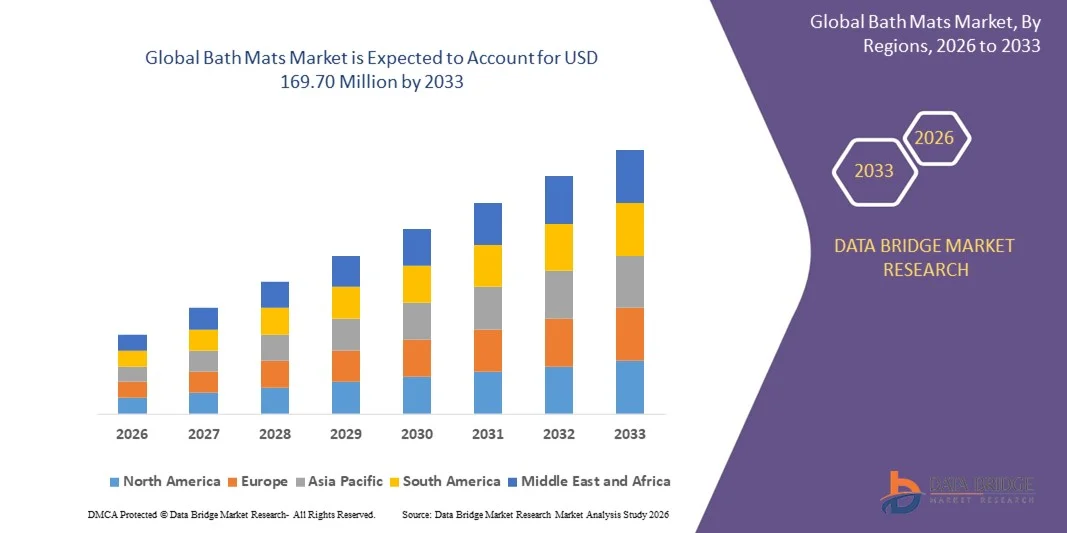
- The global bath mats market size was valued at USD 139.28 million in 2025 and is expected to reach USD 169.70 million by 2033, at a CAGR of 2.5% during the forecast period
- The market growth is largely fueled by increasing consumer awareness of hygiene, safety, and comfort in bathrooms, driving higher adoption of high-quality, absorbent, and anti-slip bath mats in residential and commercial settings
- Furthermore, rising demand for aesthetically appealing, durable, and eco-friendly bath mats is establishing them as essential home accessories, particularly in households, hotels, and hospitality spaces. These converging factors are accelerating the adoption of premium and designer bath mats, thereby significantly boosting the industry’s growth
Bath Mats Market Analysis
- Bath mats are household and commercial accessories designed to provide comfort, absorb moisture, and prevent slips and falls in bathrooms. They are available in a variety of materials such as cotton, bamboo, chenille, polyester, and nylon, and often feature anti-slip backing and machine-washable designs for enhanced usability
- The escalating demand for bath mats is primarily fueled by growing consumer preference for safe, comfortable, and stylish bathroom solutions, increasing hotel and hospitality investments, and the rising trend of home renovations and interior décor enhancements
- North America dominated bath mats market with a share of 40.3% in 2025, due to increasing consumer focus on home décor, comfort, and hygiene, as well as rising adoption of premium and eco-friendly bath accessories
- Asia-Pacific is expected to be the fastest growing region in the bath mats market during the forecast period due to rising disposable incomes, urbanization, and modernization of homes in countries such as China, Japan, and India
- Cotton segment dominated the market with a market share of 41.8% in 2025, due to its high absorbency, softness, and durability, making it a preferred choice for households. Cotton bath mats are easy to wash and maintain, which further enhances their adoption among consumers seeking practical yet comfortable bathroom accessories. The natural fibers of cotton also provide better grip and prevent slipping, adding to the safety features valued by families
Report Scope and Bath Mats Market Segmentation
|
Attributes |
Bath Mats Key Market Insights |
|
Segments Covered |
|
|
Countries Covered |
North America
Europe
Asia-Pacific
Middle East and Africa
South America
|
|
Key Market Players |
|
|
Market Opportunities |
|
|
Value Added Data Infosets |
In addition to the insights on market scenarios such as market value, growth rate, segmentation, geographical coverage, and major players, the market reports curated by the Data Bridge Market Research also include in-depth expert analysis, pricing analysis, brand share analysis, consumer survey, demography analysis, supply chain analysis, value chain analysis, raw material/consumables overview, vendor selection criteria, PESTLE Analysis, Porter Analysis, and regulatory framework. |
Bath Mats Market Trends
Rising Consumer Preference for Eco-Friendly and Sustainable Bath Mats
- A notable trend in the bath mats market is the increasing consumer shift toward eco-friendly and sustainable products, driven by heightened awareness of environmental impact and sustainable living practices. Consumers are seeking mats made from organic cotton, bamboo, or recycled materials that reduce carbon footprint and promote responsible consumption
- For instance, companies such as The Rug Company and IKEA have introduced sustainable bath mats made from recycled textiles and organic fibers, catering to environmentally conscious buyers. These initiatives are enhancing brand appeal and encouraging wider adoption of sustainable home products
- There is growing demand for anti-microbial and quick-dry bath mats that combine hygiene and environmental sustainability. Consumers are prioritizing mats that are both safe for bathroom use and manufactured with minimal ecological impact
- The market is witnessing rising popularity of customizable and designer eco-friendly bath mats that align with modern interior trends. This trend reflects consumer preference for products that are functional, stylish, and sustainably sourced
- Retailers and e-commerce platforms are expanding their sustainable product portfolios, offering consumers convenient access to certified eco-friendly bath mats. This availability is reinforcing consumer confidence in purchasing environmentally responsible home essentials
- The increasing adoption of sustainable living practices and government initiatives promoting eco-friendly products continue to drive market growth. This trend positions eco-conscious bath mats as a key segment within the broader home textile market
Bath Mats Market Dynamics
Driver
Increasing Focus on Bathroom Hygiene and Safety
- The bath mats market is being driven by growing consumer focus on hygiene and safety in bathrooms, where slip resistance and quick-drying properties are critical. Mats that prevent slips and promote cleanliness are becoming essential home accessories
- For instance, companies such as Gorilla Grip and Yimobra offer anti-slip, fast-drying bath mats that enhance bathroom safety and hygiene. Their products are gaining traction among households and hospitality sectors aiming to reduce accident risks
- Rising awareness about mold, bacteria, and moisture accumulation in bathrooms is encouraging adoption of mats that are easy to clean and maintain. Consumers are actively seeking solutions that minimize health risks while maintaining comfort
- The increasing penetration of premium and hotel-style bath mats in residential spaces is driving demand for products that combine hygiene, comfort, and aesthetic appeal. This trend emphasizes the value of functional yet visually appealing mats
- The emphasis on family-friendly and child-safe bathroom products is reinforcing the need for bath mats with high absorbency and anti-slip properties. This driver is shaping product innovation and influencing purchase decisions across households
Restraint/Challenge
Intense Competition from Low-Cost and Unbranded Products
- The bath mats market faces challenges due to intense competition from low-cost, unbranded products that are widely available through e-commerce and discount retailers. These products attract price-sensitive consumers, limiting growth for premium brands
- For instance, AmazonBasics and various local suppliers offer budget-friendly bath mats that compete with branded offerings in price-sensitive markets. Their wide availability and low pricing pose challenges for established companies seeking differentiation
- The presence of inexpensive alternatives reduces profit margins for manufacturers of high-quality or eco-friendly mats. This scenario compels brands to invest in marketing and product differentiation to maintain competitiveness
- Rapidly changing consumer preferences and seasonal trends create volatility in demand, affecting the ability of branded companies to maintain consistent sales. Market players must continuously innovate to sustain consumer interest
- The ongoing need to balance affordability with quality, sustainability, and safety features remains a critical challenge. Companies are required to optimize production and supply chain strategies while maintaining product standards to stay competitive
Bath Mats Market Scope
The market is segmented on the basis of type and application.
- By Type
On the basis of type, the bath mats market is segmented into cotton, bamboo, chenille, polyester, and nylon. The cotton segment dominated the largest market revenue share of 41.8% in 2025, driven by its high absorbency, softness, and durability, making it a preferred choice for households. Cotton bath mats are easy to wash and maintain, which further enhances their adoption among consumers seeking practical yet comfortable bathroom accessories. The natural fibers of cotton also provide better grip and prevent slipping, adding to the safety features valued by families. Furthermore, cotton bath mats are widely available in various colors, sizes, and designs, complementing diverse bathroom décors. Their compatibility with eco-friendly and sustainable practices also supports continued demand across residential and hospitality sectors.
The bamboo segment is anticipated to witness the fastest growth rate of 19.5% from 2026 to 2033, fueled by rising consumer preference for sustainable and eco-friendly bathroom products. Bamboo bath mats offer natural antimicrobial properties, moisture resistance, and durability, making them ideal for humid environments. For instance, companies such as Caroma and HomeTech are increasingly launching bamboo bath mats that cater to environmentally conscious consumers and premium hotel applications. The modern aesthetic appeal of bamboo mats also attracts buyers looking for a blend of style and functionality. In addition, bamboo mats are lightweight, easy to clean, and resistant to mold and mildew, supporting their growing adoption in both household and commercial spaces.
- By Application
On the basis of application, the bath mats market is segmented into household, hotel, salon, and other applications. The household segment dominated the largest market revenue share in 2025, driven by consistent demand for comfort, hygiene, and décor enhancement in domestic bathrooms. Consumers prioritize bath mats that offer softness, absorbency, and anti-slip features, making household use a key driver for market growth. Household bath mats also see frequent replacement and upgrade cycles, supporting continuous market revenue. Brands often target household buyers with a wide range of designs, colors, and textures that match interior décor trends, further reinforcing the dominance of this segment. The segment benefits from rising disposable income and increased consumer awareness about bathroom safety and hygiene, driving sustained adoption across urban and semi-urban areas.
The hotel segment is expected to witness the fastest CAGR from 2026 to 2033, driven by growing demand from hospitality establishments for premium and durable bath mats. For instance, Marriott International and Hilton Hotels are increasingly sourcing high-quality chenille and cotton bath mats to enhance guest experience and maintain hygiene standards. Hotels prefer mats that combine luxury, comfort, and easy maintenance, boosting adoption of branded and specialized products. The rising number of hotels and boutique accommodations worldwide supports strong demand for bath mats in commercial applications. In addition, hotels often replace bath mats frequently to maintain cleanliness and aesthetics, contributing to the segment’s accelerated growth.
Bath Mats Market Regional Analysis
- North America dominated the bath mats market with the largest revenue share of 40.3% in 2025, driven by increasing consumer focus on home décor, comfort, and hygiene, as well as rising adoption of premium and eco-friendly bath accessories
- Consumers in the region highly value the softness, absorbency, and anti-slip features offered by bath mats, along with designs that complement modern bathroom interiors
- This widespread adoption is further supported by high disposable incomes, growing urbanization, and the increasing trend of remodeling and upgrading bathrooms, establishing bath mats as a staple in residential and hospitality spaces
U.S. Bath Mats Market Insight
The U.S. bath mats market captured the largest revenue share in 2025 within North America, fueled by rising consumer awareness of hygiene and home décor aesthetics. Consumers are increasingly prioritizing high-quality, durable, and easy-to-maintain bath mats for everyday use. The growing preference for eco-friendly materials, such as cotton and bamboo, alongside innovations in non-slip and quick-drying designs, further propels the market. Moreover, strong e-commerce penetration and demand for premium hotel-style bathroom products are significantly contributing to market expansion.
Europe Bath Mats Market Insight
The Europe bath mats market is projected to expand at a substantial CAGR throughout the forecast period, driven by rising disposable incomes and increasing consumer preference for luxury and designer home accessories. The region’s focus on bathroom safety and hygiene, coupled with the trend of home renovations, is fostering adoption. European consumers are drawn to bath mats that offer both comfort and aesthetic appeal. The market is experiencing growth across residential, hospitality, and spa applications, with an emphasis on sustainable and durable materials.
U.K. Bath Mats Market Insight
The U.K. bath mats market is anticipated to grow at a noteworthy CAGR during the forecast period, driven by increasing home renovations and awareness of hygiene and safety in bathrooms. Consumers are increasingly opting for soft, absorbent, and non-slip bath mats to enhance comfort and prevent accidents. The U.K.’s mature retail and e-commerce channels, along with a growing preference for premium and designer bath accessories, are expected to continue to stimulate market growth.
Germany Bath Mats Market Insight
The Germany bath mats market is expected to expand at a considerable CAGR during the forecast period, fueled by growing consumer preference for high-quality, eco-friendly, and durable bathroom products. Germany’s well-developed retail and home décor infrastructure promotes the adoption of designer and functional bath mats, particularly in urban households. The trend of combining aesthetics with hygiene and safety features is driving demand in both residential and commercial applications.
Asia-Pacific Bath Mats Market Insight
The Asia-Pacific bath mats market is poised to grow at the fastest CAGR of 22% during the forecast period of 2026 to 2033, driven by rising disposable incomes, urbanization, and modernization of homes in countries such as China, Japan, and India. The region’s growing awareness of hygiene, comfort, and home décor trends is boosting bath mat adoption. In addition, increasing penetration of organized retail, e-commerce platforms, and premium hospitality developments is expanding the consumer base.
Japan Bath Mats Market Insight
The Japan bath mats market is gaining momentum due to high consumer preference for hygiene, comfort, and compact bathroom solutions. Japanese consumers value mats that offer quick-drying, anti-slip, and durable features, suitable for smaller living spaces. The trend of incorporating modern and minimalistic designs into bathroom décor, along with the adoption of premium materials such as cotton and bamboo, is driving growth in both residential and commercial sectors.
China Bath Mats Market Insight
The China bath mats market accounted for the largest market revenue share in Asia Pacific in 2025, attributed to rapid urbanization, rising middle-class population, and increasing awareness of bathroom hygiene and décor. China is witnessing strong demand for soft, absorbent, and anti-slip mats in residential, hotel, and rental properties. The expansion of e-commerce channels and availability of affordable, high-quality products, along with domestic manufacturers focusing on innovative designs, are key factors propelling market growth.
Bath Mats Market Share
The bath mats industry is primarily led by well-established companies, including:
- TOFTBO (U.S.)
- Chesapeake Merchandising (U.S.)
- Welspun (India)
- Trident Group (India)
- Clara Clark (U.S.)
- InterDesign (U.S.)
- Bentley Mills, Inc. (U.S.)
- MOHAWK INDUSTRIES, INC. (U.S.)
- Beaulieu Group LLC (U.S.)
- Royalty Carpet Mills Inc. (U.S.)
- Mannington Mills, Inc. (U.S.)
- Shaw Industries Group, Inc. (U.S.)
- Engineered Floors LLC (U.S.)
- Dixie Group, Inc. (U.S.)
- AstroTurf, LLC (U.S.)
- ABBEY CARPET & FLOOR (U.S.)
- Creative Bath Products, Inc. (U.S.)
- Utopia (U.S.)
- Epica (U.S.)
- Venus Group (India)
- Huai'an QiQi Textile (China)
- Townhouse Rugs (U.S.)
- Lowe's (U.S.)
Latest Developments in Global Bath Mats Market
- In November 2024, Brooklinen announced its first-ever fashion collaboration by partnering with clothing brand Kule to launch a limited-edition collection of loungewear and bath linens. The collaboration introduced playful, vibrant designs, including a special edition bath mat featuring Kule’s signature striped motifs and smiley face details. This strategic initiative strengthened Brooklinen’s market position by blending premium home textile expertise with a fashion-forward aesthetic, appealing to style-conscious consumers and expanding the brand’s presence in the competitive bath accessories segment
- In August 2024, H&M Home released its fall collection, emphasizing a clean, sophisticated aesthetic centered on stylish comfort and modern simplicity. The collection included new bath mats such as fluffy square designs and striped mats in neutral tones such as beige, white, and black. By offering high-quality, design-led, yet affordable bath products, H&M Home reinforced its accessibility in the global home décor market and enhanced consumer adoption of aesthetically appealing and functional bathroom accessories
- In April 2024, Yide Plastics unveiled a new line of eco-friendly bath mats made entirely from 100% recycled materials. These mats were designed to retain durability, softness, and slip-resistance while promoting environmental responsibility. This launch positioned Yide Plastics as a leader in sustainable home accessories, driving consumer interest in eco-conscious bath mats and influencing the broader market shift toward environmentally friendly products
- In January 2024, Ruggable expanded its portfolio through a limited-edition collaboration with Pantone to celebrate the 2024 Color of the Year, "Peach Fuzz." The curated range included stain-resistant, machine-washable bath mats designed to infuse interiors with warmth and comfort. This initiative strengthened Ruggable’s market impact by merging trend-driven aesthetics with practical, high-performance features, appealing to consumers seeking stylish yet functional bathroom solutions
- In December 2023, IKEA launched its “Home for All” winter collection, which introduced a variety of affordable, anti-slip bath mats in vibrant and seasonal color palettes. The launch targeted both residential and hospitality segments, enhancing the accessibility of functional and design-conscious bath products. By focusing on affordability, durability, and easy maintenance, IKEA expanded its consumer base, reinforcing its position as a key player in the mass-market bath mats sector
SKU-
Get online access to the report on the World's First Market Intelligence Cloud

- Interactive Data Analysis Dashboard
- Company Analysis Dashboard for high growth potential opportunities
- Research Analyst Access for customization & queries
- Competitor Analysis with Interactive dashboard
- Latest News, Updates & Trend analysis
- Harness the Power of Benchmark Analysis for Comprehensive Competitor Tracking
Research Methodology
Data collection and base year analysis are done using data collection modules with large sample sizes. The stage includes obtaining market information or related data through various sources and strategies. It includes examining and planning all the data acquired from the past in advance. It likewise envelops the examination of information inconsistencies seen across different information sources. The market data is analysed and estimated using market statistical and coherent models. Also, market share analysis and key trend analysis are the major success factors in the market report. To know more, please request an analyst call or drop down your inquiry.
The key research methodology used by DBMR research team is data triangulation which involves data mining, analysis of the impact of data variables on the market and primary (industry expert) validation. Data models include Vendor Positioning Grid, Market Time Line Analysis, Market Overview and Guide, Company Positioning Grid, Patent Analysis, Pricing Analysis, Company Market Share Analysis, Standards of Measurement, Global versus Regional and Vendor Share Analysis. To know more about the research methodology, drop in an inquiry to speak to our industry experts.
Customization Available
Data Bridge Market Research is a leader in advanced formative research. We take pride in servicing our existing and new customers with data and analysis that match and suits their goal. The report can be customized to include price trend analysis of target brands understanding the market for additional countries (ask for the list of countries), clinical trial results data, literature review, refurbished market and product base analysis. Market analysis of target competitors can be analyzed from technology-based analysis to market portfolio strategies. We can add as many competitors that you require data about in the format and data style you are looking for. Our team of analysts can also provide you data in crude raw excel files pivot tables (Fact book) or can assist you in creating presentations from the data sets available in the report.












