


Global Bioactive Wound Care Market
Market Size in USD Billion
CAGR :
% 
 USD
6.75 Billion
USD
11.51 Billion
2025
2033
USD
6.75 Billion
USD
11.51 Billion
2025
2033
 Forecast Period Forecast Period |
2026 –2033 |
 Market Size (Base Year) Market Size (Base Year) |
USD 6.75 Billion |
 Market Size (Forecast Year) Market Size (Forecast Year) |
USD 11.51 Billion |
 CAGR CAGR |
% |
| Major Markets Players |
|
Bioactive Wound Care Market Size
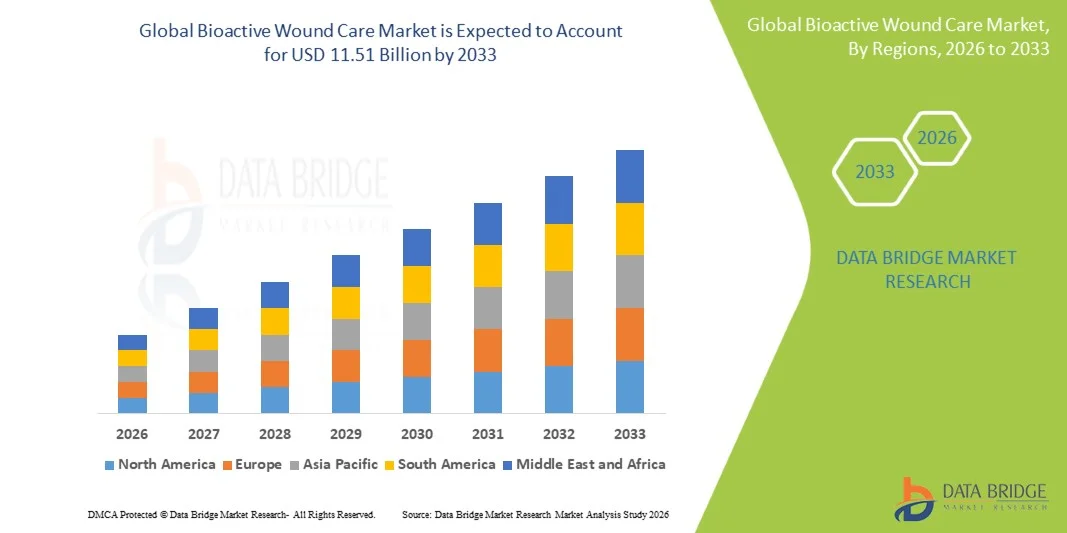
- The global bioactive wound care market size was valued at USD 6.75 billion in 2025and is expected to reach USD 11.51 billion by 2033, at a CAGR of 6.90% during the forecast period
- The market growth is primarily driven by the rising prevalence of chronic and complex wounds such as diabetic foot ulcers, pressure ulcers, and venous leg ulcers, along with increasing aging population globally, which is significantly boosting demand for advanced wound care solutions
- Furthermore, continuous advancements in bioactive materials including hydrocolloids, alginates, collagen-based dressings, and growth factor–enhanced products, combined with the shift toward faster healing, infection control, and cost-effective treatment approaches in both hospital and homecare settings, are accelerating the adoption of bioactive wound care products, thereby supporting strong market expansion
Bioactive Wound Care Market Analysis
- Bioactive wound care products, including moist wound care, active wound care, and antimicrobial wound care solutions, are increasingly integral to modern wound management due to their ability to maintain optimal healing environments, promote tissue regeneration, and prevent infection in acute and chronic wound cases across healthcare settings
- The rising prevalence of chronic wounds such as diabetic foot ulcers, pressure ulcers, and venous leg ulcers, along with a growing geriatric population and increasing incidence of diabetes and obesity worldwide, is primarily driving the demand for bioactive wound care solutions
- North America dominated the bioactive wound care market with a revenue share of 41.8% in 2025, supported by advanced healthcare infrastructure, high adoption of innovative wound care products, and strong clinical awareness, with the U.S. witnessing significant uptake in hospitals and long-term care facilities driven by advancements in advanced and regenerative wound care technologies
- Asia-Pacific is expected to be the fastest growing region in the bioactive wound care market during the forecast period due to improving healthcare access, rising healthcare expenditure, expanding diabetic population, and increasing awareness of advanced wound management practices
- The moist wound care segment dominated the bioactive wound care market with a market share of 46.5% in 2025, driven by its strong clinical preference for maintaining optimal hydration, accelerating healing rates, and reducing scarring compared to traditional dry wound care approaches
Report Scope and Bioactive Wound Care Market Segmentation
|
Attributes |
Bioactive Wound Care Key Market Insights |
|
Segments Covered |
|
|
Countries Covered |
North America · U.S. · Canada · Mexico Europe · Germany · France · U.K. · Netherlands · Switzerland · Belgium · Russia · Italy · Spain · Turkey · Rest of Europe Asia-Pacific · China · Japan · India · South Korea · Singapore · Malaysia · Australia · Thailand · Indonesia · Philippines · Rest of Asia-Pacific Middle East and Africa · Saudi Arabia · U.A.E. · South Africa · Egypt · Israel · Rest of Middle East and Africa South America · Brazil · Argentina · Rest of South America |
|
Key Market Players |
|
|
Market Opportunities |
· The increasing integration of bioactive wound care products with regenerative medicine · Expanding demand for advanced wound care in home healthcare and outpatient settings |
|
Value Added Data Infosets |
In addition to the insights on market scenarios such as market value, growth rate, segmentation, geographical coverage, and major players, the market reports curated by the Data Bridge Market Research also include in-depth expert analysis, patient epidemiology, pipeline analysis, pricing analysis, and regulatory framework |
Bioactive Wound Care Market Trends
“Growing Adoption of Advanced Moisture-Balancing and Regenerative Bioactive Technologies”
- A significant and accelerating trend in the global bioactive wound care market is the increasing adoption of advanced moist wound care, active wound care, and antimicrobial wound care solutions that support faster tissue regeneration, maintain optimal wound hydration, and reduce infection risk across chronic and acute wound management
- For instance, hydrocolloid and alginate-based dressings are increasingly being used in diabetic foot ulcer and pressure ulcer management to create a moist healing environment that accelerates epithelialization and reduces healing time in hospital and outpatient settings
- Advancements in bioactive materials such as collagen matrices, growth factor–based dressings, and skin-substitute technologies are improving cellular regeneration and enhancing healing outcomes in complex wounds that are resistant to conventional treatment approaches
- The integration of bioactive wound care with regenerative medicine and biologically active compounds is enabling more targeted healing responses, supporting faster recovery and reducing the likelihood of infection-related complications in surgical and traumatic wounds
- Growing use of antimicrobial bioactive dressings embedded with silver, iodine, and honey-based formulations is enhancing infection control efficiency, particularly in high-risk chronic wound cases with multidrug-resistant infections
- This shift toward high-performance, biologically active wound care systems is fundamentally transforming clinical treatment protocols, leading to wider adoption across hospitals, specialty clinics, and long-term care facilities globally
- The demand for bioactive wound care products that offer enhanced healing efficiency, infection control, and ease of application is growing rapidly across both developed and emerging healthcare markets as clinicians increasingly prioritize outcome-driven wound management solutions
Bioactive Wound Care Market Dynamics
Driver
“Rising Burden of Chronic Wounds and Expanding Aging Population Base”
- The increasing prevalence of chronic wounds such as diabetic foot ulcers, venous leg ulcers, pressure ulcers, and surgical wounds, combined with a rapidly aging global population, is a significant driver for the heightened demand for bioactive wound care products
- For instance, the rising incidence of diabetes and obesity has significantly increased the number of patients requiring long-term wound management solutions, thereby accelerating the adoption of advanced bioactive dressings in clinical practice
- As healthcare systems focus on reducing hospital stays and improving healing outcomes, bioactive wound care solutions offer superior benefits such as faster wound closure, infection prevention, and reduced risk of complications compared to traditional dressings
- Furthermore, the growing shift toward cost-effective outpatient and homecare treatment models is encouraging the use of easy-to-apply bioactive wound care products that support self-care and reduce healthcare burden
- Increasing government initiatives and healthcare programs focused on chronic wound management and diabetic care are further supporting the adoption of advanced wound care therapies across multiple regions
- Rising investment in wound care research and development activities by key manufacturers is accelerating innovation in bioactive materials and improving overall treatment efficacy in complex wound conditions
- The increasing clinical awareness of advanced wound healing technologies and the expanding availability of innovative bioactive products are further contributing to their adoption across hospitals, clinics, and long-term care facilities
- The rising focus on improving patient quality of life through faster recovery and reduced wound recurrence is strongly propelling the global bioactive wound care market growth
Restraint/Challenge
“High Product Costs and Limited Accessibility in Low-Resource Healthcare Setting”
- Concerns surrounding the high cost of advanced bioactive wound care products and limited reimbursement coverage in several healthcare systems pose a significant challenge to broader market penetration
- For instance, collagen-based and growth factor–enhanced wound dressings are often priced significantly higher than conventional wound care products, limiting their adoption in price-sensitive and low-income regions
- Additionally, lack of awareness and inadequate training among healthcare professionals in emerging economies restricts the effective utilization of advanced bioactive wound care solutions in clinical practice
- Supply chain constraints and uneven distribution of advanced wound care products further limit accessibility, particularly in rural healthcare settings where basic wound care remains dominant
- Regulatory approval complexities and stringent clinical validation requirements for advanced bioactive products can delay commercialization and slow down market entry for new innovations
- Dependence on skilled healthcare professionals for correct application of certain advanced wound care products can also restrict their adoption in homecare and self-care settings
- While technological advancements are improving product performance, the perceived premium pricing continues to act as a barrier for widespread adoption among smaller healthcare facilities and homecare users
- Overcoming these challenges through improved reimbursement policies, cost-effective product innovation, and wider clinical training programs will be essential for sustained market expansion
Bioactive Wound Care Market Scope
The market is segmented on the basis of product, wound type, and end user.
- By Product
On the basis of product, the bioactive wound care market is segmented into moist wound care, active wound care, and antimicrobial wound care. The moist wound care segment dominated the market with the largest market revenue share of 46.5% in 2025, driven by its strong clinical acceptance for maintaining an optimal moist environment that accelerates epithelialization and improves overall healing outcomes. It is widely preferred for managing chronic wounds such as ulcers and surgical wounds due to its ability to reduce scarring and support faster tissue regeneration. Hospitals and outpatient settings extensively use hydrocolloids, foams, and alginate-based dressings under this category. The segment also benefits from cost-effectiveness compared to advanced biologics and its broad applicability across multiple wound types. Increasing awareness among healthcare professionals regarding moisture-balanced healing further strengthens its dominance. Additionally, its ease of use and availability across both developed and emerging markets support its widespread adoption.
The antimicrobial wound care segment is anticipated to witness the fastest growth rate of 18.9% from 2026 to 2033, fueled by the rising burden of infected and non-healing wounds, particularly in diabetic and post-surgical patients. These products incorporate agents such as silver, iodine, and honey-based compounds that actively combat bacterial infections and reduce microbial load. The growing threat of antimicrobial resistance is further accelerating the demand for advanced infection-control dressings. Increasing hospital-acquired infection rates are also driving adoption in critical care environments. The segment is gaining traction in trauma and burn cases where infection prevention is crucial for survival and recovery. Continuous innovation in bioactive antimicrobial formulations is enhancing effectiveness and expanding clinical applications.
- By Wound Type
On the basis of wound type, the bioactive wound care market is segmented into surgical wounds, ulcers, gunshot wounds, traumatic wounds, and burns. The ulcers segment dominated the market with the largest market revenue share of 42.7% in 2025, driven by the high global prevalence of diabetic foot ulcers, venous leg ulcers, and pressure ulcers. These chronic wounds require long-term and advanced treatment, making bioactive wound care products essential for effective healing. The aging population and rising incidence of diabetes significantly contribute to segment dominance. Hospitals and long-term care facilities frequently rely on moist and active wound care solutions for ulcer management. The segment also benefits from repeated treatment cycles, increasing product consumption per patient. Strong clinical focus on preventing ulcer-related complications such as infections and amputations further supports its leadership.
The burns segment is anticipated to witness the fastest growth rate of 20.3% from 2026 to 2033, driven by increasing incidence of thermal, chemical, and electrical burn injuries worldwide. Bioactive wound care products are highly effective in burn management due to their ability to promote rapid tissue regeneration and maintain optimal wound hydration. Advanced dressings significantly reduce pain, infection risk, and scarring in burn patients. Rising cases of industrial accidents and household burn injuries are contributing to demand growth. Specialized burn care centers are increasingly adopting bioactive and antimicrobial dressings for improved recovery outcomes. Continuous advancements in skin-substitute and regenerative wound care technologies are further accelerating adoption in this segment.
- By End User
On the basis of end user, the bioactive wound care market is segmented into hospitals, trauma centers, armed forces, and pharmacy stores. The hospitals segment dominated the market with the largest market revenue share of 51.6% in 2025, driven by the high volume of surgical procedures, chronic wound cases, and emergency admissions requiring advanced wound care management. Hospitals are primary adopters of bioactive wound care products due to availability of skilled healthcare professionals and advanced treatment infrastructure. They extensively use moist, active, and antimicrobial wound care solutions for complex wound cases. Increasing hospital-based diabetic care programs further strengthen segment dominance. The presence of reimbursement support in hospital settings also promotes usage of advanced wound care products. Additionally, hospitals serve as key centers for adoption of innovative wound healing technologies.
The pharmacy stores segment is anticipated to witness the fastest growth rate of 19.4% from 2026 to 2033, driven by rising demand for over-the-counter advanced wound care products and increasing shift toward home-based treatment. Consumers are increasingly purchasing bioactive dressings directly from pharmacies for minor wounds, ulcers, and post-surgical care. Growing awareness of self-care and easy product availability is boosting retail penetration. Pharmacy channels also benefit from expanding distribution of advanced wound care brands targeting outpatient users. The rise in aging population preferring home treatment further supports segment growth. Additionally, digital pharmacy platforms and e-commerce expansion are making bioactive wound care products more accessible to end users.
Bioactive Wound Care Market Regional Analysis
- North America dominated the bioactive wound care market with a revenue share of 41.8% in 2025, supported by advanced healthcare infrastructure, high adoption of innovative wound care products, and strong clinical awareness
- Healthcare providers in the region highly value the clinical effectiveness, faster healing outcomes, and infection control benefits offered by bioactive wound care products such as moist, active, and antimicrobial dressings in complex wound management
- This widespread adoption is further supported by advanced healthcare infrastructure, strong reimbursement frameworks, high healthcare expenditure, and a technologically advanced clinical environment, establishing bioactive wound care as a preferred solution across hospitals, long-term care facilities, and outpatient centers
U.S. Bioactive Wound Care Market Insight
The U.S. bioactive wound care market captured the largest revenue share within North America in 2025, driven by the high burden of diabetes-related wounds, surgical procedures, and pressure injuries requiring advanced treatment solutions. Strong adoption of innovative moist, active, and antimicrobial wound care products is supported by well-established reimbursement frameworks and advanced hospital infrastructure. Increasing focus on reducing hospital stays and improving wound healing outcomes is further accelerating demand. Additionally, rapid integration of regenerative medicine, biologically active dressings, and digital wound monitoring solutions is strengthening market growth across acute care and long-term care settings.
Europe Bioactive Wound Care Market
The Europe bioactive wound care market is projected to expand at a substantial CAGR throughout the forecast period, primarily driven by the rising burden of chronic wounds and stringent healthcare quality standards across the region. Increasing focus on evidence-based wound management and growing adoption of advanced moist and antimicrobial wound care solutions are supporting market expansion in hospitals and specialty clinics. Additionally, rising geriatric population, increasing surgical procedures, and strong government healthcare support are accelerating the use of bioactive wound care products across both public and private healthcare systems.
U.K. Bioactive Wound Care Market
The U.K. bioactive wound care market is anticipated to grow at a noteworthy CAGR during the forecast period, driven by increasing cases of diabetes-related wounds and pressure ulcers among the aging population. Growing demand for advanced wound healing solutions in the National Health Service (NHS) and long-term care facilities is significantly supporting market growth. Furthermore, rising focus on reducing hospital stay duration and improving patient recovery outcomes is encouraging the adoption of moist and antimicrobial bioactive wound care products in clinical practice.
Germany Bioactive Wound Care Market
The Germany bioactive wound care market is expected to expand at a considerable CAGR during the forecast period, fueled by strong healthcare infrastructure and high awareness of advanced wound management solutions. Increasing prevalence of chronic diseases such as diabetes and vascular disorders is driving demand for effective ulcer and surgical wound treatment products. Moreover, Germany’s emphasis on medical innovation and quality-driven healthcare delivery is supporting the integration of advanced bioactive wound care technologies in hospitals and rehabilitation centers.
Asia-Pacific Bioactive Wound Care Market
The Asia-Pacific bioactive wound care market is poised to grow at the fastest CAGR of 19.6% during the forecast period of 2026 to 2033, driven by rising diabetic population, improving healthcare infrastructure, and increasing awareness of advanced wound care solutions. Growing government investments in healthcare modernization and expanding access to hospital and outpatient services are significantly boosting adoption of bioactive wound care products. Additionally, increasing medical tourism and rising availability of cost-effective wound care products are expanding market penetration across both urban and rural healthcare settings.
Japan Bioactive Wound Care Market
The Japan bioactive wound care market is gaining momentum due to its rapidly aging population and high incidence of chronic wound conditions requiring long-term care management. Strong emphasis on advanced healthcare technologies and high adoption of regenerative and moisture-balanced wound care solutions are driving market growth. Furthermore, integration of bioactive wound care with modern hospital systems and outpatient care facilities is improving treatment efficiency and supporting better patient outcomes.
India Bioactive Wound Care Market
The India bioactive wound care market accounted for the largest market revenue share in Asia Pacific in 2025, attributed to a large diabetic population, rapid urbanization, and improving access to healthcare services. Increasing awareness of advanced wound care products among healthcare professionals and patients is significantly boosting adoption in hospitals and clinics. Additionally, government initiatives supporting healthcare infrastructure development and the growing availability of affordable bioactive wound care solutions are further propelling market expansion across the country.
Bioactive Wound Care Market Share
The Bioactive Wound Care industry is primarily led by well-established companies, including:
- Smith & Nephew (U.K.)
- 3M (U.S.)
- ConvaTec Group PLC (U.K.)
- Coloplast A/S (Denmark)
- Mölnlycke Health Care AB (Sweden)
- B. Braun SE (Germany)
- Paul Hartmann AG (Germany)
- Medtronic (Ireland)
- Johnson & Johnson Services, Inc. (U.S.)
- Integra LifeSciences Holdings Corporation (U.S.)
- Organogenesis Holdings Inc. (U.S.)
- MiMedx Group, Inc. (U.S.)
- Medline Industries, LP (U.S.)
- Hollister Incorporated (U.S.)
- Urgo Medical (France)
- Covalon Technologies Ltd. (Canada)
- Axio Biosolutions Pvt. Ltd. (India)
- DermaRite Industries, LLC (U.S.)
- Advanced Medical Solutions Group plc (U.K.)
- Kerecis Ltd. (Iceland)
What are the Recent Developments in Global Bioactive Wound Care Market?
- In March 2025, Next-generation bioactive hydrogel wound dressings were developed with enhanced moisture retention and antimicrobial functionality. These dressings allow controlled release of therapeutic agents while maintaining an optimal moist environment for wound healing
- In September 2024, Sylke launched a new silk fibroin-based adhesive wound closure solution designed to enhance surgical wound healing and minimize skin irritation during recovery. The product leverages bioactive silk materials that support faster tissue regeneration and improved scar outcomes compared to conventional wound closure methods. It is positioned for use in post-operative care where reducing infection risk and improving patient comfort are critical
- In June 2024, Innovations in nanofiber-based and hydrogel bioactive wound dressings improved wound healing efficiency through enhanced oxygen permeability and moisture balance. These materials support faster cell migration and improved angiogenesis in chronic and traumatic wounds
- In November 2023, Researchers introduced bioactive wound dressings integrated with antimicrobial peptides and natural agents such as honey-based compounds for infection management. These dressings showed strong effectiveness against resistant bacterial strains including Staphylococcus aureus
- In July 2023, A novel collagen-based bioactive wound dressing was introduced featuring pH-responsive color-changing properties for real-time infection detection. The system enables clinicians to monitor wound infection status while simultaneously promoting tissue regeneration through collagen scaffolding. This dual-function approach enhances early intervention in chronic and non-healing wounds
SKU-
Get online access to the report on the World's First Market Intelligence Cloud

- Interactive Data Analysis Dashboard
- Company Analysis Dashboard for high growth potential opportunities
- Research Analyst Access for customization & queries
- Competitor Analysis with Interactive dashboard
- Latest News, Updates & Trend analysis
- Harness the Power of Benchmark Analysis for Comprehensive Competitor Tracking
Research Methodology
Data collection and base year analysis are done using data collection modules with large sample sizes. The stage includes obtaining market information or related data through various sources and strategies. It includes examining and planning all the data acquired from the past in advance. It likewise envelops the examination of information inconsistencies seen across different information sources. The market data is analysed and estimated using market statistical and coherent models. Also, market share analysis and key trend analysis are the major success factors in the market report. To know more, please request an analyst call or drop down your inquiry.
The key research methodology used by DBMR research team is data triangulation which involves data mining, analysis of the impact of data variables on the market and primary (industry expert) validation. Data models include Vendor Positioning Grid, Market Time Line Analysis, Market Overview and Guide, Company Positioning Grid, Patent Analysis, Pricing Analysis, Company Market Share Analysis, Standards of Measurement, Global versus Regional and Vendor Share Analysis. To know more about the research methodology, drop in an inquiry to speak to our industry experts.
Customization Available
Data Bridge Market Research is a leader in advanced formative research. We take pride in servicing our existing and new customers with data and analysis that match and suits their goal. The report can be customized to include price trend analysis of target brands understanding the market for additional countries (ask for the list of countries), clinical trial results data, literature review, refurbished market and product base analysis. Market analysis of target competitors can be analyzed from technology-based analysis to market portfolio strategies. We can add as many competitors that you require data about in the format and data style you are looking for. Our team of analysts can also provide you data in crude raw excel files pivot tables (Fact book) or can assist you in creating presentations from the data sets available in the report.












