


Brain-Penetrant Biologic Drug Market Size
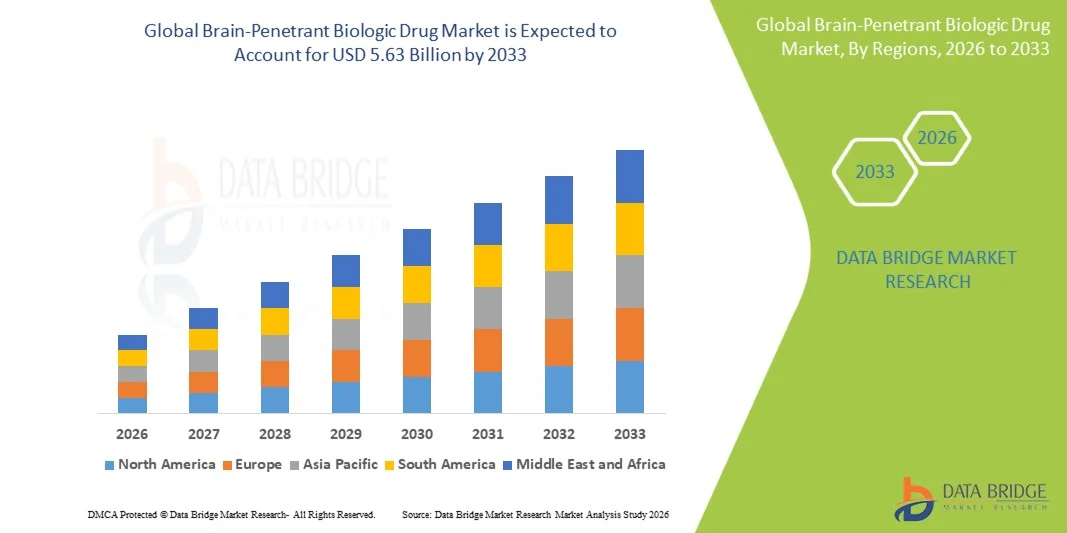
- The global brain-penetrant biologic drug market size was valued at USD 1.48 billion in 2025 and is expected to reach USD 5.63 billion by 2033, at a CAGR of 18.20% during the forecast period
- The market growth is largely fueled by advancements in blood–brain barrier (BBB) delivery technologies and increasing research in central nervous system (CNS) therapeutics, leading to enhanced development of targeted biologic treatments for neurological conditions
- Furthermore, rising prevalence of neurodegenerative diseases and growing demand for effective, precision-based therapies are establishing brain-penetrant biologics as a next-generation treatment approach. These converging factors are accelerating the adoption of such therapies, thereby significantly boosting the industry's growth
Brain-Penetrant Biologic Drug Market Analysis
- Brain-penetrant biologic drugs, designed to cross the blood–brain barrier (BBB) and deliver targeted therapeutic effects within the central nervous system, are increasingly vital in the treatment of complex neurological conditions due to their ability to address previously inaccessible disease pathways with high specificity
- The escalating demand for these biologics is primarily fueled by the rising prevalence of neurodegenerative disorders, increasing investment in CNS drug research, and advancements in BBB penetration technologies such as receptor-mediated transport and bispecific antibodies
- North America dominated the brain-penetrant biologic drug market with the largest revenue share of 42.30% in 2025, characterized by strong R&D infrastructure, high healthcare expenditure, and the presence of leading biopharmaceutical companies, with the U.S. witnessing significant growth driven by ongoing clinical trials and rapid adoption of innovative biologic therapies
- Asia-Pacific is expected to be the fastest growing region in the brain-penetrant biologic drug market during the forecast period due to expanding healthcare infrastructure, increasing awareness of neurological disorders, and rising investments in biotechnology research
- Monoclonal antibodies segment dominated the market with a market share of 46.80% in 2025, driven by their high specificity, growing clinical success in CNS indications, and increasing development of advanced antibody-based platforms for effective brain delivery
Report Scope and Brain-Penetrant Biologic Drug Market Segmentation
|
Attributes |
Brain-Penetrant Biologic Drug Key Market Insights |
|
Segments Covered |
|
|
Countries Covered |
North America
Europe
Asia-Pacific
Middle East and Africa
South America
|
|
Key Market Players |
|
|
Market Opportunities |
|
|
Value Added Data Infosets |
In addition to the insights on market scenarios such as market value, growth rate, segmentation, geographical coverage, and major players, the market reports curated by the Data Bridge Market Research also include in-depth expert analysis, patient epidemiology, pipeline analysis, pricing analysis, and regulatory framework |
Brain-Penetrant Biologic Drug Market Trends
“Advancement in Blood–Brain Barrier (BBB) Penetration Technologies”
- A significant and accelerating trend in the global brain-penetrant biologic drug market is the advancement of innovative delivery technologies such as receptor-mediated transport and bispecific antibody platforms. This fusion of biologics and delivery science is significantly enhancing therapeutic access to the central nervous system
- For instance, several biopharmaceutical companies are developing bispecific antibodies engineered to bind BBB receptors and therapeutic targets simultaneously, enabling efficient transport of biologics into brain tissues for improved disease targeting. Similarly, gene therapy platforms are being optimized to cross the BBB and deliver therapeutic payloads directly to affected neurons
- Technological integration in brain-penetrant biologics enables features such as targeted drug delivery, improved bioavailability, and reduced systemic toxicity. For instance, advanced antibody engineering enhances binding affinity and transport efficiency, while nanoparticle-based carriers improve drug stability and penetration efficiency. Furthermore, precision delivery capabilities offer improved treatment outcomes by directly targeting disease pathology within the brain
- The seamless integration of biologics with advanced delivery technologies facilitates improved therapeutic outcomes across multiple neurological conditions. Through a unified approach, developers can optimize drug design, delivery mechanisms, and treatment efficacy, creating a more efficient and targeted treatment landscape
- This trend towards more precise, efficient, and targeted biologic therapies is fundamentally reshaping treatment approaches for neurological disorders. Consequently, companies such as Roche and Biogen are developing advanced brain-penetrant biologics with enhanced delivery mechanisms and improved clinical efficacy
- The demand for brain-penetrant biologics that offer improved delivery efficiency and targeted action is growing rapidly across healthcare systems, as stakeholders increasingly prioritize effective treatments for complex CNS disorders
- Growing integration of artificial intelligence in drug discovery is supporting the design of optimized biologics with enhanced BBB penetration and target specificity, improving development success rates
Brain-Penetrant Biologic Drug Market Dynamics
Driver
“Rising Prevalence of Neurological Disorders and Demand for Targeted Therapies”
- The increasing prevalence of neurological disorders worldwide, coupled with the growing demand for targeted and effective treatment options, is a significant driver for the heightened demand for brain-penetrant biologic drugs
- For instance, in recent years, multiple clinical-stage companies have advanced therapies targeting Alzheimer’s and rare CNS disorders using BBB-penetrant platforms, aiming to improve therapeutic outcomes and disease management. Such strategies by key companies are expected to drive the market growth in the forecast period
- As healthcare systems focus more on addressing unmet needs in neurological diseases, brain-penetrant biologics offer advanced capabilities such as targeted action, improved efficacy, and reduced off-target effects, providing a compelling alternative to conventional therapies
- Furthermore, increasing investment in neuroscience research and the growing adoption of precision medicine approaches are making brain-penetrant biologics an integral component of next-generation CNS treatment strategies
- The ability to deliver therapeutics directly to brain tissues, enhanced clinical outcomes, and improved patient management are key factors propelling the adoption of these biologics across healthcare settings. The expansion of clinical pipelines and regulatory support further contribute to market growth
- Rising government and private funding initiatives for CNS drug development are further accelerating innovation and commercialization of brain-penetrant biologics across global markets
- Expanding awareness and early diagnosis of neurological disorders are increasing the eligible patient population, thereby supporting higher adoption of advanced biologic therapies
Restraint/Challenge
“Complexity in BBB Penetration and High Development Costs”
- Challenges associated with effectively crossing the blood–brain barrier and ensuring sufficient drug delivery to target sites pose a significant barrier to broader market adoption. As biologics are complex molecules, achieving consistent and safe BBB penetration remains a critical hurdle
- For instance, several clinical-stage therapies have faced limitations in achieving optimal brain exposure or have encountered safety concerns during trials, highlighting the technical complexities involved in CNS drug delivery
- Addressing these challenges through advanced engineering techniques, optimized delivery platforms, and robust clinical validation is crucial for successful commercialization. Companies are increasingly investing in innovative delivery technologies and strategic collaborations to overcome these barriers
- In addition, the high cost of biologic drug development, including extensive R&D, clinical trials, and regulatory approvals, can limit accessibility and adoption, particularly in cost-sensitive healthcare systems
- While ongoing innovation is expected to reduce development complexities over time, the high investment requirements and technical challenges continue to restrain market expansion. Overcoming these issues through technological advancements and cost optimization strategies will be vital for sustained growth
- Stringent regulatory requirements and lengthy approval timelines for biologic drugs further delay market entry and increase development risks for companies operating in this space
- Limited long-term clinical data on safety and efficacy of novel BBB-penetrant biologics may create hesitancy among healthcare providers, impacting adoption rates in early commercialization phases
Brain-Penetrant Biologic Drug Market Scope
The market is segmented on the basis of drug type, drug delivery technology, application, and end user.
- By Drug Type
On the basis of drug type, the brain-penetrant biologic drug market is segmented into monoclonal antibodies, recombinant proteins, peptide-based biologics, gene & cell therapies, and others. The monoclonal antibodies segment dominated the market with the largest market revenue share of 46.8% in 2025, driven by their high specificity, strong clinical pipeline, and increasing success in targeting central nervous system disorders. These biologics are widely preferred due to their ability to be engineered for receptor-mediated transport across the blood–brain barrier, enabling precise targeting of disease pathways. Pharmaceutical companies are heavily investing in bispecific antibody platforms that enhance BBB penetration, further strengthening the segment’s dominance. In addition, ongoing approvals and late-stage clinical trials in Alzheimer’s and oncology applications are reinforcing demand for monoclonal antibodies. The scalability of manufacturing and established regulatory pathways also contribute to their widespread adoption in both developed and emerging markets.
The gene & cell therapies segment is anticipated to witness the fastest growth rate of 24.6% from 2026 to 2033, fueled by advancements in viral vector technologies and increasing focus on curative approaches for neurological disorders. These therapies offer the potential for long-term or permanent treatment outcomes by directly modifying or replacing defective genes within the brain. Rising investments in precision medicine and rare CNS disorder treatments are accelerating the development pipeline in this segment. Furthermore, innovations in delivery systems that enable efficient BBB crossing are enhancing the feasibility of gene therapies. The growing number of clinical trials and regulatory support for advanced therapies are also contributing to rapid market expansion. Increasing collaborations between biotech firms and research institutions are expected to further boost the adoption of gene & cell therapies globally.
- By Drug Delivery Technology
On the basis of drug delivery technology, the market is segmented into Trojan horse approach, bispecific antibody, passive diffusion enhancement, BBB permeability modulation, and nanocarrier-based delivery. The bispecific antibody segment dominated the market with the largest market revenue share of 38.9% in 2025, driven by its ability to simultaneously bind BBB receptors and therapeutic targets, enabling efficient transport of biologics into the brain. This technology is gaining strong traction due to its compatibility with monoclonal antibody platforms and its ability to significantly improve drug bioavailability within CNS tissues. Pharmaceutical companies are increasingly adopting bispecific designs to overcome traditional delivery limitations associated with the BBB. The growing number of clinical-stage candidates utilizing this approach further strengthens its market position. In addition, advancements in antibody engineering and improved safety profiles are contributing to widespread adoption.
The nanocarrier-based delivery segment is expected to witness the fastest CAGR of 25.8% from 2026 to 2033, driven by its ability to enhance drug stability, control release, and improve BBB penetration efficiency. Nanotechnology-based systems, including liposomes and polymeric nanoparticles, are gaining attention for their versatility in delivering a wide range of biologics. Increasing research activities focusing on targeted and non-invasive delivery methods are accelerating the growth of this segment. Moreover, nanocarriers enable reduced systemic toxicity and improved therapeutic outcomes, making them highly attractive for CNS drug development. Growing funding in nanomedicine and interdisciplinary collaborations are further supporting innovation. The potential for personalized drug delivery solutions also contributes to the rapid expansion of this segment.
- By Application
On the basis of application, the brain-penetrant biologic drug market is segmented into neurodegenerative diseases, neurological disorders, oncology, rare CNS disorders, and others. The neurodegenerative diseases segment dominated the market with the largest market revenue share of 41.5% in 2025, driven by the high prevalence of conditions such as Alzheimer’s and Parkinson’s disease. Increasing aging population and rising disease burden are creating strong demand for effective treatment options targeting the brain. Brain-penetrant biologics are particularly valuable in this segment due to their ability to directly target disease pathology within the CNS. Pharmaceutical companies are prioritizing R&D investments in this area, resulting in a robust pipeline of innovative therapies. In addition, growing awareness and early diagnosis are supporting higher treatment adoption rates. Favorable regulatory support for breakthrough therapies is also contributing to segment growth.
The rare CNS disorders segment is anticipated to witness the fastest growth rate of 23.9% from 2026 to 2033, fueled by increasing focus on orphan drug development and unmet medical needs. These disorders often lack effective treatment options, creating significant opportunities for advanced biologic therapies. Governments and regulatory bodies are offering incentives such as fast-track approvals and exclusivity benefits to encourage innovation in this area. The growing adoption of gene and enzyme replacement therapies is further accelerating segment growth. In addition, advancements in diagnostic technologies are enabling earlier identification of rare conditions, expanding the patient pool. Rising collaborations between biotech companies and research institutions are also driving development in this niche segment.
- By End User
On the basis of end user, the market is segmented into hospitals, specialty clinics, research & academic institutes, and ambulatory care centers. The hospitals segment dominated the market with the largest market revenue share of 44.7% in 2025, driven by the availability of advanced infrastructure and skilled healthcare professionals required for biologic drug administration. Hospitals are the primary centers for the treatment of complex neurological disorders, offering comprehensive care and monitoring for patients receiving biologic therapies. The need for controlled environments and specialized equipment further supports hospital dominance in this market. In addition, hospitals are often involved in clinical trials, contributing to early adoption of innovative therapies. Strong reimbursement frameworks in developed regions also enhance patient access to hospital-based treatments.
The research & academic institutes segment is expected to witness the fastest CAGR of 22.8% from 2026 to 2033, driven by increasing research activities and growing focus on developing next-generation CNS therapies. These institutions play a critical role in early-stage drug discovery, preclinical studies, and translational research. Rising funding from governments and private organizations is supporting advanced research initiatives in brain-penetrant biologics. Furthermore, collaborations between academia and industry are accelerating the commercialization of innovative therapies. The growing emphasis on understanding BBB mechanisms and CNS disease biology is also contributing to segment growth. Increased participation in clinical trials further strengthens the role of research institutes in market expansion.
Brain-Penetrant Biologic Drug Market Regional Analysis
- North America dominated the brain-penetrant biologic drug market with the largest revenue share of 42.30% in 2025, characterized by strong R&D infrastructure, high healthcare expenditure, and the presence of leading biopharmaceutical companies
- Healthcare providers in the region highly value the advanced targeting capabilities, improved therapeutic outcomes, and precision delivery offered by brain-penetrant biologics for treating complex central nervous system conditions
- This widespread adoption is further supported by robust R&D infrastructure, high healthcare expenditure, and favorable regulatory frameworks, along with the growing focus on innovative biologic therapies, establishing brain-penetrant biologics as a preferred treatment approach for neurological diseases across clinical settings
U.S. Brain-Penetrant Biologic Drug Market Insight
The U.S. brain-penetrant biologic drug market captured the largest revenue share of 81% in 2025 within North America, fueled by strong investment in neuroscience research and the expanding pipeline of CNS-targeted biologics. Healthcare providers are increasingly prioritizing innovative therapies that enable effective drug delivery across the blood–brain barrier for improved treatment outcomes. The growing focus on precision medicine, combined with robust clinical trial activity and advanced healthcare infrastructure, further propels the market. Moreover, the increasing integration of advanced biologic platforms, such as bispecific antibodies and gene therapies, is significantly contributing to the market's expansion.
Europe Brain-Penetrant Biologic Drug Market Insight
The Europe brain-penetrant biologic drug market is projected to expand at a substantial CAGR throughout the forecast period, primarily driven by rising prevalence of neurological disorders and increasing demand for advanced treatment options. The growth in healthcare investments, coupled with strong regulatory support for innovative biologics, is fostering adoption across the region. European healthcare systems are also emphasizing early diagnosis and targeted therapies, which aligns well with the capabilities of brain-penetrant biologics. The region is experiencing significant growth across hospital and research settings, with these therapies being incorporated into both clinical practice and ongoing research programs.
U.K. Brain-Penetrant Biologic Drug Market Insight
The U.K. brain-penetrant biologic drug market is anticipated to grow at a noteworthy CAGR during the forecast period, driven by increasing investment in CNS research and a growing focus on innovative biologic therapies. In addition, the rising burden of neurological conditions is encouraging healthcare providers to adopt advanced treatment solutions. The country’s strong research ecosystem, alongside collaboration between academic institutions and biotech firms, is expected to continue to stimulate market growth.
Germany Brain-Penetrant Biologic Drug Market Insight
The Germany brain-penetrant biologic drug market is expected to expand at a considerable CAGR during the forecast period, fueled by increasing demand for advanced neurological treatments and strong emphasis on healthcare innovation. Germany’s well-developed healthcare infrastructure, combined with its focus on research and technological advancement, promotes the adoption of biologic therapies for CNS disorders. The integration of advanced delivery technologies with biologics is also becoming increasingly prevalent, with a strong preference for high-efficacy and safe treatment options aligning with clinical expectations.
Asia-Pacific Brain-Penetrant Biologic Drug Market Insight
The Asia-Pacific brain-penetrant biologic drug market is poised to grow at the fastest CAGR of 24% during the forecast period of 2026 to 2033, driven by increasing healthcare expenditure, rising awareness of neurological disorders, and expanding biotechnology capabilities in countries such as China, Japan, and India. The region's growing focus on improving healthcare access, supported by government initiatives promoting advanced therapies, is driving the adoption of brain-penetrant biologics. Furthermore, as Asia-Pacific emerges as a key hub for clinical research and biologics manufacturing, the accessibility and affordability of these therapies are expanding to a broader patient population.
Japan Brain-Penetrant Biologic Drug Market Insight
The Japan brain-penetrant biologic drug market is gaining momentum due to the country’s advanced healthcare system, aging population, and strong demand for effective neurological treatments. The Japanese market places a significant emphasis on precision medicine, and the adoption of brain-penetrant biologics is driven by the increasing prevalence of age-related CNS disorders. The integration of advanced biologic therapies with innovative delivery technologies is fueling growth. Moreover, Japan's aging population is likely to spur demand for more effective and targeted treatment solutions in both clinical and research settings.
India Brain-Penetrant Biologic Drug Market Insight
The India brain-penetrant biologic drug market accounted for the largest market revenue share in Asia Pacific in 2025, attributed to the country's expanding healthcare infrastructure, rising prevalence of neurological disorders, and increasing adoption of advanced biologic therapies. India stands as one of the fastest-growing markets for biotechnology and pharmaceutical innovation, and brain-penetrant biologics are gaining traction in both hospitals and research institutions. The push towards advanced healthcare solutions and increasing investments in R&D, alongside growing domestic biopharma capabilities, are key factors propelling the market in India.
Brain-Penetrant Biologic Drug Market Share
The Brain-Penetrant Biologic Drug industry is primarily led by well-established companies, including:
- Biogen Inc. (U.S.)
- F. Hoffmann-La Roche Ltd (Switzerland)
- Novartis AG (Switzerland)
- Pfizer Inc. (U.S.)
- Eli Lilly and Company (U.S.)
- AbbVie Inc. (U.S.)
- Amgen Inc. (U.S.)
- Regeneron Pharmaceuticals, Inc. (U.S.)
- Sanofi (France)
- AstraZeneca PLC (U.K.)
- Bristol-Myers Squibb Company (U.S.)
- Merck & Co., Inc. (U.S.)
- Takeda Pharmaceutical Company Limited (Japan)
- UCB SA (Belgium)
- Ionis Pharmaceuticals, Inc. (U.S.)
- Denali Therapeutics Inc. (U.S.)
- Biohaven Ltd. (U.S.)
- Sangamo Therapeutics, Inc. (U.S.)
- Sio Gene Therapies Inc. (U.S.)
What are the Recent Developments in Global Brain-Penetrant Biologic Drug Market?
- In January 2026, Novartis announced a USD 1.7 billion licensing agreement with SciNeuro Pharmaceuticals to develop antibody-based Alzheimer’s treatments using proprietary brain-penetration technology designed to improve drug delivery across the blood–brain barrier. This collaboration aims to enhance the effectiveness of biologic therapies targeting CNS disorders and reflects increasing industry focus on BBB-penetrant platforms for next-generation neurological treatments
- In October 2025, researchers reported the development of second-generation brain-penetrant fusion proteins utilizing receptor-mediated transport systems, enabling biologics to cross the blood–brain barrier more efficiently for diseases such as Alzheimer’s and lysosomal storage disorders. These innovations mark a significant advancement in biologic drug delivery platforms and are being evaluated in ongoing clinical trials
- In June 2025, Genentech (a member of the Roche Group) announced the advancement of its brain-penetrant monoclonal antibody prasinezumab into Phase III clinical development for early-stage Parkinson’s disease, following encouraging Phase II results indicating potential clinical benefit in slowing disease progression. This development highlights growing confidence in antibody-based therapies targeting CNS disorders and reinforces industry momentum toward advanced brain-penetrant biologics
- In September 2024, Biohaven announced that its CNS-targeted drug troriluzole successfully met the primary endpoint in a late-stage clinical trial for spinocerebellar ataxia, demonstrating a 50–70% slowing of disease progression, and the company prepared for regulatory submission and potential launch. This milestone reflects increasing clinical success in therapies targeting neurological disorders
- In April 2024, Denovo Biopharma reported successful completion of its Phase 2b ENLIGHTEN trial for liafensine, a biomarker-guided CNS therapy, meeting all primary endpoints and demonstrating significant improvement in treatment-resistant depression patients. This advancement underscores the growing role of precision medicine and targeted biologics in CNS drug development

- Interactive Data Analysis Dashboard
- Company Analysis Dashboard for high growth potential opportunities
- Research Analyst Access for customization & queries
- Competitor Analysis with Interactive dashboard
- Latest News, Updates & Trend analysis
- Harness the Power of Benchmark Analysis for Comprehensive Competitor Tracking
Data collection and base year analysis are done using data collection modules with large sample sizes. The stage includes obtaining market information or related data through various sources and strategies. It includes examining and planning all the data acquired from the past in advance. It likewise envelops the examination of information inconsistencies seen across different information sources. The market data is analysed and estimated using market statistical and coherent models. Also, market share analysis and key trend analysis are the major success factors in the market report. To know more, please request an analyst call or drop down your inquiry.
The key research methodology used by DBMR research team is data triangulation which involves data mining, analysis of the impact of data variables on the market and primary (industry expert) validation. Data models include Vendor Positioning Grid, Market Time Line Analysis, Market Overview and Guide, Company Positioning Grid, Patent Analysis, Pricing Analysis, Company Market Share Analysis, Standards of Measurement, Global versus Regional and Vendor Share Analysis. To know more about the research methodology, drop in an inquiry to speak to our industry experts.
Data Bridge Market Research is a leader in advanced formative research. We take pride in servicing our existing and new customers with data and analysis that match and suits their goal. The report can be customized to include price trend analysis of target brands understanding the market for additional countries (ask for the list of countries), clinical trial results data, literature review, refurbished market and product base analysis. Market analysis of target competitors can be analyzed from technology-based analysis to market portfolio strategies. We can add as many competitors that you require data about in the format and data style you are looking for. Our team of analysts can also provide you data in crude raw excel files pivot tables (Fact book) or can assist you in creating presentations from the data sets available in the report.












