



Chronic Bacterial Prostatitis Market Overview
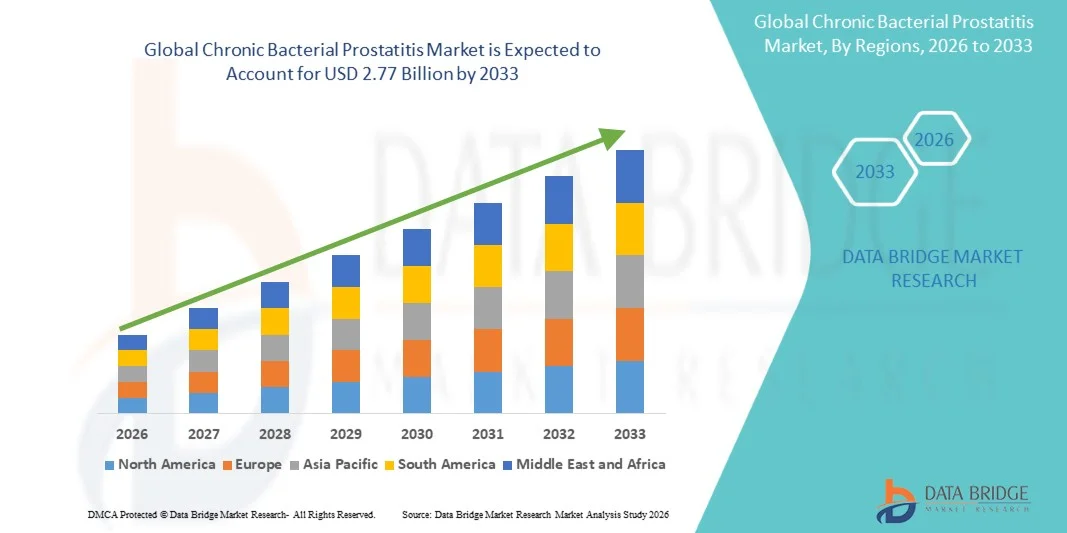
The Chronic Bacterial Prostatitis Market was valued at USD 1.50 billion in 2025 and is projected to reach USD 2.77 billion by 2033, growing at a CAGR of 8.0% from 2026 to 2033. The market is witnessing steady growth driven by the rising prevalence of recurrent urinary tract infections, increasing burden of chronic prostate infections in aging male populations, and growing awareness regarding early diagnosis and long-term management of urological disorders.
The increasing incidence of antibiotic-resistant bacterial infections, combined with improving access to advanced diagnostic techniques such as urine culture testing, PCR-based pathogen detection, and imaging-supported urological evaluation, is driving demand for more precise and long-duration treatment protocols. Pharmaceutical companies and healthcare providers are increasingly focusing on targeted antibiotic therapies, alpha-blockers, and adjunct pain management solutions, while expanding clinical research efforts to improve treatment outcomes and reduce recurrence rates in chronic bacterial prostatitis patients.
Key Market Trends & Insights
- North America dominated the Chronic Bacterial Prostatitis Market with the largest revenue share of 36.42% in 2025, supported by high disease awareness, advanced urology care infrastructure, and widespread access to diagnostic and antibiotic treatment pathways.
- The Urine Test segment led the market with a 38.64% share in 2025, driven by its widespread availability, low cost, and high clinical utility in detecting bacterial infection in the urinary tract
- Asia-Pacific is expected to be the fastest-growing region at a CAGR of 8.6% from 2026 to 2033, fueled by rising incidence of urological infections, improving healthcare access, and expanding diagnostic capabilities in China, India, and Southeast Asia.
- Post-Prostatic Massage Test are the fastest-growing diagnosis type, projected to register a CAGR of 8.4%, reflecting the surge in its higher diagnostic accuracy in identifying prostate-specific bacterial infections.
- The Antibiotics segment dominated the treatment category with a 44.18% revenue share in 2025, led by its primary role as the first-line treatment for bacterial eradication and long-term infection control.
- Oral accounted for 62.15% of the market, preferred by the ease of administration, high patient compliance, and suitability for long-term outpatient therapy.
- The Parenteral segment is the fastest-growing route of administration category, with a CAGR of 8.1%, driven by the increasing use in severe and resistant infection cases. Intravenous antibiotics provide rapid therapeutic action in complicated prostatitis conditions
Market Size & Forecast
- Global Market Value (2025): USD 1.50 Billion
- Expected Market Value (2033): USD 2.77 Billion
- Forecast CAGR (2026–2033): 8.0%
- Leading Region in 2025: North America
- Fastest Growing Region: Asia Pacific
Report Scope and Chronic Bacterial Prostatitis Market Segmentation
|
Attributes |
Chronic Bacterial Prostatitis Key Market Insights |
|
Segments Covered |
|
|
Countries Covered |
North America · U.S. · Canada · Mexico Europe · Germany · France · U.K. · Netherlands · Switzerland · Belgium · Russia · Italy · Spain · Turkey · Rest of Europe Asia-Pacific · China · Japan · India · South Korea · Singapore · Malaysia · Australia · Thailand · Indonesia · Philippines · Rest of Asia-Pacific Middle East and Africa · Saudi Arabia · U.A.E. · South Africa · Egypt · Israel · Rest of Middle East and Africa South America · Brazil · Argentina · Rest of South America |
|
Key Market Players |
· Merck & Co., Inc. (U.S.) · Pfizer Inc. (U.S.) · Johnson & Johnson Services, Inc. (U.S.) · AbbVie Inc. (U.S.) · Bayer AG (Germany) · Novartis AG (Switzerland) · Sanofi (France) · AstraZeneca plc (U.K.) · GSK plc (U.K.) · Boehringer Ingelheim International GmbH (Germany) · Teva Pharmaceutical Industries Ltd. (Israel) · Viatris Inc. (U.S.) · Astellas Pharma Inc. (Japan) · Eli Lilly and Company (U.S.) · F. Hoffmann-La Roche AG (Switzerland) · Sun Pharmaceutical Industries Ltd. (India) · Cipla Ltd. (India) · Dr. Reddy’s Laboratories Ltd. (India) · Zydus Lifesciences Ltd. (India) · Hikma Pharmaceuticals PLC (U.K.) |
|
Market Opportunities |
· Growing adoption of precision microbiological diagnostics · Expansion of long-acting and localized antibiotic delivery systems · Increasing integration of urology telemedicine and digital symptom-tracking platforms |
|
Value Added Data Infosets |
In addition to the insights on market scenarios such as market value, growth rate, segmentation, geographical coverage, and major players, the market reports curated by the Data Bridge Market Research also include in-depth expert analysis, patient epidemiology, pipeline analysis, pricing analysis, and regulatory framework. |
Chronic Bacterial Prostatitis Market Trends
Trend: Rising Adoption of Advanced Diagnostic Precision Testing
Clinicians are increasingly adopting advanced microbiological and molecular diagnostic techniques to accurately identify bacterial pathogens responsible for chronic prostatitis, enabling more targeted and effective treatment strategies. The integration of PCR-based testing and antibiotic sensitivity profiling is improving diagnostic accuracy and reducing empirical treatment dependence in urology practice. Urology clinics and diagnostic laboratories are similarly leveraging these tools to standardize infection identification and monitor treatment response through structured clinical pathways, while digital health platforms support symptom tracking and long-term patient management in chronic conditions. For instance, recent clinical adoption of PCR-guided pathogen detection has significantly improved treatment precision in recurrent bacterial prostatitis cases.
Chronic Bacterial Prostatitis Market Dynamics
Key Market Driver: Increasing Prevalence of Recurrent Urological Infections
The rising global burden of recurrent urinary tract infections and chronic bacterial prostate infections is creating sustained demand for long-term antibiotic therapy and specialized urological care. Aging male populations and increasing incidence of antibiotic-resistant bacterial strains are further intensifying the need for improved diagnostic and treatment solutions in chronic prostatitis management. Healthcare providers, urologists, and pharmaceutical companies are expanding treatment protocols that combine antibiotics, alpha-blockers, and supportive therapies to enhance patient outcomes and reduce recurrence rates. For instance, growing hospital-based management programs for recurrent prostatitis cases reflect the increasing clinical burden of the disease.
Key Restraint/Challenge: Antibiotic Resistance and Treatment Complexity
A major restraint in the Chronic Bacterial Prostatitis Market is the increasing prevalence of antibiotic-resistant bacterial strains, which complicates treatment effectiveness and prolongs disease management cycles. The need for prolonged antibiotic courses and repeated treatment adjustments increases patient non-compliance and raises healthcare costs significantly. In addition, variability in pathogen identification and limited penetration of antibiotics into prostate tissue further challenge clinical outcomes in chronic cases. For instance, rising cases of multidrug-resistant E. coli infections in urological conditions highlight the growing therapeutic limitations faced by clinicians.
Key Market Opportunity: Expansion of Targeted and Personalized Urology Therapies
The development of targeted antibiotic regimens and personalized urology treatment approaches presents a significant market opportunity for improving chronic bacterial prostatitis outcomes. Advances in biomarker identification, precision microbiology, and patient-specific treatment planning are enabling more effective and tailored therapeutic interventions. Pharmaceutical companies and research institutions are increasingly focusing on long-acting formulations and adjunct therapies to reduce recurrence and improve adherence. For instance, emerging use of culture-guided antibiotic personalization in chronic prostatitis management is enhancing treatment success rates.
Chronic Bacterial Prostatitis Market Scope
The chronic bacterial prostatitis market is segmented on the basis of diagnosis, treatment, route of administration, end-users, and distribution channel.
- By Diagnosis
On the basis of diagnosis, the Chronic Bacterial Prostatitis Market is segmented into urine test, blood test, post-prostatic massage test, imaging tests, and others. The Urine Test segment dominated the market with a 38.64% share in 2025, owing to its widespread availability, low cost, and high clinical utility in detecting bacterial infection in the urinary tract. It is commonly used as the first-line diagnostic approach in suspected prostatitis cases across hospitals and outpatient settings. Increasing preference for non-invasive and rapid diagnostic procedures is further strengthening its adoption. It also enables routine screening and follow-up monitoring during antibiotic therapy. Integration with automated laboratory systems has improved accuracy and turnaround time. However, its limitation in identifying deep-seated prostate infections remains a clinical challenge, yet it continues to be the most widely used diagnostic tool.
The Post-Prostatic Massage Test segment is projected to register the fastest growth at a CAGR of 8.4% from 2026 to 2033, driven by its higher diagnostic accuracy in identifying prostate-specific bacterial infections. This method allows better pathogen detection by analyzing expressed prostatic secretions after massage. Increasing clinical awareness regarding chronic and recurrent prostatitis is boosting adoption among urologists. Growing use in specialized urology clinics and tertiary care centers is further supporting demand. Improvements in laboratory culture techniques are enhancing diagnostic yield. For instance, rising adoption of EPS-based testing protocols in recurrent prostatitis cases is improving diagnostic precision.
- By Treatment
On the basis of treatment, the Chronic Bacterial Prostatitis Market is segmented into antibiotics, laxatives, analgesics, and others. The Antibiotics segment dominated the market with a 44.18% share in 2025, due to its primary role as the first-line treatment for bacterial eradication and long-term infection control. Fluoroquinolones and macrolides are commonly prescribed due to their better prostate tissue penetration. Increasing prevalence of recurrent bacterial infections is sustaining demand for prolonged antibiotic therapy. Hospitals and urology clinics widely rely on combination antibiotic regimens to improve outcomes. Continuous development of targeted antimicrobial therapies is enhancing treatment efficiency. However, growing resistance to antibiotics remains a clinical concern despite their dominance.
The Analgesic segment is expected to witness the fastest growth at a CAGR of 8.2% from 2026 to 2033, driven by increasing need for symptomatic pain management in chronic prostatitis patients. Chronic pelvic pain significantly affects quality of life, leading to higher demand for supportive therapies. Multimodal treatment approaches combining antibiotics and analgesics are becoming standard clinical practice. Rising awareness among patients regarding pain management options is further supporting growth. Pharmaceutical companies are introducing improved formulations with better tolerability. For instance, increasing use of NSAID-based regimens in chronic pelvic pain syndrome is enhancing patient comfort.
- By Route of Administration
On the basis of route of administration, the Chronic Bacterial Prostatitis Market is segmented into oral, parenteral, rectal, and others. The Oral segment dominated the market with a 62.15% share in 2025, owing to ease of administration, high patient compliance, and suitability for long-term outpatient therapy. Oral antibiotics are widely prescribed as first-line treatment in most clinical settings. This route enables continuous home-based management without hospital dependency. Improved drug formulations with better bioavailability are further strengthening adoption. Physicians prefer oral administration due to cost-effectiveness and convenience. Despite limitations in severe cases requiring hospitalization, oral therapy remains the standard approach globally.
The Parenteral segment is projected to register the fastest growth at a CAGR of 8.1% from 2026 to 2033, driven by increasing use in severe and resistant infection cases. Intravenous antibiotics provide rapid therapeutic action in complicated prostatitis conditions. Hospitalization rates for acute exacerbations are supporting demand for injectable therapies. Rising prevalence of multidrug-resistant bacterial strains is further increasing reliance on parenteral treatment. Advancements in hospital-based infusion systems are improving treatment efficiency. For instance, IV antibiotic therapy is increasingly used in resistant chronic prostatitis cases requiring immediate intervention.
- By End-Users
On the basis of end-users, the Chronic Bacterial Prostatitis Market is segmented into hospitals, homecare, specialty clinics, and others. The Hospitals segment dominated the market with a 48.27% share in 2025, due to availability of advanced diagnostic facilities and specialized urology departments. Hospitals manage complex and recurrent cases requiring multidisciplinary treatment approaches. High patient inflow and access to laboratory testing support dominance of this segment. Integration of antimicrobial stewardship programs ensures effective treatment protocols. Increasing hospital admissions for urological infections further strengthens demand. Hospitals also play a key role in managing resistant infection cases requiring long-term care.
The Specialty Clinics segment is expected to witness the fastest growth at a CAGR of 8.3% from 2026 to 2033, driven by rising preference for specialized urological care. These clinics offer focused diagnosis and personalized treatment strategies for chronic prostatitis patients. Increasing awareness of early intervention and targeted therapy is boosting patient visits. Specialty clinics provide shorter waiting times and more individualized care compared to hospitals. Expansion of outpatient urology services is further supporting growth. For instance, growth in dedicated urology centers is improving access to chronic prostatitis management services.
- By Distribution Channel
On the basis of distribution channel, the Chronic Bacterial Prostatitis Market is segmented into hospital pharmacy, online pharmacy, and retail pharmacy. The Hospital Pharmacy segment dominated the market with a 48.27% share in 2025, due to direct linkage with inpatient care and physician-prescribed antibiotic regimens. Hospital pharmacies ensure timely availability of specialized antibiotics for complex infections. They also support controlled dispensing in antimicrobial stewardship programs. High dependency on hospital-based treatment for severe cases drives dominance. Integration with electronic prescription systems improves efficiency and compliance. Despite growth in retail channels, hospital pharmacies remain central to treatment delivery.
The Online Pharmacy segment is projected to register the fastest growth at a CAGR of 8.5% from 2026 to 2033, driven by increasing digital healthcare adoption and home-based treatment preferences. Patients with chronic conditions increasingly prefer doorstep medication delivery for long-term antibiotic courses. Expansion of telemedicine services is further boosting online prescriptions. Improved regulatory frameworks for e-pharmacies are enhancing trust and accessibility. Rising smartphone penetration and digital payment systems are supporting growth. For instance, growing use of online pharmacy platforms for repeat antibiotic refills is transforming distribution dynamics.
Chronic Bacterial Prostatitis Market Regional Analysis
North America dominated the Chronic Bacterial Prostatitis Market with the largest revenue share of 36.42% in 2025, supported by high disease awareness, advanced urology care infrastructure, and widespread access to diagnostic and antibiotic treatment pathways. The region also benefits from widespread adoption of molecular diagnostic testing, well-established antibiotic treatment protocols, and increasing awareness regarding chronic prostate health conditions. Growing investment in precision medicine, antimicrobial stewardship programs, and continuous clinical research further strengthens regional dominance. Increasing burden of antibiotic-resistant infections and strong pharmaceutical presence continue to support North America’s leadership position in the global market.
U.S. Chronic Bacterial Prostatitis Market Insight
The U.S. chronic bacterial prostatitis market holds a dominant position due to high disease awareness, advanced healthcare infrastructure, and strong presence of specialized urology practitioners. The country benefits from widespread adoption of PCR-based diagnostics, culture sensitivity testing, and guideline-driven antibiotic therapy protocols. Increasing investment in antimicrobial stewardship programs and precision medicine is improving treatment outcomes and reducing recurrence rates. In addition, strong pharmaceutical R&D activity and growing clinical focus on male pelvic health disorders are accelerating market growth across hospital and outpatient settings.
Europe Chronic Bacterial Prostatitis Market Insight
The Europe chronic bacterial prostatitis market remains a significant contributor to global revenue, driven by well-established healthcare systems, strong diagnostic capabilities, and increasing focus on infectious disease management. The region benefits from standardized treatment guidelines, high adoption of advanced laboratory testing, and growing awareness of chronic urological conditions. Rising cases of antibiotic resistance and expanding use of combination therapies are further supporting market development. Continuous investment in clinical research and public health initiatives continues to strengthen Europe’s position in the global market.
U.K. Chronic Bacterial Prostatitis Market Insight
The U.K. chronic bacterial prostatitis market is experiencing steady growth, supported by strong NHS-led diagnostic frameworks and increasing adoption of evidence-based treatment protocols. Rising awareness of male urological health and growing access to specialist urology services are contributing to improved diagnosis rates. The country is also witnessing increased use of molecular testing and targeted antibiotic therapies to manage recurrent infections. Integration of digital health platforms and tele-urology consultations is further enhancing patient access and long-term disease management.
Germany Chronic Bacterial Prostatitis Market Insight
The Germany chronic bacterial prostatitis market is expanding due to strong healthcare infrastructure, advanced diagnostic laboratories, and high standards of clinical care. Increasing adoption of precision diagnostics and structured antibiotic treatment pathways is improving patient outcomes. Germany’s strong pharmaceutical and research ecosystem supports continuous innovation in urology therapeutics. Rising prevalence of antibiotic-resistant infections and growing focus on early intervention strategies are further driving market demand across hospitals and specialty clinics.
Asia-Pacific Chronic Bacterial Prostatitis Market Insight
The Asia-Pacific chronic bacterial prostatitis market is expected to witness rapid growth, driven by rising incidence of urological infections, improving healthcare access, and expanding diagnostic capabilities. Increasing awareness of prostate health and growing adoption of modern treatment protocols are supporting regional expansion. Countries such as China, India, and Japan are investing in healthcare infrastructure and laboratory testing services. In addition, rising urbanization and improving affordability of healthcare services are accelerating market penetration across both public and private sectors.
Japan Chronic Bacterial Prostatitis Market Insight
The Japan chronic bacterial prostatitis market is growing steadily due to advanced healthcare systems, high diagnostic accuracy, and strong focus on preventive urological care. The country benefits from widespread use of molecular diagnostics and culture-based testing for accurate pathogen identification. Increasing adoption of targeted antibiotic therapies and supportive pain management strategies is improving clinical outcomes. In addition, Japan’s aging population and strong emphasis on precision medicine are further supporting long-term market growth.
China Chronic Bacterial Prostatitis Market Insight
The China chronic bacterial prostatitis market is expanding rapidly due to increasing prevalence of urological infections, growing healthcare investments, and rising awareness of prostate-related diseases. The country is witnessing strong adoption of advanced diagnostic technologies and standardized antibiotic treatment protocols. Expanding hospital infrastructure and improving access to specialized urology services are further supporting market growth. In addition, rising focus on antimicrobial resistance management and healthcare modernization is positioning China as one of the fastest-growing markets globally.
Chronic Bacterial Prostatitis Market Share
The chronic bacterial prostatitis industry is primarily led by well-established companies, including:
- Merck & Co., Inc. (U.S.)
- Pfizer Inc. (U.S.)
- Johnson & Johnson Services, Inc. (U.S.)
- AbbVie Inc. (U.S.)
- Bayer AG (Germany)
- Novartis AG (Switzerland)
- Sanofi (France)
- AstraZeneca plc (U.K.)
- GSK plc (U.K.)
- Boehringer Ingelheim International GmbH (Germany)
- Teva Pharmaceutical Industries Ltd. (Israel)
- Viatris Inc. (U.S.)
- Astellas Pharma Inc. (Japan)
- Eli Lilly and Company (U.S.)
- Hoffmann-La Roche AG (Switzerland)
- Sun Pharmaceutical Industries Ltd. (India)
- Cipla Ltd. (India)
- Reddy’s Laboratories Ltd. (India)
- Zydus Lifesciences Ltd. (India)
- Hikma Pharmaceuticals PLC (U.K.)
Latest Developments in Chronic Bacterial Prostatitis Market
- In January 2025, a peer-reviewed medical research publication indexed on PubMed highlighted the emerging role of the prostate microbiome in chronic bacterial prostatitis, suggesting that microbial imbalance may contribute to recurrence and antibiotic treatment failure. The study opens new research directions for microbiome-targeted therapeutic strategies
- In March 2024, a PubMed Central clinical study demonstrated that PCR-based molecular diagnostics significantly improve pathogen detection accuracy in chronic bacterial prostatitis compared to conventional urine culture methods. The findings support faster diagnosis and more targeted antibiotic therapy selection in clinical practice
- In June 2023, the European Association of Urology (EAU) updated its Guidelines on Urological Infections, strengthening recommendations for culture-based pathogen identification, extended antibiotic therapy, and improved diagnostic stratification for chronic bacterial prostatitis. The updated guidelines emphasize antimicrobial resistance management and more precise treatment selection to improve long-term clinical outcomes in recurrent infection cases
- In April 2022, the American Urological Association (AUA) updated its clinical guidance for male chronic pelvic pain syndrome and prostatitis management, highlighting multimodal treatment approaches including antibiotics, alpha-blockers, and anti-inflammatory therapies. The guideline reflects growing clinical understanding of complex symptom patterns and the need for individualized treatment strategies in chronic prostatitis cases
- In September 2021, a PubMed-indexed clinical review study reported increasing antibiotic resistance among chronic prostatitis pathogens, particularly fluoroquinolone-resistant E. coli, which is reducing treatment effectiveness and increasing recurrence rates. The study highlights the need for improved antimicrobial stewardship and alternative therapeutic strategies
SKU-

- Interactive Data Analysis Dashboard
- Company Analysis Dashboard for high growth potential opportunities
- Research Analyst Access for customization & queries
- Competitor Analysis with Interactive dashboard
- Latest News, Updates & Trend analysis
- Harness the Power of Benchmark Analysis for Comprehensive Competitor Tracking
Data collection and base year analysis are done using data collection modules with large sample sizes. The stage includes obtaining market information or related data through various sources and strategies. It includes examining and planning all the data acquired from the past in advance. It likewise envelops the examination of information inconsistencies seen across different information sources. The market data is analysed and estimated using market statistical and coherent models. Also, market share analysis and key trend analysis are the major success factors in the market report. To know more, please request an analyst call or drop down your inquiry.
The key research methodology used by DBMR research team is data triangulation which involves data mining, analysis of the impact of data variables on the market and primary (industry expert) validation. Data models include Vendor Positioning Grid, Market Time Line Analysis, Market Overview and Guide, Company Positioning Grid, Patent Analysis, Pricing Analysis, Company Market Share Analysis, Standards of Measurement, Global versus Regional and Vendor Share Analysis. To know more about the research methodology, drop in an inquiry to speak to our industry experts.
Data Bridge Market Research is a leader in advanced formative research. We take pride in servicing our existing and new customers with data and analysis that match and suits their goal. The report can be customized to include price trend analysis of target brands understanding the market for additional countries (ask for the list of countries), clinical trial results data, literature review, refurbished market and product base analysis. Market analysis of target competitors can be analyzed from technology-based analysis to market portfolio strategies. We can add as many competitors that you require data about in the format and data style you are looking for. Our team of analysts can also provide you data in crude raw excel files pivot tables (Fact book) or can assist you in creating presentations from the data sets available in the report.











