


Global Chronic Cough Market
Market Size in USD Billion
CAGR :
% 
 USD
8.36 Billion
USD
15.47 Billion
2025
2033
USD
8.36 Billion
USD
15.47 Billion
2025
2033
 Forecast Period Forecast Period |
2026 –2033 |
 Market Size (Base Year) Market Size (Base Year) |
USD 8.36 Billion |
 Market Size (Forecast Year) Market Size (Forecast Year) |
USD 15.47 Billion |
 CAGR CAGR |
% |
| Major Markets Players |
|
Chronic Cough Market Size
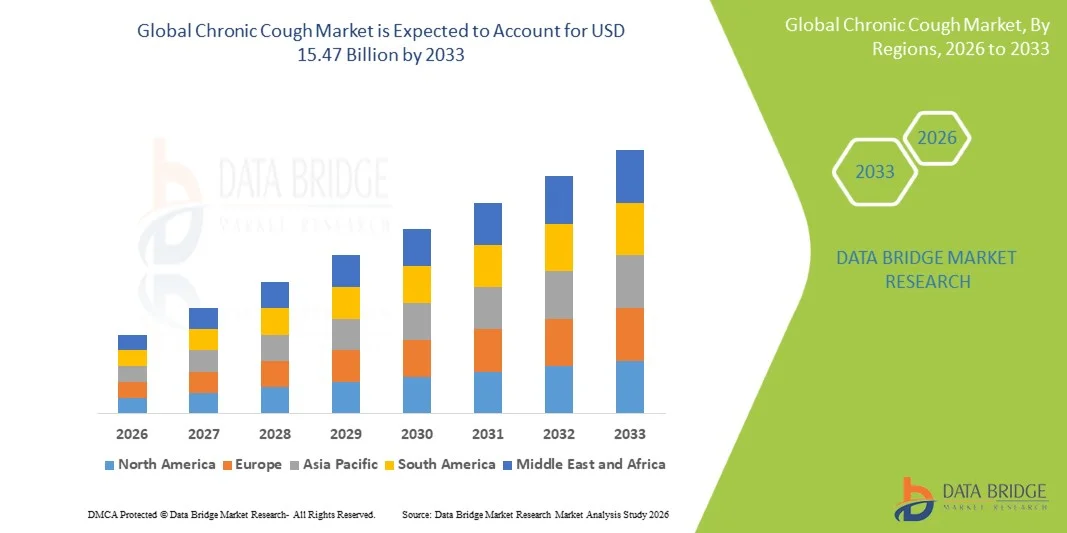
- The global chronic cough market size was valued at USD 8.36 billion in 2025 and is expected to reach USD 15.47 billion by 2033, at a CAGR of 8.00% during the forecast period
- The market growth is largely fueled by the increasing prevalence of chronic respiratory conditions such as asthma, chronic obstructive pulmonary disease (COPD), and post-infectious cough, along with rising environmental pollution levels, leading to a higher demand for effective chronic cough treatment solutions
- Furthermore, rising patient demand for safe, long-lasting, and targeted therapies, along with advancements in cough-specific drug development and improved diagnostic approaches, is establishing chronic cough treatments as essential components of respiratory care. These converging factors are accelerating the uptake of chronic cough solutions, thereby significantly boosting the industry's growth
Chronic Cough Market Analysis
- Chronic cough, defined as a persistent cough lasting more than 8 weeks, is increasingly recognized as a significant clinical condition within respiratory care across both developed and emerging regions due to its impact on quality of life and its association with underlying disorders
- The escalating demand for chronic cough treatments is primarily fueled by the rising prevalence of respiratory diseases such as asthma, chronic obstructive pulmonary disease (COPD), and gastroesophageal reflux disease (GERD), along with increasing environmental pollution and smoking rates
- North America dominated the chronic cough market with the largest revenue share of 39.4% in 2025, characterized by advanced healthcare infrastructure, high diagnosis rates, and strong presence of key pharmaceutical players, with the U.S. witnessing substantial growth in treatment adoption driven by increased awareness and availability of novel therapies
- Asia-Pacific is expected to be the fastest growing region in the chronic cough market during the forecast period due to rapid urbanization, worsening air quality, rising healthcare expenditure, and improving access to respiratory care services
- The oral segment dominated the market with a revenue share of 58.9% in 2025, primarily due to its convenience, ease of administration, and high patient compliance
Report Scope and Chronic Cough Market Segmentation
|
Attributes |
Chronic Cough Key Market Insights |
|
Segments Covered |
|
|
Countries Covered |
North America
Europe
Asia-Pacific
Middle East and Africa
South America
|
|
Key Market Players |
|
|
Market Opportunities |
|
|
Value Added Data Infosets |
In addition to the insights on market scenarios such as market value, growth rate, segmentation, geographical coverage, and major players, the market reports curated by the Data Bridge Market Research also include in-depth expert analysis, patient epidemiology, pipeline analysis, pricing analysis, and regulatory framework. |
Chronic Cough Market Trends
“Advancements in Targeted Therapies and Novel Drug Development”
- A significant and accelerating trend in the global chronic cough market is the increasing emphasis on the development of targeted therapies and next-generation pharmacological treatments that address the root causes of persistent cough rather than just symptomatic relief
- Pharmaceutical companies are actively investing in innovative drug classes such as P2X3 receptor antagonists, which directly act on sensory nerve pathways responsible for cough reflex hypersensitivity, offering a more precise therapeutic approach
- For instance, emerging therapies like gefapixant have demonstrated promising clinical outcomes in reducing cough frequency and severity, particularly among patients suffering from refractory chronic cough who do not respond to conventional treatments
- The growing understanding of cough hypersensitivity syndrome is enabling the development of mechanism-based therapies, shifting the treatment paradigm from generalized approaches to more condition-specific interventions
- In addition, advancements in clinical trial designs and biomarker identification are supporting faster drug development and more accurate assessment of treatment efficacy
- The integration of multidisciplinary treatment approaches, including pulmonology, gastroenterology, and allergy management, is further enhancing patient outcomes
- Increasing collaboration between pharmaceutical companies and research institutions is accelerating innovation and expanding the pipeline of novel chronic cough therapies
- Furthermore, regulatory support for breakthrough therapies and orphan drug designations is encouraging the development of treatments targeting unmet medical needs
- This trend toward more targeted, effective, and patient-centric therapies is significantly transforming the chronic cough treatment landscape and is expected to drive sustained market growth over the forecast period
Chronic Cough Market Dynamics
Driver
“Rising Prevalence of Respiratory Disorders and Increasing Awareness”
- The increasing global prevalence of respiratory conditions such as asthma, chronic obstructive pulmonary disease (COPD), upper airway cough syndrome, and gastroesophageal reflux disease (GERD) is a major factor driving the growth of the chronic cough market
- Environmental factors such as rising air pollution levels, exposure to allergens, and smoking habits are contributing to a higher incidence of chronic respiratory symptoms, including persistent cough
- For instance, urban populations are increasingly exposed to poor air quality, which has been strongly associated with long-term respiratory complications and chronic cough conditions
- Growing awareness among patients and healthcare providers regarding chronic cough as a distinct and treatable medical condition is leading to higher diagnosis and treatment rates
- Public health initiatives and educational campaigns are reducing the underreporting of chronic cough and encouraging timely medical consultation
- Improvements in healthcare infrastructure, particularly in emerging economies, are enhancing access to diagnostic tools and treatment options
- The expansion of telemedicine and digital healthcare platforms is further facilitating early diagnosis and continuous management of chronic cough patients
- Increased availability of both prescription and over-the-counter medications is providing patients with a wider range of treatment options
- The rising geriatric population, which is more susceptible to chronic respiratory diseases, is also contributing significantly to market demand
- Collectively, these factors are creating a strong demand for effective and long-term management solutions for chronic cough across global healthcare systems
Restraint/Challenge
“Limited Treatment Efficacy and Side Effects of Existing Therapies”
- The limited efficacy of currently available treatment options remains one of the most significant challenges in the chronic cough market, particularly for patients suffering from refractory or unexplained chronic cough
- Many conventional therapies, including antihistamines, corticosteroids, bronchodilators, and proton pump inhibitors, often fail to provide adequate or consistent relief, highlighting a substantial unmet medical need
- For instance, a considerable proportion of patients continue to experience persistent coughing despite undergoing multiple lines of treatment, which can negatively impact quality of life and increase healthcare burden
- The complexity and multifactorial nature of chronic cough make accurate diagnosis difficult, often resulting in trial-and-error treatment approaches that delay effective management
- In addition, commonly used medications are associated with side effects such as drowsiness, fatigue, dizziness, dry mouth, and gastrointestinal disturbances, which can reduce patient adherence to treatment regimens
- Long-term use of certain therapies may also raise concerns regarding safety and tolerability, particularly among elderly patients and those with comorbid conditions
- The absence of universally accepted clinical guidelines for the management of chronic cough further complicates treatment standardization across healthcare settings
- Limited awareness in some regions and underdiagnosis of chronic cough cases continue to restrict market penetration
- High costs associated with novel and advanced therapies may also pose a barrier to access, especially in low- and middle-income countries
- Addressing these challenges through improved diagnostic accuracy, development of highly effective targeted therapies, and enhanced patient education will be critical for unlocking the full potential of the chronic cough market
Chronic Cough Market Scope
The market is segmented on the basis of drug class, route of administration, end-users, and distribution channel.
• By Drug Class
On the basis of drug class, the Chronic Cough market is segmented into antihistamines, corticosteroids, decongestants, combination drugs, antibiotics, acid blockers, and others. The corticosteroids segment dominated the largest market revenue share of 34.7% in 2025, driven by their strong anti-inflammatory properties and effectiveness in treating chronic cough associated with asthma and other respiratory conditions. These drugs are widely prescribed due to their ability to reduce airway inflammation and improve breathing over time. Increasing prevalence of respiratory disorders and rising environmental pollution levels are further supporting the demand for corticosteroids globally. In addition, their availability in multiple formulations such as inhalers, tablets, and injectables enhances their adoption across diverse patient groups. Physicians prefer corticosteroids for long-term management due to their proven clinical efficacy. The segment is also benefiting from continuous advancements in drug formulations and delivery systems, improving patient compliance and outcomes.
The antihistamines segment is expected to witness the fastest CAGR of 9.6% from 2026 to 2033, driven by the increasing incidence of allergic conditions leading to chronic cough. Antihistamines are widely used for managing cough associated with allergic rhinitis and upper respiratory tract infections. Growing awareness about allergy-related conditions and rising demand for over-the-counter medications are key factors boosting segment growth. These drugs are easily accessible and are often used as first-line treatment for mild to moderate symptoms. In addition, the increasing prevalence of seasonal allergies due to climate change is further contributing to their demand. Pharmaceutical companies are also focusing on developing non-drowsy formulations to enhance patient comfort and adherence. The segment is expected to expand rapidly with increasing self-medication trends and improved access to healthcare products.
• By Route of Administration
On the basis of route of administration, the Chronic Cough market is segmented into oral, injections, inhalation, and others. The oral segment dominated the market with a revenue share of 58.9% in 2025, primarily due to its convenience, ease of administration, and high patient compliance. Oral medications such as tablets and syrups are commonly prescribed for chronic cough, especially in outpatient settings. The availability of a wide range of oral drugs across different drug classes supports the dominance of this segment. In addition, oral medications are cost-effective and easily accessible through pharmacies, making them a preferred choice among patients. Increasing demand for over-the-counter cough remedies further strengthens this segment’s position. Continuous product innovation and improved formulations also contribute to higher adoption rates globally.
The inhalation segment is expected to register the fastest CAGR of 10.8% from 2026 to 2033, driven by its targeted drug delivery mechanism and rapid onset of action. Inhalation therapies are particularly effective for treating cough associated with asthma and chronic obstructive pulmonary disease (COPD). These therapies deliver medication directly to the lungs, enhancing efficacy while minimizing systemic side effects. Increasing adoption of inhalers and nebulizers, especially in developed healthcare systems, is boosting segment growth. Technological advancements in inhalation devices are also improving patient convenience and adherence. In addition, rising awareness about respiratory health and early diagnosis of chronic conditions are contributing to increased usage. The segment is expected to witness significant growth due to its clinical advantages and growing acceptance among healthcare providers.
• By End-Users
On the basis of end-users, the Chronic Cough market is segmented into hospitals, homecare, specialty centres, and others. The hospitals segment dominated the market with a share of 45.8% in 2025, as hospitals are the primary centers for diagnosis and treatment of chronic respiratory conditions. They provide access to advanced diagnostic tools, specialized healthcare professionals, and comprehensive treatment options. Hospitals are particularly important for managing severe or persistent cough cases that require close monitoring and intervention. The availability of advanced therapies and injectable treatments further supports this segment’s dominance. Increasing hospital admissions due to respiratory disorders and rising awareness about seeking professional medical care are key factors driving growth. In addition, favorable reimbursement policies in developed regions contribute to higher patient inflow in hospitals.
The homecare segment is anticipated to grow at the fastest CAGR of 9.9% from 2026 to 2033, driven by the increasing preference for home-based treatment and long-term disease management. Patients with chronic cough often require prolonged therapy, making homecare a convenient and cost-effective option. The rise of telemedicine and digital health platforms is enabling remote monitoring and consultation, supporting this trend. In addition, the availability of portable inhalers and easy-to-administer medications is facilitating treatment at home. Growing awareness about self-care and improved access to medications are further boosting segment growth. The shift towards outpatient care and reduced hospital visits is expected to significantly contribute to the expansion of this segment.
• By Distribution Channel
On the basis of distribution channel, the Chronic Cough market is segmented into hospital pharmacy, online pharmacy, and retail pharmacy. The retail pharmacy segment dominated the market with a revenue share of 48.6% in 2025, driven by its widespread presence and easy accessibility for patients. Retail pharmacies serve as the primary point of purchase for both prescription and over-the-counter medications used in chronic cough treatment. The convenience of purchasing medicines from nearby locations and the availability of a wide product range contribute to segment dominance. In addition, pharmacists play a crucial role in guiding patients on medication usage and adherence. Expansion of pharmacy chains and improved supply chain infrastructure further support growth.
The online pharmacy segment is expected to witness the fastest CAGR of 11.2% from 2026 to 2033, fueled by the rapid growth of e-commerce and digital healthcare services. Online pharmacies offer advantages such as home delivery, competitive pricing, and privacy, making them increasingly popular among consumers. The rising adoption of smartphones and internet penetration is further driving this segment. In addition, the COVID-19 pandemic accelerated the shift towards online healthcare solutions, a trend that continues to persist. Improved regulatory frameworks and advancements in digital infrastructure are also supporting market expansion. The segment is expected to grow significantly as consumers increasingly prefer convenient and contactless purchasing options.
Chronic Cough Market Regional Analysis
- North America dominated the chronic cough market with the largest revenue share of 39.4% in 2025, characterized by advanced healthcare infrastructure, high diagnosis rates, and a strong presence of key pharmaceutical players
- The region benefits from widespread awareness regarding chronic respiratory conditions and well-established clinical guidelines for diagnosis and treatment
- In addition, increasing prevalence of chronic respiratory disorders, higher healthcare spending, and strong access to novel and prescription-based therapies are significantly contributing to market growth
U.S. Chronic Cough Market Insight
The U.S. chronic cough market captured the largest revenue share in 2025 within North America, driven by increasing diagnosis rates and higher treatment adoption. The country is witnessing substantial growth due to rising awareness of chronic cough conditions, improved access to healthcare services, and the availability of advanced and novel therapies. Furthermore, strong presence of leading pharmaceutical companies, ongoing clinical research, and expansion of specialty care services are significantly propelling market growth. The increasing use of telehealth platforms and patient-centric treatment approaches is also enhancing disease management across the country.
Europe Chronic Cough Market Insight
The Europe chronic cough market is projected to expand at a substantial CAGR throughout the forecast period, primarily driven by increasing awareness of respiratory health and supportive healthcare policies. The rising burden of chronic respiratory diseases, along with improved diagnostic capabilities, is fostering demand for effective chronic cough treatments. In addition, government-led health initiatives and growing focus on early disease detection are encouraging more patients to seek medical intervention. The region is also witnessing increased adoption of advanced therapeutic options across both hospital and outpatient settings.
U.K. Chronic Cough Market Insight
The U.K. chronic cough market is anticipated to grow at a noteworthy CAGR during the forecast period, driven by rising prevalence of respiratory conditions and strong support from national healthcare systems. Increasing awareness regarding chronic cough and its underlying causes is encouraging early diagnosis and treatment. Moreover, expanding access to healthcare services, along with ongoing public health campaigns focusing on respiratory diseases, is expected to further stimulate market growth.
Germany Chronic Cough Market Insight
The Germany chronic cough market is expected to expand at a considerable CAGR during the forecast period, supported by a well-developed healthcare system and increasing focus on respiratory disease management. High diagnosis rates, availability of advanced treatment options, and strong emphasis on clinical research are key factors contributing to market growth. In addition, the adoption of innovative therapies and improved patient care practices are enhancing treatment outcomes across the country.
Asia-Pacific Chronic Cough Market Insight
The Asia-Pacific chronic cough market is expected to grow at the fastest CAGR during the forecast period, driven by rapid urbanization, worsening air quality, rising healthcare expenditure, and improving access to respiratory care services. Increasing pollution levels and growing exposure to environmental risk factors are significantly contributing to the rising incidence of chronic cough across the region. Furthermore, expanding healthcare infrastructure, rising disposable incomes, and growing awareness regarding respiratory health are accelerating treatment adoption. Government initiatives aimed at improving healthcare access and promoting early diagnosis are also playing a crucial role in market expansion. The large patient population and increasing demand for effective and affordable treatment options make Asia-Pacific a key growth region for the chronic cough market.
Japan Chronic Cough Market Insight
The Japan chronic cough market is gaining momentum due to increasing awareness of respiratory health and a rapidly aging population, which is more susceptible to chronic conditions. The country’s advanced healthcare infrastructure and strong focus on early diagnosis and treatment are supporting market growth. In addition, the availability of innovative therapies and growing patient preference for effective symptom management solutions are contributing to increased adoption of chronic cough treatments.
China Chronic Cough Market Insight
The China chronic cough market accounted for the largest market revenue share in Asia-Pacific in 2025, attributed to rapid urbanization, rising pollution levels, and a growing burden of respiratory diseases. Increasing healthcare expenditure and improving access to medical services are driving the demand for chronic cough treatments. Furthermore, rising awareness regarding respiratory health, along with government initiatives to strengthen healthcare infrastructure, is significantly contributing to market growth. The presence of a large patient pool and expanding pharmaceutical industry further supports the development of the market in China.
Chronic Cough Market Share
The Chronic Cough industry is primarily led by well-established companies, including:
- GlaxoSmithKline plc (U.K.)
- AstraZeneca plc (U.K.)
- Merck & Co., Inc. (U.S.)
- Novartis AG (Switzerland)
- Sanofi S.A. (France)
- Johnson & Johnson (U.S.)
- Pfizer Inc. (U.S.)
- Boehringer Ingelheim International GmbH (Germany)
- Teva Pharmaceutical Industries Ltd. (Israel)
- Sun Pharmaceutical Industries Ltd. (India)
- Cipla Ltd. (India)
- Dr. Reddy’s Laboratories Ltd. (India)
- Aurobindo Pharma Ltd. (India)
- Hikma Pharmaceuticals plc (U.K.)
- Bayer AG (Germany)
- AbbVie Inc. (U.S.)
- Amneal Pharmaceuticals, Inc. (U.S.)
- Zydus Lifesciences Ltd. (India)
- Lupin Limited (India)
- Viatris Inc. (U.S.)
Latest Developments in Global Chronic Cough Market
- In January 2022, Merck & Co. announced that Japan’s Ministry of Health, Labour and Welfare approved LYFNUA (gefapixant), a first-in-class oral P2X3 receptor antagonist, for the treatment of refractory or unexplained chronic cough, marking the first regulatory approval globally for a targeted chronic cough therapy
- In 2022 (later months), the European Medicines Agency’s Committee for Medicinal Products for Human Use (CHMP) issued a positive opinion recommending approval of gefapixant for chronic cough, based on results from the COUGH-1 and COUGH-2 Phase III trials demonstrating significant reduction in cough frequency, advancing the drug toward EU commercialization
- In 2023, gefapixant (LYFNUA) received approvals across multiple regions including Europe, the United Kingdom, Switzerland, and Japan, expanding access to the first-in-class P2X3 antagonist for chronic refractory cough and validating a new therapeutic target for the disease
- In November 2023, an advisory committee of the U.S. FDA voted against the approval of Merck’s gefapixant for chronic cough, citing insufficient clinically meaningful benefit compared to placebo, highlighting regulatory challenges in demonstrating efficacy for chronic cough therapies
- In December 2023, the U.S. FDA formally rejected gefapixant for the treatment of refractory or unexpled chronic cough, despite its approval in other global markets, emphasizing the unmet need and stringent efficacy requirements in the U.S. chronic cough market
- In April 2024, the UK’s National Institute for Health and Care Excellence (NICE) terminated its appraisal of gefapixant for chronic cough after the manufacturer declined to submit further evidence, delaying potential reimbursement and adoption within the UK healthcare system
- In July 2025, Sun Pharmaceutical Industries received approval from India’s Subject Expert Committee (SEC) to initiate a Phase III clinical trial of gefapixant, expanding clinical development activities in emerging markets and reinforcing global interest in P2X3-targeted therapies
- In June 2025, gefapixant (LYFNUA) was formally recognized as an authorized treatment in multiple regions for refractory or unexplained chronic cough, with clinical studies confirming reductions in 24-hour cough frequency, reinforcing its role as a pioneering therapy in this segment
- In December 2025, researchers reported the development of a next-generation P2X3 receptor antagonist (HW091077) with improved selectivity and reduced side effects, advancing into clinical trials and indicating continued innovation in chronic cough therapeutics beyond first-generation agents like gefapixant
SKU-
Get online access to the report on the World's First Market Intelligence Cloud

- Interactive Data Analysis Dashboard
- Company Analysis Dashboard for high growth potential opportunities
- Research Analyst Access for customization & queries
- Competitor Analysis with Interactive dashboard
- Latest News, Updates & Trend analysis
- Harness the Power of Benchmark Analysis for Comprehensive Competitor Tracking
Research Methodology
Data collection and base year analysis are done using data collection modules with large sample sizes. The stage includes obtaining market information or related data through various sources and strategies. It includes examining and planning all the data acquired from the past in advance. It likewise envelops the examination of information inconsistencies seen across different information sources. The market data is analysed and estimated using market statistical and coherent models. Also, market share analysis and key trend analysis are the major success factors in the market report. To know more, please request an analyst call or drop down your inquiry.
The key research methodology used by DBMR research team is data triangulation which involves data mining, analysis of the impact of data variables on the market and primary (industry expert) validation. Data models include Vendor Positioning Grid, Market Time Line Analysis, Market Overview and Guide, Company Positioning Grid, Patent Analysis, Pricing Analysis, Company Market Share Analysis, Standards of Measurement, Global versus Regional and Vendor Share Analysis. To know more about the research methodology, drop in an inquiry to speak to our industry experts.
Customization Available
Data Bridge Market Research is a leader in advanced formative research. We take pride in servicing our existing and new customers with data and analysis that match and suits their goal. The report can be customized to include price trend analysis of target brands understanding the market for additional countries (ask for the list of countries), clinical trial results data, literature review, refurbished market and product base analysis. Market analysis of target competitors can be analyzed from technology-based analysis to market portfolio strategies. We can add as many competitors that you require data about in the format and data style you are looking for. Our team of analysts can also provide you data in crude raw excel files pivot tables (Fact book) or can assist you in creating presentations from the data sets available in the report.












