Global Coconut Based Cosmetics Market
Market Size in USD Billion
CAGR :
% 
 USD
3.82 Billion
USD
8.94 Billion
2025
2033
USD
3.82 Billion
USD
8.94 Billion
2025
2033
 Forecast Period Forecast Period |
2026 –2033 |
 Market Size (Base Year) Market Size (Base Year) |
USD 3.82 Billion |
 Market Size (Forecast Year) Market Size (Forecast Year) |
USD 8.94 Billion |
 CAGR CAGR |
% |
| Major Markets Players |
|
Coconut-based Cosmetics Market Size
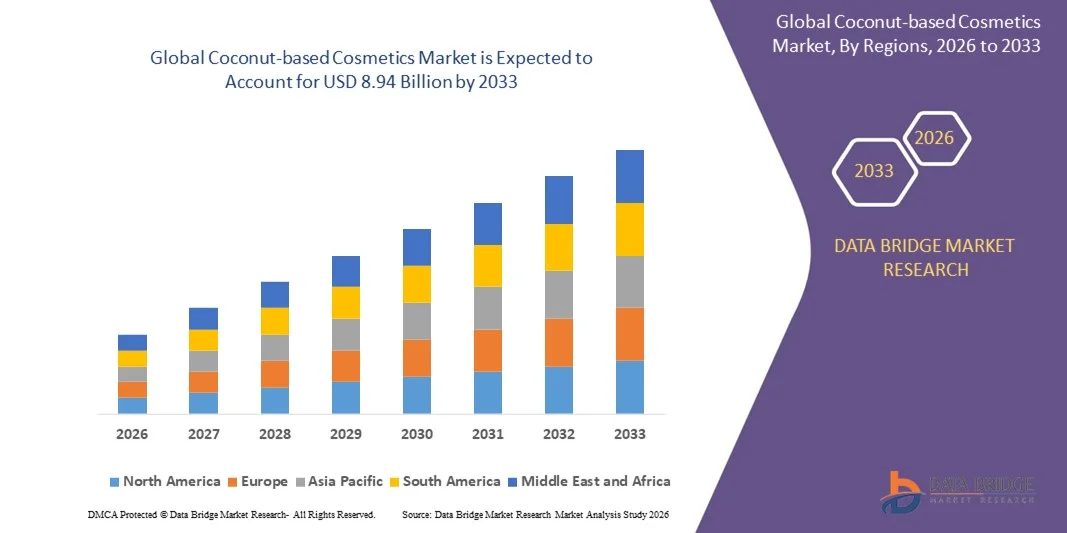
- The global coconut-based cosmetics market size was valued at USD 3.82 billion in 2025 and is expected to reach USD 8.94 billion by 2033, at a CAGR of 11.2% during the forecast period
- The market growth is largely fueled by the increasing consumer preference for natural and organic personal care products, with coconut-based ingredients being recognized for their nourishing, moisturizing, and multifunctional benefits across hair, skin, and body care
- Furthermore, rising awareness of sustainable and eco-friendly products, coupled with the expansion of e-commerce and retail distribution channels, is enabling easier access to coconut-based cosmetics. These factors are accelerating the adoption of natural personal care solutions, thereby significantly boosting the market's growth
Coconut-based Cosmetics Market Analysis
- Coconut-based cosmetics, leveraging natural coconut oil, coconut water, and other coconut derivatives, are gaining importance across skincare, haircare, and body care due to their effectiveness, gentle formulation, and consumer perception of being chemical-free and safe for regular use
- The escalating demand for coconut-based cosmetics is primarily driven by health-conscious consumers, increasing disposable income in emerging markets, and the growing trend of clean, herbal, and multifunctional beauty products that combine natural benefits with modern cosmetic science
- Asia-Pacific dominated coconut-based cosmetics market with a share of 38.5% in 2025, due to rising consumer preference for natural and organic personal care products, expanding retail and e-commerce channels, and the strong presence of coconut-producing countries in the region
- North America is expected to be the fastest growing region in the coconut-based cosmetics market during the forecast period due to increasing consumer awareness of natural and organic personal care products, rising health consciousness, and expanding e-commerce and specialty retail channels
- Liquid segment dominated the market with a market share of 62.5% in 2025, due to the widespread use of liquid-based products for hair and skin care, which offer ease of application and quick absorption. Liquid coconut-based formulations, such as oils, shampoos, and lotions, are highly preferred for their convenience and ability to deliver consistent benefits over time
Report Scope and Coconut-based Cosmetics Market Segmentation
|
Attributes |
Coconut-based Cosmetics Key Market Insights |
|
Segments Covered |
|
|
Countries Covered |
North America
Europe
Asia-Pacific
Middle East and Africa
South America
|
|
Key Market Players |
|
|
Market Opportunities |
|
|
Value Added Data Infosets |
In addition to the insights on market scenarios such as market value, growth rate, segmentation, geographical coverage, and major players, the market reports curated by the Data Bridge Market Research also include in-depth expert analysis, pricing analysis, brand share analysis, consumer survey, demography analysis, supply chain analysis, value chain analysis, raw material/consumables overview, vendor selection criteria, PESTLE Analysis, Porter Analysis, and regulatory framework. |
Coconut-based Cosmetics Market Trends
Growing Preference for Natural and Organic Personal Care
- A significant trend in the coconut-based cosmetics market is the increasing consumer preference for natural and organic personal care products, driven by rising awareness about skin health, chemical sensitivities, and environmental sustainability. This trend is encouraging manufacturers to formulate skincare, haircare, and body care products using coconut derivatives such as coconut oil, coconut water, and coconut milk
- For instance, The Body Shop extensively uses community-traded coconut oil in its skincare and haircare lines, promoting ethical sourcing and natural ingredient adoption. These initiatives strengthen brand trust and align with consumer demand for environmentally responsible and chemical-free products
- The market is witnessing growth in multifunctional cosmetics where coconut-based ingredients provide hydration, nourishment, and protection simultaneously. This is shaping a shift toward simpler, clean-label formulations that meet consumer expectations for efficacy and natural composition
- Rising interest in DIY beauty and wellness trends has led to increased incorporation of coconut-derived ingredients in homemade cosmetic recipes and professional formulations. This adoption is reinforcing the perception of coconut-based ingredients as versatile, safe, and beneficial for skin and hair care
- Coconut-based cosmetics are gaining traction in premium and niche segments where product differentiation is achieved through natural ingredient authenticity and sustainable sourcing practices. Brands are leveraging coconut’s moisturizing, anti-inflammatory, and antioxidant properties to attract health-conscious consumers
- The growing focus on cruelty-free, eco-friendly, and biodegradable packaging complements the adoption of coconut-based products, further enhancing their appeal in environmentally aware markets. This trend is positioning coconut-based cosmetics as a sustainable alternative within the broader personal care industry
Coconut-based Cosmetics Market Dynamics
Driver
Rising Adoption of Sustainable and Eco-Friendly Cosmetics
- The rising consumer demand for sustainable and eco-friendly personal care products is driving the adoption of coconut-based cosmetics, as these products often use renewable ingredients and environmentally responsible sourcing practices. Brands are emphasizing transparency and sustainability to meet growing expectations for ethical products
- For instance, Forest Essentials incorporates cold-pressed coconut oil in its Ayurvedic skincare formulations while adhering to sustainable sourcing and minimal chemical processing. These strategies reinforce the value proposition of natural, eco-conscious cosmetics in premium market segments
- Manufacturers are integrating coconut-based ingredients in formulations to reduce reliance on synthetic compounds, thereby lowering environmental impact and enhancing biodegradability. This approach supports the alignment of product offerings with evolving regulatory and consumer standards for sustainability
- The trend toward plant-based and vegan cosmetics is strengthening the demand for coconut-derived ingredients, which provide functional benefits without animal-derived components. Coconut-based formulations cater to this expanding consumer base seeking ethical and plant-forward products
- Consumers increasingly consider the environmental footprint of cosmetics, prompting brands to prioritize naturally sourced ingredients such as coconut for both performance and sustainability. This driver is fostering long-term adoption of coconut-based ingredients across mass and niche personal care segments
Restraint/Challenge
Limited Availability of Certified Coconut-Based Raw Materials
- The coconut-based cosmetics market faces challenges due to the limited supply of certified and high-quality coconut derivatives that meet international organic and sustainability standards. This scarcity can restrict production scalability and increase ingredient costs
- For instance, companies such as Kama Ayurveda face sourcing constraints when procuring certified organic coconut oil that meets strict quality and traceability requirements. These limitations affect production timelines and may hinder expansion into new markets
- The dependence on specific geographic regions for premium coconut cultivation exposes manufacturers to climatic and logistical risks, affecting raw material consistency. Seasonal variability and regional crop yields contribute to supply chain uncertainty and pricing fluctuations
- Strict regulatory standards for organic certification and sustainable sourcing add complexity to ingredient procurement and verification processes. Compliance with these standards requires additional investment in supplier audits and certification, raising operational overheads
- Market expansion efforts may be constrained by the inability to secure sufficient quantities of certified coconut-based ingredients, potentially limiting product launches and innovation. These challenges collectively underscore the need for robust sourcing strategies and long-term supplier partnerships in the coconut-based cosmetics sector
Coconut-based Cosmetics Market Scope
The market is segmented on the basis of type and form.
- By Type
On the basis of type, the Coconut-Based Cosmetics market is segmented into hair oil, soaps, lipstick, face mask, body lotion, shampoo, and conditioners. The hair oil segment dominated the market with the largest revenue share in 2025, driven by the long-established use of coconut oil for nourishing and strengthening hair. Consumers favor coconut-based hair oils for their natural properties, ability to reduce hair fall, and scalp hydration benefits, making it a staple in personal care routines. The segment also benefits from strong brand trust and wide availability across retail and e-commerce channels, encouraging repeat purchases.
The body lotion segment is expected to witness the fastest growth rate from 2026 to 2033, fueled by rising consumer preference for natural and multifunctional skincare products. For instance, brands such as The Body Shop are expanding coconut-based lotion offerings that combine hydration with a subtle fragrance, catering to health-conscious and eco-aware consumers. The segment’s growth is further supported by the increasing demand for moisturizers suitable for all skin types, and formulations enriched with coconut oil to enhance skin softness and barrier protection.
- By Form
On the basis of form, the Coconut-Based Cosmetics market is segmented into solid and liquid formats. The liquid segment held the largest market revenue share of 62.5% in 2025, driven by the widespread use of liquid-based products for hair and skin care, which offer ease of application and quick absorption. Liquid coconut-based formulations, such as oils, shampoos, and lotions, are highly preferred for their convenience and ability to deliver consistent benefits over time. The popularity of liquid formats is further supported by innovations in packaging and dispensing mechanisms that maintain product quality and enhance user experience.
The solid segment is anticipated to witness the fastest CAGR from 2026 to 2033, fueled by increasing interest in eco-friendly and travel-friendly personal care solutions. For instance, companies such as Lush Cosmetics are promoting solid soaps and shampoos enriched with coconut oil, which reduce plastic packaging and appeal to sustainable lifestyle consumers. Solid coconut-based products are also gaining traction for their long shelf life, concentrated formulation, and portability, making them increasingly attractive to environmentally conscious buyers and niche markets.
Coconut-based Cosmetics Market Regional Analysis
- Asia-Pacific dominated the coconut-based cosmetics market with the largest revenue share of 38.5% in 2025, driven by rising consumer preference for natural and organic personal care products, expanding retail and e-commerce channels, and the strong presence of coconut-producing countries in the region
- The region’s cost-effective raw material availability, growing awareness of herbal and sustainable cosmetics, and increasing disposable income are accelerating market expansion
- The availability of skilled workforce, supportive government initiatives promoting organic and herbal products, and rising urbanization across developing economies are contributing to higher consumption of coconut-based cosmetics
India Coconut-Based Cosmetics Market Insight
India held the largest share in the Asia-Pacific Coconut-Based Cosmetics market in 2025, owing to its abundant coconut production, established personal care industry, and growing domestic and export markets. The country’s strong base of herbal and ayurvedic cosmetic manufacturers, coupled with rising consumer awareness about natural ingredients, is driving market growth. Demand is further supported by innovative product launches in hair and skin care segments enriched with coconut oil and other coconut derivatives.
Indonesia Coconut-Based Cosmetics Market Insight
Indonesia is witnessing the fastest growth in the Asia-Pacific region, fueled by rising demand for natural and eco-friendly personal care products, expansion of retail networks, and increasing export opportunities. For instance, brands such as Sariayu are leveraging locally sourced coconut ingredients to offer hair oils, lotions, and soaps targeting both domestic and international consumers. Growing health consciousness and lifestyle-driven purchasing habits are further boosting market expansion.
Europe Coconut-Based Cosmetics Market Insight
The Europe Coconut-Based Cosmetics market is expanding steadily, supported by strong demand for organic and sustainable personal care products, high consumer awareness, and stringent regulatory standards promoting natural ingredients. The region emphasizes eco-friendly formulations and sustainable packaging, particularly in premium hair and skincare segments. Increasing demand for certified organic and cruelty-free cosmetics is further enhancing market growth.
Germany Coconut-Based Cosmetics Market Insight
Germany’s coconut-based cosmetics market is driven by its mature personal care industry, focus on natural and certified organic products, and growing retail and e-commerce presence. The country shows strong preference for high-quality ingredients and sustainable sourcing practices. Demand is particularly high for hair care and skincare products enriched with coconut derivatives, supporting steady market growth.
U.K. Coconut-Based Cosmetics Market Insight
The U.K. market is supported by rising interest in vegan, organic, and cruelty-free cosmetics, growing e-commerce penetration, and consumer inclination toward herbal personal care products. Increasing focus on sustainability, natural ingredients, and clean beauty trends is fostering demand for coconut-based formulations. Retail innovation and product diversification further strengthen market adoption in the region.
North America Coconut-Based Cosmetics Market Insight
North America is projected to grow at the fastest CAGR from 2026 to 2033, driven by increasing consumer awareness of natural and organic personal care products, rising health consciousness, and expanding e-commerce and specialty retail channels. Consumers are increasingly seeking hair and skincare products with coconut-based ingredients due to their nourishing and moisturizing benefits. In addition, the growth of natural beauty brands and collaborations with large retailers are supporting market expansion.
U.S. Coconut-Based Cosmetics Market Insight
The U.S. accounted for the largest share in the North America market in 2025, underpinned by high demand for natural and herbal personal care products, a strong retail and e-commerce infrastructure, and active innovation in hair and skincare formulations. The country’s focus on wellness, clean beauty trends, and sustainable sourcing is encouraging the adoption of coconut-based cosmetics. Presence of leading brands and extensive distribution networks further solidify the U.S.’s leading position in the region.
Coconut-based Cosmetics Market Share
The coconut-based cosmetics industry is primarily led by well-established companies, including:
- Coda International Plc (U.K.)
- Monza Group Ltd (U.K.)
- Innospec (U.S.)
- Lubrizol Corporation (U.S.)
- Stepan Company (U.S.)
- Ashland Inc. (U.S.)
- BASF SE (Germany)
- Sambuca Group (Italy)
- Marico (India)
- Coco Tana (Indonesia)
- Vita Coco (U.S.)
- Universal Coco Indonesia (Indonesia)
- Klassic Coconut (Indonesia)
Latest Developments in Global Coconut-based Cosmetics Market
- In October 2025, the natural skincare brand Fenua Ola was officially launched in Tuvalu with a five‑item product line centered on extra virgin coconut oil, including a coconut and vanilla oil‑to‑milk cleanser and a body oil. This launch is connecting small island coconut producers to the global personal care market, fostering sustainable agricultural supply chains and promoting high-value exports. The initiative is expected to boost regional economic growth while positioning coconut-based cosmetics as premium and globally recognized, creating new opportunities for natural product adoption and international market expansion
- In September 2025, Marico introduced its Parachute Advansed Olive Enriched Coconut Hair Oil in India, blending coconut-based nourishment with olive oil to improve hair strength and smoothness. The launch strengthens Marico’s natural haircare portfolio by appealing to health-conscious consumers who prefer multifunctional products. By combining traditional coconut benefits with contemporary hair care science, this development is expanding consumer awareness of hybrid coconut-based formulations and driving increased adoption in both domestic and urban markets
- In April 2025, BASF expanded its portfolio of natural-based cosmetic ingredients with three new solutions — Verdessence Maize, Lamesoft OP Plus, and Dehyton PK45 GA/RA, a betaine derived from Rainforest Alliance Certified coconut oil. These innovations enable personal care brands to create more sustainable formulations without sacrificing performance or sensory appeal. The introduction of these ingredients supports the clean-beauty trend, reinforces the importance of certified coconut-based raw materials, and encourages wider adoption of eco-conscious products across hair and skincare segments
- In February 2025, BioHD Skin launched its highly anticipated coconut-based skincare line in the U.S., sourcing premium raw materials from Southeast Asia, particularly Vietnam. By combining the natural benefits of coconuts with advanced scientific research, the brand delivers products that are both luxurious and highly effective. This launch is reshaping consumer perceptions in the U.S. market, elevating the status of coconut-derived cosmetics in premium skincare categories and strengthening the trend toward natural and scientifically backed formulations
- In May 2021, coconut water brand Vita Coco expanded into the European hair care segment with a range of shampoos, conditioners, and treatments. This expansion extends the application of coconut water beyond beverages into beauty and personal care, introducing European consumers to functional coconut-based hair solutions. The move helped establish coconut water as a viable ingredient in hair wellness products, increased market acceptance of coconut-derived cosmetics, and inspired further innovation in natural ingredient-based formulations
SKU-
Get online access to the report on the World's First Market Intelligence Cloud

- Interactive Data Analysis Dashboard
- Company Analysis Dashboard for high growth potential opportunities
- Research Analyst Access for customization & queries
- Competitor Analysis with Interactive dashboard
- Latest News, Updates & Trend analysis
- Harness the Power of Benchmark Analysis for Comprehensive Competitor Tracking
Research Methodology
Data collection and base year analysis are done using data collection modules with large sample sizes. The stage includes obtaining market information or related data through various sources and strategies. It includes examining and planning all the data acquired from the past in advance. It likewise envelops the examination of information inconsistencies seen across different information sources. The market data is analysed and estimated using market statistical and coherent models. Also, market share analysis and key trend analysis are the major success factors in the market report. To know more, please request an analyst call or drop down your inquiry.
The key research methodology used by DBMR research team is data triangulation which involves data mining, analysis of the impact of data variables on the market and primary (industry expert) validation. Data models include Vendor Positioning Grid, Market Time Line Analysis, Market Overview and Guide, Company Positioning Grid, Patent Analysis, Pricing Analysis, Company Market Share Analysis, Standards of Measurement, Global versus Regional and Vendor Share Analysis. To know more about the research methodology, drop in an inquiry to speak to our industry experts.
Customization Available
Data Bridge Market Research is a leader in advanced formative research. We take pride in servicing our existing and new customers with data and analysis that match and suits their goal. The report can be customized to include price trend analysis of target brands understanding the market for additional countries (ask for the list of countries), clinical trial results data, literature review, refurbished market and product base analysis. Market analysis of target competitors can be analyzed from technology-based analysis to market portfolio strategies. We can add as many competitors that you require data about in the format and data style you are looking for. Our team of analysts can also provide you data in crude raw excel files pivot tables (Fact book) or can assist you in creating presentations from the data sets available in the report.