


Global Combat Helmet Market
Market Size in USD Billion
CAGR :
% 
 USD
2.66 Billion
USD
6.37 Billion
2025
2033
USD
2.66 Billion
USD
6.37 Billion
2025
2033
 Forecast Period Forecast Period |
2026 –2033 |
 Market Size (Base Year) Market Size (Base Year) |
USD 2.66 Billion |
 Market Size (Forecast Year) Market Size (Forecast Year) |
USD 6.37 Billion |
 CAGR CAGR |
% |
| Major Markets Players |
|
What is the Global Combat Helmet Market Size and Growth Rate?
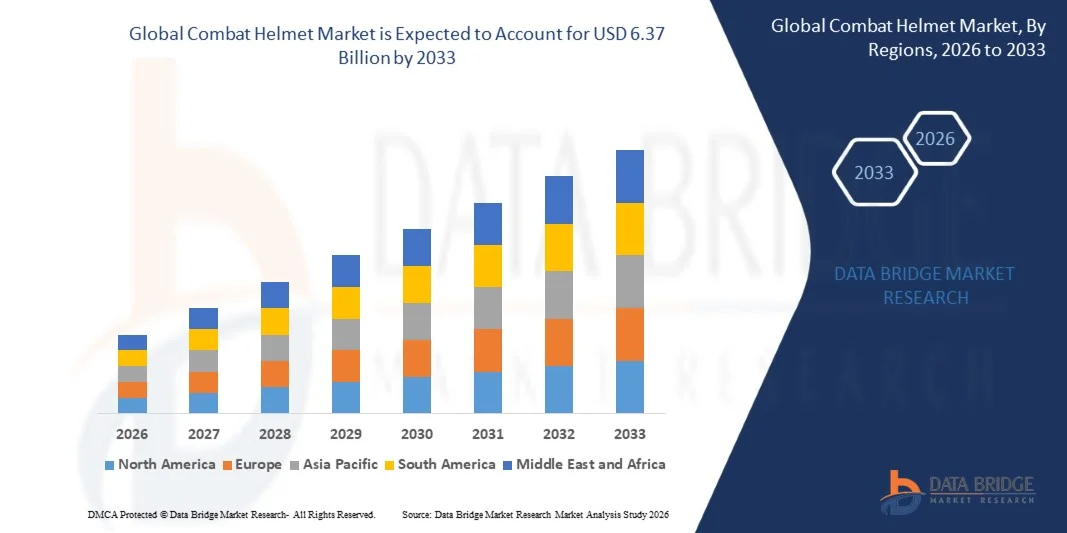
- The global combat helmet market size was valued at USD 2.66 billion in 2025 and is expected to reach USD 6.37 billion by 2033, at a CAGR of 11.50% during the forecast period
- The factors such as growth in adoption of combat helmet for better safety and protection in military and defense segment and rising incorporation of visual assistance and communication systems has resulted in growth in the market value
- However, the high cost of helmets and risk of malfunctioning of technologies will hamper the market growth rate
What are the Major Takeaways of Combat Helmet Market?
- The growing research and development activities, will also create lucrative growth opportunities for the market. The stringent conformation standards set by regulatory bodies in various countries, will further restrict the scope of growth for the market
- Asia-Pacific dominated the combat helmet market with a 38.74% revenue share in 2025, driven by rising defense modernization programs, increasing military personnel deployment, and growing investments in advanced soldier protection equipment across China, India, South Korea, Japan, and Southeast Asia
- North America is projected to register the fastest CAGR of 9.87% from 2026 to 2033, driven by continuous defense modernization programs, high military spending, and strong technological innovation across the U.S. and Canada
- The Aramid Fiber segment dominated the market with a 41.6% share in 2025, as it remains one of the most widely used materials for modern ballistic helmets due to its high strength-to-weight ratio, exceptional impact resistance, and durability
Report Scope and Combat Helmet Market Segmentation
|
Attributes |
Combat Helmet Key Market Insights |
|
Segments Covered |
|
|
Countries Covered |
North America
Europe
Asia-Pacific
Middle East and Africa
South America
|
|
Key Market Players |
|
|
Market Opportunities |
|
|
Value Added Data Infosets |
In addition to the insights on market scenarios such as market value, growth rate, segmentation, geographical coverage, and major players, the market reports curated by the Data Bridge Market Research also include in-depth expert analysis, pricing analysis, brand share analysis, consumer survey, demography analysis, supply chain analysis, value chain analysis, raw material/consumables overview, vendor selection criteria, PESTLE Analysis, Porter Analysis, and regulatory framework. |
What is the Key Trend in the Combat Helmet Market?
“Increasing Integration of Lightweight Materials and Smart Soldier Technologies in Combat Helmets”
- The combat helmet market is witnessing strong adoption of lightweight composite materials, advanced ballistic protection technologies, and modular helmet designs to improve soldier mobility, comfort, and battlefield survivability
- Manufacturers are introducing next-generation combat helmets with integrated communication systems, night vision compatibility, augmented reality displays, and advanced sensor technologies that enhance situational awareness and operational efficiency
- Growing demand for multi-functional soldier protection systems, improved ballistic resistance, and reduced helmet weight is driving the development of high-performance helmets for modern combat environments
- For instance, companies such as BAE Systems, Honeywell International Inc., DuPont, and Gentex Corporation are developing advanced combat helmet solutions using aramid fibers, ultra-high-molecular-weight polyethylene (UHMWPE), and hybrid composite materials
- Increasing integration of communication headsets, camera mounts, facial protection systems, and tactical accessories is accelerating the evolution of modular helmet platforms
- As modern warfare increasingly focuses on network-centric operations and soldier digitization, advanced combat helmets will remain critical components of integrated soldier protection systems
What are the Key Drivers of Combat Helmet Market?
- Rising defense modernization programs and increasing investments in soldier protection equipment are significantly driving the demand for advanced combat helmets across global military forces
- For instance, in 2025, defense manufacturers such as 3M, BAE Systems, and Avon Protection plc expanded their ballistic protection portfolios to support modern military helmet programs and soldier protection systems
- Growing geopolitical tensions and increasing focus on military personnel safety, counter-terrorism operations, and peacekeeping missions are accelerating procurement of advanced ballistic helmets
- Advancements in ballistic fiber technologies, lightweight composite materials, and helmet ergonomics have improved impact resistance, durability, and long-term wear comfort for soldiers
- Rising demand for integrated soldier systems, including communication devices, augmented reality displays, and battlefield sensors, is creating opportunities for technologically advanced combat helmet design
- Supported by continuous defense spending growth and increasing investments in next-generation soldier modernization programs, the Combat Helmet market is expected to witness strong long-term expansion
Which Factor is Challenging the Growth of the Combat Helmet Market?
- High manufacturing costs associated with advanced ballistic materials and composite armor technologies can limit procurement volumes, particularly for smaller defense budgets
- For instance, during 2024–2025, fluctuations in raw material costs such as aramid fibers and ultra-high-molecular-weight polyethylene affected production expenses for several global helmet manufacturers
- Complex manufacturing processes and strict military safety standards, certification requirements, and ballistic testing procedures can increase development timelines and production costs
- Limited defense budgets in developing countries may restrict the adoption of high-performance combat helmet systems with integrated electronics and advanced protection features
- Competition from alternative personal protection equipment designs and cost-efficient helmet solutions may also create pricing pressure within the market
- To address these challenges, manufacturers are focusing on cost-efficient material innovations, modular helmet platforms, and scalable production technologies, which are expected to improve affordability and expand global adoption of advanced combat helmets
How is the Combat Helmet Market Segmented?
The market is segmented on the basis of type, application, material, and end user.
• By Type
On the basis of type, the combat helmet market is segmented into Carbon Fiber, Glass Fiber, Aramid Fiber, Manganese Steel, and Others. The Aramid Fiber segment dominated the market with a 41.6% share in 2025, as it remains one of the most widely used materials for modern ballistic helmets due to its high strength-to-weight ratio, exceptional impact resistance, and durability. Aramid fibers such as Kevlar are extensively used in military helmets as they provide reliable protection against ballistic threats, shrapnel, and blunt impacts while maintaining lightweight characteristics that improve soldier mobility and comfort during extended missions. In addition, aramid-based helmets offer enhanced heat resistance, structural stability, and flexibility, making them suitable for demanding battlefield environments.
The Carbon Fiber segment is expected to grow at the fastest CAGR from 2026 to 2033, driven by increasing demand for next-generation lightweight combat gear and advanced soldier protection systems. Carbon fiber helmets offer superior structural rigidity, reduced weight, and improved durability, making them ideal for integrating communication devices, night-vision mounts, and augmented reality systems used in modern warfare.
• By Application
On the basis of application, the market is segmented into Protection, Visual Assistance, and Communication. The Protection segment dominated the market with a 58.4% share in 2025, supported by the primary role of combat helmets in safeguarding military personnel and law enforcement officers from ballistic threats, fragmentation, and blunt-force impacts. Modern combat helmets are designed to provide multi-threat protection, including resistance to small-arms fire, explosive fragments, and environmental hazards encountered in combat zones. Increasing investments in soldier modernization programs and advanced personal protective equipment have strengthened the adoption of high-performance helmets across defense forces worldwide.
The Communication segment is projected to grow at the fastest CAGR from 2026 to 2033, driven by increasing integration of communication headsets, tactical radios, and battlefield networking systems within helmet structures. Modern military operations increasingly rely on real-time communication, situational awareness, and coordinated mission execution, encouraging the development of helmets with built-in communication modules and audio systems.
• By Material
On the basis of material, the combat helmet market is segmented into Ballistic Fiber, Thermoplastic, and Metal. The Ballistic Fiber segment dominated the market with a 49.2% share in 2025, driven by widespread adoption of advanced fibers such as aramid and ultra-high-molecular-weight polyethylene (UHMWPE) in modern helmet manufacturing. These materials provide excellent ballistic resistance, lightweight performance, and improved wearer comfort, making them ideal for military and law enforcement applications. Ballistic fiber helmets are capable of absorbing and dispersing impact energy efficiently, reducing head injuries during combat or tactical operations. Their durability and adaptability to modular helmet designs further strengthen their adoption across global defense programs.
The Thermoplastic segment is expected to grow at the fastest CAGR from 2026 to 2033, propelled by advancements in high-performance polymer technologies and cost-efficient manufacturing processes. Thermoplastic helmets offer benefits such as improved design flexibility, impact resistance, and lightweight construction, making them suitable for both military training environments and law enforcement applications.
• By End User
On the basis of end user, the combat helmet market is segmented into Military Agencies and Law Enforcement Agencies. The Military Agencies segment dominated the market with a 71.3% share in 2025, as armed forces remain the largest users of advanced combat helmets worldwide. Military personnel require helmets that provide high ballistic protection, compatibility with tactical equipment, and integration with modern soldier systems, including night vision devices, communication headsets, and mounted sensors. Rising defense budgets, increasing geopolitical tensions, and continuous modernization of military equipment are driving procurement of advanced combat helmets across global defense forces.
The Law Enforcement Agencies segment is projected to grow at the fastest CAGR from 2026 to 2033, supported by rising demand for protective equipment among police forces, special response teams, and border security units. Increasing concerns related to civil unrest, terrorism threats, and high-risk tactical operations are encouraging law enforcement agencies to adopt advanced ballistic helmets that provide improved safety, mobility, and operational effectiveness.
Which Region Holds the Largest Share of the Combat Helmet Market?
- Asia-Pacific dominated the combat helmet market with a 38.74% revenue share in 2025, driven by rising defense modernization programs, increasing military personnel deployment, and growing investments in advanced soldier protection equipment across China, India, South Korea, Japan, and Southeast Asia. Expanding regional defense budgets and rising geopolitical tensions are encouraging governments to strengthen their armed forces with next-generation ballistic helmets, lightweight protective gear, and integrated soldier systems. Rapid growth in domestic defense manufacturing and strong government support for military modernization initiatives further accelerate market expansion across the region
- Leading defense manufacturers in Asia-Pacific are introducing lightweight composite helmets, enhanced ballistic protection systems, and modular helmet platforms capable of supporting communication devices, night-vision equipment, and tactical accessories. Increasing investments in defense R&D and advanced material technologies are strengthening the region’s manufacturing capabilities and technological competitiveness
- Rising military modernization initiatives, strong defense procurement programs, and expanding production of aramid fiber and ballistic composite materials further reinforce Asia-Pacific’s leadership in the global Combat Helmet market
China Combat Helmet Market Insight
China is the largest contributor in Asia-Pacific, supported by substantial investments in military modernization and the rapid expansion of domestic defense manufacturing capabilities. The country is focusing on developing advanced ballistic protection systems, lightweight composite helmets, and integrated soldier equipment to enhance battlefield survivability and operational efficiency. Growing defense spending, strong government support for military innovation, and rising production of high-performance materials such as aramid fibers and ultra-high-molecular-weight polyethylene are accelerating helmet adoption across Chinese armed forces. In addition, continuous modernization of infantry equipment and expansion of tactical gear manufacturing facilities further strengthen the country’s leadership in the regional Combat Helmet market.
India Combat Helmet Market Insight
India is emerging as a significant growth hub, driven by increasing defense procurement programs and government initiatives aimed at strengthening domestic defense manufacturing under programs such as “Make in India.” Rising demand for ballistic helmets, advanced personal protective equipment, and soldier modernization systems is encouraging local and international manufacturers to expand production capabilities within the country. Indian armed forces are increasingly adopting lightweight helmets integrated with communication systems, night-vision mounts, and modular accessories to improve battlefield efficiency. Continuous investments in defense R&D, modernization of military infrastructure, and rising focus on soldier safety are further accelerating the adoption of advanced combat helmets across the country.
Japan Combat Helmet Market Insight
Japan shows steady growth supported by increasing investments in defense technology modernization and advanced protective equipment for military personnel. The country’s strong focus on precision engineering, high-quality manufacturing standards, and advanced material technologies is supporting the development of lightweight, durable combat helmets with improved ballistic resistance. Rising security concerns and growing regional defense collaborations are encouraging Japan to enhance its soldier protection systems. In addition, integration of communication devices, sensor systems, and tactical accessories into helmet platforms is gaining traction among defense forces, strengthening long-term market growth in the country.
South Korea Combat Helmet Market Insight
South Korea contributes significantly to the regional market due to its advanced defense manufacturing capabilities and strong military modernization initiatives. The country is actively investing in next-generation soldier protection technologies, including lightweight ballistic helmets, smart soldier systems, and integrated battlefield communication equipment. Rapid advancements in composite materials and protective fiber technologies are improving helmet performance and durability. In addition, South Korea’s focus on strengthening national defense capabilities and expanding domestic production of tactical equipment is driving strong demand for advanced combat helmets across military forces.
North America Combat Helmet Market
North America is projected to register the fastest CAGR of 9.87% from 2026 to 2033, driven by continuous defense modernization programs, high military spending, and strong technological innovation across the U.S. and Canada. The region is witnessing increasing adoption of next-generation combat helmets integrated with communication systems, augmented reality displays, and sensor technologies designed to enhance soldier situational awareness and battlefield performance. Rising investments in soldier protection programs and advanced ballistic material research are further accelerating market growth. Continuous collaboration between defense agencies and technology companies also supports the development of lightweight, modular, and high-performance helmet systems.
U.S. Combat Helmet Market Insight
The U.S. is the largest contributor in North America, supported by substantial defense budgets and extensive research programs focused on improving soldier protection systems. The U.S. military is increasingly adopting advanced ballistic helmets featuring modular designs, improved impact resistance, and compatibility with night-vision systems, communication headsets, and augmented reality devices. Continuous investments in defense technology innovation and modernization of infantry equipment are driving strong demand for next-generation combat helmets. Presence of leading defense contractors and advanced manufacturing facilities further strengthens the country’s position in the global combat helmet market.
Canada Combat Helmet Market Insight
Canada contributes steadily to regional growth, driven by increasing investments in defense equipment modernization and protective gear for military and law enforcement personnel. The Canadian armed forces are focusing on improving soldier safety through adoption of lightweight ballistic helmets, enhanced protective materials, and modular helmet systems that support communication and surveillance equipment. Rising participation in international defense collaborations and peacekeeping missions is also encouraging procurement of advanced personal protection equipment. Strong research capabilities, skilled workforce availability, and continuous defense infrastructure upgrades further support the expansion of the Combat Helmet market in Canada.
Which are the Top Companies in Combat Helmet Market?
The combat helmet industry is primarily led by well-established companies, including:
- BAE Systems (U.K.)
- DuPont (U.S.)
- Honeywell International Inc. (U.S.)
- 3M (U.S.)
- Gentex Corporation (U.S.)
- Avon Protection plc (U.K.)
- Safariland, LLC (U.S.)
- ArmorSource LLC (U.S.)
- Revision Military (U.S.)
- SORD CORPORATION (Australia)
- MKU Limited (India)
- Point Blank Enterprises Inc. (U.S.)
- ArmorWorks (U.S.)
- Eagle Industries (U.S.)
- Morgan Advanced Materials (U.K.)
- Survitec Group Limited (U.K.)
What are the Recent Developments in Global Combat Helmet Market?
- In February 2025, Galvion received orders for approximately 35,000 Batlskin helmet systems from the Middle East region, including both Batlskin VIPER and Batlskin PDxT variants, strengthening the company’s global defense supply presence and reinforcing growing demand for advanced combat helmet systems in international military markets
- In August 2024, Gentex Corporation received production authorization from the U.S. Defense Logistics Agency for its Advanced Combat Helmet (ACH) Gen II, which features an Ultra-High Molecular Weight Polyethylene (UHMWPE) design to enhance ballistic protection and lightweight performance, supporting the modernization of soldier protection equipment
- In February 2023, the U.S. Defense Logistics Agency awarded a second contract to Avon Rubber p.l.c., contract SPE1C1-22-D-1516, to supply second-generation Advanced Combat Helmets, with the total agreement valued at approximately USD 6.7 million, strengthening the company’s role in supplying advanced protective gear to U.S. military forces
- In February 2023, the U.S. Army awarded a contract to ArmorSource LLC., to deliver around 14,000 Advanced Combat Vehicle Crewman Helmets (ACVC-H), with the agreement valued at approximately USD 6 million, supporting enhanced head protection for armored vehicle personnel and improving operational safety in combat environments
- In September 2022, the U.S. Army awarded a contract to Avon Group, contract W91CRB-21-D-0022, for the delivery of the Next Generation Integrated Head Protection System (NG IHPS) helmets, with the agreement valued at approximately USD 42.1 million, highlighting continued investments in advanced soldier protection systems and next-generation combat equipment
SKU-
Get online access to the report on the World's First Market Intelligence Cloud

- Interactive Data Analysis Dashboard
- Company Analysis Dashboard for high growth potential opportunities
- Research Analyst Access for customization & queries
- Competitor Analysis with Interactive dashboard
- Latest News, Updates & Trend analysis
- Harness the Power of Benchmark Analysis for Comprehensive Competitor Tracking
Research Methodology
Data collection and base year analysis are done using data collection modules with large sample sizes. The stage includes obtaining market information or related data through various sources and strategies. It includes examining and planning all the data acquired from the past in advance. It likewise envelops the examination of information inconsistencies seen across different information sources. The market data is analysed and estimated using market statistical and coherent models. Also, market share analysis and key trend analysis are the major success factors in the market report. To know more, please request an analyst call or drop down your inquiry.
The key research methodology used by DBMR research team is data triangulation which involves data mining, analysis of the impact of data variables on the market and primary (industry expert) validation. Data models include Vendor Positioning Grid, Market Time Line Analysis, Market Overview and Guide, Company Positioning Grid, Patent Analysis, Pricing Analysis, Company Market Share Analysis, Standards of Measurement, Global versus Regional and Vendor Share Analysis. To know more about the research methodology, drop in an inquiry to speak to our industry experts.
Customization Available
Data Bridge Market Research is a leader in advanced formative research. We take pride in servicing our existing and new customers with data and analysis that match and suits their goal. The report can be customized to include price trend analysis of target brands understanding the market for additional countries (ask for the list of countries), clinical trial results data, literature review, refurbished market and product base analysis. Market analysis of target competitors can be analyzed from technology-based analysis to market portfolio strategies. We can add as many competitors that you require data about in the format and data style you are looking for. Our team of analysts can also provide you data in crude raw excel files pivot tables (Fact book) or can assist you in creating presentations from the data sets available in the report.












