Global Corneal Ulcer Treatment Market
Market Size in USD Billion
CAGR :
% 
 USD
1.10 Billion
USD
1.82 Billion
2025
2033
USD
1.10 Billion
USD
1.82 Billion
2025
2033
 Forecast Period Forecast Period |
2026 –2033 |
 Market Size (Base Year) Market Size (Base Year) |
USD 1.10 Billion |
 Market Size (Forecast Year) Market Size (Forecast Year) |
USD 1.82 Billion |
 CAGR CAGR |
% |
| Major Markets Players |
|
Corneal Ulcer Treatment Market Size
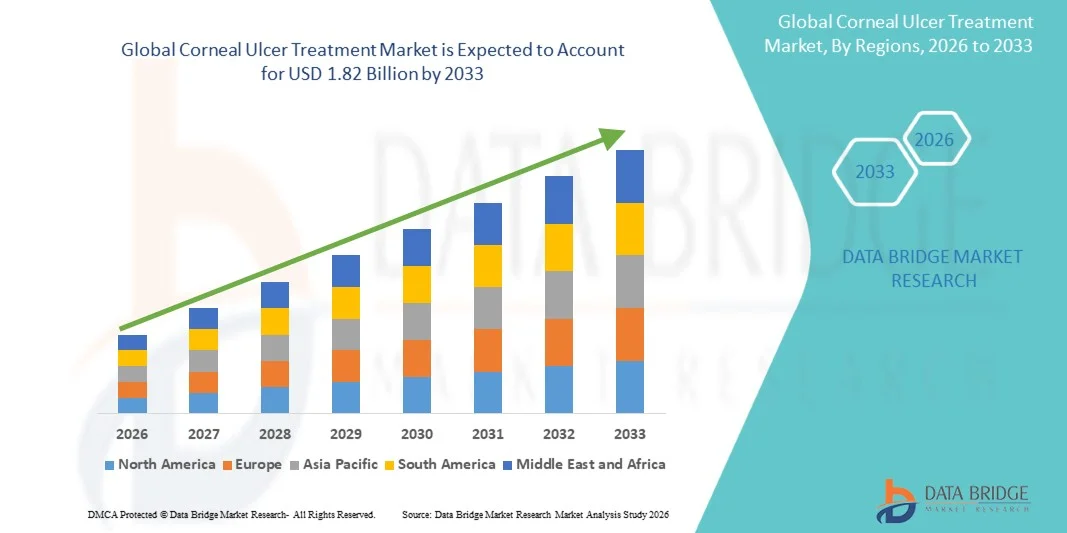
- The global corneal ulcer treatment market size was valued at USD 1.10 billion in 2025 and is expected to reach USD 1.82 billion by 2033, at a CAGR of 6.50% during the forecast period
- The market growth is largely fueled by the increasing prevalence of eye infections and corneal disorders, along with rising awareness regarding early diagnosis and treatment, leading to greater adoption of corneal ulcer treatment solutions across healthcare settings
- Furthermore, advancements in ophthalmic drugs, improved access to healthcare services, and the growing demand for effective and timely treatment options are establishing corneal ulcer treatment as a critical component of eye care. These converging factors are accelerating the uptake of Corneal Ulcer Treatment solutions, thereby significantly boosting the industry's growth
Corneal Ulcer Treatment Market Analysis
- Corneal ulcer treatment, involving the use of antimicrobial drugs, antifungal agents, and advanced ophthalmic therapies, is increasingly vital in modern eye care due to the rising incidence of eye infections, trauma, and contact lens-related complications
- The escalating demand for corneal ulcer treatment is primarily fueled by increasing awareness regarding eye health, growing prevalence of bacterial and fungal infections, and improved access to ophthalmic care services
- North America dominated the corneal ulcer treatment market with the largest revenue share of approximately 35.8% in 2025, characterized by advanced healthcare infrastructure, high awareness levels, and strong presence of key pharmaceutical players, with the U.S. witnessing substantial growth driven by early diagnosis and availability of advanced treatment options
- Asia-Pacific is expected to be the fastest growing region in the Corneal Ulcer Treatment market during the forecast period, with a projected CAGR of around 8.9%, due to rising healthcare expenditure, increasing cases of eye infections, and improving access to ophthalmology services
- The medication segment dominated the largest market revenue share of 63.2% in 2025, driven by its position as the first-line treatment for most corneal ulcer cases
Report Scope and Corneal Ulcer Treatment Market Segmentation
|
Attributes |
Corneal Ulcer Treatment Key Market Insights |
|
Segments Covered |
|
|
Countries Covered |
North America
Europe
Asia-Pacific
Middle East and Africa
South America
|
|
Key Market Players |
|
|
Market Opportunities |
|
|
Value Added Data Infosets |
In addition to the insights on market scenarios such as market value, growth rate, segmentation, geographical coverage, and major players, the market reports curated by the Data Bridge Market Research also include in-depth expert analysis, patient epidemiology, pipeline analysis, pricing analysis, and regulatory framework. |
Corneal Ulcer Treatment Market Trends
“Advancements in Ophthalmic Treatments and Increasing Focus on Early Diagnosis”
- A significant and accelerating trend in the global Corneal Ulcer Treatment market is the advancement of ophthalmic therapies and increasing emphasis on early diagnosis and timely intervention to prevent vision loss
- For instance, companies such as Alcon and Bausch + Lomb are developing advanced antimicrobial eye drops and innovative treatment solutions to improve healing outcomes in corneal ulcer patients
- The increasing adoption of combination therapies, including antibiotics, antifungals, and antiviral medications, is enhancing treatment effectiveness for different types of corneal infections
- In addition, technological advancements in diagnostic tools, such as slit-lamp examination and corneal imaging, are enabling earlier and more accurate detection of corneal ulcers
- The growing focus on personalized treatment approaches based on the severity and cause of infection is further improving patient outcomes
- This trend toward advanced, patient-centric ophthalmic care is reshaping the Corneal Ulcer Treatment market, driving innovation in both therapeutics and diagnostic solutions
Corneal Ulcer Treatment Market Dynamics
Driver
“Rising Prevalence of Eye Infections and Increasing Contact Lens Usage”
- The increasing incidence of eye infections and corneal disorders is a major driver fueling the growth of the corneal ulcer treatment market globally
- For instance, organizations such as World Health Organization highlight that microbial keratitis and related eye infections are significant causes of visual impairment worldwide, driving the demand for effective treatment
- The growing use of contact lenses, particularly improper handling and hygiene practices, is contributing to a higher risk of corneal ulcers
- In addition, increasing exposure to environmental pollutants, trauma, and ocular injuries is further driving the prevalence of corneal infections
- Rising awareness regarding eye health and the importance of early treatment is encouraging patients to seek medical care, thereby boosting market demand
- Furthermore, improving access to ophthalmic care and availability of advanced treatment options are supporting market growth
Restraint/Challenge
“Limited Access to Eye Care and High Cost of Advanced Treatments”
- One of the major challenges in the Corneal Ulcer Treatment market is limited access to specialized eye care services, particularly in rural and underdeveloped regions
- For instance, organizations such as International Agency for the Prevention of Blindness emphasize gaps in access to timely diagnosis and treatment, especially in low-income regions
- The high cost associated with advanced treatments, including specialized medications and surgical interventions such as corneal transplantation, can restrict patient access
- In addition, lack of awareness and delayed diagnosis can lead to severe complications, including permanent vision loss, increasing the burden on healthcare systems
- Variability in treatment outcomes and the emergence of antimicrobial resistance in certain infections can also pose challenges to effective disease management
- Addressing these challenges through improved healthcare infrastructure, awareness programs, affordable treatment options, and early screening initiatives will be essential for sustaining market growth
Corneal Ulcer Treatment Market Scope
The market is segmented on the basis of treatment, diagnosis, symptoms, dosage, route of administration, end-users, and distribution channel.
• By Treatment
On the basis of treatment, the Corneal Ulcer Treatment market is segmented into medication, surgery, and others. The medication segment dominated the largest market revenue share of 63.2% in 2025, driven by its position as the first-line treatment for most corneal ulcer cases. Medications such as antibiotics, antifungals, and antivirals are widely prescribed depending on the underlying cause of the ulcer. The high prevalence of bacterial keratitis significantly contributes to the demand for topical antibiotics. In addition, early-stage corneal ulcers are effectively managed with medications, reducing the need for surgical intervention. The segment benefits from easy accessibility and affordability of drug therapies. Increasing awareness regarding early diagnosis and treatment further supports growth. Pharmaceutical advancements have led to the development of more effective and targeted drugs. The widespread use of combination therapies enhances treatment outcomes. Growing healthcare infrastructure and availability of ophthalmic drugs boost adoption. Continuous R&D in ocular pharmacology strengthens the pipeline. These factors collectively ensure the dominance of the medication segment.
The surgery segment is expected to witness the fastest CAGR of 8.7% from 2026 to 2033, driven by the rising number of severe and advanced corneal ulcer cases requiring surgical intervention. Procedures such as corneal transplantation and amniotic membrane grafting are increasingly adopted for patients unresponsive to medications. Advancements in surgical techniques and equipment significantly improve success rates. Increasing availability of skilled ophthalmic surgeons further supports growth. The segment benefits from rising awareness regarding advanced treatment options. In addition, the growing burden of vision impairment and corneal blindness drives demand. Technological innovations such as laser-assisted procedures enhance precision and recovery outcomes. Expanding healthcare access in emerging economies also contributes to growth. Increasing investments in ophthalmology infrastructure further boost adoption. The development of minimally invasive surgical options supports patient preference. These factors position surgery as the fastest-growing treatment segment.
• By Diagnosis
On the basis of diagnosis, the Corneal Ulcer Treatment market is segmented into fluorescein eye stain test, slit-lamp exam, and others. The slit-lamp exam segment held the largest market revenue share of 46.5% in 2025, driven by its widespread use as a standard diagnostic tool in ophthalmology. The slit-lamp allows detailed examination of the cornea, enabling accurate detection and assessment of ulcers. It is commonly available in clinics and hospitals, supporting its extensive adoption. The segment benefits from high diagnostic accuracy and ease of use. Increasing patient visits for eye-related disorders further boost demand. Technological advancements in imaging systems enhance diagnostic precision. Ophthalmologists rely heavily on slit-lamp examinations for treatment planning. The rising prevalence of eye infections and injuries contributes to growth. In addition, integration with digital imaging systems improves documentation and monitoring. Continuous upgrades in ophthalmic equipment strengthen the segment. These factors ensure the dominance of the slit-lamp exam segment.
The fluorescein eye stain test segment is anticipated to witness the fastest CAGR of 9.1% from 2026 to 2033, driven by its effectiveness in detecting corneal epithelial defects. This test involves applying a fluorescent dye to highlight damaged areas of the cornea. It is widely used for quick and accurate diagnosis of corneal ulcers. The simplicity and cost-effectiveness of the procedure support its growing adoption. Increasing awareness regarding early diagnosis further drives demand. The test is commonly used in emergency and outpatient settings. Technological improvements in diagnostic dyes enhance visibility and accuracy. Rising incidence of eye infections and trauma contributes to growth. The segment benefits from its non-invasive nature and rapid results. Expanding use in primary healthcare settings also supports adoption. These factors position fluorescein eye stain tests as the fastest-growing diagnostic segment.
• By Symptoms
On the basis of symptoms, the Corneal Ulcer Treatment market is segmented into redness, tears, discharge from eye, blurry vision, swollen eyelids, vision changes, severe pain, and others. The redness segment accounted for the largest market revenue share of 28.4% in 2025, driven by its role as one of the most common and early symptoms of corneal ulcers. Patients experiencing redness are more likely to seek immediate medical attention, leading to higher diagnosis rates. The symptom is easily noticeable and often associated with underlying infections or inflammation. Increasing awareness about eye health encourages early consultation. The segment benefits from a high prevalence across all age groups. Ophthalmologists frequently use redness as a primary indicator for further examination. Rising environmental pollution and screen exposure contribute to eye irritation and redness. Early detection linked to this symptom improves treatment outcomes. Growing access to healthcare services further supports segment growth. These factors ensure the dominance of the redness segment.
The blurry vision segment is expected to witness the fastest CAGR of 8.5% from 2026 to 2033, driven by the increasing severity of corneal conditions affecting visual clarity. Blurry vision often indicates advanced stages of corneal ulcers, prompting urgent medical intervention. Rising awareness about vision-related complications supports early diagnosis and treatment. The segment benefits from increasing cases of eye infections and injuries. Technological advancements in diagnostic tools improve detection accuracy. Patients experiencing vision impairment are more likely to seek specialized care. Growing aging population further contributes to prevalence. The symptom is closely associated with long-term complications, driving treatment demand. Increased focus on preserving vision health supports growth. Expanding access to ophthalmic care enhances adoption. These factors position blurry vision as the fastest-growing symptom segment.
• By Dosage
On the basis of dosage, the Corneal Ulcer Treatment market is segmented into eye drops, tablets, and others. The eye drops segment dominated the largest market revenue share of 58.9% in 2025, driven by their direct application and effectiveness in delivering medication to the affected area. Eye drops are the most commonly prescribed dosage form for corneal ulcer treatment. They offer rapid action and targeted therapy, improving treatment outcomes. The segment benefits from ease of administration and patient compliance. Increasing availability of advanced formulations supports growth. Ophthalmologists prefer eye drops for both mild and severe cases. Rising prevalence of eye infections further drives demand. The segment also benefits from continuous innovation in drug delivery systems. Improved shelf life and stability enhance product adoption. Growing awareness regarding ocular health supports usage. These factors ensure the dominance of the eye drops segment.
The tablets segment is projected to witness the fastest CAGR of 7.9% from 2026 to 2033, driven by their use in systemic infections and severe cases requiring oral medication. Tablets are often prescribed alongside topical treatments for comprehensive management. The segment benefits from increasing cases of severe and resistant infections. Growing awareness about combination therapies supports adoption. Advancements in pharmaceutical formulations enhance drug effectiveness. Tablets offer convenience in administration for certain patient groups. Increasing healthcare access further boosts demand. The segment is supported by rising prescription rates in advanced cases. Expanding pharmaceutical production capabilities contribute to growth. Continuous research in oral therapies strengthens the pipeline. These factors position tablets as the fastest-growing dosage segment.
• By Route of Administration
On the basis of route of administration, the Corneal Ulcer Treatment market is segmented into oral, topical, and others. The topical segment held the largest market revenue share of 62.7% in 2025, driven by its effectiveness in delivering drugs directly to the site of infection. Topical administration ensures high drug concentration at the corneal surface, improving treatment outcomes. It is widely preferred for its rapid action and minimal systemic side effects. The segment benefits from extensive use of eye drops and ointments. Increasing prevalence of eye infections further supports growth. Ophthalmologists favor topical treatments for initial therapy. Technological advancements in drug formulations enhance absorption and efficacy. Growing awareness regarding early treatment boosts adoption. The segment also benefits from ease of use and patient compliance. Continuous innovation in ocular drug delivery systems strengthens the market. These factors ensure the dominance of the topical segment.
The oral segment is expected to witness the fastest CAGR of 8.2% from 2026 to 2033, driven by its use in severe infections and systemic involvement. Oral medications are often prescribed when topical treatments alone are insufficient. The segment benefits from increasing cases of advanced corneal ulcers. Growing awareness about comprehensive treatment approaches supports adoption. Advancements in oral drug formulations enhance effectiveness. The segment is supported by rising healthcare access and prescription rates. Oral administration offers convenience for certain patient populations. Increasing prevalence of resistant infections further drives demand. Integration of combination therapies boosts growth. Continuous research in systemic treatments enhances prospects. These factors position oral administration as the fastest-growing segment.
• By End-Users
On the basis of end-users, the Corneal Ulcer Treatment market is segmented into clinic, hospital, and others. The hospital segment accounted for the largest market revenue share of 47.6% in 2025, driven by the availability of advanced diagnostic and treatment facilities. Hospitals serve as primary centers for managing moderate to severe corneal ulcer cases. The presence of specialized ophthalmologists supports accurate diagnosis and treatment. Increasing patient inflow and rising prevalence of eye disorders further boost demand. Hospitals benefit from strong infrastructure and access to advanced technologies. The segment is supported by favorable reimbursement policies. Growing investments in healthcare infrastructure enhance capabilities. Hospitals also handle complex surgical procedures. Integration of advanced imaging systems improves outcomes. Continuous expansion of hospital networks supports growth. These factors ensure the dominance of the hospital segment.
The clinic segment is anticipated to witness the fastest CAGR of 8.6% from 2026 to 2033, driven by increasing preference for outpatient care and early diagnosis. Clinics provide accessible and cost-effective treatment options for patients. The growing number of ophthalmology clinics supports segment growth. Increasing awareness about eye health encourages early visits. Clinics are equipped with essential diagnostic tools for initial assessment. The segment benefits from shorter waiting times and convenience. Rising urbanization and healthcare access further drive demand. Technological advancements in clinic-based equipment enhance capabilities. Growing focus on preventive care supports adoption. Expansion of private clinics boosts market presence. These factors position clinics as the fastest-growing end-user segment.
• By Distribution Channel
On the basis of distribution channel, the Corneal Ulcer Treatment market is segmented into hospital pharmacy, retail pharmacy, and online pharmacy. The hospital pharmacy segment dominated the largest market revenue share of 49.1% in 2025, driven by direct dispensing of prescribed medications within hospital settings. Patients undergoing treatment in hospitals rely heavily on in-house pharmacies. The segment benefits from assured availability of specialized ophthalmic drugs. Increasing hospital admissions further support growth. Hospital pharmacies ensure proper storage and handling of sensitive medications. The segment is supported by strong integration with healthcare providers. Growing prevalence of eye disorders boosts demand. Hospitals often provide immediate access to medications post-diagnosis. Continuous expansion of hospital infrastructure enhances distribution. These factors ensure the dominance of the hospital pharmacy segment.
The online pharmacy segment is projected to witness the fastest CAGR of 11.3% from 2026 to 2033, driven by the rapid growth of e-commerce and digital healthcare platforms. Online pharmacies offer convenience and doorstep delivery of medications. Increasing internet penetration and smartphone usage support segment growth. The segment benefits from competitive pricing and wide product availability. Rising consumer preference for digital solutions drives adoption. Online platforms provide easy access to prescription refills. Growing awareness about telemedicine further boosts demand. Expansion of digital payment systems enhances user experience. Increasing regulatory support for online pharmacies supports growth. Continuous innovation in logistics and delivery strengthens the segment. These factors collectively position online pharmacies as the fastest-growing distribution channel.
Corneal Ulcer Treatment Market Regional Analysis
- North America dominated the corneal ulcer treatment market with the largest revenue share of approximately 35.8% in 2025, characterized by advanced healthcare infrastructure, high awareness levels, and a strong presence of key pharmaceutical players
- The region benefits from early diagnosis, widespread access to ophthalmic care, and increasing adoption of advanced treatment options for eye infections
- This widespread adoption is further supported by strong healthcare expenditure, availability of skilled ophthalmologists, and continuous advancements in eye care therapies, establishing corneal ulcer treatment as a critical segment within ophthalmology
U.S. Corneal Ulcer Treatment Market Insight
The U.S. corneal ulcer treatment market captured the largest revenue share in 2025 within North America, driven by early diagnosis and the availability of advanced treatment options. The country’s well-established healthcare infrastructure and strong presence of leading pharmaceutical companies are fueling market growth. In addition, the increasing prevalence of eye infections and high awareness regarding eye health are significantly contributing to the expansion of the market in the U.S.
Europe Corneal Ulcer Treatment Market Insight
The Europe corneal ulcer treatment market is projected to expand at a substantial CAGR throughout the forecast period, primarily driven by strong healthcare systems and increasing awareness of eye health. The region is witnessing growing adoption of advanced ophthalmic treatments and diagnostic technologies. In addition, rising incidence of eye infections and supportive government healthcare policies are contributing to steady market growth across Europe.
U.K. Corneal Ulcer Treatment Market Insight
The U.K. corneal ulcer treatment market is anticipated to grow at a noteworthy CAGR during the forecast period, driven by increasing awareness regarding eye care and rising cases of corneal infections. The country benefits from strong healthcare services and growing adoption of advanced diagnostic and treatment solutions. Furthermore, public health initiatives promoting early detection and treatment are supporting market expansion in the U.K.
Germany Corneal Ulcer Treatment Market Insight
The Germany corneal ulcer treatment market expected to expand at a considerable CAGR during the forecast period, fueled by advanced healthcare infrastructure and a strong focus on medical innovation. Germany’s emphasis on high-quality ophthalmic care and availability of modern treatment solutions are promoting market growth. In addition, increasing demand for effective therapies for infectious eye diseases is supporting expansion in the country.
Asia-Pacific Corneal Ulcer Treatment Market Insight
The Asia-Pacific Corneal Ulcer Treatment market is expected to be the fastest-growing region during the forecast period, with a projected CAGR of around 8.9%, driven by rising healthcare expenditure, increasing cases of eye infections, and improving access to ophthalmology services. The region is witnessing rapid growth due to a large patient population, increasing awareness about eye health, and expanding healthcare infrastructure. Furthermore, growing government initiatives and healthcare investments in countries such as China, India, and Japan are accelerating the adoption of advanced corneal ulcer treatment solutions
Japan Corneal Ulcer Treatment Market Insight
The Japan corneal ulcer treatment market is gaining momentum due to the country’s aging population and strong focus on advanced healthcare services. The increasing prevalence of eye disorders and growing demand for effective treatment options are driving market growth. In addition, advancements in ophthalmic technologies and high healthcare standards are contributing to the expansion of the market in Japan.
China Corneal Ulcer Treatment Market Insight
The China corneal ulcer treatment market accounted for the largest market revenue share in Asia-Pacific in 2025, attributed to increasing healthcare investments, rising awareness of eye diseases, and a large patient population. The country is witnessing growing demand for advanced ophthalmic treatments and improved access to healthcare services. In addition, expanding healthcare infrastructure and government initiatives are key factors propelling the growth of the corneal ulcer treatment market in China.
Corneal Ulcer Treatment Market Share
The Corneal Ulcer Treatment industry is primarily led by well-established companies, including:
- Novartis AG (Switzerland)
- F. Hoffmann-La Roche Ltd. (Switzerland)
- Pfizer Inc. (U.S.)
- Bayer AG (Germany)
- Sanofi S.A. (France)
- Bausch + Lomb Corporation (U.S.)
- AbbVie Inc. (U.S.)
- Alcon Inc. (Switzerland)
- Johnson & Johnson Vision (U.S.)
- Sun Pharmaceutical Industries Ltd. (India)
- Cipla Ltd. (India)
- Teva Pharmaceutical Industries Ltd. (Israel)
- Santen Pharmaceutical Co., Ltd. (Japan)
- Akorn Operating Company LLC (U.S.)
- Allergan (AbbVie) (U.S.)
- Lupin Pharmaceuticals Inc. (India)
- Eyevance Pharmaceuticals LLC (U.S.)
- Ocular Therapeutix, Inc. (U.S.)
- Kala Pharmaceuticals, Inc. (U.S.)
- Thea Pharmaceuticals Ltd. (France)
Latest Developments in Global Corneal Ulcer Treatment Market
- In May 2021, the U.S. Centers for Disease Control and Prevention (CDC) reported rising cases of microbial keratitis associated with contact lens misuse, reinforcing the clinical burden of corneal ulcers and the need for improved treatment and preventive strategies. This highlighted the growing importance of timely antimicrobial therapy and better patient awareness in reducing corneal infection severity
- In August 2022, clinical ophthalmology literature reaffirmed that natamycin 5% remains the only FDA-approved topical antifungal agent for fungal keratitis and corneal ulcers, maintaining its position as the standard first-line therapy. This continued reliance underscores the limited innovation in approved antifungal treatments for corneal infections
- In March 2023, studies reported increasing clinical adoption of corneal collagen cross-linking (CXL) as an adjunct treatment for infectious keratitis, showing improved microbial control and faster corneal healing in resistant corneal ulcer cases. This development reflects the growing integration of procedural therapies alongside pharmacological treatments
- In January 2024, peer-reviewed research highlighted advancements in intrastromal antifungal injection techniques for fungal corneal ulcers, demonstrating improved drug penetration and better outcomes in deep stromal infections. These targeted delivery methods are improving management of severe and refractory corneal ulcer cases
- In September 2024, preclinical research introduced nanotechnology-based antifungal delivery systems, including metal-organic framework (MOF) platforms, showing enhanced antifungal efficacy and reduced corneal inflammation in experimental models. This represents a promising innovation in next-generation ocular drug delivery systems
- In February 2025, clinical studies reported promising results for topical caspofungin in treating refractory fungal keratitis, expanding therapeutic options for patients unresponsive to conventional antifungal drugs. This development supports efforts to address antifungal resistance in corneal ulcer treatment
- In June 2025, updated ophthalmology guidelines emphasized early pathogen-specific diagnosis for infectious keratitis, recommending rapid differentiation between bacterial and fungal corneal ulcers to optimize treatment outcomes. This reflects a shift toward precision-based management in corneal ulcer therapy
- In October 2025, clinical reviews highlighted increasing adoption of combination therapy approaches, including antifungals, antibiotics, and surgical interventions such as therapeutic keratoplasty for severe corneal ulcer cases. This trend demonstrates the growing reliance on multimodal treatment strategies to improve vision outcomes and reduce complications
SKU-
Get online access to the report on the World's First Market Intelligence Cloud

- Interactive Data Analysis Dashboard
- Company Analysis Dashboard for high growth potential opportunities
- Research Analyst Access for customization & queries
- Competitor Analysis with Interactive dashboard
- Latest News, Updates & Trend analysis
- Harness the Power of Benchmark Analysis for Comprehensive Competitor Tracking
Research Methodology
Data collection and base year analysis are done using data collection modules with large sample sizes. The stage includes obtaining market information or related data through various sources and strategies. It includes examining and planning all the data acquired from the past in advance. It likewise envelops the examination of information inconsistencies seen across different information sources. The market data is analysed and estimated using market statistical and coherent models. Also, market share analysis and key trend analysis are the major success factors in the market report. To know more, please request an analyst call or drop down your inquiry.
The key research methodology used by DBMR research team is data triangulation which involves data mining, analysis of the impact of data variables on the market and primary (industry expert) validation. Data models include Vendor Positioning Grid, Market Time Line Analysis, Market Overview and Guide, Company Positioning Grid, Patent Analysis, Pricing Analysis, Company Market Share Analysis, Standards of Measurement, Global versus Regional and Vendor Share Analysis. To know more about the research methodology, drop in an inquiry to speak to our industry experts.
Customization Available
Data Bridge Market Research is a leader in advanced formative research. We take pride in servicing our existing and new customers with data and analysis that match and suits their goal. The report can be customized to include price trend analysis of target brands understanding the market for additional countries (ask for the list of countries), clinical trial results data, literature review, refurbished market and product base analysis. Market analysis of target competitors can be analyzed from technology-based analysis to market portfolio strategies. We can add as many competitors that you require data about in the format and data style you are looking for. Our team of analysts can also provide you data in crude raw excel files pivot tables (Fact book) or can assist you in creating presentations from the data sets available in the report.