Global Electrochromic Window Market
Market Size in USD Billion
CAGR :
% 
 USD
4.46 Billion
USD
12.81 Billion
2025
2033
USD
4.46 Billion
USD
12.81 Billion
2025
2033
 Forecast Period Forecast Period |
2026 –2033 |
 Market Size (Base Year) Market Size (Base Year) |
USD 4.46 Billion |
 Market Size (Forecast Year) Market Size (Forecast Year) |
USD 12.81 Billion |
 CAGR CAGR |
% |
| Major Markets Players |
|
Electrochromic Window Market Size
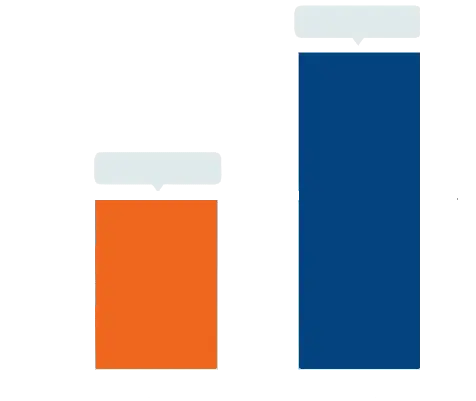
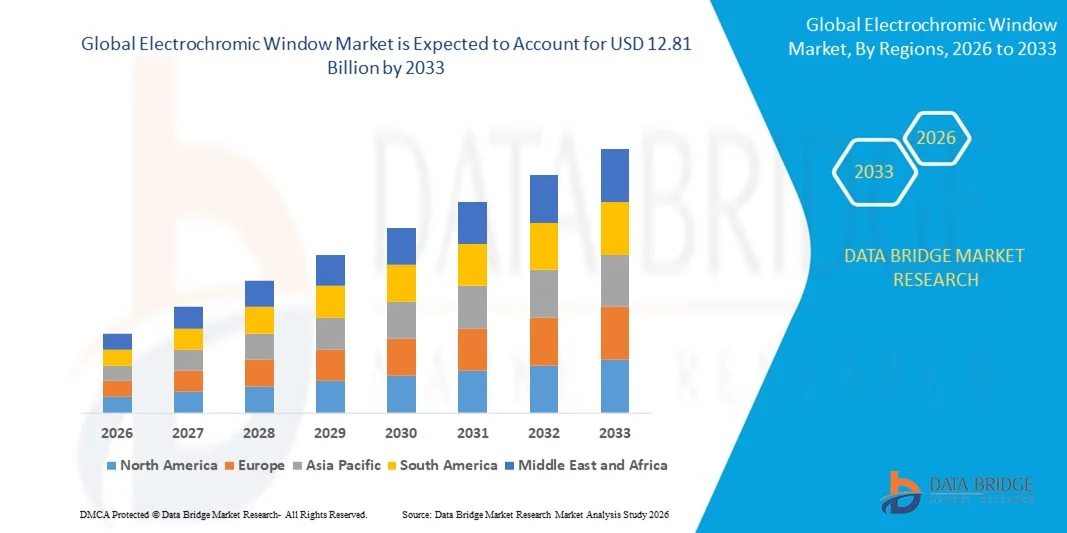
- The global electrochromic window market size was valued at USD 4.46 billion in 2025 and is expected to reach USD 12.81 billion by 2033, at a CAGR of 14.10% during the forecast period
- The market growth is largely fueled by the increasing adoption of energy-efficient building solutions and smart building technologies, leading to higher integration of electrochromic windows in both residential and commercial settings
- Furthermore, rising demand for enhanced occupant comfort, glare reduction, and automated daylight control is establishing electrochromic windows as a preferred solution in modern architecture. These factors are accelerating the uptake of dynamic glazing solutions, thereby significantly boosting the industry's growth
Electrochromic Window Market Analysis
- Electrochromic windows, offering dynamic tinting and automated control of light and heat, are becoming vital components of modern energy-efficient buildings due to their ability to reduce HVAC energy consumption and improve indoor comfort
- The growing adoption of smart building systems, increasing regulatory focus on energy efficiency, and rising consumer awareness about sustainability are primary drivers fueling demand for electrochromic windows across commercial, residential, and transportation applications
- North America dominated the electrochromic window market with a share of around 45% in 2025, due to growing adoption of energy-efficient building solutions, smart building integration, and increasing awareness of sustainable construction practices
- Asia-Pacific is expected to be the fastest growing region in the electrochromic window market during the forecast period due to rapid urbanization, increasing construction activities, and technological advancements in countries such as China, Japan, and India
- Transition Metal Oxide (TMO) segment dominated the market with a market share of 48% in 2025, due to its high durability, excellent optical modulation, and long operational lifespan. TMO-based electrochromic windows are widely adopted in commercial and residential buildings due to their proven reliability, low maintenance requirements, and ability to efficiently control solar heat gain. The segment also benefits from compatibility with large-scale glass manufacturing and integration into smart building systems, enhancing energy efficiency and user comfort
Report Scope and Electrochromic Window Market Segmentation
|
Attributes |
Electrochromic Window Key Market Insights |
|
Segments Covered |
|
|
Countries Covered |
North America
Europe
Asia-Pacific
Middle East and Africa
South America
|
|
Key Market Players |
|
|
Market Opportunities |
|
|
Value Added Data Infosets |
In addition to the insights on market scenarios such as market value, growth rate, segmentation, geographical coverage, and major players, the market reports curated by the Data Bridge Market Research also include in-depth expert analysis, geographically represented company-wise production and capacity, network layouts of distributors and partners, detailed and updated price trend analysis and deficit analysis of supply chain and demand. |
Electrochromic Window Market Trends
Growing Adoption of Smart and Energy-Efficient Building Technologies
- A significant trend in the electrochromic window market is the increasing adoption of smart and energy-efficient building solutions, driven by the rising focus on sustainability and reduction of operational energy costs. These technologies enable dynamic control over light and heat entering buildings, improving occupant comfort and lowering HVAC energy consumption
- For instance, SageGlass, a leading provider of electrochromic glazing, integrates smart tinting solutions into commercial and institutional buildings to enhance daylight management and reduce energy usage. Such implementations demonstrate the growing role of electrochromic windows in modern green building projects
- The integration of electrochromic windows with building automation systems is accelerating, allowing centralized control of lighting and temperature settings to optimize energy performance. This trend positions these windows as essential components in intelligent building designs
- Increasing awareness of indoor environmental quality is encouraging architects and facility managers to incorporate electrochromic glazing that balances daylight, glare reduction, and thermal comfort. These factors are driving stronger adoption in office, healthcare, and educational buildings
- Government initiatives and sustainability certifications such as LEED are supporting the deployment of smart windows in commercial and public infrastructure. Compliance with energy efficiency standards is motivating the installation of electrochromic windows across large-scale projects
- The market is witnessing innovation in materials and coatings that enhance switching speed, durability, and color uniformity, strengthening performance and appeal. Continuous R&D in this area is driving the next generation of high-performance electrochromic glazing solutions
Electrochromic Window Market Dynamics
Driver
Rising Demand for Daylight Control and Energy Savings
- The demand for improved daylight management and energy efficiency is driving adoption of electrochromic windows, which allow buildings to adjust tint levels according to sunlight intensity and reduce HVAC loads. These windows improve occupant comfort while significantly cutting operational energy costs
- For instance, View, Inc. supplies smart windows that automatically tint based on sunlight exposure, helping commercial buildings achieve substantial energy savings. Deployments in corporate offices highlight the practical benefits of automated glare and solar heat control
- Building owners and developers are increasingly prioritizing energy-efficient glazing solutions to meet sustainability goals and reduce long-term utility expenses. This trend is positioning electrochromic windows as key enablers of energy-efficient building design
- Integration with IoT and smart building platforms is enhancing control capabilities, enabling predictive tinting based on weather forecasts and occupancy patterns. This capability further increases operational efficiency and supports proactive energy management
- Increasing recognition of electrochromic technology’s ability to contribute to LEED and BREEAM certification points strengthens its adoption. Buildings are increasingly leveraging these windows to meet energy performance benchmarks and improve market valuation
Restraint/Challenge
High Installation and Material Costs
- Electrochromic windows face market challenges due to the high cost of raw materials such as specialty glass, conductive coatings, and electronic control components. These costs make initial investments significant compared to conventional glazing
- For instance, SageGlass reports that installation and integration costs remain a major consideration for large commercial projects, which can delay adoption despite energy savings potential. These financial constraints impact procurement decisions for developers
- Manufacturers must also address the complexity of integrating electrochromic panels with existing window framing and building automation systems. This adds to installation time, labor costs, and overall project complexity
- Limited production scale and specialized fabrication processes contribute to elevated prices, restricting widespread adoption in cost-sensitive segments such as residential retrofit projects
- The market continues to experience pressure from traditional glazing solutions that have lower upfront costs, despite lower long-term energy performance. Addressing cost barriers through economies of scale and technological improvements remains critical to broader deployment
Electrochromic Window Market Scope
The market is segmented on the basis of material type and application.
- By Material Type
On the basis of material type, the electrochromic window market is segmented into Transition Metal Oxide (TMO), Nanocrystal, Viologen, Polymer, and Reflective Hydride. The Transition Metal Oxide (TMO) segment dominated the market with the largest revenue share of 48% in 2025, driven by its high durability, excellent optical modulation, and long operational lifespan. TMO-based electrochromic windows are widely adopted in commercial and residential buildings due to their proven reliability, low maintenance requirements, and ability to efficiently control solar heat gain. The segment also benefits from compatibility with large-scale glass manufacturing and integration into smart building systems, enhancing energy efficiency and user comfort.
The Viologen segment is anticipated to witness the fastest growth rate from 2026 to 2033, fueled by its vibrant color modulation, lightweight properties, and flexibility in thin-film applications. Viologen electrochromic windows offer rapid switching times and enhanced visual aesthetics, making them attractive for premium architectural and interior applications. Their adaptability for customized glazing solutions and energy-efficient designs drives increasing adoption in modern smart buildings.
- By Application
On the basis of application, the electrochromic window market is segmented into Commercial, Residential, Transportation, and Others. The Commercial segment held the largest revenue share in 2025, driven by the growing need for energy-efficient building solutions and smart façades in offices, airports, and retail spaces. Commercial buildings increasingly prioritize electrochromic windows to reduce HVAC energy consumption, enhance occupant comfort, and achieve sustainability certifications. Integration with building automation systems further strengthens their adoption, allowing centralized control and dynamic tinting based on sunlight exposure and occupancy.
The Transportation segment is expected to witness the fastest CAGR from 2026 to 2033, propelled by rising demand for smart glazing in automobiles, trains, and aircraft. Electrochromic windows in vehicles offer glare reduction, UV protection, and improved passenger comfort, while enabling lightweight, energy-saving alternatives to traditional shading solutions. Advancements in automotive and aerospace glazing technologies, combined with increasing focus on luxury and premium vehicle features, further drive growth in this segment.
Electrochromic Window Market Regional Analysis
- North America dominated the electrochromic window market with the largest revenue share of around 45% in 2025, driven by growing adoption of energy-efficient building solutions, smart building integration, and increasing awareness of sustainable construction practices
- Consumers and commercial developers in the region highly value the ability of electrochromic windows to control solar heat gain, reduce HVAC energy consumption, and provide enhanced occupant comfort
- This widespread adoption is further supported by high disposable incomes, a technologically advanced construction ecosystem, and government initiatives promoting green buildings, establishing electrochromic windows as a preferred solution for commercial and residential properties
U.S. Electrochromic Window Market Insight
The U.S. electrochromic window market captured the largest revenue share in 2025 within North America, fueled by the rapid integration of smart building systems and demand for energy-efficient façades. Commercial and residential developers are increasingly prioritizing electrochromic windows to reduce energy costs and meet sustainability certifications. The growing trend of intelligent building automation, coupled with the integration of IoT-based climate control systems, further propels market adoption. Moreover, government incentives for green building projects and the rising preference for premium, glare-free indoor environments are significantly contributing to market growth.
Europe Electrochromic Window Market Insight
The Europe electrochromic window market is projected to expand at a substantial CAGR throughout the forecast period, driven by stringent energy efficiency regulations and the increasing demand for sustainable construction solutions. Urbanization and the adoption of smart technologies in commercial and residential buildings are fostering market growth. European consumers and businesses are drawn to the energy savings, daylight control, and comfort enhancements offered by electrochromic windows. Growth is particularly strong in office complexes, hospitals, and multi-residential developments, with windows being integrated into both new constructions and renovations.
U.K. Electrochromic Window Market Insight
The U.K. electrochromic window market is anticipated to grow at a noteworthy CAGR during the forecast period, fueled by rising demand for smart building solutions and energy-efficient technologies. Increased awareness of energy conservation, sustainability initiatives, and safety considerations are encouraging developers to implement electrochromic glazing. The U.K.’s mature construction sector, coupled with widespread adoption of connected building management systems, is expected to continue to stimulate market growth.
Germany Electrochromic Window Market Insight
The Germany electrochromic window market is expected to expand at a considerable CAGR during the forecast period, driven by the country’s strong focus on sustainability, energy efficiency, and green building certifications. Germany’s well-developed infrastructure and high adoption of advanced construction technologies promote the use of electrochromic windows in commercial and residential buildings. Integration with smart building automation systems is increasingly prevalent, while the emphasis on long-term energy savings and occupant comfort aligns with local market expectations.
Asia-Pacific Electrochromic Window Market Insight
The Asia-Pacific electrochromic window market is poised to grow at the fastest CAGR during the forecast period of 2026 to 2033, driven by rapid urbanization, increasing construction activities, and technological advancements in countries such as China, Japan, and India. Government initiatives promoting green buildings and smart cities are driving adoption across commercial and residential projects. In addition, the region’s emergence as a manufacturing hub for smart glass components is increasing affordability and accessibility, enabling wider deployment of electrochromic windows.
Japan Electrochromic Window Market Insight
The Japan electrochromic window market is gaining traction due to the country’s high-tech construction ecosystem, urbanization, and focus on energy efficiency. Adoption is driven by the integration of windows with intelligent building systems, improved occupant comfort, and glare reduction in high-rise offices and residential buildings. Japan’s aging population also encourages demand for easy-to-use, automated window solutions in both commercial and residential settings.
China Electrochromic Window Market Insight
The China electrochromic window market accounted for the largest market revenue share in Asia-Pacific in 2025, attributed to rapid urbanization, growth of commercial real estate, and rising middle-class demand for smart, energy-efficient buildings. China is a leading market for innovative glazing solutions, with electrochromic windows becoming increasingly common in offices, hotels, and high-end residential properties. Government incentives for green buildings, combined with strong domestic manufacturing capabilities, are key factors propelling market expansion.
Electrochromic Window Market Share
The electrochromic window industry is primarily led by well-established companies, including:
- AGC Glass Europe (Belgium)
- Magna Glass and Window Co (Canada)
- Chromogenics (Sweden)
- Econtrol-Glas GmbH & Co. KG (Germany)
- GUARDIAN INDUSTRIES (U.S.)
- GENTEX CORPORATION (U.S.)
- Magna International Inc. (Canada)
- PPG Industries, Inc. (U.S.)
- RavenWindow (U.S.)
- Saint-Gobain (France)
- Corning Incorporated (U.S.)
- View, Inc. (U.S.)
- Halio, Inc. (U.S.)
- Polytronix, Inc. (U.S.)
- Smartglass International Limited (U.K.)
- SPD Control Systems Corporation (U.S.)
- Pleotint LLC (U.S.)
- RESEARCH FRONTIERS INC. (U.S.)
Latest Developments in Global Electrochromic Window Market
- In 2024, AGC Inc. launched a new electrochromic glass production line in Japan, significantly boosting its manufacturing capacity to meet the rising demand for smart glass in the Asia-Pacific region. This expansion strengthens the company’s ability to supply large-scale commercial and residential projects, supporting the growth of the electrochromic window market in high-demand urban centers. The increased production capacity also positions AGC Inc. to capitalize on emerging smart building initiatives and energy-efficiency regulations in Japan and neighboring markets
- In 2024, View, Inc. appointed a new CEO to drive growth in the smart window market, signaling a strategic leadership shift aimed at reinforcing its market position. This move is expected to accelerate innovation, expand commercial deployments, and strengthen partnerships, thereby enhancing the adoption of electrochromic windows in commercial and transportation infrastructure. The leadership change reflects a broader industry focus on scaling operations to meet growing demand for energy-efficient and automated glazing solutions
- In 2024, Halio secured $70 million in Series D funding to accelerate smart glass production, providing the company with the resources to expand manufacturing and speed up commercialization of its electrochromic technology. This investment is set to increase market availability of dynamic windows, facilitating adoption in premium residential and commercial buildings. The funding also enables Halio to innovate on product design and performance, contributing to heightened competition and growth in the global electrochromic window market
- In 2024, SageGlass announced a partnership with Saint-Gobain for next-generation electrochromic glass, aiming to co-develop and commercialize advanced dynamic glazing solutions for commercial applications. This collaboration enhances technological capabilities, expands product offerings, and accelerates market penetration of electrochromic windows. By leveraging Saint-Gobain’s global reach and SageGlass’s innovation, the partnership is expected to drive adoption in energy-efficient building projects worldwide
- In 2024, View, Inc. installed electrochromic smart windows at the newly opened Terminal A at Newark Liberty International Airport, marking a landmark deployment in a major U.S. transportation hub. This project demonstrates the scalability and reliability of electrochromic windows in large, high-traffic commercial environments. The installation highlights the technology’s benefits in energy savings, occupant comfort, and daylight management, reinforcing its role in the growing smart building and airport infrastructure market
SKU-
Get online access to the report on the World's First Market Intelligence Cloud

- Interactive Data Analysis Dashboard
- Company Analysis Dashboard for high growth potential opportunities
- Research Analyst Access for customization & queries
- Competitor Analysis with Interactive dashboard
- Latest News, Updates & Trend analysis
- Harness the Power of Benchmark Analysis for Comprehensive Competitor Tracking
Global Electrochromic Window Market, Supply Chain Analysis and Ecosystem Framework
To support market growth and help clients navigate the impact of geopolitical shifts, DBMR has integrated in-depth supply chain analysis into its Global Electrochromic Window Market research reports. This addition empowers clients to respond effectively to global changes affecting their industries. The supply chain analysis section includes detailed insights such as Global Electrochromic Window Market consumption and production by country, price trend analysis, the impact of tariffs and geopolitical developments, and import and export trends by country and HSN code. It also highlights major suppliers with data on production capacity and company profiles, as well as key importers and exporters. In addition to research, DBMR offers specialized supply chain consulting services backed by over a decade of experience, providing solutions like supplier discovery, supplier risk assessment, price trend analysis, impact evaluation of inflation and trade route changes, and comprehensive market trend analysis.
Research Methodology
Data collection and base year analysis are done using data collection modules with large sample sizes. The stage includes obtaining market information or related data through various sources and strategies. It includes examining and planning all the data acquired from the past in advance. It likewise envelops the examination of information inconsistencies seen across different information sources. The market data is analysed and estimated using market statistical and coherent models. Also, market share analysis and key trend analysis are the major success factors in the market report. To know more, please request an analyst call or drop down your inquiry.
The key research methodology used by DBMR research team is data triangulation which involves data mining, analysis of the impact of data variables on the market and primary (industry expert) validation. Data models include Vendor Positioning Grid, Market Time Line Analysis, Market Overview and Guide, Company Positioning Grid, Patent Analysis, Pricing Analysis, Company Market Share Analysis, Standards of Measurement, Global versus Regional and Vendor Share Analysis. To know more about the research methodology, drop in an inquiry to speak to our industry experts.
Customization Available
Data Bridge Market Research is a leader in advanced formative research. We take pride in servicing our existing and new customers with data and analysis that match and suits their goal. The report can be customized to include price trend analysis of target brands understanding the market for additional countries (ask for the list of countries), clinical trial results data, literature review, refurbished market and product base analysis. Market analysis of target competitors can be analyzed from technology-based analysis to market portfolio strategies. We can add as many competitors that you require data about in the format and data style you are looking for. Our team of analysts can also provide you data in crude raw excel files pivot tables (Fact book) or can assist you in creating presentations from the data sets available in the report.