Global Eosinophilic Esophagitis Eoe Market
Market Size in USD Billion
CAGR :
% 
 USD
436.97 Billion
USD
4,356.05 Billion
2025
2033
USD
436.97 Billion
USD
4,356.05 Billion
2025
2033
 Forecast Period Forecast Period |
2026 –2033 |
 Market Size (Base Year) Market Size (Base Year) |
USD 436.97 Billion |
 Market Size (Forecast Year) Market Size (Forecast Year) |
USD 4,356.05 Billion |
 CAGR CAGR |
% |
| Major Markets Players |
|
Eosinophilic Esophagitis (EoE) Market Size
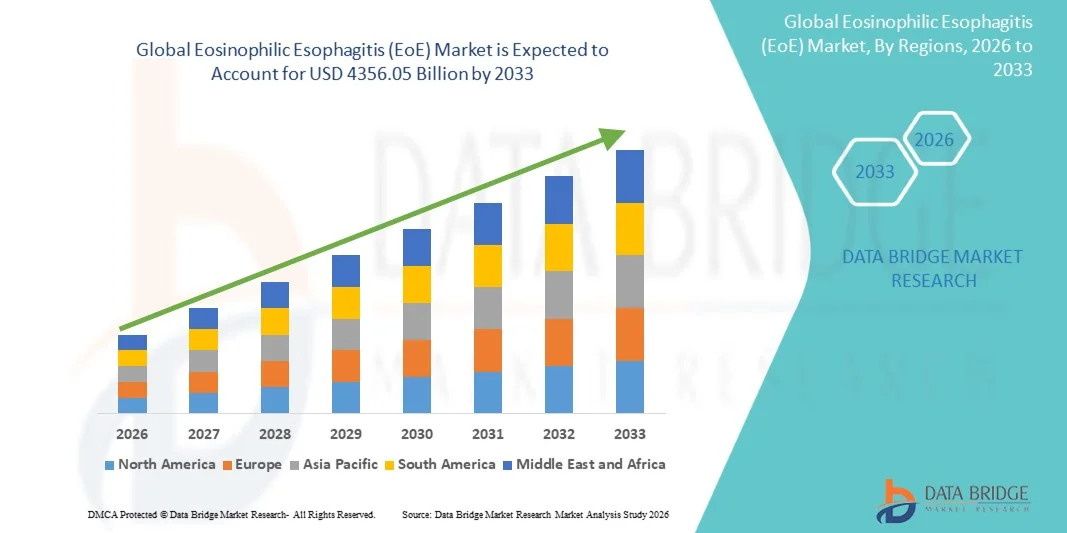
- The global Eosinophilic Esophagitis (EoE) market size was valued at USD 436.97 billion in 2025 and is expected to reach USD 4356.05 billion by 2033, at a CAGR of 33.30% during the forecast period
- The growth of the Eosinophilic Esophagitis (EoE) market is driven by increasing awareness, early diagnosis, and rising prevalence of EoE globally
- Advances in therapeutic solutions and diagnostic technologies are improving patient outcomes, while demand for targeted, effective, and convenient treatments continues to rise. These factors collectively contribute to the accelerating adoption of EoE therapies, supporting steady expansion of the market
Eosinophilic Esophagitis (EoE) Market Analysis
- Eosinophilic Esophagitis (EoE) is increasingly recognized as a significant chronic inflammatory condition affecting the esophagus, and growing awareness among patients and healthcare providers is driving demand for improved diagnostic and therapeutic solutions
- The EoE market expansion is primarily fueled by rising prevalence rates, enhanced screening and diagnostic technologies, increased research and development for targeted treatments, and a growing preference for personalized and effective management options
- North America dominated the EoE market with the largest revenue share of 40.00% in 2025, supported by high disease awareness, advanced healthcare infrastructure, strong payer support, and increased uptake of innovative therapeutic and diagnostic offerings in both clinical and outpatient settings
- Asia‑Pacific is expected to be the fastest‑growing region in the EoE market during the forecast period, driven by improving healthcare access, growing urban populations, rising disposable incomes, and increasing investments in gastrointestinal disease diagnosis and treatment
- The Upper Endoscopy segment held the largest market revenue share of 54.8% in 2025, driven by its role as the gold standard for diagnosing EoE
Report Scope and Eosinophilic Esophagitis (EoE) Market Segmentation
|
Attributes |
Eosinophilic Esophagitis (EoE) Key Market Insights |
|
Segments Covered |
|
|
Countries Covered |
North America
Europe
Asia-Pacific
Middle East and Africa
South America
|
|
Key Market Players |
• Sanofi (France) |
|
Market Opportunities |
|
|
Value Added Data Infosets |
In addition to the insights on market scenarios such as market value, growth rate, segmentation, geographical coverage, and major players, the market reports curated by the Data Bridge Market Research also include in-depth expert analysis, patient epidemiology, pipeline analysis, pricing analysis, and regulatory framework. |
Eosinophilic Esophagitis (EoE) Market Trends
“Rising Prevalence of EoE and Growing Awareness Among Patients and Healthcare Providers”
- The increasing incidence of EoE globally, particularly in North America and Europe, is a key factor driving market growth. Improved diagnostic methods and heightened awareness among gastroenterologists and allergists are contributing to earlier detection and treatment
- For example, recent studies indicate that the prevalence of EoE in children and adults is steadily rising, with estimates ranging from 30–50 cases per 100,000 individuals in developed countries, highlighting a significant patient population in need of effective therapies
- Enhanced awareness campaigns and educational initiatives by organizations such as the American Partnership for Eosinophilic Disorders (APFED) are helping patients recognize symptoms early, leading to increased consultation rates and treatment adoption
- The growing recognition of EoE as a chronic immune-mediated condition, coupled with improved access to specialized care, encourages timely intervention, supporting the expansion of the market
- In addition, the rising availability of targeted therapeutic options, including dietary management programs, proton pump inhibitors, and emerging biologics, is enabling clinicians to provide personalized treatment approaches, fueling market growth
- Increasing research collaborations between pharmaceutical companies and academic institutions are leading to more clinical trials focused on innovative EoE therapies, thereby accelerating the introduction of novel drugs and boosting market prospects
- The rising patient population, combined with enhanced insurance coverage in many developed countries, has made long-term treatment plans more feasible, encouraging adoption of maintenance therapies for chronic management of EoE
- Public health initiatives emphasizing early detection and patient education on symptom recognition, such as difficulty swallowing or food impaction, are driving more patients to seek medical intervention, further supporting market growth
Eosinophilic Esophagitis (EoE) Market Dynamics
Driver
“Shift Towards Personalized Treatment and Biologic Therapies”
- A key trend in the EoE market is the focus on precision medicine, with treatment strategies increasingly tailored to individual patient profiles, including age, severity, and comorbidities
- Biologic therapies targeting eosinophil-mediated inflammation, such as monoclonal antibodies under clinical development, are gaining attention for their potential to reduce reliance on corticosteroids and dietary restriction
- Research and development efforts are also emphasizing non-invasive monitoring techniques, such as esophageal string tests and blood-based biomarkers, to track disease activity without repeated endoscopies
- Furthermore, patient-centric care models, including nutritional counseling and integrated allergy management, are becoming more common, reflecting a holistic approach to EoE management
- Telemedicine and digital health platforms are increasingly being used to monitor patients remotely, allowing healthcare providers to adjust treatment plans efficiently while improving patient adherence and engagement
- The emergence of combination therapies, including biologics with diet-based interventions, is becoming a preferred approach to enhance treatment efficacy and improve quality of life for patients
- Growing emphasis on early intervention strategies is leading to the development of predictive models and risk stratification tools, helping clinicians personalize therapy plans and reduce disease complications
- Collaborative research between pharmaceutical companies, hospitals, and patient advocacy groups is fostering the development of next-generation therapies, highlighting the industry’s commitment to innovative and patient-focused solutions
Restraint/Challenge
“Limited Treatment Options and Diagnostic Challenges”
- A key trend in the EoE market is the focus on precision medicine, with treatment strategies increasingly tailored to individual patient profiles, including age, severity, and comorbidities
- Biologic therapies targeting eosinophil-mediated inflammation, such as monoclonal antibodies under clinical development, are gaining attention for their potential to reduce reliance on corticosteroids and dietary restrictions
- Research and development efforts are also emphasizing non-invasive monitoring techniques, such as esophageal string tests and blood-based biomarkers, to track disease activity without repeated endoscopies
- Furthermore, patient-centric care models, including nutritional counseling and integrated allergy management, are becoming more common, reflecting a holistic approach to EoE management
- Telemedicine and digital health platforms are increasingly being used to monitor patients remotely, allowing healthcare providers to adjust treatment plans efficiently while improving patient adherence and engagement
- The emergence of combination therapies, including biologics with diet-based interventions, is becoming a preferred approach to enhance treatment efficacy and improve quality of life for patients
- Growing emphasis on early intervention strategies is leading to the development of predictive models and risk stratification tools, helping clinicians personalize therapy plans and reduce disease complications
- Collaborative research between pharmaceutical companies, hospitals, and patient advocacy groups is fostering the development of next-generation therapies, highlighting the industry’s commitment to innovative and patient-focused solutions
Eosinophilic Esophagitis (EoE) Market Scope
The market is segmented on the basis of product, diagnosis, and treatment.
• By Product
On the basis of product, the Eosinophilic Esophagitis (EoE) market is segmented into Budesonide Oral Suspension, Fluticasone ODT, Mepolizumab, Reslizumab, Benralizumab, and others. The Budesonide Oral Suspension segment dominated the largest market revenue share of 42.3% in 2025, driven by its strong clinical efficacy in reducing esophageal inflammation and its widespread adoption as a first-line pharmacological therapy. Physicians prefer budesonide due to its targeted topical action and favorable safety profile compared to systemic corticosteroids. The availability of formulations specifically designed for esophageal coating further enhances its effectiveness in EoE management. In addition, strong clinical guidelines and increasing diagnosis rates are supporting its continued use across both adult and pediatric populations. The segment also benefits from high patient compliance due to ease of administration and proven symptom relief outcomes. Growing awareness among healthcare providers and improved access to treatment in developed regions further contribute to its dominance. Pharmaceutical companies are also focusing on improving formulations, which strengthens product positioning. Reimbursement support in key markets further boosts adoption rates. Moreover, continuous research validating long-term benefits enhances physician confidence. The expanding patient pool diagnosed with EoE significantly contributes to sustained demand. The segment’s established market presence ensures stable revenue generation.
The Mepolizumab segment is anticipated to witness the fastest growth rate of 19.4% from 2026 to 2033, fueled by increasing adoption of biologics targeting eosinophilic pathways. Mepolizumab works by inhibiting IL-5, directly reducing eosinophil production and offering targeted therapy for severe EoE cases. Rising cases of treatment-resistant patients are driving demand for advanced biologics. Increasing clinical trials and regulatory approvals for biologics further accelerate growth. Healthcare providers are increasingly shifting toward precision medicine, supporting biologic adoption. Improved patient outcomes and reduced relapse rates contribute to its growing preference. In addition, advancements in monoclonal antibody therapies enhance treatment effectiveness. Pharmaceutical companies are investing heavily in biologics, expanding availability. Higher awareness about immunological mechanisms of EoE supports demand. Expansion in specialty care centers further boosts utilization. Favorable pipeline developments are expected to strengthen future growth. Increasing healthcare expenditure also supports biologics adoption. Overall, innovation-driven demand positions this segment as the fastest growing.
• By Diagnosis
On the basis of diagnosis, the Eosinophilic Esophagitis (EoE) market is segmented into Upper Endoscopy, Esophagus Biopsy, and Blood Tests. The Upper Endoscopy segment held the largest market revenue share of 54.8% in 2025, driven by its role as the gold standard for diagnosing EoE. It allows direct visualization of the esophagus and identification of characteristic features such as rings, furrows, and inflammation. Physicians rely heavily on this technique for accurate disease confirmation and severity assessment. The procedure also enables simultaneous biopsy collection, enhancing diagnostic accuracy. High adoption in hospitals and specialty clinics further strengthens its dominance. Increasing prevalence of EoE has led to higher procedural volumes globally. Technological advancements in endoscopic imaging improve diagnostic precision. Reimbursement availability in developed markets supports its widespread use. Growing awareness among gastroenterologists also contributes to demand. Integration with advanced imaging tools enhances clinical outcomes. The procedure’s reliability ensures continued preference among clinicians. In addition, strong clinical guidelines recommend endoscopy as a primary diagnostic approach. These factors collectively sustain its leading market share.
The Blood Tests segment is expected to witness the fastest CAGR of 16.2% from 2026 to 2033, driven by increasing demand for non-invasive diagnostic alternatives. Patients prefer less invasive procedures, which boosts the adoption of blood-based diagnostics. Advancements in biomarker research are improving the accuracy of blood tests for EoE detection. Ongoing research focusing on eosinophil-related biomarkers supports segment growth. The convenience and reduced discomfort compared to endoscopy enhance patient compliance. Healthcare systems are increasingly adopting cost-effective diagnostic solutions, further driving demand. Technological innovations are enabling early-stage detection through blood analysis. Expansion of personalized medicine also supports biomarker-based diagnostics. Increased screening initiatives are contributing to higher test volumes. Blood tests are particularly useful for monitoring disease progression and treatment response. Rising healthcare awareness further accelerates adoption. Growing investments in diagnostic research strengthen future prospects. Overall, the shift toward non-invasive diagnostics positions this segment as the fastest growing.
• By Treatment
On the basis of treatment, the Eosinophilic Esophagitis (EoE) market is segmented into Dietary Therapy, Medication, and Dilation. The Medication segment accounted for the largest market revenue share of 47.6% in 2025, driven by the widespread use of corticosteroids and biologics in managing inflammation and symptoms. Pharmacological therapies are often the first line of treatment due to their rapid effectiveness. Increasing availability of targeted therapies enhances treatment outcomes. Physicians prefer medications for moderate to severe cases due to their reliability. Growing number of approved drugs further strengthens segment growth. Patient preference for convenient treatment options also supports adoption. Continuous advancements in drug formulations improve efficacy and safety. Pharmaceutical companies are heavily investing in R&D, boosting innovation. Rising prevalence of EoE contributes to higher prescription volumes. Strong clinical guidelines recommending medication use further drive demand. Improved healthcare access globally supports treatment uptake. In addition, favorable reimbursement scenarios enhance affordability. These factors collectively ensure the segment’s dominance in the market.
The Dietary Therapy segment is expected to witness the fastest CAGR of 17.1% from 2026 to 2033, driven by increasing awareness of non-pharmacological treatment approaches. Patients are increasingly opting for elimination diets to manage symptoms without long-term medication use. Growing preference for natural and holistic treatment methods supports segment growth. Clinical evidence supporting dietary interventions enhances physician recommendations. Personalized nutrition plans are gaining traction in EoE management. Increased involvement of dietitians in treatment planning further boosts adoption. Dietary therapy is particularly effective in pediatric patients, driving demand in this group. Rising awareness campaigns about food allergens contribute to growth. Improved diagnostic capabilities help identify trigger foods more effectively. Healthcare providers are increasingly combining dietary therapy with other treatments. The approach reduces dependency on medications, appealing to long-term patients. Expansion of patient education programs further accelerates adoption. Overall, lifestyle-driven treatment trends position this segment as the fastest growing.
Eosinophilic Esophagitis (EoE) Market Regional Analysis
- North America dominated the eosinophilic esophagitis (EoE) market with the largest revenue share of 40.00% in 2025, supported by high disease awareness, advanced healthcare infrastructure, strong payer support, and increased uptake of innovative therapeutic and diagnostic offerings in both clinical and outpatient settings
- Patients in the region benefit from early diagnosis and access to specialized care, including gastroenterology and allergy clinics, which facilitates timely and effective disease management.
- This dominance is further reinforced by the presence of leading pharmaceutical companies, ongoing clinical trials, and strong regulatory support, establishing North America as a key hub for EoE treatment advancements
U.S. Eosinophilic Esophagitis (EoE) Market Insight
The U.S. eosinophilic esophagitis (EoE) market captured the largest revenue share in 2025 within North America, driven by a high prevalence of EoE and widespread awareness among both patients and healthcare professionals. The country’s well-established healthcare system, coupled with favorable reimbursement policies, enables greater access to advanced diagnostic procedures such as endoscopy and biopsy. Furthermore, the increasing adoption of targeted therapies, including biologics and proton pump inhibitors, along with strong research and development activities, continues to propel the EoE market. The presence of key market players and patient advocacy organizations further supports early diagnosis and treatment adoption across the country.
Europe Eosinophilic Esophagitis (EoE) Market Insight
The Europe eosinophilic esophagitis (EoE) market is projected to expand at a substantial CAGR throughout the forecast period, primarily driven by rising awareness of eosinophilic disorders and improvements in healthcare infrastructure. Increasing focus on early diagnosis and standardized treatment guidelines across countries is supporting market growth. In addition, favorable government initiatives, expanding access to specialist care, and growing research activities related to gastrointestinal diseases are contributing to the increasing adoption of EoE therapies. The region is witnessing steady growth across hospital and specialty clinic settings, with a rising emphasis on patient-centric treatment approaches.
U.K. Eosinophilic Esophagitis (EoE) Market Insight
The U.K. eosinophilic esophagitis (EoE) market is anticipated to grow at a noteworthy CAGR during the forecast period, driven by increasing awareness of chronic gastrointestinal disorders and improved diagnostic capabilities within the National Health Service (NHS). The rising focus on early intervention and structured care pathways is encouraging timely diagnosis and management of EoE. In addition, ongoing research initiatives and growing collaboration between healthcare providers and research institutions are supporting the adoption of advanced therapies. Increasing patient education and access to specialist clinics are further expected to stimulate market growth in the U.K.
Germany Eosinophilic Esophagitis (EoE) Market Insight
The Germany eosinophilic esophagitis (EoE) market is expected to expand at a considerable CAGR during the forecast period, fueled by a strong healthcare system and increasing focus on innovative treatment approaches. Germany’s advanced diagnostic infrastructure and high healthcare expenditure enable efficient disease identification and management. The country’s emphasis on clinical research and adoption of novel biologic therapies is further supporting market expansion. In addition, rising awareness among healthcare professionals and patients regarding EoE symptoms and treatment options is contributing to the steady growth of the market.
Asia-Pacific Eosinophilic Esophagitis (EoE) Market Insight
The Asia-Pacific eosinophilic esophagitis (EoE) market is expected to be the fastest-growing region during the forecast period, driven by improving healthcare access, growing urban populations, rising disposable incomes, and increasing investments in gastrointestinal disease diagnosis and treatment. The region is witnessing a gradual increase in awareness regarding EoE, supported by expanding healthcare infrastructure and government initiatives aimed at improving disease management. In addition, the growing presence of multinational pharmaceutical companies and increasing clinical research activities are contributing to market expansion across the region.
Japan Eosinophilic Esophagitis (EoE) Market Insight
The Japan eosinophilic esophagitis (EoE) market is gaining momentum due to the country’s advanced healthcare system and strong focus on early disease detection. Increasing awareness of allergic and immune-mediated disorders, along with improved access to specialized diagnostic procedures, is supporting market growth. Japan’s ongoing research in gastrointestinal diseases and adoption of innovative treatment options, including targeted therapies, are further driving the development of the EoE market. In addition, the country’s aging population is contributing to increased demand for effective long-term disease management solutions.
China Eosinophilic Esophagitis (EoE) Market Insight
The China eosinophilic esophagitis (EoE) market accounted for the largest market revenue share in Asia-Pacific in 2025, attributed to the country’s rapidly expanding healthcare infrastructure and growing awareness of chronic gastrointestinal conditions. Increasing urbanization, rising healthcare expenditure, and improved access to diagnostic facilities are key factors driving market growth. Furthermore, government initiatives aimed at strengthening healthcare systems and the growing presence of domestic and international pharmaceutical companies are contributing to the development of the EoE market in China. The rising focus on early diagnosis and treatment is expected to further accelerate market expansion in the coming years.
Eosinophilic Esophagitis (EoE) Market Share
The Eosinophilic Esophagitis (EoE) industry is primarily led by well-established companies, including:
• Sanofi (France)
• Regeneron Pharmaceuticals (U.S.)
• GSK (U.K.)
• AstraZeneca (U.K.)
• Takeda Pharmaceutical Company (Japan)
• Pfizer (U.S.)
• F. Hoffmann-La Roche (Switzerland)
• Merck & Co. (U.S.)
• Bristol Myers Squibb (U.S.)
• Eli Lilly and Company (U.S.)
• AbbVie (U.S.)
• Teva Pharmaceutical Industries (Israel)
• Amgen (U.S.)
• Allakos (U.S.)
• Arena Pharmaceuticals (U.S.)
• Celgene (U.S.)
• Novartis (Switzerland)
• Johnson & Johnson (U.S.)
• Biogen (U.S.)
• Celltrion (South Korea
Latest Developments in Global Eosinophilic Esophagitis (EoE) Market
- In October 2021, Sanofi and Regeneron Pharmaceuticals announced positive results from a Phase 3 clinical trial evaluating dupilumab for eosinophilic esophagitis (EoE), demonstrating significant improvement in disease signs and symptoms in adolescents and adults. This development marked a crucial late-stage advancement toward regulatory approval and highlighted the growing potential of biologic therapies in EoE treatment
- In May 2022, the U.S. Food and Drug Administration approved dupilumab (Dupixent) for the treatment of eosinophilic esophagitis in patients aged 12 years and older, making it the first FDA-approved therapy specifically indicated for EoE. This milestone addressed a major unmet need and introduced a targeted biologic treatment option for patients with this chronic inflammatory disease
- In January 2023, the European Commission granted approval for dupilumab (Dupixent) for the treatment of eosinophilic esophagitis in adults and adolescents aged 12 years and above, expanding access to the first targeted EoE therapy across Europe and reinforcing its role as a standard-of-care biologic option
- In January 2024, the U.S. Food and Drug Administration approved dupilumab (Dupixent) for pediatric patients aged 1 to 11 years with eosinophilic esophagitis, significantly expanding its indication and making it the first and only treatment option available for this younger patient population in the United States
- In February 2024, the U.S. Food and Drug Administration approved Eohilia (budesonide oral suspension), developed by Takeda Pharmaceutical Company, as the first oral therapy specifically indicated for eosinophilic esophagitis in patients aged 11 years and older. This approval introduced a non-injectable treatment alternative, improving patient convenience and expanding therapeutic choices
- In November 2024, the European Medicines Agency approved dupilumab (Dupixent) for children aged 1 to 11 years with eosinophilic esophagitis, further strengthening pediatric treatment availability in Europe and reinforcing the drug’s position as the leading biologic therapy in the global EoE market
SKU-
Get online access to the report on the World's First Market Intelligence Cloud

- Interactive Data Analysis Dashboard
- Company Analysis Dashboard for high growth potential opportunities
- Research Analyst Access for customization & queries
- Competitor Analysis with Interactive dashboard
- Latest News, Updates & Trend analysis
- Harness the Power of Benchmark Analysis for Comprehensive Competitor Tracking
Research Methodology
Data collection and base year analysis are done using data collection modules with large sample sizes. The stage includes obtaining market information or related data through various sources and strategies. It includes examining and planning all the data acquired from the past in advance. It likewise envelops the examination of information inconsistencies seen across different information sources. The market data is analysed and estimated using market statistical and coherent models. Also, market share analysis and key trend analysis are the major success factors in the market report. To know more, please request an analyst call or drop down your inquiry.
The key research methodology used by DBMR research team is data triangulation which involves data mining, analysis of the impact of data variables on the market and primary (industry expert) validation. Data models include Vendor Positioning Grid, Market Time Line Analysis, Market Overview and Guide, Company Positioning Grid, Patent Analysis, Pricing Analysis, Company Market Share Analysis, Standards of Measurement, Global versus Regional and Vendor Share Analysis. To know more about the research methodology, drop in an inquiry to speak to our industry experts.
Customization Available
Data Bridge Market Research is a leader in advanced formative research. We take pride in servicing our existing and new customers with data and analysis that match and suits their goal. The report can be customized to include price trend analysis of target brands understanding the market for additional countries (ask for the list of countries), clinical trial results data, literature review, refurbished market and product base analysis. Market analysis of target competitors can be analyzed from technology-based analysis to market portfolio strategies. We can add as many competitors that you require data about in the format and data style you are looking for. Our team of analysts can also provide you data in crude raw excel files pivot tables (Fact book) or can assist you in creating presentations from the data sets available in the report.