Global Eye Drops And Lubricants Drugs Market
Market Size in USD Billion
CAGR :
% 
 USD
22.48 Billion
USD
33.21 Billion
2025
2033
USD
22.48 Billion
USD
33.21 Billion
2025
2033
 Forecast Period Forecast Period |
2026 –2033 |
 Market Size (Base Year) Market Size (Base Year) |
USD 22.48 Billion |
 Market Size (Forecast Year) Market Size (Forecast Year) |
USD 33.21 Billion |
 CAGR CAGR |
% |
| Major Markets Players |
|
Eye Drops and Lubricants Drugs Market Size
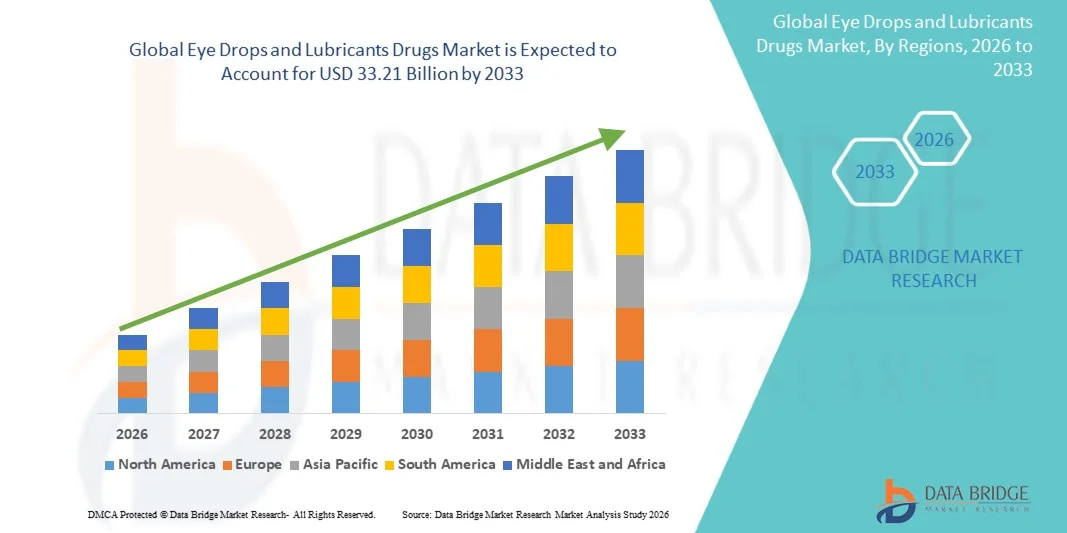
- The global eye drops and lubricants drugs market size was valued at USD 22.48 billion in 2025 and is expected to reach USD 33.21 billion by 2033, at a CAGR of 5.00% during the forecast period
- The market growth is largely fueled by the rising prevalence of dry eye syndrome, allergic conjunctivitis, and other ocular surface disorders, along with increasing screen exposure and environmental pollution, leading to higher demand for Eye Drops and Lubricants Drugs solutions
- Furthermore, growing aging population, increasing adoption of contact lenses, and advancements in preservative-free and long-lasting ophthalmic formulations are establishing eye drops and lubricants as essential components of routine eye care. These converging factors are accelerating the uptake of Eye Drops and Lubricants Drugs solutions, thereby significantly boosting the industry's growth
Eye Drops and Lubricants Drugs Market Analysis
- Eye drops and lubricants drugs, including artificial tears, antihistamine eye drops, antibiotic eye drops, and anti-inflammatory ophthalmic solutions, are increasingly vital components of modern ophthalmic care due to their role in managing dry eye syndrome, irritation, allergies, and overall ocular surface health
- The escalating demand for eye drops and lubricants drugs is primarily fueled by the rising prevalence of dry eye disease, increasing screen time exposure (digital eye strain), growing geriatric population, and higher incidence of ocular allergies and infections, thereby boosting routine ophthalmic treatment adoption
- North America dominated the eye drops and lubricants drugs market with the largest revenue share of 38.9% in 2025, driven by high prevalence of eye disorders, strong healthcare infrastructure, widespread availability of OTC ophthalmic products, and high patient awareness regarding eye care
- Asia-Pacific is expected to be the fastest growing region in the eye drops and lubricants drugs market during the forecast period due to rising pollution levels, increasing screen exposure, expanding healthcare access, and growing awareness of eye health management
- The topical segment dominated the largest market revenue share of around 82.5% in 2025, driven by the direct and localized delivery of drugs into the eye for faster therapeutic effect
Report Scope and Eye Drops and Lubricants Drugs Market Segmentation
|
Attributes |
Eye Drops and Lubricants Drugs Key Market Insights |
|
Segments Covered |
|
|
Countries Covered |
North America
Europe
Asia-Pacific
Middle East and Africa
South America
|
|
Key Market Players |
|
|
Market Opportunities |
|
|
Value Added Data Infosets |
In addition to the insights on market scenarios such as market value, growth rate, segmentation, geographical coverage, and major players, the market reports curated by the Data Bridge Market Research also include in-depth expert analysis, patient epidemiology, pipeline analysis, pricing analysis, and regulatory framework. |
Eye Drops and Lubricants Drugs Market Trends
“Advancements in Preservative-Free Formulations and Digital Eye Care Awareness”
- A significant and accelerating trend in the global eye drops and lubricants drugs market is the increasing development of preservative-free and advanced ocular lubrication formulations aimed at improving patient comfort and long-term eye safety
- For instance, single-dose preservative-free artificial tears and lipid-based eye lubricants are widely adopted for treating dry eye syndrome, especially among patients with prolonged digital screen exposure
- Rising cases of digital eye strain and dry eye disease are driving demand for advanced lubricating eye drops that provide longer-lasting hydration and improved tear film stability
- Pharmaceutical companies are increasingly focusing on nano-formulations and sustained-release eye drop technologies to enhance drug retention time in the ocular surface
- Growing awareness of eye health and preventive ophthalmic care is encouraging early adoption of lubricating eye drops among both young and elderly populations
- In addition, increasing ophthalmology consultations and improved access to OTC eye care products are further supporting market growth globally
Eye Drops and Lubricants Drugs Market Dynamics
Driver
“Rising Prevalence of Dry Eye Disorders and Increasing Exposure to Digital Screens”
- The increasing prevalence of dry eye disease, allergic conjunctivitis, and other ocular surface disorders is a major driver of the eye drops and lubricants drugs market
- For instance, prolonged use of digital devices such as smartphones, computers, and tablets has significantly increased cases of eye irritation and dryness worldwide
- Aging populations are also contributing to higher demand, as older individuals are more prone to reduced tear production and chronic dry eye conditions
- Growing awareness regarding eye health and availability of over-the-counter lubricating eye drops are further supporting market expansion
- In addition, increasing ophthalmic consultations and routine eye examinations are improving diagnosis rates, driving higher product adoption
- Overall, the rising need for effective and fast-relief ocular hydration solutions is strongly propelling market growth globally
Restraint/Challenge
“Side Effects of Prolonged Use and Preference for Alternative Treatment Options”
- The eye drops and lubricants drugs market faces challenges due to potential side effects associated with long-term or improper use of certain formulations, including irritation, blurred vision, and rebound redness
- For instance, overuse of decongestant eye drops can lead to dependency and worsening symptoms in some patients
- Availability of alternative treatments such as prescription anti-inflammatory eye drops, punctal plugs, and advanced ophthalmic therapies can reduce reliance on lubricating eye drops
- In addition, lack of proper awareness regarding correct usage and dosing frequency may limit optimal therapeutic outcomes
- In some cases, patients prefer natural remedies or delay treatment, which can restrict market penetration
- Addressing these challenges through patient education, safer formulations, and improved product labeling will be essential for sustained market growth
Eye Drops and Lubricants Drugs Market Scope
The market is segmented on the basis of indication, type, route of administration, end-users, and distribution channel.
• By Indication
On the basis of indication, the Eye Drops and Lubricants Drugs market is segmented into conjunctivitis, dry eye, glaucoma, refractive errors, and others. The dry eye segment dominated the largest market revenue share of around 38.6% in 2025, driven by the rising prevalence of digital eye strain, environmental pollution, and age-related tear film instability. Increasing screen exposure from smartphones, computers, and digital devices is significantly contributing to dry eye cases globally. Growing geriatric population is further accelerating demand for lubricating eye drops. Rising awareness of ocular hygiene and eye care is boosting early diagnosis and treatment adoption. Expanding availability of artificial tear formulations is supporting market penetration. Increasing use of contact lenses is contributing to irritation-related cases. Strong OTC availability of lubricants is enhancing accessibility. Growing outpatient ophthalmology visits are improving diagnosis rates. Lifestyle changes and urbanization are worsening eye discomfort conditions. Healthcare awareness campaigns are supporting preventive care adoption. Rising healthcare expenditure is further strengthening demand. Continuous innovation in lubricant formulations is improving treatment effectiveness.
The glaucoma segment is expected to witness the fastest CAGR of around 7.8% from 2026 to 2033, driven by the increasing global burden of age-related vision impairment. Rising prevalence of chronic eye diseases is strongly supporting growth. Growing awareness of early glaucoma screening is improving diagnosis rates. Advancements in intraocular pressure-lowering medications are boosting treatment effectiveness. Expanding geriatric population is a major growth driver. Increasing ophthalmology consultations are supporting prescription rates. Rising adoption of long-term disease management therapies is fueling demand. Government-led vision care programs are enhancing awareness. Increasing availability of combination eye drop therapies is improving compliance. Expanding healthcare infrastructure in emerging economies is boosting access. Technological advancements in sustained-release formulations are supporting innovation. Rising healthcare spending on ophthalmology is further accelerating growth.
• By Type
On the basis of type, the Eye Drops and Lubricants Drugs market is segmented into antibiotics, hormones, artificial tears, and others. The artificial tears segment dominated the largest market revenue share of around 44.2% in 2025, driven by the high prevalence of dry eye syndrome and increasing digital device usage globally. Rising screen time exposure is significantly increasing demand for lubricating eye drops. Growing aging population is contributing to tear deficiency-related conditions. Strong OTC availability is making artificial tears easily accessible to consumers. Increasing awareness of eye health is boosting preventive usage. Expanding pharmacy and retail distribution is improving product reach. Rising contact lens usage is increasing eye irritation cases. Environmental pollution and allergens are worsening ocular discomfort. Technological improvements in preservative-free formulations are enhancing safety. Strong physician recommendation is supporting adoption. Growing self-medication trends are boosting sales. Increasing product innovation is improving effectiveness and duration of relief.
The antibiotics segment is expected to witness the fastest CAGR of around 8.3% from 2026 to 2033, driven by rising incidence of bacterial eye infections and post-surgical complications. Increasing prevalence of conjunctivitis is boosting demand for antibiotic eye drops. Growing awareness of early infection treatment is improving adoption. Advancements in broad-spectrum antibiotic formulations are enhancing treatment outcomes. Rising outpatient ophthalmic procedures are increasing prophylactic use. Expanding healthcare access in developing regions is supporting growth. Increasing hygiene-related infections are contributing to demand. Strong prescription rates from ophthalmologists are supporting usage. Growing pediatric eye infection cases are driving adoption. Rising pollution levels are worsening infection risks. Increasing availability of combination antibiotic formulations is improving effectiveness. Expanding pharmaceutical R&D is supporting innovation.
• By Route of Administration
On the basis of route of administration, the market is segmented into oral, topical, and others. The topical segment dominated the largest market revenue share of around 82.5% in 2025, driven by the direct and localized delivery of drugs into the eye for faster therapeutic effect. Increasing prevalence of eye disorders is significantly boosting demand for topical formulations. Strong patient preference for eye drops over systemic therapies is supporting adoption. High bioavailability at the ocular surface is driving clinical effectiveness. Expanding OTC availability is improving accessibility. Rising awareness of self-care eye treatments is boosting usage. Growing geriatric population is increasing ocular disease burden. Frequent prescription of lubricants and anti-inflammatory drops is strengthening demand. Ease of administration is supporting patient compliance. Increasing ophthalmology consultations is driving prescriptions. Technological advancements in sustained-release eye drops are improving outcomes. Growing digital eye strain cases are further fueling usage.
The oral segment is expected to witness the fastest CAGR of around 6.9% from 2026 to 2033, driven by systemic treatment requirements for severe and chronic ocular conditions. Increasing use in glaucoma management is supporting demand. Rising prevalence of inflammatory eye diseases is contributing to growth. Advancements in systemic ophthalmic therapies are improving efficacy. Growing clinical adoption in complex cases is boosting usage. Expanding healthcare infrastructure is supporting availability. Increasing research in oral ocular drug delivery is enhancing innovation. Rising chronic disease burden is supporting long-term therapy adoption.
• By End-Users
On the basis of end-users, the Eye Drops and Lubricants Drugs market is segmented into hospitals, homecare, specialty clinics, and others. The homecare segment dominated the largest market revenue share of around 56.7% in 2025, driven by increasing self-medication practices and easy availability of over-the-counter eye lubricants. Rising prevalence of dry eye syndrome is strongly boosting demand. Growing digital screen usage is increasing eye irritation cases. Expanding retail pharmacy networks are improving accessibility. Increasing awareness of preventive eye care is supporting usage. Strong preference for convenient treatment options is driving adoption. Rising aging population is contributing to higher home-based care demand. Growing availability of preservative-free eye drops is supporting usage. Increasing smartphone penetration is indirectly contributing to eye strain cases. Rising healthcare awareness campaigns are boosting self-care behavior. Expanding e-commerce platforms are improving product reach.
The specialty clinics segment is expected to witness the fastest CAGR of around 8.1% from 2026 to 2033, driven by increasing demand for advanced ophthalmic diagnosis and treatment. Rising prevalence of complex eye disorders is boosting clinic visits. Growing awareness of early disease detection is supporting adoption. Expanding ophthalmology infrastructure is improving access. Increasing availability of specialized eye care services is driving demand. Rising referrals from general physicians are supporting growth. Advancements in diagnostic technologies are enhancing treatment accuracy. Increasing geriatric population is contributing to higher clinic utilization.
• By Distribution Channel
On the basis of distribution channel, the market is segmented into hospital pharmacy, online pharmacy, and retail pharmacy. The retail pharmacy segment dominated the largest market revenue share of around 49.3% in 2025, driven by the easy availability of OTC eye drops and lubricants. Rising prevalence of eye irritation and dryness is significantly boosting demand. Strong pharmacy network penetration is improving accessibility. Increasing self-care trends are supporting market growth. Expanding availability of branded and generic products is enhancing adoption. Growing consumer preference for instant purchase is driving sales. Rising awareness of eye health is strengthening usage. Increasing outpatient prescriptions are boosting retail demand. Strong distribution networks are supporting market dominance.
The online pharmacy segment is expected to witness the fastest CAGR of around 9.2% from 2026 to 2033, driven by rising digitalization of healthcare and growing e-commerce adoption. Increasing smartphone penetration is boosting online purchases. Growing preference for doorstep delivery is supporting demand. Expanding telemedicine consultations are increasing prescriptions. Competitive pricing and discounts are encouraging adoption. Rising awareness of digital health platforms is supporting growth. Increasing convenience of online ordering is driving sales. Expanding logistics networks are improving delivery efficiency.
Eye Drops and Lubricants Drugs Market Regional Analysis
- North America dominated the eye drops and lubricants drugs market with the largest revenue share of 38.9% in 2025, driven by high prevalence of eye disorders, strong healthcare infrastructure, widespread availability of OTC ophthalmic products, and high patient awareness regarding eye care
- The region benefits from well-established ophthalmology care systems, high adoption of lubricating eye drops for dry eye treatment, and strong access to both prescription and over-the-counter ocular health products
- This dominance is further supported by increasing screen exposure-related eye strain, advanced healthcare spending, and strong presence of leading ophthalmic pharmaceutical companies across the region
U.S. Eye Drops and Lubricants Drugs Market Insight
The U.S. eye drops and lubricants drugs market captured the largest revenue share in North America in 2025, driven by high incidence of dry eye disease, allergies, and other ocular surface disorders, along with strong access to advanced ophthalmic care. The country has a well-developed healthcare system with widespread availability of OTC and prescription eye drops. Additionally, high awareness of eye health, increasing screen time, and strong presence of leading pharmaceutical companies are further supporting market growth in the U.S.
Europe Eye Drops and Lubricants Drugs Market Insight
The Europe eye drops and lubricants drugs market is projected to expand at a substantial CAGR throughout the forecast period, driven by rising prevalence of dry eye conditions, strong public healthcare systems, and increasing awareness of preventive eye care. Growing adoption of lubricating eye drops for screen-induced eye strain and aging-related ocular disorders is further supporting market expansion across European countries.
U.K. Eye Drops and Lubricants Drugs Market Insight
The U.K. eye drops and lubricants drugs market is anticipated to grow at a noteworthy CAGR during the forecast period, driven by increasing cases of dry eye syndrome and strong NHS-supported eye care services. Rising screen exposure and growing awareness of ocular health are further encouraging the use of lubricating eye drops among both young and elderly populations.
Germany Eye Drops and Lubricants Drugs Market Insight
The Germany eye drops and lubricants drugs market is expected to expand at a considerable CAGR during the forecast period, fueled by a strong healthcare system, high awareness of ophthalmic health, and increasing adoption of OTC eye care products. Germany’s emphasis on preventive healthcare and early diagnosis of eye disorders supports steady market growth.
Asia-Pacific Eye Drops and Lubricants Drugs Market Insight
The Asia-Pacific eye drops and lubricants drugs market is expected to be the fastest growing region during the forecast period due to rising pollution levels, increasing screen exposure, expanding healthcare access, and growing awareness of eye health management. Rapid urbanization and lifestyle changes are significantly increasing cases of dry eye syndrome and related ocular disorders across the region.
Japan Eye Drops and Lubricants Drugs Market Insight
The Japan eye drops and lubricants drugs market is gaining momentum due to its aging population, high healthcare standards, and increasing prevalence of dry eye conditions. Strong awareness of eye health and widespread use of lubricating eye drops for age-related and screen-related eye strain are supporting steady market growth.
China Eye Drops and Lubricants Drugs Market Insight
The China eye drops and lubricants drugs market accounted for the largest market revenue share in Asia Pacific in 2025, attributed to a large population base, rising pollution levels, increasing screen time, and growing awareness of eye care. Expanding healthcare infrastructure, rising availability of affordable OTC ophthalmic products, and strong domestic pharmaceutical production are key factors driving market growth in China.
Eye Drops and Lubricants Drugs Market Share
The Eye Drops and Lubricants Drugs industry is primarily led by well-established companies, including:
- Novartis AG (Switzerland)
- Bausch + Lomb Corporation (Canada)
- Alcon Inc. (Switzerland)
- Santen Pharmaceutical Co., Ltd. (Japan)
- Johnson & Johnson Vision Care (U.S.)
- Sun Pharmaceutical Industries Ltd. (India)
- Lupin Limited (India)
- Cipla Ltd. (India)
- Dr. Reddy’s Laboratories Ltd. (India)
- Fresenius Kabi AG (Germany)
- Akorn Operating Company LLC (U.S.)
- Rohto Pharmaceutical Co., Ltd. (Japan)
- Similasan AG (Switzerland)
- I-MED Pharma Inc. (Canada)
- Nicox S.A. (France)
- Teva Pharmaceutical Industries Ltd. (Israel)
- Aerie Pharmaceuticals (Alcon) (U.S.)
- Ursapharm Arzneimittel GmbH (Germany)
- Entod Pharmaceuticals Ltd. (India)
Latest Developments in Global Eye Drops and Lubricants Drugs Market
- In March 2021, Teva Pharmaceuticals announced the launch of the first generic version of AZOPT (brinzolamide ophthalmic suspension) 1% in the United States, expanding affordable treatment options for patients suffering from glaucoma and ocular hypertension. The product introduction strengthened access to ophthalmic drugs and supported the growing demand for cost-effective eye care treatments in the global eye drops market
- In March 2024, the U.S. Food and Drug Administration (FDA) approved Eyenovia’s APP13007 eye drops (clobetasol propionate ophthalmic formulation) for the treatment of post-operative inflammation and pain following cataract surgery. This approval marked an important advancement in steroid-based ophthalmic therapies, offering improved patient outcomes in post-surgical eye care and expanding the therapeutic scope of prescription eye drops
- In May 2025, the U.S. FDA approved Alcon’s novel dry eye disease treatment “Tryptyr”, a next-generation ophthalmic solution designed to stimulate natural tear production. The therapy demonstrated rapid efficacy in clinical trials, with tear production improvements observed as early as day one of use. The approval significantly strengthened Alcon’s dry eye portfolio alongside existing products such as Systane and Eysuvis, reinforcing innovation in the lubricants and artificial tears segment
- In October 2025, the U.S. FDA approved Glaukos Corporation’s Epioxa eye therapy for the treatment of keratoconus, a progressive eye disease that can lead to vision loss. The therapy introduces a less invasive corneal cross-linking approach compared to earlier treatments, reducing patient discomfort and recovery time. This approval represents a major advancement in ophthalmic drug-device combination therapies and expands treatment options within the broader eye care pharmaceuticals market.
SKU-
Get online access to the report on the World's First Market Intelligence Cloud

- Interactive Data Analysis Dashboard
- Company Analysis Dashboard for high growth potential opportunities
- Research Analyst Access for customization & queries
- Competitor Analysis with Interactive dashboard
- Latest News, Updates & Trend analysis
- Harness the Power of Benchmark Analysis for Comprehensive Competitor Tracking
Research Methodology
Data collection and base year analysis are done using data collection modules with large sample sizes. The stage includes obtaining market information or related data through various sources and strategies. It includes examining and planning all the data acquired from the past in advance. It likewise envelops the examination of information inconsistencies seen across different information sources. The market data is analysed and estimated using market statistical and coherent models. Also, market share analysis and key trend analysis are the major success factors in the market report. To know more, please request an analyst call or drop down your inquiry.
The key research methodology used by DBMR research team is data triangulation which involves data mining, analysis of the impact of data variables on the market and primary (industry expert) validation. Data models include Vendor Positioning Grid, Market Time Line Analysis, Market Overview and Guide, Company Positioning Grid, Patent Analysis, Pricing Analysis, Company Market Share Analysis, Standards of Measurement, Global versus Regional and Vendor Share Analysis. To know more about the research methodology, drop in an inquiry to speak to our industry experts.
Customization Available
Data Bridge Market Research is a leader in advanced formative research. We take pride in servicing our existing and new customers with data and analysis that match and suits their goal. The report can be customized to include price trend analysis of target brands understanding the market for additional countries (ask for the list of countries), clinical trial results data, literature review, refurbished market and product base analysis. Market analysis of target competitors can be analyzed from technology-based analysis to market portfolio strategies. We can add as many competitors that you require data about in the format and data style you are looking for. Our team of analysts can also provide you data in crude raw excel files pivot tables (Fact book) or can assist you in creating presentations from the data sets available in the report.