Global Facioscapulohumeral Muscular Dystrophy Market
Market Size in USD Million
CAGR :
% 
 USD
35.26 Million
USD
48.26 Million
2025
2033
USD
35.26 Million
USD
48.26 Million
2025
2033
 Forecast Period Forecast Period |
2026 - 2033 |
 Market Size (Base Year) Market Size (Base Year) |
USD 35.26 Million |
 Market Size (Forecast Year) Market Size (Forecast Year) |
USD 48.26 Million |
 CAGR CAGR |
% |
| Major Markets Players |
|
Facioscapulohumeral Muscular Dystrophy Market Overview
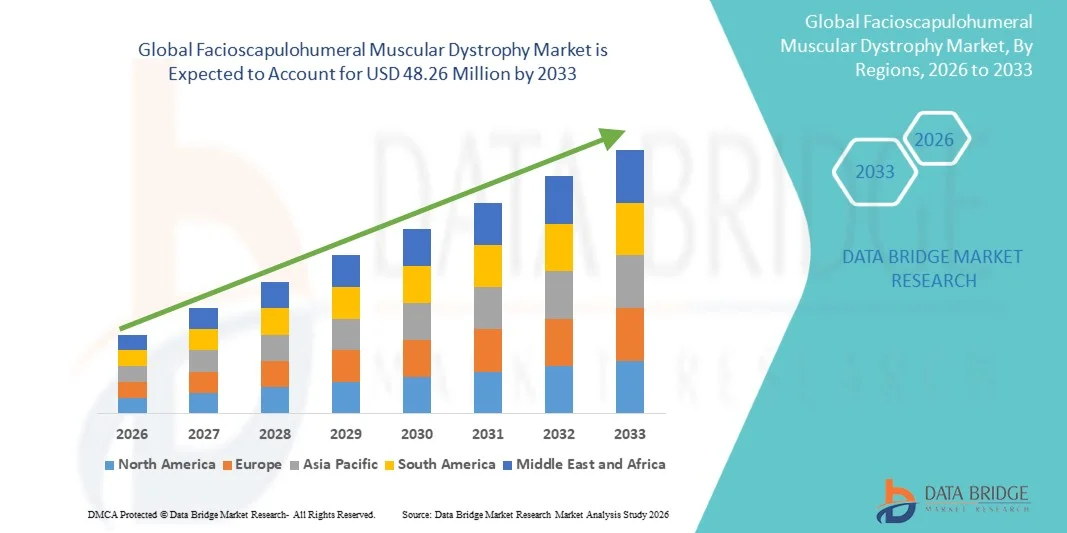
The Facioscapulohumeral Muscular Dystrophy Market was valued at USD 35.26 million in 2025 and is projected to reach USD 48.26 million by 2033, growing at a CAGR of 4.00% from 2026 to 2033. Market growth is supported by increasing awareness of rare neuromuscular disorders, advancements in genetic diagnostic technologies, and expanding clinical research focused on disease-modifying therapies for facioscapulohumeral muscular dystrophy (FSHD).
The rising understanding of the genetic mechanisms underlying FSHD, particularly the role of DUX4 gene expression in disease pathogenesis, is driving pharmaceutical and biotechnology companies to invest in targeted therapeutic development. Improved diagnostic capabilities, including advanced genetic testing and DNA mutation analysis, are enabling earlier and more accurate identification of FSHD patients, expanding the diagnosed patient population. In addition, growing healthcare infrastructure investments in emerging markets, increasing patient advocacy efforts, and the expansion of specialized neuromuscular disease centers are creating new opportunities for stakeholders across the forecast period.
Key Market Trends & Insights
- North America dominated the Facioscapulohumeral Muscular Dystrophy Market with the largest revenue share of 42.8% in 2025, supported by advanced diagnostic infrastructure, strong clinical research networks, and the presence of leading pharmaceutical companies focused on rare disease therapeutics.
- Europe is expected to be the second-largest regional market, driven by established neuromuscular disease registries, comprehensive healthcare systems, and active patient advocacy organizations supporting FSHD research.
- Asia-Pacific is expected to be the fastest-growing region at a CAGR of 5.65% from 2026 to 2033, driven by expanding healthcare infrastructure, increasing genetic testing adoption, and rising awareness of rare neuromuscular disorders.
- The Facioscapulohumeral Muscular Dystrophy 1 segment led the market with a 78.5% market share in 2025, reflecting its higher prevalence compared to FSHD2 and the concentration of clinical research and therapeutic development efforts on this disease subtype.
- The Medication segment dominated the treatment category with a 52.4% market share in 2025, supported by ongoing clinical trials for disease-modifying therapies and symptomatic management approaches.
- The Genetic Testing segment is anticipated to be the fastest-growing diagnosis category, driven by advances in next-generation sequencing technologies and increasing clinical adoption of molecular diagnostics for rare diseases.
- The Hospital segment dominated the end-user category with a 58.6% market share in 2025, supported by access to multidisciplinary neuromuscular disease teams, specialized diagnostic capabilities, and comprehensive patient management infrastructure.
- The Hospital Pharmacy segment dominated the distribution channel category with a 48.2% market share in 2025, driven by centralized medication dispensing for complex rare disease therapies and specialized pharmaceutical services.
Market Size & Forecast
- Global Market Value (2025): USD 35.26 Million
- Expected Market Value (2033): USD 48.26 Million
- Forecast CAGR (2026–2033): 4.00%
- Leading Region in 2025: North America
- Fastest Growing Region: Asia-Pacific
Report Scope and Facioscapulohumeral Muscular Dystrophy Market Segmentation
|
Attributes |
Facioscapulohumeral Muscular Dystrophy Key Market Insights |
|
Segments Covered |
· By Type: Facioscapulohumeral Muscular Dystrophy 1 and Facioscapulohumeral Muscular Dystrophy 2 · By Treatment: Medication, Physical Therapy and Others · By Diagnosis: Blood Tests, Magnetic Resonance Imaging (MRI), Electromyography (EMG), Genetic Testing, DNA Mutation Analysis and Others · By Symptoms: Muscle Weakness, Mild High-Tone Hearing Loss, Difficulty Whistling, Abnormalities, Atrophy, Lordosis and Others · By Dosage: Injection, Tablets and Others · By Route of Administration: Oral, Parenteral and Others · By End-Users: Clinic, Hospital and Others · By Distribution Channel: Hospital Pharmacy, Retail Pharmacy and Online Pharmacy |
|
Countries Covered |
North America · U.S. · Canada · Mexico Europe · Germany · France · U.K. · Netherlands · Switzerland · Belgium · Russia · Italy · Spain · Turkey · Rest of Europe Asia-Pacific · China · Japan · India · South Korea · Singapore · Malaysia · Australia · Thailand · Indonesia · Philippines · Rest of Asia-Pacific Middle East and Africa · Saudi Arabia · U.A.E. · South Africa · Egypt · Israel · Rest of Middle East and Africa South America · Brazil · Argentina · Rest of South America |
|
Key Market Players |
· Fulcrum Therapeutics (U.S.) · Avidity Biosciences (U.S.) · Facio Therapies (Netherlands) · Dyne Therapeutics (U.S.) · Arrowhead Pharmaceuticals (U.S.) · Design Therapeutics (U.S.) · Ultragenyx Pharmaceutical (U.S.) · Sarepta Therapeutics (U.S.) · Ionis Pharmaceuticals (U.S.) · Scholar Rock (U.S.) · Acceleron Pharma (acquired by Merck) (U.S.) · MLo Bio (U.S.) |
|
Market Opportunities |
· Development of DUX4-targeting gene therapies and antisense oligonucleotide approaches with disease-modifying potential · Expansion of genetic testing and newborn screening programs enabling earlier diagnosis and intervention |
|
Value Added Data Infosets |
In addition to the insights on market scenarios such as market value, growth rate, segmentation, geographical coverage, and major players, the market reports curated by the Data Bridge Market Research also include depth expert analysis, patient epidemiology, pipeline analysis, pricing analysis, and regulatory framework. |
Facioscapulohumeral Muscular Dystrophy Market Trends
Trend: Advancement of DUX4-Targeted Therapeutic Approaches
Clinical development of facioscapulohumeral muscular dystrophy therapies continues to accelerate as pharmaceutical companies advance DUX4-targeted approaches, including antisense oligonucleotides, small molecules, and gene therapy platforms. The identification of DUX4 as the primary pathogenic driver of FSHD has enabled development of precision therapeutics designed to reduce DUX4 expression or block its downstream effects. Novel delivery technologies, including antibody-oligonucleotide conjugates, are improving muscle tissue targeting and therapeutic efficacy in clinical trials.
For instance,
Fulcrum Therapeutics' losmapimod, a p38α/β MAPK inhibitor, has demonstrated the ability to reduce DUX4-driven gene expression in FSHD patients, representing the most advanced clinical candidate targeting the underlying disease mechanism. Phase 3 clinical trials are evaluating functional outcomes and disease progression endpoints.
In addition, Avidity Biosciences is developing AOC 1020, an antibody-oligonucleotide conjugate designed to selectively deliver DUX4-targeting oligonucleotides to muscle tissue, representing a novel therapeutic modality for FSHD treatment.
The convergence of improved understanding of FSHD pathophysiology with advances in oligonucleotide and gene therapy technologies is expected to accelerate the development of disease-modifying therapies, transforming the treatment landscape for FSHD patients globally.
Facioscapulohumeral Muscular Dystrophy Market Dynamics
Key Market Driver: Increasing Investment in Rare Disease Therapeutic Development
The growing investment by pharmaceutical and biotechnology companies in rare disease therapeutic development is a primary driver of market growth. Orphan drug designations, regulatory incentives including extended market exclusivity, and priority review pathways are encouraging companies to pursue FSHD therapies. The advancement of multiple therapeutic candidates through clinical trials is expanding treatment options and attracting investment into the FSHD space.
For instance,
The U.S. FDA and European Medicines Agency have granted orphan drug designations to multiple FSHD therapeutic candidates, including losmapimod and AOC 1020, providing regulatory incentives that support clinical development and commercial viability. Growing pharmaceutical industry investment in FSHD therapeutics is expected to drive market expansion and improve patient access to disease-modifying therapies.
Key Restraint/Challenge: Limited Disease Awareness and Diagnostic Delays
The limited awareness of facioscapulohumeral muscular dystrophy among general practitioners and the variable clinical presentation of the disease contribute to significant diagnostic delays. Many patients experience symptoms for years before receiving an accurate diagnosis, limiting early intervention opportunities and clinical trial enrollment. The rarity of FSHD and the absence of newborn screening programs in most regions further constrain timely diagnosis.
For instance,
Studies indicate that the average time from symptom onset to confirmed FSHD diagnosis exceeds five years in many healthcare systems, reflecting the need for improved physician education and expanded genetic testing access. Addressing diagnostic delays through enhanced awareness programs and genetic testing infrastructure remains a critical challenge for market stakeholders.
Key Market Opportunity: Expansion of Genetic Testing and Molecular Diagnostics
The development of advanced genetic testing platforms, including next-generation sequencing and optical genome mapping technologies, is creating opportunities for improved FSHD diagnosis and patient identification. These technologies enable accurate detection of D4Z4 repeat contractions and methylation patterns associated with FSHD, supporting earlier diagnosis and expanding the identified patient population eligible for therapeutic intervention.
For instance,
Bionano Genomics' optical genome mapping technology has demonstrated high accuracy in detecting D4Z4 repeat contractions associated with FSHD1, providing a non-invasive alternative to traditional Southern blot analysis and enabling broader clinical adoption of genetic testing for FSHD diagnosis. Expanding genetic testing capabilities are expected to increase diagnosed patient populations and support clinical trial enrollment, driving market growth during the forecast period.
Facioscapulohumeral Muscular Dystrophy Market Scope
The facioscapulohumeral muscular dystrophy market is segmented on the basis of type, treatment, diagnosis, symptoms, dosage, route of administration, end-users, and distribution channel.
By Type
On the basis of type, the Facioscapulohumeral Muscular Dystrophy Market is segmented into facioscapulohumeral muscular dystrophy 1 and facioscapulohumeral muscular dystrophy 2. The Facioscapulohumeral Muscular Dystrophy 1 segment dominated the market with a 78.5% market share in 2025, reflecting its significantly higher prevalence compared to FSHD2. FSHD1 accounts for approximately 95% of all FSHD cases and is caused by contraction of D4Z4 repeats on chromosome 4, leading to aberrant DUX4 expression. The concentration of clinical research, therapeutic development, and diagnostic testing efforts on FSHD1 contributes to segment leadership. Strong clinical evidence characterizing FSHD1 pathophysiology and established genetic testing protocols support widespread diagnosis and patient identification.
The Facioscapulohumeral Muscular Dystrophy 2 segment is expected to witness the fastest growth at a CAGR of 5.20% from 2026 to 2033. FSHD2 is caused by mutations in the SMCHD1 gene combined with a permissive D4Z4 allele, resulting in DUX4 expression through epigenetic mechanisms. Growing understanding of FSHD2 genetics, improved diagnostic testing capabilities, and increasing recognition of FSHD2 among clinicians are expanding the identified patient population. Clinical trials increasingly include FSHD2 patients, supporting segment growth.
By Treatment
On the basis of treatment, the Facioscapulohumeral Muscular Dystrophy Market is segmented into medication, physical therapy, and others. The Medication segment dominated the market with a 52.4% market share in 2025, supported by ongoing clinical trials for disease-modifying therapies and established use of symptomatic treatments including pain management, anti-inflammatory agents, and medications addressing comorbidities. The advancement of DUX4-targeting therapeutics through clinical development is driving pharmaceutical investment and market growth. Corticosteroids and other supportive medications provide symptomatic relief for FSHD patients, contributing to medication segment revenues.
The Physical Therapy segment is expected to witness the fastest growth at a CAGR of 4.85% from 2026 to 2033, driven by increasing recognition of physical therapy benefits in FSHD management, expanding access to specialized neuromuscular rehabilitation programs, and growing integration of physical therapy with emerging pharmacological treatments. Specialized neuromuscular physical therapy programs, including range-of-motion exercises, resistance training, and aerobic conditioning, are standard components of FSHD management. Growing emphasis on multidisciplinary care approaches supports continued segment growth.
By Diagnosis
On the basis of diagnosis, the Facioscapulohumeral Muscular Dystrophy Market is segmented into blood tests, magnetic resonance imaging (MRI), electromyography (EMG), genetic testing, DNA mutation analysis, and others. The Genetic Testing segment dominated the market with a 38.6% market share in 2025, reflecting its established role as the definitive diagnostic method for FSHD. Molecular genetic testing identifying D4Z4 repeat contractions (FSHD1) or SMCHD1 mutations (FSHD2) provides conclusive diagnosis and enables differentiation from other neuromuscular disorders. Advances in next-generation sequencing and optical genome mapping technologies are improving testing accuracy and accessibility.
The Genetic Testing segment is also expected to witness the fastest growth at a CAGR of 5.40% from 2026 to 2033, driven by advances in sequencing technologies, decreasing testing costs, and increasing clinical adoption of genetic diagnostics for rare diseases.
By Symptoms
On the basis of symptoms, the Facioscapulohumeral Muscular Dystrophy Market is segmented into muscle weakness, mild high-tone hearing loss, difficulty whistling, abnormalities, atrophy, lordosis, and others. The Muscle Weakness segment dominated the market with a 42.5% market share in 2025, reflecting the cardinal symptom of FSHD affecting facial, scapular, and upper arm muscles. Progressive muscle weakness drives patient healthcare utilization, diagnostic evaluations, and therapeutic interventions, contributing to market revenues across multiple segments.
The Atrophy segment is expected to witness the fastest growth at a CAGR of 4.65% from 2026 to 2033, driven by progressive muscle atrophy affecting scapular stabilizers, biceps, and lower extremity muscles in advanced disease stages therefore increasing clinical attention to disease progression endpoints and development of therapies targeting muscle preservation.
By Dosage
On the basis of dosage, the Facioscapulohumeral Muscular Dystrophy Market is segmented into injection, tablets, and others. The tablets segment dominated the market with a 48.5% market share in 2025, supported by oral administration of symptomatic treatments including pain medications, anti-inflammatory agents, and investigational oral therapeutics such as losmapimod. Patient preference for oral dosing and established pharmaceutical manufacturing infrastructure for tablet formulations contribute to segment leadership.
The Injection segment is projected to grow at the fastest CAGR of 5.15% during 2026–2033, driven by the rising use of parenterally administered oligonucleotide therapeutics and supportive care medications. Growth is further supported by the development of antibody-oligonucleotide conjugates, injectable disease-modifying therapies, and continued advancements in injectable antisense oligonucleotides and gene therapy candidates undergoing clinical development.
By Route of Administration
On the basis of route of administration, the Facioscapulohumeral Muscular Dystrophy Market is segmented into oral, parenteral, and others. The Oral segment dominated the market with a 52.8% market share in 2025, reflecting established use of oral medications for symptomatic management and advancement of oral disease-modifying candidates through clinical trials. Patient compliance benefits and ease of administration support oral route dominance.
The Parenteral segment,.
The Parenteral segment is expected to witness the fastest growth at a CAGR of 4.95% from 2026 to 2033, driven by investigational oligonucleotide therapies, injectable supportive care medications, and potential gene therapy approaches. Subcutaneous and intravenous administration routes are being evaluated for novel FSHD therapeutics.
By End-Users
On the basis of end-users, the Facioscapulohumeral Muscular Dystrophy Market is segmented into clinic, hospital, and others. The Hospital segment dominated the market with a 58.6% market share in 2025, supported by access to multidisciplinary neuromuscular disease teams, specialized diagnostic capabilities including genetic testing and muscle MRI, and comprehensive patient management infrastructure. Academic medical centers and specialized neuromuscular disease centers serve as primary sites for FSHD diagnosis, clinical care, and clinical trial enrollment. Complex diagnostic workups and coordination of multidisciplinary care contribute to hospital segment leadership.
The Clinic segment is expected to witness the fastest growth in the market, registering a CAGR of 4.75% from 2026 to 2033. This growth is primarily driven by the expansion of outpatient neuromuscular specialty clinics, which provide convenient access to diagnosis, monitoring, and long-term disease management. Increasing availability of genetic testing and counseling services in community-based healthcare settings is facilitating earlier and more accurate diagnosis of FSHD. Additionally, growing awareness among healthcare providers and patients, coupled with a stronger focus on multidisciplinary care, rehabilitation services, and regular follow-up, is supporting greater utilization of clinic-based services worldwide.
By Distribution Channel
On the basis of distribution channel, the Facioscapulohumeral Muscular Dystrophy Market is segmented into hospital pharmacy, retail pharmacy, and online pharmacy. The Hospital Pharmacy segment dominated the market with a 48.2% market share in 2025, driven by centralized medication dispensing for complex rare disease therapies, specialized pharmaceutical services for investigational treatments, and integration with inpatient and outpatient hospital services. Hospital pharmacies provide clinical support for FSHD medication management and coordinate with neuromuscular disease specialists.
The Online Pharmacy segment is expected to witness the fastest growth, registering a CAGR of 5.85% from 2026 to 2033. Growth is being driven by the increasing adoption of telemedicine services among rare disease patients, enabling remote consultations and prescription management. Enhanced digital pharmacy platforms, featuring streamlined ordering processes, medication tracking, and patient support services, are improving access to treatments. Additionally, rising patient preference for home delivery, reduced travel requirements, and greater convenience in obtaining long-term medications are expected to further accelerate segment growth during the forecast period.
Facioscapulohumeral Muscular Dystrophy Market Regional Analysis
North America dominated the facioscapulohumeral muscular dystrophy market with a revenue share of 42.8% in 2025, supported by advanced diagnostic infrastructure, strong clinical research networks, and the presence of leading pharmaceutical companies focused on rare disease therapeutics. Favorable regulatory pathways for orphan drugs, robust patient advocacy organizations, and extensive physician expertise with neuromuscular diseases contribute to regional market leadership.
U.S. Facioscapulohumeral Muscular Dystrophy Market Insight
The U.S. facioscapulohumeral muscular dystrophy market dominated the North American region with a market share of 86.4% in 2025, benefiting from the highest concentration of FSHD clinical trials globally, advanced genetic testing infrastructure, and strong pharmaceutical industry investment in rare disease therapeutics. Academic medical centers including the University of Rochester, University of Kansas, and University of Washington serve as leading FSHD research and clinical care centers. The FSHD Society and other patient advocacy organizations actively support research funding and patient awareness initiatives, contributing to market development.
Europe Facioscapulohumeral Muscular Dystrophy Market Insight
The Europe facioscapulohumeral muscular dystrophy market remains a major contributor, with established neuromuscular disease centers across Germany, France, the U.K., Netherlands, and Italy. Comprehensive national healthcare systems, active patient registries, and strong clinical research networks support FSHD diagnosis and treatment access. European Reference Networks for rare diseases facilitate cross-border collaboration and expertise sharing for FSHD patient care.
U.K. Facioscapulohumeral Muscular Dystrophy Market Insight
The U.K. facioscapulohumeral muscular dystrophy market is characterized by specialized neuromuscular disease services within NHS hospitals and active participation in multinational FSHD clinical trials. Muscular Dystrophy UK and other patient advocacy organizations support research funding and patient support programs, contributing to market awareness and development.
Germany Facioscapulohumeral Muscular Dystrophy Market Insight
Germany's robust neuromuscular disease infrastructure and specialized university hospital programs support comprehensive FSHD diagnosis and management. Strong genetic testing capabilities and active clinical research participation contribute to market growth and patient access to emerging therapies.
Asia-Pacific Facioscapulohumeral Muscular Dystrophy Market Insight
The Asia-Pacific facioscapulohumeral muscular dystrophy market is poised for rapid growth with a CAGR of 5.65% during the forecast period, driven by expanding healthcare infrastructure, increasing genetic testing adoption, and rising awareness of rare neuromuscular disorders. Japan, China, and South Korea are establishing specialized neuromuscular disease centers and expanding genetic diagnostic capabilities, improving FSHD patient identification and care.
Japan Facioscapulohumeral Muscular Dystrophy Market Insight
The Japan facioscapulohumeral muscular dystrophy market dominated the Asia-Pacific region with a market share of 38.2% in 2025, benefiting from advanced healthcare infrastructure, established neuromuscular disease expertise, and active participation in multinational clinical trials. Government support for rare disease research and comprehensive health insurance coverage support patient access to diagnostic testing and treatment.
China Facioscapulohumeral Muscular Dystrophy Market Insight
The China facioscapulohumeral muscular dystrophy market is experiencing rapid growth driven by healthcare modernization initiatives, expanding genetic testing infrastructure, and increasing awareness of rare neuromuscular diseases. Government rare disease policies and growing private healthcare investment are improving FSHD patient identification and care access.
Facioscapulohumeral Muscular Dystrophy Market Share
The facioscapulohumeral muscular dystrophy industry is primarily led by biotechnology companies focused on rare disease therapeutic development, including:
- Fulcrum Therapeutics (U.S.)
- Avidity Biosciences (U.S.)
- Facio Therapies (Netherlands)
- Dyne Therapeutics (U.S.)
- Arrowhead Pharmaceuticals (U.S.)
- Design Therapeutics (U.S.)
- Ultragenyx Pharmaceutical (U.S.)
- Sarepta Therapeutics (U.S.)
- Ionis Pharmaceuticals (U.S.)
- Scholar Rock (U.S.)
- Acceleron Pharma (acquired by Merck) (U.S.)
- MLo Bio (U.S.)
Latest Developments in Facioscapulohumeral Muscular Dystrophy Market
- In March 2026, Avidity Biosciences announced positive interim Phase 1/2 clinical trial data for AOC 1020, its antibody-oligonucleotide conjugate targeting DUX4 expression in FSHD patients. The data demonstrated favorable safety and tolerability profiles along with preliminary evidence of DUX4 target engagement in muscle tissue, supporting advancement to later-stage clinical development.
- In January 2026, Fulcrum Therapeutics reported topline results from its Phase 3 REACH trial evaluating losmapimod in adults with FSHD. The company announced that the trial met its primary endpoint of demonstrating statistically significant improvement in reachable workspace, representing a major milestone in FSHD therapeutic development.
- In November 2025, Dyne Therapeutics announced initiation of a Phase 1/2 clinical trial for DYNE-302, its FORCE platform-based therapeutic candidate targeting DUX4 for FSHD treatment. The trial represents expansion of Dyne's oligonucleotide conjugate platform into FSHD following success in myotonic dystrophy programs.
- In September 2025, Facio Therapies announced completion of enrollment in its Phase 1 clinical trial evaluating FA-101, a small molecule DUX4 inhibitor, in healthy volunteers. The Netherlands-based company reported favorable safety and pharmacokinetic results supporting advancement to patient studies.
- In June 2025, Arrowhead Pharmaceuticals announced preclinical data supporting advancement of its ARO-DUX4 program targeting DUX4 silencing through RNA interference mechanisms. The company indicated plans for IND-enabling studies to support clinical development in FSHD.
- In March 2025, the FSHD Society announced the launch of a global FSHD patient registry expansion initiative, aiming to increase enrollment to support clinical trial recruitment and natural history data collection. The registry expansion supports ongoing therapeutic development efforts by multiple pharmaceutical companies.
- In December 2024, Ultragenyx Pharmaceutical announced a research collaboration with academic partners to explore gene therapy approaches for FSHD, expanding the company's rare disease gene therapy pipeline into neuromuscular disorders.
- In October 2024, Fulcrum Therapeutics announced FDA Breakthrough Therapy Designation for losmapimod for the treatment of FSHD, reflecting the potential of the p38α/β MAPK inhibitor to address significant unmet medical need in the FSHD patient population.
SKU-
Get online access to the report on the World's First Market Intelligence Cloud

- Interactive Data Analysis Dashboard
- Company Analysis Dashboard for high growth potential opportunities
- Research Analyst Access for customization & queries
- Competitor Analysis with Interactive dashboard
- Latest News, Updates & Trend analysis
- Harness the Power of Benchmark Analysis for Comprehensive Competitor Tracking
Research Methodology
Data collection and base year analysis are done using data collection modules with large sample sizes. The stage includes obtaining market information or related data through various sources and strategies. It includes examining and planning all the data acquired from the past in advance. It likewise envelops the examination of information inconsistencies seen across different information sources. The market data is analysed and estimated using market statistical and coherent models. Also, market share analysis and key trend analysis are the major success factors in the market report. To know more, please request an analyst call or drop down your inquiry.
The key research methodology used by DBMR research team is data triangulation which involves data mining, analysis of the impact of data variables on the market and primary (industry expert) validation. Data models include Vendor Positioning Grid, Market Time Line Analysis, Market Overview and Guide, Company Positioning Grid, Patent Analysis, Pricing Analysis, Company Market Share Analysis, Standards of Measurement, Global versus Regional and Vendor Share Analysis. To know more about the research methodology, drop in an inquiry to speak to our industry experts.
Customization Available
Data Bridge Market Research is a leader in advanced formative research. We take pride in servicing our existing and new customers with data and analysis that match and suits their goal. The report can be customized to include price trend analysis of target brands understanding the market for additional countries (ask for the list of countries), clinical trial results data, literature review, refurbished market and product base analysis. Market analysis of target competitors can be analyzed from technology-based analysis to market portfolio strategies. We can add as many competitors that you require data about in the format and data style you are looking for. Our team of analysts can also provide you data in crude raw excel files pivot tables (Fact book) or can assist you in creating presentations from the data sets available in the report.