


Global Fuchs Endothelial Corneal Dystrophy Market
Market Size in USD Million
CAGR :
% 
 USD
945.50 Million
USD
1,802.58 Million
2025
2033
USD
945.50 Million
USD
1,802.58 Million
2025
2033
 Forecast Period Forecast Period |
2026 –2033 |
 Market Size (Base Year) Market Size (Base Year) |
USD 945.50 Million |
 Market Size (Forecast Year) Market Size (Forecast Year) |
USD 1,802.58 Million |
 CAGR CAGR |
% |
| Major Markets Players |
|
Fuchs’ Endothelial Corneal Dystrophy Market Size
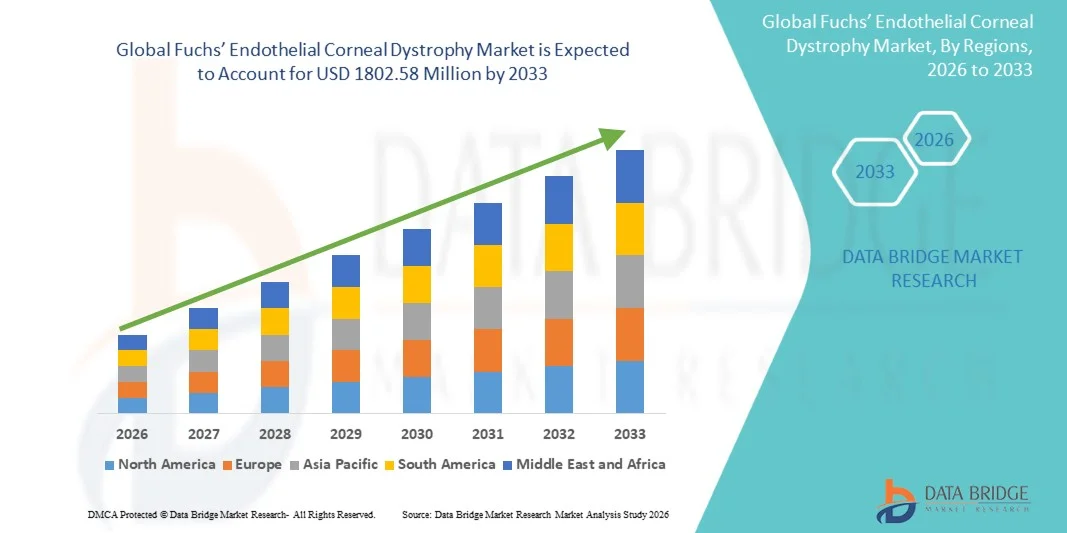
- The global Fuchs’ Endothelial Corneal Dystrophy market size was valued at USD 945.5 Million in 2025and is expected to reach USD 1802.58 Million by 2033, at a CAGR of 8.40% during the forecast period
- The market growth is largely fueled by the increasing prevalence of age-related ophthalmic disorders and the rising incidence of corneal endothelial diseases, leading to growing demand for advanced diagnostic and therapeutic solutions for Fuchs’ Endothelial Corneal Dystrophy across global healthcare systems
- Furthermore, expanding awareness regarding early diagnosis and treatment options, advancements in corneal transplantation techniques, and increasing adoption of minimally invasive ophthalmic procedures are establishing Fuchs’ Endothelial Corneal Dystrophy treatments as an important component of modern eye care management. These converging factors are accelerating the uptake of Fuchs’ Endothelial Corneal Dystrophy solutions, thereby significantly boosting the industry’s growth
Fuchs’ Endothelial Corneal Dystrophy Market Analysis
- Fuchs’ Endothelial Corneal Dystrophy, a progressive eye disorder affecting the corneal endothelium and leading to vision impairment and corneal swelling, is becoming increasingly important in ophthalmic healthcare due to the growing aging population and rising prevalence of degenerative eye diseases worldwide
- The escalating demand for Fuchs’ Endothelial Corneal Dystrophy treatments is primarily fueled by increasing awareness regarding early ophthalmic diagnosis, advancements in corneal transplantation procedures, rising adoption of endothelial keratoplasty techniques, and growing availability of specialized eye care services
- North America dominated the Fuchs’ Endothelial Corneal Dystrophy market with the largest revenue share of 39.4% in 2025, characterized by advanced ophthalmology healthcare infrastructure, high adoption of innovative corneal treatment procedures, and strong presence of specialized eye care centers, with the U.S. witnessing substantial growth in corneal transplantation surgeries and ophthalmic research activities
- Asia-Pacific is expected to be the fastest growing region in the Fuchs’ Endothelial Corneal Dystrophy market during the forecast period due to increasing geriatric population, rising healthcare expenditure, improving access to ophthalmic care, and growing awareness regarding vision-related disorders across countries such as China, India, and Japan
- The topical segment dominated the largest market revenue share of 61.3% in 2025, driven by the widespread use of ophthalmic eye drops and saline solutions for symptom management and corneal hydration control
Report Scope and Fuchs’ Endothelial Corneal Dystrophy Market Segmentation
|
Attributes |
Fuchs’ Endothelial Corneal Dystrophy Key Market Insights |
|
Segments Covered |
|
|
Countries Covered |
North America · U.S. · Canada · Mexico Europe · Germany · France · U.K. · Netherlands · Switzerland · Belgium · Russia · Italy · Spain · Turkey · Rest of Europe Asia-Pacific · China · Japan · India · South Korea · Singapore · Malaysia · Australia · Thailand · Indonesia · Philippines · Rest of Asia-Pacific Middle East and Africa · Saudi Arabia · U.A.E. · South Africa · Egypt · Israel · Rest of Middle East and Africa South America · Brazil · Argentina · Rest of South America |
|
Key Market Players |
· Alcon Inc. (Switzerland) · Bausch + Lomb (U.S.) · Johnson & Johnson Vision (U.S.) · Carl Zeiss Meditec AG (Germany) · Topcon Corporation (Japan) · EssilorLuxottica (France) · STAAR Surgical Company (U.S.) · Santen Pharmaceutical Co., Ltd. (Japan) · Ophthotech Corporation (U.S.) · Glaukos Corporation (U.S.) · Sun Pharmaceutical Industries Ltd. (India) · Novartis AG (Switzerland) · AbbVie Inc. (U.S.) · Hoya Corporation (Japan) · NIDEK Co., Ltd. (Japan) · CooperVision (U.S.) · Lumenis Ltd. (Israel) · BVI Medical (U.K.) · Rayner Intraocular Lenses (U.K.) · Ziemer Ophthalmic Systems (Switzerland) |
|
Market Opportunities |
· Rising Adoption of Advanced Corneal Transplantation Procedures · Growing Demand for Early Diagnosis and Specialized Ophthalmic Care in Emerging Markets |
|
Value Added Data Infosets |
In addition to the insights on market scenarios such as market value, growth rate, segmentation, geographical coverage, and major players, the market reports curated by the Data Bridge Market Research also include in-depth expert analysis, patient epidemiology, pipeline analysis, pricing analysis, and regulatory framework. |
Fuchs’ Endothelial Corneal Dystrophy Market Trends
“Advancements in Corneal Transplantation Techniques and Emerging Cell-Based Therapies”
- A significant and accelerating trend in the global Fuchs’ Endothelial Corneal Dystrophy market is the growing adoption of advanced corneal transplantation procedures and the development of innovative regenerative and cell-based treatment approaches for managing progressive corneal disorders
- For instance, minimally invasive surgical techniques such as Descemet Membrane Endothelial Keratoplasty (DMEK) and Descemet Stripping Automated Endothelial Keratoplasty (DSAEK) are increasingly being preferred due to their improved visual outcomes, reduced recovery time, and lower complication rates compared to traditional corneal transplantation procedures
- The increasing focus on regenerative medicine and endothelial cell therapy is encouraging research institutions and pharmaceutical companies to develop novel therapeutic solutions aimed at restoring corneal endothelial function and reducing dependency on donor corneas
- Furthermore, advancements in ophthalmic diagnostic technologies, including high-resolution corneal imaging and early disease detection systems, are supporting timely diagnosis and more effective treatment planning for patients with Fuchs’ Endothelial Corneal Dystrophy
- The growing awareness regarding vision preservation and the rising availability of specialized ophthalmic treatment centers are contributing to increased patient access to advanced corneal care services globally
- This trend toward minimally invasive treatment, regenerative ophthalmology, and improved diagnostic capabilities is reshaping the management of corneal dystrophies. Consequently, companies such as Santen Pharmaceutical and Bausch + Lomb are strengthening research initiatives and expanding ophthalmic treatment portfolios targeting corneal disorders
- The demand for effective therapies for Fuchs’ Endothelial Corneal Dystrophy is increasing steadily due to the rising aging population and growing prevalence of degenerative eye disorders worldwide
Fuchs’ Endothelial Corneal Dystrophy Market Dynamics
Driver
“Rising Prevalence of Corneal Disorders and Growing Geriatric Population”
- The increasing prevalence of corneal diseases and the rapidly growing geriatric population are major factors driving the growth of the global Fuchs’ Endothelial Corneal Dystrophy market
- For instance, age-related degeneration of corneal endothelial cells is contributing to a higher incidence of Fuchs’ Endothelial Corneal Dystrophy, particularly among older adults and female populations who are more susceptible to the condition
- The growing awareness regarding early diagnosis and treatment of vision-related disorders is encouraging patients to seek advanced ophthalmic care and surgical interventions at earlier disease stages
- Furthermore, improvements in healthcare infrastructure, increasing availability of specialized ophthalmologists, and expanding access to advanced corneal transplantation procedures are supporting higher treatment adoption rates globally
- The increasing demand for minimally invasive surgical techniques with faster recovery and improved visual outcomes is also accelerating the adoption of endothelial keratoplasty procedures. In addition, rising investments in ophthalmology research and regenerative medicine are expected to create new treatment opportunities during the forecast period
Restraint/Challenge
“Limited Donor Cornea Availability and High Treatment Costs”
- Limited availability of donor corneas for transplantation remains a significant challenge affecting the treatment landscape for Fuchs’ Endothelial Corneal Dystrophy patients worldwide
- For instance, the growing demand for corneal transplantation procedures often exceeds the available supply of donor tissues, leading to extended waiting periods and restricted treatment accessibility in several regions
- In addition, the high cost associated with advanced surgical procedures, postoperative care, and long-term disease management can create financial barriers for patients, particularly in low- and middle-income countries
- The risk of surgical complications, graft rejection, and postoperative infections may also limit patient willingness to undergo corneal transplantation procedures in certain cases
- Furthermore, limited awareness regarding corneal disorders and insufficient access to specialized ophthalmic care in developing regions can delay diagnosis and treatment initiation, negatively affecting patient outcomes and market growth
- Overcoming these challenges through increased donor awareness programs, advancements in regenerative therapies, improved healthcare accessibility, and continued innovation in ophthalmic treatment technologies will be essential for sustaining long-term growth in the global Fuchs’ Endothelial Corneal Dystrophy market
Fuchs’ Endothelial Corneal Dystrophy Market Scope
The market is segmented on the basis of treatment, diagnosis, symptoms, dosage, route of administration, end-users, and distribution channel.
- By Treatment
On the basis of treatment, the Fuchs’ Endothelial Corneal Dystrophy market is segmented into medication, surgery, and others. The surgery segment dominated the largest market revenue share of 58.7% in 2025, driven by the increasing adoption of advanced corneal transplantation procedures and growing prevalence of severe endothelial corneal damage among aging populations. Surgical interventions such as endothelial keratoplasty and corneal transplantation are widely considered the most effective treatment options for restoring vision in advanced-stage Fuchs’ Endothelial Corneal Dystrophy patients. Healthcare professionals increasingly recommend surgical treatment because it provides long-term visual improvement and significantly enhances patient quality of life. The segment also benefits from advancements in minimally invasive ophthalmic surgical techniques and improved graft survival outcomes. Rising awareness regarding early diagnosis and treatment accessibility is contributing significantly to segment growth globally. Increasing healthcare investments in ophthalmology infrastructure and expanding availability of skilled corneal surgeons further support market expansion. The growing geriatric population, which is highly susceptible to corneal endothelial degeneration, is also accelerating demand for surgical interventions. In addition, favorable reimbursement frameworks and rising adoption of outpatient ophthalmic procedures are strengthening segment dominance. Technological innovations in corneal transplantation methods and improved postoperative recovery outcomes continue to drive treatment preference among patients and clinicians. Furthermore, increasing prevalence of vision impairment disorders and expanding access to specialized eye care services are expected to sustain surgical segment leadership throughout the forecast period.
The medication segment is expected to witness the fastest CAGR of 9.8% from 2026 to 2033, driven by increasing demand for non-invasive treatment options and ongoing advancements in ophthalmic drug development. Medications such as hypertonic saline solutions and anti-inflammatory therapies are increasingly utilized to manage corneal swelling and improve patient comfort during early stages of the disease. Healthcare providers are emphasizing early therapeutic intervention to delay disease progression and reduce the need for surgical procedures. Pharmaceutical companies continue investing in innovative ophthalmic formulations and regenerative therapies aimed at improving corneal endothelial cell function. The segment also benefits from growing awareness regarding preventive eye care and regular ophthalmic examinations among elderly populations. Rising healthcare accessibility and expanding ophthalmology clinics in emerging economies are further contributing to market growth. Increasing adoption of topical therapies and patient preference for convenient treatment solutions support higher medication utilization rates. Research activities focusing on gene therapy and cell-based regenerative approaches are also creating future growth opportunities within the segment. In addition, improved diagnostic capabilities and early-stage disease detection are encouraging broader use of pharmaceutical management strategies. Furthermore, rising investments in ophthalmic research and personalized eye care solutions are expected to accelerate medication segment growth during the forecast period.
- By Diagnosis
On the basis of diagnosis, the Fuchs’ Endothelial Corneal Dystrophy market is segmented into cornea examination and grading, corneal tomography, corneal pachymetry, corneal cell count, and others. The cornea examination and grading segment accounted for the largest market revenue share of 36.9% in 2025, driven by its widespread use as the primary diagnostic approach for identifying disease severity and monitoring progression in Fuchs’ Endothelial Corneal Dystrophy patients. Ophthalmologists extensively rely on slit-lamp examination and grading systems to evaluate corneal guttae formation, edema, and endothelial dysfunction. The segment benefits from the increasing prevalence of age-related eye disorders and growing awareness regarding early ophthalmic diagnosis. Cornea examination procedures are cost-effective, non-invasive, and routinely performed in hospitals, clinics, and specialty ophthalmology centers worldwide. Rising investments in eye care infrastructure and increasing availability of advanced ophthalmic imaging systems are also supporting segment growth. Healthcare providers increasingly emphasize regular corneal evaluations for elderly populations due to the progressive nature of the disease. In addition, expanding ophthalmology screening programs and improved access to specialized eye care services are contributing to market expansion. Technological advancements in digital slit-lamp systems and imaging-assisted grading techniques further strengthen diagnostic accuracy and efficiency. Increasing collaborations between ophthalmic device manufacturers and healthcare institutions are also enhancing diagnostic accessibility. Furthermore, growing public awareness regarding vision health and preventive eye care is expected to sustain segment dominance throughout the forecast period.
The corneal tomography segment is expected to witness the fastest CAGR of 10.5% from 2026 to 2033, driven by rising adoption of advanced ophthalmic imaging technologies and increasing demand for precise corneal structure analysis. Corneal tomography provides detailed three-dimensional imaging of the cornea, enabling accurate assessment of corneal thickness, curvature, and endothelial abnormalities associated with Fuchs’ Endothelial Corneal Dystrophy. Healthcare professionals increasingly prefer tomography systems because they improve diagnostic precision and support early disease detection. The segment also benefits from ongoing technological advancements in ophthalmic imaging devices and artificial intelligence-assisted diagnostic platforms. Growing investments in ophthalmology research and expansion of specialty eye care centers are further supporting market growth. Rising patient awareness regarding advanced eye diagnostic procedures and increasing healthcare expenditure are accelerating adoption globally. In addition, improved imaging resolution and faster diagnostic processing capabilities are enhancing clinical workflow efficiency. Pharmaceutical and medical device companies continue investing in innovative ophthalmic diagnostic technologies to improve patient outcomes and treatment planning. Expanding use of corneal tomography in pre-surgical evaluation and postoperative monitoring is also contributing to segment expansion. Furthermore, increasing focus on precision ophthalmology and personalized eye care solutions is expected to drive strong market growth during the forecast period.
- By Symptoms
On the basis of symptoms, the Fuchs’ Endothelial Corneal Dystrophy market is segmented into sensitivity to light, night vision problems, swelling, inability to drive at night, gritty-like feeling in both eyes, pain, low vision in humid weather, cloudy vision, appearance of halo-like circles around lights, and others. The cloudy vision segment dominated the largest market revenue share of 31.8% in 2025, driven by its status as one of the most common and clinically significant symptoms experienced by patients with Fuchs’ Endothelial Corneal Dystrophy. Cloudy or blurred vision occurs due to progressive corneal swelling and endothelial cell dysfunction, significantly impacting daily activities and quality of life. Patients experiencing persistent vision impairment are more likely to seek ophthalmic consultation and treatment, contributing to higher diagnosis and therapy rates. Healthcare professionals frequently prioritize cloudy vision symptoms for early disease identification and monitoring of treatment effectiveness. The segment also benefits from increasing awareness regarding age-related vision disorders and improved accessibility to ophthalmic diagnostic services. Rising prevalence of corneal dystrophies among elderly populations is further accelerating segment growth globally. In addition, advancements in diagnostic imaging technologies and ophthalmic screening programs are supporting early detection of vision abnormalities. Increasing patient awareness regarding preventive eye care and timely medical intervention also contributes significantly to market expansion. Pharmaceutical and surgical treatment adoption rates remain high among patients with severe cloudy vision symptoms requiring immediate visual improvement. Furthermore, expanding healthcare infrastructure and growing investments in specialized eye care services are expected to sustain segment dominance during the forecast period.
The night vision problems segment is expected to witness the fastest CAGR of 9.9% from 2026 to 2033, driven by increasing recognition of early-stage visual disturbances associated with corneal endothelial dysfunction. Patients with Fuchs’ Endothelial Corneal Dystrophy frequently experience difficulty seeing in low-light conditions due to corneal edema and light scattering effects. Growing awareness regarding nighttime visual impairment and road safety concerns is significantly encouraging earlier ophthalmic consultations and diagnosis. Healthcare professionals are increasingly focusing on night vision assessment during routine eye examinations for aging populations. The segment also benefits from rising adoption of advanced corneal imaging systems capable of detecting subtle vision abnormalities in early disease stages. Increasing elderly populations and growing prevalence of age-related ophthalmic disorders further contribute to market growth. Ophthalmologists are emphasizing early intervention strategies to prevent worsening night vision impairment and improve patient quality of life. In addition, increasing use of corrective therapies and surgical procedures aimed at restoring visual clarity is supporting treatment demand. Technological advancements in ophthalmic diagnostics and personalized vision care solutions are also contributing to segment expansion. Furthermore, rising public awareness regarding eye health and preventive ophthalmic screening programs are expected to drive substantial growth during the forecast period.
- By Dosage
On the basis of dosage, the Fuchs’ Endothelial Corneal Dystrophy market is segmented into solutions, tablet, injection, and others. The solutions segment accounted for the largest market revenue share of 49.6% in 2025, driven by the widespread use of ophthalmic saline and lubricating eye solutions for managing corneal swelling and improving patient comfort. Hypertonic saline solutions are commonly prescribed to reduce corneal edema and temporarily improve visual clarity in patients with early-stage Fuchs’ Endothelial Corneal Dystrophy. Healthcare professionals frequently recommend ophthalmic solutions because they are easy to administer, non-invasive, and highly suitable for long-term symptom management. The segment benefits from increasing patient preference for topical therapies and growing accessibility to over-the-counter ophthalmic products. Pharmaceutical companies continue investing in advanced ophthalmic formulations aimed at improving corneal hydration control and therapeutic effectiveness. Rising awareness regarding preventive eye care and increasing ophthalmology consultations are significantly contributing to segment growth. In addition, expanding geriatric populations and growing prevalence of age-related eye disorders further support market expansion. Ophthalmic solutions are also favored due to their relatively lower treatment costs and minimal systemic side effects. Increasing healthcare infrastructure development and wider distribution of eye care products across retail and hospital pharmacies strengthen market penetration. Furthermore, growing focus on patient-centric ophthalmic care and symptom relief therapies is expected to sustain segment dominance during the forecast period.
The injection segment is expected to witness the fastest CAGR of 10.7% from 2026 to 2033, driven by increasing research into regenerative ophthalmic therapies and advanced biologic treatment approaches. Injectable therapies are gaining attention for their potential to improve corneal endothelial cell regeneration and slow disease progression in severe cases. Pharmaceutical and biotechnology companies are actively investing in cell-based therapies, growth factor injections, and innovative regenerative medicine solutions targeting corneal disorders. The segment also benefits from increasing demand for minimally invasive therapeutic procedures with improved long-term clinical outcomes. Rising investments in ophthalmic research and regenerative medicine are significantly supporting market expansion globally. Healthcare providers are increasingly exploring injectable therapies for patients who are not immediate candidates for corneal transplantation surgery. Advancements in biologic drug delivery technologies and ophthalmic injection techniques are improving treatment safety and therapeutic precision. In addition, growing awareness regarding advanced eye care solutions and expanding access to specialty ophthalmology clinics are contributing to segment growth. Increasing clinical trials focused on endothelial cell regeneration therapies further support future market opportunities. Furthermore, ongoing technological advancements and rising focus on personalized ophthalmic treatment strategies are expected to accelerate injection segment growth throughout the forecast period.
- By Route of Administration
On the basis of route of administration, the Fuchs’ Endothelial Corneal Dystrophy market is segmented into oral, topical, and others. The topical segment dominated the largest market revenue share of 61.3% in 2025, driven by the widespread use of ophthalmic eye drops and saline solutions for symptom management and corneal hydration control. Topical therapies are highly preferred because they provide direct drug delivery to the affected corneal tissues while minimizing systemic side effects. Healthcare professionals commonly prescribe topical medications for reducing corneal edema, relieving discomfort, and improving temporary visual clarity in patients with early-stage disease. The segment benefits from increasing patient preference for non-invasive treatment approaches and easy self-administration methods. Pharmaceutical companies continue developing advanced ophthalmic formulations with enhanced retention properties and improved therapeutic effectiveness. Rising prevalence of age-related eye disorders and growing ophthalmology consultations are significantly supporting market expansion. In addition, expanding retail pharmacy networks and greater accessibility to prescription and over-the-counter eye care products are contributing to increased adoption. Topical therapies are also favored because they support long-term disease management without requiring hospitalization or invasive procedures. Growing awareness regarding preventive eye care and regular ophthalmic monitoring further strengthens segment growth. Furthermore, advancements in ophthalmic drug delivery technologies and increasing investments in eye care research are expected to sustain topical segment dominance during the forecast period.
The oral segment is expected to witness the fastest CAGR of 8.6% from 2026 to 2033, driven by increasing research into systemic therapies and supportive treatment approaches for corneal dystrophy management. Oral medications are increasingly being evaluated for their potential role in reducing inflammation, improving ocular health, and supporting postoperative recovery in ophthalmic patients. Healthcare providers are exploring oral therapeutic options as adjunctive treatments alongside topical therapies and surgical interventions. The segment benefits from rising investments in ophthalmic pharmaceutical research and development activities focused on innovative systemic treatment approaches. Increasing patient demand for comprehensive disease management solutions and personalized treatment strategies is also supporting market growth. Pharmaceutical companies continue conducting clinical studies assessing oral antioxidant therapies and regenerative compounds for corneal health improvement. Growing geriatric populations and rising prevalence of chronic eye diseases are further accelerating demand for supportive oral medications. In addition, advancements in pharmaceutical formulation technologies and improved patient adherence programs are contributing to segment expansion. Expanding healthcare access and increasing awareness regarding holistic eye care solutions further support market development. Furthermore, ongoing innovations in ophthalmic therapeutics and increasing multidisciplinary treatment approaches are expected to drive gradual oral segment growth throughout the forecast period.
- By End-Users
On the basis of end-users, the Fuchs’ Endothelial Corneal Dystrophy market is segmented into clinic, hospital, and others. The hospital segment accounted for the largest market revenue share of 54.1% in 2025, driven by the high volume of advanced ophthalmic surgeries and specialized corneal treatment procedures performed in hospital settings. Hospitals remain primary treatment centers for patients requiring corneal transplantation, endothelial keratoplasty, and comprehensive ophthalmic evaluation. The availability of advanced surgical infrastructure, skilled ophthalmologists, and multidisciplinary eye care teams significantly supports segment dominance. Increasing hospitalization associated with severe vision impairment and progressive corneal degeneration is contributing to higher treatment demand within hospitals. Hospitals also provide integrated postoperative care, diagnostic imaging, and long-term disease monitoring services, improving patient outcomes and treatment success rates. Rising investments in ophthalmology departments and expansion of specialized eye care facilities further strengthen hospital-based treatment accessibility globally. In addition, favorable reimbursement policies and insurance coverage for ophthalmic surgeries are supporting increased patient admissions. Pharmaceutical and medical device companies frequently collaborate with hospitals for clinical research, ophthalmic innovation, and advanced treatment adoption initiatives. Growing awareness regarding early diagnosis and surgical intervention is also accelerating hospital visits among aging populations. Furthermore, increasing prevalence of corneal disorders and expanding healthcare expenditure are expected to sustain hospital segment dominance throughout the forecast period.
The clinic segment is expected to witness the fastest CAGR of 9.4% from 2026 to 2033, driven by increasing preference for outpatient ophthalmic care and growing accessibility to specialized eye clinics. Clinics provide convenient and cost-effective treatment options for patients with mild to moderate corneal dystrophy symptoms requiring regular monitoring and non-invasive therapies. Patients increasingly prefer clinics because they offer shorter waiting times, personalized consultations, and easier access to ophthalmologists without hospitalization requirements. The segment benefits from rising awareness regarding preventive eye care and increasing demand for routine ophthalmic examinations among elderly populations. Expanding numbers of private ophthalmology clinics and specialty vision care centers across developed and emerging economies are also contributing significantly to market growth. Healthcare providers in clinics increasingly utilize advanced diagnostic technologies such as corneal tomography and pachymetry for early disease detection and treatment planning. Growing adoption of teleophthalmology and digital eye care consultation services further improves accessibility and patient convenience. In addition, increasing investments in outpatient eye care infrastructure and integrated ophthalmic management models are supporting segment expansion. Government initiatives promoting vision health awareness and early intervention programs are also encouraging clinic visits globally. Furthermore, increasing patient demand for accessible and personalized ophthalmic care solutions is expected to drive strong clinic segment growth during the forecast period.
- By Distribution Channel
On the basis of distribution channel, the Fuchs’ Endothelial Corneal Dystrophy market is segmented into hospital pharmacy, retail pharmacy, and online pharmacy. The hospital pharmacy segment dominated the largest market revenue share of 50.4% in 2025, driven by the high dispensing volume of ophthalmic medications and postoperative therapies within hospital settings. Hospital pharmacies play a critical role in managing prescription eye medications, surgical consumables, and specialized ophthalmic treatments for patients undergoing corneal procedures. The segment benefits from strong coordination between ophthalmologists, pharmacists, and surgical departments, ensuring safe medication management and optimized patient care. Increasing hospital admissions for advanced corneal surgeries and vision restoration procedures are significantly contributing to segment growth. Hospital pharmacies also provide specialized counseling regarding postoperative eye care and medication adherence, improving treatment outcomes. Rising investments in ophthalmology infrastructure and expansion of specialty eye care hospitals further strengthen pharmaceutical distribution within healthcare institutions. In addition, favorable reimbursement frameworks and centralized procurement systems improve treatment affordability and medication accessibility. Pharmaceutical companies continue collaborating with hospital pharmacies to support ophthalmic drug availability and advanced treatment adoption. Growing prevalence of age-related corneal disorders and increasing ophthalmic consultations are also accelerating demand within hospital pharmacy channels. Furthermore, expanding healthcare expenditure and rising awareness regarding specialized eye care treatments are expected to sustain segment dominance during the forecast period.
The online pharmacy segment is expected to witness the fastest CAGR of 11.3% from 2026 to 2033, driven by the rapid digitalization of healthcare services and increasing consumer preference for convenient medicine purchasing platforms. Online pharmacies provide patients with easy access to ophthalmic medications, lubricating eye drops, and postoperative therapies through home delivery services and digital prescription systems. The convenience of online ordering, competitive pricing, and subscription-based refill options is significantly accelerating online pharmacy adoption globally. Increasing internet penetration, smartphone usage, and digital healthcare awareness are also contributing to market growth. The COVID-19 pandemic further strengthened consumer confidence in e-pharmacy platforms and contactless healthcare solutions, creating long-term opportunities within the segment. Pharmaceutical companies and online healthcare providers are increasingly expanding partnerships to improve ophthalmic product distribution and treatment accessibility across remote regions. Regulatory improvements supporting e-prescriptions and secure digital healthcare ecosystems are further strengthening segment expansion. Online pharmacies also offer digital medication reminders, educational resources, and patient support services that improve treatment adherence and continuity of care. Rising investments in healthcare e-commerce infrastructure and logistics optimization continue to enhance online pharmaceutical distribution capabilities globally. In addition, increasing preference for personalized digital healthcare experiences and convenient access to eye care products is expected to drive substantial segment growth throughout the forecast period.
Fuchs’ Endothelial Corneal Dystrophy Market Regional Analysis
- North America dominated the Fuchs’ Endothelial Corneal Dystrophy market with the largest revenue share of 39.4% in 2025, characterized by advanced ophthalmology healthcare infrastructure, high adoption of innovative corneal treatment procedures, and the strong presence of specialized eye care centers. The region benefits from increasing awareness regarding vision-related disorders, rising prevalence of age-associated corneal diseases, and growing availability of advanced surgical interventions for corneal endothelial dysfunction
- The increasing number of corneal transplantation surgeries, growing adoption of endothelial keratoplasty procedures, and rising ophthalmic research activities continue to drive demand for Fuchs’ Endothelial Corneal Dystrophy treatments across hospitals and specialty ophthalmology clinics in the region
- Furthermore, favorable reimbursement policies, technological advancements in ophthalmic diagnostics, and increasing investments in eye care infrastructure are reinforcing North America’s leadership in the global Fuchs’ Endothelial Corneal Dystrophy market
U.S. Fuchs’ Endothelial Corneal Dystrophy Market Insight
The U.S. Fuchs’ Endothelial Corneal Dystrophy market captured the largest revenue share within North America in 2025, driven by substantial growth in corneal transplantation surgeries, increasing prevalence of corneal endothelial disorders, and strong ophthalmic research activities. Rising awareness regarding early diagnosis and treatment of vision impairment, combined with increasing adoption of advanced endothelial keratoplasty procedures, is significantly contributing to market growth. In addition, the presence of specialized eye care institutions, advanced healthcare infrastructure, and continuous innovation in ophthalmic treatment technologies continue to propel the market in the U.S.
Europe Fuchs’ Endothelial Corneal Dystrophy Market Insight
The Europe Fuchs’ Endothelial Corneal Dystrophy market is projected to expand at a substantial CAGR throughout the forecast period, supported by increasing healthcare expenditure, growing geriatric population, and rising demand for advanced ophthalmic treatment procedures. The region’s well-established eye care infrastructure and growing focus on early intervention for corneal disorders are encouraging wider adoption of innovative treatment approaches. Furthermore, increasing ophthalmology research initiatives and expanding availability of corneal transplantation services are contributing significantly to market growth across Europe.
U.K. Fuchs’ Endothelial Corneal Dystrophy Market Insight
The U.K. Fuchs’ Endothelial Corneal Dystrophy market is anticipated to grow at a noteworthy CAGR during the forecast period due to increasing prevalence of age-related eye disorders and rising awareness regarding corneal disease management. Expanding ophthalmology services, supportive healthcare programs, and increasing adoption of minimally invasive corneal surgical procedures are supporting market growth in the country. Moreover, growing investments in eye care research and increasing patient access to specialized ophthalmic treatment are further driving demand for Fuchs’ Endothelial Corneal Dystrophy therapies in the U.K.
Germany Fuchs’ Endothelial Corneal Dystrophy Market Insight
The Germany Fuchs’ Endothelial Corneal Dystrophy market is expected to expand at a considerable CAGR during the forecast period, fueled by strong healthcare infrastructure, rising adoption of advanced ophthalmic technologies, and increasing awareness regarding corneal disorders. Germany’s emphasis on precision healthcare and innovative surgical procedures is accelerating the uptake of endothelial keratoplasty and other corneal treatment solutions. In addition, increasing research collaborations and advancements in ophthalmic diagnostics are contributing positively to market growth in the country.
Asia-Pacific Fuchs’ Endothelial Corneal Dystrophy Market Insight
The Asia-Pacific Fuchs’ Endothelial Corneal Dystrophy market is expected to witness the fastest CAGR during the forecast period of 2026 to 2033 due to increasing geriatric population, rising healthcare expenditure, improving access to ophthalmic care, and growing awareness regarding vision-related disorders across countries such as China, India, and Japan. Rapid improvements in healthcare infrastructure, increasing availability of eye care specialists, and rising adoption of advanced ophthalmic treatment procedures are significantly driving market growth in the region. Furthermore, government initiatives aimed at preventing blindness and improving access to vision care services are accelerating the adoption of Fuchs’ Endothelial Corneal Dystrophy treatments across Asia-Pacific.
Japan Fuchs’ Endothelial Corneal Dystrophy Market Insight
The Japan Fuchs’ Endothelial Corneal Dystrophy market is gaining momentum due to the country’s aging population, advanced ophthalmic healthcare system, and increasing focus on vision preservation and eye health management. Rising adoption of innovative corneal treatment technologies, coupled with growing awareness regarding early diagnosis of endothelial corneal disorders, is driving market growth. In addition, Japan’s strong research capabilities in ophthalmology and expanding availability of specialized eye care centers are contributing to the expansion of the market in the country.
China Fuchs’ Endothelial Corneal Dystrophy Market Insight
The China Fuchs’ Endothelial Corneal Dystrophy market accounted for the largest market revenue share in Asia-Pacific in 2025, attributed to expanding healthcare infrastructure, rising prevalence of vision-related disorders, and increasing awareness regarding advanced ophthalmic treatments. Growing healthcare expenditure, improving accessibility to eye care services, and rising investments in ophthalmology research are key factors driving market growth in the country. In addition, increasing availability of specialized eye hospitals, expanding adoption of corneal transplantation procedures, and strong government support for healthcare modernization are significantly contributing to the growth of the Fuchs’ Endothelial Corneal Dystrophy market in China.
Fuchs’ Endothelial Corneal Dystrophy Market Share
The Fuchs’ Endothelial Corneal Dystrophy industry is primarily led by well-established companies, including:
- Alcon Inc. (Switzerland)
- Bausch + Lomb (U.S.)
- Johnson & Johnson Vision (U.S.)
- Carl Zeiss Meditec AG (Germany)
- Topcon Corporation (Japan)
- EssilorLuxottica (France)
- STAAR Surgical Company (U.S.)
- Santen Pharmaceutical Co., Ltd. (Japan)
- Ophthotech Corporation (U.S.)
- Glaukos Corporation (U.S.)
- Sun Pharmaceutical Industries Ltd. (India)
- Novartis AG (Switzerland)
- AbbVie Inc. (U.S.)
- Hoya Corporation (Japan)
- NIDEK Co., Ltd. (Japan)
- CooperVision (U.S.)
- Lumenis Ltd. (Israel)
- BVI Medical (U.K.)
- Rayner Intraocular Lenses (U.K.)
- Ziemer Ophthalmic Systems (Switzerland)
Latest Developments in Global Fuchs’ Endothelial Corneal Dystrophy Market
- In March 2021, researchers from Washington University School of Medicine reported clinical trial evidence that fluvoxamine and other repurposed drugs were being investigated for inflammatory modulation in early-stage corneal and systemic conditions, contributing to broader interest in pharmacologic approaches for degenerative ocular diseases including FECD. This period marked growing momentum in non-surgical research strategies for endothelial dysfunction-related eye disorders
- In February 2022, peer-reviewed ophthalmology research highlighted advances in Descemet membrane endothelial keratoplasty (DMEK) and Descemet stripping only (DSO/DWEK) as evolving surgical standards for FECD treatment, with improved graft survival and faster visual recovery compared to traditional corneal transplantation techniques. These innovations continued to reshape the global FECD treatment landscape toward minimally invasive surgery
- In May 2024, peer-reviewed ophthalmology literature highlighted ongoing first-in-human and Phase 1/2 studies of gene-targeting therapies for FECD, including approaches targeting the TCF4 gene mutation responsible for many late-onset cases. These therapies represent a shift toward disease-modifying treatment rather than surgical management alone
- In May 2025, Design Therapeutics announced positive Phase 1 results for DT-168, a GeneTAC small-molecule eye drop targeting mutant TCF4, with plans to advance into a Phase 2 biomarker trial for FECD patients in the second half of 2025. This marked one of the most significant gene-targeted therapeutic milestones in the FECD pipeline
SKU-
Get online access to the report on the World's First Market Intelligence Cloud

- Interactive Data Analysis Dashboard
- Company Analysis Dashboard for high growth potential opportunities
- Research Analyst Access for customization & queries
- Competitor Analysis with Interactive dashboard
- Latest News, Updates & Trend analysis
- Harness the Power of Benchmark Analysis for Comprehensive Competitor Tracking
Research Methodology
Data collection and base year analysis are done using data collection modules with large sample sizes. The stage includes obtaining market information or related data through various sources and strategies. It includes examining and planning all the data acquired from the past in advance. It likewise envelops the examination of information inconsistencies seen across different information sources. The market data is analysed and estimated using market statistical and coherent models. Also, market share analysis and key trend analysis are the major success factors in the market report. To know more, please request an analyst call or drop down your inquiry.
The key research methodology used by DBMR research team is data triangulation which involves data mining, analysis of the impact of data variables on the market and primary (industry expert) validation. Data models include Vendor Positioning Grid, Market Time Line Analysis, Market Overview and Guide, Company Positioning Grid, Patent Analysis, Pricing Analysis, Company Market Share Analysis, Standards of Measurement, Global versus Regional and Vendor Share Analysis. To know more about the research methodology, drop in an inquiry to speak to our industry experts.
Customization Available
Data Bridge Market Research is a leader in advanced formative research. We take pride in servicing our existing and new customers with data and analysis that match and suits their goal. The report can be customized to include price trend analysis of target brands understanding the market for additional countries (ask for the list of countries), clinical trial results data, literature review, refurbished market and product base analysis. Market analysis of target competitors can be analyzed from technology-based analysis to market portfolio strategies. We can add as many competitors that you require data about in the format and data style you are looking for. Our team of analysts can also provide you data in crude raw excel files pivot tables (Fact book) or can assist you in creating presentations from the data sets available in the report.












