


Gastroenteritis Treatment Market Size
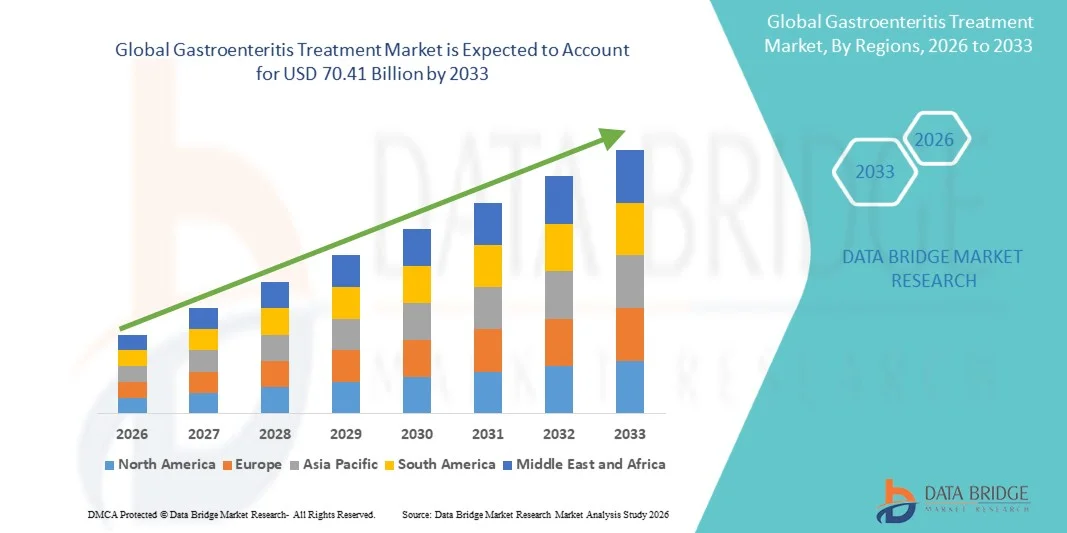
- The global gastroenteritis treatment market size was valued at USD 44.18 billion in 2025 and is expected to reach USD 70.41 billion by 2033, at a CAGR of 6.00% during the forecast period
- The market growth is primarily driven by the high global incidence of infectious gastroenteritis caused by viral, bacterial, and parasitic pathogens, particularly in regions with limited access to clean water and sanitation infrastructure
- Furthermore, increasing awareness regarding early diagnosis and treatment, along with rising healthcare access, oral rehydration therapy adoption, and improved availability of antibiotics and antivirals, is supporting market expansion and strengthening demand for effective gastroenteritis management solutions
Gastroenteritis Treatment Market Analysis
- Gastroenteritis treatment, involving antibiotic therapy, dehydration therapy, and supportive care, plays a critical role in managing acute intestinal infections caused by viral, bacterial, and parasitic pathogens, with a strong focus on preventing dehydration and complications across vulnerable populations such as children and the elderly
- The increasing demand for gastroenteritis treatment is primarily driven by the high global burden of infectious diarrhea, rising cases of foodborne and waterborne diseases, improved awareness regarding early rehydration therapy, and expanding access to essential medicines and healthcare services in emerging economies
- North America dominated the gastroenteritis treatment market with the largest revenue share of 42.9% in 2025, supported by advanced healthcare infrastructure, high treatment-seeking behavior, and strong availability of prescription and OTC gastrointestinal therapies, particularly in hospital and outpatient care settings
- Asia-Pacific is expected to be the fastest growing region in the gastroenteritis treatment market during the forecast period, due to a high incidence of gastrointestinal infections, improving sanitation conditions, expanding healthcare infrastructure, and increasing public health initiatives targeting diarrheal disease control
- The dehydration therapy segment dominated the gastroenteritis treatment market with a share of 50.6% in 2025 due to its critical role in preventing fluid loss and maintaining electrolyte balance
Report Scope and Gastroenteritis Treatment Market Segmentation
|
Attributes |
Gastroenteritis Treatment Key Market Insights |
|
Segments Covered |
|
|
Countries Covered |
North America
Europe
Asia-Pacific
Middle East and Africa
South America
|
|
Key Market Players |
|
|
Market Opportunities |
|
|
Value Added Data Infosets |
In addition to the insights on market scenarios such as market value, growth rate, segmentation, geographical coverage, and major players, the market reports curated by the Data Bridge Market Research also include in-depth expert analysis, patient epidemiology, pipeline analysis, pricing analysis, and regulatory framework |
Gastroenteritis Treatment Market Trends
“Rising Adoption of Rapid Rehydration and Point-of-Care Treatment Solutions”
- A significant and accelerating trend in the global gastroenteritis treatment market is the growing adoption of rapid oral rehydration therapy (ORT) and point-of-care treatment solutions, improving early management of dehydration and reducing hospitalization needs across diverse healthcare settings
- For instance, WHO-recommended ORS formulations are widely deployed in emergency care kits and community health programs, enabling fast intervention during acute diarrheal outbreaks in both developed and developing regions
- The integration of zinc supplementation with oral rehydration therapy is enhancing recovery outcomes in pediatric gastroenteritis cases, with clinical protocols increasingly promoting combined treatment approaches for faster symptom resolution
- Furthermore, healthcare systems are increasingly focusing on decentralized treatment models, allowing pharmacies and primary care centers to provide immediate gastroenteritis care without requiring hospital admission
- Digital health platforms and telemedicine consultations are increasingly being used to guide early gastroenteritis management, enabling patients to receive timely hydration and medication advice remotely
- The development of ready-to-use, flavored oral rehydration solutions is improving patient compliance, especially among pediatric populations, thereby supporting faster recovery rates
Gastroenteritis Treatment Market Dynamics
Driver
“Growing Burden of Infectious Diarrheal Diseases and Expanding Healthcare Access”
- The increasing global burden of viral, bacterial, and parasitic gastrointestinal infections, coupled with expanding healthcare access in emerging economies, is a major driver accelerating demand for gastroenteritis treatment solutions
- For instance, UNICEF-supported diarrhea control programs in low-income regions are expanding access to oral rehydration salts and essential medicines, significantly reducing mortality from dehydration-related complications
- Rising foodborne and waterborne disease outbreaks in urban and rural populations are further increasing the need for effective antibiotic and dehydration therapies across healthcare facilities
- Furthermore, growing awareness among caregivers and healthcare professionals regarding early intervention and standardized treatment protocols is boosting timely adoption of gastroenteritis therapies
- The increasing availability of affordable over-the-counter ORS and supportive medications is further supporting market expansion across both hospital and community care settings
- Government-led sanitation and clean drinking water initiatives are reducing disease severity patterns while simultaneously increasing early diagnosis and treatment uptake
- Expanding pediatric healthcare programs and vaccination awareness campaigns are further strengthening preventive and supportive treatment adoption globally
Restraint/Challenge
“Antimicrobial Resistance and Limited Treatment Specificity in Viral Cases”
- The global gastroenteritis treatment market faces significant challenges due to rising antimicrobial resistance and limited effectiveness of antibiotics in viral gastroenteritis cases, restricting treatment precision and outcomes
- For instance, WHO has highlighted increasing resistance among common bacterial pathogens such as Escherichia coli and Salmonella, complicating antibiotic-based treatment strategies in severe infections
- Misuse and overprescription of antibiotics in gastroenteritis cases are contributing to reduced drug efficacy and increasing long-term public health concerns globally
- Furthermore, the lack of targeted antiviral therapies for most viral gastroenteritis cases limits treatment options to mainly supportive care, reducing pharmaceutical innovation scope
- These challenges are further intensified by diagnostic limitations in resource-constrained regions, making it difficult to differentiate between viral and bacterial infections and optimize treatment decisions
- Weak healthcare infrastructure in rural areas often delays accurate treatment initiation, increasing the risk of complications and prolonged disease duration
- Patient non-compliance with hydration protocols and premature discontinuation of therapy further reduces overall treatment effectiveness and outcomes
Gastroenteritis Treatment Market Scope
The market is segmented on the basis of treatment, route of administration, end-users, and distribution channel.
- By Treatment
On the basis of treatment, the gastroenteritis treatment market is segmented into antibiotic therapy, dehydration therapy, and others. The dehydration therapy segment dominated the market with the largest revenue share of 50.6% in 2025, driven by its critical role as the first-line intervention for preventing fluid loss and electrolyte imbalance in acute gastroenteritis cases. Dehydration therapy, particularly oral rehydration solutions (ORS), is widely recommended by global health authorities due to its cost-effectiveness and proven efficacy in reducing mortality. The segment also benefits from strong adoption in both hospital and community-level care, especially in pediatric populations where rapid fluid replacement is essential. Increasing availability of ready-to-use ORS formulations and government-backed diarrheal disease control programs further strengthen its dominance. The simplicity of administration and suitability for mass distribution in outbreak situations also contribute significantly to its leading market position.
The antibiotic therapy segment is expected to witness the fastest growth rate of 10% during 2026–2033, driven by rising cases of severe bacterial gastroenteritis requiring targeted antimicrobial intervention. Increasing diagnosis of pathogen-specific infections, particularly in hospital settings, is boosting demand for prescription antibiotics. Furthermore, advancements in targeted antibiotic formulations and improved clinical guidelines for bacterial gastroenteritis management are supporting growth. Expanding healthcare access in emerging economies is also enabling better treatment adoption for moderate to severe infections. However, growing concerns around antimicrobial resistance are encouraging more rational and regulated use, shaping controlled but steady growth of this segment.
- By Route of Administration
On the basis of route of administration, the market is segmented into oral and parenteral. The oral segment dominated the market with the largest revenue share of 60–65% in 2025, driven by its widespread use in dehydration therapy and ease of administration in both homecare and outpatient settings. Oral treatments, especially ORS and oral antibiotics, are highly preferred due to their non-invasive nature and cost efficiency. The segment is strongly supported by global public health initiatives promoting oral rehydration as the primary response to diarrheal diseases. It is also widely adopted in pediatric care due to ease of consumption and high compliance. The availability of flavored and improved formulations further enhances patient acceptance and treatment adherence.
The parenteral segment is expected to witness the fastest growth rate of 9% during 2026–2033, driven by increasing hospitalization of severe gastroenteritis cases requiring intravenous fluid replacement and injectable antibiotics. Parenteral therapy is critical in cases of extreme dehydration where oral intake is not feasible. Rising emergency admissions in infectious outbreak scenarios are further supporting demand. In addition, improvements in hospital infrastructure and emergency care services in developing regions are expanding access to IV-based treatment. The segment is also benefiting from growing clinical emphasis on rapid stabilization in high-risk patient groups such as infants and elderly individuals.
- By End-Users
On the basis of end-users, the market is segmented into hospitals, homecare, specialty clinics, and others. The hospitals segment dominated the market with the largest revenue share of 55% in 2025, driven by high patient inflow for moderate to severe gastroenteritis cases requiring professional medical supervision. Hospitals serve as primary treatment centers for dehydration management, intravenous therapy, and diagnostic confirmation of infectious causes. The availability of advanced laboratory testing and emergency care infrastructure further supports segment dominance. Increasing hospitalization rates during seasonal outbreaks also contribute significantly to demand. In addition, hospitals are the primary distribution point for prescription antibiotics and severe-case management protocols.
The homecare segment is expected to witness the fastest growth rate of 11% during 2026–2033, driven by increasing preference for at-home treatment of mild gastroenteritis cases using ORS and OTC medications. Rising awareness about early symptom management and self-care practices is reducing unnecessary hospital visits. The availability of easy-to-use oral rehydration products and digital health guidance is further supporting home-based treatment adoption. Expanding telemedicine services are enabling remote monitoring and prescription guidance for patients. Cost-effectiveness and convenience are key factors accelerating the shift toward homecare treatment models.
- By Distribution Channel
On the basis of distribution channel, the market is segmented into hospital pharmacy, retail pharmacy, online pharmacies, and others. The hospital pharmacy segment dominated the market with the largest revenue share of 45% in 2025, driven by high prescription volumes for inpatient and emergency gastroenteritis cases. Hospital pharmacies ensure immediate availability of antibiotics, IV fluids, and ORS solutions during acute care management. Their integration within healthcare facilities enables rapid dispensing during critical treatment windows. Strong reliance on physician-prescribed therapies further strengthens this channel’s dominance. In addition, outbreak-driven demand in hospitals significantly increases medication consumption through this channel.
The online pharmacies segment is expected to witness the fastest growth rate of 12% during 2026–2033, driven by increasing digital healthcare adoption and rising demand for convenient medicine access. Consumers are increasingly purchasing ORS, probiotics, and OTC gastrointestinal medicines through online platforms. Expansion of e-pharmacy networks in urban and semi-urban regions is further supporting growth. Faster delivery services and digital prescriptions are improving accessibility to essential treatments. Growing preference for contactless healthcare solutions post-pandemic is also accelerating adoption of online pharmacy channels.
Gastroenteritis Treatment Market Regional Analysis
- North America dominated the gastroenteritis treatment market with the largest revenue share of 42.9% in 2025, supported by advanced healthcare infrastructure, high treatment-seeking behavior, and strong availability of prescription and OTC gastrointestinal therapies, particularly in hospital and outpatient care settings
- Patients and healthcare providers in the region highly prioritize early diagnosis, effective dehydration management, and access to prescription-based antibiotic and supportive therapies, improving overall treatment adoption rates
- This widespread dominance is further supported by high healthcare expenditure, strong awareness regarding oral rehydration therapy, and the availability of advanced hospital and outpatient care systems, establishing standardized gastroenteritis management as a key clinical priority
U.S. Gastroenteritis Treatment Market Insight
The U.S. gastroenteritis treatment market captured the largest revenue share within North America in 2025, driven by a high incidence of foodborne infections and strong demand for advanced gastrointestinal care solutions. Patients increasingly rely on rapid diagnosis, oral rehydration therapy, and prescription-based antibiotics for effective symptom management and faster recovery outcomes. The market is further supported by strong healthcare infrastructure, high healthcare spending, and widespread availability of OTC and prescription treatments across hospitals, clinics, and retail pharmacies. In addition, growing awareness regarding dehydration risks and early intervention continues to strengthen treatment adoption across both urban and rural populations.
Europe Gastroenteritis Treatment Market Insight
The Europe gastroenteritis treatment market is projected to expand at a steady CAGR during the forecast period, driven by strong public healthcare systems, increasing awareness of food safety, and rising emphasis on infection prevention and control measures. Patients and healthcare providers in the region follow standardized clinical guidelines for dehydration therapy and antibiotic usage, which ensures consistent and effective treatment practices across healthcare settings. Growth is further supported by robust pharmaceutical accessibility, high hygiene standards, and strong government initiatives aimed at reducing the incidence of waterborne and foodborne diseases across both urban and rural populations.
U.K. Gastroenteritis Treatment Market Insight
The U.K. gastroenteritis treatment market is anticipated to grow at a moderate CAGR during the forecast period, driven by increasing seasonal gastrointestinal infections and strong dependence on NHS-guided treatment protocols. Patients and healthcare providers emphasize early oral rehydration therapy and outpatient-based care, which helps reduce unnecessary hospital admissions for mild and moderate cases. The market is further supported by strong healthcare awareness, easy access to over-the-counter medicines, and a well-developed retail and pharmacy distribution network that ensures timely availability of essential gastroenteritis treatments.
Germany Gastroenteritis Treatment Market Insight
The Germany gastroenteritis treatment market is expected to expand at a considerable CAGR during the forecast period, fueled by advanced healthcare infrastructure and strong awareness of infection prevention and clinical hygiene practices. The population increasingly prefers evidence-based treatment approaches, particularly for dehydration management and bacterial infection control in clinical environments. Growth is further supported by strong pharmaceutical manufacturing capabilities, efficient hospital systems, and increasing regulatory focus on minimizing antibiotic misuse through controlled treatment guidelines.
Asia-Pacific Gastroenteritis Treatment Market Insight
The Asia-Pacific gastroenteritis treatment market is poised to grow at the fastest CAGR of 11% during 2026–2033, driven by high disease prevalence, rapid urbanization, and improving access to healthcare services across emerging economies. Populations in the region are increasingly adopting oral rehydration therapy and basic antibiotics due to rising awareness and government-led diarrheal disease control initiatives. This strong growth is further supported by expanding primary healthcare infrastructure, a large population base, and improving affordability of essential medicines, significantly strengthening treatment penetration across both rural and urban areas.
Japan Gastroenteritis Treatment Market Insight
The Japan gastroenteritis treatment market is gaining momentum due to advanced healthcare systems, strong hygiene standards, and high adoption of supportive care therapies for infectious gastrointestinal diseases. Patients place strong emphasis on early diagnosis and outpatient treatment, with widespread use of oral rehydration solutions and probiotic-based supportive care. Growth is further supported by an aging population, increasing demand for easy-to-administer therapies, and strong integration of digital health monitoring within healthcare delivery systems.
India Gastroenteritis Treatment Market Insight
The India gastroenteritis treatment market accounted for the largest revenue share in Asia-Pacific in 2025, attributed to high incidence of diarrheal diseases, rapid urbanization, and expanding access to affordable treatment options. Patients increasingly rely on oral rehydration solutions, antibiotics, and over-the-counter gastrointestinal medicines due to rising awareness and government-led public health initiatives. The market is further supported by improving sanitation infrastructure, increasing healthcare expenditure, and the rapid expansion of retail and online pharmacy networks, ensuring wider and faster access to essential treatments across the country.
Gastroenteritis Treatment Market Share
The Gastroenteritis Treatment industry is primarily led by well-established companies, including:
- F. Hoffmann-La Roche Ltd (Switzerland)
- Pfizer Inc. (U.S.)
- Sanofi (France)
- GSK plc (U.K.)
- Merck & Co., Inc. (U.S.)
- Novartis AG (Switzerland)
- AstraZeneca plc (U.K.)
- Abbott (U.S.)
- Eli Lilly and Company (U.S.)
- Teva Pharmaceutical Industries Ltd. (Israel)
- Sun Pharmaceutical Industries Ltd. (India)
- Dr. Reddy’s Laboratories Limited (India)
- Cipla Limited (India)
- Lupin Limited (India)
- Aurobindo Pharma Limited (India)
- Zydus Lifesciences Limited (India)
- Alkem Laboratories Limited (India)
- FDC Limited (India)
What are the Recent Developments in Global Gastroenteritis Treatment Market?
- In October 2025, A meta-analysis published in 2025 confirmed that zinc supplementation significantly reduces diarrhoea duration and severity in children with acute infectious gastroenteritis. The study reinforced WHO recommendations for zinc as an adjunct therapy alongside ORS
- In October 2025, Vaxart advanced its oral pill-based norovirus vaccine program, presenting updated clinical trial results for a next-generation candidate targeting GI.1 and GII.4 strains. The vaccine is designed to prevent norovirus-induced acute gastroenteritis, one of the leading causes of diarrhoeal illness globally
- In July 2025, Government of Ladakh (India) expanded ORS–Zinc diarrhoea control campaign across Anganwadi centres. The administration strengthened its “Stop Diarrhoea Campaign” by establishing ORS and zinc distribution points across Anganwadi centres to improve early treatment of gastroenteritis in children
- In February 2025, Kenvue expanded its ORSL product ecosystem by introducing advanced ORS-based hydration solutions to support diarrhoea and gastroenteritis care in high-burden regions. The product line focuses on improving fluid-electrolyte balance and faster recovery outcomes in children under 5 years
- In January 2025, Kenvue introduced a ready-to-drink ORS formulation designed to treat dehydration caused by acute gastroenteritis and diarrhoeal diseases. The product ensures accurate WHO-recommended osmolarity, eliminating preparation errors common with powdered ORS

- Interactive Data Analysis Dashboard
- Company Analysis Dashboard for high growth potential opportunities
- Research Analyst Access for customization & queries
- Competitor Analysis with Interactive dashboard
- Latest News, Updates & Trend analysis
- Harness the Power of Benchmark Analysis for Comprehensive Competitor Tracking
Data collection and base year analysis are done using data collection modules with large sample sizes. The stage includes obtaining market information or related data through various sources and strategies. It includes examining and planning all the data acquired from the past in advance. It likewise envelops the examination of information inconsistencies seen across different information sources. The market data is analysed and estimated using market statistical and coherent models. Also, market share analysis and key trend analysis are the major success factors in the market report. To know more, please request an analyst call or drop down your inquiry.
The key research methodology used by DBMR research team is data triangulation which involves data mining, analysis of the impact of data variables on the market and primary (industry expert) validation. Data models include Vendor Positioning Grid, Market Time Line Analysis, Market Overview and Guide, Company Positioning Grid, Patent Analysis, Pricing Analysis, Company Market Share Analysis, Standards of Measurement, Global versus Regional and Vendor Share Analysis. To know more about the research methodology, drop in an inquiry to speak to our industry experts.
Data Bridge Market Research is a leader in advanced formative research. We take pride in servicing our existing and new customers with data and analysis that match and suits their goal. The report can be customized to include price trend analysis of target brands understanding the market for additional countries (ask for the list of countries), clinical trial results data, literature review, refurbished market and product base analysis. Market analysis of target competitors can be analyzed from technology-based analysis to market portfolio strategies. We can add as many competitors that you require data about in the format and data style you are looking for. Our team of analysts can also provide you data in crude raw excel files pivot tables (Fact book) or can assist you in creating presentations from the data sets available in the report.












