Global Glucagon Like Peptide 1 Glp 1 Agonists Market
Market Size in USD Billion
CAGR :
% 
 USD
65.85 Billion
USD
236.82 Billion
2025
2033
USD
65.85 Billion
USD
236.82 Billion
2025
2033
 Forecast Period Forecast Period |
2026 - 2033 |
 Market Size (Base Year) Market Size (Base Year) |
USD 65.85 Billion |
 Market Size (Forecast Year) Market Size (Forecast Year) |
USD 236.82 Billion |
 CAGR CAGR |
% |
| Major Markets Players |
|
Glucagon-Like Peptide 1 (GLP-1) Agonists Market Overview
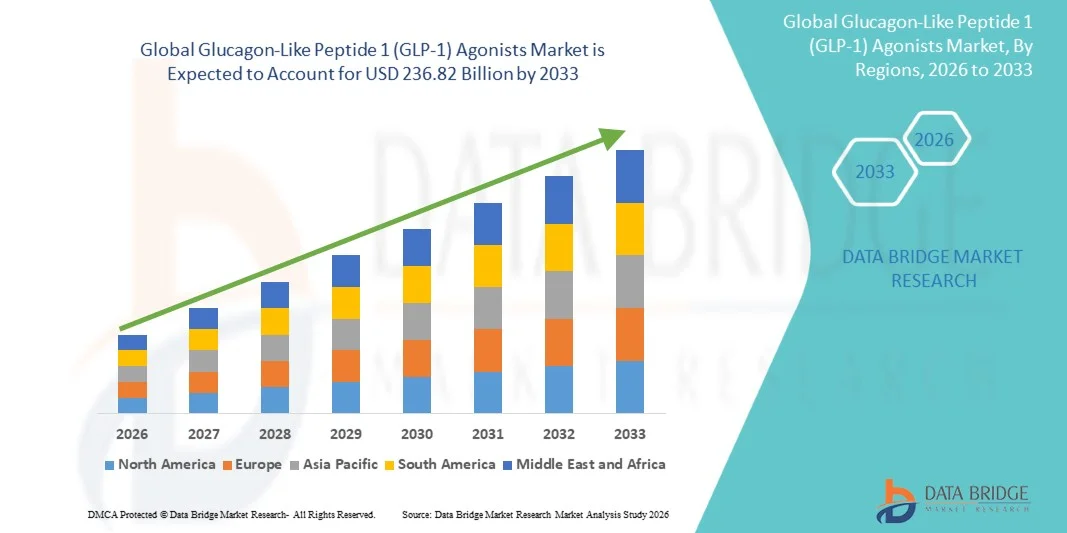
The Glucagon-Like Peptide 1 (GLP-1) Agonists Market was valued at USD 65.85 billion in 2025 and is projected to reach USD 236.82 billion by 2033, growing at a CAGR of 17.35% from 2026 to 2033. The market is experiencing consistent growth driven by the rising prevalence of obesity and type 2 diabetes, increasing awareness of metabolic health management, and expanding adoption of innovative GLP-1 receptor agonist therapies across global healthcare systems.
The growing burden of chronic metabolic disorders worldwide, combined with increasing healthcare expenditures and stronger clinical emphasis on long-term weight management and glycemic control, is compelling healthcare providers, payers, and patients to adopt advanced GLP-1 agonist therapies. Modern GLP-1 receptor agonists are increasingly replacing traditional treatment approaches in many patient populations, offering effective blood glucose regulation, substantial weight-loss benefits, and reduced cardiovascular risk. In addition, ongoing advancements in drug formulations, including once-weekly injectable therapies and emerging oral GLP-1 treatments, are improving patient adherence and treatment outcomes. Growing regulatory approvals for expanded indications, rising investment in metabolic disease research, and increasing demand for personalized chronic disease management solutions continue to accelerate adoption across both developed and emerging healthcare markets.
Key Market Trends & Insights
- North America dominated the Glucagon-Like Peptide 1 (GLP-1) Agonists Market with the largest revenue share of 41.38% in 2025, supported by the high prevalence of type 2 diabetes and obesity, strong adoption of innovative GLP-1 therapies, favorable reimbursement frameworks, and the presence of major pharmaceutical manufacturers. Increasing physician preference for GLP-1 receptor agonists due to their glycemic control benefits, cardiovascular risk reduction, and weight management capabilities continues to strengthen market leadership across the region.
- The Parenteral segment dominated the market with a share of 67.45% in 2025 due to the widespread availability and clinical success of injectable GLP-1 therapies .
- Asia-Pacific is expected to be the fastest-growing region at a CAGR of 9.4% from 2026 to 2033, fueled by the rapidly increasing diabetic population, expanding healthcare infrastructure, rising healthcare expenditure, and improving access to advanced biologic therapies across China, India, Japan, and South Korea. Growing awareness regarding obesity management and chronic disease prevention is also accelerating market growth.
- The Liraglutide segment is projected to be the fastest-growing drug category, registering a CAGR of 9.1% from 2026 to 2033, reflecting increasing utilization in both diabetes and obesity treatment applications. Expanding clinical evidence supporting cardiovascular benefits and weight-loss outcomes is driving strong demand worldwide.
- The Trulicity brand dominated the market with a revenue share of 31.72% in 2025, supported by strong global commercialization, favorable patient adherence rates, proven cardiovascular outcomes, and broad regulatory approvals. Its convenient administration profile continues to contribute significantly to prescription growth across developed and emerging markets.
- The Oral route of administration segment is anticipated to be the fastest-growing category with a CAGR of 10.2% from 2026 to 2033, driven by growing patient preference for non-injectable therapies, improving treatment compliance, and ongoing advancements in oral peptide drug delivery technologies.
- The Parenteral route of administration accounted for 67.45% of the market in 2025, owing to the established use of injectable GLP-1 agonists, superior bioavailability, extensive clinical validation, and widespread physician familiarity. Most commercially successful GLP-1 therapies continue to be administered through injectable formulations.
- Hospitals dominated the end-user segment with a market share of 44.26% in 2025, driven by high patient volumes, increasing diabetes management programs, growing obesity treatment initiatives, and greater access to specialist endocrinology services. Hospitals also play a critical role in initiating advanced GLP-1 treatment regimens and long-term patient monitoring.
- Specialty Clinics are expected to witness the fastest growth at a CAGR of 9.6% from 2026 to 2033, supported by rising demand for personalized diabetes care, increasing obesity management services, expanding endocrinology practices, and growing adoption of innovative GLP-1-based treatment protocols. The shift toward specialized outpatient care models continues to accelerate segment expansion globally.
Market Size & Forecast
- Global Market Value (2025): USD 65.85 Billion
- Expected Market Value (2033): USD 236.82 Billion
- Forecast CAGR (2026–2033): 17.35%
- Leading Region in 2025: North America
- Fastest Growing Region: Asia-Pacific
Report Scope and Glucagon-Like Peptide 1 (GLP-1) Agonists Market Segmentation
|
Attributes |
Glucagon-Like Peptide 1 (GLP-1) Agonists Key Market Insights |
|
Segments Covered |
• By Drugs: Exenatide, Liraglutide, Dulaglutide, and Lixisenatide |
|
Countries Covered |
North America · U.S. · Canada · Mexico Europe · Germany · France · U.K. · Netherlands · Switzerland · Belgium · Russia · Italy · Spain · Turkey · Rest of Europe Asia-Pacific · China · Japan · India · South Korea · Singapore · Malaysia · Australia · Thailand · Indonesia · Philippines · Rest of Asia-Pacific Middle East and Africa · Saudi Arabia · U.A.E. · South Africa · Egypt · Israel · Rest of Middle East and Africa South America · Brazil · Argentina · Rest of South America |
|
Key Market Players |
• Novo Nordisk A/S (Denmark) |
|
Market Opportunities |
· Expansion of GLP-1 Agonists into Obesity and Weight Management Therapies · Development of Oral GLP-1 Formulations and Next-Generation Combination Therapies · Growing Adoption in Emerging Markets Across |
|
Value Added Data Infosets |
In addition to the insights on market scenarios such as market value, growth rate, segmentation, geographical coverage, and major players, the market reports curated by the Data Bridge Market Research also include in-depth expert analysis, geographically represented company-wise production and capacity, network layouts of distributors and partners, detailed and updated price trend analysis and deficit analysis of supply chain and demand. |
Glucagon-Like Peptide 1 (GLP-1) Agonists Market Trends
Trend: Expanding Use of GLP-1 Agonists for Obesity Management and Cardiometabolic Health
The Glucagon-Like Peptide 1 (GLP-1) Agonists Market is witnessing a major transformation as these therapies expand beyond diabetes management into obesity treatment and broader cardiometabolic care. GLP-1 agonists are increasingly being prescribed for weight reduction due to their proven ability to regulate appetite, delay gastric emptying, and improve metabolic health. Growing clinical evidence demonstrating cardiovascular and renal benefits is further strengthening adoption among healthcare providers. For instance, semaglutide-based therapies have demonstrated significant weight-loss outcomes in clinical studies, while several GLP-1 products have received regulatory approvals for obesity treatment in major markets. In addition, increasing awareness of obesity as a chronic disease and rising demand for effective long-term weight management solutions are accelerating global market expansion.
Glucagon-Like Peptide 1 (GLP-1) Agonists Market Dynamics
Key Market Driver: Rising Global Prevalence of Type 2 Diabetes and Obesity
The rapid development of autonomous vehicles and Advanced Driver Assistance Systems (ADAS) has created substantial demand for high-fidelity Glucagon-Like Peptide 1 (GLP-1) Agonists that can validate AI algorithms, sensor models, and vehicle behavior in millions of virtual scenarios impossible to replicate through physical testing. Automotive OEMs, Tier-1 suppliers, and technology companies are deploying simulators as a core component of their development pipeline, reducing costs, accelerating iteration cycles, and improving system safety.
Key Restraint/Challenge: High Initial Investment Cost of Advanced Simulators
The increasing prevalence of type 2 diabetes and obesity is a major driver of the global GLP-1 Agonists market. According to the International Diabetes Federation (IDF), more than 530 million adults worldwide are living with diabetes, with type 2 diabetes accounting for the vast majority of cases. Simultaneously, the World Health Organization (WHO) estimates that over 1 billion people globally are living with obesity. These growing patient populations are creating substantial demand for therapies that offer both glycemic control and weight reduction benefits. GLP-1 agonists have demonstrated effectiveness in lowering HbA1c levels, promoting weight loss, and reducing cardiovascular risks, making them increasingly attractive treatment options. Furthermore, expanding clinical guidelines recommending GLP-1 receptor agonists for high-risk diabetic patients continue to support strong market growth across developed and emerging healthcare markets.
Key Market Opportunity: Development of Next-Generation GLP-1 and Combination Therapies
The development of next-generation incretin-based therapies presents a substantial growth opportunity for the GLP-1 Agonists market. Pharmaceutical companies are investing heavily in dual- and triple-action therapies that combine GLP-1 receptor activity with GIP and glucagon receptor modulation to achieve superior weight-loss and metabolic outcomes. For example, newer incretin therapies have demonstrated greater efficacy in weight reduction compared to earlier GLP-1 products during late-stage clinical trials. In addition, advances in oral peptide delivery technologies are expanding treatment options beyond injectable formulations, improving patient convenience and adherence. Growing research into cardiovascular protection, chronic kidney disease management, nonalcoholic steatohepatitis (NASH), and other metabolic disorders is further broadening the therapeutic potential of GLP-1 agonists. As healthcare systems increasingly prioritize chronic disease prevention and obesity management, these innovations are expected to create significant commercial opportunities across North America, Europe, Asia-Pacific, and emerging healthcare markets.
Glucagon-Like Peptide 1 (GLP-1) Agonists Market Scope
The Glucagon-Like Peptide 1 (GLP-1) Agonists market is segmented on the basis of drugs, brand, route of administration, and end users.
- By Drugs
On the basis of drugs, the Glucagon-Like Peptide 1 (GLP-1) Agonists Market is segmented into Exenatide, Liraglutide, Dulaglutide, and Lixisenatide. The Dulaglutide segment dominated the market with a share of 36.84% in 2025 due to its strong clinical efficacy, convenient once-weekly dosing schedule, proven cardiovascular benefits, and extensive physician adoption across diabetes treatment programs. The drug has demonstrated significant effectiveness in glycemic control while reducing cardiovascular risk factors among patients with type 2 diabetes. Increasing preference among healthcare providers for long-acting GLP-1 therapies has further strengthened demand. Favorable reimbursement coverage across developed markets and strong commercial penetration have supported widespread adoption. In addition, growing awareness regarding the benefits of early diabetes intervention and improved patient adherence associated with weekly administration continue to drive utilization. The expansion of diabetes management programs, increasing obesity treatment initiatives, and strong clinical evidence supporting long-term outcomes have reinforced the segment’s leadership position. Continuous post-marketing studies and physician confidence further contribute to market dominance. As healthcare systems increasingly focus on chronic disease management and cardiovascular risk reduction, Dulaglutide remains the leading drug segment globally.
The Liraglutide segment is expected to witness the fastest CAGR of 9.1% from 2026 to 2033, driven by expanding use in both type 2 diabetes and obesity management applications. Growing clinical evidence supporting significant weight reduction and cardiovascular protection is accelerating physician adoption. Increasing regulatory approvals across obesity treatment indications are broadening the addressable patient population. Healthcare providers are increasingly recommending Liraglutide for patients requiring comprehensive metabolic management beyond glucose control. Rising obesity prevalence worldwide and growing awareness regarding medically supervised weight management programs are further supporting demand. In addition, favorable treatment outcomes and increasing patient preference for proven long-term therapies are contributing to segment expansion. Ongoing research into additional metabolic and cardiovascular applications is expected to create new growth opportunities. Strong investments in patient education and chronic disease prevention programs further support adoption. These factors collectively position Liraglutide as the fastest-growing drug segment during the forecast period.
- By Brand
On the basis of brand, the Glucagon-Like Peptide 1 (GLP-1) Agonists Market is segmented into Byetta, Bydureon, Victoza, Trulicity, and Lyxumia. The Trulicity segment dominated the market with a share of 31.72% in 2025 owing to its strong global market presence, convenient weekly dosing regimen, extensive clinical validation, and broad physician acceptance. The brand has gained significant traction due to its ability to provide effective glycemic control while supporting cardiovascular risk reduction. High patient adherence levels and favorable treatment outcomes have further contributed to its market leadership. Increasing prescription volumes across North America and Europe continue to strengthen segment growth. The availability of robust clinical data and expanding healthcare provider confidence have supported widespread adoption. In addition, strong commercialization strategies and broad reimbursement coverage have increased accessibility. Rising demand for long-acting injectable therapies and expanding diabetes care programs further reinforce the segment’s dominant position. Continuous product awareness initiatives and established market presence contribute significantly to its leadership in the global GLP-1 agonists market.
The Victoza segment is projected to register the fastest CAGR of 8.8% from 2026 to 2033, driven by increasing utilization in obesity management and cardiovascular risk reduction programs. Growing recognition of the brand’s clinical effectiveness and extensive long-term safety profile is supporting prescription growth. Healthcare providers are increasingly utilizing Victoza for patients requiring comprehensive metabolic management. Rising obesity prevalence and expanding treatment guidelines favoring GLP-1 therapies are accelerating adoption. The drug’s established efficacy in weight management applications is further strengthening demand. Growing awareness among patients regarding the benefits of early intervention and chronic disease prevention also contributes to market expansion. Ongoing research evaluating broader therapeutic applications continues to support future growth potential. In addition, increasing healthcare investments and expanding access to advanced diabetes treatments are expected to accelerate adoption throughout the forecast period.
- By Route of Administration
On the basis of route of administration, the Glucagon-Like Peptide 1 (GLP-1) Agonists Market is segmented into Oral, Parenteral, and Others. The Parenteral segment dominated the market with a share of 67.45% in 2025 due to the widespread availability and clinical success of injectable GLP-1 therapies. Injectable formulations offer superior bioavailability, predictable therapeutic outcomes, and extensive physician familiarity. Most commercially successful GLP-1 products currently utilize parenteral delivery systems, supporting strong market penetration. The segment benefits from robust clinical evidence demonstrating efficacy in glucose management, weight reduction, and cardiovascular protection. Increasing patient demand for effective long-term therapies and strong healthcare provider confidence continue to support adoption. In addition, advances in injection device technology have improved ease of use and patient compliance. Expanding diabetes prevalence globally and increasing healthcare investments further reinforce segment dominance. The strong presence of leading branded injectable therapies continues to drive revenue generation across major markets.
The Oral segment is expected to witness the fastest CAGR of 10.2% from 2026 to 2033, driven by growing patient preference for non-injectable treatment options and advancements in oral peptide delivery technologies. Oral GLP-1 therapies improve convenience, enhance treatment adherence, and reduce barriers associated with injectable medications. Increasing research investments and successful commercialization of oral formulations are accelerating market acceptance. Healthcare providers are increasingly recommending oral alternatives for patients seeking improved treatment convenience. Rising awareness regarding obesity and diabetes management is supporting demand for innovative delivery methods. Furthermore, expanding access to oral therapies across emerging markets is creating new growth opportunities. Technological advancements that improve absorption and therapeutic effectiveness are further enhancing adoption. As patient-centric treatment approaches gain importance, oral GLP-1 therapies are expected to experience substantial growth throughout the forecast period.
- By End Users
On the basis of end users, the Glucagon-Like Peptide 1 (GLP-1) Agonists Market is segmented into Hospitals, Specialty Clinics, and Others. The Hospitals segment dominated the market with a share of 44.26% in 2025 owing to high patient volumes, comprehensive diabetes management programs, and access to multidisciplinary healthcare teams. Hospitals play a critical role in initiating advanced GLP-1 therapies, monitoring treatment outcomes, and managing complex metabolic disorders. The availability of endocrinologists, cardiologists, and obesity specialists supports widespread adoption of GLP-1 agonists. Increasing rates of diabetes-related hospital visits and obesity treatment programs further contribute to segment growth. Strong healthcare infrastructure and reimbursement support across developed regions continue to reinforce market leadership. In addition, hospitals serve as primary centers for patient education, chronic disease management, and long-term therapy monitoring. Growing emphasis on cardiovascular risk reduction and integrated patient care models further strengthens adoption. These factors collectively support the segment’s dominant position in the global market.
The Specialty Clinics segment is anticipated to witness the fastest CAGR of 9.6% from 2026 to 2033, driven by rising demand for personalized diabetes and obesity management services. Specialty clinics offer focused expertise, individualized treatment plans, and improved patient monitoring, making them increasingly attractive for chronic disease management. Growing numbers of endocrinology and weight management centers worldwide are supporting market expansion. Patients are increasingly seeking specialized care environments that provide tailored therapeutic strategies and continuous follow-up. Increasing adoption of advanced GLP-1 therapies within outpatient settings is accelerating growth. In addition, shorter waiting times, enhanced patient engagement, and greater accessibility are contributing to segment expansion. Rising healthcare investments and growing awareness regarding obesity-related health risks further support demand. As healthcare delivery increasingly shifts toward specialized outpatient care, specialty clinics are expected to emerge as the fastest-growing end-user segment globally.
Glucagon-Like Peptide 1 (GLP-1) Agonists Market Regional Analysis
North America dominated the Glucagon-Like Peptide 1 (GLP-1) Agonists market and accounted for the largest revenue share of 41.38% in 2025, supported by the high prevalence of type 2 diabetes and obesity, strong adoption of innovative GLP-1 receptor agonist therapies, and the presence of leading pharmaceutical manufacturers. The region benefits from advanced healthcare infrastructure, favorable reimbursement policies, extensive clinical research activities, and increasing physician preference for GLP-1 therapies due to their proven effectiveness in glycemic control, weight management, and cardiovascular risk reduction. Rising patient awareness regarding chronic disease management and growing demand for personalized treatment approaches continue to strengthen North America’s leadership position in the global market.
U.S. Glucagon-Like Peptide 1 (GLP-1) Agonists Market Insight
The U.S. Glucagon-Like Peptide 1 (GLP-1) Agonists market is witnessing strong growth due to the increasing prevalence of type 2 diabetes, obesity, and metabolic disorders across the country. Strong adoption of advanced GLP-1 therapies by healthcare providers, coupled with growing clinical evidence supporting cardiovascular and weight-loss benefits, is driving market demand. In addition, favorable reimbursement coverage, expanding prescription volumes, and continuous product innovation by major pharmaceutical companies are accelerating market expansion. Rising investments in diabetes care programs and chronic disease management initiatives further support sustained growth in the U.S. market.
Europe Glucagon-Like Peptide 1 (GLP-1) Agonists Market Insight
The Europe Glucagon-Like Peptide 1 (GLP-1) Agonists market remains a major contributor to global revenue, driven by increasing diabetes prevalence, strong healthcare systems, and growing adoption of advanced biologic therapies. The region benefits from supportive government healthcare programs, expanding access to innovative diabetes treatments, and increasing physician awareness regarding the cardiovascular and metabolic benefits of GLP-1 receptor agonists. Furthermore, rising focus on obesity management and preventive healthcare strategies continues to support market expansion across European countries.
U.K. Glucagon-Like Peptide 1 (GLP-1) Agonists Market Insight
The U.K. Glucagon-Like Peptide 1 (GLP-1) Agonists market is experiencing steady growth, supported by increasing rates of obesity and type 2 diabetes, along with growing adoption of innovative diabetes therapies. Rising awareness among healthcare professionals regarding the long-term benefits of GLP-1 receptor agonists for weight reduction and cardiovascular health is contributing to market growth. In addition, expanding access to specialty care services and favorable treatment guidelines are strengthening demand for GLP-1 therapies throughout the country.
Germany Glucagon-Like Peptide 1 (GLP-1) Agonists Market Insight
The Germany Glucagon-Like Peptide 1 (GLP-1) Agonists market is expanding steadily due to the country’s advanced healthcare infrastructure, strong pharmaceutical industry presence, and increasing burden of diabetes and obesity. Healthcare providers are increasingly prescribing GLP-1 receptor agonists because of their effectiveness in blood glucose management and weight control. Continuous advancements in biologic drug development, supportive reimbursement frameworks, and growing investment in chronic disease management programs are further driving market growth in Germany.
Asia-Pacific Glucagon-Like Peptide 1 (GLP-1) Agonists Market Insight
The Asia-Pacific Glucagon-Like Peptide 1 (GLP-1) Agonists market is expected to witness rapid growth and is projected to register the fastest CAGR of 9.4% from 2026 to 2033, driven by the rapidly expanding diabetic population, rising obesity prevalence, and increasing healthcare expenditure across countries such as China, India, Japan, and South Korea. Growing awareness regarding advanced diabetes management, improving access to biologic therapies, and expanding healthcare infrastructure are supporting regional market expansion. In addition, rising government initiatives focused on chronic disease prevention and treatment are accelerating adoption of GLP-1 receptor agonists across the region.
Japan Glucagon-Like Peptide 1 (GLP-1) Agonists Market Insight
The Japan Glucagon-Like Peptide 1 (GLP-1) Agonists market is witnessing consistent growth due to increasing prevalence of metabolic disorders, an aging population, and strong adoption of innovative diabetes treatment solutions. Healthcare providers are increasingly utilizing GLP-1 receptor agonists to improve glycemic control while reducing cardiovascular risks and supporting weight management goals. Moreover, continuous pharmaceutical innovation and favorable healthcare reimbursement policies are further contributing to market growth across Japan.
China Glucagon-Like Peptide 1 (GLP-1) Agonists Market Insight
The China Glucagon-Like Peptide 1 (GLP-1) Agonists market is growing rapidly, driven by the country’s large diabetic population, rising obesity rates, and expanding healthcare infrastructure. Increasing awareness regarding modern diabetes management approaches, growing availability of innovative GLP-1 therapies, and rising healthcare spending are significantly boosting market demand. In addition, government initiatives aimed at improving chronic disease management, coupled with increasing investments by pharmaceutical companies, are positioning China as one of the fastest-growing markets for Glucagon-Like Peptide 1 (GLP-1) Agonists globally.
Glucagon-Like Peptide 1 (GLP-1) Agonists Market Share
The Glucagon-Like Peptide 1 (GLP-1) Agonists industry is primarily led by well-established companies, including:
- Novo Nordisk A/S (Denmark)
- Eli Lilly and Company (U.S.)
- AstraZeneca PLC (United Kingdom)
- Sanofi S.A. (France)
- Pfizer Inc. (U.S.)
- Amgen Inc. (U.S.)
- Boehringer Ingelheim International GmbH (Germany)
- Merck & Co., Inc. (U.S.)
- Johnson & Johnson (U.S.)
- Roche Holding AG (Switzerland)
- Zealand Pharma A/S (Denmark)
- Hanmi Pharmaceutical Co., Ltd. (South Korea)
- Jiangsu Hengrui Pharmaceuticals Co., Ltd. (China)
- Innovent Biologics, Inc. (China)
- Shanghai Benemae Pharmaceutical Corporation (China)
- PegBio Co., Ltd. (China)
- Glenmark Pharmaceuticals Ltd. (India)
- Sun Pharmaceutical Industries Ltd. (India)
- Dr. Reddy’s Laboratories Ltd. (India)
- Lupin Limited (India)
- Biocon Limited (India)
- Cipla Limited (India)
- Viatris Inc. (U.S.)
- Teva Pharmaceutical Industries Ltd. (Israel)
- AbbVie Inc. (U.S.)
- Structure Therapeutics Inc. (U.S.)
- Viking Therapeutics, Inc. (U.S.)
- Altimmune, Inc. (U.S.)
- Metsera, Inc. (U.S.)
- Roche Diabetes Care (Switzerland)
- Carmot Therapeutics, Inc. (U.S.)
- Eccogene Co., Ltd. (China)
- Sciwind Biosciences Co., Ltd. (China)
Latest Developments in Glucagon-Like Peptide 1 (GLP-1) Agonists Market
- In June 2021, Novo Nordisk announced that the U.S. FDA approved Wegovy (semaglutide 2.4 mg) for chronic weight management in adults with obesity or overweight and at least one weight-related condition. The approval marked a major milestone for the GLP-1 market by expanding the use of GLP-1 receptor agonists beyond diabetes management into obesity treatment and significantly accelerating market growth
- In May 2022, Eli Lilly and Company received U.S. FDA approval for Mounjaro (tirzepatide) for the treatment of adults with type 2 diabetes. Tirzepatide became the first approved dual GIP/GLP-1 receptor agonist, demonstrating superior glycemic control and weight-loss outcomes compared with several existing diabetes therapies, creating a new competitive segment within the incretin market
- In November 2023, Eli Lilly and Company announced that the U.S. FDA approved Zepbound (tirzepatide) for chronic weight management in adults with obesity or overweight and weight-related medical conditions. The approval significantly expanded the commercial opportunity for GLP-1-based obesity therapies and intensified competition with Wegovy in the rapidly growing anti-obesity drug market
- In March 2024, Novo Nordisk secured U.S. FDA approval for a new indication for Wegovy (semaglutide) to reduce the risk of major adverse cardiovascular events, including cardiovascular death, heart attack, and stroke, in adults with cardiovascular disease and obesity or overweight. This was the first approval of a weight-loss medication specifically for cardiovascular risk reduction, further strengthening the clinical value proposition of GLP-1 therapies
- In December 2024, the U.S. FDA officially determined that the shortage of tirzepatide had been resolved, enabling manufacturers to better meet growing demand for GLP-1 therapies. The development represented an important stabilization point for the GLP-1 market after prolonged supply constraints caused by unprecedented demand for obesity and diabetes treatments
- In February 2025, the U.S. FDA declared that the shortage of semaglutide products had ended, signaling improved supply-chain capacity and manufacturing scalability for GLP-1 therapies. The announcement was viewed as a significant milestone for broader patient access and market expansion
SKU-
Get online access to the report on the World's First Market Intelligence Cloud

- Interactive Data Analysis Dashboard
- Company Analysis Dashboard for high growth potential opportunities
- Research Analyst Access for customization & queries
- Competitor Analysis with Interactive dashboard
- Latest News, Updates & Trend analysis
- Harness the Power of Benchmark Analysis for Comprehensive Competitor Tracking
Research Methodology
Data collection and base year analysis are done using data collection modules with large sample sizes. The stage includes obtaining market information or related data through various sources and strategies. It includes examining and planning all the data acquired from the past in advance. It likewise envelops the examination of information inconsistencies seen across different information sources. The market data is analysed and estimated using market statistical and coherent models. Also, market share analysis and key trend analysis are the major success factors in the market report. To know more, please request an analyst call or drop down your inquiry.
The key research methodology used by DBMR research team is data triangulation which involves data mining, analysis of the impact of data variables on the market and primary (industry expert) validation. Data models include Vendor Positioning Grid, Market Time Line Analysis, Market Overview and Guide, Company Positioning Grid, Patent Analysis, Pricing Analysis, Company Market Share Analysis, Standards of Measurement, Global versus Regional and Vendor Share Analysis. To know more about the research methodology, drop in an inquiry to speak to our industry experts.
Customization Available
Data Bridge Market Research is a leader in advanced formative research. We take pride in servicing our existing and new customers with data and analysis that match and suits their goal. The report can be customized to include price trend analysis of target brands understanding the market for additional countries (ask for the list of countries), clinical trial results data, literature review, refurbished market and product base analysis. Market analysis of target competitors can be analyzed from technology-based analysis to market portfolio strategies. We can add as many competitors that you require data about in the format and data style you are looking for. Our team of analysts can also provide you data in crude raw excel files pivot tables (Fact book) or can assist you in creating presentations from the data sets available in the report.