


Global Health Tourism Market
Market Size in USD Billion
CAGR :
% 
 USD
75.27 Billion
USD
1,136.47 Billion
2025
2033
USD
75.27 Billion
USD
1,136.47 Billion
2025
2033
 Forecast Period Forecast Period |
2026 –2033 |
 Market Size (Base Year) Market Size (Base Year) |
USD 75.27 Billion |
 Market Size (Forecast Year) Market Size (Forecast Year) |
USD 1,136.47 Billion |
 CAGR CAGR |
% |
| Major Markets Players |
|
Health Tourism Market Size
- The global health tourism market size was valued at USD 75.27 billion in 2025 and is expected to reach USD 1136.47 billion by 2033, at a CAGR of 40.40% during the forecast period
- The market growth is largely fueled by the increasing demand for affordable and high-quality healthcare services across borders, along with advancements in medical technologies and improved healthcare infrastructure in emerging destinations, leading to the expansion of health tourism globally
- Furthermore, rising patient preference for cost-effective treatments, shorter waiting times, and access to specialized procedures is establishing health tourism as a preferred option for medical care. These converging factors are accelerating the uptake of health tourism services, thereby significantly boosting the market’s growth
Health Tourism Market Analysis
- Health tourism services, including medical treatments, wellness therapies, and elective procedures, are increasingly vital due to their role in providing cost-effective, high-quality care combined with travel experiences across international destinations
- The escalating demand for health tourism is primarily driven by rising healthcare costs in developed countries, increasing awareness of alternative treatment destinations, and growing preference for shorter waiting times and specialized procedures
- The U.S. dominated the health tourism market with the largest revenue share of approximately 36.8% in 2025, supported by advanced healthcare infrastructure, availability of specialized treatments, and strong inflow of international patients seeking high-quality medical care
- Canada is expected to be the fastest-growing region in the health tourism market during the forecast period, with a projected CAGR of 8.9%, driven by increasing investments in healthcare facilities, growing reputation for quality care, and rising cross-border patient inflow
- The private segment dominated the largest market revenue share of 67.3% in 2025, driven by the availability of advanced medical facilities and personalized care
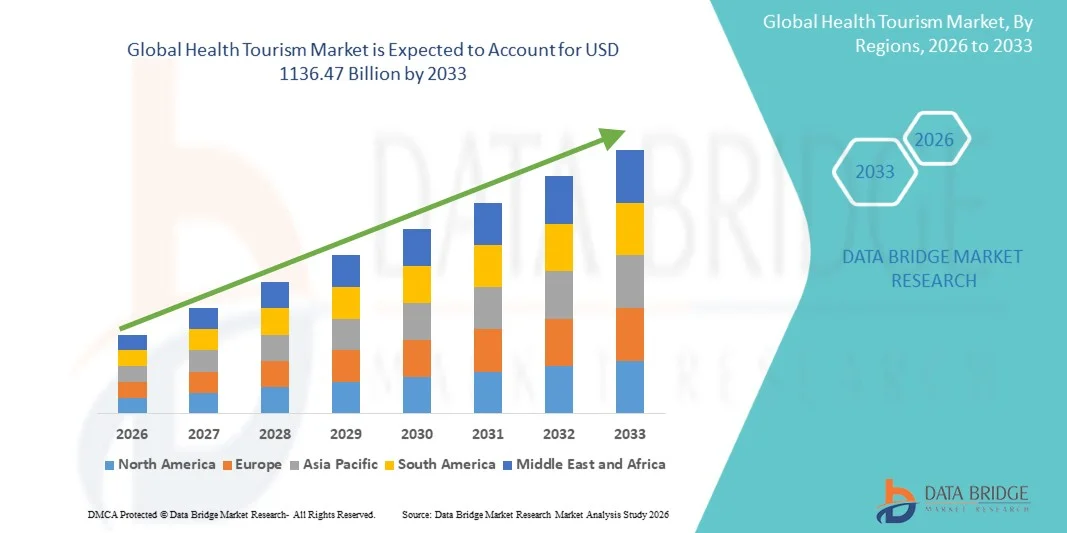
Report Scope and Health Tourism Market Segmentation
|
Attributes |
Health Tourism Key Market Insights |
|
Segments Covered |
|
|
Countries Covered |
North America
|
|
Key Market Players |
• Apollo Hospitals Enterprise Ltd. (India) |
|
Market Opportunities |
|
|
Value Added Data Infosets |
In addition to the insights on market scenarios such as market value, growth rate, segmentation, geographical coverage, and major players, the market reports curated by the Data Bridge Market Research also include in-depth expert analysis, patient epidemiology, pipeline analysis, pricing analysis, and regulatory framework. |
Health Tourism Market Trends
“Rising Demand for Cross-Border Healthcare Services”
- A significant and accelerating trend in the global health tourism market is the increasing number of patients seeking medical treatments across international borders due to cost advantages, shorter waiting times, and access to advanced medical technologies not readily available in their home countries
- For instance, countries such as Thailand, India, and Mexico have become major hubs for medical tourism, offering procedures such as cardiac surgeries and cosmetic treatments at costs that are approximately 40–70% lower compared to the U.S. and Western Europe, attracting a large influx of international patients annually
- The growing globalization of healthcare services, supported by improved travel connectivity and medical visa facilitation, is significantly enhancing patient mobility and treatment accessibility worldwide
- In addition, the expansion of internationally accredited hospitals and healthcare facilities is increasing patient confidence in seeking treatment abroad, ensuring quality standards and safety
- The rise of digital platforms and medical tourism facilitators is simplifying the process of selecting healthcare providers, comparing costs, and organizing travel and treatment plans
- Emerging economies are increasingly investing in healthcare infrastructure to position themselves as competitive medical tourism destinations, further strengthening this trend
- The integration of teleconsultation services before and after procedures is also improving continuity of care for international patients
- Furthermore, the growing demand for specialized treatments such as fertility services, orthopedic procedures, and dental care is contributing to the expansion of health tourism
- Wellness tourism, including preventive healthcare, Ayurveda, and rehabilitation services, is also gaining traction alongside traditional medical tourism
- Overall, this trend is reshaping global healthcare delivery by promoting accessibility, affordability, and patient-centric care across borders
Health Tourism Market Dynamics
Driver
“Cost Advantages and Improved Healthcare Accessibility”
- The substantial cost difference in medical procedures between developed and developing countries is a key driver fueling the growth of the global health tourism market, with patients often saving between 30% and 80% on treatments abroad
- For instance, a cardiac bypass surgery that may cost over USD 120,000 in the U.S. can be performed in India for approximately USD 7,000–10,000, attracting a large number of international patients seeking affordable yet high-quality care
- Increasing healthcare costs and long waiting periods in developed nations are encouraging patients to explore international treatment options
- The rising prevalence of chronic diseases and the growing need for surgical interventions are further driving demand for cost-effective treatment solutions globally
- Governments in several countries are actively promoting medical tourism through favorable policies, medical visas, and public-private partnerships
- The availability of highly skilled healthcare professionals and internationally trained doctors in emerging markets is enhancing treatment outcomes and boosting patient trust
- Improved healthcare infrastructure and adoption of advanced medical technologies in developing regions are making them competitive alternatives to traditional healthcare systems
- In addition, the expansion of insurance coverage for overseas treatments in some countries is further supporting market growth
- The increasing awareness of treatment options abroad through digital media and patient testimonials is also accelerating adoption
- Collectively, these factors are significantly contributing to the expansion of the global health tourism market by improving affordability and accessibility of healthcare services
Restraint/Challenge
“Regulatory Complexities and Post-Treatment Risks”
- Differences in healthcare regulations, accreditation standards, and legal frameworks across countries pose a major challenge for patients seeking treatment abroad, often creating uncertainty regarding quality and accountability
- For instance, variations in malpractice laws and limited legal recourse in certain destinations can discourage patients from opting for overseas medical procedures, particularly in complex or high-risk treatments
- Post-treatment complications and lack of proper follow-up care once patients return to their home countries remain a significant concern impacting overall treatment outcomes
- Language barriers and cultural differences between patients and healthcare providers can also affect communication and patient experience
- In addition, the absence of standardized global healthcare protocols may lead to inconsistencies in treatment quality across different regions
- Travel-related risks, including long-distance flights and recovery challenges, can further complicate patient outcomes, especially for critical procedures
- Insurance limitations and lack of reimbursement for international treatments in many countries act as a barrier to adoption
- The need for extensive documentation, visa approvals, and logistical arrangements can make the process complex and time-consuming for patients
- Concerns regarding data privacy and medical record sharing across borders also contribute to hesitation among potential medical tourists
- Addressing these challenges through international accreditation, improved regulatory harmonization, and enhanced post-treatment care coordination will be crucial for sustaining long-term market growth
Health Tourism Market Scope
The market is segmented on the basis of service, type of treatment, age group, and service provider.
• By Service
On the basis of service, the Health Tourism market is segmented into Transport, Accommodation, Hospitality and Others. The accommodation segment dominated the largest market revenue share of 38.7% in 2025, driven by the essential role of lodging in the overall medical travel experience. Patients traveling internationally require extended stays for pre- and post-treatment recovery, significantly boosting demand for comfortable and medically assisted accommodation facilities. The growth is further supported by partnerships between hospitals and hotels offering recovery packages. Increasing preference for premium recovery environments and personalized services is also contributing to segment dominance. In addition, the rise of medical resorts and wellness retreats is enhancing patient experience. Healthcare providers are increasingly bundling accommodation with treatment packages. The segment benefits from rising inbound medical tourists from developed nations seeking cost-effective care. Technological integration such as online booking and virtual assistance further supports growth. Moreover, improved hospitality standards in emerging economies strengthen demand. Government initiatives promoting medical tourism infrastructure also play a key role. These factors collectively reinforce the segment’s leading position.
The transport segment is expected to witness the fastest CAGR of 10.2% from 2026 to 2033, driven by increasing international patient mobility and demand for seamless travel solutions. Growth in air connectivity and medical travel facilitation services is significantly boosting the segment. Patients are increasingly opting for specialized medical transport services, including air ambulances and assisted travel. The segment is also benefiting from rising collaborations between travel agencies and healthcare providers. Increasing digitalization in travel booking and coordination enhances convenience. In addition, governments are improving visa processes to attract medical tourists. The demand for end-to-end travel solutions is further accelerating growth. Expansion of low-cost airlines is making medical travel more accessible. The segment also benefits from rising awareness of cross-border healthcare options. Technological advancements in patient transport safety contribute to growth. These factors collectively drive the rapid expansion of the transport segment.
• By Type of Treatment
On the basis of type of treatment, the Health Tourism market is segmented into Cosmetic Treatment, Dental Treatment, Cardiovascular Treatment, Orthopaedic Treatment, Bariatric Treatment, Fertility Treatment, Cancer Treatment, Ophthalmic Treatment, Neurological Treatment and Others. The cosmetic treatment segment dominated the largest market revenue share of 29.5% in 2025, driven by increasing demand for aesthetic procedures and cost advantages in emerging markets. Patients from developed countries often travel abroad for affordable cosmetic surgeries such as rhinoplasty, liposuction, and facelifts. The segment benefits from minimal waiting times and access to advanced procedures. Rising social media influence and beauty awareness further drive demand. In addition, availability of skilled surgeons in countries like India, Thailand, and Turkey supports growth. The segment also benefits from bundled packages including travel and accommodation. Increasing acceptance of cosmetic procedures globally is another key factor. Technological advancements in minimally invasive procedures enhance patient outcomes. The growing middle-class population seeking aesthetic enhancement also contributes. Strong marketing by medical tourism providers boosts patient inflow. These factors collectively maintain the segment’s dominance.
The cardiovascular treatment segment is projected to witness the fastest CAGR of 11.4% from 2026 to 2033, driven by the rising global burden of heart diseases. Patients are increasingly traveling for cost-effective and high-quality cardiac procedures such as bypass surgeries and angioplasty. The segment benefits from advanced healthcare infrastructure in emerging economies. Increasing awareness about treatment options abroad supports growth. In addition, long waiting periods in developed countries drive patients to seek faster treatment overseas. The segment is also supported by growing accreditation of hospitals. Technological advancements in cardiac care improve success rates. Government initiatives promoting specialized treatment centers further contribute. Rising elderly population is a key growth driver. Expansion of international insurance coverage also supports adoption. These factors collectively accelerate segment growth.
• By Age Group
On the basis of age group, the Health Tourism market is segmented into Senior Citizens, Minors and Adults. The adults segment dominated the largest market revenue share of 54.1% in 2025, driven by higher mobility and financial independence among working-age individuals. Adults are more likely to seek elective treatments such as cosmetic, dental, and fertility procedures abroad. The segment benefits from increased awareness of medical tourism options. Rising disposable income enables international travel for healthcare. In addition, adults are more inclined to combine treatment with leisure travel. The segment also sees strong demand for preventive healthcare services. Technological advancements in treatment options attract adult patients. Growing corporate healthcare programs also support medical travel. The availability of customized treatment packages enhances adoption. Rising stress-related health issues further drive demand. These factors collectively ensure the segment’s leading position.
The senior citizens segment is expected to witness the fastest CAGR of 9.8% from 2026 to 2033, driven by the increasing aging population globally. Older individuals often require specialized treatments such as orthopaedic and cardiovascular procedures. The segment benefits from cost advantages in emerging markets. Growing availability of geriatric care services enhances patient comfort. In addition, improvements in travel assistance services support elderly mobility. Increasing life expectancy is a key growth driver. The segment is also supported by rising healthcare costs in developed countries. Technological advancements in minimally invasive procedures make travel safer. Government initiatives promoting senior healthcare further boost growth. Expansion of insurance coverage for elderly patients also contributes. These factors collectively drive rapid growth of the segment.
• By Service Provider
On the basis of service provider, the Health Tourism market is segmented into Private and Public. The private segment dominated the largest market revenue share of 67.3% in 2025, driven by the availability of advanced medical facilities and personalized care. Private hospitals often offer state-of-the-art technology and internationally accredited services, attracting foreign patients. The segment benefits from shorter waiting times and flexible treatment schedules. In addition, private providers actively market medical tourism packages globally. High-quality infrastructure and skilled professionals further enhance patient trust. The segment also offers comprehensive packages including travel, treatment, and recovery. Increasing investments in private healthcare facilities support growth. Strong collaborations with international insurance providers boost patient inflow. The segment benefits from better patient experience and comfort. Rising demand for premium healthcare services further strengthens its position. These factors collectively maintain dominance.
The public segment is anticipated to witness the fastest CAGR of 8.6% from 2026 to 2033, driven by increasing government initiatives to promote medical tourism. Public hospitals are improving infrastructure and service quality to attract international patients. The segment benefits from lower treatment costs compared to private providers. In addition, government support through policy reforms and funding enhances growth. Increasing accreditation of public hospitals boosts credibility. The segment is also supported by expanding healthcare infrastructure in developing countries. Rising partnerships with global healthcare organizations further contribute. Improved accessibility and affordability attract a broader patient base. Technological upgrades in public healthcare facilities enhance service delivery. Growing focus on universal healthcare strengthens adoption. These factors collectively drive the segment’s rapid expansion.
Health Tourism Market Regional Analysis
- North America dominated the Health Tourism market with the largest revenue in 2025, driven by advanced healthcare infrastructure, high healthcare expenditure, and the strong presence of internationally accredited hospitals offering specialized treatments to global patients
- The region benefits from a well-established ecosystem of medical service providers, facilitators, and insurance support systems, enabling seamless access for international patients seeking high-quality and technologically advanced medical care
- This widespread dominance is further supported by strong inbound medical tourism, availability of cutting-edge treatments such as oncology, cardiovascular, and orthopedic procedures, along with a highly skilled healthcare workforce
U.S. Health Tourism Market Insight
The U.S. health tourism market captured the largest revenue share of 36.8% in 2025 within North America, supported by its world-class healthcare infrastructure, advanced treatment capabilities, and strong inflow of international patients seeking specialized and complex medical procedures. The country remains a key destination for high-end treatments, including cancer therapies, organ transplants, and robotic surgeries, attracting patients from both developed and emerging economies. In addition, the presence of leading hospitals, research institutions, and highly trained medical professionals further strengthens the country’s position in the global market. The growing adoption of personalized medicine, advanced diagnostics, and innovative treatment approaches continues to propel the Health Tourism industry in the U.S.
Canada Health Tourism Market Insight
The Canada health tourism market is expected to grow at the fastest CAGR of 8.9% during the forecast period, driven by increasing investments in healthcare infrastructure, rising government support, and a growing reputation for delivering high-quality, patient-centric care. The country is witnessing an increase in cross-border patient inflow, particularly from neighboring regions, due to its strong healthcare standards and comparatively shorter waiting times in certain specialized treatments. In addition, Canada’s focus on expanding medical facilities, improving service quality, and promoting international patient programs is contributing to its emergence as a key growth hub in the global health tourism market.
Health Tourism Market Share
The Health Tourism industry is primarily led by well-established companies, including:
• Apollo Hospitals Enterprise Ltd. (India)
• Fortis Healthcare Limited (India)
• Bumrungrad International Hospital (Thailand)
• Bangkok Hospital (Thailand)
• KPJ Healthcare Berhad (Malaysia)
• Raffles Medical Group (Singapore)
• Cleveland Clinic (U.S.)
• Mayo Clinic (U.S.)
• Mount Elizabeth Hospitals (Singapore)
• Prince Court Medical Centre (Malaysia)
• Gleneagles Hospital (Singapore)
• Medanta – The Medicity (India)
• Wockhardt Hospitals (India)
• Narayana Health (India)
• Asklepios Kliniken GmbH (Germany)
• Helios Hospitals (Germany)
• Acibadem Healthcare Group (Turkey)
• Saudi German Hospital (UAE)
• IHH Healthcare Berhad (Malaysia)
• Seoul National University Hospital (South Korea)
Latest Developments in Health Tourism Market
- In January 2021, global health tourism demonstrated resilience despite the COVID-19 pandemic, as patients—particularly from the United States—continued traveling abroad for essential and cost-effective medical procedures, with treatments often costing 40–80% less compared to domestic healthcare systems, highlighting the sector’s strong underlying demand even during global disruptions
- In August 2022, industry analysis reported that the global medical tourism market was projected to reach over USD 180 billion by 2025, driven by increasing demand from developed countries seeking affordable treatments in emerging healthcare destinations, signaling strong post-pandemic recovery and expansion of cross-border healthcare services
- In July 2025, global health tourism trends highlighted a surge in cross-border patient travel driven by cost efficiency, shorter wait times, and access to advanced treatments, with countries such as India, Thailand, and Turkey continuing to dominate while emerging destinations like the UAE and Brazil gained traction
- In July 2025, healthcare experts raised concerns over the rapid growth of medical tourism for procedures such as bariatric surgery, calling for stricter international regulations and quality standards to address patient safety risks and ensure proper post-operative care in cross-border treatments
- In October 2025, the Kerala Health Tourism and Global Ayurveda Summit highlighted significant growth in wellness and medical tourism, with approximately 740,000 foreign patients visiting Kerala in 2024 and generating substantial revenue, underscoring the rising importance of integrative and traditional medicine in global health tourism
SKU-
Get online access to the report on the World's First Market Intelligence Cloud

- Interactive Data Analysis Dashboard
- Company Analysis Dashboard for high growth potential opportunities
- Research Analyst Access for customization & queries
- Competitor Analysis with Interactive dashboard
- Latest News, Updates & Trend analysis
- Harness the Power of Benchmark Analysis for Comprehensive Competitor Tracking
Research Methodology
Data collection and base year analysis are done using data collection modules with large sample sizes. The stage includes obtaining market information or related data through various sources and strategies. It includes examining and planning all the data acquired from the past in advance. It likewise envelops the examination of information inconsistencies seen across different information sources. The market data is analysed and estimated using market statistical and coherent models. Also, market share analysis and key trend analysis are the major success factors in the market report. To know more, please request an analyst call or drop down your inquiry.
The key research methodology used by DBMR research team is data triangulation which involves data mining, analysis of the impact of data variables on the market and primary (industry expert) validation. Data models include Vendor Positioning Grid, Market Time Line Analysis, Market Overview and Guide, Company Positioning Grid, Patent Analysis, Pricing Analysis, Company Market Share Analysis, Standards of Measurement, Global versus Regional and Vendor Share Analysis. To know more about the research methodology, drop in an inquiry to speak to our industry experts.
Customization Available
Data Bridge Market Research is a leader in advanced formative research. We take pride in servicing our existing and new customers with data and analysis that match and suits their goal. The report can be customized to include price trend analysis of target brands understanding the market for additional countries (ask for the list of countries), clinical trial results data, literature review, refurbished market and product base analysis. Market analysis of target competitors can be analyzed from technology-based analysis to market portfolio strategies. We can add as many competitors that you require data about in the format and data style you are looking for. Our team of analysts can also provide you data in crude raw excel files pivot tables (Fact book) or can assist you in creating presentations from the data sets available in the report.












