Global Hemorrhagic Stroke Treatment Market
Market Size in USD Billion
CAGR :
% 
 USD
45.91 Billion
USD
83.72 Billion
2025
2033
USD
45.91 Billion
USD
83.72 Billion
2025
2033
 Forecast Period Forecast Period |
2026 –2033 |
 Market Size (Base Year) Market Size (Base Year) |
USD 45.91 Billion |
 Market Size (Forecast Year) Market Size (Forecast Year) |
USD 83.72 Billion |
 CAGR CAGR |
% |
| Major Markets Players |
|
Hemorrhagic Stroke Treatment Market Size
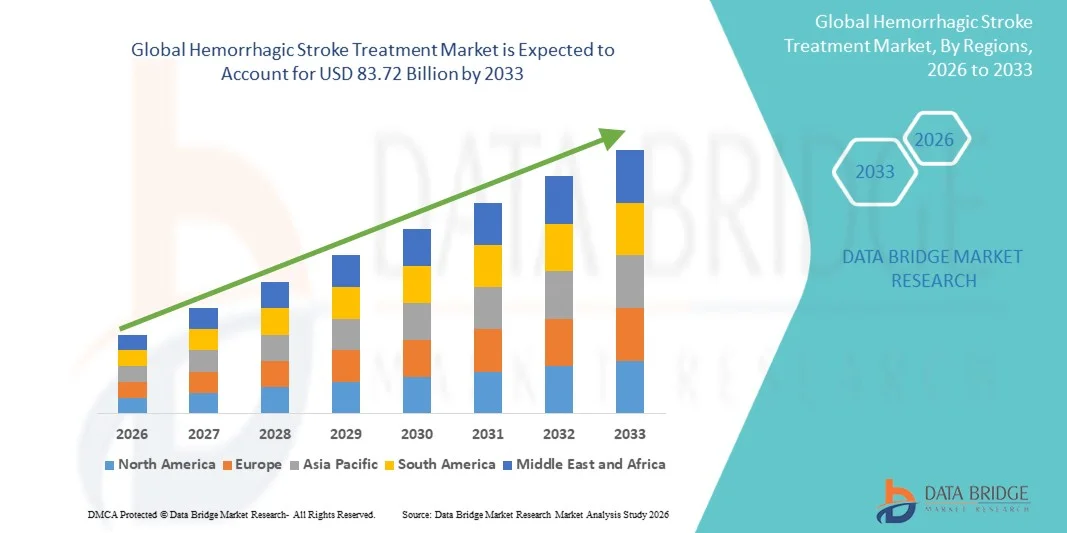
- The global Hemorrhagic Stroke Treatment market size was valued at USD 45.91 billion in 2025and is expected to reach USD 83.72 billion by 2033, at a CAGR of 7.80% during the forecast period
- The market growth is largely fueled by the rising incidence of hemorrhagic stroke cases driven by aging populations, hypertension prevalence, and lifestyle-related risk factors, along with advancements in neuroimaging and emergency care systems that enable faster and more accurate diagnosis and intervention
- Furthermore, increasing adoption of minimally invasive neurosurgical techniques, improved critical care management, and growing development of neuroprotective drugs and clot-stabilizing therapies are establishing hemorrhagic stroke treatment solutions as essential components of acute neurological care. These converging factors are accelerating the uptake of hemorrhagic stroke treatment solutions, thereby significantly boosting the industry's growth
Hemorrhagic Stroke Treatment Market Analysis
- Hemorrhagic stroke treatment, including neurosurgical interventions, blood pressure management therapies, clot control drugs, and intensive care support, is increasingly vital in acute neurological care due to rising stroke incidence and improved emergency response systems
- The escalating demand for hemorrhagic stroke treatment is primarily fueled by the growing prevalence of hypertension, aging populations, lifestyle-related risk factors, and rapid advancements in neurocritical care and imaging technologies enabling faster diagnosis and intervention
- North America dominated the hemorrhagic stroke treatment market with the largest revenue share of 38.7% in 2025, characterized by advanced healthcare infrastructure, high adoption of minimally invasive neurosurgical procedures, strong presence of key medical device and pharmaceutical companies, and well-established stroke care networks in the U.S.
- Asia-Pacific is expected to be the fastest growing region in the hemorrhagic stroke treatment market during the forecast period due to rising healthcare expenditure, increasing awareness of strok
- The Injectable segment held the largest market revenue share of 67.8% in 2025, driven by its rapid onset of action and critical role in emergency stroke management
Report Scope and Hemorrhagic Stroke Treatment Market Segmentation
|
Attributes |
Hemorrhagic Stroke Treatment Key Market Insights |
|
Segments Covered |
|
|
Countries Covered |
North America · U.S. · Canada · Mexico Europe · Germany · France · U.K. · Netherlands · Switzerland · Belgium · Russia · Italy · Spain · Turkey · Rest of Europe Asia-Pacific · China · Japan · India · South Korea · Singapore · Malaysia · Australia · Thailand · Indonesia · Philippines · Rest of Asia-Pacific Middle East and Africa · Saudi Arabia · U.A.E. · South Africa · Egypt · Israel · Rest of Middle East and Africa South America · Brazil · Argentina · Rest of South America |
|
Key Market Players |
• Pfizer Inc. (U.S.) |
|
Market Opportunities |
· Advancement in emergency neurointervention and minimally invasive neurosurgery · Rising Demand in Emerging Markets |
|
Value Added Data Infosets |
In addition to the insights on market scenarios such as market value, growth rate, segmentation, geographical coverage, and major players, the market reports curated by the Data Bridge Market Research also include in-depth expert analysis, patient epidemiology, pipeline analysis, pricing analysis, and regulatory framework. |
Hemorrhagic Stroke Treatment Market Trends
“Advancements in Neurocritical Care and Precision Treatment Approaches”
- A significant and accelerating trend in the global Hemorrhagic Stroke Treatment market is the advancement of neurocritical care management combined with precision-based treatment strategies. These developments are improving survival rates and reducing long-term neurological complications in patients suffering from intracerebral and subarachnoid hemorrhage
- For instance, the increasing use of minimally invasive surgical techniques such as endoscopic evacuation and stereotactic aspiration is improving outcomes by reducing brain tissue damage and lowering post-operative complications compared to traditional open surgery approaches
- Advanced neuroimaging technologies, including CT angiography and perfusion imaging, are playing a critical role in early detection, accurate localization of bleeding, and rapid clinical decision-making, which is essential in time-sensitive stroke management
- The integration of intensive care protocols with continuous intracranial pressure monitoring is enabling more precise control of cerebral perfusion, helping clinicians prevent secondary brain injury in critically ill patients
- Growing research into neuroprotective agents and hemostatic therapies is further expanding treatment options aimed at limiting hematoma expansion and improving neurological recovery outcomes
Hemorrhagic Stroke Treatment Market Dynamics
Driver
“Rising Incidence of Stroke and Advancements in Emergency Neurological Care”
- The increasing global burden of stroke, particularly hemorrhagic stroke, is a major driver of market growth, largely attributed to aging populations, hypertension prevalence, and lifestyle-related risk factors
- For instance, improved emergency medical response systems and faster hospital admission protocols are significantly reducing treatment delays, which is critical for improving survival rates in hemorrhagic stroke cases
- Expanding availability of specialized stroke centers equipped with advanced neuroimaging and neurosurgical capabilities is enhancing early diagnosis and treatment efficiency
- Growing adoption of evidence-based clinical guidelines for acute stroke management is improving standardization of care across hospitals and healthcare systems
- Increasing investment in neurology-focused research and development is also accelerating innovation in novel therapeutic interventions aimed at reducing mortality and disability rates
Restraint/Challenge
“High Treatment Complexity, Limited Therapeutic Window, and Cost Burden”
- One of the major challenges in the hemorrhagic stroke treatment market is the extremely narrow therapeutic window, which requires immediate medical intervention to prevent irreversible brain damage. Delays in treatment significantly worsen patient outcomes
- For instance, many patients fail to reach specialized stroke centers within the critical time frame, limiting the effectiveness of surgical or pharmacological interventions
- The complexity of managing intracranial hemorrhage often requires multidisciplinary coordination involving neurologists, neurosurgeons, and critical care specialists, which may not be readily available in all healthcare settings
- High treatment costs associated with advanced neuroimaging, neurosurgical procedures, and prolonged intensive care unit stays place a significant financial burden on healthcare systems and patients
- In addition, limited availability of definitive curative therapies and the focus on supportive care rather than reversal of brain injury continue to restrict long-term outcome improvements
- Addressing these challenges will require strengthening emergency stroke networks, improving early detection systems, and expanding access to specialized neurocritical care services globally
Hemorrhagic Stroke Treatment Market Scope
The market is segmented on the basis of treatment, route of administration, end-users, and distribution channel.
- By Treatment
On the basis of treatment, the Hemorrhagic Stroke Treatment market is segmented into Antihypertensives, Anticoagulants, Diuretics, Anticonvulsants, and Others. The Antihypertensives segment dominated the largest market revenue share of 41.9% in 2025, driven by their critical role in controlling blood pressure and preventing further cerebral bleeding in hemorrhagic stroke patients. Rapid stabilization of hypertension is essential in acute stroke management, supporting strong clinical adoption. Increasing global prevalence of hypertension significantly contributes to demand. Hospitals widely use antihypertensive agents as first-line emergency treatment. Strong clinical guidelines recommending blood pressure control reinforce usage. Growing awareness of early stroke intervention further supports market expansion. Expanding healthcare infrastructure improves accessibility in both developed and emerging regions. In addition, improved drug formulations enhance treatment efficiency and patient outcomes.
The Anticoagulants segment is expected to witness the fastest CAGR of 23.4% from 2026 to 2033, driven by increasing use in preventing recurrent stroke complications and managing underlying thrombotic conditions. Rising incidence of cardiovascular disorders supports demand. Advancements in safer anticoagulant formulations reduce bleeding risks and improve adoption. Growing clinical research in stroke prevention therapies accelerates innovation. Increasing awareness of secondary stroke prevention boosts usage. Expanding hospital-based neurology care further drives segment growth.
- By Route of Administration
On the basis of route of administration, the Hemorrhagic Stroke Treatment market is segmented into Oral and Injectable. The Injectable segment held the largest market revenue share of 67.8% in 2025, driven by its rapid onset of action and critical role in emergency stroke management. Injectable therapies are preferred in acute hospital settings for immediate stabilization of patients. High bioavailability ensures faster therapeutic response. Increasing hospitalization rates for stroke emergencies support dominance. Advanced critical care infrastructure enhances injectable drug utilization. Strong clinical protocols in emergency neurology favor parenteral administration. Rising adoption in intensive care units further strengthens demand. In addition, injectable formulations are essential in severe and life-threatening cases.
The Oral segment is expected to witness the fastest CAGR of 21.6% from 2026 to 2033, driven by increasing use in post-stroke management and long-term secondary prevention. Oral medications improve patient compliance during recovery phases. Growing shift toward outpatient and home-based care supports adoption. Availability of cost-effective oral formulations enhances accessibility. Increasing awareness of long-term stroke prevention boosts demand. Expanding geriatric population further contributes to segment growth.
- By End-Users
On the basis of end-users, the Hemorrhagic Stroke Treatment market is segmented into Hospitals, Homecare, and Others. The Hospitals segment accounted for the largest market revenue share of 72.3% in 2025, driven by the critical need for emergency intervention and specialized neurological care. Hospitals are primary centers for acute stroke treatment and intensive monitoring. Availability of advanced imaging and neurosurgical facilities supports dominance. Presence of skilled neurologists ensures effective patient management. Increasing stroke-related hospital admissions further drives demand. Government healthcare systems prioritize hospital-based stroke care. Access to advanced life-saving therapies strengthens treatment outcomes. Integration of multidisciplinary stroke units enhances hospital efficiency.
The Homecare segment is expected to witness the fastest CAGR of 22.9% from 2026 to 2033, driven by rising demand for post-stroke rehabilitation and long-term patient management. Home-based care improves recovery outcomes and reduces hospital burden. Increasing adoption of telemedicine supports remote monitoring. Growing geriatric population boosts demand for homecare services. Advancements in portable medical devices enhance treatment feasibility. Rising awareness of rehabilitation programs further accelerates adoption.
- By Distribution Channel
On the basis of distribution channel, the Hemorrhagic Stroke Treatment market is segmented into Hospital Pharmacy, Online Pharmacy, and Retail Pharmacy. The Hospital Pharmacy segment held the largest market revenue share of 58.6% in 2025, driven by strong integration with emergency stroke care and inpatient treatment systems. Hospital pharmacies ensure immediate availability of critical medications. High dependency on acute care settings supports dominance. Government-supported stroke treatment programs further reinforce hospital distribution. Increasing hospitalization rates strengthen demand. Strict regulatory control ensures safe and effective drug dispensing. Strong coordination between physicians and pharmacists enhances treatment efficiency.
The Online Pharmacy segment is expected to witness the fastest CAGR of 24.2% from 2026 to 2033, driven by rapid digital healthcare adoption and increasing demand for home delivery of chronic and preventive medications. Expansion of telemedicine platforms supports online prescriptions. Rising smartphone penetration and internet access accelerate adoption. Patients prefer online channels for convenience and privacy. Competitive pricing and discount offerings further drive usage. Partnerships between e-pharmacy platforms and healthcare providers enhance accessibility and market reach.
Hemorrhagic Stroke Treatment Market Regional Analysis
- North America dominated the hemorrhagic stroke treatment market with the largest revenue share of 38.7% in 2025, characterized by advanced healthcare infrastructure, high adoption of minimally invasive neurosurgical procedures, strong presence of key medical device and pharmaceutical companies, and well-established stroke care networks in the U.S.
- The region benefits from rapid integration of advanced neuroimaging technologies, clot management systems, and surgical intervention devices, enabling faster diagnosis and improved treatment outcomes for hemorrhagic stroke patients
- Strong emergency response systems, widespread availability of stroke centers, and favorable reimbursement policies further support the adoption of advanced treatment modalities across North America
U.S. Hemorrhagic Stroke Treatment Market Insight
The U.S. hemorrhagic stroke treatment market captured the largest revenue share within North America in 2025, driven by continuous advancements in neurointerventional procedures and increasing availability of specialized stroke care units. Growing adoption of endovascular coiling, surgical clipping, and image-guided minimally invasive techniques is improving patient survival rates. In addition, strong clinical research activity and rapid introduction of novel hemostatic agents and neuroprotective drugs are further strengthening market growth. The expansion of certified stroke centers and improved emergency response systems is also enhancing treatment accessibility.
Europe Hemorrhagic Stroke Treatment Market Insight
The Europe hemorrhagic stroke treatment market is projected to expand at a substantial CAGR during the forecast period, supported by increasing investments in stroke care infrastructure and strong adherence to clinical treatment guidelines. Rising adoption of minimally invasive neurosurgery and advanced imaging technologies is improving early diagnosis and intervention rates. Additionally, Europe’s aging population is contributing to higher stroke incidence, thereby driving demand for effective acute and post-acute treatment solutions.
U.K. Hemorrhagic Stroke Treatment Market Insight
The U.K. hemorrhagic stroke treatment market is expected to grow steadily, supported by the NHS framework for stroke care and increasing deployment of specialized stroke units. Growing use of thrombolytic adjunct therapies, advanced neurosurgical tools, and tele-stroke services is improving patient outcomes. Furthermore, rising public awareness of stroke symptoms and faster hospital response times are enhancing early treatment adoption.
Germany Hemorrhagic Stroke Treatment Market Insight
The Germany hemorrhagic stroke treatment market is anticipated to expand at a notable pace, driven by strong hospital infrastructure, high healthcare expenditure, and increasing adoption of advanced neurovascular devices. Germany’s focus on precision medicine and innovation in surgical neurology is supporting the use of image-guided interventions and hybrid operating rooms. In addition, rising prevalence of cardiovascular risk factors is contributing to growing treatment demand.
Asia-Pacific Hemorrhagic Stroke Treatment Market Insight
The Asia-Pacific hemorrhagic stroke treatment market is expected to grow at the fastest CAGR during the forecast period due to rising healthcare expenditure, increasing awareness of stroke management, improving hospital infrastructure, and expanding access to advanced neurocare treatments. Rapid urbanization and growing prevalence of hypertension and lifestyle-related disorders are also increasing the burden of hemorrhagic stroke across the region.
Japan Hemorrhagic Stroke Treatment Market Insight
The Japan hemorrhagic stroke treatment market is driven by a highly advanced healthcare system and strong focus on neurological care. Increasing use of endovascular therapies, advanced imaging systems, and rapid emergency stroke response protocols is improving clinical outcomes. Japan’s aging population further contributes to higher stroke incidence, sustaining demand for long-term neurocare services.
China Hemorrhagic Stroke Treatment Market Insight
The China hemorrhagic stroke treatment market accounted for a significant share in Asia Pacific in 2025, supported by rapid expansion of hospital infrastructure, increasing access to neurovascular interventions, and growing adoption of advanced stroke treatment technologies. Rising government investment in stroke prevention programs and improved availability of specialized neurology departments are further driving market growth.
Hemorrhagic Stroke Treatment Market Share
The Hemorrhagic Stroke Treatment industry is primarily led by well-established companies, including:
- Pfizer Inc. (U.S.)
• F. Hoffmann-La Roche Ltd. (Switzerland)
• Novartis AG (Switzerland)
• AstraZeneca plc (U.K.)
• Bristol-Myers Squibb Company (U.S.)
• Merck & Co., Inc. (U.S.)
• Eli Lilly and Company (U.S.)
• Sanofi S.A. (France)
• Johnson & Johnson (U.S.)
• Amgen Inc. (U.S.)
• Boehringer Ingelheim International GmbH (Germany)
• Takeda Pharmaceutical Company Limited (Japan)
• Teva Pharmaceutical Industries Ltd. (Israel)
• Sun Pharmaceutical Industries Ltd. (India)
• Cipla Limited (India)
• Dr. Reddy’s Laboratories Ltd. (India)
• Lupin Limited (India)
• Zydus Lifesciences Ltd. (India)
• Hikma Pharmaceuticals plc (U.K.)
• Mylan N.V. (U.S.)
Latest Developments in Global Hemorrhagic Stroke Treatment Market
- In May 2021, clinical stroke management guidelines reinforced the importance of rapid blood pressure control and neurosurgical intervention (craniotomy and hematoma evacuation) as primary treatment strategies for intracerebral hemorrhage, supporting standardized acute care protocols across global stroke centers
- In October 2022, ongoing clinical research in stroke therapeutics highlighted increasing evaluation of neuroprotective agents and minimally invasive surgical evacuation techniques, including image-guided hematoma removal systems aimed at reducing brain damage in hemorrhagic stroke patients
- In March 2023, international stroke trials increasingly focused on expanding thrombolytic research into broader stroke windows, including evaluation of agents such as tenecteplase in selected stroke populations, supporting a shift toward faster, more efficient reperfusion strategies in acute neurovascular care
- In August 2023, global neurocritical care studies emphasized growing adoption of minimally invasive endoscopic and catheter-based evacuation techniques for intracerebral hemorrhage, improving survival outcomes and reducing post-surgical complications compared to traditional open craniotomy approaches
- In April 2024, large-scale stroke intervention trials (including TRACE and TNK-based studies) demonstrated improved functional outcomes with advanced thrombolysis strategies and extended treatment windows, reinforcing the evolving role of pharmacologic intervention even in complex cerebrovascular cases
- In May 2024, global neurology research highlighted increasing use of AI-based imaging and perfusion-guided decision-making systems in hemorrhagic stroke diagnosis and surgical planning, enabling faster identification of bleeding severity and improving treatment precision in emergency settings
- In May 2025, studies published in stroke therapeutics emphasized the expansion of endovascular thrombectomy and minimally invasive neurointervention techniques beyond traditional time windows, significantly improving survival and reducing disability in complex stroke cases
SKU-
Get online access to the report on the World's First Market Intelligence Cloud

- Interactive Data Analysis Dashboard
- Company Analysis Dashboard for high growth potential opportunities
- Research Analyst Access for customization & queries
- Competitor Analysis with Interactive dashboard
- Latest News, Updates & Trend analysis
- Harness the Power of Benchmark Analysis for Comprehensive Competitor Tracking
Research Methodology
Data collection and base year analysis are done using data collection modules with large sample sizes. The stage includes obtaining market information or related data through various sources and strategies. It includes examining and planning all the data acquired from the past in advance. It likewise envelops the examination of information inconsistencies seen across different information sources. The market data is analysed and estimated using market statistical and coherent models. Also, market share analysis and key trend analysis are the major success factors in the market report. To know more, please request an analyst call or drop down your inquiry.
The key research methodology used by DBMR research team is data triangulation which involves data mining, analysis of the impact of data variables on the market and primary (industry expert) validation. Data models include Vendor Positioning Grid, Market Time Line Analysis, Market Overview and Guide, Company Positioning Grid, Patent Analysis, Pricing Analysis, Company Market Share Analysis, Standards of Measurement, Global versus Regional and Vendor Share Analysis. To know more about the research methodology, drop in an inquiry to speak to our industry experts.
Customization Available
Data Bridge Market Research is a leader in advanced formative research. We take pride in servicing our existing and new customers with data and analysis that match and suits their goal. The report can be customized to include price trend analysis of target brands understanding the market for additional countries (ask for the list of countries), clinical trial results data, literature review, refurbished market and product base analysis. Market analysis of target competitors can be analyzed from technology-based analysis to market portfolio strategies. We can add as many competitors that you require data about in the format and data style you are looking for. Our team of analysts can also provide you data in crude raw excel files pivot tables (Fact book) or can assist you in creating presentations from the data sets available in the report.