Global Hodgkin Lymphoma Drug Market
Market Size in USD Billion
CAGR :
% 
 USD
3.50 Billion
USD
10.52 Billion
2025
2033
USD
3.50 Billion
USD
10.52 Billion
2025
2033
 Forecast Period Forecast Period |
2026 –2033 |
 Market Size (Base Year) Market Size (Base Year) |
USD 3.50 Billion |
 Market Size (Forecast Year) Market Size (Forecast Year) |
USD 10.52 Billion |
 CAGR CAGR |
% |
| Major Markets Players |
|
Hodgkin Lymphoma Drug Market Size
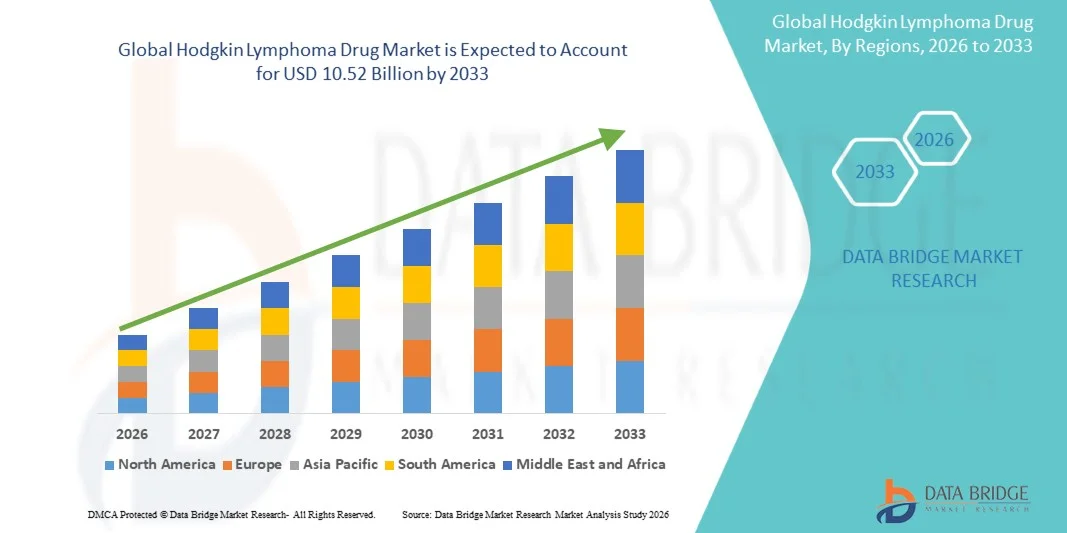
- The global Hodgkin Lymphoma Drug market size was valued at USD 3.50 billion in 2025 and is expected to reach USD 10.52 billion by 2033, at a CAGR of 14.75% during the forecast period
- The market growth is largely fueled by the rising incidence of Hodgkin lymphoma, increasing awareness of early cancer diagnosis, and continuous advancements in oncology drug development, leading to greater adoption of targeted therapies, immunotherapies, and combination chemotherapy regimens in clinical practice
- Furthermore, growing demand for more effective and less toxic treatment options, expanding use of personalized medicine approaches, and increasing clinical research in novel biologics and checkpoint inhibitors are establishing Hodgkin Lymphoma Drug solutions as a critical component of modern cancer care. These converging factors are accelerating the uptake of Hodgkin Lymphoma Drug solutions, thereby significantly boosting the industry's growth
Hodgkin Lymphoma Drug Market Analysis
- Hodgkin Lymphoma drugs, including chemotherapy regimens (ABVD, BEACOPP), targeted therapies, immunotherapies, and antibody–drug conjugates, are increasingly vital components of modern oncology care due to their improved survival outcomes, reduced relapse rates, and growing use of precision medicine-based treatment strategies
- The escalating demand for Hodgkin Lymphoma drugs is primarily fueled by the rising incidence of lymphoma cases, increasing adoption of immuno-oncology therapies, and continuous advancements in targeted cancer treatment options, along with expanding clinical trials for novel biologics and combination therapies
- North America dominated the Hodgkin Lymphoma Drug market with the largest revenue share of approximately 42.5% in 2025, characterized by advanced oncology infrastructure, high adoption of innovative cancer therapies, strong presence of leading pharmaceutical companies, and increasing access to novel immunotherapies, particularly across the U.S. healthcare system
- Asia-Pacific is expected to be the fastest growing region in the Hodgkin Lymphoma Drug market during the forecast period due to rising cancer burden, improving access to advanced oncology treatments, increasing healthcare investments, and expanding availability of immunotherapy and targeted drug therapies across China, India, Japan, and Southeast Asia
- The Classic Hodgkin Lymphoma segment dominated the largest market revenue share of 87.4% in 2025, driven by its significantly higher prevalence compared to the nodular lymphocyte-predominant subtype
Report Scope and Hodgkin Lymphoma Drug Market Segmentation
|
Attributes |
Hodgkin Lymphoma Drug Key Market Insights |
|
Segments Covered |
|
|
Countries Covered |
North America
Europe
Asia-Pacific
Middle East and Africa
South America
|
|
Key Market Players |
|
|
Market Opportunities |
|
|
Value Added Data Infosets |
In addition to the insights on market scenarios such as market value, growth rate, segmentation, geographical coverage, and major players, the market reports curated by the Data Bridge Market Research also include in-depth expert analysis, patient epidemiology, pipeline analysis, pricing analysis, and regulatory framework. |
Hodgkin Lymphoma Drug Market Trends
“Advancements in Targeted and Immunotherapy-Based Treatment Approaches”
- A significant and accelerating trend in the global Hodgkin Lymphoma Drug market is the increasing shift toward targeted therapies and immunotherapy-based treatment regimens. These therapies are improving survival rates while reducing the toxicity associated with traditional chemotherapy.
- Drugs such as brentuximab vedotin (an antibody-drug conjugate) and PD-1 inhibitors like nivolumab and pembrolizumab are increasingly being used in relapsed or refractory Hodgkin lymphoma cases
- For instance, nivolumab has demonstrated strong clinical outcomes in patients who have failed multiple prior lines of therapy, showing durable responses in heavily pretreated populations. In the CheckMate 205 clinical study, nivolumab showed meaningful tumor response rates in relapsed classical Hodgkin lymphoma patients, reinforcing its role in immunotherapy-based treatment strategies
- The growing adoption of combination regimens involving immunotherapy and chemotherapy is enhancing progression-free survival rates and expanding treatment options for advanced-stage patients.
- Increasing clinical trial activity focused on checkpoint inhibitors and novel monoclonal antibodies is further accelerating innovation in this space.
- Globally, North America and Europe are leading adoption due to strong oncology infrastructure, while Asia-Pacific is witnessing rising uptake driven by improved cancer diagnostics and treatment accessibility
Hodgkin Lymphoma Drug Market Dynamics
Driver
“Rising incidence of Hodgkin lymphoma and expanding oncology treatment access”
- The primary driver of the global Hodgkin Lymphoma Drug market is the increasing incidence of lymphoma cases worldwide, along with improved diagnosis rates and expanding access to oncology care
- For instance, according to global cancer burden data, Hodgkin lymphoma continues to show consistent incidence rates in both developed and developing regions, with increasing detection in younger populations due to improved screening and awareness programs. In countries such as the United States, early-stage diagnosis rates have improved significantly due to widespread use of advanced imaging and biopsy techniques, enabling earlier initiation of therapy.
- The growing availability of advanced biologics and targeted therapies in hospital settings is significantly improving treatment outcomes and encouraging early adoption of novel drugs
- In addition, rising healthcare expenditure and government initiatives for cancer care expansion are supporting broader access to high-cost oncology treatments
- Increasing physician preference for less toxic and more effective targeted therapies over conventional chemotherapy is further driving market growth globally
Restraint/Challenge
“High Treatment Costs, Adverse Effects, and Access Limitations”
- One of the major restraints in the Hodgkin Lymphoma Drug market is the high cost of advanced therapies such as monoclonal antibodies and immune checkpoint inhibitors, which limits affordability in low- and middle-income countries
- For instance, drugs like brentuximab vedotin and PD-1 inhibitors are expensive, and in several healthcare systems, limited reimbursement coverage restricts their widespread use despite proven clinical efficacy. In India and several Southeast Asian countries, access to these therapies remains limited to major urban oncology centers due to cost constraints and reimbursement gaps
- Another challenge is the occurrence of immune-related adverse events associated with immunotherapy, including fatigue, pneumonitis, and autoimmune reactions, which require careful monitoring and may complicate treatment continuation
- Limited access to specialized oncology centers in rural and underdeveloped regions further delays diagnosis and initiation of optimal treatment regimens
- In addition, long treatment durations and the need for combination therapy in advanced cases increase overall treatment burden for patients and healthcare systems
- Addressing these challenges through improved drug affordability programs, expanded insurance coverage, and development of safer next-generation therapies will be essential for sustained global market growth
Hodgkin Lymphoma Drug Market Scope
The market is segmented on the basis of type, drug type, treatment type, route of administration, and end users.
• By Type
On the basis of type, the Hodgkin Lymphoma Drug market is segmented into Classic Hodgkin Lymphoma and Nodular Lymphocyte-predominant Hodgkin Lymphoma. The Classic Hodgkin Lymphoma segment dominated the largest market revenue share of 87.4% in 2025, driven by its significantly higher prevalence compared to the nodular lymphocyte-predominant subtype. It accounts for the majority of diagnosed Hodgkin lymphoma cases globally, leading to strong demand for standardized chemotherapy and immunotherapy regimens. Increasing awareness and early diagnosis are supporting timely treatment initiation. Advancements in combination drug therapies are improving survival outcomes. Expanding oncology care infrastructure further strengthens segment dominance. Rising incidence among young adults continues to drive treatment demand. Strong clinical guideline recommendations reinforce its leading position in the market.
The Nodular Lymphocyte-predominant Hodgkin Lymphoma segment is expected to witness the fastest growth rate of 21.9% from 2026 to 2033, driven by improved diagnostic accuracy and better disease classification techniques. Although rare, it requires specialized treatment approaches that are increasingly gaining attention. Rising adoption of targeted therapies and immunotherapy is supporting growth. Increasing awareness among oncologists is improving detection rates. Advancements in personalized medicine are enhancing treatment outcomes. Growing clinical research in rare lymphoma subtypes is boosting segment expansion. Improved long-term survival rates are also encouraging early intervention strategies.
• By Drug Type
On the basis of drug type, the Hodgkin Lymphoma Drug market is segmented into Adriamycin, Bleomycin, Vinblastine, Dacarbazine, Prednisone, Procarbazine, Vincristine, Cyclophosphamide, Etoposide, Mechlorethamine, Nivolumab, and Others. The Adriamycin segment held the largest market revenue share of 19.6% in 2025, driven by its key role in standard ABVD chemotherapy regimens used as first-line treatment for Hodgkin lymphoma. Its high efficacy in combination therapy protocols makes it a cornerstone drug in oncology treatment. Strong clinical guidelines supporting its use reinforce demand. Widespread availability across global healthcare systems further supports dominance. Increasing chemotherapy adoption rates continue to drive utilization. Established safety and efficacy profile strengthens its leadership position.
The Nivolumab segment is expected to witness the fastest CAGR of 24.8% from 2026 to 2033, driven by increasing adoption of immunotherapy for relapsed and refractory Hodgkin lymphoma. It works by enhancing immune system response against cancer cells, offering improved survival outcomes. Rising preference for targeted and immune-based therapies is accelerating demand. Expanding clinical approvals across regions are boosting accessibility. Increasing oncology research investment supports innovation. Growing use in combination therapy regimens further strengthens adoption. Advancements in checkpoint inhibitor therapies continue to drive rapid growth.
• By Treatment Type
On the basis of treatment type, the Hodgkin Lymphoma Drug market is segmented into Medication, Chemotherapy, and Surgery. The Chemotherapy segment accounted for the largest market revenue share of 62.3% in 2025, driven by its position as the standard first-line treatment for Hodgkin lymphoma. Combination chemotherapy regimens such as ABVD remain widely used across all stages of the disease. High effectiveness in achieving remission supports strong clinical preference. Expanding oncology treatment infrastructure reinforces demand. Increasing patient diagnosis rates further boost usage. Strong guideline-based treatment protocols continue to support dominance.
The Medication segment is expected to witness the fastest growth rate of 23.5% from 2026 to 2033, driven by rising adoption of targeted therapies and immunotherapies. These drugs offer improved outcomes with reduced toxicity compared to traditional chemotherapy. Increasing preference for personalized cancer treatment is boosting demand. Expanding use of checkpoint inhibitors supports growth. Advancements in precision oncology are improving survival rates. Growing clinical trials for novel drug combinations are accelerating adoption. Rising focus on long-term disease management further strengthens segment expansion.
• By Route of Administration
On the basis of route of administration, the Hodgkin Lymphoma Drug market is segmented into Oral and Injectable. The Injectable segment held the largest market revenue share of 78.9% in 2025, driven by the dominance of intravenous chemotherapy and immunotherapy regimens in Hodgkin lymphoma treatment. Injectable drugs ensure rapid systemic absorption and high therapeutic effectiveness. Most first-line and combination therapies are administered intravenously in clinical settings. Strong hospital-based treatment protocols support segment leadership. Increasing oncology patient admissions further reinforce demand. Availability of infusion centers enhances accessibility.
The Oral segment is expected to witness the fastest CAGR of 22.6% from 2026 to 2033, driven by growing development of oral targeted therapies and supportive care drugs. Oral administration offers improved patient convenience and compliance. Rising adoption of outpatient cancer management is supporting growth. Advancements in oral chemotherapy formulations are expanding usage. Increasing preference for home-based treatment is accelerating demand. Pharmaceutical innovation in oral oncology drugs is further boosting adoption. Growing shift toward patient-friendly therapies strengthens segment expansion.
• By End Users
On the basis of end users, the Hodgkin Lymphoma Drug market is segmented into Hospitals, Homecare, Specialty Clinics, and Others. The Hospitals segment dominated the largest market revenue share of 71.5% in 2025, driven by the high requirement for structured chemotherapy administration, advanced diagnostic support, and inpatient cancer care. Hospitals serve as primary treatment centers for lymphoma patients requiring intensive therapy. Availability of oncology specialists and infusion facilities strengthens dominance. Rising cancer prevalence increases hospital admissions. Strong healthcare infrastructure supports treatment delivery. Continuous advancements in oncology departments reinforce market leadership.
The Specialty Clinics segment is expected to witness the fastest CAGR of 24.1% from 2026 to 2033, driven by increasing outpatient oncology care and targeted treatment services. These clinics provide specialized cancer management with reduced hospital dependency. Rising adoption of personalized medicine is boosting demand. Expansion of private oncology care centers supports growth. Improved accessibility to advanced therapies is accelerating uptake. Increasing patient preference for specialized care environments further supports expansion. Growth in cancer awareness programs continues to drive segment development.
Hodgkin Lymphoma Drug Market Regional Analysis
- North America dominated the Hodgkin Lymphoma Drug market with the largest revenue share of approximately 42.5% in 2025, characterized by advanced oncology infrastructure, high adoption of innovative cancer therapies, strong presence of leading pharmaceutical companies, and increasing access to novel immunotherapies across major healthcare systems. The region has also witnessed growing use of checkpoint inhibitors and antibody-drug conjugates as standard components of Hodgkin lymphoma treatment, particularly in relapsed and refractory cases
- Oncologists and healthcare providers in the region highly value the improved survival outcomes, targeted mechanisms of action, and reduced toxicity profiles offered by newer Hodgkin lymphoma therapies compared to conventional chemotherapy. Increasing preference for personalized oncology treatment approaches continues to strengthen market demand
- This widespread adoption is further supported by high healthcare expenditure, strong reimbursement frameworks, advanced diagnostic capabilities, and rising incidence of lymphoma cases, establishing immunotherapy-based regimens as a key standard of care in both hospital and specialty oncology settings
U.S. Hodgkin Lymphoma Drug Market Insight
The U.S. Hodgkin Lymphoma Drug market captured the largest revenue share in 2025 within North America, driven by high adoption of novel oncology drugs, strong clinical research activity, and rapid uptake of immunotherapy-based treatment protocols. Physicians are increasingly prioritizing targeted therapies such as PD-1 inhibitors and antibody-drug conjugates for both first-line and relapsed Hodgkin lymphoma treatment. The growing preference for precision oncology, combined with robust demand across cancer treatment centers, academic hospitals, and specialty oncology clinics, further propels the market. Moreover, increasing integration of biomarker-driven treatment strategies and clinical trial participation is significantly contributing to market expansion.
Europe Hodgkin Lymphoma Drug Market Insight
The Europe Hodgkin Lymphoma Drug market is projected to expand at a substantial CAGR throughout the forecast period, primarily driven by rising lymphoma incidence, strong healthcare infrastructure, and increasing adoption of advanced cancer therapies. The region’s well-established oncology care systems and national cancer programs are fostering the use of immunotherapy and targeted treatment options. European oncologists are also drawn to improved efficacy and long-term remission outcomes associated with newer drug classes. The market is experiencing significant growth across hospitals, oncology centers, and research institutions, with increasing incorporation of innovative therapies into standardized treatment guidelines.
U.K. Hodgkin Lymphoma Drug Market Insight
The U.K. Hodgkin Lymphoma Drug market is anticipated to grow at a noteworthy CAGR during the forecast period, driven by rising cancer burden and strong adoption of NHS-supported oncology treatment programs. Increasing availability of immunotherapies and participation in clinical trials are encouraging broader use of advanced Hodgkin lymphoma drugs. The UK’s strong focus on evidence-based oncology care and early access schemes for innovative medicines is expected to continue stimulating market growth.
Germany Hodgkin Lymphoma Drug Market Insight
The Germany Hodgkin Lymphoma Drug market is expected to expand at a considerable CAGR during the forecast period, fueled by strong oncology infrastructure, increasing investment in cancer research, and rising adoption of targeted therapies. Germany’s well-developed hospital networks and emphasis on precision medicine promote the use of immunotherapy-based treatment regimens. The integration of advanced diagnostic tools and personalized treatment planning is also becoming increasingly prevalent in oncology care.
Asia-Pacific Hodgkin Lymphoma Drug Market Insight
The Asia-Pacific Hodgkin Lymphoma Drug market is poised to grow at the fastest CAGR during the forecast period of 2026 to 2033, driven by rising cancer burden, improving access to advanced oncology treatments, increasing healthcare investments, and expanding availability of immunotherapy and targeted drug therapies across China, India, Japan, and Southeast Asia. The region’s improving diagnostic capabilities and expanding oncology care infrastructure are accelerating adoption of modern treatment options. Furthermore, government initiatives supporting cancer care access and rising participation in global clinical trials are enhancing availability of innovative therapies.
Japan Hodgkin Lymphoma Drug Market Insight
The Japan Hodgkin Lymphoma Drug market is gaining momentum due to the country’s advanced healthcare system, strong oncology research base, and aging population. Japanese clinicians place high emphasis on precision medicine and evidence-based cancer treatment, driving adoption of immunotherapy and targeted drugs. Increasing use of novel biologics in both frontline and relapsed settings is supporting steady market growth.
China Hodgkin Lymphoma Drug Market Insight
The China Hodgkin Lymphoma Drug market accounted for the largest market revenue share in Asia Pacific in 2025, attributed to the country’s large patient pool, improving oncology infrastructure, increasing healthcare expenditure, and expanding access to advanced cancer therapies. China is witnessing growing adoption of immunotherapy and targeted treatments in major urban hospitals. Government healthcare reforms, rising clinical trial activity, and increasing availability of innovative oncology drugs are key factors propelling market growth in the country.
Hodgkin Lymphoma Drug Market Share
The Hodgkin Lymphoma Drug industry is primarily led by well-established companies, including:
- Bristol-Myers Squibb Company (U.S.)
- Merck & Co., Inc. (U.S.)
- F. Hoffmann-La Roche Ltd (Switzerland)
- Novartis AG (Switzerland)
- Pfizer Inc. (U.S.)
- Sanofi S.A. (France)
- Takeda Pharmaceutical Company Limited (Japan)
- Johnson & Johnson (U.S.)
- AbbVie Inc. (U.S.)
- AstraZeneca plc (U.K.)
- GlaxoSmithKline plc (U.K.)
- Eisai Co., Ltd. (Japan)
- Astellas Pharma Inc. (Japan)
- BeiGene Ltd. (China)
- Innovent Biologics Inc. (China)
- Seattle Genetics, Inc. (Seagen) (U.S.)
- Merck KGaA (Germany)
- Teva Pharmaceutical Industries Ltd. (Israel)
- Cipla Ltd. (India)
- Dr. Reddy’s Laboratories Ltd. (India)
Latest Developments in Global Hodgkin Lymphoma Drug Market
- In October 2021, clinical oncology updates highlighted continued expansion of brentuximab vedotin (Adcetris) in combination regimens for classical Hodgkin lymphoma, reinforcing its role as a cornerstone CD30-targeted antibody–drug conjugate in frontline and relapsed settings. This supported broader adoption in hospital oncology protocols
- In November 2022, the U.S. FDA approved brentuximab vedotin (Adcetris) in combination with multi-agent chemotherapy for pediatric patients aged 2 years and older with previously untreated high-risk classical Hodgkin lymphoma, marking a major expansion of its indication into pediatric oncology care
- In October 2024, real-world oncology practice updates emphasized increasing adoption of combination immunotherapy and antibody–drug conjugates (notably nivolumab + AVD and brentuximab vedotin-based regimens), reflecting a shift toward chemotherapy-sparing strategies in advanced Hodgkin lymphoma management
- In December 2025, the U.S. FDA granted priority review to nivolumab in combination with AVD (doxorubicin, vinblastine, dacarbazine) for previously untreated stage III or IV classical Hodgkin lymphoma, marking a major regulatory milestone for first-line immunotherapy-based regimens
- In February 2025, the FDA approved brentuximab vedotin in combination with lenalidomide and rituximab for relapsed or refractory large B-cell lymphoma, demonstrating continued lifecycle expansion of ADC-based oncology drugs originally developed within the broader hematologic malignancy space, including Hodgkin lymphoma treatment frameworks
- In March 2025, clinical trial evaluations continued to support PD-1 inhibitors (nivolumab, pembrolizumab) as standard-of-care options in relapsed/refractory Hodgkin lymphoma, with improved progression-free survival and durable response rates compared to older chemotherapy-only regimens
- In March 2026, the FDA approved nivolumab in combination with chemotherapy (AVD) for frontline treatment of stage III/IV classical Hodgkin lymphoma, converting immunotherapy from relapsed setting into first-line standard therapy and significantly reshaping treatment paradigms
SKU-
Get online access to the report on the World's First Market Intelligence Cloud

- Interactive Data Analysis Dashboard
- Company Analysis Dashboard for high growth potential opportunities
- Research Analyst Access for customization & queries
- Competitor Analysis with Interactive dashboard
- Latest News, Updates & Trend analysis
- Harness the Power of Benchmark Analysis for Comprehensive Competitor Tracking
Research Methodology
Data collection and base year analysis are done using data collection modules with large sample sizes. The stage includes obtaining market information or related data through various sources and strategies. It includes examining and planning all the data acquired from the past in advance. It likewise envelops the examination of information inconsistencies seen across different information sources. The market data is analysed and estimated using market statistical and coherent models. Also, market share analysis and key trend analysis are the major success factors in the market report. To know more, please request an analyst call or drop down your inquiry.
The key research methodology used by DBMR research team is data triangulation which involves data mining, analysis of the impact of data variables on the market and primary (industry expert) validation. Data models include Vendor Positioning Grid, Market Time Line Analysis, Market Overview and Guide, Company Positioning Grid, Patent Analysis, Pricing Analysis, Company Market Share Analysis, Standards of Measurement, Global versus Regional and Vendor Share Analysis. To know more about the research methodology, drop in an inquiry to speak to our industry experts.
Customization Available
Data Bridge Market Research is a leader in advanced formative research. We take pride in servicing our existing and new customers with data and analysis that match and suits their goal. The report can be customized to include price trend analysis of target brands understanding the market for additional countries (ask for the list of countries), clinical trial results data, literature review, refurbished market and product base analysis. Market analysis of target competitors can be analyzed from technology-based analysis to market portfolio strategies. We can add as many competitors that you require data about in the format and data style you are looking for. Our team of analysts can also provide you data in crude raw excel files pivot tables (Fact book) or can assist you in creating presentations from the data sets available in the report.