




Global Immune Tolerance Therapy Market
Market Size in USD Billion
CAGR :
% 
 USD
2.18 Billion
USD
8.41 Billion
2025
2033
USD
2.18 Billion
USD
8.41 Billion
2025
2033
 Forecast Period Forecast Period |
2026 –2033 |
 Market Size (Base Year) Market Size (Base Year) |
USD 2.18 Billion |
 Market Size (Forecast Year) Market Size (Forecast Year) |
USD 8.41 Billion |
 CAGR CAGR |
% |
| Major Markets Players |
|
Immune Tolerance Therapy Market Size
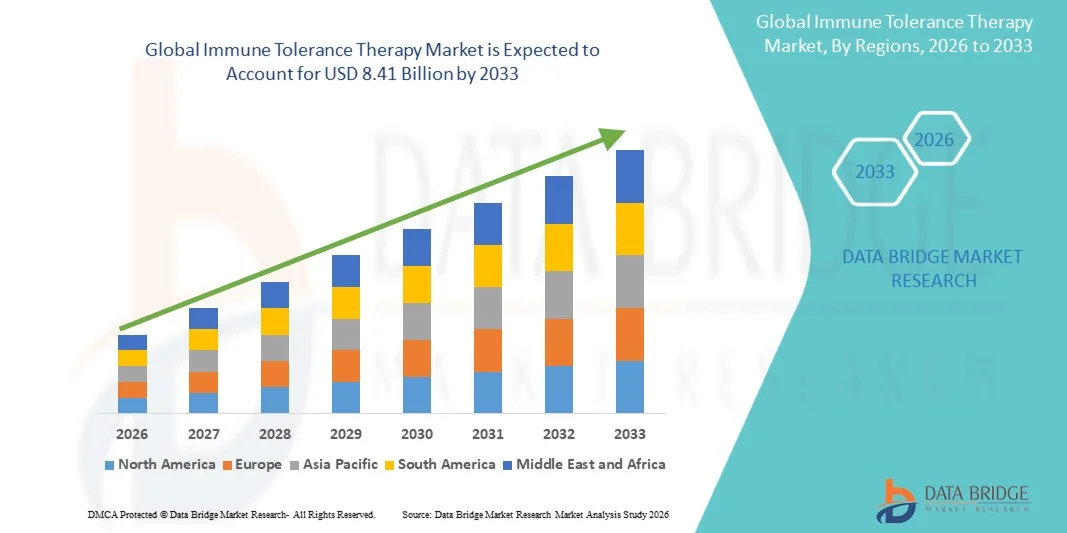
- The global immune tolerance therapy market size was valued at USD 2.18 billion in 2025 and is expected to reach USD 8.41 billion by 2033, at a CAGR of 18.40% during the forecast period
- The market growth is largely fueled by the increasing prevalence of autoimmune diseases, rising organ transplant procedures, and advancements in targeted immunotherapies
- Furthermore, growing awareness among healthcare providers and patients about immune tolerance therapies, along with the development of personalized treatment approaches, is driving adoption. These converging factors are accelerating the uptake of Immune Tolerance Therapy solutions, thereby significantly boosting the industry's growth
Immune Tolerance Therapy Market Analysis
- Immune tolerance therapies, including cellular and biologic treatments, are increasingly vital for managing autoimmune disorders, preventing graft-versus-host disease, and improving outcomes in organ transplantation due to their ability to modulate immune responses and reduce adverse effects
- The escalating demand for immune tolerance therapies is primarily fueled by the rising prevalence of autoimmune diseases, increasing organ transplant procedures, and growing awareness among healthcare providers and patients regarding personalized and targeted immunotherapies
- North America dominated the immune tolerance therapy market with the largest revenue share of approximately 38.5% in 2025, supported by a well-established healthcare infrastructure, high adoption of advanced therapies, and strong presence of leading biotech companies. The U.S. is experiencing substantial growth in immune tolerance therapy adoption, driven by innovations in cellular therapies, biologics, and clinical research initiatives.
- Asia Pacific is expected to be the fastest-growing region in the immune tolerance therapy market during the forecast period, registering a CAGR of approximately 9.2%, fueled by increasing awareness of autoimmune conditions, expanding clinical trials, and growing adoption of advanced immunotherapy solutions
- The autoimmune diseases segment dominated the largest market revenue share of approximately 48.3% in 2025, driven by the rising global prevalence of conditions such as type 1 diabetes, multiple sclerosis, and rheumatoid arthritis
Report Scope and Immune Tolerance Therapy Market Segmentation
|
Attributes |
Immune Tolerance Therapy Key Market Insights |
|
Segments Covered |
|
|
Countries Covered |
North America
Europe
Asia-Pacific
Middle East and Africa
South America
|
|
Key Market Players |
• Astellas Pharma Inc. (Japan) |
|
Market Opportunities |
|
|
Value Added Data Infosets |
In addition to the insights on market scenarios such as market value, growth rate, segmentation, geographical coverage, and major players, the market reports curated by the Data Bridge Market Research also include in-depth expert analysis, patient epidemiology, pipeline analysis, pricing analysis, and regulatory framework. |
Immune Tolerance Therapy Market Trends
“Enhanced Convenience Through Personalized Immune Therapies”
- A significant and accelerating trend in the global Immune Tolerance Therapy market is the shift toward personalized and targeted immune modulation therapies. These therapies aim to selectively regulate immune responses, offering improved safety and efficacy compared to conventional immunosuppressive treatments
- For instance, in 2025, a clinical study at the University of Pennsylvania demonstrated the use of antigen-specific immune tolerance therapy in patients with type 1 diabetes, effectively reducing autoimmune attack while minimizing side effects
- Personalized therapy development is increasingly guided by biomarker identification, genetic profiling, and patient-specific immune mapping. For instance, some biotech companies are employing precision medicine approaches to design therapies for patients with multiple sclerosis, tailoring treatment to individual immune profiles
- The integration of these personalized approaches into clinical practice is streamlining treatment administration and improving patient adherence. Healthcare providers can monitor patient response in real time, adjusting therapy dosages for optimal outcomes, creating a more efficient and patient-centric care experience
- This trend towards individualized, data-driven immune therapies is fundamentally reshaping patient expectations for treatment safety and effectiveness. Consequently, companies such as Novartis and Eli Lilly are investing in next-generation immune tolerance therapies with advanced targeting mechanisms to improve patient outcomes
- The demand for immune tolerance therapies is growing rapidly across hospitals, specialty clinics, and research institutions, as patients and healthcare providers increasingly prioritize targeted, safer, and more effective treatment options
Immune Tolerance Therapy Market Dynamics
Driver
“Growing Need Due to Rising Prevalence of Autoimmune and Chronic Disorders”
- The increasing prevalence of autoimmune diseases and chronic inflammatory conditions, coupled with rising patient awareness, is a significant driver for the heightened demand for immune tolerance therapies
- For instance, in 2025, Genentech expanded its immune tolerance therapy pipeline to target multiple autoimmune diseases, reflecting strong market potential and healthcare demand
- As healthcare providers seek safer alternatives to broad-spectrum immunosuppressive drugs, immune tolerance therapies offer advanced features such as reduced side effects, precise immune modulation, and long-term disease control
- Furthermore, the growing interest in preventive and precision medicine approaches is making immune tolerance therapies an integral component of modern treatment protocols, offering seamless integration with personalized care plans
- The ability to provide targeted immune modulation for specific patient populations, combined with ongoing research in biomarkers and patient stratification, are key factors propelling the adoption of immune tolerance therapies across hospitals and specialized treatment centers
Restraint/Challenge
“High Development Costs and Complex Regulatory Requirements”
- Concerns regarding the high cost of development, clinical trials, and manufacturing of immune tolerance therapies pose a significant challenge to broader market adoption. Developing antigen-specific therapies or patient-tailored treatments can require millions of dollars per clinical program, limiting accessibility, especially in emerging economies
- For instance, rare autoimmune indications often involve small patient populations, which increases per-patient therapy costs and slows return on investment for companies
- Regulatory hurdles also pose a major barrier, as immune tolerance therapies must undergo extensive testing to ensure safety, efficacy, and reproducibility. Delays in approvals or stringent compliance requirements can limit timely market entry
- Variability in patient response and the need for specialized delivery mechanisms add complexity to the therapy’s adoption, further affecting market penetration
- Overcoming these challenges requires continuous innovation, collaborations between biotech firms and healthcare providers, and strategies to make therapies more cost-effective and widely accessible. Companies investing in scalable manufacturing processes and regulatory expertise are expected to gain a competitive advantage in the long term
Immune Tolerance Therapy Market Scope
The market is segmented on the basis of therapy type and application.
• By Therapy Type
On the basis of therapy type, the Immune Tolerance Therapy market is segmented into cellular therapy, antibody therapy, peptide therapy, and gene therapy. The cellular therapy segment dominated the largest market revenue share of approximately 42.8% in 2025, driven by its ability to modulate immune responses effectively and target specific autoimmune and transplant-related conditions. Hospitals and specialty clinics prefer cellular therapies due to proven efficacy in inducing long-term immune tolerance, particularly in transplantation and autoimmune diseases. Rising R&D investment, increasing clinical trials, and regulatory approvals support adoption. Technological advancements in stem cell processing, expansion, and delivery methods further enhance market dominance. Growth is fueled by increasing prevalence of autoimmune disorders and organ transplant procedures. Strong physician awareness and patient demand for personalized therapies also contribute. The recurring use in chronic indications ensures steady revenue streams. Geographically, North America and Europe remain key markets due to advanced healthcare infrastructure and early therapy adoption. Favorable reimbursement policies and clinical guideline endorsements reinforce market share.
The antibody therapy segment is expected to witness the fastest CAGR of 20.5% from 2026 to 2033, driven by its increasing application in autoimmune diseases and allergic disorders. Monoclonal antibodies targeting specific immune pathways offer rapid efficacy with improved safety profiles. Rising prevalence of conditions such as rheumatoid arthritis, multiple sclerosis, and severe allergies supports adoption. Technological advancements in antibody engineering, humanization, and formulation enhance effectiveness and reduce adverse events. Growth is further supported by an expanding number of clinical trials and regulatory approvals. Hospitals, research institutes, and specialty clinics increasingly integrate antibody therapy into treatment protocols. Patient preference for targeted and less invasive therapies drives demand. Market expansion is accelerated in Asia-Pacific due to improving healthcare infrastructure. Collaborations between biotech firms and academic centers also promote innovation. Increasing awareness among healthcare professionals and patient communities boosts uptake globally.
• By Application
On the basis of application, the Immune Tolerance Therapy market is segmented into autoimmune diseases, transplantation, allergic disorders, and other indications. The autoimmune diseases segment dominated the largest market revenue share of approximately 48.3% in 2025, driven by the rising global prevalence of conditions such as type 1 diabetes, multiple sclerosis, and rheumatoid arthritis. Cellular and antibody-based immune tolerance therapies are increasingly preferred for long-term disease management, reducing reliance on conventional immunosuppressants. The segment benefits from continuous clinical research, technological improvements in therapy delivery, and supportive regulatory approvals. Hospitals and specialty clinics increasingly adopt these therapies for better patient outcomes and reduced relapse rates. Geographic markets such as North America and Europe dominate due to strong healthcare infrastructure and established treatment protocols. Insurance coverage and government support further reinforce market dominance.
The transplantation segment is expected to witness the fastest CAGR of 19.8% from 2026 to 2033, fueled by the critical need to prevent graft rejection in organ and tissue transplants. Cellular therapies, particularly T-regulatory cells and stem-cell based approaches, are increasingly used to induce immune tolerance and reduce immunosuppressant dependency. Rising transplant procedures globally, increasing donor availability, and supportive clinical trial data drive adoption. Hospitals and transplant centers are integrating advanced immune tolerance therapies into standard care. Regulatory approvals and reimbursement schemes further boost uptake. Technological advancements in personalized therapy preparation enhance patient safety and efficacy. Growing awareness among clinicians about improved long-term outcomes accelerates market expansion. Asia-Pacific is emerging as a high-growth region due to expanding healthcare infrastructure.
Immune Tolerance Therapy Market Regional Analysis
- North America dominated the immune tolerance therapy market with the largest revenue share of approximately 38.5% in 2025, supported by a well-established healthcare infrastructure, high adoption of advanced therapies, and the strong presence of leading biotech companies
- The market is experiencing substantial growth in immune tolerance therapy adoption, driven by innovations in cellular therapies, biologics, and ongoing clinical research initiatives
- The region benefits from robust healthcare funding, high patient awareness, and increasing prevalence of autoimmune and inflammatory conditions, all of which are accelerating the uptake of targeted immune modulation therapies
U.S. Immune Tolerance Therapy Market Insight
The U.S. immune tolerance therapy market captured the largest revenue share within North America in 2025, fueled by rapid advancements in biologics, cellular therapies, and clinical research infrastructure. Hospitals, specialty clinics, and research institutions are increasingly implementing immune tolerance therapies for autoimmune conditions such as type 1 diabetes, multiple sclerosis, and rheumatoid arthritis. The expanding adoption of precision medicine approaches, coupled with strong government support for advanced immunotherapy research, is further propelling market growth. Furthermore, patient and healthcare provider awareness regarding the safety and efficacy advantages of targeted therapies over conventional immunosuppressants is contributing significantly to market expansion.
Europe Immune Tolerance Therapy Market Insight
The Europe immune tolerance therapy market is projected to grow steadily during the forecast period, primarily driven by well-established healthcare systems, increasing prevalence of autoimmune disorders, and favorable government initiatives supporting advanced therapy adoption. Countries such as Germany, France, and Switzerland are witnessing strong uptake due to high patient awareness, advanced clinical trial programs, and reimbursement support for novel immune therapies. The region is also experiencing growth in research collaborations and cross-border clinical studies, strengthening the pipeline of innovative immune tolerance solutions.
U.K. Immune Tolerance Therapy Market Insight
The U.K. immune tolerance therapy market is expected to grow at a notable CAGR during the forecast period, driven by rising autoimmune disease prevalence, patient preference for safer therapies, and increased clinical trial activity. The country’s strong healthcare framework and early adoption of biologics and cell-based therapies contribute to market expansion. Growing patient demand for targeted, safer treatment options, alongside support from institutions like the NHS for advanced therapies, is facilitating the uptake of immune tolerance therapies across hospitals and specialty clinics.
Germany Immune Tolerance Therapy Market Insight
The Germany immune tolerance therapy market is anticipated to expand significantly during the forecast period, supported by its advanced healthcare infrastructure, high investment in biotechnology, and growing clinical research initiatives. German patients and healthcare providers are increasingly adopting immune tolerance therapies for autoimmune and inflammatory disorders, driven by a focus on precision medicine and long-term disease management. Strong collaborations between biotech firms, hospitals, and academic institutions further enhance therapy availability and adoption.
Asia-Pacific Immune Tolerance Therapy Market Insight
The Asia-Pacific immune tolerance therapy market is expected to grow at the fastest CAGR of approximately 9.2% during the forecast period, fueled by rising awareness of autoimmune conditions, expanding clinical trial activity, and the adoption of advanced immunotherapy solutions. Countries such as China, India, Japan, and South Korea are witnessing increased investments in healthcare infrastructure, growing patient populations, and higher acceptance of biologics and cellular therapies. Additionally, government initiatives promoting advanced therapy development and regulatory support are enabling faster adoption across hospitals and specialty clinics.
Japan Immune Tolerance Therapy Market Insight
The Japan immune tolerance therapy market is gaining traction due to the country’s technologically advanced healthcare infrastructure, aging population, and increasing prevalence of autoimmune disorders. Healthcare providers are adopting targeted immune modulation therapies to improve patient outcomes, and ongoing research into biologics and cellular therapies is further driving market growth. Japan’s emphasis on precision medicine and regulatory support for innovative therapies is enhancing accessibility and patient acceptance.
China Immune Tolerance Therapy Market Insight
The China immune tolerance therapy market accounted for the largest revenue share in the Asia-Pacific region in 2025, driven by increasing awareness of autoimmune disorders, rapid urbanization, expanding healthcare infrastructure, and rising adoption of advanced immunotherapies. Government initiatives supporting biotechnology development, coupled with growing domestic manufacturing capabilities for biologics and cellular therapies, are facilitating market expansion. The country is also experiencing a surge in clinical trials and patient enrollment in immune therapy programs, further propelling growth.
Immune Tolerance Therapy Market Share
The Immune Tolerance Therapy industry is primarily led by well-established companies, including:
• Astellas Pharma Inc. (Japan)
• Novartis AG (Switzerland)
• Pfizer Inc. (U.S.)
• Bristol-Myers Squibb (U.S.)
• Sanofi S.A. (France)
• GlaxoSmithKline plc (U.K.)
• Johnson & Johnson (U.S.)
• Amgen Inc. (U.S.)
• Roche Holding AG (Switzerland)
• Moderna, Inc. (U.S.)
• Celltrion, Inc. (South Korea)
• Takeda Pharmaceutical Company Limited (Japan)
• Eli Lilly and Company (U.S.)
• Novavax, Inc. (U.S.)
• Regeneron Pharmaceuticals (U.S.)
• Samsung Biologics (South Korea)
• F. Hoffmann-La Roche AG (Switzerland)
• CureVac N.V. (Germany)
• Biogen Inc. (U.S.)
• UniQure N.V. (Netherlands)
Latest Developments in Global Immune Tolerance Therapy Market
- In October 2021, the U.S. FDA approved allogeneic processed thymus tissue (Rethymic) — the first thymus tissue therapy for children with congenital athymia. This novel treatment involves implantation of donor thymus tissue to reconstitute immune function and establish immune tolerance in patients lacking a functioning thymus, marking a significant expansion of immune tolerance‑based therapeutic options
- In November 2022, the U.S. FDA approved teplizumab (Tzield) as the first therapy indicated to delay the onset of stage 3 type 1 diabetes in individuals with stage 2 disease. By modulating T‑cell activity and promoting regulatory pathways linked to immune tolerance, teplizumab represents a breakthrough in targeting autoimmune processes rather than solely managing symptoms
- In June 2024, Quell Therapeutics Ltd., a pioneer in engineered regulatory T‑cell therapies, announced that its QEL‑001 CAR‑Treg therapy progressed into the efficacy phase of the Phase 1/2 LIBERATE trial for liver transplant patients. The advancement followed successful safety results from the initial dosing cohort and signaled a key movement toward immune tolerance‑based cellular therapies for transplant rejection
- In October 2024, Tolerance Bio, a biotechnology company focused on thymus‑targeting immune tolerance therapies, emerged with $17.2 million in seed financing to advance its allogeneic thymus‑based cell therapy platform. This funding milestone positioned the company to accelerate clinical development of therapies aimed at correcting immune dysfunction and restoring tolerance in autoimmune diseases
- In April 2025, Johnson & Johnson received U.S. FDA approval for nipocalimab (Imaavy), an FcRn‑blocking monoclonal antibody designed to reduce pathogenic IgG levels and improve long‑term disease control in generalized myasthenia gravis — a chronic autoimmune condition. The approval expanded the immune tolerance therapy landscape by introducing a new mechanism for modulating immune responses in autoimmunity
- In April 2025, Amgen’s Uplizna (inebilizumab) received expanded approval from the U.S. FDA for the treatment of Immunoglobulin G4‑related disease (IgG4‑RD), making it the first approved therapy for this rare immune‑mediated condition. By targeting B‑cell‑driven pathology, Uplizna helps reduce disease flares and supports steroid‑sparing treatment strategies in immune tolerance‑targeted care
- In October 2025, Quell Therapeutics announced that it would present promising pre‑clinical data for QEL‑005, a next‑generation CAR‑Treg cell therapy candidate for complex autoimmune diseases, at the ACR Convergence 2025 meeting. The data highlighted broad immunomodulatory activity and positioned the therapy for clinical trial applications in 2026, underscoring significant progress in engineered regulatory T‑cell approaches to induce immune tolerance
SKU-
Get online access to the report on the World's First Market Intelligence Cloud

- Interactive Data Analysis Dashboard
- Company Analysis Dashboard for high growth potential opportunities
- Research Analyst Access for customization & queries
- Competitor Analysis with Interactive dashboard
- Latest News, Updates & Trend analysis
- Harness the Power of Benchmark Analysis for Comprehensive Competitor Tracking
Research Methodology
Data collection and base year analysis are done using data collection modules with large sample sizes. The stage includes obtaining market information or related data through various sources and strategies. It includes examining and planning all the data acquired from the past in advance. It likewise envelops the examination of information inconsistencies seen across different information sources. The market data is analysed and estimated using market statistical and coherent models. Also, market share analysis and key trend analysis are the major success factors in the market report. To know more, please request an analyst call or drop down your inquiry.
The key research methodology used by DBMR research team is data triangulation which involves data mining, analysis of the impact of data variables on the market and primary (industry expert) validation. Data models include Vendor Positioning Grid, Market Time Line Analysis, Market Overview and Guide, Company Positioning Grid, Patent Analysis, Pricing Analysis, Company Market Share Analysis, Standards of Measurement, Global versus Regional and Vendor Share Analysis. To know more about the research methodology, drop in an inquiry to speak to our industry experts.
Customization Available
Data Bridge Market Research is a leader in advanced formative research. We take pride in servicing our existing and new customers with data and analysis that match and suits their goal. The report can be customized to include price trend analysis of target brands understanding the market for additional countries (ask for the list of countries), clinical trial results data, literature review, refurbished market and product base analysis. Market analysis of target competitors can be analyzed from technology-based analysis to market portfolio strategies. We can add as many competitors that you require data about in the format and data style you are looking for. Our team of analysts can also provide you data in crude raw excel files pivot tables (Fact book) or can assist you in creating presentations from the data sets available in the report.












