


Intrathecal Nucleic Acid Therapeutics Market Size
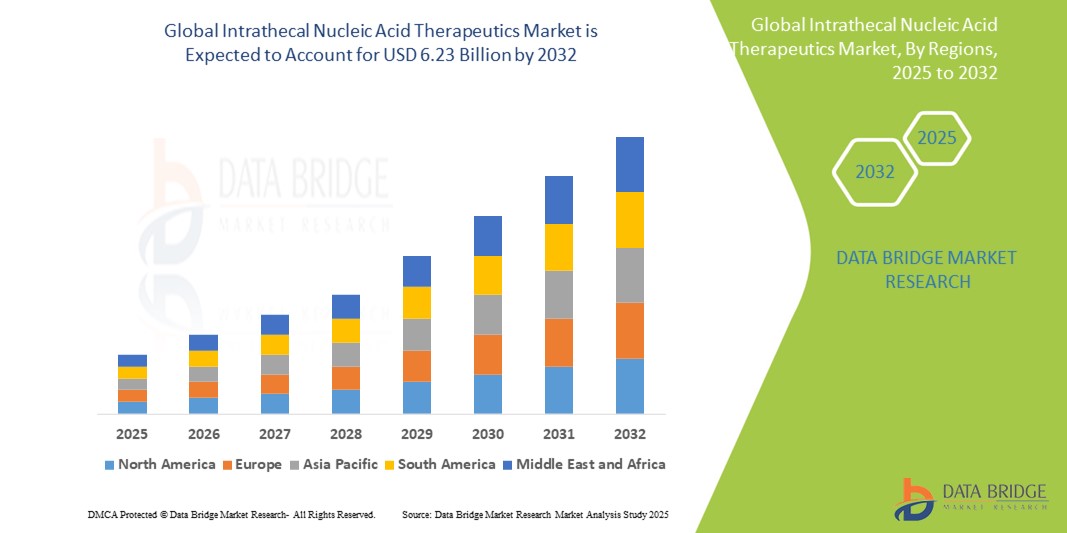
- The global intrathecal nucleic acid therapeutics market size was valued at USD 3.43 billion in 2024 and is expected to reach USD 6.23 billion by 2032, at a CAGR of 7.74% during the forecast period
- The market growth is largely fuelled by the increasing prevalence of neurological disorders and the technological advancements in nucleic acid delivery systems, particularly those designed for targeted intrathecal administration, which allows direct delivery to the central nervous system for enhanced therapeutic efficacy
- Furthermore, rising demand for precision medicine, coupled with the growing pipeline of antisense oligonucleotides and RNA-based therapies for conditions such as spinal muscular atrophy (SMA), amyotrophic lateral sclerosis (ALS), and multiple sclerosis (MS), is positioning intrathecal nucleic acid therapeutics as a transformative approach in neurodegenerative disease treatment. These converging factors are accelerating the uptake of Intrathecal Nucleic Acid Therapeutics solutions, thereby significantly boosting the industry's growth
Intrathecal Nucleic Acid Therapeutics Market Analysis
- Intrathecal nucleic acid therapeutics, offering targeted delivery of RNA and DNA-based treatments directly into the cerebrospinal fluid, are becoming increasingly vital in the management of severe neurological disorders due to their enhanced efficacy, ability to bypass the blood-brain barrier, and promising clinical outcomes in rare genetic conditions
- The escalating demand for intrathecal nucleic acid therapeutics is primarily fuelled by the rising prevalence of neurodegenerative diseases, advancements in gene silencing and antisense oligonucleotide (ASO) technologies, and increased funding for precision medicine
- North America dominated the intrathecal nucleic acid therapeutics market with the largest revenue share of 46.7% in 2024, characterized by robust healthcare infrastructure, high R&D investment in genetic therapies, and a strong presence of leading biopharma companies
- Asia-Pacific is expected to be the fastest-growing region in the intrathecal nucleic acid therapeutics market during the forecast period with a CAGR 24.1%, driven by expanding biotech capabilities, increasing government initiatives in rare disease treatment, and rising healthcare expenditure in countries such as China, Japan, and India
- The intrathecal segment dominated the intrathecal nucleic acid therapeutics market with a market share of 43.3% in 2024, owing to its precision in delivering therapeutics directly to the central nervous system, which improves drug bioavailability and therapeutic outcomes for CNS-related disorders
Report Scope and Intrathecal Nucleic Acid Therapeutics Market Segmentation
|
Attributes |
Intrathecal Nucleic Acid Therapeutics Key Market Insights |
|
Segments Covered |
|
|
Countries Covered |
North America
Europe
Asia-Pacific
Middle East and Africa
South America
|
|
Key Market Players |
|
|
Market Opportunities |
|
|
Value Added Data Infosets |
In addition to the insights on market scenarios such as market value, growth rate, segmentation, geographical coverage, and major players, the market reports curated by the Data Bridge Market Research also include in-depth expert analysis, pricing analysis, brand share analysis, consumer survey, demography analysis, supply chain analysis, value chain analysis, raw material/consumables overview, vendor selection criteria, PESTLE Analysis, Porter Analysis, and regulatory framework. |
Intrathecal Nucleic Acid Therapeutics Market Trends
“Advancing Precision and Personalization in Treatment Delivery”
- A significant and accelerating trend in the global intrathecal nucleic acid therapeutics market is the increasing development of highly targeted and customizable treatment modalities enabled through nucleic acid technology. This evolution is enhancing therapeutic precision and improving patient outcomes, especially for neurodegenerative and rare CNS disorders.
- For instance, therapies such as Spinraza (nusinersen), delivered intrathecally, have paved the way for nucleic acid-based interventions directly targeting spinal motor neurons in spinal muscular atrophy (SMA). Similar breakthroughs are being explored for conditions such as ALS and Huntington’s disease
- Advanced nucleic acid therapeutics, including antisense oligonucleotides (ASOs), small interfering RNAs (siRNAs), and gene-editing constructs, are now being engineered to deliver cell-specific action with minimal off-target effects. These therapies, when administered intrathecally, bypass the blood-brain barrier, allowing direct access to the central nervous system for enhanced therapeutic efficacy
- Moreover, innovations in formulation and delivery platforms are supporting sustained release and improved biocompatibility, enabling more effective treatment regimens. Companies are also exploring programmable delivery systems that can adapt dosage over time or in response to specific biomarkers, opening doors for personalized medicine
- This trend towards precision, customization, and improved patient compliance is fundamentally reshaping expectations for the treatment of neurological diseases. Consequently, leading biotech firms are investing in next-generation delivery platforms and adaptive therapy designs that respond to patient-specific molecular profiles
- The demand for highly specialized, intrathecally delivered nucleic acid therapies is growing rapidly, especially in regions with advanced healthcare infrastructure and strong R&D capabilities, as both clinicians and patients seek more effective and targeted solutions for previously intractable CNS disorders
Intrathecal Nucleic Acid Therapeutics Market Dynamics
Driver
“Growing Demand Due to Rising Prevalence of Neurological Disorders and Advancements in Nucleic Acid Delivery”
- The increasing global burden of neurological diseases such as spinal muscular atrophy (SMA), amyotrophic lateral sclerosis (ALS), and Huntington’s disease is significantly driving the demand for intrathecal nucleic acid therapeutics. These therapies enable direct delivery to the central nervous system, bypassing the blood-brain barrier for enhanced effectiveness
- For instance, in December 2023, Biogen and Ionis Pharmaceuticals expanded their collaboration on antisense oligonucleotide therapies, aiming to develop next-generation intrathecal treatments for complex neurodegenerative conditions. Such initiatives by leading biotech firms are expected to fuel market growth over the forecast period
- Furthermore, the rise of precision medicine and the growing focus on rare and orphan disease treatment are reinforcing the adoption of targeted nucleic acid-based therapies. The ability of intrathecal delivery to ensure localized, high-potency action in affected CNS regions makes it an ideal choice
- Increasing regulatory support, such as fast-track and orphan drug designations by the FDA and EMA, also contribute to the acceleration of clinical development and commercialization, supporting broader adoption of intrathecal nucleic acid therapeutics
- The development of more patient-friendly delivery systems, including sustained-release formulations and implantable infusion pumps, further enhances treatment convenience, improving compliance and expanding the potential patient base for these therapies
Restraint/Challenge
“Invasiveness, Safety Concerns, and High Development Costs”
- One of the primary challenges in the intrathecal nucleic acid therapeutics market is the invasive nature of intrathecal administration, which involves lumbar puncture or catheter-based delivery into the spinal canal. This can lead to procedural complications such as infection, bleeding, or nerve injury, limiting patient acceptance
- For instance, some clinical trials have reported adverse events such as headaches, procedural discomfort, or inflammation associated with repeated intrathecal injections, raising safety and tolerability concerns that must be addressed through better protocols and patient monitoring
- In additon, the complex manufacturing, formulation, and stability requirements of nucleic acid therapeutics lead to significantly higher development costs compared to traditional small molecules. This creates pricing and reimbursement challenges, particularly in emerging markets
- Regulatory hurdles and the need for long-term efficacy and safety data further slow down product approvals, increasing the time and investment required to bring new therapies to market
- Overcoming these challenges will require a combination of innovations in delivery technologies, cost-optimization in manufacturing, broader clinical validation, and physician-patient education to build confidence in the long-term safety and value of intrathecal nucleic acid treatments
Intrathecal Nucleic Acid Therapeutics Market Scope
The market is segmented on the basis of type, therapy area, route of administration, and end user.
By Type
On the basis of type, the intrathecal nucleic acid therapeutics market is segmented into antisense oligonucleotides, small interfering RNAs (siRNAs), MicroRNAs, Messenger RNA (mRNA), and Others. The antisense oligonucleotides segment dominated the largest market revenue share in 2024, driven by its proven efficacy in modulating gene expression and its successful use in approved drugs such as nusinersen for spinal muscular atrophy (SMA). These molecules have gained prominence due to their ability to specifically bind to RNA targets and modify splicing or translation processes.
The small interfering RNAs (siRNAs) segment is anticipated to witness the fastest growth from 2025 to 2032, fueled by the expanding pipeline of siRNA-based therapeutics and increasing research investments in targeted CNS disorders. Their potential to silence disease-causing genes at the mRNA level offers promise in treating complex neurological diseases.
• By Therapy Area
On the basis of therapy area, the intrathecal nucleic acid therapeutics market is segmented into spinal muscular atrophy, amyotrophic lateral sclerosis (ALS), Huntington’s disease, multiple sclerosis, and others. The spinal muscular atrophy segment accounted for the largest market revenue share in 2024 due to the clinical success of intrathecal ASO therapies such as Spinraza. Early diagnosis, newborn screening programs, and high treatment efficacy contribute to the dominance of this segment.
The Huntington’s disease segment is expected to witness the fastest CAGR during the forecast period, owing to the growing number of clinical trials exploring ASOs and gene-silencing approaches targeting the HTT gene. The unmet clinical need and orphan drug incentives are accelerating development in this space.
• By Route of Administration
On the basis of route of administration, the intrathecal nucleic acid therapeutics market is segmented into intrathecal, intracerebroventricular, and others. The intrathecal segment held the largest share of 43.3% in 2024, as it is the most effective route for delivering nucleic acid-based therapeutics directly into the central nervous system (CNS), bypassing the blood-brain barrier. This route ensures high CNS bioavailability and minimal systemic exposure.
The intracerebroventricular route is projected to grow at a steady rate, supported by clinical trials evaluating its use in infantile neurodegenerative conditions where broader CNS distribution is required. However, its invasive nature and complexity slightly limit its broader adoption compared to intrathecal delivery.
• By End User
On the basis of end user, the intrathecal nucleic acid therapeutics market is segmented into Hospitals, Specialty Clinics, Research Institutes, and Others. The hospitals segment accounted for the largest market revenue share in 2024, driven by the availability of advanced infrastructure, skilled neurologists, and the high volume of patients undergoing specialized CNS treatments.
The research institutes segment is expected to register the fastest growth from 2025 to 2032, supported by increasing collaborations between academia and industry, rising government funding for neurological research, and the active development of next-generation nucleic acid therapeutics through preclinical programs.
Intrathecal Nucleic Acid Therapeutics Market Regional Analysis
- North America dominated the intrathecal nucleic acid therapeutics market with the largest revenue share of 46.7% in 2024, driven by the growing prevalence of neurological disorders, increasing R&D investments, and the presence of leading biotechnology companies such as Biogen, Ionis Pharmaceuticals, and Sarepta Therapeutics
- The region benefits from a favorable regulatory environment, including orphan drug designations and fast-track approvals by the U.S. FDA, which accelerate product development and commercialization of nucleic acid-based therapies delivered via the intrathecal route
- In addition, the well-established healthcare infrastructure, widespread access to advanced treatment options, and high healthcare expenditure further fuel the adoption of intrathecal nucleic acid therapeutics. Clinical research hubs across the U.S. and Canada also contribute to continuous innovation and early adoption of new therapies
U.S. Intrathecal Nucleic Acid Therapeutics Market Insight
The U.S. intrathecal nucleic acid therapeutics market captured the largest revenue share of 76.5% in 2024 within North America, driven by the increasing prevalence of rare neurological conditions such as spinal muscular atrophy (SMA), Huntington’s disease, and amyotrophic lateral sclerosis (ALS). The presence of advanced healthcare infrastructure, robust clinical trial activity, and accelerated drug approval pathways—including orphan drug and fast-track designations—are supporting rapid adoption. In addition, strong R&D efforts from leading players such as Biogen and Ionis Pharmaceuticals continue to position the U.S. as a hub for innovation in targeted CNS therapies.
Europe Intrathecal Nucleic Acid Therapeutics Market Insight
The Europe intrathecal nucleic acid therapeutics market accounted for 27.3% of global revenue in 2024, bolstered by rising investments in gene and RNA-based therapeutics. Countries such as Germany, France, and the U.K. are spearheading clinical trials and fostering innovation through academic-industry collaborations. The European Medicines Agency's initiatives to fast-track rare disease treatments, along with robust CNS research programs, are further propelling market expansion across the continent.
U.K. Intrathecal Nucleic Acid Therapeutics Market Insight
The U.K. intrathecal nucleic acid therapeutics market is projected to grow at a notable CAGR during 2025–2032, fueled by strong support for genomics and personalized medicine. Initiatives such as Genomics England, combined with NHS-led adoption of precision therapies for neurodegenerative disorders, are fostering a favorable environment for market growth. The country’s dynamic biotech sector and government funding for rare disease programs continue to support therapeutic innovation and accessibility.
Germany Intrathecal Nucleic Acid Therapeutics Market Insight
Germany remains a key contributor to the European market, accounting for 7.4% of the global market share in 2024. Its emphasis on high healthcare standards, early technology adoption, and pharmaceutical innovation is boosting demand for intrathecal nucleic acid therapeutics. The integration of these advanced therapies into major academic and tertiary care centers underlines Germany’s commitment to advancing CNS treatment paradigms.
Asia-Pacific Intrathecal Nucleic Acid Therapeutics Market Insight
The Asia-Pacific intrathecal nucleic acid therapeutics market is poised to grow at the fastest CAGR of 24.1% between 2025 and 2032. In 2024, the region held 18.6% of the global market share, with rapid adoption driven by rising healthcare expenditure, expanding access to genetic therapies, and growing awareness of neurodegenerative diseases. Countries such as China, Japan, and India are witnessing increased clinical activity, regulatory reform, and public-private partnerships that are accelerating access to advanced CNS therapeutics.
China Intrathecal Nucleic Acid Therapeutics Market Insight
China accounted for the largest market share within Asia-Pacific at 9.8% in 2024, supported by strong domestic pharmaceutical R&D, expanding clinical trial infrastructure, and favorable policy frameworks under initiatives such as “Healthy China 2030.” Collaborations between Chinese biotechs and global pharmaceutical companies are accelerating local development and deployment of intrathecal nucleic acid therapies.
India Intrathecal Nucleic Acid Therapeutics Market Insight
India is emerging as one of the fastest-growing markets, projected to register a CAGR of 26.3% from 2025 to 2032. The country accounted for 2.6% of global revenue in 2024. Increased focus on orphan drug development, a rising number of clinical trials, and growing collaborations with international research organizations are driving market momentum. Government support through rare disease policy initiatives is further fostering innovation and access to novel CNS therapies.
Intrathecal Nucleic Acid Therapeutics Market Share
The intrathecal nucleic acid therapeutics industry is primarily led by well-established companies, including:
- Ionis Pharmaceuticals (U.S.)
- Biogen Inc. (U.S.)
- F. Hoffmann-La Roche Ltd. (Switzerland)
- Novartis AG (Switzerland)
- Sarepta Therapeutics (U.S.)
- Wave Life Sciences (Singapore)
- Stoke Therapeutics (U.S.)
- Alnylam Pharmaceuticals (U.S.)
- uniQure N.V. (Netherlands)
- PTC Therapeutics (U.S.)
- Ultragenyx Pharmaceutical Inc. (U.S.)
- Regenxbio Inc. (U.S.)
- Precision BioSciences (U.S.)
- Silence Therapeutics (U.K.)
- Voyager Therapeutics (U.S.)
Latest Developments in Global Intrathecal Nucleic Acid Therapeutics Market
- In June 2025, Amylyx Pharmaceuticals received FDA Fast Track designation for AMX0114, an intrathecal antisense oligonucleotide (ASO) targeting calpain‑2 in ALS. The Phase 1 LUMINA trial is underway, with dosing initiated and early cohort data expected later this year
- In April 2025, Rutgers University researchers published pharmacokinetic data in mice showing that intrathecally administered U1 adaptor oligonucleotides effectively concentrate in key CNS regions (lumbar/cervical spinal cord, cerebellum) with minimal systemic leakage — supporting safer intrathecal delivery platforms
- In February–March 2025, Novartis reported positive late-stage data for intrathecal Zolgensma (onasemnogene abeparvovec‑IT) in older SMA patients, showing statistically significant motor improvements (HFMSE scale) in the Phase III STEER and Phase IIIb STRENGTH trials

- Interactive Data Analysis Dashboard
- Company Analysis Dashboard for high growth potential opportunities
- Research Analyst Access for customization & queries
- Competitor Analysis with Interactive dashboard
- Latest News, Updates & Trend analysis
- Harness the Power of Benchmark Analysis for Comprehensive Competitor Tracking
Data collection and base year analysis are done using data collection modules with large sample sizes. The stage includes obtaining market information or related data through various sources and strategies. It includes examining and planning all the data acquired from the past in advance. It likewise envelops the examination of information inconsistencies seen across different information sources. The market data is analysed and estimated using market statistical and coherent models. Also, market share analysis and key trend analysis are the major success factors in the market report. To know more, please request an analyst call or drop down your inquiry.
The key research methodology used by DBMR research team is data triangulation which involves data mining, analysis of the impact of data variables on the market and primary (industry expert) validation. Data models include Vendor Positioning Grid, Market Time Line Analysis, Market Overview and Guide, Company Positioning Grid, Patent Analysis, Pricing Analysis, Company Market Share Analysis, Standards of Measurement, Global versus Regional and Vendor Share Analysis. To know more about the research methodology, drop in an inquiry to speak to our industry experts.
Data Bridge Market Research is a leader in advanced formative research. We take pride in servicing our existing and new customers with data and analysis that match and suits their goal. The report can be customized to include price trend analysis of target brands understanding the market for additional countries (ask for the list of countries), clinical trial results data, literature review, refurbished market and product base analysis. Market analysis of target competitors can be analyzed from technology-based analysis to market portfolio strategies. We can add as many competitors that you require data about in the format and data style you are looking for. Our team of analysts can also provide you data in crude raw excel files pivot tables (Fact book) or can assist you in creating presentations from the data sets available in the report.












