Global Ischemic Heart Disease Market
Market Size in USD Billion
CAGR :
% 
 USD
5.01 Billion
USD
7.21 Billion
2025
2033
USD
5.01 Billion
USD
7.21 Billion
2025
2033
 Forecast Period Forecast Period |
2026 –2033 |
 Market Size (Base Year) Market Size (Base Year) |
USD 5.01 Billion |
 Market Size (Forecast Year) Market Size (Forecast Year) |
USD 7.21 Billion |
 CAGR CAGR |
% |
| Major Markets Players |
|
Ischemic Heart Disease Market Size
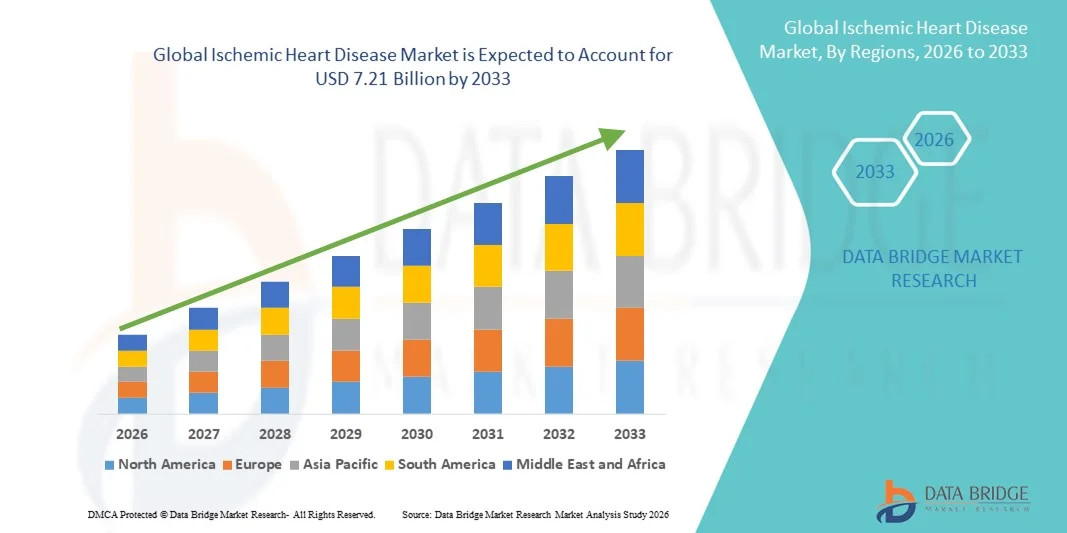
- The global ischemic heart disease market size was valued at USD 5.01 billion in 2025 and is expected to reach USD 7.21 billion by 2033, at a CAGR of 4.67% during the forecast period
- The market growth is largely fueled by the rising global prevalence of ischemic heart disease, driven by lifestyle-related risk factors such as sedentary behavior, unhealthy diets, smoking, obesity, diabetes, and hypertension, along with an aging population across both developed and emerging economies
- Furthermore, increasing demand for early diagnosis, effective pharmacological therapies, and advanced interventional treatment options—combined with continuous advancements in cardiovascular drugs, diagnostic technologies, and minimally invasive procedures—is accelerating the uptake of ischemic heart disease treatment solutions, thereby significantly boosting the overall growth of the market
Ischemic Heart Disease Market Analysis
- Ischemic heart disease (IHD), encompassing conditions caused by reduced blood supply to the heart muscle, remains a major global health burden and a critical focus of cardiovascular care across hospital and outpatient settings due to its high morbidity and mortality rates
- The escalating demand for ischemic heart disease treatments is primarily driven by the rising prevalence of lifestyle-related risk factors such as obesity, diabetes, hypertension, smoking, and physical inactivity, along with an aging global population and increasing awareness of early diagnosis and preventive cardiac care
- North America dominated the ischemic heart disease market with the largest revenue share of 42.4% in 2025, supported by advanced healthcare infrastructure, high healthcare spending, widespread access to diagnostic and interventional cardiology services, and strong presence of leading pharmaceutical and medical device companies, particularly in the U.S.
- Asia-Pacific is expected to be the fastest-growing region in the ischemic heart disease market during the forecast period, driven by rapid urbanization, increasing incidence of cardiovascular diseases, growing healthcare expenditure, expanding access to cardiac care services, and rising awareness of heart disease management in countries such as China and India
- The angina pectoris segment dominated the largest market revenue share of 58.6% in 2025, driven by its high prevalence and chronic nature requiring long-term medical management
Report Scope and Ischemic Heart Disease Market Segmentation
|
Attributes |
Ischemic Heart Disease Key Market Insights |
|
Segments Covered |
|
|
Countries Covered |
North America
Europe
Asia-Pacific
Middle East and Africa
South America
|
|
Key Market Players |
• Pfizer Inc. (U.S.) |
|
Market Opportunities |
|
|
Value Added Data Infosets |
In addition to the insights on market scenarios such as market value, growth rate, segmentation, geographical coverage, and major players, the market reports curated by the Data Bridge Market Research also include in-depth expert analysis, patient epidemiology, pipeline analysis, pricing analysis, and regulatory framework. |
Ischemic Heart Disease Market Trends
Advancements in Diagnosis, Treatment Modalities, and Integrated Care Approaches
- A significant and accelerating trend in the global ischemic heart disease market is the continuous advancement in diagnostic technologies and treatment modalities aimed at improving early detection, disease management, and long-term patient outcomes. Healthcare systems are increasingly adopting advanced imaging, biomarker-based diagnostics, and minimally invasive therapeutic approaches to enhance clinical effectiveness
- For instance, improvements in non-invasive imaging techniques such as coronary CT angiography and cardiac MRI are enabling earlier and more accurate identification of ischemic heart conditions, supporting timely intervention and personalized treatment planning
- Innovations in pharmacological therapies, including next-generation antiplatelet agents, lipid-lowering drugs, and combination therapies, are improving disease control and reducing the risk of recurrent cardiovascular events. These advancements are expanding treatment options for patients with varying disease severity
- In addition, the growing adoption of integrated care models that combine medication management, interventional procedures, and lifestyle modification programs is enhancing overall disease management and patient adherence
- The increasing use of minimally invasive procedures, such as percutaneous coronary interventions and advanced stent technologies, is further transforming treatment standards by reducing recovery times and improving procedural outcomes
- This trend toward more precise, comprehensive, and patient-centered management of ischemic heart disease is reshaping clinical practices globally
- Consequently, pharmaceutical companies, medical device manufacturers, and healthcare providers are increasingly investing in innovative solutions to address unmet needs in ischemic heart disease treatment
Ischemic Heart Disease Market Dynamics
Driver
Rising Prevalence of Cardiovascular Diseases and Aging Population
- The rising global prevalence of cardiovascular diseases, particularly ischemic heart disease, combined with the rapidly aging population, is a key driver fueling market growth. Sedentary lifestyles, unhealthy dietary habits, smoking, and increasing rates of obesity and diabetes are contributing to the growing disease burden worldwide
- For instance, in 2025, multiple healthcare organizations and governments expanded national cardiovascular health programs aimed at improving access to diagnosis and treatment for ischemic heart disease, supporting market expansion during the forecast period
- As life expectancy increases, the number of individuals at risk of developing ischemic heart disease continues to rise, driving demand for long-term pharmacological treatments, interventional procedures, and disease management solutions
- Increased awareness among patients and healthcare professionals regarding early diagnosis and preventive care is further accelerating treatment adoption
- In addition, improvements in healthcare infrastructure, expanding reimbursement coverage, and growing investments in cardiac care facilities are supporting sustained growth of the ischemic heart disease market
Restraint/Challenge
High Treatment Costs and Limited Access in Developing Regions
- The high cost associated with advanced diagnostic procedures, long-term drug therapies, and interventional treatments poses a significant challenge to the widespread adoption of ischemic heart disease solutions. These costs can limit access for patients in low- and middle-income regions
- For instance, advanced cardiac procedures and prolonged medication regimens may not be affordable for a large segment of the population, particularly in regions with limited healthcare funding or inadequate insurance coverage
- In addition, disparities in access to specialized cardiac care centers and trained healthcare professionals further restrict timely diagnosis and treatment in underserved areas
- Concerns related to adverse drug effects, polypharmacy in elderly patients, and strict regulatory requirements can also complicate treatment decisions and slow market growth
- Overcoming these challenges through cost-effective treatment strategies, improved healthcare access, supportive reimbursement policies, and expanded preventive care initiatives will be critical for ensuring sustained growth in the ischemic heart disease market
Ischemic Heart Disease Market Scope
The market is segmented on the basis of disease and drug class.
- By Disease
On the basis of disease, the Ischemic Heart Disease market is segmented into angina pectoris and myocardial infarction. The angina pectoris segment dominated the largest market revenue share of 58.6% in 2025, driven by its high prevalence and chronic nature requiring long-term medical management. Angina pectoris is often the earliest clinical manifestation of ischemic heart disease, leading to early diagnosis and sustained treatment demand. Patients typically require continuous pharmacological therapy to control symptoms and prevent disease progression. Increasing lifestyle-related risk factors such as obesity, hypertension, and diabetes further contribute to prevalence. Regular outpatient treatment and repeat prescriptions support consistent revenue generation. Improved diagnostic awareness also increases patient identification. As a result, angina pectoris remains the dominant disease segment globally.
The myocardial infarction segment is expected to witness the fastest CAGR of 6.8% from 2026 to 2033, driven by rising incidence of acute cardiac events worldwide. Sedentary lifestyles, smoking, and aging populations increase heart attack risk. Improved emergency response systems are raising survival rates, leading to higher post-event drug demand. Long-term secondary prevention therapy further supports growth. Advances in acute care improve diagnosis accuracy. Increasing hospital admissions boost treatment volumes. These factors collectively drive rapid growth of the myocardial infarction segment.
- By Drug Class
On the basis of drug class, the Ischemic Heart Disease market is segmented into anti-dyslipidemic drugs, calcium channel blockers, beta-blockers, ACE inhibitors, ARBs, vasodilators, and antithrombotic agents. The antithrombotic agents segment accounted for the largest market revenue share of 34.9% in 2025, owing to their critical role in preventing clot formation and reducing heart attack risk. These drugs are widely prescribed for both acute and chronic ischemic heart disease management. High clinical reliance during and after cardiac events drives strong demand. Antithrombotics are standard therapy in hospital and outpatient settings. Increasing prevalence of myocardial infarction supports widespread usage. Continuous prescription in secondary prevention enhances revenue stability. Their proven effectiveness ensures dominant adoption across healthcare systems.
The anti-dyslipidemic drugs segment is anticipated to register the fastest CAGR of 7.4% from 2026 to 2033, driven by growing focus on cholesterol management and preventive cardiology. Rising awareness of lipid control in reducing cardiovascular risk boosts demand. Statins and newer lipid-lowering agents are increasingly prescribed for early intervention. Expanding screening programs improve diagnosis rates. Preventive healthcare initiatives support long-term therapy use. Increased use in high-risk populations accelerates adoption. These factors collectively contribute to rapid growth of anti-dyslipidemic drugs.
Ischemic Heart Disease Market Regional Analysis
- North America dominated the ischemic heart disease market with the largest revenue share of 42.4% in 2025, supported by advanced healthcare infrastructure, high healthcare spending, and widespread access to diagnostic and interventional cardiology services
- The strong presence of leading pharmaceutical and medical device companies, particularly in the U.S., is further strengthening the regional market
- High prevalence of lifestyle-related risk factors such as obesity, hypertension, and diabetes, along with early disease detection and well-established treatment protocols, is driving sustained demand for ischemic heart disease therapeutics and interventions across the region
U.S. Ischemic Heart Disease Market Insight
The U.S. ischemic heart disease market accounted for the largest revenue share within North America in 2025, driven by a high burden of cardiovascular disease and extensive availability of advanced treatment options. Widespread adoption of diagnostic tools such as coronary angiography, stress testing, and cardiac imaging, along with strong utilization of interventional procedures including angioplasty and stenting, is supporting market growth. In addition, continuous innovation in cardiovascular drugs, biologics, and medical devices, coupled with favorable reimbursement policies, is contributing significantly to the expansion of the U.S. market.
Europe Ischemic Heart Disease Market Insight
The Europe ischemic heart disease market is projected to expand at a substantial CAGR throughout the forecast period, driven by an aging population, rising prevalence of coronary artery disease, and increasing focus on preventive cardiology. Strong public healthcare systems, improved access to diagnostic services, and growing adoption of evidence-based treatment guidelines are supporting market growth across the region. Furthermore, increasing investments in cardiovascular research and the availability of advanced therapeutic options are enhancing patient outcomes and market expansion in Europe.
U.K. Ischemic Heart Disease Market Insight
The U.K. ischemic heart disease market is anticipated to grow at a noteworthy CAGR during the forecast period, supported by the National Health Service’s (NHS) strong emphasis on early diagnosis, risk factor management, and standardized cardiac care pathways. Rising incidence of ischemic heart disease, along with increased adoption of minimally invasive cardiac procedures and modern pharmacological therapies, is driving market growth. National initiatives aimed at reducing cardiovascular mortality and improving long-term patient outcomes are expected to further sustain market expansion.
Germany Ischemic Heart Disease Market Insight
The Germany ischemic heart disease market is expected to expand at a considerable CAGR during the forecast period, fueled by a well-developed healthcare system, high adoption of advanced cardiology technologies, and strong focus on preventive and interventional care. Germany’s extensive network of cardiac care centers, combined with high healthcare expenditure and strong insurance coverage, is promoting widespread access to ischemic heart disease diagnostics and treatments. Continuous clinical research and innovation in cardiovascular therapeutics are further supporting market growth.
Asia-Pacific Ischemic Heart Disease Market Insight
The Asia-Pacific ischemic heart disease market is expected to grow at the fastest CAGR during the forecast period, driven by rapid urbanization, increasing incidence of cardiovascular diseases, and rising healthcare expenditure. Expanding access to cardiac care services, improving diagnostic capabilities, and growing awareness of heart disease management are accelerating market growth across the region. In addition, government initiatives aimed at strengthening healthcare infrastructure and addressing the rising cardiovascular disease burden are supporting increased adoption of ischemic heart disease treatments in Asia-Pacific.
Japan Ischemic Heart Disease Market Insight
The Japan ischemic heart disease market is witnessing steady growth due to the country’s aging population and high prevalence of age-related cardiovascular conditions. Strong emphasis on early diagnosis, preventive care, and advanced treatment approaches is driving market expansion. Japan’s well-established healthcare system, combined with continuous innovation in cardiovascular drugs and medical devices, is supporting effective management of ischemic heart disease across hospital and outpatient settings.
China Ischemic Heart Disease Market Insight
The China ischemic heart disease market accounted for a significant revenue share in the Asia-Pacific region in 2025, driven by rapid urbanization, changing lifestyles, and increasing prevalence of cardiovascular risk factors. Expanding healthcare infrastructure, rising healthcare spending, and improving access to cardiac diagnostic and treatment services are key factors propelling market growth. In addition, government-led healthcare reforms and increasing awareness of heart disease prevention and management are expected to further boost demand for ischemic heart disease therapeutics and interventions in China.
Ischemic Heart Disease Market Share
The Ischemic Heart Disease industry is primarily led by well-established companies, including:
• Pfizer Inc. (U.S.)
• Novartis AG (Switzerland)
• Merck & Co., Inc. (U.S.)
• Johnson & Johnson (U.S.)
• Sanofi S.A. (France)
• AstraZeneca plc (U.K.)
• Bristol-Myers Squibb Company (U.S.)
• Bayer AG (Germany)
• Abbott (U.S.)
• Amgen Inc. (U.S.)
• Takeda Pharmaceutical Company Ltd. (Japan)
• Teva Pharmaceutical Industries Ltd. (Israel)
• Daiichi Sankyo Company Ltd. (Japan)
• GlaxoSmithKline plc (U.K.)
• Sun Pharmaceutical Industries Ltd. (India)
• Cipla Ltd. (India)
• Endo International plc (Ireland)
• Aurobindo Pharma Ltd. (India)
Latest Developments in Global Ischemic Heart Disease Market
- In September 2024, the U.S. Food and Drug Administration approved flurpiridaz F‑18 (Flyrcado) as a PET myocardial perfusion imaging agent for the evaluation of myocardial ischemia, enabling better non‑invasive diagnosis of coronary artery disease and improving clinical assessment of ischemic heart disease severity. This approval reflects advances in diagnostic imaging that can enhance early detection and treatment planning for IHD patients
- In June 2024, Faraday Pharmaceuticals completed patient enrollment in its pivotal Phase III Iocyte AMI‑3 clinical trial for FDY‑5301, a novel therapeutic designed to reduce ischemia‑reperfusion injury following acute myocardial infarction, marking a critical milestone toward potential new treatment options for heart attack patients. Enrollment completion is a key step in advancing the therapeutic through regulatory pathways
- In July 2024, CellProthera announced the commencement of the long‑term follow‑up observational study ‘PERFECT’, expanding clinical evaluation of ProtheraCytes in patients who suffered severe heart attacks, supporting regenerative therapy development for post‑acute ischemic heart disease treatment. Long‑term data collection strengthens understanding of cell therapy benefits after myocardial infarction
- In January 2025, DelveInsight reported a robust global myocardial infarction clinical trial pipeline with more than 45 therapeutic candidates (including selatogrel, Zalunfiban, and RTP‑026) across various stages of development aimed at improving outcomes in ischemic heart disease and acute MI patients. This widespread clinical activity underscores intensive R&D efforts in the field
- In March 2025, the U.S. FDA approved the first generic formulation of rivaroxaban (Xarelto) 2.5 mg for the reduction of cardiovascular risk in adults with coronary artery disease (CAD) and peripheral artery disease (PAD), potentially increasing broader patient access to antithrombotic therapy used in IHD management. Generic approvals often improve affordability and utilization in high‑risk patient populations
- In March 2025, the U.S. FDA approved tenecteplase (TNKase) for adults with acute ischemic stroke, a clot‑dissolving thrombolytic treatment whose mechanism and outcomes are closely relevant to ischemic cardiovascular events and may influence treatment paradigms in acute coronary syndromes. Although stroke‑specific, advances in thrombolytic therapies are important for ischemic disease overlap
- In March 2025, data from the Phase II OCEAN(a)‑DOSE trial showed that olpasiran, a lipoprotein(a)‑lowering siRNA investigational therapy, sustained significant reductions in oxidized phospholipids on ApoB particles, suggesting promise for lowering cardiovascular risk that contributes to ischemic disease progression. Therapies targeting lipoprotein(a) are of growing interest for IHD risk reduction
- In January 2025, Pfizer announced a strategic acquisition aimed at strengthening its cardiovascular drug portfolio to enhance ischemic heart disease treatment offerings, reflecting industry consolidation and prioritization of cardio‑metabolic therapies. This move highlights big pharma commitment to expanding IHD therapeutic pipeline
SKU-
Get online access to the report on the World's First Market Intelligence Cloud

- Interactive Data Analysis Dashboard
- Company Analysis Dashboard for high growth potential opportunities
- Research Analyst Access for customization & queries
- Competitor Analysis with Interactive dashboard
- Latest News, Updates & Trend analysis
- Harness the Power of Benchmark Analysis for Comprehensive Competitor Tracking
Research Methodology
Data collection and base year analysis are done using data collection modules with large sample sizes. The stage includes obtaining market information or related data through various sources and strategies. It includes examining and planning all the data acquired from the past in advance. It likewise envelops the examination of information inconsistencies seen across different information sources. The market data is analysed and estimated using market statistical and coherent models. Also, market share analysis and key trend analysis are the major success factors in the market report. To know more, please request an analyst call or drop down your inquiry.
The key research methodology used by DBMR research team is data triangulation which involves data mining, analysis of the impact of data variables on the market and primary (industry expert) validation. Data models include Vendor Positioning Grid, Market Time Line Analysis, Market Overview and Guide, Company Positioning Grid, Patent Analysis, Pricing Analysis, Company Market Share Analysis, Standards of Measurement, Global versus Regional and Vendor Share Analysis. To know more about the research methodology, drop in an inquiry to speak to our industry experts.
Customization Available
Data Bridge Market Research is a leader in advanced formative research. We take pride in servicing our existing and new customers with data and analysis that match and suits their goal. The report can be customized to include price trend analysis of target brands understanding the market for additional countries (ask for the list of countries), clinical trial results data, literature review, refurbished market and product base analysis. Market analysis of target competitors can be analyzed from technology-based analysis to market portfolio strategies. We can add as many competitors that you require data about in the format and data style you are looking for. Our team of analysts can also provide you data in crude raw excel files pivot tables (Fact book) or can assist you in creating presentations from the data sets available in the report.