




Global Leukodystrophy Drug Market
Market Size in USD Billion
CAGR :
% 
 USD
750.00 Billion
USD
1,186.39 Billion
2025
2033
USD
750.00 Billion
USD
1,186.39 Billion
2025
2033
 Forecast Period Forecast Period |
2026 –2033 |
 Market Size (Base Year) Market Size (Base Year) |
USD 750.00 Billion |
 Market Size (Forecast Year) Market Size (Forecast Year) |
USD 1,186.39 Billion |
 CAGR CAGR |
% |
| Major Markets Players |
|
Leukodystrophy Drug Market Size
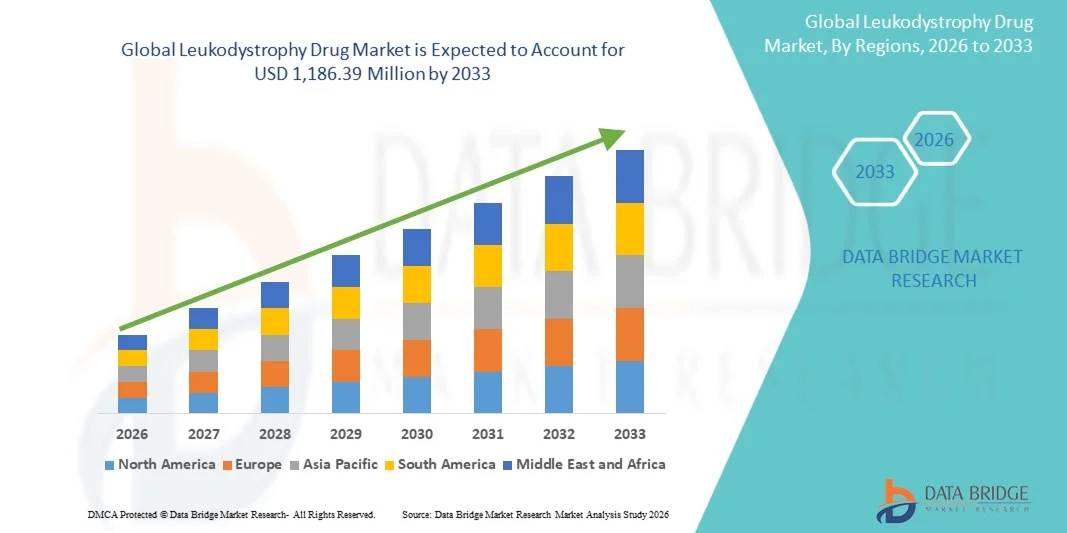
- The global leukodystrophy drug market size was valued at USD 750.00 million in 2025 and is expected to reach USD 1,186.39 million by 2033, at a CAGR of 5.90% during the forecast period
- The market growth is primarily driven by the rising prevalence of leukodystrophy disorders, increasing awareness of rare genetic diseases, and advancements in gene therapy and targeted pharmacological interventions. These factors are fostering greater investment in research and development for effective treatments
- In addition, growing patient demand for improved therapeutic options, coupled with regulatory incentives for orphan drug development, is accelerating the introduction of novel leukodystrophy therapies. These converging dynamics are fueling the adoption of specialized treatment solutions, thereby significantly boosting the industry's expansion
Leukodystrophy Drug Market Analysis
- Leukodystrophy drugs, providing targeted treatment options for rare genetic white matter disorders, are increasingly crucial in managing disease progression and improving patient quality of life due to their potential to slow or modify neurological deterioration
- The rising demand for leukodystrophy therapies is primarily driven by growing awareness of rare genetic disorders, advancements in medication and stem cell transplant treatments, and increased investments in orphan drug development by pharmaceutical companies
- North America dominated the leukodystrophy drug market with the largest revenue share of 42.5% in 2025, supported by advanced healthcare infrastructure, high patient awareness, and strong presence of key industry players. The U.S. has witnessed significant growth in clinical trials and approvals for novel leukodystrophy treatments, particularly in medication therapies, fueled by both established pharma companies and biotech startups
- Asia-Pacific is expected to be the fastest-growing region in the leukodystrophy drug market during the forecast period, due to improving healthcare infrastructure, increased disease diagnosis rates, and rising investments in rare disease research
- The Medication segment dominated the leukodystrophy drug market in 2025 with a share of 55.2%, driven by its wide availability and adoption in clinical practice
Report Scope and Leukodystrophy Drug Market Segmentation
|
Attributes |
Leukodystrophy Drug Key Market Insights |
|
Segments Covered |
|
|
Countries Covered |
North America
Europe
Asia-Pacific
Middle East and Africa
South America
|
|
Key Market Players |
|
|
Market Opportunities |
|
|
Value Added Data Infosets |
In addition to the insights on market scenarios such as market value, growth rate, segmentation, geographical coverage, and major players, the market reports curated by the Data Bridge Market Research also include in-depth expert analysis, patient epidemiology, pipeline analysis, pricing analysis, and regulatory framework |
Leukodystrophy Drug Market Trends
“Advancements in Gene Therapy and Targeted Treatments”
- A significant and accelerating trend in the global leukodystrophy drug market is the growing adoption of gene therapy and precision-targeted medications, offering potential long-term disease modification and improved neurological outcomes
- For instance, AVXS-101, a gene therapy for spinal muscular atrophy, is inspiring similar approaches for leukodystrophy patients, demonstrating the potential of single-dose therapies to alter disease progression
- Gene therapy integration enables features such as targeted delivery to the central nervous system and improved enzyme replacement efficacy, enhancing clinical outcomes. For instance, some experimental therapies for Metachromatic Leukodystrophy show promise in reducing white matter degradation when administered early
- The integration of these advanced therapies with supportive pharmacological treatments facilitates a comprehensive disease management approach, enabling clinicians to combine medication, stem cell transplant, and rehabilitation strategies
- This trend towards more precise, potentially curative therapies is fundamentally reshaping patient expectations and clinical protocols. For instance, companies such as Orchard Therapeutics are developing gene therapy solutions targeting rare leukodystrophies with long-term efficacy potential
- The demand for advanced leukodystrophy treatments is growing rapidly across both pediatric and adult populations, as patients and caregivers increasingly prioritize therapies that address root causes rather than solely managing symptoms
- Digital health platforms and telemedicine are being integrated to support patient monitoring and therapy adherence. For instance, mobile apps track symptom progression and provide guidance for home-based rehabilitation
Leukodystrophy Drug Market Dynamics
Driver
“Rising Rare Disease Awareness and Orphan Drug Incentives”
- The increasing awareness of rare genetic disorders and regulatory incentives for orphan drug development is a significant driver for heightened demand for leukodystrophy therapies
- For instance, in March 2025, the U.S. FDA granted orphan drug designation to a novel Krabbe disease therapy, encouraging further investment in clinical development
- As patients and healthcare providers become more aware of available therapeutic options, leukodystrophy drugs offer targeted solutions with the potential to slow disease progression and improve quality of life
- Furthermore, growing investments in research and development by pharmaceutical and biotech companies are expanding the therapeutic pipeline, making novel therapies increasingly accessible
- Early diagnosis through genetic screening and patient registries enhances treatment uptake, and the availability of multiple treatment modalities, such as medication and stem cell transplantation, is propelling market growth
- Increasing government funding and public-private initiatives for rare disease research are supporting the introduction of innovative treatments. For instance, programs in Europe and North America provide grants for leukodystrophy-focused studies
- Rising patient advocacy and awareness campaigns are helping to accelerate clinical trial recruitment and therapy adoption. For instance, advocacy groups for X-linked Adrenoleukodystrophy actively connect patients with ongoing studies
Restraint/Challenge
“High Costs and Limited Accessibility in Emerging Regions”
- The relatively high cost of advanced leukodystrophy therapies and limited healthcare infrastructure in some regions pose significant challenges to broader market penetration
- For instance, gene therapies and specialized medications can exceed several hundred thousand USD per patient, making them unaffordable for many families without insurance coverage
- Addressing affordability through reimbursement policies, patient assistance programs, and tiered pricing is crucial for expanding access to these therapies. For instance, some biotech companies offer financial support programs for eligible patients in Europe and North America
- The rarity of the disease and small patient populations can limit large-scale clinical trials, delaying therapy approvals and adoption in certain markets
- Overcoming these challenges through expanded access programs, healthcare professional education, and international collaborations will be vital for sustained market growth
- Variability in regulatory frameworks across countries can slow the introduction of therapies into new markets. For instance, delayed approvals in certain Asia-Pacific countries affect patient access
- Limited awareness among general practitioners and rural healthcare providers can restrict early diagnosis and timely treatment initiation. For instance, lack of training on rare leukodystrophies may lead to misdiagnosis or delayed intervention
Leukodystrophy Drug Market Scope
The market is segmented on the basis of type, therapy, treatment, drug class, route of administration, and distribution channel.
- By Type
On the basis of type, the leukodystrophy drug market is segmented into Metachromatic Leukodystrophy, Krabbe Disease, X-linked Adrenoleukodystrophy, Alexander Disease, Fabry Disease, and Others. The Metachromatic Leukodystrophy segment dominated the market with the largest revenue share of 28% in 2025, driven by its higher prevalence, well-established diagnostic pathways, and availability of targeted treatment options. Patients with Metachromatic Leukodystrophy often receive early interventions, including enzyme replacement and supportive therapies, making this segment a key revenue contributor. Pharmaceutical companies are also prioritizing R&D for this type due to predictable patient populations and clinical trial feasibility. In addition, regulatory incentives for orphan drugs targeting Metachromatic Leukodystrophy further boost its dominance. The segment benefits from increasing awareness among healthcare professionals and patient advocacy groups, ensuring faster adoption of newly approved therapies.
The X-linked Adrenoleukodystrophy segment is expected to witness the fastest growth rate of 12.5% CAGR from 2026 to 2033, fueled by advancements in gene therapy and growing newborn screening programs. Early detection and timely treatment, including stem cell transplantation and novel medication, are expanding the addressable patient population. Rising collaborations between biotech firms and academic centers are accelerating clinical studies for X-linked Adrenoleukodystrophy. Increasing patient advocacy and awareness campaigns also contribute to higher diagnosis rates. Emerging therapies targeting specific genetic mutations are expected to drive significant market adoption. The introduction of scalable gene therapy solutions for this type is anticipated to further accelerate revenue growth during the forecast period.
- By Therapy
On the basis of therapy, the market is segmented into occupational therapy, speech therapy, and physical therapy. The Occupational Therapy segment dominated the market in 2025, owing to its role in improving daily living skills and enhancing patient independence. Occupational therapy programs are often integrated into comprehensive care plans alongside medication and stem cell treatments. Early rehabilitation interventions are critical in slowing functional decline and maintaining patient quality of life. The segment benefits from increased hospital adoption, home-based programs, and awareness campaigns. Tele-rehabilitation platforms are also supporting wider accessibility, particularly in regions with limited specialist availability. The combination of therapy with personalized treatment plans strengthens patient adherence and outcomes.
The Physical Therapy segment is projected to witness the fastest growth from 2026 to 2033,due to increasing recognition of its role in maintaining motor function and preventing secondary complications. Programs targeting mobility, muscle strength, and coordination are becoming standard adjuncts to pharmacological treatments. Hospitals and specialty clinics are increasingly offering structured physical therapy programs, while home-based solutions are gaining traction. Technological innovations, such as motion-tracking tools and guided rehabilitation apps, further accelerate adoption. Patient demand for integrated therapy solutions and long-term care planning is driving growth. Rising investment in training more certified therapists also contributes to market expansion.
- By Treatment
On the basis of treatment, the market is segmented into medication and stem cell transplant. The Medication segment dominated the market in 2025 with a share of 55.2%, driven by wide availability, ease of administration, and inclusion in standard care protocols. Anti-epileptics, analgesics, and other supportive medications help manage symptoms and improve patient comfort. Medications are often first-line interventions before considering high-cost or invasive procedures. Pharmaceutical advancements in drug formulations and targeted therapy options further reinforce dominance. Awareness among clinicians regarding appropriate dosing and long-term management strengthens uptake. Continuous R&D and orphan drug approvals also expand treatment options and patient access.
The Stem Cell Transplant segment is expected to witness the fastest growth from 2026 to 2033, due to its potential for disease modification and long-term efficacy. Increasing clinical trials, improved transplant protocols, and better patient selection criteria are driving adoption. Public and private healthcare investments in stem cell facilities are expanding treatment availability. Early intervention, particularly for X-linked Adrenoleukodystrophy and Metachromatic Leukodystrophy, enhances outcomes and stimulates market interest. Collaboration between biotech firms and hospitals is improving accessibility. Rising insurance coverage and government incentives in developed regions are also boosting growth rates.
- By Drug Class
On the basis of drug class, the market is segmented into anti-epileptics, analgesics, and others. The Anti-Epileptics segment dominated the market in 2025 with a share of 30%, driven by the high prevalence of seizure-related symptoms among leukodystrophy patients. Anti-epileptics are integrated into most treatment protocols and are critical in improving quality of life. Their established safety profile and widespread clinical use reinforce market dominance. Continuous innovation in formulations ensures better efficacy and reduced side effects. The segment benefits from awareness campaigns and strong adoption across pediatric and adult populations. Hospital adoption and insurance coverage also support strong market penetration.
The Analgesics segment is expected to witness the fastest growth from 2026 to 2033, due to rising focus on symptom management and patient comfort. Increasing patient awareness of supportive care, home-based therapy, and pain management programs fuels adoption. Innovative analgesic formulations and delivery methods, including oral and parenteral routes, enhance patient compliance. Integration with telemedicine for monitoring and guidance further accelerates uptake. Emerging markets with rising healthcare infrastructure are contributing to higher growth. Pharmaceutical companies are expanding their product lines to include targeted pain management for rare disease patients.
- By Route of Administration
On the basis of route of administration, the market is segmented into oral and parenteral. The Oral segment dominated the market in 2025 due to patient preference, ease of administration, and suitability for long-term treatment at home. Oral medications allow flexible dosing and better adherence, especially for pediatric patients. Pharmaceutical formulations continue to improve bioavailability and reduce side effects. Oral routes are widely supported by healthcare professionals and included in standard care guidelines. Continuous patient education ensures proper use and compliance. Market dominance is further reinforced by the availability of multiple therapeutic classes in oral form.
The Parenteral segment is expected to witness the fastest growth from 2026 to 2033, due to its use in enzyme replacement therapies, gene therapy delivery, and stem cell transplantation. Parenteral administration allows direct delivery to targeted tissues, enhancing therapeutic efficacy. Rising adoption of hospital-based treatments and outpatient infusion centers supports growth. Improvements in minimally invasive infusion techniques increase patient acceptance. Ongoing clinical trials and approvals for parenteral therapies further drive adoption. Awareness campaigns and patient support programs also facilitate uptake in emerging markets.
- By Distribution Channel
On the basis of distribution channel, the market is segmented into hospital pharmacy, retail pharmacy, and online pharmacy. The Hospital Pharmacy segment dominated the market in 2025 due to the need for specialized dispensing, integration with clinical treatment, and close monitoring by healthcare professionals. Hospital pharmacies facilitate access to orphan drugs, gene therapy medications, and stem cell transplants, ensuring proper administration. Direct interaction with clinicians enhances patient compliance. Hospitals also manage therapy follow-up and adverse event monitoring. Adoption is highest in developed regions with strong hospital networks.
The Online Pharmacy segment is expected to witness the fastest growth from 2026 to 2033, due to increasing digitalization, e-commerce penetration, and patient preference for home delivery of rare disease medications. Online channels improve accessibility for patients in remote areas. Digital platforms also provide education, reminders, and adherence support. Expansion of telemedicine consultations complements online pharmacy growth. Regulatory approvals for e-pharmacies and secure delivery systems boost patient confidence. Rising convenience and privacy benefits drive rapid adoption across both developed and emerging markets.
Leukodystrophy Drug Market Regional Analysis
- North America dominated the leukodystrophy drug market with the largest revenue share of 42.5% in 2025, supported by advanced healthcare infrastructure, high patient awareness, and strong presence of key industry players
- Patients and caregivers in the region highly value access to innovative treatments such as gene therapy, stem cell transplants, and targeted medications, along with supportive care including occupational and physical therapy
- This widespread adoption is further supported by high healthcare expenditure, strong presence of key pharmaceutical and biotech companies, and regulatory incentives for orphan drug development, establishing North America as the most lucrative market for leukodystrophy therapies
U.S. Leukodystrophy Drug Market Insight
The U.S. leukodystrophy drug market captured the largest revenue share of 81% in 2025 within North America, fueled by the availability of advanced therapies, early diagnosis programs, and high patient awareness. Patients and caregivers are increasingly prioritizing access to innovative treatments, including gene therapy, medication, and stem cell transplantation. The growing integration of specialized rehabilitation programs such as occupational and physical therapy further enhances treatment outcomes. Moreover, robust healthcare infrastructure, strong insurance coverage, and regulatory incentives for orphan drugs significantly contribute to market expansion. The increasing presence of leading pharmaceutical and biotech companies conducting clinical trials is also accelerating the adoption of novel leukodystrophy therapies.
Europe Leukodystrophy Drug Market Insight
The Europe leukodystrophy drug market is projected to expand at a substantial CAGR throughout the forecast period, primarily driven by rising awareness of rare diseases and growing investments in orphan drug development. Increased urbanization, coupled with the demand for accessible specialized healthcare facilities, is fostering the adoption of advanced leukodystrophy treatments. European patients and caregivers value therapies that improve quality of life and slow disease progression. The region is experiencing significant growth across pediatric and adult populations, with treatments being incorporated into both hospitals and specialty clinics. Supportive healthcare policies and collaborative research initiatives further stimulate market development.
U.K. Leukodystrophy Drug Market Insight
The U.K. leukodystrophy drug market is anticipated to grow at a noteworthy CAGR during the forecast period, driven by the rising trend of early genetic screening and specialized treatment adoption. Concerns regarding progressive neurological deterioration are encouraging patients and healthcare providers to opt for gene therapy, medication, and stem cell transplants. In addition, the U.K.’s robust healthcare system, strong clinical trial ecosystem, and advanced e-health infrastructure are expected to continue stimulating market growth. Patient advocacy groups and increased awareness campaigns also play a key role in expanding therapy adoption.
Germany Leukodystrophy Drug Market Insight
The Germany leukodystrophy drug market is expected to expand at a considerable CAGR during the forecast period, fueled by increasing awareness of rare neurological disorders and access to innovative treatment solutions. Germany’s well-developed healthcare infrastructure, coupled with its emphasis on research and innovation, promotes the adoption of leukodystrophy therapies in both hospitals and specialty centers. The integration of advanced treatments with patient management programs, such as physical and occupational therapy, is becoming increasingly prevalent. Strong regulatory support and reimbursement policies further enhance treatment accessibility.
Asia-Pacific Leukodystrophy Drug Market Insight
The Asia-Pacific leukodystrophy drug market is poised to grow at the fastest CAGR during the forecast period of 2026 to 2033, driven by increasing disease diagnosis rates, improving healthcare infrastructure, and rising awareness of rare diseases in countries such as China, Japan, and India. The region’s growing inclination towards adopting novel therapies, supported by government initiatives promoting rare disease care, is driving market adoption. Furthermore, Asia-Pacific is emerging as a hub for clinical trials and biotechnology development, improving the availability and accessibility of therapies to a wider patient population. Rising healthcare expenditure and supportive policies are also contributing to rapid market growth.
Japan Leukodystrophy Drug Market Insight
The Japan leukodystrophy drug market is gaining momentum due to the country’s high healthcare standards, early adoption of gene therapies, and focus on pediatric care. Japanese patients benefit from structured treatment protocols, combining medication, stem cell therapy, and supportive rehabilitation programs. The integration of telemedicine and hospital-based follow-up programs is enhancing treatment adherence and outcomes. In addition, Japan’s aging population and rising awareness of rare genetic disorders are likely to spur demand for accessible, effective therapies in both hospital and outpatient settings.
India Leukodystrophy Drug Market Insight
The India leukodystrophy drug market accounted for the largest market revenue share in Asia-Pacific in 2025, attributed to the country’s improving healthcare infrastructure, increasing awareness of rare diseases, and growing access to specialized treatments. India represents a rapidly expanding patient pool for leukodystrophy therapies, including medication and stem cell transplants. Government initiatives for rare disease care, the rise of private specialty clinics, and partnerships with international biotech firms are key factors propelling market growth. The availability of affordable therapies and rehabilitation programs is further increasing patient access and adoption across residential and hospital settings.
Leukodystrophy Drug Market Share
The Leukodystrophy Drug industry is primarily led by well-established companies, including:
- Orchard Therapeutics plc (U.K.)
- Ultragenyx Pharmaceutical Inc. (U.S.)
- Genetix Biotherapeutics Inc. (U.S.)
- Ionis Pharmaceuticals, Inc. (U.S.)
- SynaptixBio Ltd. (U.K.)
- Passage Bio, Inc. (U.S.)
- Sangamo Therapeutics, Inc. (U.S.)
- CRISPR Therapeutics AG (Switzerland)
- Editas Medicine, Inc. (U.S.)
- Alnylam Pharmaceuticals, Inc. (U.S.)
- Biogen Inc. (U.S.)
- Cure Rare Disease (U.S.)
- Forge Biologics, Inc. (U.S.)
- Minoryx Therapeutics (Spain)
- Leadiant Biosciences (U.S.)
- ProQR Therapeutics (Netherlands)
- Krystal Biotech, Inc. (U.S.)
- Denali Therapeutics Inc. (U.S.)
- CANbridge Bio-pharma Co., Ltd. (China)
- IntraBio Inc. (U.S.)
What are the Recent Developments in Global Leukodystrophy Drug Market?
- In March 2025, researchers at the Children’s Hospital of Philadelphia reported a preclinical study demonstrating an improved gene therapy approach for metachromatic leukodystrophy, indicating ongoing innovation in gene therapy modalities that may enhance effectiveness and safety in future treatment developments
- In March 2024, the U.S. Food and Drug Administration approved Lenmeldy (atidarsagene autotemcel) as the first gene therapy for the treatment of children with early‑onset metachromatic leukodystrophy (MLD), offering a one‑time, personalized stem cell‑based treatment that significantly reduces the risk of motor impairment and death compared with untreated patients and represents the first approved treatment option beyond supportive care for this rare disease
- In September 2022, the U.S. FDA granted accelerated approval to Bluebird Bio’s gene therapy Skysona (elivaldogene autotemcel) for early, active cerebral adrenoleukodystrophy (CALD), marking one of the few approved gene therapy treatments for a leukodystrophy‑related condition and expanding therapeutic options for patients without matched stem cell donors
- In February 2022, the U.K. National Institute for Health and Care Excellence (NICE) recommended the first gene therapy for metachromatic leukodystrophy for use in eligible children, recognizing its clinical benefits despite extremely high cost and highlighting the growing uptake of innovative rare disease therapies in national health systems.
- In July 2021, the European Commission authorized the gene therapy Skysona for cerebral adrenoleukodystrophy (CALD) in patients under 18 years of age who cannot receive a matched sibling donor transplant, representing an important regulatory milestone in Europe for treating this rare leukodystrophy subtype
SKU-
Get online access to the report on the World's First Market Intelligence Cloud

- Interactive Data Analysis Dashboard
- Company Analysis Dashboard for high growth potential opportunities
- Research Analyst Access for customization & queries
- Competitor Analysis with Interactive dashboard
- Latest News, Updates & Trend analysis
- Harness the Power of Benchmark Analysis for Comprehensive Competitor Tracking
Research Methodology
Data collection and base year analysis are done using data collection modules with large sample sizes. The stage includes obtaining market information or related data through various sources and strategies. It includes examining and planning all the data acquired from the past in advance. It likewise envelops the examination of information inconsistencies seen across different information sources. The market data is analysed and estimated using market statistical and coherent models. Also, market share analysis and key trend analysis are the major success factors in the market report. To know more, please request an analyst call or drop down your inquiry.
The key research methodology used by DBMR research team is data triangulation which involves data mining, analysis of the impact of data variables on the market and primary (industry expert) validation. Data models include Vendor Positioning Grid, Market Time Line Analysis, Market Overview and Guide, Company Positioning Grid, Patent Analysis, Pricing Analysis, Company Market Share Analysis, Standards of Measurement, Global versus Regional and Vendor Share Analysis. To know more about the research methodology, drop in an inquiry to speak to our industry experts.
Customization Available
Data Bridge Market Research is a leader in advanced formative research. We take pride in servicing our existing and new customers with data and analysis that match and suits their goal. The report can be customized to include price trend analysis of target brands understanding the market for additional countries (ask for the list of countries), clinical trial results data, literature review, refurbished market and product base analysis. Market analysis of target competitors can be analyzed from technology-based analysis to market portfolio strategies. We can add as many competitors that you require data about in the format and data style you are looking for. Our team of analysts can also provide you data in crude raw excel files pivot tables (Fact book) or can assist you in creating presentations from the data sets available in the report.












