Global Light Emitting Diode Led Phototherapy System Market
Market Size in USD Million
CAGR :
% 
 USD
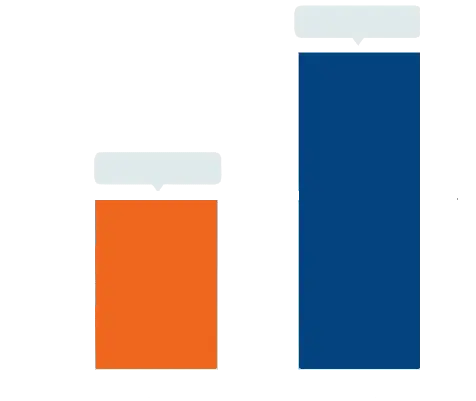
163.00 Million
USD
219.00 Million
2025
2033
USD
163.00 Million
USD
219.00 Million
2025
2033
 Forecast Period Forecast Period |
2026 –2033 |
 Market Size (Base Year) Market Size (Base Year) |
USD 163.00 Million |
 Market Size (Forecast Year) Market Size (Forecast Year) |
USD 219.00 Million |
 CAGR CAGR |
% |
| Major Markets Players |
|
Light-Emitting Diode (LED) Phototherapy System Market Size
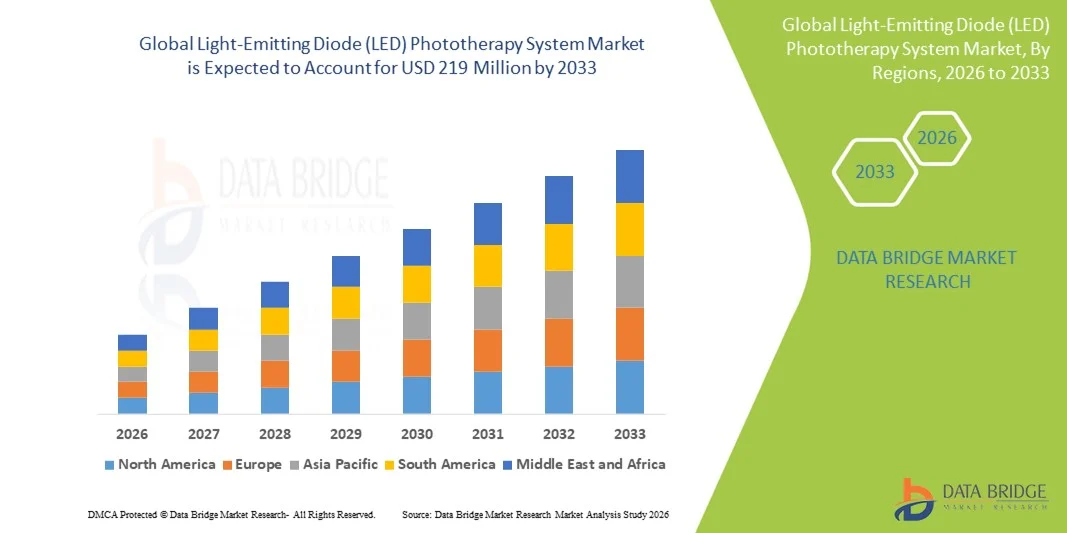
- The global light-emitting diode (LED) phototherapy system market size was valued at USD 163 Million in 2025 and is expected to reach USD 219 Million by 2033, at a CAGR of3.78% during the forecast period
- The market growth is largely fueled by increasing adoption of advanced dermatological and neonatal care technologies, rising awareness of non-invasive treatment options, and technological progress in LED phototherapy systems that enable precise, safe, and effective treatment for a range of conditions
- Furthermore, growing consumer preference for minimally invasive therapies, increasing demand for home-based healthcare devices, and expanding adoption of LED phototherapy in hospitals, dermatology clinics, and aesthetic centers are accelerating the uptake of Light-Emitting Diode (LED) Phototherapy System solutions, thereby significantly boosting the industry's growth
Light-Emitting Diode (LED) Phototherapy System Market Analysis
- LED phototherapy systems, offering non-invasive and targeted treatment for dermatological, neonatal, and aesthetic conditions, are increasingly vital in both clinical and home care settings due to their safety, precision, and ease of use
- The escalating demand for LED phototherapy systems is primarily fueled by rising awareness of minimally invasive therapies, growing adoption in dermatology and neonatal care, and increasing preference for home-based treatment solutions
- North America dominated the Light-Emitting Diode (LED) Phototherapy System market with the largest revenue share of approximately 39.5% in 2025, supported by advanced healthcare infrastructure, early adoption of innovative phototherapy technologies, high patient awareness, and strong presence of key market players in dermatology and neonatal care
- Asia-Pacific is expected to be the fastest-growing region in the Light-Emitting Diode (LED) Phototherapy System market during the forecast period, registering a CAGR of 11.8%, driven by increasing urbanization, rising disposable incomes, expanding healthcare facilities, and growing adoption of advanced LED-based treatments in both clinical and home-care settings
- The skin aging segment accounted for the largest market revenue share of 49.2% in 2025, supported by the rising global focus on anti-aging therapies and cosmetic treatments
Report Scope and Light-Emitting Diode (LED) Phototherapy System Market Segmentation
|
Attributes |
Light-Emitting Diode (LED) Phototherapy System Key Market Insights |
|
Segments Covered |
|
|
Countries Covered |
North America
Europe
Asia-Pacific
Middle East and Africa
South America
|
|
Key Market Players |
|
|
Market Opportunities |
|
|
Value Added Data Infosets |
In addition to the insights on market scenarios such as market value, growth rate, segmentation, geographical coverage, and major players, the market reports curated by the Data Bridge Market Research also include in-depth expert analysis, patient epidemiology, pipeline analysis, pricing analysis, and regulatory framework. |
Light-Emitting Diode (LED) Phototherapy System Market Trends
Rising Adoption of LED Phototherapy for Dermatological and Aesthetic Treatments
- A significant and accelerating trend in the global Light-Emitting Diode (LED) Phototherapy System market is the increasing preference for non-invasive dermatological and cosmetic treatments. Patients and consumers are seeking safer, drug-free alternatives for managing acne, psoriasis, eczema, skin rejuvenation, and anti-aging therapies. This trend is further fueled by rising awareness of skin health and preventive care, as well as the growth of dermatology clinics and aesthetic centers worldwide
- For instance, several leading dermatology clinics in Dubai and Riyadh have installed multi-wavelength LED phototherapy systems that allow practitioners to tailor treatments to individual patient needs, enhancing efficacy and comfort. Similarly, aesthetic centers in Europe are adopting LED panels for anti-aging and skin rejuvenation therapies, offering customizable treatment sessions for improved patient outcomes
- The adoption of LED phototherapy systems is also being driven by the availability of portable and home-use devices, which provide convenient options for continuous therapy outside clinical settings. These devices are increasingly incorporated into wellness and skincare routines, making treatments more accessible to a wider consumer base
- In addition, research and development in multi-wavelength LED technology has enhanced the effectiveness of these devices in targeting specific skin concerns, improving patient satisfaction, and expanding applications across medical, cosmetic, and wellness sectors
- The growing trend toward combining LED phototherapy with other non-invasive skincare treatments, such as topical formulations or light-assisted cosmetic procedures, is further solidifying its role as a preferred solution for dermatological care and aesthetic enhancement
- Companies such as Dermalux and Omnilux are expanding their product portfolios with versatile, energy-efficient LED systems that cater to both professional clinics and at-home consumers, supporting widespread adoption across regions
Light-Emitting Diode (LED) Phototherapy System Market Dynamics
Driver
Rising Prevalence of Skin Disorders and Cosmetic Treatments
- The increasing prevalence of acne, psoriasis, eczema, rosacea, and other chronic skin conditions is significantly driving the demand for LED phototherapy systems across hospitals, dermatology clinics, and aesthetic centers
- For instance, in April 2025, several dermatology centers in Saudi Arabia upgraded their treatment facilities with advanced multi-wavelength LED phototherapy systems to address the growing number of patients seeking non-invasive skin treatments. Such strategic investments by healthcare providers are expected to accelerate market growth during the forecast period
- The rising global awareness regarding non-invasive and drug-free treatment alternatives is encouraging patients to opt for LED-based therapies due to their minimal side effects and reduced recovery time compared to laser or chemical-based procedures
- Increasing consumer interest in anti-aging treatments, skin rejuvenation, and cosmetic enhancement procedures is further strengthening the adoption of LED phototherapy devices in aesthetic clinics and wellness centers
- The growing geriatric population, which is more susceptible to skin-related disorders and age-associated dermatological conditions, is also contributing to the rising demand for advanced phototherapy solutions
- In addition, expanding healthcare infrastructure and the establishment of specialized dermatology clinics in emerging economies are creating favorable conditions for the adoption of LED phototherapy systems
Restraint/Challenge
High Initial Costs and Limited Accessibility
- The high upfront cost of professional-grade LED phototherapy systems remains a major barrier for small and mid-sized dermatology clinics, particularly in developing regions
- For instance, premium multi-wavelength LED systems with advanced intensity control and larger treatment panels require substantial capital investment, limiting affordability for independent practitioners
- Limited reimbursement policies for cosmetic and dermatological procedures in several countries result in out-of-pocket expenses for patients, reducing the frequency of treatments and slowing device adoption
- The lack of standardized treatment protocols and variability in device specifications across manufacturers can create uncertainty among healthcare providers regarding treatment consistency and long-term efficacy
- In certain regions, insufficient awareness about the clinical benefits of LED phototherapy and limited training among practitioners further restrict market penetration.
- In addition, competition from alternative treatment options such as laser therapy, chemical peels, and pharmaceutical interventions may slow adoption in price-sensitive markets
Light-Emitting Diode (LED) Phototherapy System Market Scope
The market is segmented on the basis of product type and application.
- By Product Type
On the basis of product type, the LED phototherapy system market is segmented into tabletop type, on-casters type, and other types. The tabletop type dominated the market with the largest revenue share of 46.5% in 2025, driven by its compact design, ease of use, and suitability for home and clinical use. Tabletop units are preferred by dermatologists and beauty clinics for localized treatment of skin conditions like acne, dark spots, and early signs of aging. Their affordability, portability, and compatibility with existing skincare routines further contribute to high adoption rates. The tabletop segment benefits from strong consumer demand for home-use phototherapy devices and growing awareness of non-invasive cosmetic treatments. In addition, the availability of multiple wavelength options (red, blue, and near-infrared) in tabletop systems enhances their versatility, providing both therapeutic and cosmetic benefits.
The on-casters type is anticipated to witness the fastest growth rate, with a CAGR of 20.8% from 2026 to 2033, as these units are increasingly adopted in dermatology clinics, hospitals, and professional beauty centers. On-casters units allow easy mobility across treatment rooms, accommodate multiple users in clinical settings, and can deliver higher-intensity light therapy for larger treatment areas. Rising investments in aesthetic and dermatological clinics, coupled with the growing preference for professional-grade phototherapy systems in skin care and anti-aging treatments, are expected to drive rapid adoption of on-casters units during the forecast period.
- By Application
On the basis of application, the market is segmented into skin aging, skin dark spots, skin acne, and others. The skin aging segment accounted for the largest market revenue share of 49.2% in 2025, supported by the rising global focus on anti-aging therapies and cosmetic treatments. Red LED phototherapy, which stimulates collagen production, is particularly popular among consumers and dermatology clinics aiming to reduce wrinkles, fine lines, and improve skin elasticity. Increasing disposable income, growing consumer awareness about non-invasive cosmetic procedures, and the expansion of beauty and wellness centers contribute to strong adoption of LED phototherapy for skin aging. The segment also benefits from marketing campaigns highlighting anti-aging benefits, and the ease of integrating tabletop and on-casters systems into existing clinic setups further strengthens its dominance.
The skin acne segment is projected to witness the fastest CAGR of 21.4% from 2026 to 2033, driven by the prevalence of acne among adolescents and adults and the rising demand for non-pharmacological treatment options. Blue LED therapy, targeting Propionibacterium acnes, offers a drug-free, non-invasive solution for acne management, making it appealing to both home users and dermatology clinics. Increasing research on combination therapies with red and blue light, expansion of professional skin clinics, and heightened consumer preference for chemical-free skin treatment solutions are expected to boost growth in this segment. The segment’s rapid growth is also aided by growing awareness through social media and digital health campaigns emphasizing safe and effective home acne treatments.
Light-Emitting Diode (LED) Phototherapy System Market Regional Analysis
- North America dominated the LED phototherapy system market with the largest revenue share of approximately 39.5% in 2025, supported by advanced healthcare infrastructure, early adoption of innovative phototherapy technologies, high patient awareness, and the strong presence of key market players in dermatology and neonatal care
- The U.S. accounted for the major portion of the region, driven by the growing preference for non-invasive dermatological treatments, the increasing adoption of home-based phototherapy devices, and the expansion of cosmetic and dermatology clinics. Canada also contributed to market growth, supported by rising healthcare expenditure and demand for advanced skincare treatments
- High disposable incomes, widespread awareness of phototherapy benefits for skin conditions, and robust distribution channels further bolster North America’s market dominance
U.S. Light-Emitting Diode (LED) Phototherapy System Market Insight
The U.S. light-emitting diode (LED) phototherapy system market accounted for the largest revenue share within North America in 2025, driven by the country’s advanced healthcare infrastructure, strong presence of leading dermatology and medical device companies, and high adoption of innovative light-based treatment technologies. The increasing prevalence of skin conditions such as acne, psoriasis, eczema, and skin aging has significantly contributed to demand for LED-based phototherapy solutions. In addition, the growing popularity of non-invasive cosmetic procedures and anti-aging treatments across aesthetic clinics and medical spas supports market expansion. The U.S. also benefits from strong reimbursement frameworks in neonatal care, where LED phototherapy is widely used for treating neonatal jaundice. Rising consumer awareness about home-use LED devices, coupled with high disposable income and digital health adoption, further accelerates growth. Continuous product innovations, FDA approvals of advanced phototherapy systems, and increasing investments in dermatological research are expected to sustain the U.S. market’s leading position during the forecast period.
Europe Light-Emitting Diode (LED) Phototherapy System Market Insight
Europe LED phototherapy system market is projected to witness steady growth, driven by increasing adoption of LED phototherapy for skin aging, acne, and pigmentation disorders across clinical and aesthetic centers. Countries such as the U.K. and Germany lead due to rising awareness of non-invasive cosmetic treatments and well-established dermatology clinics. The market is supported by stringent healthcare standards, technological innovation in dermatology devices, and an increasing number of aesthetic centers. The region is experiencing strong adoption in urban centers and high-income populations, particularly in professional dermatology and aesthetic applications.
U.K. Light-Emitting Diode (LED) Phototherapy System Market Insight
The U.K. Light-Emitting Diode (LED) Phototherapy System market is anticipated to grow at a noteworthy CAGR during the forecast period, driven by increasing demand for non-invasive dermatological and aesthetic treatments. Rising awareness regarding skin health, anti-aging therapies, and acne management is contributing to strong adoption of LED-based phototherapy systems across dermatology clinics and aesthetic centers. The country’s well-established healthcare infrastructure and expanding private cosmetic treatment sector further support market growth. In addition, increasing consumer preference for home-use LED phototherapy devices, particularly for skin rejuvenation and acne treatment, is accelerating adoption. The presence of certified dermatology practitioners and a strong regulatory framework ensures quality standards, fostering patient confidence in light-based therapies. Growing investments in skincare technology and rising demand for minimally invasive cosmetic procedures are expected to sustain steady market expansion in the U.K.
Germany Light-Emitting Diode (LED) Phototherapy System Market Insight
The Germany Light-Emitting Diode (LED) Phototherapy System market is expected to expand at a considerable CAGR during the forecast period, supported by increasing demand for advanced dermatological treatments and a strong emphasis on medical technology innovation. Germany’s robust healthcare infrastructure and high healthcare spending enable rapid adoption of technologically advanced LED phototherapy systems in hospitals, dermatology clinics, and aesthetic centers. Rising cases of skin disorders, including acne and psoriasis, alongside growing demand for anti-aging treatments, are key growth drivers. The country’s focus on quality medical devices and compliance with strict European regulatory standards further enhances market credibility. In addition, increasing awareness about non-pharmacological and non-invasive treatment options is encouraging both clinical and home-use adoption. Continuous technological advancements and the presence of well-established medical device manufacturers contribute to sustained growth in the German market.
Asia-Pacific Light-Emitting Diode (LED) Phototherapy System Market Insight
Asia-Pacific LED phototherapy system market is expected to be the fastest-growing region, registering a CAGR of 11.8% from 2026 to 2033, driven by increasing urbanization, rising disposable incomes, expanding healthcare facilities, and growing adoption of advanced LED-based treatments in both clinical and home-care settings. Countries such as China, Japan, India, and South Korea are leading growth due to the rising demand for anti-aging therapies, acne management, and skin rejuvenation. Government initiatives promoting digital healthcare, a growing middle-class population, and the expansion of cosmetic and dermatology clinics contribute to rapid adoption. In addition, affordability of LED phototherapy systems and increasing awareness about home-use skincare devices are supporting market penetration.
Japan Light-Emitting Diode (LED) Phototherapy System Market Insight
Japan’s LED phototherapy system market growth is fueled by the country’s high-tech culture, increasing urbanization, and emphasis on preventive skincare. Rising patient awareness about non-invasive dermatological treatments, coupled with the elderly population seeking safe and effective skin therapies, is driving adoption. Clinical and home-based LED phototherapy solutions are gaining traction, particularly for skin aging and pigmentation disorders.
China Light-Emitting Diode (LED) Phototherapy System Market Insight
China LED phototherapy system market accounted for the largest revenue share in Asia-Pacific in 2025, attributed to rapid urbanization, technological adoption, and a growing middle-class population. The rise of aesthetic clinics and dermatology centers, combined with increasing consumer preference for non-invasive skin treatments, is boosting market growth. The development of domestic LED phototherapy manufacturers and affordability of devices further accelerate adoption across residential and clinical applications.
Light-Emitting Diode (LED) Phototherapy System Market Share
The Light-Emitting Diode (LED) Phototherapy System industry is primarily led by well-established companies, including:
- Viora Medical (Israel)
- Dermalux (U.K.)
- Revive Light Therapy (U.S.)
- LightStim (U.S.)
- Celluma (U.S.)
- Alma Lasers (Israel)
- Dusa Pharmaceuticals (U.S.)
- MediLED (Germany)
- AcuPulse (U.S.)
- Lumenis (Israel)
- Cynosure (U.S.)
- BTL Industries (Czech Republic)
- Wuhan Yihu Biotechnology (China)
- Beurer (Germany)
- Project E Beauty (U.S.)
- Silk’n (Israel)
- DermaRay (U.S.)
- FDA Medical (China)
Latest Developments in Global Light-Emitting Diode (LED) Phototherapy System Market
- In July 2023, Natus Medical Incorporated received CE certification for its home-use neonatal phototherapy system, marking a significant milestone in expanding LED phototherapy beyond hospital settings and enabling broader access for neonatal jaundice management worldwide. This approval allowed device distribution across the European market and enhanced treatment options for at-home care
- In March 2024, GE Healthcare launched a modular LED phototherapy system with auto-adjust irradiance, designed to improve treatment accuracy and reduce time for neonatal jaundice treatment; by October 2024, it had been deployed in over 310 U.S. hospitals, showcasing rapid clinical adoption and improved patient throughput
- In March 2025, Philips Healthcare announced a strategic partnership with LumiThera to co-develop next-generation phototherapy devices, aimed at combining Philips’ global reach with LumiThera’s Bioptron LED technology to enhance therapeutic capabilities for both dermatology and neonatal applications
- In April 2025, BioPhotas, Inc. launched the Celluma Series 2 DELUX, a multifunctional, FDA-cleared full-body LED phototherapy panel that supports four treatment modes — including acne therapy, wrinkle reduction, and pain relief — offering clinics a versatile platform for dermatological and aesthetic treatments
SKU-
Get online access to the report on the World's First Market Intelligence Cloud

- Interactive Data Analysis Dashboard
- Company Analysis Dashboard for high growth potential opportunities
- Research Analyst Access for customization & queries
- Competitor Analysis with Interactive dashboard
- Latest News, Updates & Trend analysis
- Harness the Power of Benchmark Analysis for Comprehensive Competitor Tracking
Research Methodology
Data collection and base year analysis are done using data collection modules with large sample sizes. The stage includes obtaining market information or related data through various sources and strategies. It includes examining and planning all the data acquired from the past in advance. It likewise envelops the examination of information inconsistencies seen across different information sources. The market data is analysed and estimated using market statistical and coherent models. Also, market share analysis and key trend analysis are the major success factors in the market report. To know more, please request an analyst call or drop down your inquiry.
The key research methodology used by DBMR research team is data triangulation which involves data mining, analysis of the impact of data variables on the market and primary (industry expert) validation. Data models include Vendor Positioning Grid, Market Time Line Analysis, Market Overview and Guide, Company Positioning Grid, Patent Analysis, Pricing Analysis, Company Market Share Analysis, Standards of Measurement, Global versus Regional and Vendor Share Analysis. To know more about the research methodology, drop in an inquiry to speak to our industry experts.
Customization Available
Data Bridge Market Research is a leader in advanced formative research. We take pride in servicing our existing and new customers with data and analysis that match and suits their goal. The report can be customized to include price trend analysis of target brands understanding the market for additional countries (ask for the list of countries), clinical trial results data, literature review, refurbished market and product base analysis. Market analysis of target competitors can be analyzed from technology-based analysis to market portfolio strategies. We can add as many competitors that you require data about in the format and data style you are looking for. Our team of analysts can also provide you data in crude raw excel files pivot tables (Fact book) or can assist you in creating presentations from the data sets available in the report.