




Global Lupus Nephritis Market
Market Size in USD Billion
CAGR :
% 
 USD
2.26 Billion
USD
5.22 Billion
2025
2033
USD
2.26 Billion
USD
5.22 Billion
2025
2033
 Forecast Period Forecast Period |
2026 - 2033 |
 Market Size (Base Year) Market Size (Base Year) |
USD 2.26 Billion |
 Market Size (Forecast Year) Market Size (Forecast Year) |
USD 5.22 Billion |
 CAGR CAGR |
% |
| Major Markets Players |
|
Lupus Nephritis Market Overview
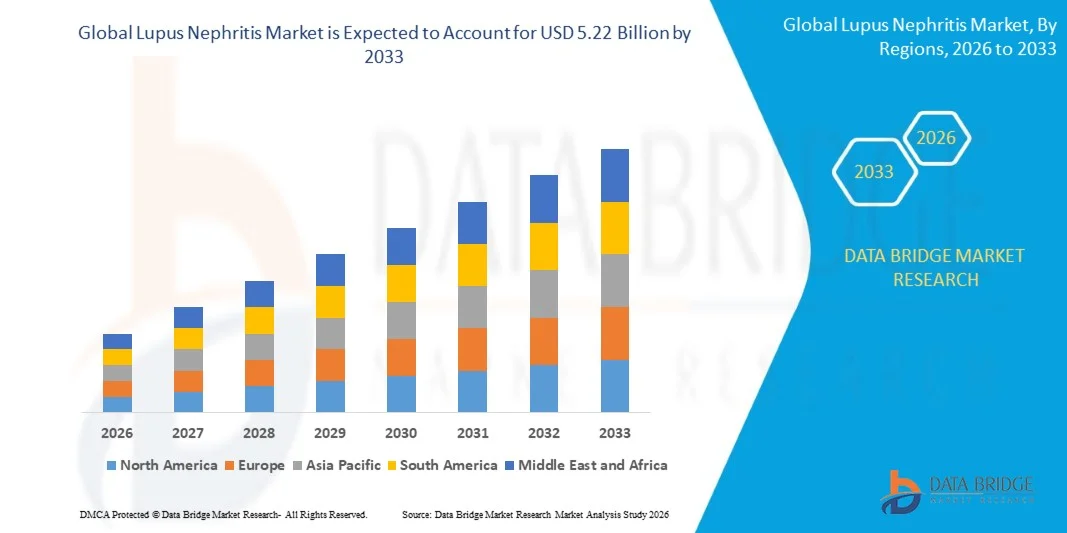
The Lupus Nephritis Market was valued at USD 2.26 billion in 2025 and is projected to reach USD 5.22 billion by 2033, growing at a CAGR of 11.05% from 2026 to 2033. The market is experiencing consistent growth driven by the rising prevalence of systemic lupus erythematosus (SLE)-associated kidney complications, increasing awareness regarding early diagnosis and treatment, and continuous advancements in immunosuppressive and biologic therapies. Expanding research activities, growing healthcare expenditure, and the introduction of targeted treatment options are further supporting market expansion across developed and emerging healthcare markets.
The increasing burden of autoimmune diseases globally, combined with growing recognition of lupus nephritis as a major cause of chronic kidney disease and renal failure, is compelling healthcare providers to adopt advanced diagnostic and therapeutic approaches. Novel biologic therapies, combination treatment regimens, and precision medicine strategies are increasingly complementing conventional immunosuppressive treatments in many markets, offering improved disease management, reduced renal damage progression, and better long-term patient outcomes. Furthermore, ongoing clinical trials and expanding regulatory approvals for innovative lupus nephritis therapies continue to strengthen market growth worldwide.
Key Market Trends & Insights
- North America dominated the Lupus Nephritis Market with the largest revenue share of 39.64% in 2025, supported by a high prevalence of systemic lupus erythematosus (SLE), strong adoption of advanced biologic therapies, favorable reimbursement policies, and the presence of leading pharmaceutical companies. The region also benefits from extensive clinical research activities, increasing awareness regarding early diagnosis, and growing utilization of targeted treatment options for lupus nephritis management.
- The parenteral segment dominated the market with a 67.45% share in 2025, primarily due to the widespread use of intravenous biologics and injectable immunosuppressive therapies in moderate-to-severe lupus nephritis cases.
- Asia-Pacific is expected to be the fastest-growing region at a CAGR of 8.9% from 2026 to 2033, fueled by increasing healthcare expenditure, improving access to specialty care, rising prevalence of autoimmune diseases, and expanding awareness regarding lupus nephritis diagnosis and treatment across China, India, Japan, and South Korea.
- The Parenteral segment is the fastest-growing route of administration, projected to register a CAGR of 9.1%, reflecting the growing adoption of biologics, monoclonal antibodies, and advanced infusion therapies that offer targeted disease management and improved treatment outcomes for moderate-to-severe lupus nephritis patients.
- The Class 3 Lupus Nephritis segment dominates the stages category with a 38.76% revenue share in 2025, owing to its higher diagnosis rate, significant risk of renal complications, and frequent requirement for aggressive immunosuppressive treatment strategies to preserve kidney function.
- Hospitals account for 52.48% of the market in the end-user category, preferred for comprehensive disease management, multidisciplinary care, advanced diagnostic capabilities, infusion-based biologic administration, and monitoring of complex lupus nephritis cases.
- The Hospital Pharmacy segment is the fastest-growing distribution channel, with a CAGR of 8.7%, driven by increasing utilization of specialty biologics, growing inpatient treatment volumes, expanding hospital-based infusion services, and rising demand for prescription medications used in lupus nephritis management.
Market Size & Forecast
- Global Market Value (2025): USD 2.26 Billion
- Expected Market Value (2033): USD 5.22 Billion
- Forecast CAGR (2026–2033): 11.05%
- Leading Region in 2025: North America
- Fastest Growing Region: Asia-Pacific
Report Scope and Lupus Nephritis Market Segmentation
|
Attributes |
Lupus Nephritis Key Market Insights |
|
Segments Covered |
|
|
Countries Covered |
North America · U.S. · Canada · Mexico Europe · Germany · France · U.K. · Netherlands · Switzerland · Belgium · Russia · Italy · Spain · Turkey · Rest of Europe Asia-Pacific · China · Japan · India · South Korea · Singapore · Malaysia · Australia · Thailand · Indonesia · Philippines · Rest of Asia-Pacific Middle East and Africa · Saudi Arabia · U.A.E. · South Africa · Egypt · Israel · Rest of Middle East and Africa South America · Brazil · Argentina · Rest of South America |
|
Key Market Players |
• Roche (Switzerland) |
|
Market Opportunities |
· Expansion of Targeted Biologic and Precision Therapies · Rising Adoption of Early Diagnosis and Biomarker-Based Treatment Approaches · Growth in Emerging Markets and Improved Access to Nephrology Care |
|
Value Added Data Infosets |
In addition to the insights on market scenarios such as market value, growth rate, segmentation, geographical coverage, and major players, the market reports curated by the Data Bridge Market Research also include in-depth expert analysis, geographically represented company-wise production and capacity, network layouts of distributors and partners, detailed and updated price trend analysis and deficit analysis of supply chain and demand. |
Lupus Nephritis Market Trends
Trend: Expanding Use of Targeted Biologics and Precision Immunotherapy in Lupus Nephritis Treatment
The Lupus Nephritis Market is witnessing a major shift toward biologics and precision immunotherapy, driven by increasing adoption of B-cell targeted therapies and complement inhibitors. Drugs such as belimumab (anti-BAFF) and emerging pipeline therapies targeting CD20 and interferon pathways are improving long-term renal outcomes and reducing relapse rates in lupus nephritis patients. Clinical studies have demonstrated that belimumab, when added to standard therapy, can significantly reduce the risk of renal flares and progression to end-stage kidney disease. In addition, increasing regulatory approvals for biologics in autoimmune kidney diseases across major markets such as the U.S. and Europe is accelerating treatment adoption. Growing physician preference for steroid-sparing regimens is further supporting the transition toward advanced biologic-based treatment approaches.
Lupus Nephritis Market Dynamics
Key Market Driver: Rising Global Prevalence of Systemic Lupus Erythematosus (SLE) and Lupus Nephritis
The increasing prevalence of systemic lupus erythematosus (SLE), particularly among women of childbearing age, is a major driver of the lupus nephritis market. According to published epidemiological studies, lupus affects approximately 20–150 per 100,000 individuals globally, with up to 60% of SLE patients developing lupus nephritis during the course of their disease. The condition remains one of the leading causes of morbidity and mortality in SLE patients due to progressive kidney damage. Rising awareness of early diagnosis and improved screening practices in nephrology and rheumatology clinics are contributing to higher detection rates. Furthermore, increasing use of immunosuppressive therapies such as mycophenolate mofetil, cyclophosphamide, and corticosteroids remains central to disease management. The growing burden of autoimmune diseases globally, combined with expanding access to specialty care, continues to strengthen market growth.
Key Restraint/Challenge: High Treatment Cost and Long-Term Immunosuppressive Therapy Burden
A significant challenge in the Lupus Nephritis Market is the high cost associated with long-term treatment and biologic therapies. Advanced therapies such as monoclonal antibodies and combination immunosuppressive regimens are often expensive and require prolonged administration, creating affordability barriers in low- and middle-income countries. Additionally, conventional therapies like corticosteroids and cyclophosphamide are associated with severe side effects including infection risk, infertility, and metabolic complications, limiting long-term use. Limited access to nephrology specialists and delayed diagnosis in emerging markets further complicate disease management. Despite improvements in healthcare infrastructure, unequal access to biologics and supportive care continues to restrict optimal treatment outcomes, particularly in resource-constrained healthcare systems.
Key Market Opportunity: Expansion of Novel Biologics, Pipeline Drugs, and Personalized Treatment Approaches
The development of next-generation biologics and precision medicine approaches presents a significant growth opportunity in the lupus nephritis market. Pharmaceutical companies are actively investing in novel mechanisms of action, including dual B-cell and T-cell targeting agents, interferon inhibitors, and complement pathway blockers. For example, ongoing clinical trials of drugs such as obinutuzumab and voclosporin have shown promising efficacy in improving renal response rates in lupus nephritis patients. In addition, the growing adoption of personalized medicine based on disease classification (Class I–VI lupus nephritis) and biomarker profiling is improving treatment precision and patient outcomes. Increasing regulatory support for orphan drug designation and fast-track approvals in autoimmune diseases is further accelerating innovation. Expanding healthcare access in emerging economies, coupled with rising investment in nephrology care infrastructure, is expected to unlock significant long-term growth opportunities across global markets.
Lupus Nephritis Market Scope
The Lupus Nephritis market is segmented on the basis of stages, medication, route of administration, end users, and distribution channel.
- By Stages
On the basis of stages, the Lupus Nephritis Market is segmented into Class 1, Class 2, Class 3, and Others (Class 4, Class 5, and mixed forms). The Class 3 segment dominated the market with a 34.62% revenue share in 2025, primarily due to its higher clinical prevalence and active proliferative disease characteristics requiring immediate immunosuppressive intervention. Class 3 lupus nephritis is often diagnosed at an earlier progression stage, allowing effective management through corticosteroids and immunosuppressive drugs, which significantly contributes to its market dominance. Increasing biopsy-based diagnosis rates and improved nephrology screening programs are further strengthening early detection. Rising awareness among physicians regarding kidney involvement in SLE patients is also improving treatment initiation rates. Hospitals and specialty clinics frequently report higher patient inflow for Class 3 cases due to acute symptom presentation. Government-led autoimmune disease awareness programs are supporting early-stage identification. The growing use of combination therapy approaches is enhancing clinical outcomes in this segment. Improved access to renal diagnostics in emerging economies is expanding patient detection. Overall, Class 3 remains the most clinically significant revenue contributor.
The Class 4 segment is expected to register the fastest growth at a CAGR of 7.8% from 2026 to 2033, driven by its severe diffuse proliferative nature requiring intensive biologic and combination therapy. Increasing adoption of advanced immunosuppressive regimens and targeted biologics is improving survival outcomes in Class 4 patients. Rising hospital admissions due to severe renal complications is expanding treatment demand. Pharmaceutical companies are focusing on high-efficacy drugs for late-stage lupus nephritis. Growing use of precision medicine and biomarker-based classification is improving disease management. Expanding clinical trials targeting severe renal inflammation are boosting innovation. Improved healthcare infrastructure in Asia-Pacific is supporting early intervention. Higher relapse rates in Class 4 patients increase long-term therapy usage. Increasing biologic drug approvals are further accelerating growth. This segment is expected to significantly expand due to rising disease severity globally.
- By Medication
On the basis of medication, the Lupus Nephritis Market is segmented into immunosuppressive drugs, corticosteroids, and others (including biologics and supportive therapies). The immunosuppressive drugs segment dominated the market with a 48.91% share in 2025, owing to their strong clinical effectiveness and widespread use as first-line therapy in lupus nephritis management. Drugs such as mycophenolate mofetil and cyclophosphamide remain widely prescribed due to their ability to control renal inflammation and prevent disease progression. Physicians prefer these therapies because of their established treatment protocols and long-term clinical evidence. Increasing hospital-based treatment guidelines continue to support their dominance. Growing availability of generic formulations is improving affordability across emerging markets. Rising SLE prevalence is directly increasing drug demand. Combination therapy with corticosteroids further strengthens usage rates. Improved diagnostic rates are increasing treatment initiation. Government reimbursement support in developed countries enhances accessibility. Overall, immunosuppressants remain the backbone of lupus nephritis treatment.
The biologics and targeted therapy segment is expected to witness the fastest CAGR of 9.2% from 2026 to 2033, driven by increasing adoption of precision medicine approaches. Rising clinical success of drugs such as belimumab and emerging pipeline molecules is accelerating market growth. Biologics offer improved renal response rates and reduced relapse frequency compared to traditional therapies. Growing demand for steroid-sparing treatment options is boosting adoption. Pharmaceutical companies are heavily investing in B-cell and complement-targeted therapies. Increasing FDA and EMA approvals for lupus biologics are supporting expansion. Rising awareness of long-term side effects of corticosteroids is shifting prescribing trends. Expanding clinical trial pipelines are improving innovation speed. Personalized treatment strategies based on disease severity are gaining traction. This segment is expected to redefine future lupus nephritis management.
- By Route of Administration
On the basis of route of administration, the Lupus Nephritis Market is segmented into oral, parenteral, and others. The parenteral segment dominated the market with a 67.45% share in 2025, primarily due to the widespread use of intravenous biologics and injectable immunosuppressive therapies in moderate-to-severe lupus nephritis cases. Hospital-based administration ensures accurate dosing, patient monitoring, and improved clinical outcomes. Injectable drugs remain essential in acute disease management due to their rapid therapeutic action. Increasing hospitalization rates for severe renal complications further strengthen this segment. Biologic therapies such as monoclonal antibodies are predominantly administered via injection, reinforcing dominance. Rising use of infusion centers in specialty clinics is expanding access. Strong physician preference for controlled administration supports growth. Higher bioavailability of parenteral drugs improves effectiveness. Government hospital reimbursement policies enhance adoption. This segment remains critical for advanced disease treatment pathways.
The oral segment is expected to register the fastest CAGR of 8.1% from 2026 to 2033, driven by increasing demand for patient-friendly long-term therapies. Oral immunosuppressants such as mycophenolate mofetil are widely used for maintenance therapy. Growing preference for home-based treatment is accelerating adoption. Pharmaceutical advancements in oral biologics are improving drug efficacy. Rising healthcare costs are pushing demand for non-injectable therapies. Improved adherence rates with oral drugs support growth. Expanding outpatient care models are increasing usage. Emerging markets are driving demand for affordable oral therapies. Innovation in drug delivery systems is enhancing absorption rates. This segment is expected to expand rapidly due to convenience and accessibility.
- By End Users
On the basis of end users, the Lupus Nephritis Market is segmented into hospitals, specialty clinics, and others. The hospitals segment dominated the market with a 52.38% share in 2025, due to high patient inflow and availability of advanced diagnostic and treatment infrastructure. Hospitals are the primary centers for managing moderate to severe lupus nephritis cases requiring immunosuppressive and biologic therapies. Presence of multidisciplinary care teams including nephrologists and rheumatologists strengthens hospital dominance. Emergency care facilities and inpatient treatment availability support complex case management. Increasing hospitalization rates for renal complications further drive demand. Government healthcare systems heavily rely on hospital-based treatment pathways. Advanced diagnostic tools such as renal biopsy are widely available in hospitals. Strong reimbursement frameworks improve accessibility. Rising prevalence of autoimmune disorders increases hospital visits. Overall, hospitals remain the core treatment hub globally.
The specialty clinics segment is expected to witness the fastest CAGR of 7.6% from 2026 to 2033, driven by rising preference for outpatient and long-term disease management. Increasing availability of nephrology and rheumatology specialty centers is improving patient access. Specialty clinics offer personalized treatment approaches and better follow-up care. Growing adoption of biologic infusion centers in outpatient settings is supporting expansion. Reduced hospital burden and lower treatment costs are boosting preference. Rising awareness of chronic autoimmune disease management is driving clinic visits. Expansion of private healthcare systems in emerging economies is supporting growth. Telemedicine integration is improving consultation accessibility. Improved drug availability in outpatient settings is strengthening adoption. This segment is expected to grow steadily with healthcare decentralization.
- By Distribution Channel
On the basis of distribution channel, the Lupus Nephritis Market is segmented into hospital pharmacy, retail pharmacy, and others. The hospital pharmacy segment dominated the market with a 58.73% share in 2025, owing to high dependency on inpatient treatment and direct drug dispensing for immunosuppressive and biologic therapies. Hospital pharmacies ensure controlled drug distribution for severe lupus nephritis cases. Integration with hospital treatment protocols strengthens dominance. High usage of injectable biologics in clinical settings supports demand. Strong inventory management systems improve drug availability. Government healthcare systems prefer centralized drug dispensing. Increasing hospitalization rates further drive usage. Availability of high-cost biologics is concentrated in hospital pharmacies. Clinical supervision ensures treatment compliance. Overall, hospital pharmacies remain the key distribution channel.
The retail pharmacy segment is expected to register the fastest CAGR of 7.9% from 2026 to 2033, driven by increasing outpatient prescriptions and expansion of oral therapy usage. Growing availability of immunosuppressive drugs in retail networks is improving access. Rising chronic disease management outside hospitals supports demand. Expansion of pharmacy chains in emerging markets is boosting distribution. Increasing adoption of oral maintenance therapies enhances retail penetration. Government initiatives to improve drug accessibility are supporting growth. Rising patient preference for convenient drug access is accelerating adoption. E-commerce pharmacy platforms are further expanding reach. Improved affordability of generic drugs strengthens retail sales. This segment is expected to grow rapidly with healthcare decentralization.
Lupus Nephritis Market Regional Analysis
North America dominated the Lupus Nephritis market and accounted for the largest revenue share of 39.64% in 2025, supported by a high prevalence of systemic lupus erythematosus (SLE), strong adoption of advanced biologic therapies, favorable reimbursement policies, and the presence of leading pharmaceutical companies. The region also benefits from extensive clinical research activities, increasing awareness regarding early diagnosis, and growing utilization of targeted treatment options for lupus nephritis management. Rising physician preference for biologics and immunosuppressive combination therapies continues to strengthen treatment adoption across hospitals and specialty clinics.
U.S. Lupus Nephritis Market Insight
The U.S. Lupus Nephritis market is witnessing strong growth due to the high burden of autoimmune diseases, advanced healthcare infrastructure, and early access to innovative biologics such as monoclonal antibody therapies and targeted immunosuppressants. Strong clinical trial activity and FDA approvals for novel lupus nephritis therapies are further accelerating market expansion. In addition, increasing focus on precision medicine and personalized treatment approaches is improving patient outcomes and driving sustained demand across hospitals, nephrology centers, and specialty clinics.
Europe Lupus Nephritis Market Insight
The Europe Lupus Nephritis market remains a significant contributor to global revenue, driven by strong healthcare systems, increasing autoimmune disease diagnosis rates, and supportive reimbursement frameworks. Countries such as Germany, France, and the U.K. are witnessing rising adoption of advanced biologics and immunosuppressive therapies. Expanding clinical research initiatives and growing awareness programs for early lupus diagnosis continue to support treatment uptake across hospitals and specialty care settings.
U.K. Lupus Nephritis Market Insight
The U.K. Lupus Nephritis market is experiencing steady growth, supported by robust NHS-driven access to specialty care, increasing adoption of biologic therapies, and growing clinical research into autoimmune kidney disorders. Rising awareness of lupus nephritis among healthcare providers and patients is improving early diagnosis rates. Additionally, increasing participation in global clinical trials for next-generation therapies is strengthening the country’s position in the lupus nephritis treatment landscape.
Germany Lupus Nephritis Market Insight
The Germany Lupus Nephritis market is expanding steadily due to strong pharmaceutical R&D infrastructure, high healthcare spending, and increasing adoption of targeted immunotherapies. German hospitals and specialty nephrology centers are increasingly using biologics alongside standard immunosuppressive treatments to improve renal outcomes. Furthermore, strong regulatory support for innovative drug approvals and growing clinical research in autoimmune diseases are driving market growth.
Asia-Pacific Lupus Nephritis Market Insight
The Asia-Pacific Lupus Nephritis market is expected to witness rapid growth, driven by increasing healthcare expenditure, improving access to specialty care, rising prevalence of autoimmune diseases, and expanding awareness regarding lupus nephritis diagnosis and treatment across China, India, Japan, and South Korea. Government initiatives aimed at strengthening nephrology care infrastructure and increasing availability of advanced biologic therapies are further supporting regional market expansion.
Japan Lupus Nephritis Market Insight
The Japan Lupus Nephritis market is witnessing consistent growth due to a well-developed healthcare system, high diagnostic rates of autoimmune diseases, and increasing adoption of advanced biologic therapies. Japanese pharmaceutical companies are actively engaged in developing and commercializing novel treatments for lupus nephritis. In addition, strong emphasis on early diagnosis and chronic disease management is improving patient outcomes.
China Lupus Nephritis Market Insight
The China Lupus Nephritis market is growing rapidly, driven by rising awareness of autoimmune diseases, expanding healthcare infrastructure, and increasing access to advanced biologic and immunosuppressive therapies. Government healthcare reforms and growing investments in specialty care hospitals are improving diagnosis and treatment rates. In addition, rising participation in global clinical trials and increasing availability of innovative therapies are positioning China as one of the fastest-growing lupus nephritis markets globally.
Lupus Nephritis Market Share
The Lupus Nephritis industry is primarily led by well-established companies, including:
- Roche (Switzerland)
- AstraZeneca (United Kingdom)
- GSK (United Kingdom)
- Novartis (Switzerland)
- Pfizer Inc. (U.S.)
- Bristol Myers Squibb (U.S.)
- AbbVie Inc. (U.S.)
- Johnson & Johnson (U.S.)
- GlaxoSmithKline plc (United Kingdom)
- Sanofi (France)
- Lupin Limited (India)
- Cipla Ltd. (India)
- Sun Pharmaceutical Industries Ltd. (India)
- Viatris Inc. (U.S.)
- Amgen Inc. (U.S.)
- Biogen Inc. (U.S.)
- Merck & Co., Inc. (U.S.)
- Otsuka Pharmaceutical Co., Ltd. (Japan)
- Astellas Pharma Inc. (Japan)
- Takeda Pharmaceutical Company Limited (Japan)
- Bayer AG (Germany)
- Eli Lilly and Company (U.S.)
- Alnylam Pharmaceuticals (U.S.)
- Aurinia Pharmaceuticals (Canada)
- Horizon Therapeutics (U.S.)
- Travere Therapeutics (U.S.)
- Aurinia Pharmaceuticals Inc. (Canada)
- Aurinia Pharmaceuticals (Canada)
Latest Developments in Lupus Nephritis Market
- In January 2021, the U.S. FDA approved voclosporin (Lupkynis) by Aurinia Pharmaceuticals, marking the first oral therapy specifically indicated for active lupus nephritis. The approval was based on Phase III AURORA clinical trial results demonstrating significant improvement in renal response when used with standard immunosuppressive therapy. Voclosporin introduced a novel calcineurin inhibitor mechanism, improving proteinuria reduction and enabling steroid-sparing treatment strategies
- In December 2020 (widely implemented in 2021 treatment practice), the U.S. FDA approved belimumab (Benlysta) for active lupus nephritis in adults. This marked the first biologic therapy approved for lupus nephritis, supported by the BLISS-LN Phase III trial, which showed improved renal response rates and reduced risk of renal-related events when added to standard therapy
- In August 2021, the U.S. FDA approved anifrolumab (Saphnelo) for the treatment of moderate to severe systemic lupus erythematosus (SLE), expanding targeted biologic options for lupus-related immune modulation. Although not directly approved for lupus nephritis, the drug’s mechanism targeting type I interferon signaling has positioned it as a key pipeline candidate being evaluated in lupus nephritis clinical trials
- In May 2023, clinical evidence highlighted expanding real-world adoption of combination therapy using voclosporin and belimumab in lupus nephritis management. Case-based studies reported improved renal outcomes and steroid reduction when dual targeted therapy was used in refractory patients, signaling a shift toward combination biologic and calcineurin inhibitor regimens in clinical practice
- In March 2025, the FDA accepted a supplemental Biologics License Application (sBLA) for obinutuzumab (Gazyva) for lupus nephritis treatment based on Phase III REGENCY trial data. The therapy demonstrated superior complete renal response rates compared to standard therapy and represents a next-generation anti-CD20 monoclonal antibody with enhanced B-cell depletion activity
- In October 2025, the U.S. FDA approved obinutuzumab (Gazyva) for the treatment of adults with lupus nephritis receiving standard therapy. This approval marked a significant advancement as the first anti-CD20 antibody to demonstrate robust efficacy in Phase III lupus nephritis trials, expanding biologic options for refractory and high-risk patients
- In November 2025, updated clinical guidelines from the American College of Rheumatology (ACR) reinforced the use of combination immunosuppressive regimens including belimumab, voclosporin, and emerging biologics for lupus nephritis management. The guideline emphasized individualized treatment based on disease class and renal response, reflecting the evolving precision medicine approach
SKU-
Get online access to the report on the World's First Market Intelligence Cloud

- Interactive Data Analysis Dashboard
- Company Analysis Dashboard for high growth potential opportunities
- Research Analyst Access for customization & queries
- Competitor Analysis with Interactive dashboard
- Latest News, Updates & Trend analysis
- Harness the Power of Benchmark Analysis for Comprehensive Competitor Tracking
Research Methodology
Data collection and base year analysis are done using data collection modules with large sample sizes. The stage includes obtaining market information or related data through various sources and strategies. It includes examining and planning all the data acquired from the past in advance. It likewise envelops the examination of information inconsistencies seen across different information sources. The market data is analysed and estimated using market statistical and coherent models. Also, market share analysis and key trend analysis are the major success factors in the market report. To know more, please request an analyst call or drop down your inquiry.
The key research methodology used by DBMR research team is data triangulation which involves data mining, analysis of the impact of data variables on the market and primary (industry expert) validation. Data models include Vendor Positioning Grid, Market Time Line Analysis, Market Overview and Guide, Company Positioning Grid, Patent Analysis, Pricing Analysis, Company Market Share Analysis, Standards of Measurement, Global versus Regional and Vendor Share Analysis. To know more about the research methodology, drop in an inquiry to speak to our industry experts.
Customization Available
Data Bridge Market Research is a leader in advanced formative research. We take pride in servicing our existing and new customers with data and analysis that match and suits their goal. The report can be customized to include price trend analysis of target brands understanding the market for additional countries (ask for the list of countries), clinical trial results data, literature review, refurbished market and product base analysis. Market analysis of target competitors can be analyzed from technology-based analysis to market portfolio strategies. We can add as many competitors that you require data about in the format and data style you are looking for. Our team of analysts can also provide you data in crude raw excel files pivot tables (Fact book) or can assist you in creating presentations from the data sets available in the report.












