




Global Malt Based Drinks Market
Market Size in USD Billion
CAGR :
% 
 USD
27.16 Billion
USD
39.23 Billion
2025
2033
USD
27.16 Billion
USD
39.23 Billion
2025
2033
 Forecast Period Forecast Period |
2026 –2033 |
 Market Size (Base Year) Market Size (Base Year) |
USD 27.16 Billion |
 Market Size (Forecast Year) Market Size (Forecast Year) |
USD 39.23 Billion |
 CAGR CAGR |
% |
| Major Markets Players |
|
Malt-Based Drinks Market Size
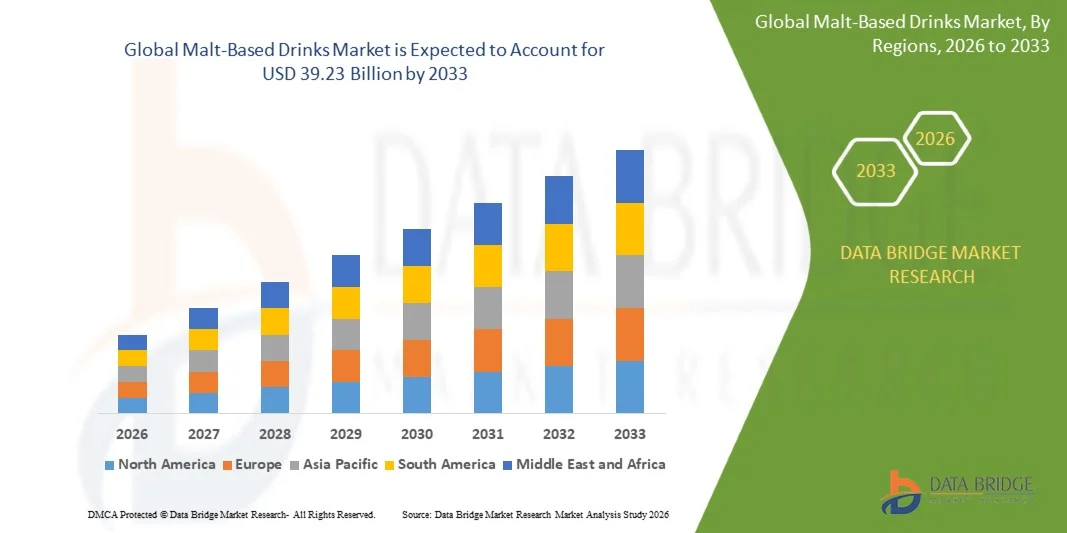
- The global malt-based drinks market size was valued at USD 27.16 billion in 2025 and is expected to reach USD 39.23 billion by 2033, at a CAGR of 4.70% during the forecast period
- The market growth is largely fueled by the increasing consumer preference for nutritious, flavored, and functional beverages, driving higher adoption of malt-based drinks across different age groups and regions
- Furthermore, rising health consciousness, demand for non-alcoholic and fortified beverage options, and expanding distribution through modern retail and e-commerce channels are strengthening market penetration. These converging factors are accelerating the consumption of malt-based drinks, thereby significantly boosting the industry's growth
Malt-Based Drinks Market Analysis
- Malt-based drinks, offering nutritious, malt-derived beverages in both alcoholic and non-alcoholic variants, are increasingly vital components of the beverage industry due to their health benefits, taste variety, and versatility for multiple consumption occasions
- The escalating demand for malt-based drinks is primarily fueled by growing health awareness among consumers, expanding product innovation in flavored and fortified beverages, and increasing accessibility through offline and online distribution channels
- Asia-Pacific dominated the malt-based drinks market with a share of around 35% in 2025, due to rising consumer preference for flavored and nutritious beverages, expanding beverage manufacturing infrastructure, and a strong presence of regional beverage companies
- North America is expected to be the fastest growing region in the malt-based drinks market during the forecast period due to increasing demand for functional beverages, growing health-conscious population, and rising popularity of non-alcoholic malt drinks
- Non-Alcoholic segment dominated the market with a market share of 68.5% in 2025, due to growing health awareness and regulatory restrictions on alcohol consumption in several regions. Non-alcoholic malt drinks appeal to a wide range of consumers, including teenagers and adults seeking nutritious beverages with minimal alcohol content. Companies often enhance this segment by adding functional ingredients such as vitamins, minerals, and probiotics to target the wellness-oriented consumer base
Report Scope and Malt-Based Drinks Market Segmentation
|
Attributes |
Malt-Based Drinks Key Market Insights |
|
Segments Covered |
|
|
Countries Covered |
North America
Europe
Asia-Pacific
Middle East and Africa
South America
|
|
Key Market Players |
|
|
Market Opportunities |
|
|
Value Added Data Infosets |
In addition to the insights on market scenarios such as market value, growth rate, segmentation, geographical coverage, and major players, the market reports curated by the Data Bridge Market Research also include in-depth expert analysis, pricing analysis, brand share analysis, consumer survey, demography analysis, supply chain analysis, value chain analysis, raw material/consumables overview, vendor selection criteria, PESTLE Analysis, Porter Analysis, and regulatory framework. |
Malt-Based Drinks Market Trends
“Rising Demand for Flavored and Functional Malt-Based Beverages”
- A notable trend in the malt-based drinks market is the growing consumer preference for flavored and functional malt beverages, driven by the rising interest in taste innovation and health-oriented formulations. This trend is encouraging manufacturers to diversify their portfolios with drinks that combine enjoyment with nutritional benefits such as added vitamins, minerals, and protein
- For instance, Nestlé’s Milo brand has expanded its product line with flavored malt beverages enriched with essential nutrients targeting children and young adults. Such product innovations are increasing consumer engagement and strengthening brand loyalty across multiple regions
- The demand for ready-to-drink malt beverages is rising as convenience-oriented consumers seek quick and nutritious drink options. This is pushing manufacturers to focus on portable packaging formats and shelf-stable formulations that cater to on-the-go lifestyles
- Functional malt beverages are gaining traction among health-conscious consumers who value immunity-boosting, energy-enhancing, or digestive-supporting ingredients. Brands such as Horlicks and Ovaltine are leveraging this trend by fortifying malt drinks with vitamins and minerals to appeal to wellness-focused demographics
- Regional preferences are influencing product flavors and formulations, with companies offering localized tastes to suit specific cultural palettes. This is driving innovation in flavor development and expanding market penetration in emerging regions
- The market is witnessing strong growth in premium and specialty malt drinks, with consumers increasingly willing to pay more for high-quality ingredients and perceived health benefits. This rising incorporation of functional and flavored products is reinforcing the overall shift toward health-oriented beverage consumption
Malt-Based Drinks Market Dynamics
Driver
“Growing Health and Wellness Awareness Among Consumers”
- Increasing health and wellness awareness among consumers is driving the demand for malt-based drinks that offer nutritional benefits, such as immunity support, energy enhancement, and bone strengthening. Consumers are actively seeking beverages that deliver both taste and functional value, influencing product development strategies across the market
- For instance, GSK’s Horlicks has introduced variants enriched with vitamin D, calcium, and protein to cater to growing health-conscious audiences. These fortified offerings are enhancing consumer trust and boosting market adoption among families and young adults
- Rising interest in natural and clean-label products is encouraging manufacturers to formulate malt beverages with minimal additives and artificial ingredients. This is shaping a preference for transparent labeling and ingredient integrity
- The increasing prevalence of lifestyle-related health concerns is fueling demand for functional malt drinks that support wellness routines. Companies are responding with products targeting specific health benefits, reinforcing consumer engagement with the category
- Consumer awareness campaigns and educational marketing initiatives are driving informed choices and encouraging brand loyalty. The consistent focus on nutrition and wellness is sustaining long-term market growth and shaping future product innovations
Restraint/Challenge
“Volatility in Raw Material Prices and Supply Chain Disruptions”
- The malt-based drinks market faces challenges due to fluctuations in raw material prices, particularly barley, milk solids, and cocoa, which directly impact production costs and profitability. Supply chain disruptions caused by geopolitical tensions, climate events, or logistics bottlenecks further complicate stable product availability
- For instance, companies such as Nestlé and Mondelez have experienced price variability in cocoa and malt extracts, influencing production planning and cost management. These instabilities necessitate strategic sourcing and inventory management to maintain consistent supply
- Rising transportation and energy costs add additional pressure to operational budgets, affecting manufacturers’ ability to maintain competitive pricing. These factors collectively increase financial and logistical risks in the supply chain
- The reliance on global suppliers for key ingredients exposes the market to foreign exchange fluctuations and import-export restrictions. This can hinder timely production and limit responsiveness to changing demand
- Manufacturers are challenged to balance cost optimization with quality assurance, as reducing expenses may compromise product integrity. These constraints continue to shape strategic decisions and highlight the importance of resilient supply chain management across the malt-based drinks industry
Malt-Based Drinks Market Scope
The market is segmented on the basis of type, application, and distribution channel.
• By Type
On the basis of type, the malt-based drinks market is segmented into flavored beverages and unflavored beverages. The flavored beverages segment dominated the market with the largest market revenue share in 2025, driven by increasing consumer preference for taste variety and innovative flavors. Consumers are drawn to flavored malt drinks due to their ability to provide a more enjoyable and refreshing drinking experience, especially among younger demographics. The segment also benefits from strong marketing campaigns by leading beverage manufacturers that emphasize unique flavor profiles and health benefits such as added vitamins or natural ingredients. In addition, flavored malt drinks often see higher repeat purchases due to their appealing taste and versatility as a beverage option for social occasions and casual consumption.
The unflavored beverages segment is anticipated to witness the fastest growth rate from 2026 to 2033, fueled by rising demand for functional and health-oriented malt-based drinks. Unflavored malt beverages are often preferred by health-conscious consumers seeking low-sugar or low-calorie options, and their neutral taste allows easy fortification with additional nutrients. For instance, companies such as AB InBev have introduced nutrient-enriched unflavored malt drinks targeting fitness enthusiasts and wellness-focused consumers. The growth is further supported by their compatibility with various consumption occasions, including breakfast, post-workout, and as a dietary supplement.
• By Application
On the basis of application, the malt-based drinks market is segmented into alcoholic and non-alcoholic drinks. The non-alcoholic segment dominated the market with the largest market revenue share of 68.5% in 2025, driven by growing health awareness and regulatory restrictions on alcohol consumption in several regions. Non-alcoholic malt drinks appeal to a wide range of consumers, including teenagers and adults seeking nutritious beverages with minimal alcohol content. Companies often enhance this segment by adding functional ingredients such as vitamins, minerals, and probiotics to target the wellness-oriented consumer base. In addition, the convenience of consumption at home, workplaces, and social gatherings boosts the segment’s popularity.
The alcoholic segment is expected to witness the fastest growth rate from 2026 to 2033, fueled by increasing interest in malt-based craft beers and premium alcoholic beverages. For instance, Heineken has expanded its malt-based alcoholic portfolio to include flavored and low-alcohol variants, attracting consumers seeking novel drinking experiences. The segment’s growth is also supported by rising disposable income and evolving consumer preferences toward unique and artisanal alcoholic drinks. In addition, the proliferation of bar and restaurant culture in emerging markets is expected to drive demand for alcoholic malt beverages.
• By Distribution Channel
On the basis of distribution channel, the malt-based drinks market is segmented into offline and online channels. The offline channel dominated the market with the largest market revenue share in 2025, driven by the established presence of supermarkets, hypermarkets, convenience stores, and specialty beverage stores. Consumers prefer offline channels for the immediate availability of products, ability to compare multiple options, and personalized recommendations from store staff. The segment also benefits from in-store promotions, sampling campaigns, and bulk purchase options that encourage higher sales volumes. In addition, offline retail remains the preferred choice in regions with limited internet penetration or for consumers seeking immediate gratification.
The online channel is anticipated to witness the fastest growth rate from 2026 to 2033, fueled by increasing e-commerce adoption and rising consumer preference for home delivery convenience. For instance, Amazon and Walmart have expanded their online grocery and beverage offerings to include malt-based drinks, enabling easy access to a wide product range. The growth is further supported by digital marketing strategies, subscription models, and personalized recommendations that enhance customer engagement. Consumers increasingly rely on online platforms for product reviews, discounts, and doorstep delivery, making this channel a fast-growing avenue for market expansion.
Malt-Based Drinks Market Regional Analysis
- Asia-Pacific dominated the malt-based drinks market with the largest revenue share of around 35% in 2025, driven by rising consumer preference for flavored and nutritious beverages, expanding beverage manufacturing infrastructure, and a strong presence of regional beverage companies
- The region’s cost-effective production, growing urban population, and increasing disposable income are accelerating market expansion
- The availability of skilled labor, favorable government policies supporting the food and beverage sector, and rapid adoption of modern retail channels are contributing to increased consumption of malt-based drinks across both urban and semi-urban areas
China Malt-Based Drinks Market Insight
China held the largest share in the Asia-Pacific malt-based drinks market in 2025, owing to its position as a leading beverage producer with extensive manufacturing and distribution networks. The country’s well-established beverage industry, rising health-conscious consumer base, and strong government support for food and beverage innovation are major growth drivers. Demand is also bolstered by increasing urbanization, e-commerce penetration, and introduction of functional and flavored malt-based products targeting various age groups.
India Malt-Based Drinks Market Insight
India is witnessing the fastest growth in the Asia-Pacific region, fueled by a rapidly expanding middle-class population, rising awareness of health and nutrition, and growing investments in beverage manufacturing. Government initiatives supporting local food and beverage production, along with increasing availability of flavored malt drinks and fortified products, are strengthening market demand. In addition, growing online retail channels and aggressive marketing by domestic and international beverage brands are contributing to robust market expansion.
Europe Malt-Based Drinks Market Insight
The Europe malt-based drinks market is expanding steadily, supported by increasing consumer focus on health and wellness, strong regulatory standards for food safety, and growing demand for non-alcoholic malt-based beverages. The region emphasizes high-quality ingredients, clean labeling, and functional formulations, particularly targeting young adults and health-conscious consumers. Rising investments in product innovation, such as sugar-free and nutrient-enriched malt beverages, are further enhancing market growth.
Germany Malt-Based Drinks Market Insight
Germany’s malt-based drinks market is driven by high consumer awareness regarding nutrition, well-established retail networks, and strong domestic beverage manufacturing. The country has extensive R&D capabilities and partnerships between universities and beverage companies, fostering innovation in flavored and functional malt drinks. Demand is particularly strong for non-alcoholic fortified beverages, premium malt-based drinks, and products catering to fitness and wellness trends.
U.K. Malt-Based Drinks Market Insight
The U.K. market is supported by a mature beverage industry, increasing preference for non-alcoholic and functional drinks, and growing investment in R&D for product innovation. Consumers are seeking healthier beverage alternatives, including malt-based drinks with added nutrients and vitamins. With rising focus on clean-label products, collaborations between food tech startups and established beverage brands, and expansion of online retail channels, the U.K. continues to play a significant role in the European market.
North America Malt-Based Drinks Market Insight
North America is projected to grow at the fastest CAGR from 2026 to 2033, driven by increasing demand for functional beverages, growing health-conscious population, and rising popularity of non-alcoholic malt drinks. A strong focus on product innovation, use of natural ingredients, and expansion of e-commerce and specialty retail channels are boosting market demand. In addition, increasing consumer awareness regarding nutritional content and low-calorie alternatives is supporting market expansion.
U.S. Malt-Based Drinks Market Insight
The U.S. accounted for the largest share in the North America market in 2025, underpinned by its well-developed beverage industry, high consumer spending on health and wellness products, and strong distribution networks. The country’s emphasis on functional beverages, R&D in product fortification, and increasing availability of flavored and nutrient-enriched malt drinks are encouraging market growth. Presence of major players and strong online and offline retail infrastructure further solidify the U.S.’s leading position in the region.
Malt-Based Drinks Market Share
The malt-based drinks industry is primarily led by well-established companies, including:
- Nestlé (Switzerland)
- Mondelez International, Inc. (U.S.)
- Browar Van Pur (Poland)
- RateBeer, LLC (U.S.)
- Harboe’s Brewery (Denmark)
- Cambscuisine (U.K.)
- GranMalt AG (Switzerland)
- CODY’s Drinks International GmbH (Germany)
- United Brands Company, Inc. (U.S.)
- Malt Company (India) Pvt Limited (India)
- Barbican India (India)
- Royal Unibrew A/S (Denmark)
- PureMalt Products Ltd. (U.K.)
- Asahi Group Holdings, Ltd. (Japan)
- Swinkels Family Brewers (Netherlands)
- The Ceres Brewery (Denmark)
- The Molson Coors Beverage Company (U.S.)
- MOUSSY (U.K.)
Latest Developments in Global Malt-Based Drinks Market
- In January 2026, Mahou San Miguel launched the “Vamos by Mahou” non‑alcoholic malt beverage range in Egypt, marking a major expansion of its non‑alcoholic portfolio into the Middle East and Africa. This strategic product introduction responds to rising consumer demand for malt drinks in the region and drives growth by catering to diverse local taste preferences with multiple flavor variants, reinforcing the company’s international footprint in the health‑oriented beverage segment
- In March 2025, Windhoek Beer introduced a new lemon‑flavoured non‑alcoholic beer in Namibia, offering a crisp, naturally flavoured alternative with less than 0.5 % ABV. The launch supports the brand’s commitment to expanding choices in the malt‑based drinks category and capitalizes on growing consumer interest in flavored, low‑alcohol‑content beverages, strengthening the non‑alcoholic segment’s presence in Southern Africa
- In April 2024, The Boston Beer Company launched its non‑alcoholic RTD fruit brew “General Admission” in the U.S., combining malt‑based beer characteristics with fruit‑infused seltzer appeal. This innovative product broadens the non‑alcoholic malt beverage portfolio and taps into the expanding sober‑centric consumer trend, supporting both retail and e‑commerce distribution channels to meet evolving demand
- In July 2024, Carlsberg Group expanded its strategic partnership with Foodpanda to integrate its beverage offerings into digital and e‑commerce channels, improving access and consumer engagement through enhanced promotions and delivery services. This collaboration strengthens the availability of malt‑based drinks online, reflecting the industry’s shift toward digital retail and personalized consumer experiences
- In November 2023, United Breweries (part of Heineken Group) introduced Heineken Silver Draught Beer in India, marking its entry into the draught malt‑based beer segment in selected premium bars and pubs. This targeted product launch aligns with changing consumer preferences toward premium draft experiences and supports the expansion of malt beverage varieties within the Indian market
SKU-
Get online access to the report on the World's First Market Intelligence Cloud

- Interactive Data Analysis Dashboard
- Company Analysis Dashboard for high growth potential opportunities
- Research Analyst Access for customization & queries
- Competitor Analysis with Interactive dashboard
- Latest News, Updates & Trend analysis
- Harness the Power of Benchmark Analysis for Comprehensive Competitor Tracking
Global Malt Based Drinks Market, Supply Chain Analysis and Ecosystem Framework
To support market growth and help clients navigate the impact of geopolitical shifts, DBMR has integrated in-depth supply chain analysis into its Global Malt Based Drinks Market research reports. This addition empowers clients to respond effectively to global changes affecting their industries. The supply chain analysis section includes detailed insights such as Global Malt Based Drinks Market consumption and production by country, price trend analysis, the impact of tariffs and geopolitical developments, and import and export trends by country and HSN code. It also highlights major suppliers with data on production capacity and company profiles, as well as key importers and exporters. In addition to research, DBMR offers specialized supply chain consulting services backed by over a decade of experience, providing solutions like supplier discovery, supplier risk assessment, price trend analysis, impact evaluation of inflation and trade route changes, and comprehensive market trend analysis.
Research Methodology
Data collection and base year analysis are done using data collection modules with large sample sizes. The stage includes obtaining market information or related data through various sources and strategies. It includes examining and planning all the data acquired from the past in advance. It likewise envelops the examination of information inconsistencies seen across different information sources. The market data is analysed and estimated using market statistical and coherent models. Also, market share analysis and key trend analysis are the major success factors in the market report. To know more, please request an analyst call or drop down your inquiry.
The key research methodology used by DBMR research team is data triangulation which involves data mining, analysis of the impact of data variables on the market and primary (industry expert) validation. Data models include Vendor Positioning Grid, Market Time Line Analysis, Market Overview and Guide, Company Positioning Grid, Patent Analysis, Pricing Analysis, Company Market Share Analysis, Standards of Measurement, Global versus Regional and Vendor Share Analysis. To know more about the research methodology, drop in an inquiry to speak to our industry experts.
Customization Available
Data Bridge Market Research is a leader in advanced formative research. We take pride in servicing our existing and new customers with data and analysis that match and suits their goal. The report can be customized to include price trend analysis of target brands understanding the market for additional countries (ask for the list of countries), clinical trial results data, literature review, refurbished market and product base analysis. Market analysis of target competitors can be analyzed from technology-based analysis to market portfolio strategies. We can add as many competitors that you require data about in the format and data style you are looking for. Our team of analysts can also provide you data in crude raw excel files pivot tables (Fact book) or can assist you in creating presentations from the data sets available in the report.












