




Global Memantine Market
Market Size in USD Billion
CAGR :
% 
 USD
3.15 Billion
USD
5.49 Billion
2025
2033
USD
3.15 Billion
USD
5.49 Billion
2025
2033
 Forecast Period Forecast Period |
2026 - 2033 |
 Market Size (Base Year) Market Size (Base Year) |
USD 3.15 Billion |
 Market Size (Forecast Year) Market Size (Forecast Year) |
USD 5.49 Billion |
 CAGR CAGR |
% |
| Major Markets Players |
|
Memantine Market Overview
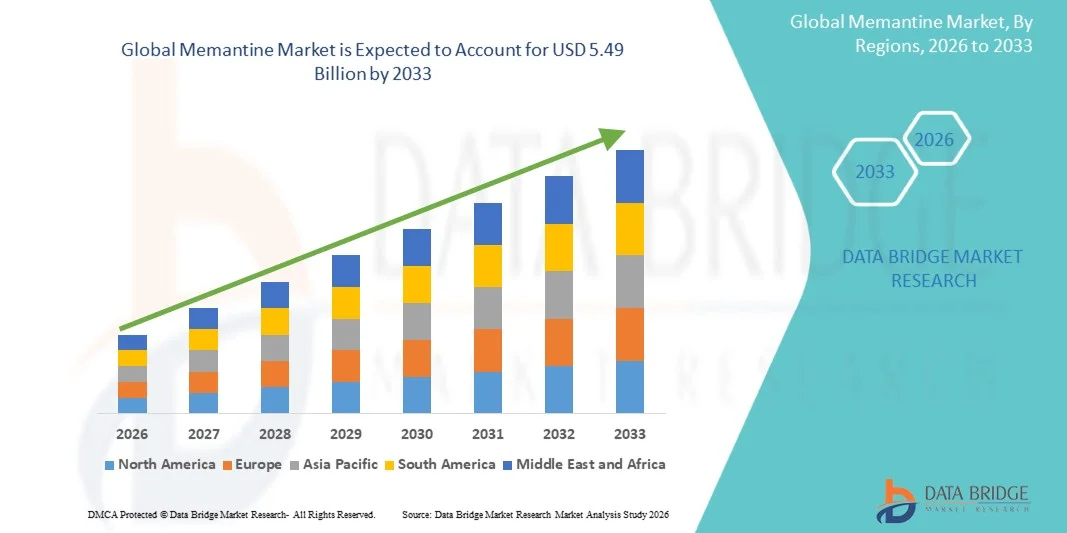
The global Memantine market was valued at USD 3.15 billion in 2025 and is projected to reach USD 5.49 billion by 2033, growing at a CAGR of 7.20% from 2026 to 2033. The market is witnessing steady growth driven by the rising prevalence of Alzheimer’s disease and other neurodegenerative disorders, increasing geriatric population, and growing awareness of cognitive impairment treatments.
The expanding burden of dementia worldwide, combined with improved diagnosis rates and broader access to central nervous system (CNS) therapeutics, is supporting demand for Memantine-based therapies. In addition, the increasing adoption of combination therapies (such as memantine with donepezil), along with ongoing generic drug penetration and supportive healthcare reimbursement frameworks in developed markets, is further driving market expansion across hospitals, retail pharmacies, and online distribution channels.
Key Market Trends & Insights
- North America dominated the global Memantine market with the largest revenue share of 38.62% in 2025, supported by high Alzheimer’s disease prevalence, strong healthcare infrastructure, and widespread access to advanced CNS therapeutics.
- The N-Methyl-D-aspartate (NMDA) Receptor Antagonist segment led the market with a 92.35% share in 2025, driven by the fact that Memantine is a core and widely prescribed NMDA receptor antagonist for moderate-to-severe Alzheimer’s disease
- Asia-Pacific is expected to be the fastest-growing region at a CAGR of 9.4% from 2026 to 2033, fueled by the rapidly aging population, improving diagnostic rates, expanding healthcare access, and rising awareness of dementia treatment options in countries such as China and India.
- Pediatric is the fastest-growing demographic type, projected to register a CAGR of 6.8%, reflecting the surge in rare neurological conditions and experimental use in developmental cognitive disorders.
- The Alzheimer’s disease segment dominated the application category with a 84.15% revenue share in 2025, led by the rapidly increasing global prevalence of Alzheimer’s disease among the aging population, improved diagnostic rates, and strong reliance on Memantine
- Tablet accounted for 72.48% of the market, preferred by its high patient compliance, cost-effectiveness, and widespread availability in generic formulations.
- The oral solution segment is the fastest-growing dosage form category, with a CAGR of 7.1%, driven by increasing demand among elderly patients with swallowing difficulties (dysphagia).
Market Size & Forecast
- Global Market Value (2025): USD 3.15 Billion
- Expected Market Value (2033): USD 5.49 Billion
- Forecast CAGR (2026–2033): 7.20%
- Leading Region in 2025: North America
- Fastest Growing Region: Asia Pacific
Report Scope and Global Memantine Market Segmentation
|
Attributes |
Memantine Key Market Insights |
|
Segments Covered |
|
|
Countries Covered |
North America · U.S. · Canada · Mexico Europe · Germany · France · U.K. · Netherlands · Switzerland · Belgium · Russia · Italy · Spain · Turkey · Rest of Europe Asia-Pacific · China · Japan · India · South Korea · Singapore · Malaysia · Australia · Thailand · Indonesia · Philippines · Rest of Asia-Pacific Middle East and Africa · Saudi Arabia · U.A.E. · South Africa · Egypt · Israel · Rest of Middle East and Africa South America · Brazil · Argentina · Rest of South America |
|
Key Market Players |
· Sun Pharmaceutical Industries Ltd. (India) · Teva Pharmaceutical Industries Ltd. (Israel) · Dr. Reddy’s Laboratories Ltd. (India) · Lupin Limited (India) · Cipla Limited (India) · Aurobindo Pharma Limited (India) · Torrent Pharmaceuticals Ltd. (India) · Zydus Lifesciences Limited (India) · Hetero Drugs Ltd. (India) · Alembic Pharmaceuticals Ltd. (India) · Alkem Laboratories Ltd. (India) · Glenmark Pharmaceuticals Ltd. (India) · Ipca Laboratories Ltd. (India) · Macleods Pharmaceuticals Ltd. (India) · Apotex Inc. (Canada) · H. Lundbeck A/S (Denmark) · Merz Pharmaceuticals GmbH (Germany) · Eisai Co., Ltd. (Japan) · Novartis AG (Switzerland) |
|
Market Opportunities |
· Expansion of combination therapies in moderate-to-severe Alzheimer’s treatment · Rising adoption of generic Memantine in emerging economies · Increasing investment in early-stage dementia diagnosis programs and cognitive screening initiatives |
|
Value Added Data Infosets |
In addition to the insights on market scenarios such as market value, growth rate, segmentation, geographical coverage, and major players, the market reports curated by the Data Bridge Market Research also include in-depth expert analysis, patient epidemiology, pipeline analysis, pricing analysis, and regulatory framework. |
Global Memantine Market Trends
Trend: Growing Adoption of Combination Therapy in Alzheimer’s Management
The use of Memantine alongside acetylcholinesterase inhibitors such as donepezil is becoming increasingly common in clinical practice, particularly for patients with moderate-to-severe Alzheimer’s disease. This combination approach is gaining traction because it targets multiple pathways of cognitive decline, offering better control over symptoms such as memory loss, confusion, and behavioral disturbances compared to single-drug therapy. Clinical studies and real-world evidence continue to support improved patient outcomes, which is encouraging neurologists and geriatric specialists to adopt combination regimens more widely. In addition, updated treatment guidelines in several countries are reinforcing this approach, further accelerating its integration into standard care protocols across hospitals and memory clinics
Global Memantine Market Dynamics
Key Market Driver: Rising Prevalence of Alzheimer’s Disease and Aging Population
One of the strongest growth drivers for the Memantine market is the rapidly increasing global elderly population, which directly correlates with higher incidence rates of Alzheimer’s disease and other forms of dementia. As life expectancy rises, especially in developed and emerging economies, healthcare systems are witnessing a significant surge in neurodegenerative disorder cases. At the same time, improvements in diagnostic tools, greater awareness among caregivers, and increased neurological screening are leading to earlier and more frequent identification of Alzheimer’s patients. This is expanding the treated population base, thereby boosting demand for symptomatic therapies such as Memantine, which is widely used in moderate-to-severe stages to help manage cognitive and functional decline and improve quality of life.
Key Restraint/Challenge: Generic Competition and Pricing Pressure
The Memantine market faces strong pricing pressure due to extensive penetration of generic versions following patent expirations of branded drugs. This has led to intense competition among pharmaceutical manufacturers, significantly reducing average selling prices and limiting revenue growth potential despite rising patient numbers. In many regions, especially price-sensitive markets, healthcare providers and payers prefer low-cost generics over branded formulations, further intensifying margin pressure. In addition, reimbursement policies in several healthcare systems encourage cost containment, which restricts premium pricing strategies and makes it challenging for companies to differentiate their products beyond basic bioequivalence.
Key Market Opportunity: Expansion of Early Diagnosis and Dementia Screening Programs
The increasing global emphasis on early detection of Alzheimer’s disease and structured cognitive screening programs presents a major opportunity for Memantine market expansion. Governments and healthcare organizations are investing in public health initiatives aimed at identifying dementia at earlier stages, which allows for earlier therapeutic intervention and better long-term disease management. As more patients are diagnosed before reaching advanced stages, there is a growing window for initiating Memantine therapy as part of combination or staged treatment approaches. In addition, rising awareness campaigns, improved access to neurological consultations, and expansion of memory clinics particularly in emerging economies are expected to significantly increase the overall treated patient pool, driving sustained demand growth for Memantine-based therapies.
Global Memantine Market Scope
The Memantine market is segmented on the basis of drug class, application, demographic, dosage form, end-users, and distribution channel.
- By Drug Class
On the basis of drug class, the global Memantine market is segmented into N-Methyl-D-aspartate (NMDA) receptor antagonists and others. The NMDA receptor antagonist segment dominated the market with a majority share of 92.35% in 2025, as Memantine itself is a primary NMDA receptor antagonist widely prescribed for moderate-to-severe Alzheimer’s disease. This mechanism helps regulate glutamate activity in the brain, reducing neurotoxicity and slowing cognitive decline progression. Its strong clinical validation and inclusion in global treatment guidelines reinforce its dominance. High prescription rates across hospitals and neurology clinics further support this segment. In addition, widespread availability of generic formulations enhances accessibility across both developed and emerging markets. Continuous reliance on NMDA-targeted therapies in Alzheimer’s care ensures sustained leadership of this segment.
The “Others” segment is projected to be the fastest growing at a CAGR of 7.6% from 2026 to 2033, driven by research into adjunct and combination neurological therapies. This includes emerging supportive drug classes used alongside Memantine to enhance cognitive outcomes or manage behavioral symptoms. Increasing focus on multi-target treatment strategies in dementia care is expanding this category. Pharmaceutical R&D investments in neuroprotective and disease-modifying agents are further accelerating growth. In addition, evolving clinical trials exploring novel CNS pathways are contributing to pipeline expansion. Growing demand for personalized treatment approaches in neurodegenerative disorders is expected to strengthen this segment over time.
- By Application
On the basis of application, the market is segmented into Alzheimer’s disease and others. The Alzheimer’s disease segment dominated the market with a share of 84.15% in 2025, as Memantine is primarily indicated for moderate-to-severe Alzheimer’s-related cognitive impairment. The increasing global burden of dementia, particularly among the aging population, continues to drive prescription volumes. Improved diagnosis rates and awareness campaigns are leading to earlier treatment initiation in clinical settings. Hospitals and memory care centers widely rely on Memantine as part of standard treatment protocols. Its proven efficacy in improving daily functioning and slowing symptom progression reinforces its dominance. Strong inclusion in clinical guidelines across major healthcare systems further strengthens this segment.
The “Others” segment is expected to be the fastest growing at a CAGR of 7.3% from 2026 to 2033, driven by exploratory use in other neurocognitive and psychiatric conditions. Research into off-label applications such as vascular dementia and Parkinson’s-related cognitive impairment is expanding its potential scope. Increasing clinical trials evaluating broader CNS benefits are contributing to demand growth. Rising interest in repurposing established CNS drugs for multiple indications is also supporting expansion. In addition, growing neurological disorder prevalence beyond Alzheimer’s is creating incremental opportunities. Expanding physician awareness of Memantine’s neuroprotective properties is further accelerating this segment.
- By Demographic
On the basis of demographic, the market is segmented into adult and pediatric. The adult segment dominated the market with a share of 98.21% in 2025, as Alzheimer’s disease and most dementia-related conditions primarily affect the elderly adult population. The rising global geriatric population is the core driver behind this dominance. Adults above 60 years represent the highest prescription base for Memantine therapy worldwide. Strong clinical focus on age-related cognitive decline further supports this segment. Healthcare systems prioritize adult neurological care programs due to higher disease prevalence. Widespread hospital-based diagnosis and long-term treatment plans reinforce consistent demand.
The pediatric segment is projected to be the fastest growing at a CAGR of 6.8% from 2026 to 2033, although from a very small base, driven by rare neurological conditions and experimental use in developmental cognitive disorders. Increasing research into pediatric neuroprotection and off-label applications is gradually expanding its scope. Advancements in pediatric neurology diagnostics are enabling better identification of cognitive dysfunction cases. Pharmaceutical companies are cautiously exploring safety profiles in younger populations. Rising focus on rare and orphan neurological diseases is further contributing to growth. However, strict regulatory oversight continues to limit widespread adoption.
- By Dosage Form
On the basis of dosage form, the market is segmented into tablets, oral solution, and extended-release capsules. The tablet segment dominated the market with a share of 72.48% in 2025, due to its high patient compliance, cost-effectiveness, and widespread availability in generic formulations. Tablets are the most commonly prescribed form in both hospital and retail settings. They offer ease of storage, dosing accuracy, and long shelf life, making them suitable for long-term therapy. Strong physician preference and established prescription habits further support dominance. Broad manufacturing scalability by generic drug producers ensures global availability. The segment benefits from extensive reimbursement coverage in many healthcare systems.
The oral solution segment is expected to be the fastest growing at a CAGR of 7.1% from 2026 to 2033, driven by increasing demand among elderly patients with swallowing difficulties (dysphagia). It allows flexible dosing adjustments and is preferred in advanced-stage dementia care. Growing adoption in home healthcare and assisted living facilities is further boosting demand. Improved formulation stability and taste-masking technologies are enhancing patient compliance. Rising awareness among caregivers regarding ease of administration is also supporting growth. Expanding geriatric care infrastructure globally continues to accelerate this segment.
- By End-Users
On the basis of end-users, the market is segmented into clinics, hospitals, and others. The hospital segment dominated the market with a share of 46.37% in 2025, due to higher patient inflow for neurological diagnosis and treatment initiation. Hospitals serve as primary centers for Alzheimer’s diagnosis and long-term disease management. Availability of specialized neurologists and advanced diagnostic infrastructure strengthens this segment. Hospital-based prescription practices ensure standardized treatment protocols. Strong integration with pharmacy networks further supports medication access. In addition, reimbursement systems are more structured in hospital settings, driving higher utilization.
The clinic segment is projected to be the fastest growing at a CAGR of 7.4% from 2026 to 2033, driven by the expansion of outpatient neurological care and memory clinics. Patients increasingly prefer clinics for early diagnosis and follow-up management due to convenience and lower costs. Rising number of private neurology practices is expanding access to treatment. Clinics are also playing a growing role in long-term dementia monitoring and therapy adjustments. Improved awareness of cognitive health is increasing outpatient consultations. Growing healthcare decentralization is further accelerating this segment.
- By Distribution Channel
On the basis of distribution channel, the market is segmented into hospital pharmacy, retail pharmacy, and online pharmacy. The hospital pharmacy segment dominated the market with a share of 46.37% in 2025, due to strong linkage with hospital-based diagnosis and prescription initiation. Patients diagnosed with Alzheimer’s in hospitals typically receive direct medication dispensing through in-house pharmacies. This ensures continuity of care and controlled drug distribution. Institutional purchasing agreements and reimbursement frameworks further support dominance. High prescription volumes in inpatient and specialty care settings reinforce this segment’s leadership. Hospital pharmacies remain critical in managing chronic neurological therapies.
The online pharmacy segment is expected to be the fastest growing at a CAGR of 8.0% from 2026 to 2033, driven by increasing digital healthcare adoption and home delivery convenience for chronic patients. Caregivers of Alzheimer’s patients increasingly prefer online ordering for regular medication refills. Expansion of e-pharmacy platforms and telemedicine integration is supporting market growth. Improved regulatory frameworks for online drug sales are enhancing trust and accessibility. Rising smartphone penetration and digital literacy among caregivers are further boosting adoption. The segment is also benefiting from growing demand for contactless healthcare solutions.
Global Memantine Market Regional Analysis
North America dominated the global Memantine market with the largest revenue share of 38.62% in 2025, supported by high Alzheimer’s disease prevalence, strong healthcare infrastructure, and widespread access to advanced CNS therapeutics. The region benefits from early diagnosis rates, widespread availability of branded and generic Memantine formulations, and well-established reimbursement frameworks that support long-term treatment adoption. In addition, strong presence of leading pharmaceutical companies, active neurology research, and high awareness of dementia management further reinforce market leadership. Increasing geriatric population and continuous improvements in cognitive disorder screening and care pathways continue to strengthen North America’s dominance in the global market.
U.S. Memantine Market Insight
The U.S. Memantine market is witnessing strong growth due to the high prevalence of Alzheimer’s disease, advanced neurological care infrastructure, and widespread access to branded and generic CNS therapies. The country benefits from early diagnosis practices, strong reimbursement coverage, and extensive adoption of combination therapies for dementia management. In addition, the presence of leading pharmaceutical companies, ongoing clinical research in neurodegenerative disorders, and increasing awareness of cognitive health are driving market expansion across hospitals, specialty clinics, and retail pharmacies.
Europe Memantine Market Insight
The Europe Memantine market remains a significant contributor to global revenue, driven by a rapidly aging population, strong public healthcare systems, and established treatment guidelines for Alzheimer’s disease. Widespread use of generic Memantine, coupled with government-supported dementia care programs, is supporting consistent demand across the region. Increasing investments in early diagnosis, memory care centers, and neurological research are further strengthening market adoption. In addition, rising awareness of neurodegenerative disorders and structured reimbursement frameworks continue to support steady market growth.
U.K. Memantine Market Insight
The U.K. Memantine market is experiencing steady growth, supported by rising Alzheimer’s disease prevalence, strong NHS-backed treatment frameworks, and increasing focus on dementia care initiatives. Widespread prescription of Memantine in moderate-to-severe Alzheimer’s cases and strong adoption of cost-effective generics are contributing to market expansion. Furthermore, growing integration of digital health tools for cognitive assessment and increasing emphasis on early diagnosis and community-based care are enhancing treatment accessibility and driving market growth.
Germany Memantine Market Insight
The Germany Memantine market is expanding steadily due to its strong geriatric population base, advanced healthcare infrastructure, and high diagnosis rates of neurodegenerative disorders. Pharmaceutical accessibility, robust reimbursement systems, and strong physician adherence to clinical guidelines are supporting widespread Memantine use. In addition, increasing focus on dementia research, expansion of neurological care facilities, and rising adoption of combination therapies are further driving demand across hospital and retail pharmacy channels.
Asia-Pacific Memantine Market Insight
The Asia-Pacific Memantine market is expected to witness rapid growth, driven by a large aging population, improving healthcare access, and increasing awareness of Alzheimer’s disease across emerging economies. Expanding diagnostic capabilities, rising government focus on dementia care, and growing availability of affordable generics are supporting regional adoption. In addition, increasing investments in neurological healthcare infrastructure and expanding pharmaceutical distribution networks are accelerating market penetration across both urban and semi-urban areas.
Japan Memantine Market Insight
The Japan Memantine market is witnessing consistent growth due to one of the world’s most rapidly aging populations and high prevalence of age-related cognitive disorders. Strong healthcare coverage, early diagnosis practices, and established dementia care programs are driving steady demand for Memantine therapy. In addition, increasing adoption of combination treatments and continuous advancements in geriatric care services are further supporting market growth across hospitals and long-term care facilities.
China Memantine Market Insight
The China Memantine market is growing rapidly, driven by a large elderly population, rising burden of Alzheimer’s disease, and improving awareness of neurodegenerative conditions. Expanding healthcare infrastructure, increasing diagnosis rates, and strong penetration of generic pharmaceuticals are significantly boosting market demand. Furthermore, government initiatives focused on elderly care, growing hospital capacity, and wider access to neurological treatments are positioning China as one of the fastest-growing Memantine markets globally.
Global Memantine Market Share
The Memantine industry is primarily led by well-established companies, including:
- Sun Pharmaceutical Industries Ltd. (India)
- Teva Pharmaceutical Industries Ltd. (Israel)
- Reddy’s Laboratories Ltd. (India)
- Lupin Limited (India)
- Cipla Limited (India)
- Aurobindo Pharma Limited (India)
- Torrent Pharmaceuticals Ltd. (India)
- Zydus Lifesciences Limited (India)
- Hetero Drugs Ltd. (India)
- Alembic Pharmaceuticals Ltd. (India)
- Alkem Laboratories Ltd. (India)
- Glenmark Pharmaceuticals Ltd. (India)
- Ipca Laboratories Ltd. (India)
- Macleods Pharmaceuticals Ltd. (India)
- Apotex Inc. (Canada)
- Lundbeck A/S (Denmark)
- Merz Pharmaceuticals GmbH (Germany)
- Eisai Co., Ltd. (Japan)
- Novartis AG (Switzerland)
Latest Developments in Global Memantine Market
- In April 2026, the U.S. FDA approved a new treatment option for agitation associated with Alzheimer’s disease, strengthening the broader therapeutic landscape in which Memantine is widely used for moderate-to-severe cognitive impairment. This development supports combination-based management approaches in dementia care, where Memantine continues to play a key role in symptom control and cognitive stabilization
- In January 2025, the U.S. FDA approved a generic extended-release combination of memantine and donepezil for the treatment of moderate-to-severe Alzheimer’s disease. This approval improved patient access to combination therapy by increasing affordability and availability of treatment options, strengthening the use of Memantine in routine clinical practice
- In July 2024, the U.S. FDA approved donanemab (Kisunla) for Alzheimer’s disease, introducing another disease-modifying therapy in the treatment landscape. While targeting early-stage Alzheimer’s, its approval indirectly reinforces the continued need for symptomatic treatments such as Memantine in later-stage disease management
- In July 2023, the FDA granted approval to lecanemab (Leqembi), a monoclonal antibody targeting amyloid plaques in Alzheimer’s disease. This advancement has reshaped treatment pathways and increased combination use scenarios where Memantine remains a core symptomatic therapy in moderate-to-severe stages
- In February 2022, regulatory updates continued to support the established use of memantine hydrochloride formulations for Alzheimer’s disease treatment. These approvals reinforced its position as a standard NMDA receptor antagonist therapy, ensuring continued global availability and widespread generic market expansion
SKU-
Get online access to the report on the World's First Market Intelligence Cloud

- Interactive Data Analysis Dashboard
- Company Analysis Dashboard for high growth potential opportunities
- Research Analyst Access for customization & queries
- Competitor Analysis with Interactive dashboard
- Latest News, Updates & Trend analysis
- Harness the Power of Benchmark Analysis for Comprehensive Competitor Tracking
Research Methodology
Data collection and base year analysis are done using data collection modules with large sample sizes. The stage includes obtaining market information or related data through various sources and strategies. It includes examining and planning all the data acquired from the past in advance. It likewise envelops the examination of information inconsistencies seen across different information sources. The market data is analysed and estimated using market statistical and coherent models. Also, market share analysis and key trend analysis are the major success factors in the market report. To know more, please request an analyst call or drop down your inquiry.
The key research methodology used by DBMR research team is data triangulation which involves data mining, analysis of the impact of data variables on the market and primary (industry expert) validation. Data models include Vendor Positioning Grid, Market Time Line Analysis, Market Overview and Guide, Company Positioning Grid, Patent Analysis, Pricing Analysis, Company Market Share Analysis, Standards of Measurement, Global versus Regional and Vendor Share Analysis. To know more about the research methodology, drop in an inquiry to speak to our industry experts.
Customization Available
Data Bridge Market Research is a leader in advanced formative research. We take pride in servicing our existing and new customers with data and analysis that match and suits their goal. The report can be customized to include price trend analysis of target brands understanding the market for additional countries (ask for the list of countries), clinical trial results data, literature review, refurbished market and product base analysis. Market analysis of target competitors can be analyzed from technology-based analysis to market portfolio strategies. We can add as many competitors that you require data about in the format and data style you are looking for. Our team of analysts can also provide you data in crude raw excel files pivot tables (Fact book) or can assist you in creating presentations from the data sets available in the report.












