Global Membranous Nephropathy Market
Market Size in USD Billion
CAGR :
% 
 USD
575.21 Billion
USD
783.58 Billion
2025
2033
USD
575.21 Billion
USD
783.58 Billion
2025
2033
 Forecast Period Forecast Period |
2026 –2033 |
 Market Size (Base Year) Market Size (Base Year) |
USD 575.21 Billion |
 Market Size (Forecast Year) Market Size (Forecast Year) |
USD 783.58 Billion |
 CAGR CAGR |
% |
| Major Markets Players |
|
Membranous Nephropathy Market Size
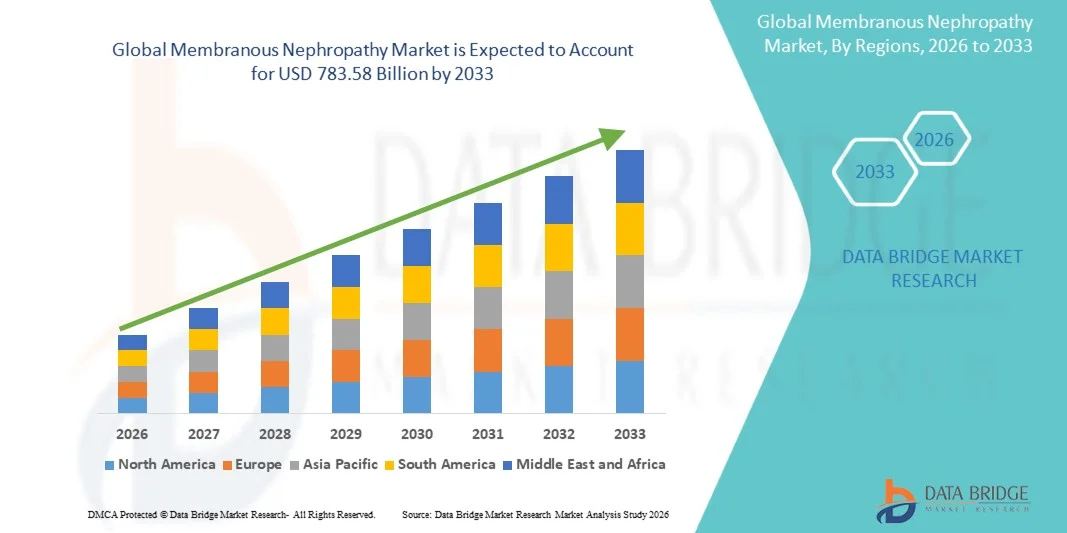
- The global membranous nephropathy market size was valued at USD 575.21 billion in 2025and is expected to reach USD 783.58 billion by 2033, at a CAGR of 3.94% during the forecast period
- The market growth is largely fueled by the increasing prevalence of autoimmune kidney disorders and rising awareness regarding chronic renal diseases, leading to greater demand for advanced nephrology treatments and targeted therapeutic solutions across healthcare systems
- Furthermore, growing investments in biologic drug development, increasing adoption of immunosuppressive therapies, and rising focus on precision medicine are establishing innovative therapeutics as the preferred treatment approach for Membranous Nephropathy. These converging factors are accelerating the uptake of Membranous Nephropathy treatment solutions, thereby significantly boosting the industry’s growth
Membranous Nephropathy Market Analysis
- Membranous Nephropathy therapeutics are increasingly vital in nephrology care due to their role in reducing proteinuria, preserving kidney function, and improving long-term renal outcomes across hospitals and specialty clinics
- The escalating demand for Membranous Nephropathy treatments is primarily fueled by the rising prevalence of autoimmune kidney disorders, growing awareness regarding chronic renal diseases, and increasing adoption of targeted biologics and immunosuppressive therapies
- North America dominated the membranous nephropathy market with the largest revenue share of 41.9% in 2025, characterized by advanced healthcare infrastructure, strong clinical research capabilities, and a robust presence of leading biopharmaceutical companies, with the U.S. experiencing substantial growth in the adoption of innovative nephrology therapies driven by increasing regulatory approvals and ongoing development of targeted renal biologics
- Asia-Pacific is expected to be the fastest growing region in the membranous nephropathy market during the forecast period due to increasing healthcare expenditure, rising awareness regarding kidney disease management, and improving access to specialty nephrology treatment services
- The primary membranous nephropathy segment accounted for the largest market revenue share of 71.5% in 2025, driven by its higher prevalence as an idiopathic autoimmune kidney disorder
Report Scope and Membranous Nephropathy Market Segmentation
|
Attributes |
Membranous Nephropathy Key Market Insights |
|
Segments Covered |
|
|
Countries Covered |
North America · U.S. · Canada · Mexico Europe · Germany · France · U.K. · Netherlands · Switzerland · Belgium · Russia · Italy · Spain · Turkey · Rest of Europe Asia-Pacific · China · Japan · India · South Korea · Singapore · Malaysia · Australia · Thailand · Indonesia · Philippines · Rest of Asia-Pacific Middle East and Africa · Saudi Arabia · U.A.E. · South Africa · Egypt · Israel · Rest of Middle East and Africa South America · Brazil · Argentina · Rest of South America |
|
Key Market Players |
· Novartis AG (Switzerland) · F. Hoffmann-La Roche Ltd. (Switzerland) · AstraZeneca (U.K.) · Bristol Myers Squibb (U.S.) · Pfizer Inc. (U.S.) · AbbVie Inc. (U.S.) · Amgen Inc. (U.S.) · Sanofi (France) · Eli Lilly and Company (U.S.) · Regeneron Pharmaceuticals, Inc. (U.S.) · Otsuka Pharmaceutical Co., Ltd. (Japan) · Takeda Pharmaceutical Company Limited (Japan) · Travere Therapeutics, Inc. (U.S.) · Aurinia Pharmaceuticals Inc. (Canada) · Calliditas Therapeutics AB (Sweden) · CSL Limited (Australia) · Alexion Pharmaceuticals, Inc. (U.S.) · Apellis Pharmaceuticals, Inc. (U.S.) · Biogen Inc. (U.S.) · Vertex Pharmaceuticals Incorporated (U.S.) |
|
Market Opportunities |
· Increasing development of targeted biologics and complement pathway inhibitors · Rising awareness regarding early diagnosis of autoimmune kidney disorders |
|
Value Added Data Infosets |
In addition to the insights on market scenarios such as market value, growth rate, segmentation, geographical coverage, and major players, the market reports curated by the Data Bridge Market Research also include in-depth expert analysis, patient epidemiology, pipeline analysis, pricing analysis, and regulatory framework. |
Membranous Nephropathy Market Trends
“Increasing Focus on Complement Pathway Inhibition and Targeted Biologic Therapies”
- A significant and rapidly evolving trend in the global Membranous Nephropathy market is the growing emphasis on complement pathway inhibition and targeted biologic therapies aimed at addressing the underlying immune-mediated mechanisms of the disease
- Pharmaceutical and biotechnology companies are increasingly focusing on developing novel agents that target key immune pathways, particularly the phospholipase A2 receptor (PLA2R)-associated autoimmune response, which is strongly linked to primary membranous nephropathy
- For instance, multiple clinical-stage therapies such as anti-CD20 monoclonal antibodies, complement inhibitors, and selective immunomodulators are being evaluated to reduce proteinuria and slow the progression of kidney damage in affected patients
- The shift toward precision medicine is enabling more personalized treatment approaches based on antibody profiling, disease severity, and patient-specific immune activity, improving clinical outcomes and reducing unnecessary exposure to broad immunosuppressive therapies
- Furthermore, advancements in biomarker identification and diagnostic technologies are improving early detection and disease monitoring, allowing physicians to better stratify patients and optimize treatment strategies
- The increasing number of clinical trials, orphan drug designations, and research collaborations in rare kidney diseases is accelerating innovation and expanding the pipeline of targeted therapies for membranous nephropathy
- This trend toward mechanism-specific biologics and individualized treatment strategies is significantly transforming the therapeutic landscape of membranous nephropathy globally
Membranous Nephropathy Market Dynamics
Driver
“Growing Need Due to Rising Prevalence of Autoimmune Kidney Disorders and Advancements in Renal Research”
- The increasing prevalence of autoimmune-related kidney disorders and chronic glomerular diseases is a key factor driving the growth of the global Membranous Nephropathy market
- Rising awareness among healthcare professionals regarding early diagnosis and improved disease classification is contributing to higher detection rates and earlier intervention in membranous nephropathy cases
- For instance, expanding research initiatives in nephrology and increased funding for rare kidney disease studies are supporting the development of innovative therapeutic approaches and accelerating clinical trials globally
- Furthermore, advancements in immunosuppressive therapies and biologic drugs are improving treatment outcomes by helping reduce proteinuria, preserve kidney function, and delay progression to end-stage renal disease
- The growing aging population, along with increasing incidences of hypertension, diabetes, and other chronic conditions, is also contributing to a higher burden of kidney-related disorders, thereby driving demand for effective treatment options
- In addition, improved access to kidney biopsy procedures, enhanced diagnostic accuracy, and expanding nephrology care infrastructure are supporting earlier diagnosis and better disease management
- Supportive regulatory frameworks for orphan drug development and increasing healthcare investments in rare disease treatment are further accelerating market growth
Restraint/Challenge
“High Treatment Costs and Limited Availability of Targeted Therapies”
- The high cost associated with advanced biologic therapies and long-term immunosuppressive treatments remains a significant challenge restraining the growth of the Membranous Nephropathy market
- Many patients require prolonged treatment regimens, continuous monitoring, and specialized diagnostic evaluations, resulting in substantial financial burdens for both healthcare systems and patients, particularly in developing regions
- For instance, novel biologic agents and targeted therapies under development often involve high research and manufacturing costs, leading to expensive treatment options that may limit accessibility
- In addition, the limited availability of approved targeted therapies specifically for membranous nephropathy continues to create treatment gaps, with many patients still relying on conventional immunosuppressive drugs that may have variable efficacy and notable side effects
- Furthermore, delayed diagnosis and lack of disease awareness among general healthcare providers can result in late-stage intervention, reducing the effectiveness of available treatments
- The absence of standardized global treatment protocols and inconsistent reimbursement policies across regions also pose barriers to widespread adoption of advanced therapies
- Addressing these challenges through expanded research funding, improved affordability of biologics, enhanced awareness initiatives, and broader access to specialized nephrology care will be essential for sustaining long-term growth in the global Membranous Nephropathy market
Membranous Nephropathy Market Scope
The market is segmented on the basis of treatment, drug class, type, end-users, and distribution channel.
- By Treatment
On the basis of treatment, the Membranous Nephropathy market is segmented into conservative therapy, non-immunosuppressive therapy, immunosuppressive therapy, and others. The conservative therapy segment dominated the largest market revenue share of 38.9% in 2025, driven by its widespread use as an initial management approach in early-stage membranous nephropathy patients. Conservative therapy primarily focuses on blood pressure control, proteinuria reduction, and kidney function preservation through ACE inhibitors, ARBs, and lifestyle modifications. Physicians often prefer this approach for patients with mild to moderate disease progression to delay the need for aggressive immunosuppressive interventions. Increasing awareness regarding early-stage diagnosis and routine renal screening is further supporting segment growth globally. In addition, the relatively low cost and easy accessibility of conservative treatments make them widely adopted across healthcare settings. Growing emphasis on preventive nephrology care and long-term disease monitoring also strengthens the segment’s dominance. Continuous clinical guidelines supporting stepwise treatment strategies further reinforce its adoption in global practice.
The immunosuppressive therapy segment is anticipated to witness the fastest growth rate with a CAGR of 22.3% from 2026 to 2033, driven by the increasing prevalence of moderate to severe membranous nephropathy cases requiring targeted immune modulation. Immunosuppressive agents such as corticosteroids, calcineurin inhibitors, and biologics are increasingly used to reduce immune complex deposition and slow disease progression. Rising clinical adoption of personalized treatment approaches and advancements in targeted biologic therapies are significantly contributing to segment expansion. In addition, increasing research into complement inhibition and novel immune-targeting drugs is further accelerating growth. Healthcare providers are increasingly shifting toward early initiation of immunosuppressive therapy in high-risk patients to prevent end-stage renal disease progression. Expanding reimbursement coverage for advanced renal therapeutics and growing investment in rare kidney disease drug development are also supporting market growth globally.
- By Drug Class
On the basis of drug class, the Membranous Nephropathy market is segmented into alkylating agents, cyclophosphamide, chlorambucil, cyclic peptides, tacrolimus, mycophenolate mofetil, and others. The cyclophosphamide segment held the largest market revenue share of 26.7% in 2025, driven by its long-established clinical efficacy in reducing proteinuria and inducing remission in membranous nephropathy patients. Cyclophosphamide is widely used in combination with corticosteroids as a standard immunosuppressive regimen for moderate to severe cases. Physicians prefer this drug due to its proven outcomes in slowing disease progression and improving long-term renal survival rates. Increasing adoption of guideline-based treatment protocols and extensive clinical experience further support its strong market presence. In addition, its availability as a cost-effective therapeutic option enhances accessibility across both developed and emerging healthcare systems. Continuous monitoring and well-established dosing protocols also contribute to its sustained usage in nephrology practice.
The cyclic peptides segment is expected to witness the fastest CAGR of 23.1% from 2026 to 2033, driven by increasing adoption of advanced immunosuppressive therapies such as calcineurin inhibitors, including tacrolimus and cyclosporine. These agents are gaining significant traction due to their targeted immune modulation capabilities and improved efficacy in reducing proteinuria. Rising clinical preference for biologically advanced and kidney-protective therapies is supporting segment growth globally. In addition, ongoing research into safer formulations with reduced nephrotoxicity is further accelerating adoption. The shift toward precision medicine and individualized treatment regimens is also contributing to increased utilization of cyclic peptide-based therapies. Expanding clinical trials and growing availability of advanced nephrology drugs are expected to further strengthen this segment during the forecast period.
- By Type
On the basis of type, the Membranous Nephropathy market is segmented into primary and secondary. The primary membranous nephropathy segment accounted for the largest market revenue share of 71.5% in 2025, driven by its higher prevalence as an idiopathic autoimmune kidney disorder. Primary membranous nephropathy is characterized by immune complex deposition in the glomerular basement membrane without any identifiable secondary cause, making it the most commonly diagnosed form. Increasing awareness regarding autoimmune kidney diseases and advancements in diagnostic biomarkers such as PLA2R antibodies are significantly improving detection rates. Physicians frequently adopt immunosuppressive and conservative treatment strategies for managing disease progression in primary cases. Rising incidence of chronic kidney disorders and improved nephrology screening programs are further contributing to segment dominance. In addition, expanding research into autoimmune mechanisms and complement pathway involvement is supporting therapeutic advancements. The growing availability of targeted biologic therapies is also strengthening long-term treatment outcomes for primary disease management.
The secondary membranous nephropathy segment is anticipated to witness the fastest CAGR of 20.6% from 2026 to 2033, driven by the increasing prevalence of underlying conditions such as infections, malignancies, and autoimmune diseases. Secondary cases are increasingly being identified due to improved diagnostic accuracy and greater clinical awareness. Healthcare providers are focusing on early identification and treatment of underlying causes to manage disease progression effectively. In addition, rising global burden of cancer and chronic infectious diseases is contributing to segment expansion. Advances in diagnostic imaging and laboratory testing are further improving detection rates of secondary membranous nephropathy. The growing emphasis on multidisciplinary treatment approaches is expected to support sustained market growth during the forecast period.
- By End-Users
On the basis of end-users, the Membranous Nephropathy market is segmented into hospitals, homecare, specialty centres, and others. The hospitals segment dominated the largest market revenue share of 46.8% in 2025, driven by the availability of advanced diagnostic infrastructure, nephrology specialists, and comprehensive treatment facilities. Hospitals serve as primary care centers for moderate to severe membranous nephropathy cases requiring immunosuppressive therapy, renal biopsy, and continuous monitoring. Increasing hospital admissions related to chronic kidney diseases and autoimmune disorders is significantly supporting segment growth globally. In addition, hospitals are the main providers of advanced biologic and immunosuppressive treatments requiring strict clinical supervision. Government investments in healthcare infrastructure and expansion of nephrology departments are further strengthening market dominance. Hospitals also play a crucial role in clinical trials and research activities for novel kidney disease therapies. The availability of advanced laboratory services and integrated care systems further enhances patient management outcomes.
The specialty centres segment is expected to witness the fastest CAGR of 21.4% from 2026 to 2033, driven by increasing demand for specialized kidney disease management and personalized treatment approaches. Specialty nephrology centres offer focused expertise in glomerular diseases, enabling faster diagnosis and tailored treatment plans. Rising patient preference for outpatient care and reduced hospital dependency is contributing to segment growth. In addition, the expansion of private nephrology clinics and dedicated renal care units is accelerating adoption globally. Technological advancements in diagnostic tools and increasing awareness regarding early disease management are further supporting market expansion. The growing focus on precision nephrology and individualized treatment strategies is expected to drive strong growth in this segment.
- By Distribution Channel
On the basis of distribution channel, the Membranous Nephropathy market is segmented into hospital pharmacy, online pharmacy, and retail pharmacy. The hospital pharmacy segment held the largest market revenue share of 49.3% in 2025, driven by the high volume of prescriptions for immunosuppressive therapies, biologics, and renal supportive drugs dispensed within hospital settings. Hospital pharmacies play a critical role in ensuring controlled distribution and proper administration of high-risk nephrology medications. The presence of trained pharmacists and integrated clinical monitoring systems further supports segment dominance globally. Increasing hospitalization rates for chronic kidney disease and autoimmune renal disorders are also contributing to market growth. In addition, hospitals ensure timely availability of advanced therapies for inpatients undergoing intensive treatment. Collaborations between pharmaceutical companies and hospital networks for specialty drug supply further strengthen this segment. The growing adoption of hospital-based renal care programs and reimbursement support for expensive therapies also contribute to market expansion.
The online pharmacy segment is anticipated to witness the fastest CAGR of 23.5% from 2026 to 2033, driven by rapid digitalization in healthcare and increasing patient preference for convenient medicine access. Online pharmacies offer benefits such as home delivery, subscription-based refill services, and cost-effective pricing for long-term renal medications. Rising internet penetration and smartphone usage are significantly supporting the growth of digital pharmaceutical platforms. Patients increasingly prefer online channels for repeat prescriptions due to convenience and reduced healthcare access barriers. In addition, supportive regulatory frameworks for telemedicine and e-pharmacy services are accelerating adoption globally. Improvements in digital payment security and pharmaceutical logistics infrastructure are further enhancing market expansion.
Membranous Nephropathy Market Regional Analysis
- North America dominated the membranous nephropathy market with the largest revenue share of 41.9% in 2025, characterized by advanced healthcare infrastructure, strong clinical research capabilities, and a robust presence of leading biopharmaceutical companies. The region is witnessing substantial growth in the adoption of innovative nephrology therapies, driven by increasing regulatory approvals and the ongoing development of targeted renal biologics for the treatment of membranous nephropathy
- Rising prevalence of autoimmune and chronic kidney disorders, increasing awareness regarding early diagnosis, and growing adoption of precision medicine approaches are further supporting market expansion across North America. In addition, favorable reimbursement frameworks and strong investment in rare kidney disease research are accelerating the availability of advanced therapeutic options
- The presence of specialized nephrology centers, extensive clinical trial activity, and strong collaboration between pharmaceutical companies and research institutions continues to reinforce North America’s leadership in the Membranous Nephropathy market
U.S. Membranous Nephropathy Market Insight
The U.S. membranous nephropathy market captured the largest revenue share in 2025 within North America, fueled by increasing cases of immune-mediated kidney disorders and strong adoption of advanced biologic therapies. The country is experiencing significant growth in clinical trials focused on targeted renal treatments, supported by rapid regulatory approvals for innovative nephrology drugs. Furthermore, rising healthcare expenditure, strong presence of major biopharmaceutical companies, and increasing use of precision medicine approaches are contributing substantially to market expansion in the U.S.
Europe Membranous Nephropathy Market Insight
The Europe membranous nephropathy market is projected to expand at a substantial CAGR throughout the forecast period, primarily driven by increasing awareness regarding rare kidney diseases and improving access to advanced nephrology care. The region benefits from strong healthcare systems, supportive orphan drug policies, and rising investments in clinical research for renal disorders. In addition, growing emphasis on early diagnosis and personalized treatment strategies is encouraging the adoption of innovative biologic therapies across Europe.
U.K. Membranous Nephropathy Market Insight
The U.K. membranous nephropathy market is anticipated to grow at a noteworthy CAGR during the forecast period, driven by increasing prevalence of chronic kidney diseases and expanding access to specialty nephrology services. The country’s strong clinical research ecosystem and increasing participation in global renal disease trials are supporting market growth. Moreover, favorable reimbursement policies and rising awareness regarding autoimmune kidney disorders are further driving the adoption of advanced treatment options in the U.K.
Germany Membranous Nephropathy Market Insight
The Germany membranous nephropathy market is expected to expand at a considerable CAGR during the forecast period, fueled by advanced healthcare infrastructure and strong focus on medical innovation. Germany’s emphasis on biotechnology research and precision medicine is accelerating the development and adoption of targeted therapies for membranous nephropathy. In addition, increasing collaborations between pharmaceutical companies and academic research centers are improving treatment accessibility and supporting market expansion.
Asia-Pacific Membranous Nephropathy Market Insight
The Asia-Pacific membranous nephropathy market is expected to be the fastest growing region during the forecast period due to increasing healthcare expenditure, rising awareness regarding kidney disease management, and improving access to specialty nephrology treatment services. Rapid improvements in healthcare infrastructure across countries such as China, Japan, and India are enabling better diagnosis and treatment of membranous nephropathy. In addition, growing government initiatives focused on chronic disease management and expanding availability of advanced biologic therapies are driving strong regional growth.
Japan Membranous Nephropathy Market Insight
The Japan membranous nephropathy market is gaining momentum due to the country’s aging population, advanced healthcare system, and increasing focus on chronic disease management. Japan’s strong emphasis on clinical research and precision medicine is supporting the adoption of innovative nephrology therapies. Furthermore, rising awareness regarding kidney health and increasing availability of specialized treatment services are contributing to steady market growth.
China Membranous Nephropathy Market Insight
The China membranous nephropathy market accounted for the largest market revenue share in Asia-Pacific in 2025, attributed to rapid improvements in healthcare infrastructure, growing prevalence of kidney diseases, and increasing healthcare investments. China is witnessing rising adoption of advanced nephrology therapies supported by expanding clinical research activities and improving access to specialty care. In addition, strong government initiatives, increasing awareness regarding kidney disease management, and growing availability of biologic treatment options are key factors propelling market growth in the country.
Membranous Nephropathy Market Share
The Membranous Nephropathy industry is primarily led by well-established companies, including:
- Novartis AG (Switzerland)
- Hoffmann-La Roche Ltd. (Switzerland)
- AstraZeneca (U.K.)
- Bristol Myers Squibb (U.S.)
- Pfizer Inc. (U.S.)
- AbbVie Inc. (U.S.)
- Amgen Inc. (U.S.)
- Sanofi (France)
- Eli Lilly and Company (U.S.)
- Regeneron Pharmaceuticals, Inc. (U.S.)
- Otsuka Pharmaceutical Co., Ltd. (Japan)
- Takeda Pharmaceutical Company Limited (Japan)
- Travere Therapeutics, Inc. (U.S.)
- Aurinia Pharmaceuticals Inc. (Canada)
- Calliditas Therapeutics AB (Sweden)
- CSL Limited (Australia)
- Alexion Pharmaceuticals, Inc. (U.S.)
- Apellis Pharmaceuticals, Inc. (U.S.)
- Biogen Inc. (U.S.)
- Vertex Pharmaceuticals Incorporated (U.S.)
Latest Developments in Global Membranous Nephropathy Market
- In December 2021, the U.S. FDA approved Tarpeyo (budesonide) for the treatment of IgA nephropathy, marking one of the earliest targeted-release corticosteroid therapies for glomerular diseases, including broader implications for immune-mediated kidney disorders like membranous nephropathy. This approval represented a shift toward gut-targeted immune modulation in glomerular disease therapy
- In February 2023, the U.S. FDA granted accelerated approval to Filspari (sparsentan) for reducing proteinuria in patients with IgA nephropathy, making it the first non-immunosuppressive dual endothelin and angiotensin receptor antagonist. Its success strengthened the broader development pathway for podocyte-protective therapies also being evaluated in membranous nephropathy
- In February 2024, the European Medicines Agency (EMA) issued a positive opinion for Filspari (sparsentan), supporting its expansion into the European market for IgA nephropathy. This marked a key regulatory expansion for one of the most important new kidney-protective drug classes relevant to membranous nephropathy pipeline research
- In August 2024, the U.S. FDA granted accelerated approval to Fabhalta (iptacopan), the first oral complement factor B inhibitor, for reducing proteinuria in IgA nephropathy. This represented a breakthrough in complement-targeted therapy, a mechanism also highly relevant to membranous nephropathy pathophysiology
- In September 2024, the FDA granted full approval to Filspari (sparsentan), confirming long-term efficacy in slowing kidney function decline in IgA nephropathy based on the PROTECT study. This established dual receptor antagonists as a validated disease-modifying class in glomerular diseases
- In March 2025, the FDA approved Fabhalta (iptacopan) for C3 glomerulopathy, expanding complement inhibition therapy into ultra-rare glomerular diseases. This milestone reinforced the rapid evolution of complement-targeting strategies relevant across membranous nephropathy and related nephrotic syndromes
- In November 2025, the FDA approved Voyxact (sibeprenlimab) (Otsuka Pharmaceutical) for IgA nephropathy, a monoclonal antibody reducing proteinuria by targeting upstream immune pathways. This approval highlighted increasing competition in biologic therapies for immune-mediated glomerular diseases, including membranous nephropathy
SKU-
Get online access to the report on the World's First Market Intelligence Cloud

- Interactive Data Analysis Dashboard
- Company Analysis Dashboard for high growth potential opportunities
- Research Analyst Access for customization & queries
- Competitor Analysis with Interactive dashboard
- Latest News, Updates & Trend analysis
- Harness the Power of Benchmark Analysis for Comprehensive Competitor Tracking
Research Methodology
Data collection and base year analysis are done using data collection modules with large sample sizes. The stage includes obtaining market information or related data through various sources and strategies. It includes examining and planning all the data acquired from the past in advance. It likewise envelops the examination of information inconsistencies seen across different information sources. The market data is analysed and estimated using market statistical and coherent models. Also, market share analysis and key trend analysis are the major success factors in the market report. To know more, please request an analyst call or drop down your inquiry.
The key research methodology used by DBMR research team is data triangulation which involves data mining, analysis of the impact of data variables on the market and primary (industry expert) validation. Data models include Vendor Positioning Grid, Market Time Line Analysis, Market Overview and Guide, Company Positioning Grid, Patent Analysis, Pricing Analysis, Company Market Share Analysis, Standards of Measurement, Global versus Regional and Vendor Share Analysis. To know more about the research methodology, drop in an inquiry to speak to our industry experts.
Customization Available
Data Bridge Market Research is a leader in advanced formative research. We take pride in servicing our existing and new customers with data and analysis that match and suits their goal. The report can be customized to include price trend analysis of target brands understanding the market for additional countries (ask for the list of countries), clinical trial results data, literature review, refurbished market and product base analysis. Market analysis of target competitors can be analyzed from technology-based analysis to market portfolio strategies. We can add as many competitors that you require data about in the format and data style you are looking for. Our team of analysts can also provide you data in crude raw excel files pivot tables (Fact book) or can assist you in creating presentations from the data sets available in the report.