


Global Mild Cognitive Impairment Mci Treatment Market
Market Size in USD Billion
CAGR :
% 
 USD
2.51 Billion
USD
4.89 Billion
2025
2033
USD
2.51 Billion
USD
4.89 Billion
2025
2033
 Forecast Period Forecast Period |
2026 –2033 |
 Market Size (Base Year) Market Size (Base Year) |
USD 2.51 Billion |
 Market Size (Forecast Year) Market Size (Forecast Year) |
USD 4.89 Billion |
 CAGR CAGR |
% |
| Major Markets Players |
|
Mild Cognitive Impairment (MCI) Treatment Market Size
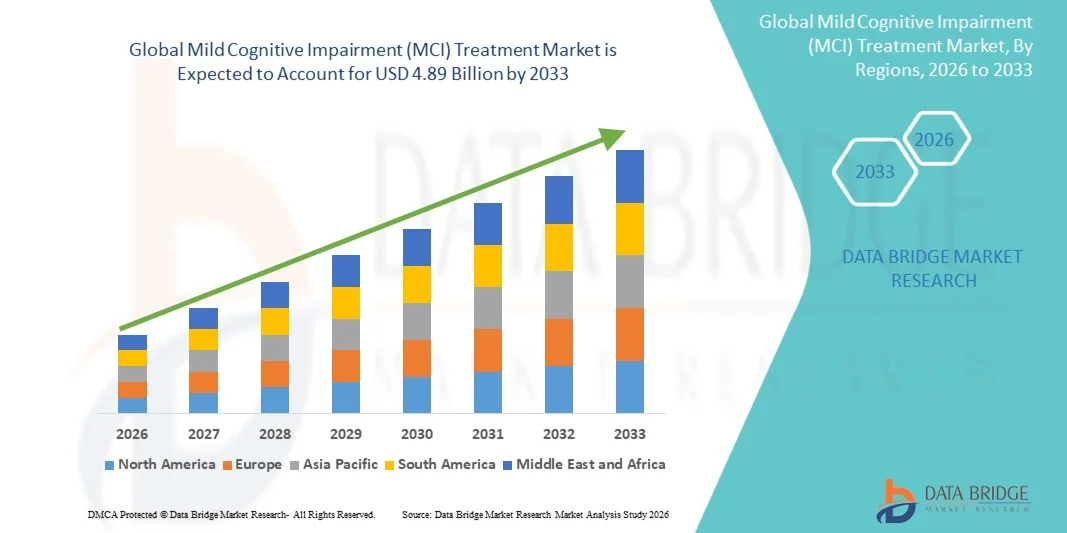
- The global mild cognitive impairment (MCI) treatment market size was valued at USD 2.51 billion in 2025 and is expected to reach USD 4.89 billion by 2033, at a CAGR of 8.70% during the forecast period
- The market growth is largely fueled by increasing awareness of cognitive health and the rising prevalence of age-related neurological disorders, which are driving demand for early detection and treatment solutions for Mild Cognitive Impairment (MCI)
- Furthermore, advancements in neuropharmacology, digital therapeutics, and personalized treatment approaches are enhancing the efficacy and accessibility of MCI interventions. These converging factors are accelerating the adoption of Mild Cognitive Impairment (MCI) Treatment solutions, thereby significantly boosting the industry's growth
Mild Cognitive Impairment (MCI) Treatment Market Analysis
- Smart cognitive health solutions, including pharmacological and non-pharmacological interventions, are increasingly vital for managing Mild Cognitive Impairment (MCI) due to growing concerns about age-related memory decline and early-stage dementia
- The escalating demand for MCI treatments is primarily fueled by rising awareness among patients and caregivers, advancements in personalized medicine, and integration of digital therapeutics and AI-driven monitoring tools in clinical care
- North America dominated the mild cognitive impairment (MCI) treatment market with the largest revenue share of 42.5% in 2025, characterized by advanced healthcare infrastructure, high adoption of innovative therapies, and strong R&D activity in neurodegenerative treatments, particularly in the U.S.
- Asia-Pacific is expected to be the fastest-growing region in the Mild Cognitive Impairment (MCI) Treatment market during the forecast period, driven by increasing elderly populations, rising healthcare expenditure, and growing awareness of cognitive disorders
- The Geriatric segment dominated the largest market revenue share of 64.1% in 2025, due to higher prevalence of MCI and age-related comorbidities
Report Scope and Mild Cognitive Impairment (MCI) Treatment Market Segmentation
|
Attributes |
Mild Cognitive Impairment (MCI) Treatment Key Market Insights |
|
Segments Covered |
|
|
Countries Covered |
North America
Europe
Asia-Pacific
Middle East and Africa
South America
|
|
Key Market Players |
• Biogen (U.S.) |
|
Market Opportunities |
|
|
Value Added Data Infosets |
In addition to the insights on market scenarios such as market value, growth rate, segmentation, geographical coverage, and major players, the market reports curated by the Data Bridge Market Research also include in-depth expert analysis, patient epidemiology, pipeline analysis, pricing analysis, and regulatory framework. |
Mild Cognitive Impairment (MCI) Treatment Market Trends
“Rising Focus on Early Detection and Therapeutic Advancements”
- A significant and accelerating trend in the global Mild Cognitive Impairment (MCI) Treatment market is the growing emphasis on early detection, accurate diagnosis, and development of targeted therapies. This trend is reshaping treatment approaches, with healthcare providers increasingly adopting biomarker-based screening, neuroimaging, and personalized care plans to slow cognitive decline and improve patient outcomes
- For instance, in March 2025, Eli Lilly expanded access to its novel cognitive assessment platform in the U.S., enabling physicians to identify MCI patients earlier and initiate tailored intervention programs. Similarly, Biogen has been investing in digital cognitive monitoring tools to track patient progress and optimize treatment plans
- Increasing public awareness of MCI symptoms and proactive management strategies is also driving adoption of cognitive training programs, lifestyle interventions, and pharmacological treatments. The convergence of these approaches is facilitating a more holistic and patient-centric model of care
- In addition, collaboration between pharmaceutical companies, research institutions, and telehealth providers is enabling better access to diagnostic services and follow-up care, particularly in underserved regions
- This trend towards early intervention and personalized treatment is fundamentally reshaping patient expectations and treatment paradigms in the MCI market, encouraging innovation and research in both pharmacological and non-pharmacological therapies
Mild Cognitive Impairment (MCI) Treatment Market Dynamics
Driver
“Rising Incidence of Cognitive Disorders and Aging Population”
- The increasing prevalence of cognitive impairment, driven by an aging global population, is a primary driver of the Mild Cognitive Impairment (MCI) Treatment market. As the number of adults aged 65 and above grows worldwide, the demand for early intervention and effective treatment strategies is accelerating
- For instance, according to a 2024 Alzheimer’s Disease International report, over 55 million people globally are living with mild cognitive decline, prompting healthcare providers to expand diagnostic and therapeutic offerings. Pharmaceutical companies are responding with new treatment options, such as cholinesterase inhibitors and disease-modifying therapies, to manage symptoms and slow progression
- Expanding government initiatives and public health programs to increase awareness of cognitive disorders are also contributing to market growth. Screening campaigns, dementia registries, and patient education programs are enhancing early detection rates and treatment uptake
- Moreover, rising healthcare investments in developed regions such as North America and Europe, alongside improved access to therapies in emerging markets, are creating opportunities for broader adoption of MCI treatments
- The combination of demographic shifts, rising patient awareness, and healthcare infrastructure improvements is significantly driving market expansion across both pharmacological and non-pharmacological treatment segments
Restraint/Challenge
“High Treatment Costs and Limited Access in Emerging Regions”
- Despite the market growth, several challenges are restraining the expansion of MCI treatments. High costs associated with advanced diagnostics, novel therapies, and long-term patient monitoring can limit accessibility, particularly in emerging economies
- For instance, many patients in countries such as India and Brazil are unable to afford advanced biomarker tests or innovative pharmacological interventions, creating gaps in early detection and treatment. Similarly, the lack of trained healthcare professionals and specialized memory clinics in some regions hinders timely diagnosis
- In addition, limited patient awareness and cultural stigma surrounding cognitive decline can delay intervention, reducing the effectiveness of early-stage treatments
- Addressing these barriers through government-funded healthcare programs, subsidized treatment options, and educational campaigns will be critical for ensuring broader adoption
- The development of cost-effective therapies, digital monitoring solutions, and scalable care models will further support sustained growth in the Mild Cognitive Impairment (MCI) Treatment market
Mild Cognitive Impairment (MCI) Treatment Market Scope
The market is segmented on the basis of Disease Type, Treatment Type, Route of Administration, Drug Type, Gender, Age, End-User, and Distribution Channel.
• By Drug Type
On the basis of drug type, the market is segmented into Branded and Generics. The Branded segment dominated the largest market revenue share of 59.3% in 2025, driven by strong clinical evidence supporting efficacy, physician trust in established formulations, and consistent patient outcomes. Hospitals and specialty clinics prioritize branded drugs to ensure safety and therapeutic predictability, particularly for geriatric patients. Branded medications benefit from robust marketing campaigns, awareness programs, and broad insurance coverage. Advanced formulations, such as modified-release tablets, contribute to better compliance. Patient adherence is further enhanced through hospital pharmacy monitoring and guided therapy plans. Clinical trials and R&D pipelines reinforce trust in branded products. Availability in multiple dosages allows tailored treatment for diverse patient needs. Branded drugs are often integrated into hospital protocols for standardized care. Physician recommendations and hospital preference strongly influence adoption rates. The combination of efficacy, reputation, and accessibility strengthens segment dominance globally.
The Generics segment is expected to witness the fastest CAGR of 7.0% from 2026 to 2033, driven by cost-effectiveness, affordability, and growing adoption in homecare and emerging markets. Rising prevalence of MCI globally fuels demand for accessible medications. Homecare services increasingly rely on generics for outpatient management. Governments and insurance providers encourage generics for economic sustainability. Telemedicine platforms facilitate patient access to generics remotely. Clinical equivalence with branded products reassures both prescribers and patients. Expansion of pharmacy networks enhances distribution reach. Public awareness campaigns highlight generics as reliable and safe options. Rising patient self-medication trends support growth. Increased availability of generic cognitive enhancers drives competition and affordability. Market penetration is bolstered by online pharmacies. Generics adoption supports broad-based healthcare strategies and improves treatment accessibility.
• By Gender Type
On the basis of gender, the market is segmented into Male and Female. The Female segment dominated the largest market revenue share of 53.8% in 2025, reflecting a higher prevalence of cognitive impairment, Alzheimer’s progression, and memory decline in women. Hospitals and specialty clinics conduct gender-specific screenings and awareness programs. Women are more likely to participate in preventive cognitive health initiatives. Physician recommendations for cognitive therapies are frequently gender-sensitive. Insurance coverage for therapy sessions and medications favors early intervention. Caregiver support programs often target female patients due to longer life expectancy and higher incidence rates. Awareness campaigns, social programs, and community-based interventions reinforce female patient engagement. Hospital and homecare services frequently customize treatment for women. Clinical trials often have higher female enrollment to address gender-specific outcomes. Public health strategies focus on female cognitive health for long-term care planning. Higher compliance and monitoring reinforce revenue dominance.
The Male segment is expected to witness the fastest CAGR of 6.4% from 2026 to 2033, driven by rising awareness, early diagnosis initiatives, and targeted intervention programs. Increasing participation in cognitive health check-ups and screenings supports growth. Hospitals and clinics are expanding male-focused educational programs. Men are increasingly engaging in home-based care and telehealth solutions. Insurance initiatives encourage preventive cognitive treatment for men. Clinical research is exploring male-specific neuroprotective strategies. Adult and geriatric male populations benefit from personalized care plans. Growing adoption of therapy and medication combinations accelerates market penetration. Community programs improve outreach and early intervention. Male patient adherence is improving with caregiver and family support. Online pharmacy access further facilitates treatment. Overall, awareness, accessibility, and preventive measures drive segment CAGR.
• By Age Type
On the basis of age, the market is segmented into Child, Adult, and Geriatric. The Geriatric segment dominated the largest market revenue share of 64.1% in 2025, due to higher prevalence of MCI and age-related comorbidities. Hospitals, specialty clinics, and homecare services heavily cater to geriatric patients. Cognitive screenings, memory tests, and therapy programs are widely implemented. Medication adherence and monitoring are prioritized in hospital and homecare settings. Advanced diagnostic facilities, clinical guidelines, and insurance coverage strengthen dominance. Geriatric-focused public health programs and awareness campaigns increase detection. Physicians recommend combined therapy and medication plans tailored to elderly patients. Caregiver support and home-based interventions enhance compliance. Clinical trials often target geriatric populations. Telemedicine platforms enable continuous monitoring and follow-up. Higher hospital utilization by elderly patients reinforces market share.
The Adult segment is expected to witness the fastest CAGR of 6.5% from 2026 to 2033, fueled by early screening programs, preventive cognitive health awareness, and workplace wellness initiatives. Adults increasingly seek outpatient therapy and medication interventions. Growing adoption of digital cognitive health tools supports early detection. Homecare services expand for adult patients preferring at-home monitoring. Insurance incentives encourage adult participation in preventive programs. Hospitals and specialty clinics integrate adult-focused therapies. Telehealth platforms facilitate adherence and follow-up. Lifestyle interventions and cognitive training programs gain popularity. Awareness campaigns highlight early MCI detection benefits. Clinical research targeting adults expands treatment options. Employers offer cognitive health programs in workplace wellness initiatives. Overall, early intervention and preventive care drive adult segment CAGR.
• By End-User
On the basis of end-users, the market is segmented into Hospitals, Specialty Clinics, Homecare, and Others. The Hospitals segment dominated the largest market revenue share of 61.2% in 2025, supported by centralized treatment, access to specialists, and inpatient monitoring for MCI patients. Hospitals facilitate complex therapy combinations, ensure adherence, and manage medication supply. Neurologists and geriatric specialists coordinate care for optimal outcomes. Advanced diagnostic facilities and clinical guidelines reinforce dominance. Insurance coverage and reimbursement policies favor hospital-based treatments. Hospital pharmacies ensure continuous drug availability. Multi-disciplinary care teams enhance patient management. Clinical trials are concentrated in hospital settings. Hospitals implement telemedicine and outpatient follow-up programs. Awareness campaigns conducted via hospitals strengthen patient engagement. Overall, hospitals remain central to effective MCI management.
The Homecare segment is expected to witness the fastest CAGR of 7.2% from 2026 to 2033, driven by telemedicine services, outpatient care, and patient preference for treatment at home. Remote cognitive assessments, digital therapy tools, and home-delivered medications accelerate adoption. Elderly patients prefer homecare due to convenience and safety. Specialty clinics collaborate with homecare providers to extend treatment coverage. Insurance programs increasingly support home-based interventions. Awareness campaigns target patients and caregivers. Integration of wearable monitoring devices ensures adherence. Homecare adoption expands in emerging markets. Patient engagement and family support enhance therapy continuity. Telehealth platforms facilitate remote consultations. Home-based rehabilitation programs strengthen outcomes. Overall, convenience, technology, and accessibility drive rapid segment growth.
• By Distribution Channel
On the basis of distribution channel, the market is segmented into Hospital Pharmacies and Retail Pharmacies. The Hospital Pharmacy segment dominated the largest market revenue share of 57.8% in 2025, due to prescription-based access, integration with treatment protocols, and immediate availability of medications. Hospitals ensure adherence to therapy, provide monitoring, and manage inventory for specialized drugs. Hospitals facilitate patient education, dosing compliance, and complex regimen management. Insurance coverage and reimbursement policies reinforce dominance. Coordination with specialty clinics supports seamless drug delivery. Availability of advanced oral and parenteral formulations enhances uptake. Hospital pharmacies participate in clinical trials and research initiatives. Geriatric patients benefit from in-hospital medication oversight. Public health programs utilize hospital pharmacies for community-based outreach. Clinical guidelines encourage hospital-based dispensing. Overall, hospital pharmacies ensure reliability, compliance, and continuous revenue leadership. The Retail Pharmacy segment is expected to witness the fastest CAGR of 6.8% from 2026 to 2033, driven by growing patient access to medications, expanding retail pharmacy networks, and increasing awareness of home-based MCI care. Retail pharmacies provide convenient, locally accessible options. Online ordering and home delivery services further boost adoption. Community education and promotional campaigns enhance
The Retail Pharmacy segment is expected to witness the fastest CAGR of 6.8% from 2026 to 2033, driven by growing patient access to medications, expanding retail pharmacy networks, and increasing awareness of home-based MCI care. Retail pharmacies provide convenient, locally accessible options. Online ordering and home delivery services further boost adoption. Community education and promotional campaigns enhance visibility. Patients prefer retail pharmacies for convenience and flexible timing. Expansion of pharmacy chains in urban and rural areas increases reach. Retail pharmacies support medication adherence with counseling programs. Collaboration with homecare providers facilitates delivery. Cost-effectiveness and availability of generics drive growth. Telehealth prescriptions can be fulfilled through retail channels. Retail pharmacies supplement hospital pharmacy services. Overall, convenience, accessibility, and awareness fuel segment CAGR.
Mild Cognitive Impairment (MCI) Treatment Market Regional Analysis
- North America dominated the mild cognitive impairment (MCI) treatment market with the largest revenue share of 42.5% in 2025
- Characterized by advanced healthcare infrastructure, high adoption of innovative therapies, and strong R&D activity in neurodegenerative treatments
- The region benefits from the widespread availability of hospitals, specialty clinics, and homecare facilities offering both pharmacological and non-pharmacological interventions for Amnestic and Non-Amnestic MCI
U.S. Mild Cognitive Impairment (MCI) Treatment Market Insight
The U.S. mild cognitive impairment (MCI) treatment market accounted for the largest share within North America, driven by increasing clinical adoption of targeted therapies, early detection programs, and supportive regulatory policies. Hospitals and specialty clinics are expanding access to both branded and generic MCI medications, as well as therapy-based interventions. For instance, in 2025, Biogen launched an expanded cognitive assessment program integrated with pharmacological treatment plans, enabling early intervention for adult and geriatric patients with Amnestic MCI. This program enhanced treatment adherence and outcomes across hospital and homecare settings. The growing focus on outpatient rehabilitation, cognitive training programs, and increased insurance coverage further supports market growth.
Europe Mild Cognitive Impairment (MCI) Treatment Market Insight
The Europe mild cognitive impairment (MCI) treatment market is projected to expand at a substantial CAGR throughout the forecast period, supported by increasing government funding for cognitive health initiatives, stringent healthcare guidelines, and higher adoption of both medications and therapy. European countries are witnessing strong growth in hospital and specialty clinic uptake for geriatric and adult populations. For instance, Germany has implemented early detection and outpatient therapy programs for Non-Amnestic MCI, improving adherence to treatment plans in urban hospital networks.
U.K. Mild Cognitive Impairment (MCI) Treatment Market Insight
The U.K. mild cognitive impairment (MCI) treatment market is expected to grow at a notable CAGR during the forecast period due to rising awareness of cognitive decline, increasing geriatric populations, and government-backed programs for dementia and MCI. Both hospital and homecare interventions are driving demand. For instance, in 2024, NHS initiatives expanded cognitive therapy and pharmacological treatment coverage for adult and geriatric patients, supporting early intervention and improving long-term management outcomes.
Germany Mild Cognitive Impairment (MCI) Treatment Market Insight
Germany mild cognitive impairment (MCI) treatment market is projected to witness significant market expansion, driven by increasing digitalization of cognitive health monitoring, awareness campaigns, and aging population demographics. The adoption of oral and parenteral treatments, along with therapy-based interventions, is rising across hospitals, specialty clinics, and homecare services. Hospitals are increasingly offering integrated treatment programs combining pharmacological therapy with cognitive exercises for geriatric patients with Amnestic MCI, enhancing therapeutic efficacy.
Asia-Pacific Mild Cognitive Impairment (MCI) Treatment Market Insight
Asia-Pacific mild cognitive impairment (MCI) treatment market is expected to be the fastest-growing region in the MCI Treatment market during the forecast period, fueled by rising elderly populations, expanding healthcare infrastructure, and growing awareness of cognitive disorders. The market is supported by hospital and specialty clinic expansion, homecare adoption, and increasing access to both branded and generic medications. In China, for instance, metropolitan hospitals introduced comprehensive MCI programs combining pharmacological and therapy interventions for adult and geriatric populations, enhancing treatment adherence. Similarly, India is witnessing a rise in outpatient therapy adoption and home-based cognitive programs.
Japan Mild Cognitive Impairment (MCI) Treatment Market Insight
Japan’s mild cognitive impairment (MCI) treatment market is growing steadily due to the aging population, high healthcare expenditure, and emphasis on early detection and therapy-based management. Hospitals, specialty clinics, and homecare facilities are increasingly offering oral and parenteral therapies, alongside cognitive rehabilitation programs. For instance, private clinics have implemented structured early MCI intervention programs combining pharmacological and cognitive therapy for adults and geriatric patients, improving long-term outcomes and quality of life.
China Mild Cognitive Impairment (MCI) Treatment Market Insight
China mild cognitive impairment (MCI) treatment market accounted for the largest share of the Asia-Pacific region in 2025, driven by increasing awareness of cognitive disorders, rapid urbanization, and growing access to hospital pharmacies and retail pharmacy channels. Branded and generic medications, along with therapy programs, are increasingly accessible to adult and geriatric populations. Several metropolitan hospitals launched combined pharmacological and therapy interventions for both Amnestic and Non-Amnestic MCI patients, improving adherence and effectiveness of treatments.
Mild Cognitive Impairment (MCI) Treatment Market Share
The Mild Cognitive Impairment (MCI) Treatment industry is primarily led by well-established companies, including:
• Biogen (U.S.)
• Eli Lilly and Company (U.S.)
• Roche (Switzerland)
• Novartis (Switzerland)
• Acadia Pharmaceuticals (U.S.)
• H. Lundbeck A/S (Denmark)
• F. Hoffmann-La Roche AG (Switzerland)
• Takeda Pharmaceutical Company (Japan)
• Axsome Therapeutics (U.S.)
• Merck & Co., Inc. (U.S.)
• Sunovion Pharmaceuticals (U.S.)
• Amgen Inc. (U.S.)
• Cassava Sciences (U.S.)
• Otsuka Pharmaceutical Co., Ltd. (Japan)
• Evoke Pharma (U.S.)
• Johnson & Johnson (U.S.)
• Pfizer Inc. (U.S.)
• Boehringer Ingelheim (Germany)
• Neurotrope, Inc. (U.S.)
• Viela Bio (U.S.)
Latest Developments in Global Mild Cognitive Impairment (MCI) Treatment Market
- In June 2021, the U.S. Food and Drug Administration (FDA) granted approval to Aduhelm (aducanumab‑avwa) — a monoclonal antibody developed by Biogen and Eisai for Alzheimer’s disease — marking a controversial first anti‑amyloid therapy that also influenced early‑stage MCI research and sparked industry focus on amyloid‑targeted treatments
- In January 2023, the U.S. FDA approved Leqembi (lecanemab), a monoclonal antibody jointly developed by Eisai and Biogen designed to target amyloid beta plaques in the brain and slow cognitive decline in patients with mild cognitive impairment (MCI) due to early Alzheimer’s disease. This approval expanded treatment options for MCI patients and marked a significant advance in disease‑modifying therapies
- In April 2024, Sage Therapeutics, Inc. published topline results from the PRECEDENT Phase 2 study of SAGE‑718, an experimental oral small molecule therapy showing positive safety and tolerability in patients with MCI associated with Parkinson’s disease, demonstrating growing interest in novel small‑molecule treatments for cognitive impairment
- In July 2024, the U.S. FDA approved KISUNLA (donanemab‑azbt) — developed by Eli Lilly — for early symptomatic Alzheimer’s disease including individuals with MCI and confirmed amyloid pathology, representing another significant anti‑amyloid therapy entering the treatment landscape
- In September 2023, Biogen initiated a new therapeutic launch focused on MCI that leveraged amyloid‑beta modulation approaches previously used in Alzheimer’s drugs, signaling strategic expansion of treatment pipelines into early cognitive impairment interventions
- In April 2025, the European Commission authorized Eisai and Biogen’s Leqembi for use in treating early stages of Alzheimer’s disease, including mild cognitive impairment patients underlying amyloid pathology — making it one of the first MCI‑focused approvals across the EU regulatory bloc
- In July 2025, the Saudi Food and Drug Authority (SFDA) approved Leqembi as the first Alzheimer’s treatment available in Saudi Arabia for those with mild cognitive impairment due to Alzheimer’s disease, reflecting ongoing global regulatory uptake of amyloid‑targeting therapies
- In May 2025, Australia’s Therapeutic Goods Administration (TGA) approved donanemab (marketed as Kisunla) — marking a new treatment option for early symptomatic Alzheimer’s disease, including high‑risk MCI populations, underscoring worldwide diversification of treatment access
SKU-
Get online access to the report on the World's First Market Intelligence Cloud

- Interactive Data Analysis Dashboard
- Company Analysis Dashboard for high growth potential opportunities
- Research Analyst Access for customization & queries
- Competitor Analysis with Interactive dashboard
- Latest News, Updates & Trend analysis
- Harness the Power of Benchmark Analysis for Comprehensive Competitor Tracking
Research Methodology
Data collection and base year analysis are done using data collection modules with large sample sizes. The stage includes obtaining market information or related data through various sources and strategies. It includes examining and planning all the data acquired from the past in advance. It likewise envelops the examination of information inconsistencies seen across different information sources. The market data is analysed and estimated using market statistical and coherent models. Also, market share analysis and key trend analysis are the major success factors in the market report. To know more, please request an analyst call or drop down your inquiry.
The key research methodology used by DBMR research team is data triangulation which involves data mining, analysis of the impact of data variables on the market and primary (industry expert) validation. Data models include Vendor Positioning Grid, Market Time Line Analysis, Market Overview and Guide, Company Positioning Grid, Patent Analysis, Pricing Analysis, Company Market Share Analysis, Standards of Measurement, Global versus Regional and Vendor Share Analysis. To know more about the research methodology, drop in an inquiry to speak to our industry experts.
Customization Available
Data Bridge Market Research is a leader in advanced formative research. We take pride in servicing our existing and new customers with data and analysis that match and suits their goal. The report can be customized to include price trend analysis of target brands understanding the market for additional countries (ask for the list of countries), clinical trial results data, literature review, refurbished market and product base analysis. Market analysis of target competitors can be analyzed from technology-based analysis to market portfolio strategies. We can add as many competitors that you require data about in the format and data style you are looking for. Our team of analysts can also provide you data in crude raw excel files pivot tables (Fact book) or can assist you in creating presentations from the data sets available in the report.












