Global Organic Cosmetics Market Size
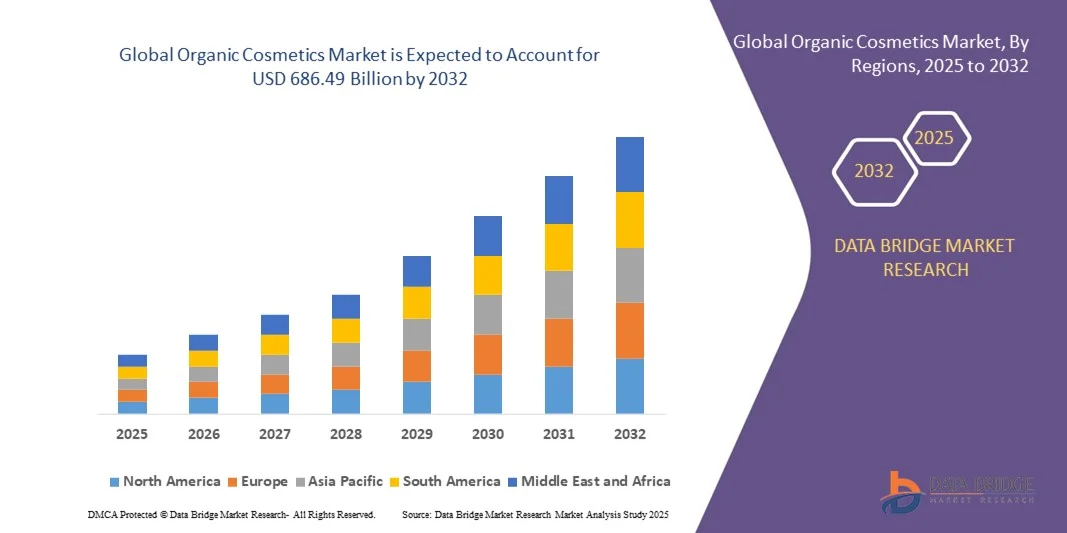
- The global Organic Cosmetics Market size was valued at USD 324.95 billion in 2024 and is expected to reach USD 686.49 billion by 2032, at a CAGR of 9.80% during the forecast period.
- The market growth is primarily driven by increasing consumer awareness regarding the benefits of natural and chemical-free products, coupled with a rising preference for sustainable and eco-friendly beauty solutions.
- Additionally, the surge in social media influence, beauty trends, and demand for personalized skincare and cosmetic products is encouraging brands to innovate and expand their organic product lines. These combined factors are propelling the adoption of organic cosmetics, thereby substantially enhancing the industry's growth.
Global Organic Cosmetics Market Analysis
- Organic cosmetics, comprising skincare, haircare, and color cosmetic products made from natural and chemical-free ingredients, are becoming increasingly essential in personal care routines across both developed and emerging markets due to their perceived health benefits, eco-friendly appeal, and suitability for sensitive skin.
- The rising demand for organic cosmetics is primarily driven by growing consumer awareness of harmful chemicals in conventional products, increased preference for sustainable and cruelty-free options, and a surge in online retail accessibility for niche beauty brands.
- North America dominated the Global Organic Cosmetics Market with the largest revenue share of 36.1% in 2024, fueled by high consumer awareness, strong regulatory support for organic certification, and a mature retail ecosystem, with the U.S. witnessing significant growth in organic skincare and haircare product adoption, supported by established beauty brands and innovative startups focusing on clean beauty and personalized formulations.
- Asia-Pacific is expected to be the fastest-growing region in the Global Organic Cosmetics Market during the forecast period due to rising disposable incomes, increasing urbanization, and growing interest in natural and herbal beauty products among millennial and Gen Z consumers.
- The Organic Skin Care segment dominated the market with the largest revenue share of 45.6% in 2024, driven by rising consumer focus on maintaining healthy skin using natural and chemical-free formulations.
Report Scope and Global Organic Cosmetics Market Segmentation
|
Attributes |
Organic Cosmetics Key Market Insights |
|
Segments Covered |
|
|
Countries Covered |
North America
Europe
Asia-Pacific
Middle East and Africa
South America
|
|
Key Market Players |
|
|
Market Opportunities |
|
|
Value Added Data Infosets |
In addition to the insights on market scenarios such as market value, growth rate, segmentation, geographical coverage, and major players, the market reports curated by the Data Bridge Market Research also include in-depth expert analysis, pricing analysis, brand share analysis, consumer survey, demography analysis, supply chain analysis, value chain analysis, raw material/consumables overview, vendor selection criteria, PESTLE Analysis, Porter Analysis, and regulatory framework. |
Global Organic Cosmetics Market Trends
Enhanced Convenience Through AI and Personalization in Organic Cosmetics
- A significant and accelerating trend in the global Organic Cosmetics Market is the integration of artificial intelligence (AI) and personalized beauty technology, allowing consumers to receive tailored skincare, haircare, and cosmetic recommendations based on their unique skin type, preferences, and environmental factors. This fusion of technologies is enhancing convenience and efficacy in personal care routines.
- For instance, brands like L’Oréal and Estée Lauder offer AI-powered tools and mobile apps that analyze skin conditions through selfies and suggest personalized product regimens. Similarly, Procter & Gamble’s Opté Precision Skincare device scans skin and dispenses a targeted serum to address pigmentation issues, offering highly customized solutions.
- AI integration in organic cosmetics enables features such as predictive product recommendations, tracking user preferences over time, and providing intelligent alerts for skincare routines. For example, some apps can suggest adjustments to routines based on weather, seasonal changes, or skin sensitivity, ensuring users achieve optimal results. Furthermore, virtual try-on capabilities using augmented reality (AR) enhance convenience by allowing consumers to test products digitally before purchase.
- The seamless integration of AI-driven personalization with e-commerce platforms and mobile apps facilitates a centralized and interactive shopping experience. Through a single interface, users can discover products, receive personalized recommendations, track their skincare progress, and shop online, creating a unified and intelligent beauty routine.
- This trend towards more intelligent, personalized, and technology-driven solutions is fundamentally reshaping consumer expectations in the organic cosmetics industry. Consequently, companies such as L’Oréal, Estée Lauder, and Shiseido are developing AI-enabled beauty platforms with features like personalized product suggestions, virtual try-on, and smart routine tracking.
- The demand for organic cosmetics that offer AI-driven personalization and digital convenience is growing rapidly across both developed and emerging markets, as consumers increasingly prioritize tailored, effective, and effortless beauty solutions.
Global Organic Cosmetics Market Dynamics
Driver
Growing Need Due to Rising Consumer Awareness and Demand for Safe, Chemical-Free Products
- The increasing awareness of the harmful effects of synthetic chemicals, parabens, sulfates, and other potentially toxic ingredients in conventional cosmetics, coupled with the rising preference for natural and eco-friendly products, is a significant driver for the heightened demand for organic cosmetics.
- For instance, in 2024, L’Oréal announced the expansion of its clean beauty line under the “Botanicals Fresh Care” brand, focusing on plant-based, chemical-free formulations. Such initiatives by leading companies are expected to drive substantial growth in the organic cosmetics market during the forecast period.
- As consumers become more conscious of product safety, ethical sourcing, and environmental sustainability, organic cosmetics offer clear advantages, including non-toxic ingredients, cruelty-free certification, and reduced environmental impact, providing a compelling alternative to conventional products.
- Furthermore, the growing popularity of wellness-oriented lifestyles and the desire for holistic self-care are making organic cosmetics an essential part of daily routines, with products ranging from skincare and haircare to color cosmetics gaining traction.
- The convenience of readily available certified organic products, combined with online access to reviews, tutorials, and personalized recommendations, is a key factor propelling the adoption of organic cosmetics across both developed and emerging markets. The trend towards DIY beauty routines, subscription boxes, and personalized skincare kits further contributes to market growth.
Restraint/Challenge
Concerns Regarding Product Authenticity, Certification, and Premium Pricing
- Concerns surrounding product authenticity, lack of standardized certification, and potential greenwashing pose significant challenges to broader market adoption. Consumers may be hesitant to purchase organic products if they are uncertain about the legitimacy of claims such as “natural,” “organic,” or “chemical-free.”
- For instance, reports of mislabeled products or unverified claims have made some consumers cautious about trusting organic cosmetic brands, creating a barrier for market penetration.
- Addressing these concerns through robust certification standards, transparent labeling, and clear communication of ingredient sourcing is crucial for building consumer trust. Companies such as Weleda, Dr. Hauschka, and Tata Harper emphasize their certified organic and cruelty-free credentials in marketing to reassure potential buyers.
- Additionally, the relatively high price point of many organic cosmetic products compared to conventional alternatives can be a barrier for price-sensitive consumers, particularly in developing regions. While more affordable brands such as Burt’s Bees and Innisfree have increased accessibility, premium organic products with advanced formulations or luxury packaging often carry a higher price tag.
- Overcoming these challenges through improved certification transparency, consumer education on product benefits, and development of more affordable organic cosmetic options will be vital for sustained market growth.
Global Organic Cosmetics Market Scope
Organic cosmetics market is segmented on the basis of product type, distribution channel, and gender.
- By Product Type
On the basis of product type, the Global Organic Cosmetics Market is segmented into Organic Skin Care, Organic Hair Care, Organic Fragrances, Organic Make-Up, and Others. The Organic Skin Care segment dominated the market with the largest revenue share of 45.6% in 2024, driven by rising consumer focus on maintaining healthy skin using natural and chemical-free formulations. Skincare products such as face creams, serums, and lotions are widely preferred due to their perceived anti-aging, moisturizing, and sensitive-skin-friendly benefits. Consumers increasingly seek trusted brands offering certified organic ingredients, which further boosts this segment.
The Organic Hair Care segment is expected to witness the fastest CAGR of 22.1% from 2025 to 2032, fueled by growing awareness about hair damage from synthetic chemicals and the rising popularity of plant-based shampoos, conditioners, and hair oils. Hair care products also benefit from innovative formulations targeting specific hair concerns, accelerating adoption globally.
- By Distribution Channel
On the basis of distribution channel, the Global Organic Cosmetics Market is segmented into Supermarkets/Hypermarkets, Exclusive Retail Stores, Multi-Branded Retail Outlets, Online Channels, Beauty Parlours/Salons, and Others. The Online Channels segment dominated the market with the largest revenue share of 38.7% in 2024, supported by the convenience of doorstep delivery, easy access to international brands, and the rise of e-commerce platforms offering certified organic products. Social media influence and digital marketing campaigns also drive online sales.
The Supermarkets/Hypermarkets segment is expected to witness the fastest CAGR of 21.5% from 2025 to 2032, as large retail chains expand their organic product offerings, improve shelf visibility, and cater to a growing base of health-conscious consumers who prefer in-store purchases with guaranteed authenticity. This growth is further supported by loyalty programs, promotions, and wider geographic availability.
- By Gender
On the basis of gender, the Global Organic Cosmetics Market is segmented into Male and Female. The Female segment dominated the market with the largest revenue share of 62.4% in 2024, driven by higher spending on skincare, haircare, and cosmetic products, coupled with a growing preference for premium and chemical-free formulations. Women increasingly adopt holistic self-care routines that include organic beauty and wellness products.
The Male segment is expected to witness the fastest CAGR of 20.8% from 2025 to 2032, fueled by the rising popularity of male grooming products, including organic skincare, beard care, and fragrances. The emergence of dedicated male-focused organic brands and marketing campaigns targeting young urban professionals is further accelerating growth in this segment.
Global Organic Cosmetics Market Regional Analysis
- North America dominated the Global Organic Cosmetics Market with the largest revenue share of 36.1% in 2024, driven by rising consumer awareness of chemical-free, eco-friendly beauty products and a strong preference for certified organic formulations.
- Consumers in the region increasingly prioritize safe, natural, and sustainable personal care solutions, valuing the health benefits, ethical sourcing, and cruelty-free certifications offered by leading organic cosmetic brands.
- This widespread adoption is further supported by high disposable incomes, a well-informed population regarding health and wellness, and the presence of established global and regional organic cosmetic players, making North America the largest and most mature market for organic skincare, haircare, fragrances, and make-up products.
U.S. Organic Cosmetics Market Insight
The U.S. organic cosmetics market captured the largest revenue share of 81% in North America in 2024, driven by increasing consumer awareness of chemical-free, sustainable beauty products. Consumers are prioritizing skincare, haircare, and make-up products that are certified organic, cruelty-free, and environmentally friendly. The growing popularity of DIY beauty routines, online shopping, and subscription-based organic cosmetic services further fuels market growth. Additionally, rising interest in wellness-oriented lifestyles and holistic self-care is supporting adoption, while established brands and startups continue to innovate with natural formulations, advanced anti-aging ingredients, and eco-conscious packaging.
Europe Organic Cosmetics Market Insight
The Europe organic cosmetics market is projected to expand at a substantial CAGR during the forecast period, driven by stringent regulations on chemical ingredients and growing consumer preference for sustainable and natural personal care products. Urbanization, higher disposable incomes, and rising awareness of health and environmental impacts are fostering adoption across skincare, haircare, and make-up segments. Countries like France, Germany, and Italy are witnessing significant growth in both retail and online channels, with organic cosmetics being increasingly incorporated into daily personal care routines and wellness-focused lifestyles.
U.K. Organic Cosmetics Market Insight
The U.K. organic cosmetics market is anticipated to grow at a noteworthy CAGR during the forecast period, driven by rising awareness of product safety, environmental sustainability, and ethical sourcing. Consumers are increasingly choosing organic skincare, haircare, and make-up products due to concerns about harmful chemicals in conventional cosmetics. The U.K.’s strong retail infrastructure, e-commerce growth, and popularity of social media-driven beauty trends are expected to further stimulate market growth. Additionally, certifications such as COSMOS and Soil Association enhance consumer trust in organic products.
Germany Organic Cosmetics Market Insight
The Germany organic cosmetics market is expected to expand at a considerable CAGR during the forecast period, fueled by strong consumer awareness of natural ingredients, eco-friendly formulations, and sustainable packaging. Germany’s focus on health, wellness, and environmentally responsible lifestyles promotes the adoption of organic skincare, haircare, and make-up products. Both retail and online channels are witnessing growth, with urban consumers showing a preference for certified organic brands and products that align with the country’s stringent regulatory standards.
Asia-Pacific Organic Cosmetics Market Insight
The Asia-Pacific organic cosmetics market is poised to grow at the fastest CAGR of 24% during 2025–2032, driven by rising disposable incomes, urbanization, and increasing awareness of chemical-free personal care. Countries such as China, Japan, and India are experiencing rapid adoption of organic skincare, haircare, and make-up products, particularly among millennials and Gen Z consumers. The region’s growing e-commerce penetration, rising social media influence, and expansion of domestic organic cosmetic brands are accelerating market growth. Furthermore, government initiatives promoting wellness and safety standards in cosmetics contribute to the rising popularity of certified organic products.
Japan Organic Cosmetics Market Insight
The Japan organic cosmetics market is gaining momentum due to the country’s high demand for premium, safe, and eco-friendly personal care products. Consumers increasingly adopt organic skincare, haircare, and make-up formulations that are gentle on sensitive skin and environmentally sustainable. The popularity of holistic self-care routines, combined with advanced retail infrastructure and strong online penetration, is fueling market growth. Aging populations and wellness-conscious urban consumers are particularly driving demand for anti-aging and natural skincare products.
China Organic Cosmetics Market Insight
The China organic cosmetics market accounted for the largest revenue share in Asia-Pacific in 2024, attributed to rapid urbanization, a growing middle class, and increasing awareness of chemical-free personal care. Consumers are shifting toward organic skincare, haircare, and make-up products due to concerns about harmful ingredients in conventional cosmetics. The rise of e-commerce platforms, social media-driven beauty trends, and domestic organic cosmetic brands offering affordable and certified products are key factors propelling market growth. Initiatives promoting sustainability and wellness-oriented lifestyles further enhance adoption across residential and commercial segments.
Global Organic Cosmetics Market Share
The Organic Cosmetics industry is primarily led by well-established companies, including:
• L’Oréal (France)
• Estée Lauder (U.S.)
• Procter & Gamble (U.S.)
• Unilever (U.K.)
• Shiseido (Japan)
• Beiersdorf (Germany)
• Amorepacific (South Korea)
• Natura &Co (Brazil)
• Oriflame (Sweden)
• The Body Shop (U.K.)
• Weleda (Switzerland)
• Burt’s Bees (U.S.)
• Dr. Hauschka (Germany)
• Kiehl’s (U.S.)
• Herbivore Botanicals (U.S.)
• Tata Harper (U.S.)
• Origins (U.S.)
• Juice Beauty (U.S.)
• Innisfree (South Korea)
• Cosmax (South Korea)
What are the Recent Developments in Global Organic Cosmetics Market?
- In April 2023, L’Oréal Group, a global leader in beauty and personal care, launched a strategic initiative in South Africa to expand its organic cosmetics portfolio, focusing on sustainable skincare and haircare products. This initiative highlights the company’s commitment to providing safe, eco-friendly, and innovative beauty solutions tailored to local consumer preferences. By leveraging its global expertise and cutting-edge formulations, L’Oréal is addressing regional demand for natural and certified organic products while reinforcing its position in the rapidly growing global organic cosmetics market.
- In March 2023, The Body Shop, a veteran in ethical beauty, introduced a new line of organic skincare products in North America, specifically formulated for sensitive and environmentally conscious consumers. The new range emphasizes cruelty-free, sustainable ingredients and eco-friendly packaging, demonstrating The Body Shop’s commitment to combining innovation with social responsibility to meet the rising demand for clean and natural personal care products.
- In March 2023, Shiseido Co., Ltd. successfully launched its “Urban Wellness” organic skincare initiative in Bengaluru, India, aimed at promoting skin health and safety from environmental pollutants using natural and certified organic ingredients. This initiative underscores Shiseido’s dedication to blending advanced cosmetic science with sustainable formulations to create safe, effective, and environmentally friendly products for urban consumers.
- In February 2023, Beiersdorf AG, a global provider of skincare solutions under the NIVEA and Eucerin brands, announced a strategic partnership with local wellness retailers in the U.S. to promote its organic and natural skincare lines. This collaboration is designed to increase accessibility and consumer awareness of certified organic products, supporting Beiersdorf’s commitment to sustainability and innovation in personal care.
- In January 2023, Juice Beauty, a leading U.S.-based organic beauty brand, unveiled its new Organic Anti-Aging Serum at the International Beauty Expo. The product, formulated with natural and certified organic ingredients, offers consumers enhanced skin rejuvenation benefits while emphasizing environmentally friendly practices. This launch highlights Juice Beauty’s commitment to integrating scientific innovation with sustainability, catering to the rising consumer preference for safe, effective, and eco-conscious cosmetics.

- Interactive Data Analysis Dashboard
- Company Analysis Dashboard for high growth potential opportunities
- Research Analyst Access for customization & queries
- Competitor Analysis with Interactive dashboard
- Latest News, Updates & Trend analysis
- Harness the Power of Benchmark Analysis for Comprehensive Competitor Tracking
Data collection and base year analysis are done using data collection modules with large sample sizes. The stage includes obtaining market information or related data through various sources and strategies. It includes examining and planning all the data acquired from the past in advance. It likewise envelops the examination of information inconsistencies seen across different information sources. The market data is analysed and estimated using market statistical and coherent models. Also, market share analysis and key trend analysis are the major success factors in the market report. To know more, please request an analyst call or drop down your inquiry.
The key research methodology used by DBMR research team is data triangulation which involves data mining, analysis of the impact of data variables on the market and primary (industry expert) validation. Data models include Vendor Positioning Grid, Market Time Line Analysis, Market Overview and Guide, Company Positioning Grid, Patent Analysis, Pricing Analysis, Company Market Share Analysis, Standards of Measurement, Global versus Regional and Vendor Share Analysis. To know more about the research methodology, drop in an inquiry to speak to our industry experts.
Data Bridge Market Research is a leader in advanced formative research. We take pride in servicing our existing and new customers with data and analysis that match and suits their goal. The report can be customized to include price trend analysis of target brands understanding the market for additional countries (ask for the list of countries), clinical trial results data, literature review, refurbished market and product base analysis. Market analysis of target competitors can be analyzed from technology-based analysis to market portfolio strategies. We can add as many competitors that you require data about in the format and data style you are looking for. Our team of analysts can also provide you data in crude raw excel files pivot tables (Fact book) or can assist you in creating presentations from the data sets available in the report.