




Global Pain Relief Therapy Market
Market Size in USD Billion
CAGR :
% 
 USD
64.42 Billion
USD
168.24 Billion
2025
2033
USD
64.42 Billion
USD
168.24 Billion
2025
2033
 Forecast Period Forecast Period |
2026 –2033 |
 Market Size (Base Year) Market Size (Base Year) |
USD 64.42 Billion |
 Market Size (Forecast Year) Market Size (Forecast Year) |
USD 168.24 Billion |
 CAGR CAGR |
% |
| Major Markets Players |
|
Pain Relief Therapy Market Size
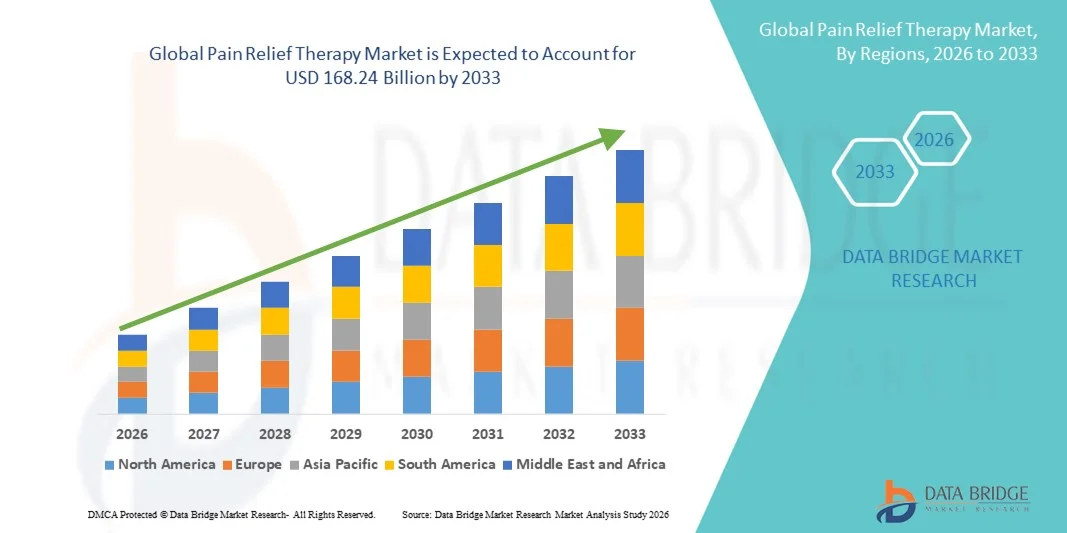
- The global pain relief therapy market size was valued at USD 64.42 billion in 2025 and is expected to reach USD 168.24 billion by 2033, at a CAGR of 12.75% during the forecast period
- The market growth is largely fueled by the rising prevalence of chronic pain, increasing geriatric population, and growing awareness regarding non-invasive and minimally invasive pain management solutions, leading to greater adoption of pain relief therapy across hospitals, clinics, and homecare settings. Advancements in neuromodulation devices, wearable pain management technologies, and targeted drug delivery systems are further driving market expansion and improving patient outcomes in both developed and emerging regions
- Furthermore, the growing preference for personalized, non-opioid, and multimodal pain management approaches is establishing pain relief therapy as an essential component of modern healthcare. Increasing healthcare expenditure, technological innovation, and expanding access to outpatient and homecare services are accelerating the uptake of advanced pain relief therapy solutions, thereby significantly boosting overall industry growth
Pain Relief Therapy Market Analysis
- Pain relief therapy solutions, including pharmacological, non-pharmacological, and device-based interventions, are increasingly vital components of modern healthcare due to their ability to manage chronic and acute pain, improve patient quality of life, and reduce reliance on opioids. Technological advancements in neuromodulation devices, wearable TENS units, and targeted drug delivery systems are further driving adoption across hospitals, clinics, and homecare settings
- The escalating demand for pain relief therapy is primarily fueled by the rising prevalence of chronic pain conditions, increasing geriatric population, and growing awareness of non-invasive and minimally invasive therapies. Innovations in digital therapeutics, AI-enabled pain monitoring, and personalized treatment plans are further accelerating market adoption and improving patient outcomes
- North America dominated the pain relief therapy market with the largest revenue share of approximately 42.3% in 2025, driven by advanced healthcare infrastructure, high disposable incomes, strong reimbursement frameworks, and widespread adoption of device-based and non-opioid therapies. The U.S. continues to witness substantial growth, supported by the increasing prevalence of chronic pain, growing outpatient care services, and innovations from leading medical device companies
- Asia-Pacific is expected to be the fastest-growing region in the pain relief therapy market during the forecast period, projected to register a CAGR of approximately 11.5% driven by rising healthcare expenditure, growing awareness of non-opioid therapies, increasing geriatric population, and expansion of pain management clinics in countries such as China, India, and Japan
- The Prescribed segment dominated the market with a revenue share of 55.4% in 2025, reflecting the dependence on professional consultation for effective pain management
Report Scope and Pain Relief Therapy Market Segmentation
|
Attributes |
Pain Relief Therapy Key Market Insights |
|
Segments Covered |
|
|
Countries Covered |
North America
Europe
Asia-Pacific
Middle East and Africa
South America
|
|
Key Market Players |
|
|
Market Opportunities |
|
|
Value Added Data Infosets |
In addition to the insights on market scenarios such as market value, growth rate, segmentation, geographical coverage, and major players, the market reports curated by the Data Bridge Market Research also include in-depth expert analysis, patient epidemiology, pipeline analysis, pricing analysis, and regulatory framework. |
Pain Relief Therapy Market Trends
Advancements in Non-Invasive and Personalized Pain Relief Technologies
- A major trend in the global pain relief therapy market is the increasing adoption of non-invasive and minimally invasive devices that provide targeted pain management without the side effects associated with long-term pharmaceutical use
- Technologies such as transcutaneous electrical nerve stimulation (TENS), ultrasound therapy, cryotherapy, and wearable neuromodulation devices are gaining popularity in both clinical and home settings
- For instance, companies like DJO Global have introduced wearable TENS units and compact cryotherapy systems that allow patients to manage chronic pain at home with professional-level effectiveness
- There is also a growing emphasis on personalized pain therapy, where devices can be adjusted to the patient’s condition, pain intensity, and treatment history
- Integration of biofeedback systems and digital platforms to track therapy outcomes is reshaping how clinicians prescribe and monitor treatments
- In addition, advancements in pharmacological and non-pharmacological hybrid therapies are expanding treatment options for musculoskeletal, neuropathic, and postoperative pain
- Increased interest in holistic and multimodal pain management approaches, including physical therapy, rehabilitation devices, and patient-guided therapies, is also driving innovation and adoption across markets globally
Pain Relief Therapy Market Dynamics
Driver
Rising Prevalence of Chronic Pain and Aging Population
- The global pain relief therapy market is strongly driven by the increasing prevalence of chronic pain conditions, including arthritis, back pain, fibromyalgia, and neuropathic pain
- The rise in musculoskeletal disorders, coupled with sedentary lifestyles and occupational stress, has created a growing need for effective pain management solutions
- For instance, research by the World Health Organization indicates that approximately 20% of adults worldwide suffer from chronic pain, highlighting the urgent demand for therapeutic interventions
- Aging populations in developed countries, particularly in Europe, the U.S., and Japan, are further increasing demand for safe and effective pain management solutions
- Rising awareness among patients about non-pharmacological therapies and their benefits is encouraging the adoption of physical therapy devices, wearable pain relief technologies, and rehabilitative equipment
- Moreover, expansion of healthcare infrastructure in emerging economies and increased insurance coverage for therapeutic devices are making pain relief therapies more accessible, further fueling market growth
Restraint/Challenge
High Costs and Regulatory Complexities
- Despite strong demand, the global pain relief therapy market faces challenges related to high device costs, stringent regulations, and lack of standardized treatment protocols
- Advanced pain relief devices such as neuromodulation systems, robotic rehabilitation units, and continuous monitoring equipment often involve significant upfront investment and ongoing maintenance costs, which can limit adoption in smaller clinics or low-income regions
- For instance, devices from companies such as Medtronic plc require specialized training and calibration, making them less accessible for home use or smaller healthcare facilities. Regulatory approval processes across different countries, including FDA clearance in the U.S. and CE marking in Europe, increase time-to-market and compliance costs for manufacturer
- In addition, variability in clinical guidelines and lack of standardization in pain therapy protocols can create uncertainty for healthcare providers and patients, slowing adoption
- Patient discomfort, lack of awareness, and skepticism regarding device effectiveness can also pose challenges
- Addressing these barriers through cost reduction, clinical validation studies, reimbursement support, and patient education is essential for sustained growth and wider adoption of pain relief therapies worldwide
Pain Relief Therapy Market Scope
The market is segmented on the basis of Product, Mode of Purchase, Application, and End-User.
- By Type
On the basis of type, the Pain Relief Therapy market is segmented into Prescription-based products, OTC-based products (Pharmaceuticals and Medical Devices), and Others. The Prescription-based products segment dominated the market with a revenue share of 46.3% in 2025, driven by the reliance on clinically approved medications and medical devices for pain management. Hospitals, clinics, and physiotherapy centers heavily utilize prescription therapies due to their standardized efficacy, patient safety, and regulatory backing. Prescription products are preferred for post-operative, post-trauma, and chronic musculoskeletal disorder treatments. High adoption is fueled by growing awareness among healthcare providers, rising musculoskeletal disease prevalence, and insurance coverage facilitating access. Additionally, advancements in targeted drug delivery and novel formulations further strengthen demand. The homecare segment is also increasingly adopting prescription therapies under medical guidance. Physician recommendations and clinical guidelines contribute significantly to the segment’s dominance. Telemedicine and e-prescription platforms are enhancing reach and accessibility. Growing geriatric populations with chronic pain drive long-term consumption. Research and innovation in analgesic devices complement prescription drug use.
The OTC-based products segment is expected to witness the fastest CAGR of 10.8% from 2026 to 2033, supported by rising self-medication trends, increasing awareness of pain management solutions, and easy availability through pharmacies and online platforms. OTC adoption is growing in sports medicine, post-trauma recovery, and homecare therapy. The availability of gels, patches, and non-invasive devices encourages consumer preference. Rising disposable income, digital healthcare awareness, and DIY healthcare trends are boosting penetration. OTC products are increasingly combined with wearable or home-use devices for convenience. Marketing campaigns and consumer education strengthen uptake. Retail expansion, e-commerce platforms, and pharmacy networks improve accessibility. Younger populations and fitness enthusiasts are early adopters. OTC products provide a lower-cost alternative to prescription therapies. Innovation in packaging and extended-release formulations supports growth. Awareness campaigns by manufacturers drive trust and adoption. Growing interest in physical therapy and post-exercise recovery enhances usage. The segment is projected to see strong regional growth, particularly in Asia-Pacific and North America.
- By Mode of Purchase
On the basis of mode of purchase, the Pain Relief Therapy market is segmented into Over-The-Counter (OTC) and Prescribed. The Prescribed segment dominated the market with a revenue share of 55.4% in 2025, reflecting the dependence on professional consultation for effective pain management. Hospitals, clinics, and physiotherapy centers primarily use prescribed products due to efficacy, regulatory compliance, and patient safety. Prescription therapies are critical for post-operative, post-trauma, and chronic musculoskeletal treatments. Integration with hospital protocols and insurance coverage supports adoption. Technological advancements in medical devices enhance physician trust. Telemedicine adoption is helping patients receive prescriptions remotely. Geriatric and chronic pain populations rely heavily on prescribed products. Clinical guidelines and physician recommendations reinforce usage. Research-backed devices and formulations strengthen market dominance. Homecare integration under medical guidance is increasing. E-prescription services enhance convenience and adherence. Hospitals and ambulatory care settings remain key contributors to market revenue.
The OTC segment is expected to witness the fastest CAGR of 11.2% from 2026 to 2033, fueled by rising consumer awareness, self-medication trends, and easy accessibility through retail pharmacies and online channels. OTC products are increasingly adopted for minor musculoskeletal pain, sports recovery, and post-exercise soreness. E-commerce platforms and pharmacy chains are expanding reach. Product innovation, including gels, patches, and wearable devices, encourages uptake. Digital health campaigns promote safe self-use. Younger populations and fitness enthusiasts drive adoption. Homecare settings increasingly prefer OTC options for convenience. Rising disposable incomes and affordability boost market penetration. OTC adoption is strong in Asia-Pacific due to increasing healthcare awareness. Marketing initiatives and product education drive consumer trust. Non-invasive and portable solutions appeal to modern lifestyles. Retail expansion ensures wider availability, contributing to accelerated growth.
- By Application
On the basis of application, the Pain Relief Therapy market is segmented into Musculoskeletal Disorder, Sports Medicine, Post-operative, Post-trauma, Physical Therapy, and Others. The Musculoskeletal Disorder segment dominated the market with a revenue share of 48.6% in 2025, driven by the high prevalence of arthritis, back pain, and chronic joint conditions. Hospitals, clinics, physiotherapy centers, and homecare services rely on these therapies for pain management and functional recovery. Aging populations and sedentary lifestyles contribute to rising demand. Prescription-based drugs and medical devices form the backbone of treatment protocols. Technological advancements, including wearable analgesic devices, support effective therapy. Insurance coverage and reimbursement policies facilitate patient access. Telemedicine platforms integrate therapy guidance and monitoring. Chronic pain management requires long-term solutions, reinforcing segment dominance. Physiotherapists and healthcare providers are key influencers. Patient awareness programs and education initiatives enhance adoption. Continuous R&D in musculoskeletal therapies supports sustained growth.
The Sports Medicine segment is expected to witness the fastest CAGR of 12.1% from 2026 to 2033, driven by growing participation in professional and recreational sports, rising awareness of injury prevention, and increasing adoption of recovery-focused therapies. OTC gels, patches, and non-invasive devices are widely used for quick pain relief. Physiotherapy and sports rehabilitation centers are expanding their use of advanced devices. The adoption of portable and wearable pain relief solutions accelerates market growth. Marketing campaigns targeting athletes and fitness enthusiasts boost awareness. Rising disposable income and health-conscious consumers favor preventive care. Homecare and self-management solutions are becoming popular. Integration with fitness trackers and apps enhances personalized therapy. E-commerce and pharmacy networks improve accessibility. Innovations in pain-relief devices and formulations support rapid adoption. Awareness programs by sports organizations further increase acceptance. Regional growth is strong in North America and Asia-Pacific due to active sports participation.
- By End-User
On the basis of end-user, the Pain Relief Therapy market is segmented into Hospitals, Clinics, Ambulatory Centers, Physiotherapy Centers, and Homecare Settings. The Hospitals segment dominated the market with a revenue share of 50.3% in 2025, owing to high adoption of prescription therapies, advanced medical devices, and continuous monitoring solutions. Hospitals provide comprehensive pain management for post-operative, post-trauma, and chronic musculoskeletal conditions. Insurance coverage and clinical protocols support adoption. Physician recommendations and clinical guidelines reinforce usage. Integration of wearable and connected devices enhances treatment efficacy. Telemedicine services expand patient access and monitoring. Aging populations and rising chronic pain prevalence increase hospital-based demand. Research-driven innovations in therapies strengthen adoption. Homecare and outpatient services complement hospital use. Strong healthcare infrastructure and funding support sustained growth. Training programs for medical professionals enhance therapy delivery.
The Homecare Settings segment is expected to witness the fastest CAGR of 12.5% from 2026 to 2033, driven by rising awareness of self-managed pain relief solutions, growing adoption of OTC products, and increasing convenience of wearable devices. Homecare adoption is fueled by chronic pain patients, post-operative recovery, and sports injury management. Portable devices, OTC gels, and patches enable independent therapy. Digital health apps and remote monitoring support patient compliance. Telemedicine guidance ensures safe and effective self-management. Aging populations and increased life expectancy drive demand. E-commerce platforms expand accessibility. Affordability and convenience boost adoption among working adults and caregivers. Integration with smart devices enhances therapy tracking. Rising awareness campaigns and social media influence adoption. Regional growth is strong in Asia-Pacific due to increasing healthcare access and awareness.
Pain Relief Therapy Market Regional Analysis
- North America dominated the pain relief therapy market with a revenue share of approximately 42.3% in 2025. Growth in the region is supported by advanced healthcare infrastructure, high patient awareness, and strong reimbursement policies. Rising prevalence of chronic pain and increasing demand for non-opioid and device-based therapies are key drivers
- Technological advancements in pain management devices, including minimally invasive solutions, further enhance adoption
- The region also benefits from high disposable incomes and a well-established healthcare ecosystem. Hospitals, outpatient clinics, and home care services are increasingly integrating these therapies. Overall, North America remains a highly mature and innovation-driven market
U.S. Pain Relief Therapy Market Insight
The U.S. pain relief therapy market accounted for the largest revenue share within North America, driven by the increasing prevalence of chronic pain and expansion of outpatient care services. Growing patient preference for non-opioid therapies and home-based pain management solutions is accelerating market growth. Innovations from leading medical device companies, such as wearable pain relief devices and neuromodulation therapies, are gaining traction. Strong insurance reimbursement frameworks and high healthcare spending further support adoption. Rising awareness of minimally invasive therapies and patient-centric approaches is also encouraging uptake. The integration of telemedicine and digital health platforms is facilitating broader access to pain relief solutions. Overall, the U.S. market continues to lead North America in both size and innovation.
Europe Pain Relief Therapy Market Insight
Europe’s pain relief therapy market is expanding steadily, driven by well-developed healthcare systems and stringent treatment regulations. Awareness of non-opioid and device-based therapies is growing among patients and healthcare providers. Countries such as Germany, France, and the U.K. are witnessing strong adoption in hospitals, outpatient clinics, and home care setups. Technological integration in therapies and a focus on patient-centric care are encouraging innovation. The aging population and rising incidence of chronic pain further boost demand. Additionally, Europe benefits from robust healthcare reimbursement mechanisms. Overall, the region combines regulatory support with technological adoption to foster steady growth.
U.K. Pain Relief Therapy Market Insight
The U.K. pain relief therapy market is witnessing steady growth, driven by increasing awareness of chronic pain management and the adoption of advanced therapies. Expansion of outpatient clinics and home healthcare solutions is facilitating accessibility. Non-opioid therapies and minimally invasive device-based treatments are gaining popularity among patients and physicians. Rising demand for personalized and patient-centric approaches is also supporting market expansion. The country’s strong e-commerce and medical device distribution infrastructure aids rapid product availability. Government initiatives promoting healthcare access and quality further boost adoption. Overall, the U.K. market continues to grow steadily with technological and policy support.
Germany Pain Relief Therapy Market Insight
Germany pain relief therapy market remains a key European market due to its advanced healthcare system and high patient awareness. Adoption of innovative device-based therapies and integrative pain management solutions in hospitals and specialized clinics is driving growth. The country emphasizes research, sustainability, and technological innovation in healthcare. Rising prevalence of chronic pain and demand for minimally invasive therapies are additional growth factors. Robust reimbursement policies and strong infrastructure support therapy adoption. Integration of digital health platforms and outpatient services further expands access. Germany’s focus on patient safety and efficacy ensures continued market strength.
Asia-Pacific Pain Relief Therapy Market Insight
Asia-Pacific pain relief therapy market is projected to be the fastest-growing region, with a CAGR of approximately 11.5% during the forecast period. Growth is driven by rising healthcare expenditure, increasing awareness of non-opioid therapies, and a growing geriatric population. Expansion of pain management clinics in China, India, and Japan supports adoption. Technological advancements, government initiatives, and rising disposable incomes are accelerating market penetration. Patients are increasingly seeking home-based and minimally invasive therapies. The region is also benefiting from expanding manufacturing capabilities for cost-effective devices. Overall, Asia-Pacific offers significant growth potential for Pain Relief Therapy solutions.
Japan Pain Relief Therapy Market Insight
Japan’s pain relief therapy market is gaining momentum due to a high-tech healthcare environment, rapid urbanization, and an aging population. Adoption of home-based and minimally invasive therapies is increasing among elderly patients and working-age populations. Integration of telemedicine and outpatient services enhances accessibility. Rising awareness of non-opioid solutions and patient-centric care supports demand. The market benefits from technological innovations, including wearable and digital pain management devices. Government initiatives promoting healthcare efficiency and patient safety further encourage adoption. Japan’s focus on convenience, safety, and innovation drives steady growth in the Pain Relief Therapy market.
China Pain Relief Therapy Market Insight
China pain relief therapy market accounted for the largest revenue share in Asia-Pacific in 2025, driven by rapid urbanization, increasing healthcare investments, and a growing middle-class population. Rising awareness of non-opioid therapies and expansion of pain management clinics are key factors supporting adoption. Device-based and minimally invasive therapies are becoming increasingly popular in hospitals, outpatient clinics, and residential settings. Government initiatives aimed at improving healthcare accessibility and affordability further boost market growth. Technological advancements in medical devices and the rise of domestic manufacturers are expanding product availability. Patients are increasingly prioritizing home-based and convenient therapy options. Overall, China represents a highly dynamic and fast-growing market within the region.
Pain Relief Therapy Market Share
The Pain Relief Therapy industry is primarily led by well-established companies, including:
- Medtronic plc (Ireland)
- Boston Scientific Corporation (U.S.)
- Abbott (U.S.)
- BD (U.S.)
- Zimmer Biomet Holdings, Inc. (U.S.)
- Stryker Corporation (U.S.)
- Smith & Nephew plc (U.K.)
- ConvaTec Group PLC (U.K.)
- Fresenius Kabi AG (Germany)
- Halyard Health, Inc. (U.S.)
- Elekta AB (Sweden)
- Johnson & Johnson (U.S.)
- Arthrex, Inc. (U.S.)
- NuVasive, Inc. (U.S.)
- Medline Industries, Inc. (U.S.)
- DJO Global, Inc. (U.S.)
- Stimwave Technologies, Inc. (U.S.)
- Natus Medical Incorporated (U.S.)
- Bioness, Inc. (U.S.)
- AbbVie Inc. (U.S.)
Latest Developments in Global Pain Relief Therapy Market
- In January 2025, the U.S. FDA approved suzetrigine (brand name Journavx), developed by Vertex Pharmaceuticals, as the first novel non‑opioid pain medication in over 20 years for the treatment of moderate to severe acute pain, representing a potential paradigm shift in pharmaceutical pain therapy
- In April 2025, U.S. hospitals including UT Health San Antonio began offering suzetrigine (Journavx) for post‑surgical pain management, emphasizing opioid‑free recovery pathways that reduce the risks associated with conventional narcotic painkillers with addictive potential
- In August 2025, the U.S. FDA approved Tonmya, a sublingual non‑opioid therapy developed by Tonix Pharmaceuticals for the treatment of fibromyalgia‑related chronic pain, marking the first new approved treatment for this condition in more than 15 years and offering a novel therapeutic option for millions of patients
SKU-
Get online access to the report on the World's First Market Intelligence Cloud

- Interactive Data Analysis Dashboard
- Company Analysis Dashboard for high growth potential opportunities
- Research Analyst Access for customization & queries
- Competitor Analysis with Interactive dashboard
- Latest News, Updates & Trend analysis
- Harness the Power of Benchmark Analysis for Comprehensive Competitor Tracking
Research Methodology
Data collection and base year analysis are done using data collection modules with large sample sizes. The stage includes obtaining market information or related data through various sources and strategies. It includes examining and planning all the data acquired from the past in advance. It likewise envelops the examination of information inconsistencies seen across different information sources. The market data is analysed and estimated using market statistical and coherent models. Also, market share analysis and key trend analysis are the major success factors in the market report. To know more, please request an analyst call or drop down your inquiry.
The key research methodology used by DBMR research team is data triangulation which involves data mining, analysis of the impact of data variables on the market and primary (industry expert) validation. Data models include Vendor Positioning Grid, Market Time Line Analysis, Market Overview and Guide, Company Positioning Grid, Patent Analysis, Pricing Analysis, Company Market Share Analysis, Standards of Measurement, Global versus Regional and Vendor Share Analysis. To know more about the research methodology, drop in an inquiry to speak to our industry experts.
Customization Available
Data Bridge Market Research is a leader in advanced formative research. We take pride in servicing our existing and new customers with data and analysis that match and suits their goal. The report can be customized to include price trend analysis of target brands understanding the market for additional countries (ask for the list of countries), clinical trial results data, literature review, refurbished market and product base analysis. Market analysis of target competitors can be analyzed from technology-based analysis to market portfolio strategies. We can add as many competitors that you require data about in the format and data style you are looking for. Our team of analysts can also provide you data in crude raw excel files pivot tables (Fact book) or can assist you in creating presentations from the data sets available in the report.












