Global Pancreatic Cancer Treatment Market
Market Size in USD Billion
CAGR :
% 
 USD
3.73 Billion
USD
10.41 Billion
2025
2033
USD
3.73 Billion
USD
10.41 Billion
2025
2033
 Forecast Period Forecast Period |
2026 –2033 |
 Market Size (Base Year) Market Size (Base Year) |
USD 3.73 Billion |
 Market Size (Forecast Year) Market Size (Forecast Year) |
USD 10.41 Billion |
 CAGR CAGR |
% |
| Major Markets Players |
|
Pancreatic Cancer Treatment Market Size
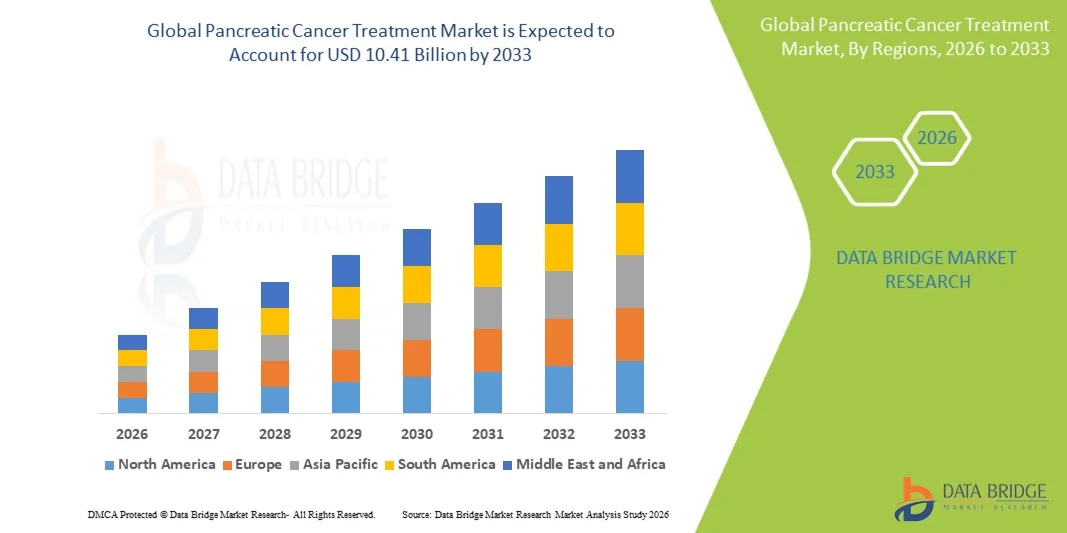
- The global pancreatic cancer treatment market size was valued at USD 3.73 billion in 2025 and is expected to reach USD 10.41 billion by 2033, at a CAGR of 13.70% during the forecast period
- The market growth is primarily driven by the rising global incidence of pancreatic cancer, increasing awareness regarding early diagnosis, and advancements in treatment modalities such as chemotherapy, targeted therapy, and immunotherapy
- Furthermore, growing investments in oncology research, expanding clinical trials, and the introduction of novel therapeutics aimed at improving survival rates are positioning pancreatic cancer treatment as a critical focus area in cancer care. These combined factors are significantly accelerating the growth of the market during the forecast period
Pancreatic Cancer Treatment Market Analysis
- Pancreatic cancer treatment, encompassing chemotherapy, targeted therapy, immunotherapy, and surgical interventions, plays a critical role in oncology care as healthcare systems increasingly focus on improving survival outcomes and quality of life for patients diagnosed with this aggressive malignancy
- The escalating demand for pancreatic cancer treatments is primarily driven by the rising global incidence of pancreatic cancer, growing awareness about early diagnosis, and continuous advancements in therapeutic approaches including precision medicine and combination therapies
- North America dominated the pancreatic cancer treatment market with the largest revenue share of 38.7% in 2025, supported by advanced healthcare infrastructure, high healthcare expenditure, and strong presence of leading pharmaceutical companies, with the U.S. witnessing significant adoption of novel therapies and ongoing clinical research initiatives
- Asia-Pacific is expected to be the fastest growing region in the pancreatic cancer treatment market during the forecast period due to increasing healthcare investments, improving access to cancer care, and a rising patient population across emerging economies
- Chemotherapy segment dominated the pancreatic cancer treatment market with a market share of 41.3% in 2025, driven by its widespread use as a first-line treatment option and its continued role in combination regimens for managing advanced stages of the disease
Report Scope and Pancreatic Cancer Treatment Market Segmentation
|
Attributes |
Pancreatic Cancer Treatment Key Market Insights |
|
Segments Covered |
|
|
Countries Covered |
North America
Europe
Asia-Pacific
Middle East and Africa
South America
|
|
Key Market Players |
|
|
Market Opportunities |
|
|
Value Added Data Infosets |
In addition to the insights on market scenarios such as market value, growth rate, segmentation, geographical coverage, and major players, the market reports curated by the Data Bridge Market Research also include in-depth expert analysis, patient epidemiology, pipeline analysis, pricing analysis, and regulatory framework |
Pancreatic Cancer Treatment Market Trends
“Advancements in Precision Medicine and Immunotherapy Integration”
- A significant and accelerating trend in the global pancreatic cancer treatment market is the growing integration of precision medicine and immunotherapy approaches alongside conventional chemotherapy regimens. This convergence of treatment modalities is significantly improving patient-specific outcomes and therapeutic effectiveness
- For instance, therapies such as targeted inhibitors and immune checkpoint inhibitors are increasingly being evaluated in combination with chemotherapy to enhance survival rates. Similarly, personalized treatment strategies based on genetic profiling are gaining traction in clinical oncology practice
- Integration of precision medicine enables identification of specific genetic mutations and biomarkers to guide treatment decisions and optimize therapy selection. For instance, certain therapies are designed to target BRCA mutations or other molecular alterations, improving response rates and minimizing unnecessary toxicity. Furthermore, immunotherapy approaches offer the potential to stimulate the body’s immune system to recognize and attack cancer cells more effectively
- The seamless incorporation of advanced diagnostics with therapeutic interventions facilitates a more tailored and coordinated treatment approach. Through integrated healthcare systems, clinicians can align diagnostic insights with targeted therapies, improving overall disease management and patient monitoring outcomes
- This trend towards more personalized, targeted, and effective treatment strategies is fundamentally reshaping clinical approaches to pancreatic cancer care. Consequently, companies such as Roche are focusing on developing biomarker-driven therapies and combination treatment regimens to enhance clinical outcomes
- The demand for advanced pancreatic cancer treatments that incorporate precision medicine and immunotherapy is growing rapidly across healthcare systems, as providers increasingly prioritize improved survival rates and patient-centric care models
- Growing collaborations between pharmaceutical companies, research institutions, and healthcare providers are accelerating the development and commercialization of novel therapies, enhancing overall treatment accessibility and effectiveness
Pancreatic Cancer Treatment Market Dynamics
Driver
“Rising Incidence and Increasing Focus on Early Diagnosis and Advanced Therapies”
- The increasing global incidence of pancreatic cancer, coupled with growing emphasis on early diagnosis and advanced therapeutic options, is a significant driver for the heightened demand for pancreatic cancer treatments
- For instance, in March 2025, Bristol Myers Squibb announced progress in its oncology pipeline, focusing on combination immunotherapy approaches for difficult-to-treat cancers including pancreatic cancer. Such strategies by key companies are expected to drive the pancreatic cancer treatment industry growth in the forecast period
- As healthcare systems become more focused on improving cancer survival rates and early detection, advanced treatment options such as targeted therapy and immunotherapy offer improved clinical outcomes compared to traditional approaches
- Furthermore, the growing investments in oncology research and the increasing number of clinical trials are accelerating the development of innovative therapies, making advanced pancreatic cancer treatment more accessible
- The availability of combination therapies, improved diagnostic techniques, and supportive care solutions are key factors propelling the adoption of pancreatic cancer treatments across hospitals and specialty cancer centers. The shift toward personalized medicine and integrated care approaches further contributes to market growth
- Expanding government initiatives and funding programs aimed at cancer research and awareness are further supporting the adoption of advanced pancreatic cancer treatments across developed and developing regions
- Increasing availability of advanced healthcare infrastructure and oncology specialists is enabling better diagnosis and treatment accessibility, particularly in emerging markets, thereby driving overall market growth
Restraint/Challenge
“High Treatment Costs and Limited Early Diagnosis Rates”
- Challenges associated with late-stage diagnosis and high treatment costs pose significant barriers to broader adoption of pancreatic cancer therapies. Due to the asymptomatic nature of early-stage pancreatic cancer, many patients are diagnosed at advanced stages, limiting treatment effectiveness and options
- For instance, delayed diagnosis often results in reduced eligibility for surgical interventions and increased reliance on costly systemic therapies, impacting overall treatment outcomes and affordability
- Addressing these challenges through improved screening methods, early detection programs, and cost-effective treatment solutions is crucial for enhancing patient outcomes. Companies such as Pfizer and Novartis are focusing on expanding access to innovative therapies while optimizing cost structures. In addition, the high cost of advanced treatments such as targeted therapy and immunotherapy can be a barrier to adoption, particularly in low- and middle-income regions where healthcare resources are limited
- While advancements in treatment technologies continue, the affordability and accessibility of these therapies remain critical concerns, especially for patients without adequate insurance coverage or healthcare support systems
- Overcoming these challenges through enhanced diagnostic capabilities, increased healthcare funding, and the development of more affordable therapeutic options will be vital for sustained market growth
- Stringent regulatory requirements and lengthy approval timelines for oncology drugs can delay the introduction of innovative therapies, impacting market expansion and patient access
- Limited awareness and lack of standardized screening programs in many regions further hinder early detection efforts, restricting timely treatment intervention and overall market growth
Pancreatic Cancer Treatment Market Scope
The market is segmented on the basis of treatment type, diagnosis, route of administration, end-users, and distribution channel.
- By Treatment Type
On the basis of treatment type, the pancreatic cancer treatment market is segmented into chemotherapy, targeted therapy, immunotherapy, hormone therapy, and others. The chemotherapy segment dominated the market with the largest revenue share of 41.3% in 2025, driven by its widespread use as the standard first-line treatment for pancreatic cancer, particularly in advanced and metastatic stages. Chemotherapy regimens such as combination therapies remain the backbone of treatment due to their proven clinical efficacy and accessibility across healthcare settings. The dominance is further supported by the relatively lower cost compared to newer therapies and its integration into neoadjuvant and adjuvant treatment protocols. In addition, the high global burden of late-stage diagnosis increases reliance on chemotherapy, reinforcing its market leadership. Continuous improvements in drug combinations and supportive care have also enhanced patient tolerance and outcomes. The established clinical guidelines and physician familiarity with chemotherapy further strengthen its dominant position.
The targeted therapy segment is anticipated to witness the fastest growth rate from 2026 to 2033, fueled by increasing adoption of precision medicine and biomarker-based treatment approaches. Targeted therapies focus on specific genetic mutations such as BRCA, enabling more personalized and effective treatment strategies. The growing availability of companion diagnostics is further accelerating the use of targeted therapies in clinical practice. Pharmaceutical companies are heavily investing in the development of novel targeted agents, expanding the treatment pipeline. These therapies offer improved efficacy with reduced systemic toxicity compared to traditional chemotherapy. Rising awareness among clinicians and patients regarding personalized oncology is also contributing to segment growth. Furthermore, ongoing clinical trials and regulatory approvals are expected to significantly boost the adoption of targeted therapies during the forecast period.
- By Diagnosis
On the basis of diagnosis, the market is segmented into blood test, biopsy, imaging tests, and others. The imaging tests segment dominated the market with the largest revenue share in 2025, driven by its essential role in detecting, staging, and monitoring pancreatic cancer. Techniques such as CT scans, MRI, and PET scans are widely used due to their accuracy and non-invasive nature. Imaging is often the first step in identifying abnormalities in the pancreas, making it a critical component of diagnostic workflows. The increasing availability of advanced imaging technologies across hospitals and diagnostic centers further supports its dominance. In addition, imaging plays a vital role in treatment planning and assessing therapeutic response. The integration of AI-based imaging solutions is also enhancing diagnostic precision and efficiency. These factors collectively contribute to the leading position of the imaging tests segment.
The biopsy segment is expected to witness the fastest growth rate from 2026 to 2033, driven by the increasing need for definitive diagnosis and molecular profiling. Biopsy procedures provide detailed histological and genetic information, which is crucial for selecting appropriate targeted therapies. The rising adoption of minimally invasive biopsy techniques is improving patient comfort and reducing procedural risks. Advances in liquid biopsy technologies are further revolutionizing early detection and monitoring of pancreatic cancer. Growing emphasis on precision medicine is increasing reliance on biopsy-based diagnostics. In addition, expanding research in tumor biology and biomarkers is supporting segment growth. These advancements are expected to significantly accelerate the adoption of biopsy diagnostics in the coming years.
- By Route of Administration
On the basis of route of administration, the market is segmented into oral, parenteral, and others. The parenteral segment dominated the market with the largest revenue share in 2025, owing to the widespread administration of chemotherapy and biologics through intravenous routes. Parenteral delivery ensures rapid drug absorption and precise dosage control, which is critical in cancer treatment. Most standard pancreatic cancer therapies are administered in clinical settings, reinforcing the dominance of this segment. The increasing number of hospital-based treatment procedures further contributes to its leading position. In addition, parenteral administration is preferred for patients with advanced disease stages who require intensive therapy. The established infrastructure for intravenous drug delivery in hospitals supports its continued dominance. Ongoing advancements in infusion technologies are also enhancing treatment efficiency and patient safety.
The oral segment is anticipated to witness the fastest growth rate from 2026 to 2033, driven by the growing development of oral targeted therapies and supportive medications. Oral administration offers greater convenience and improved patient compliance compared to injectable treatments. The shift toward outpatient care and home-based treatment is further supporting the adoption of oral therapies. Pharmaceutical companies are increasingly focusing on developing effective oral formulations for cancer treatment. These therapies reduce the need for frequent hospital visits, lowering overall healthcare costs. In addition, advancements in drug delivery technologies are improving the bioavailability of oral medications. This trend is expected to significantly boost the growth of the oral segment during the forecast period.
- By End-Users
On the basis of end-users, the market is segmented into hospitals, specialty clinics, homecare, and others. The hospitals segment dominated the market with the largest revenue share in 2025, driven by the availability of advanced diagnostic and treatment facilities. Hospitals serve as primary centers for cancer diagnosis, surgery, and administration of complex therapies such as chemotherapy and immunotherapy. The presence of multidisciplinary oncology teams ensures comprehensive patient care, contributing to higher patient preference for hospital-based treatment. In addition, hospitals are equipped with advanced imaging and laboratory infrastructure, supporting accurate diagnosis and monitoring. The increasing number of hospital admissions for cancer treatment further strengthens this segment. Government funding and healthcare investments in hospital infrastructure also play a significant role in its dominance.
The specialty clinics segment is expected to witness the fastest growth rate from 2026 to 2033, fueled by the rising demand for specialized and personalized cancer care. Specialty clinics offer focused oncology services with shorter waiting times and more personalized treatment approaches. The growing trend toward outpatient care is driving patient preference for these clinics. These facilities often provide access to advanced therapies and clinical trials, enhancing treatment options. In addition, specialty clinics are increasingly adopting innovative technologies for diagnosis and treatment. The expansion of private healthcare providers and oncology networks is further supporting segment growth. This shift toward specialized care delivery is expected to significantly boost the segment during the forecast period.
- By Distribution Channel
On the basis of distribution channel, the market is segmented into hospital pharmacy, retail pharmacy, online pharmacy, and others. The hospital pharmacy segment dominated the market with the largest revenue share in 2025, driven by the direct dispensing of oncology drugs within hospital settings. Most pancreatic cancer treatments, particularly injectable therapies, are administered and distributed through hospital pharmacies. This ensures proper storage, handling, and administration of specialized medications. The close coordination between healthcare providers and hospital pharmacies enhances treatment efficiency and patient safety. In addition, hospital pharmacies play a key role in managing high-cost oncology drugs and ensuring their availability. The increasing number of hospital-based treatments further reinforces this segment’s dominance.
The online pharmacy segment is anticipated to witness the fastest growth rate from 2026 to 2033, driven by the increasing adoption of digital healthcare platforms and e-pharmacy services. Online pharmacies offer convenience, home delivery, and competitive pricing, attracting a growing number of patients. The rising use of oral medications and supportive care drugs is further supporting this segment’s growth. Increasing internet penetration and digital literacy are enabling broader access to online pharmacy services. In addition, regulatory support for e-pharmacies in several regions is facilitating market expansion. The shift toward patient-centric care and remote healthcare solutions is expected to significantly accelerate the growth of the online pharmacy segment.
Pancreatic Cancer Treatment Market Regional Analysis
- North America dominated the pancreatic cancer treatment market with the largest revenue share of 38.7% in 2025, supported by advanced healthcare infrastructure, high healthcare expenditure, and strong presence of leading pharmaceutical companies
- Patients and healthcare providers in the region highly prioritize access to advanced therapies, improved diagnostic technologies, and integrated cancer care systems that enhance treatment outcomes and survival rates
- This widespread adoption is further supported by well-established healthcare infrastructure, high healthcare expenditure, a strong presence of leading pharmaceutical companies, and continuous advancements in research and clinical trials, establishing advanced pancreatic cancer treatments as a preferred solution across hospitals and specialty cancer centers
U.S. Pancreatic Cancer Treatment Market Insight
The U.S. pancreatic cancer treatment market captured the largest revenue share of 81% in 2025 within North America, fueled by the high incidence of pancreatic cancer and the strong presence of advanced oncology infrastructure. Healthcare providers are increasingly prioritizing innovative treatment approaches, including targeted therapy and immunotherapy, to improve patient outcomes. The growing emphasis on early diagnosis, combined with robust clinical research and drug development activities, further propels the market. Moreover, the increasing adoption of precision medicine and integration of advanced diagnostic technologies is significantly contributing to the market's expansion.
Europe Pancreatic Cancer Treatment Market Insight
The Europe pancreatic cancer treatment market is projected to expand at a substantial CAGR throughout the forecast period, primarily driven by increasing cancer awareness programs and the rising demand for advanced treatment solutions. The growth in healthcare expenditure, coupled with improved access to oncology care, is fostering the adoption of pancreatic cancer treatments. European patients and providers are also inclined toward innovative therapies that enhance survival outcomes. The region is experiencing significant growth across hospital and specialty care settings, with advanced treatments being incorporated into both public and private healthcare systems.
U.K. Pancreatic Cancer Treatment Market Insight
The U.K. pancreatic cancer treatment market is anticipated to grow at a noteworthy CAGR during the forecast period, driven by the increasing burden of pancreatic cancer and a strong focus on early detection and improved treatment pathways. In addition, government initiatives and cancer research funding are encouraging the adoption of advanced therapeutic options. The country’s well-established healthcare system, alongside its expanding clinical trial landscape, is expected to continue to stimulate market growth.
Germany Pancreatic Cancer Treatment Market Insight
The Germany pancreatic cancer treatment market is expected to expand at a considerable CAGR during the forecast period, fueled by rising awareness regarding cancer treatment and the demand for technologically advanced therapies. Germany’s well-developed healthcare infrastructure, combined with its focus on research and innovation, promotes the adoption of advanced pancreatic cancer treatments, particularly in hospital settings. The integration of precision medicine and targeted therapies is also becoming increasingly prevalent, with a strong preference for effective and high-quality treatment solutions aligning with patient expectations.
Asia-Pacific Pancreatic Cancer Treatment Market Insight
The Asia-Pacific pancreatic cancer treatment market is poised to grow at the fastest CAGR of 9.6% during the forecast period of 2026 to 2033, driven by increasing cancer incidence, rising healthcare investments, and improving access to medical services in countries such as China, Japan, and India. The region's growing focus on healthcare infrastructure development, supported by government initiatives, is driving the adoption of pancreatic cancer treatments. Furthermore, as Asia-Pacific strengthens its position in pharmaceutical manufacturing and clinical research, the accessibility and availability of cancer therapies are expanding to a wider patient population.
Japan Pancreatic Cancer Treatment Market Insight
The Japan pancreatic cancer treatment market is gaining momentum due to the country’s advanced healthcare system, aging population, and increasing focus on cancer care. The Japanese market places a significant emphasis on early diagnosis and effective treatment strategies, and the adoption of advanced therapies is driven by the increasing number of cancer cases. The integration of innovative treatment approaches with diagnostic technologies is fueling growth. Moreover, Japan's aging demographic is likely to spur demand for more effective and accessible cancer treatment solutions in both hospital and specialized care settings.
India Pancreatic Cancer Treatment Market Insight
The India pancreatic cancer treatment market accounted for the largest market revenue share in Asia-Pacific in 2025, attributed to the country’s large patient population, increasing cancer awareness, and improving healthcare infrastructure. India stands as a rapidly growing market for oncology treatments, and pancreatic cancer therapies are becoming increasingly accessible across hospitals and specialty clinics. The push toward strengthening healthcare systems and the availability of cost-effective treatment options, alongside growing domestic pharmaceutical capabilities, are key factors propelling the market in India.
Pancreatic Cancer Treatment Market Share
The Pancreatic Cancer Treatment industry is primarily led by well-established companies, including:
- Merck & Co., Inc. (U.S.)
- Bristol-Myers Squibb Company (U.S.)
- AstraZeneca PLC (U.K.)
- Pfizer Inc. (U.S.)
- Novartis AG (Switzerland)
- F. Hoffmann-La Roche Ltd. (Switzerland)
- Genentech, Inc. (U.S.)
- Eli Lilly and Company (U.S.)
- Amgen Inc. (U.S.)
- AbbVie Inc. (U.S.)
- Ipsen Pharma (France)
- Bayer AG (Germany)
- Sanofi (France)
- GSK plc (U.K.)
- Takeda Pharmaceutical Company Limited (Japan)
- Sun Pharmaceutical Industries Ltd. (India)
- Oncolytics Biotech Inc. (Canada)
- Elekta AB (Sweden)
- Accuray Incorporated (U.S.)
What are the Recent Developments in Global Pancreatic Cancer Treatment Market?
- In April 2026, Actuate Therapeutics announced positive results from a mid-stage clinical trial of its experimental drug elraglusib in combination with chemotherapy for advanced pancreatic cancer. The study showed that 44% of patients receiving the combination therapy were alive after one year compared to 22% with chemotherapy alone, with the drug reducing the risk of death by 38%. This development highlights the growing importance of combination therapies in improving survival outcomes for pancreatic cancer patients
- In April 2026, Revolution Medicines reported promising Phase 3 trial results for its KRAS-targeting drug daraxonrasib, which nearly doubled median survival in pancreatic cancer patients from 6.7 months to 13.2 months. The therapy targets KRAS mutations present in the majority of pancreatic cancers, marking a major breakthrough in treating a historically hard-to-target cancer. This advancement signals a potential shift toward targeted therapies transforming pancreatic cancer care
- In February 2026, the U.S. Food and Drug Administration approved the Tumor Treating Fields (TTFields) device, Optune Pax, for use in combination with chemotherapy for locally advanced pancreatic cancer. The device uses electric fields to disrupt cancer cell division and showed improved overall survival when added to standard chemotherapy. This approval represents a novel, non-invasive treatment approach expanding therapeutic options beyond conventional drug therapies
- In September 2025, researchers from the Institute of Cancer Research identified a new drug target protein (SPP1) that plays a key role in pancreatic cancer progression. Blocking this protein was shown to reduce tumor spread and improve survival potential in early studies. This discovery opens new pathways for the development of targeted therapies aimed at controlling metastasis in pancreatic cancer
- In February 2025, clinical research led by Memorial Sloan Kettering Cancer Center demonstrated the potential of personalized mRNA vaccines in treating pancreatic cancer by stimulating the immune system to attack tumor cells. Early trial results showed durable immune responses and extended survival in some patients. This development underscores the growing role of immunotherapy and personalized medicine in advancing pancreatic cancer treatment strategies
SKU-
Get online access to the report on the World's First Market Intelligence Cloud

- Interactive Data Analysis Dashboard
- Company Analysis Dashboard for high growth potential opportunities
- Research Analyst Access for customization & queries
- Competitor Analysis with Interactive dashboard
- Latest News, Updates & Trend analysis
- Harness the Power of Benchmark Analysis for Comprehensive Competitor Tracking
Research Methodology
Data collection and base year analysis are done using data collection modules with large sample sizes. The stage includes obtaining market information or related data through various sources and strategies. It includes examining and planning all the data acquired from the past in advance. It likewise envelops the examination of information inconsistencies seen across different information sources. The market data is analysed and estimated using market statistical and coherent models. Also, market share analysis and key trend analysis are the major success factors in the market report. To know more, please request an analyst call or drop down your inquiry.
The key research methodology used by DBMR research team is data triangulation which involves data mining, analysis of the impact of data variables on the market and primary (industry expert) validation. Data models include Vendor Positioning Grid, Market Time Line Analysis, Market Overview and Guide, Company Positioning Grid, Patent Analysis, Pricing Analysis, Company Market Share Analysis, Standards of Measurement, Global versus Regional and Vendor Share Analysis. To know more about the research methodology, drop in an inquiry to speak to our industry experts.
Customization Available
Data Bridge Market Research is a leader in advanced formative research. We take pride in servicing our existing and new customers with data and analysis that match and suits their goal. The report can be customized to include price trend analysis of target brands understanding the market for additional countries (ask for the list of countries), clinical trial results data, literature review, refurbished market and product base analysis. Market analysis of target competitors can be analyzed from technology-based analysis to market portfolio strategies. We can add as many competitors that you require data about in the format and data style you are looking for. Our team of analysts can also provide you data in crude raw excel files pivot tables (Fact book) or can assist you in creating presentations from the data sets available in the report.