Global Peptide Antibiotics Market
Market Size in USD Billion
CAGR :
% 
 USD
5.31 Billion
USD
8.14 Billion
2025
2033
USD
5.31 Billion
USD
8.14 Billion
2025
2033
 Forecast Period Forecast Period |
2026 –2033 |
 Market Size (Base Year) Market Size (Base Year) |
USD 5.31 Billion |
 Market Size (Forecast Year) Market Size (Forecast Year) |
USD 8.14 Billion |
 CAGR CAGR |
% |
| Major Markets Players |
|
Peptide Antibiotics Market Size
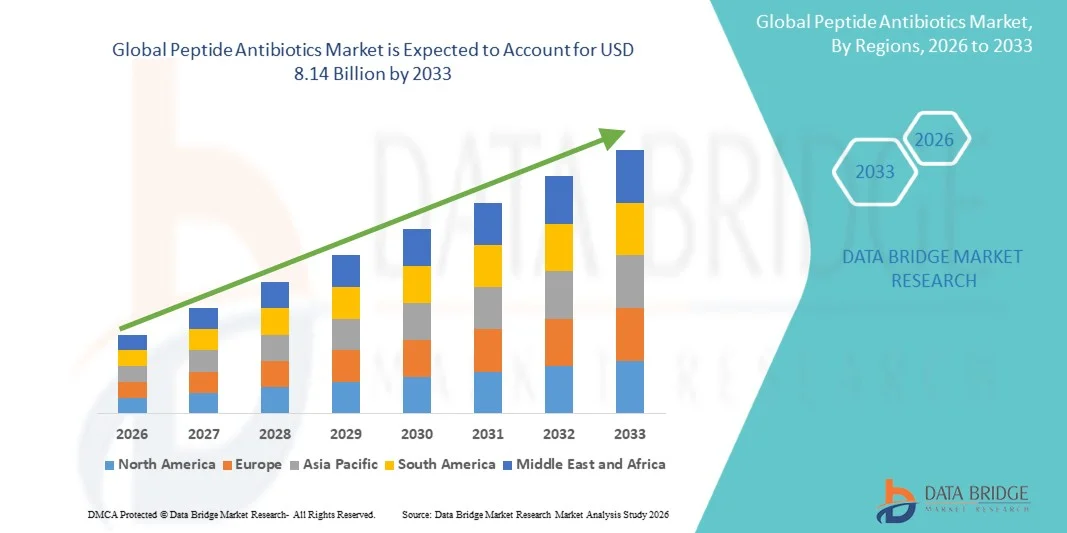
- The global peptide antibiotics market size was valued at USD 5.31 billion in 2025 and is expected to reach USD 8.14 billion by 2033, at a CAGR of 5.50% during the forecast period
- The market growth is largely fueled by the rising burden of antimicrobial resistance (AMR), which is driving demand for advanced peptide‑based antibacterial therapies that can target drug‑resistant pathogens more effectively than conventional antibiotics. Increased clinical adoption in hospital settings and ongoing R&D efforts for novel peptide antibiotic candidates are key contributors to market expansion
- Furthermore, growing prevalence of hospital‑acquired and other bacterial infections, along with a heightened focus on precision antimicrobial therapies, is pushing pharmaceutical companies and healthcare providers to adopt peptide antibiotics. These converging factors are accelerating the uptake of peptide antibiotic solutions, thereby significantly boosting the industry’s growth
Peptide Antibiotics Market Analysis
- Peptide antibiotics, offering targeted antimicrobial activity against bacteria and other pathogens, are increasingly vital components of modern healthcare and pharmaceutical applications due to their effectiveness against drug-resistant strains, high specificity, and integration into advanced therapeutic regimens
- The escalating demand for peptide antibiotics is primarily fueled by the rising prevalence of antimicrobial resistance (AMR), increasing hospital-acquired infections, and a growing preference for novel therapies that offer higher efficacy and lower side effects compared to conventional antibiotics
- North America dominated the peptide antibiotics market with the largest revenue share of 38.4% in 2025, characterized by advanced healthcare infrastructure, strong R&D investments, and early adoption of innovative therapies, with the U.S. leading in clinical trials and commercialization of peptide-based antibiotic formulations driven by both established pharmaceutical companies and biotech startups
- Asia-Pacific is expected to be the fastest-growing region in the peptide antibiotics market during the forecast period due to increasing healthcare expenditures, rising awareness about drug-resistant infections, and expansion of pharmaceutical manufacturing capabilities
- Non-ribosomal Synthesized Peptide Antibiotics segment dominated the market with a share of 71.4% in 2025, driven by their broad-spectrum activity and established clinical applications
Report Scope and Peptide Antibiotics Market Segmentation
|
Attributes |
Peptide Antibiotics Key Market Insights |
|
Segments Covered |
|
|
Countries Covered |
North America
Europe
Asia-Pacific
Middle East and Africa
South America
|
|
Key Market Players |
|
|
Market Opportunities |
|
|
Value Added Data Infosets |
In addition to the insights on market scenarios such as market value, growth rate, segmentation, geographical coverage, and major players, the market reports curated by the Data Bridge Market Research also include in-depth expert analysis, patient epidemiology, pipeline analysis, pricing analysis, and regulatory framework |
Peptide Antibiotics Market Trends
“Emergence of Next-Generation Peptide Therapeutics”
- A significant and accelerating trend in the global peptide antibiotics market is the development of next-generation peptide therapeutics that target multidrug-resistant pathogens while minimizing toxicity to human cells
- For instance, Daptomycin analogues are being engineered to enhance activity against resistant Gram-positive infections, offering a promising alternative to traditional antibiotics
- Advanced delivery systems, such as nanoparticle-based carriers, are being utilized to improve bioavailability and stability of peptide antibiotics, enabling more effective treatments and sustained therapeutic action
- The integration of computational biology and AI in peptide design allows researchers to predict peptide efficacy and resistance patterns, accelerating the discovery of novel antibiotic candidates
- This trend towards more precise, potent, and targeted peptide antibiotics is reshaping therapeutic strategies for bacterial infections, driving pharmaceutical companies to invest heavily in R&D
- The demand for innovative peptide antibiotics is growing rapidly across both hospital and outpatient settings, as clinicians increasingly prioritize efficacy against resistant infections and improved patient outcomes
- Growing collaborations between biotech startups and large pharmaceutical companies are enabling faster commercialization of novel peptides, expanding the market potential globally
Peptide Antibiotics Market Dynamics
Driver
“Rising Antimicrobial Resistance and Healthcare Burden”
- The increasing prevalence of antimicrobial resistance (AMR) worldwide, combined with the growing incidence of hospital-acquired infections, is a major driver of peptide antibiotic adoption
- For instance, Dalbavancin has gained attention for its effectiveness against resistant Staphylococcus aureus strains in clinical settings, addressing unmet therapeutic needs
- As healthcare systems face mounting pressure to manage drug-resistant infections, peptide antibiotics offer targeted solutions with reduced risk of promoting further resistance
- The expansion of advanced healthcare infrastructure and rising awareness about infection control are making peptide antibiotics an integral part of therapeutic protocols
- High clinical demand for treatments that combine efficacy, safety, and reduced dosing frequency is propelling adoption across hospitals and specialty care centers, particularly in regions with high infection prevalence
- Ongoing R&D initiatives by pharmaceutical companies and biotech firms to develop novel peptide molecules are further strengthening market growth and adoption
- For instance, government and private funding for antimicrobial research is increasing, supporting the rapid development and clinical adoption of peptide-based therapies
- Rising patient awareness and demand for targeted therapies that minimize side effects compared to broad-spectrum antibiotics is encouraging prescribers to favor peptide antibiotics
Restraint/Challenge
“High Costs and Regulatory Hurdles”
- Concerns regarding the high production cost of peptide antibiotics and the rigorous regulatory approval processes pose significant challenges to market expansion
- For instance, developing non-ribosomal synthesized peptide antibiotics involves complex synthesis and purification, increasing overall manufacturing expenses
- Strict regulatory requirements for clinical trials, safety validation, and quality control can delay product launches, particularly for innovative peptide candidates
- Limited awareness among healthcare providers in emerging markets about peptide antibiotic benefits can slow adoption despite clinical efficacy
- While some peptides are gaining approvals, the premium pricing and reimbursement challenges in certain regions may restrict access and usage in cost-sensitive healthcare systems
- Addressing these challenges through streamlined regulatory pathways, cost-effective manufacturing techniques, and increased education for clinicians will be crucial for sustained market growth
- For instance, ensuring consistent supply chains and scalability of peptide production remains a barrier, especially for high-demand hospital treatments
- Emerging competition from generic peptide antibiotics and biosimilars may put pressure on pricing and profit margins, affecting investment in novel peptide R&D
Peptide Antibiotics Market Scope
The market is segmented on the basis of product type, drugs, route of administration, and distribution channel.
- By Product Type
On the basis of product type, the peptide antibiotics market is segmented into ribosomal synthesized peptide antibiotics and non-ribosomal synthesized peptide antibiotics. The Non-ribosomal Synthesized Peptide Antibiotics segment dominated the market with the largest market revenue share of 71.4% in 2025, driven by their broad-spectrum activity, structural diversity, and proven clinical efficacy against resistant bacterial strains. These antibiotics are widely used in hospital settings for treating severe infections and are preferred due to their enhanced potency and reduced risk of resistance development. Pharmaceutical companies continue to focus on expanding their non-ribosomal peptide portfolios, enhancing formulations, and increasing availability for hospital-based treatments. In addition, the segment benefits from strong regulatory approvals and adoption in North America and Europe, where advanced healthcare infrastructure supports the use of high-efficacy peptide therapies. Clinical guidelines often recommend non-ribosomal peptides for complicated Gram-positive infections, reinforcing their dominance.
The Ribosomal Synthesized Peptide Antibiotics segment is anticipated to witness the fastest growth rate of 9.2% CAGR from 2026 to 2033, fueled by increasing research into bioengineered peptides with improved specificity and reduced toxicity. Ribosomal peptides are gaining traction in both hospital and outpatient settings due to their potential for oral administration and compatibility with combination therapies. Advances in biotechnology, including synthetic biology and peptide optimization, are enabling faster development and lower production costs. The growing demand for targeted antimicrobial solutions in emerging markets is also driving growth. Furthermore, ribosomal peptides are being explored for new therapeutic indications, which is expected to significantly expand market opportunities in the coming years.
- By Drugs
On the basis of drug type, the peptide antibiotics market is segmented into daptomycin, dalbavancin, telavancin, and others. The Daptomycin segment dominated the market with the largest revenue share in 2025, driven by its effectiveness against multidrug-resistant Gram-positive infections, including MRSA and complicated skin infections. Daptomycin is widely adopted in hospital settings for severe and refractory cases due to its proven clinical performance and well-established safety profile. Its once-daily dosing regimen and potent bactericidal action further enhance its preference among healthcare providers. The drug is heavily recommended in clinical guidelines for resistant infections, ensuring continued high adoption rates. Pharmaceutical companies actively promote Daptomycin through hospital programs and educational campaigns to increase awareness among clinicians. Strategic partnerships and licensing agreements are also enhancing global availability, solidifying its dominant market position.
The Dalbavancin segment is expected to witness the fastest growth from 2026 to 2033, fueled by its long half-life, enabling once-weekly dosing and reducing hospitalization time. Dalbavancin is increasingly preferred for outpatient therapy and home-based treatments, particularly for skin and soft tissue infections. It’s convenient dosing and strong efficacy against resistant strains are driving adoption in both developed and emerging markets. In addition, expanding approvals for various indications and rising awareness among healthcare providers about its benefits contribute to its rapid growth. Biotech companies are also exploring new formulations and combination therapies to maximize clinical effectiveness, further accelerating market uptake.
- By Route of Administration
On the basis of route of administration, the peptide antibiotics market is segmented into oral, parenteral, topical, and others. The Parenteral segment dominated the market with the largest revenue share in 2025, reflecting its widespread use in hospitals and critical care settings for systemic infections. Parenteral administration ensures rapid bioavailability, high potency, and reliable therapeutic outcomes, particularly for severe infections requiring immediate intervention. The segment benefits from extensive adoption in developed countries, strong physician preference, and hospital protocols recommending intravenous therapy for complicated infections. Companies continue to focus on optimizing formulations for parenteral delivery, enhancing stability and reducing adverse reactions. Parenteral peptide antibiotics are also integral to combination therapy strategies in multi-drug resistant infections, supporting their market dominance.
The Oral segment is expected to witness the fastest growth rate from 2026 to 2033, driven by increasing R&D into bioavailable oral peptides and the rising demand for outpatient and home-based treatments. Oral administration improves patient compliance, reduces hospital stays, and allows wider adoption in emerging markets. Advances in peptide stabilization and formulation technologies are enabling the development of effective oral therapies. In addition, oral peptides are being studied for chronic infections, expanding potential applications. Rising awareness among clinicians and patients about convenient and effective oral therapies is further accelerating adoption.
- By Distribution Channel
On the basis of distribution channel, the peptide antibiotics market is segmented into hospitals, homecare, specialty clinics, and others. The Hospitals segment dominated the market with the largest revenue share in 2025, driven by the high prevalence of hospital-acquired infections, established adoption of parenteral therapies, and robust infrastructure for administering peptide antibiotics. Hospitals are the primary point of care for severe bacterial infections, ensuring consistent demand. Clinical protocols and physician familiarity with hospital-based peptide therapies further strengthen market dominance. Major pharmaceutical companies focus on hospital partnerships, training programs, and direct supply agreements to maintain strong market presence. In addition, hospitals provide access to combination therapies and clinical monitoring, increasing adoption rates.
The Homecare segment is expected to witness the fastest growth from 2026 to 2033, fueled by the rising trend of outpatient management of infections and increased availability of long-acting peptide antibiotics. Homecare allows patients to receive therapy outside hospitals, reducing healthcare costs and improving convenience. The growing aging population and increasing chronic infection cases are driving homecare adoption. Companies are introducing patient-friendly administration devices and support services to facilitate home-based therapy. Telehealth and remote monitoring integration further enhance homecare effectiveness, supporting rapid growth of this distribution channel.
Peptide Antibiotics Market Regional Analysis
- North America dominated the peptide antibiotics market with the largest revenue share of 38.4% in 2025, characterized by advanced healthcare infrastructure, strong R&D investments, and early adoption of innovative therapies
- Healthcare providers in the region highly value the efficacy, specificity, and safety profile of peptide antibiotics, particularly for treating multidrug-resistant Gram-positive infections and complicated skin and soft tissue infections
- This widespread adoption is further supported by strong R&D investment, early clinical trial activity, and government initiatives promoting antimicrobial stewardship, establishing peptide antibiotics as a preferred therapeutic solution in both hospital and outpatient settings
U.S. Peptide Antibiotics Market Insight
The U.S. peptide antibiotics market captured the largest revenue share of 38% in 2025, fueled by high prevalence of hospital-acquired infections and increasing antimicrobial resistance. Hospitals and specialty clinics are adopting peptide-based therapies for multidrug-resistant Gram-positive infections due to their proven efficacy and safety. The growing trend of outpatient and home-based treatments, combined with widespread use of parenteral peptide antibiotics, further propels the market. Moreover, significant R&D investments, early adoption of innovative therapies, and strong clinical guideline recommendations are contributing to market expansion.
Europe Peptide Antibiotics Market Insight
The Europe peptide antibiotics market is projected to expand at a substantial CAGR throughout the forecast period, primarily driven by stringent infection control protocols and rising awareness of antimicrobial resistance. Increasing healthcare expenditure, coupled with the demand for advanced hospital and outpatient treatments, is fostering peptide antibiotic adoption. European clinicians value these therapies for their efficacy against multidrug-resistant infections and their suitability for combination treatment regimens. The region is witnessing growth across hospitals, specialty clinics, and homecare applications, with peptide antibiotics incorporated into both new treatment protocols and updated clinical guidelines.
U.K. Peptide Antibiotics Market Insight
The U.K. peptide antibiotics market is anticipated to grow at a noteworthy CAGR during the forecast period, driven by rising hospital-acquired infection rates and increasing focus on antimicrobial stewardship. Clinicians are preferring targeted peptide therapies to manage multidrug-resistant infections, enhancing treatment outcomes. In addition, growing awareness among healthcare providers about peptide antibiotics’ efficacy and safety is encouraging adoption in hospitals and specialty clinics. The U.K.’s strong healthcare infrastructure, combined with supportive regulatory frameworks, is expected to continue stimulating market growth.
Germany Peptide Antibiotics Market Insight
The Germany peptide antibiotics market is expected to expand at a considerable CAGR during the forecast period, fueled by strong clinical awareness of multidrug-resistant pathogens and the demand for high-efficacy therapeutics. Germany’s advanced healthcare system and focus on innovative treatments promote the adoption of peptide antibiotics in both hospital and outpatient care. Integration of peptide therapies into standard treatment protocols and their proven clinical effectiveness for complicated infections further drives growth. Moreover, government support for R&D and infection control initiatives encourages wider uptake of peptide-based solutions.
Asia-Pacific Peptide Antibiotics Market Insight
The Asia-Pacific peptide antibiotics market is poised to grow at the fastest CAGR during the forecast period of 2026 to 2033, driven by rising hospitalizations for infectious diseases, expanding healthcare infrastructure, and increasing awareness of antimicrobial resistance in countries such as China, India, and Japan. The region’s growing inclination toward advanced therapeutics, supported by government healthcare initiatives and rising healthcare expenditure, is driving adoption. Furthermore, Asia-Pacific is emerging as a hub for peptide antibiotic production, improving affordability and accessibility across both hospital and homecare settings.
Japan Peptide Antibiotics Market Insight
The Japan peptide antibiotics market is gaining momentum due to the country’s advanced healthcare system, aging population, and rising incidence of resistant infections. Clinicians are adopting peptide therapies for hospital and specialty clinic use, particularly for complicated Gram-positive infections. Integration of peptide antibiotics into clinical protocols and combination therapies is fueling growth. Moreover, Japan’s strong emphasis on high-quality, safe therapeutics and continuous investment in R&D supports the adoption of innovative peptide solutions across both residential and outpatient healthcare sectors.
India Peptide Antibiotics Market Insight
The India peptide antibiotics market accounted for the largest revenue share in Asia-Pacific in 2025, attributed to the country’s expanding healthcare infrastructure, rising infectious disease burden, and growing adoption of advanced antimicrobial therapies. Hospitals and specialty clinics are increasingly using peptide antibiotics to treat multidrug-resistant infections. The push towards improved infection management, combined with availability of cost-effective peptide therapies and government initiatives, are key factors propelling the market. In addition, increasing awareness among clinicians about the efficacy and safety of peptide antibiotics is driving growth in both urban and semi-urban healthcare settings.
Peptide Antibiotics Market Share
The Peptide Antibiotics industry is primarily led by well-established companies, including:
- Pfizer Inc., (U.S.)
- Merck & Co., Inc., (U.S.)
- GSK plc, (U.K.)
- Novartis AG, (Switzerland)
- AbbVie Inc., (U.S.)
- Sandoz AG, (Switzerland)
- Theravance Biopharma, (U.S.)
- Xellia Pharmaceuticals, (Denmark)
- Revance Therapeutics Inc., (U.S.)
- ANI Pharmaceuticals, Inc., (U.S.)
- Cumberland Pharmaceuticals Inc., (U.S.)
- Melinta Therapeutics, (U.S.)
- Teva Pharmaceutical Industries Ltd., (Israel)
- AstraZeneca PLC, (U.K.)
- Johnson & Johnson Services, Inc., (U.S.)
- Neuland Laboratories Limited, (India)
- CPC Scientific Inc., (U.S.)
- AMP Biotech, (U.S.)
- Phoenix Biotechnology Inc., (U.S.)
- AuroMedics Pharma LLC, (U.S.)
What are the Recent Developments in Global Peptide Antibiotics Market?
- In March 2026, Peptilogics began a pivotal Phase 2/3 trial (RETAIN) of PLG0206, the first drug specifically designed to cure medical device‑related infections by penetrating biofilm in periprosthetic joint infection patients, underscoring advancement toward potential late‑stage regulatory milestones
- In December 2025, the U.S. FDA approved zoliflodacin (brand name Nuzolvence) as an oral antibiotic for treating antibiotic‑resistant Neisseria gonorrhoeae, marking the introduction of a new class of antibiotic with potential relevance to peptide‑related antimicrobial strategies and resistance management
- In September 2024, Beiersdorf and Macro Biologics entered a multi‑year partnership to develop biodegradable antimicrobial peptides for use in skin care and healthcare applications, combining Macro’s technology with Beiersdorf’s formulation expertise to expand antimicrobial peptide usage
- In September 2023, Peptilogics reported positive 180‑day top‑line interim data from its Phase 1b trial of PLG0206 in patients with prosthetic joint infections, demonstrating safety and robust reduction in infection recurrence among a high‑risk population
- In April 2023, Peptilogics announced the completion of patient enrollment for its Phase 1b trial of PLG0206, an engineered antimicrobial peptide targeting periprosthetic joint infections, designed to disrupt biofilm‑forming bacteria and address a critical unmet need in surgical infection management
SKU-
Get online access to the report on the World's First Market Intelligence Cloud

- Interactive Data Analysis Dashboard
- Company Analysis Dashboard for high growth potential opportunities
- Research Analyst Access for customization & queries
- Competitor Analysis with Interactive dashboard
- Latest News, Updates & Trend analysis
- Harness the Power of Benchmark Analysis for Comprehensive Competitor Tracking
Research Methodology
Data collection and base year analysis are done using data collection modules with large sample sizes. The stage includes obtaining market information or related data through various sources and strategies. It includes examining and planning all the data acquired from the past in advance. It likewise envelops the examination of information inconsistencies seen across different information sources. The market data is analysed and estimated using market statistical and coherent models. Also, market share analysis and key trend analysis are the major success factors in the market report. To know more, please request an analyst call or drop down your inquiry.
The key research methodology used by DBMR research team is data triangulation which involves data mining, analysis of the impact of data variables on the market and primary (industry expert) validation. Data models include Vendor Positioning Grid, Market Time Line Analysis, Market Overview and Guide, Company Positioning Grid, Patent Analysis, Pricing Analysis, Company Market Share Analysis, Standards of Measurement, Global versus Regional and Vendor Share Analysis. To know more about the research methodology, drop in an inquiry to speak to our industry experts.
Customization Available
Data Bridge Market Research is a leader in advanced formative research. We take pride in servicing our existing and new customers with data and analysis that match and suits their goal. The report can be customized to include price trend analysis of target brands understanding the market for additional countries (ask for the list of countries), clinical trial results data, literature review, refurbished market and product base analysis. Market analysis of target competitors can be analyzed from technology-based analysis to market portfolio strategies. We can add as many competitors that you require data about in the format and data style you are looking for. Our team of analysts can also provide you data in crude raw excel files pivot tables (Fact book) or can assist you in creating presentations from the data sets available in the report.