




Global Performance Enhancing Drugs Market
Market Size in USD Billion
CAGR :
% 
 USD
11.92 Billion
USD
18.01 Billion
2025
2033
USD
11.92 Billion
USD
18.01 Billion
2025
2033
 Forecast Period Forecast Period |
2026 –2033 |
 Market Size (Base Year) Market Size (Base Year) |
USD 11.92 Billion |
 Market Size (Forecast Year) Market Size (Forecast Year) |
USD 18.01 Billion |
 CAGR CAGR |
% |
| Major Markets Players |
|
Performance Enhancing Drugs Market Size
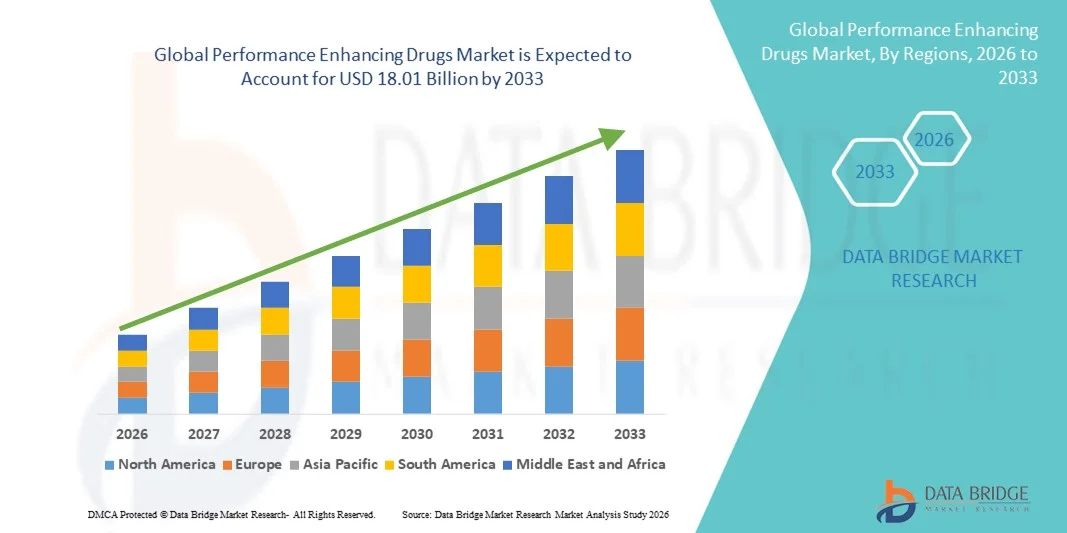
- The global performance enhancing drugs market size was valued at USD 11.92 billion in 2025 and is expected to reach USD 18.01 billion by 2033, at a CAGR of 5.30% during the forecast period
- The market growth is largely fueled by the increasing demand for improved physical performance, enhanced endurance, and muscle development across professional athletes, bodybuilders, and recreational fitness enthusiasts, along with growing awareness of advanced performance enhancement compounds
- Furthermore, rising participation in competitive sports, expanding fitness culture, and continuous development of novel formulations and delivery methods are establishing performance enhancing drugs as widely sought-after solutions for strength, stamina, and recovery optimization. These converging factors are accelerating the uptake of Performance Enhancing Drugs solutions, thereby significantly boosting the industry's growth
Performance Enhancing Drugs Market Analysis
- Performance enhancing drugs (PEDs), including anabolic steroids, stimulants, hormone modulators, and peptide-based compounds, are increasingly utilized to improve strength, endurance, muscle mass, and recovery across professional athletes, bodybuilders, and recreational fitness participants. Growing awareness of advanced performance optimization compounds is shaping demand dynamics
- The escalating demand for performance enhancing drugs is primarily fueled by rising participation in competitive sports, expanding fitness and bodybuilding culture, increasing emphasis on physical aesthetics, and growing availability of specialized formulations designed to enhance stamina and recovery time
- North America dominated the performance enhancing drugs market with the largest revenue share of 36.8% in 2025, characterized by high sports participation rates, strong fitness industry presence, advanced pharmaceutical manufacturing capabilities, and significant consumer spending on performance optimization products. The U.S. accounts for a substantial portion of the regional demand due to widespread gym culture and professional athletic activities
- Asia-Pacific is expected to be the fastest-growing region in the performance enhancing drugs market during the forecast period, expanding at a CAGR of 9.6% from 2026 to 2033, driven by increasing urbanization, rising disposable incomes, expanding fitness centers, growing bodybuilding competitions, and increasing awareness of performance supplements across emerging economies
- The Pills segment accounted for the largest market revenue share of 52.6% in 2025, driven by ease of administration, affordability, and wide consumer acceptance
Report Scope and Performance Enhancing Drugs Market Segmentation
|
Attributes |
Performance Enhancing Drugs Key Market Insights |
|
Segments Covered |
|
|
Countries Covered |
North America
Europe
Asia-Pacific
Middle East and Africa
South America
|
|
Key Market Players |
|
|
Market Opportunities |
|
|
Value Added Data Infosets |
In addition to the insights on market scenarios such as market value, growth rate, segmentation, geographical coverage, and major players, the market reports curated by the Data Bridge Market Research also include in-depth expert analysis, patient epidemiology, pipeline analysis, pricing analysis, and regulatory framework. |
Performance Enhancing Drugs Market Trends
Rising Demand for Aesthetic Enhancement and Competitive Performance Optimization
- A prominent and accelerating trend in the global performance enhancing drugs market is the growing societal emphasis on physical appearance, athletic excellence, and rapid body transformation. Across both professional and recreational segments, individuals are increasingly seeking pharmaceutical solutions that promise faster muscle gain, improved endurance, enhanced recovery, and visible physique improvements within shorter timeframes. This shift is being amplified by the influence of social media platforms, fitness influencers, and bodybuilding communities that promote idealized body standards and performance benchmarks
- For instance, the rising use of anabolic agents such as Oxandrolone and selective androgen receptor modulators (SARMs) among amateur fitness enthusiasts demonstrates how performance enhancement is expanding beyond elite athletes into mainstream gym populations. Similarly, endurance-enhancing substances such as erythropoietin (EPO) have historically gained attention in competitive cycling and long-distance sports, reflecting the persistent pursuit of stamina optimization
- The trend is further strengthened by increasing accessibility through online distribution channels and cross-border pharmaceutical trade. Digital platforms, underground suppliers, and informal networks have made these substances more readily available, particularly in regions where regulatory oversight is less stringent. Moreover, certain segments of the aging population are showing growing interest in hormone optimization therapies, including testosterone-based formulations, to counteract fatigue, muscle loss, and reduced vitality associated with aging
- In addition, the expanding fitness industry, including bodybuilding competitions, mixed martial arts training centers, and high-intensity athletic programs, is indirectly fueling demand. As competitive standards rise, athletes and fitness aspirants often perceive performance-enhancing substances as tools to gain an edge, accelerate recovery from injuries, and maintain consistent training intensity
- This evolving landscape is reshaping consumer expectations around physical performance and body image, transforming performance enhancement from a niche athletic practice into a broader lifestyle-driven phenomenon. Consequently, the Performance Enhancing Drugs market continues to witness diversification in product types, including anabolic steroids, stimulants, peptide hormones, and metabolic modulators, catering to varied performance objectives
- The sustained desire for accelerated results, visible transformation, and competitive advantage is expected to reinforce this upward trend across both developed and emerging markets, particularly where fitness culture and physique-oriented sports are rapidly expanding
Performance Enhancing Drugs Market Dynamics
Driver
Increasing Competitive Pressure and Expanding Fitness Industry
- The intensifying level of competition across professional sports, bodybuilding circuits, and high-performance athletics is a major driver propelling demand within the Performance Enhancing Drugs market. Athletes competing at elite levels face immense pressure to outperform rivals, break records, and secure sponsorships, creating strong incentives to enhance physical capacity beyond natural limits
- For instance, historical doping cases in global sporting events such as the Olympic Games and international cycling tournaments have highlighted the persistent use of substances like anabolic steroids and blood-boosting agents to improve speed, strength, and endurance. These incidents underscore how competitive intensity directly correlates with the adoption of performance-enhancing substances
- Beyond professional athletics, the rapid expansion of commercial gyms, bodybuilding leagues, CrossFit competitions, and combat sports academies is widening the consumer base. Recreational athletes and fitness enthusiasts increasingly seek rapid muscle hypertrophy, reduced recovery time, and improved metabolic performance. The commercialization of physique competitions and online fitness coaching programs has further normalized conversations around supplementation and enhancement
- In addition, rising disposable incomes in developing economies are enabling greater expenditure on fitness-related products, including advanced supplementation and hormone-based therapies. In some regions, loosely regulated pharmaceutical markets make access relatively easier, thereby accelerating adoption rates
- The psychological aspect of performance pressure, combined with financial incentives tied to sporting success, endorsements, and social recognition, continues to stimulate demand. As long as competitive benchmarks intensify and physique-driven industries grow, the Performance Enhancing Drugs market is likely to remain structurally supported by these underlying drivers
Restraint/Challenge
Stringent Regulations, Health Risks, and Ethical Concerns
- A significant restraint impacting the Performance Enhancing Drugs market is the increasingly strict regulatory framework imposed by global anti-doping authorities and national health agencies
- Organizations such as the World Anti-Doping Agency (WADA) regularly update prohibited substance lists and implement rigorous testing protocols across professional sports, limiting the legal scope of performance-enhancing drug usage
- For instance, numerous high-profile athlete suspensions following positive doping tests have reinforced regulatory vigilance and heightened scrutiny around pharmaceutical enhancement. These enforcement actions create legal risks for distributors and severe reputational and career consequences for users
- Beyond regulatory barriers, serious health risks associated with prolonged or unsupervised use of anabolic steroids, stimulants, and hormone modulators present a substantial challenge. Documented side effects include cardiovascular complications, liver toxicity, hormonal imbalances, psychiatric disturbances, and long-term metabolic disorders
- Growing awareness of these adverse outcomes is discouraging cautious consumers from engaging with such products
- Ethical debates surrounding fairness in sports and the integrity of competition further constrain market expansion. Sporting institutions, sponsors, and audiences increasingly demand clean performance standards, reducing tolerance for enhancement practices that compromise equity
- Moreover, the illicit nature of many distribution channels introduces quality control issues, counterfeit products, and contamination risks. The absence of standardized manufacturing oversight in underground markets heightens safety concerns and deters risk-averse consumers
- Addressing these challenges would require stronger regulatory compliance frameworks, medically supervised therapeutic applications where appropriate, and increased public education regarding potential health implications
- However, persistent legal restrictions and safety concerns are expected to continue acting as structural restraints on the long-term expansion of the performance enhancing drugs market
Performance Enhancing Drugs Market Scope
The market is segmented on the basis of type, products, and end user.
- By Type
On the basis of type, the Performance Enhancing Drugs market is segmented into Ergogenic Aids, Nootropic, and Others. The Ergogenic Aids segment dominated the largest market revenue share of 48.3% in 2025, driven by the high consumption of substances aimed at improving physical strength, endurance, and athletic performance. These include anabolic agents, stimulants, and hormone-based enhancers widely used in competitive sports and bodybuilding. Rising participation in professional and amateur sports globally supports segment growth. Increasing gym culture and fitness awareness further accelerate demand. Ergogenic aids are often preferred for rapid muscle gain and stamina enhancement. Strong distribution networks through online and offline channels contribute to revenue expansion. Demand remains high among professional athletes despite regulatory scrutiny. Growing commercialization of sports leagues globally also strengthens product uptake. Continuous product innovation in performance supplements reinforces dominance. Expansion of the fitness industry in emerging economies sustains steady growth.
The Nootropic segment is anticipated to witness the fastest CAGR of 17.9% from 2026 to 2033, fueled by rising demand for cognitive performance enhancement among students, professionals, and military personnel. Increasing academic competition and workplace productivity pressures are driving adoption. Nootropics are widely marketed for improving memory, focus, and mental clarity. Growing awareness through digital platforms accelerates market penetration. Expansion of e-commerce channels improves product accessibility. Rising R&D investments in safer cognitive enhancers support product development. The popularity of biohacking and self-optimization trends further propels demand. Increasing urbanization and stressful lifestyles contribute to segment expansion. Regulatory monitoring is encouraging the development of regulated and standardized formulations. Growing consumer preference for mental wellness supplements supports sustained CAGR growth.
- By Products
On the basis of products, the Performance Enhancing Drugs market is segmented into Pills, Injections, Patches, and Others. The Pills segment accounted for the largest market revenue share of 52.6% in 2025, driven by ease of administration, affordability, and wide consumer acceptance. Oral formulations are convenient and widely distributed across pharmacies and online platforms. Consumers prefer pills due to non-invasive usage and simple dosage management. High availability of dietary supplements and over-the-counter formulations strengthens segment leadership. Pharmaceutical companies focus heavily on tablet-based ergogenic and nootropic products. Growing demand for self-administered performance enhancers supports growth. Regulatory frameworks often favor oral supplements over injectable substances. Expansion of retail and online sales channels reinforces accessibility. Rising consumer preference for discreet consumption also supports dominance. Continuous innovation in extended-release formulations further boosts segment revenue.
The Injections segment is expected to register the fastest CAGR of 18.4% from 2026 to 2033, driven by higher potency and faster physiological effects compared to oral products. Injectable anabolic steroids and hormone therapies are preferred by professional bodybuilders and competitive athletes. Rapid onset of action and improved bioavailability support adoption. Growing underground and specialized distribution channels contribute to expansion. Increasing demand for targeted hormone-based therapies accelerates growth. Medical supervision in certain therapeutic uses further expands acceptance. Advancements in safe injectable delivery systems strengthen market potential. Rising performance pressure in competitive sports fuels segment demand. Technological improvements in injectable formulations enhance safety profiles. Expanding gym culture in emerging markets further drives CAGR growth.
- By End User
On the basis of end user, the Performance Enhancing Drugs market is segmented into Athletes, Body Builders, Students, Militaries, and Others. The Athletes segment dominated with a revenue share of 36.9% in 2025, driven by intense competition in professional and semi-professional sports. High performance expectations and sponsorship pressures encourage usage. Athletes seek endurance, strength, and recovery enhancement products. Growing commercialization of sports events globally strengthens demand. Availability of specialized performance-enhancing regimens supports segment growth. Training programs often incorporate ergogenic supplements for optimized output. Expanding participation in international sporting events contributes to sustained revenue. Technological advancements in sports science further promote product integration. High spending capacity among professional athletes reinforces market share.
The Students segment is projected to witness the fastest CAGR of 16.8% from 2026 to 2033, fueled by increasing academic competition and rising demand for cognitive enhancers. Students are adopting nootropics to improve concentration, memory retention, and exam performance. Growing awareness through social media platforms accelerates adoption. Expansion of online retail channels enhances product availability. Urban lifestyles and competitive education systems contribute to rising demand. Increasing stress levels among students further drive usage. Development of plant-based and safer cognitive enhancers supports growth. Rising disposable income in emerging markets strengthens market penetration. Continuous innovation in mental performance supplements sustains long-term CAGR expansion.
Performance Enhancing Drugs Market Regional Analysis
- North America dominated the Performance Enhancing Drugs market with the largest revenue share of 36.8% in 2025, characterized by high sports participation rates, a well-established fitness industry ecosystem, advanced pharmaceutical manufacturing capabilities, and substantial consumer expenditure on performance optimization products. The region benefits from a deeply rooted gym culture, strong presence of professional athletic leagues, and widespread availability of both prescription-based and underground enhancement substances. In addition, increasing interest in bodybuilding, mixed martial arts, endurance sports, and physique competitions continues to sustain consistent demand for anabolic agents, stimulants, and hormone-based performance enhancers across both professional and recreational user groups
- Consumers in the region demonstrate a strong inclination toward muscle-building compounds, endurance-enhancing agents, and recovery-accelerating drugs, particularly within competitive sports and high-intensity training environments. The widespread popularity of strength training programs, sports leagues, and fitness expos has further amplified awareness and usage. Moreover, the presence of advanced research facilities, specialized clinics offering hormone optimization therapies, and a mature supplement retail network enhances product accessibility and distribution efficiency
- This widespread adoption is further supported by high disposable incomes, increasing aesthetic consciousness, and a results-driven fitness mindset that prioritizes rapid physical transformation and competitive edge. The commercialization of sports, lucrative sponsorship contracts, and social media-driven physique standards collectively reinforce demand, establishing performance enhancing drugs as a persistent component within segments of the athletic and bodybuilding communities
U.S. Performance Enhancing Drugs Market Insight
The U.S. performance enhancing drugs market captured the largest revenue share within North America in 2025, accounting for a substantial proportion of regional demand due to the country’s expansive gym culture, strong professional sports infrastructure, and high consumer spending on fitness-related products. The presence of major athletic leagues, collegiate sports programs, and competitive bodybuilding circuits creates a consistent environment where performance optimization remains a key focus. Furthermore, the country’s advanced pharmaceutical industry and distribution networks facilitate both legitimate hormone therapies and illicit product circulation. The rising popularity of strength sports, physique competitions, and online fitness coaching platforms continues to stimulate demand. In addition, increasing interest in testosterone replacement therapy (TRT) and other hormone-based treatments among aging male populations contributes to market expansion. While regulatory scrutiny remains strong, the scale of athletic participation and consumer willingness to invest in physical enhancement sustains the U.S. as the dominant contributor to regional revenues.
Europe Performance Enhancing Drugs Market Insight
The Europe performance enhancing drugs market is projected to expand at a steady CAGR throughout the forecast period, supported by a strong sporting culture, growing fitness awareness, and increasing participation in bodybuilding and endurance events. Countries across Western and Eastern Europe are witnessing a rise in gym memberships, amateur athletic competitions, and physique-focused social media communities, all of which contribute to awareness of performance-enhancing substances. However, the region also operates under strict anti-doping regulations and rigorous pharmaceutical oversight. Despite regulatory constraints, underground distribution networks and cross-border trade sustain product availability. Growth is particularly evident in fitness-centric urban centers where demand for rapid muscle gain, strength enhancement, and recovery optimization remains pronounced.
U.K. Performance Enhancing Drugs Market Insight
The U.K. performance enhancing drugs market is anticipated to grow at a noteworthy CAGR during the forecast period, driven by increasing participation in bodybuilding, football training academies, and combat sports. The country’s strong fitness culture, expanding gym chains, and competitive sports landscape encourage interest in muscle-building and endurance-enhancing compounds. While anti-doping enforcement remains stringent, demand persists within certain athletic subcultures seeking competitive advantages or accelerated physique transformation. Online retail channels and informal supply chains also contribute to market circulation, although regulatory monitoring continues to influence overall growth dynamics.
Germany Performance Enhancing Drugs Market Insight
The Germany performance enhancing drugs market is expected to expand at a considerable CAGR during the forecast period, supported by rising fitness center memberships, strong sports club participation, and growing awareness of advanced training supplementation. Germany’s structured athletic programs and emphasis on performance excellence create a consistent environment for demand in muscle-building and endurance-enhancing products. At the same time, strict pharmaceutical regulations and anti-doping enforcement shape market behavior. Nonetheless, increasing interest in physique development, competitive bodybuilding events, and strength training communities continues to contribute to steady demand growth within controlled and informal channels.
Asia-Pacific Performance Enhancing Drugs Market Insight
The Asia-Pacific performance enhancing drugs market is poised to grow at the fastest CAGR of 9.6% during the forecast period of 2026 to 2033, driven by rapid urbanization, rising disposable incomes, expanding fitness infrastructure, and growing awareness of performance supplements across emerging economies. The proliferation of modern gym facilities, bodybuilding competitions, and combat sports leagues in countries such as China, Japan, India, South Korea, and Australia is significantly contributing to regional expansion. Moreover, increasing social media penetration and exposure to global fitness trends are influencing consumer aspirations toward muscular physiques and enhanced athletic performance. As pharmaceutical manufacturing capabilities strengthen in parts of Asia-Pacific, product accessibility and affordability are also improving, supporting broader adoption across urban populations.
Japan Performance Enhancing Drugs Market Insight
The Japan performance enhancing drugs market is gaining traction due to rising health consciousness, increasing participation in strength training, and growing interest in physique enhancement among younger demographics. While Japan maintains strict pharmaceutical regulations, niche demand persists within bodybuilding and competitive athletic communities. In addition, interest in hormone optimization therapies and metabolic enhancement solutions is gradually emerging, particularly among middle-aged populations seeking improved vitality and physical performance. The structured fitness industry and technologically advanced healthcare infrastructure further influence market dynamics.
China Performance Enhancing Drugs Market Insight
The China Performance Enhancing Drugs market accounted for the largest revenue share in Asia-Pacific in 2025, attributed to the country’s expanding middle class, rapid urbanization, and accelerating fitness industry growth. The rise of commercial gym chains, bodybuilding tournaments, and combat sports training academies is creating sustained demand for muscle-building and endurance-enhancing substances.
China’s expanding domestic pharmaceutical production capabilities and evolving supplement industry are increasing product availability. Furthermore, growing awareness of physique aesthetics, competitive sports ambitions, and social media-driven fitness culture are key factors propelling market growth, positioning China as a central contributor to regional expansion.
Performance Enhancing Drugs Market Share
The Performance Enhancing Drugs industry is primarily led by well-established companies, including:
- Pfizer Inc. (U.S.)
- Eli Lilly and Company (U.S.)
- AbbVie Inc. (U.S.)
- Novartis AG (Switzerland)
- Roche Holding AG (Switzerland)
- Merck & Co., Inc. (U.S.)
- Bayer AG (Germany)
- Takeda Pharmaceutical Company Limited (Japan)
- Teva Pharmaceutical Industries Ltd. (Israel)
- Sanofi S.A. (France)
- Mylan N.V. (U.S.)
- Sun Pharmaceutical Industries Ltd. (India)
- Cipla Limited (India)
- Dr. Reddy’s Laboratories Ltd. (India)
- GSK plc (U.K.)
- Amgen Inc. (U.S.)
- Endo International plc (Ireland)
- Hikma Pharmaceuticals plc (U.K.)
- Aurobindo Pharma Limited (India)
- Lupin Limited (India)
Latest Developments in Global Performance Enhancing Drugs Market
- In January 2023,, Nutrabolt launched Cellucor P6 Ultimate, a commercially released testosterone booster supplement featuring PeptiStrong — an AI-identified peptide ingredient intended to support muscle strength, endurance, and recovery in athletic populations. This launch expanded the performance-enhancing supplement segment and reflects innovations using biotechnology and AI in product development
- In November 2023, the World Anti-Doping Agency (WADA) launched the “Natural Is Enough” social media campaign, a multi-region initiative funded in part by the European Union to raise awareness about the dangers of anabolic steroids and other performance-enhancing drugs, particularly among young people and athletes, encouraging natural training and clean sport
- In October 2024, LifeMD, Inc. launched TestoRx, a telehealth-based testosterone replacement therapy service under its Rex MD brand. The service combines physician consultations, blood testing, and performance-enhancing hormone therapy options — reflecting a trend toward digital delivery of PED-related interventions for age-related or physiological performance declines
- In May 2025, Sandoz introduced a new 15 mg/1.5 mL concentration of OMNITROPE® biosimilar human growth hormone (HGH) in Egypt, expanding access to a PED-related therapeutic that can improve height outcomes in pediatric short stature while also affecting muscle and bone development — sectors relevant in sports performance contexts
- In June 2025, D-Bal Max introduced a U.S. legal alternative to the anabolic steroid Dianabol (methandrostenolone). Marketed toward fitness enthusiasts and bodybuilders, the supplement is designed to promote muscle growth, strength, and recovery without the legal and health risks associated with traditional anabolic steroids — illustrating demand for safer performance-enhancing products in the consumer space
- In March 2025, major anti-doping enforcement efforts expanded as the World Anti-Doping Agency extended its Intelligence & Investigations programme to Oceania and Asia, aiming to crackdown on illicit PED supply chains, seize drug shipments, and close illegal production labs — significant for shaping the enforcement landscape of performance-enhancing drugs globally
- In May 2025, the Enhanced Games — a new competitive sports event that explicitly allows performance-enhancing drug use under medical supervision and without traditional anti-doping testing — announced its first date and location (May 2026 in Las Vegas). This controversial development has attracted both investment and criticism, reflecting broader cultural debates around PEDs, athlete autonomy, and the boundaries of regulated sport
- In June 2025, World Aquatics announced that swimmers, coaches, and officials associated with the Enhanced Games would be banned from elite competitions, underscoring the tension between traditional anti-doping authorities and new pro-PED events challenging established frameworks
SKU-
Get online access to the report on the World's First Market Intelligence Cloud

- Interactive Data Analysis Dashboard
- Company Analysis Dashboard for high growth potential opportunities
- Research Analyst Access for customization & queries
- Competitor Analysis with Interactive dashboard
- Latest News, Updates & Trend analysis
- Harness the Power of Benchmark Analysis for Comprehensive Competitor Tracking
Research Methodology
Data collection and base year analysis are done using data collection modules with large sample sizes. The stage includes obtaining market information or related data through various sources and strategies. It includes examining and planning all the data acquired from the past in advance. It likewise envelops the examination of information inconsistencies seen across different information sources. The market data is analysed and estimated using market statistical and coherent models. Also, market share analysis and key trend analysis are the major success factors in the market report. To know more, please request an analyst call or drop down your inquiry.
The key research methodology used by DBMR research team is data triangulation which involves data mining, analysis of the impact of data variables on the market and primary (industry expert) validation. Data models include Vendor Positioning Grid, Market Time Line Analysis, Market Overview and Guide, Company Positioning Grid, Patent Analysis, Pricing Analysis, Company Market Share Analysis, Standards of Measurement, Global versus Regional and Vendor Share Analysis. To know more about the research methodology, drop in an inquiry to speak to our industry experts.
Customization Available
Data Bridge Market Research is a leader in advanced formative research. We take pride in servicing our existing and new customers with data and analysis that match and suits their goal. The report can be customized to include price trend analysis of target brands understanding the market for additional countries (ask for the list of countries), clinical trial results data, literature review, refurbished market and product base analysis. Market analysis of target competitors can be analyzed from technology-based analysis to market portfolio strategies. We can add as many competitors that you require data about in the format and data style you are looking for. Our team of analysts can also provide you data in crude raw excel files pivot tables (Fact book) or can assist you in creating presentations from the data sets available in the report.












