




Global Perfusion Systems Market
Market Size in USD Billion
CAGR :
% 
 USD
1.36 Billion
USD
1.91 Billion
2025
2033
USD
1.36 Billion
USD
1.91 Billion
2025
2033
 Forecast Period Forecast Period |
2026 –2033 |
 Market Size (Base Year) Market Size (Base Year) |
USD 1.36 Billion |
 Market Size (Forecast Year) Market Size (Forecast Year) |
USD 1.91 Billion |
 CAGR CAGR |
% |
| Major Markets Players |
|
Perfusion Systems Market Size
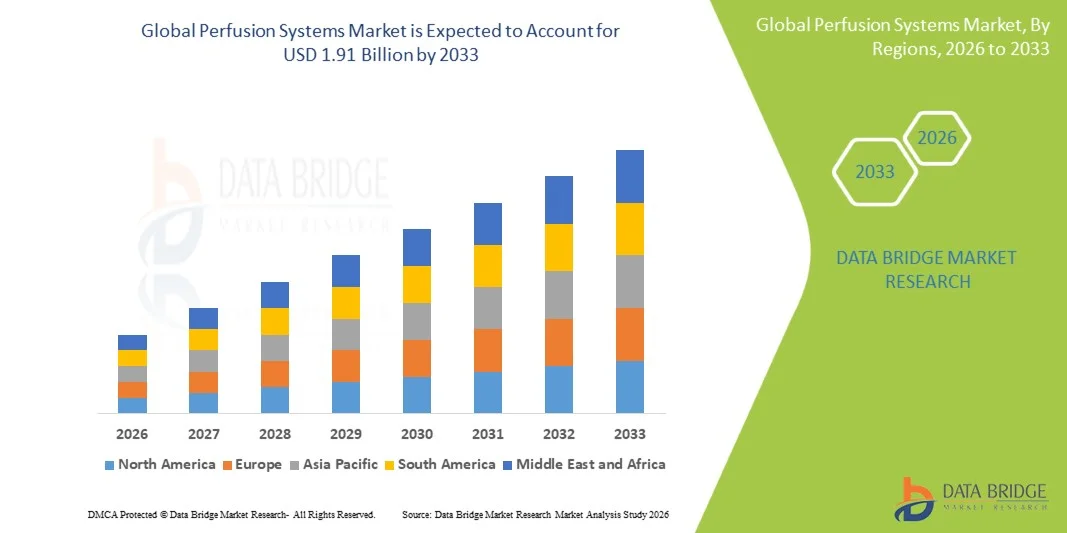
- The global perfusion systems market size was valued at USD 1.36 billion in 2025 and is expected to reach USD 1.91 billion by 2033, at a CAGR of 4.4% during the forecast period
- The market growth is largely fueled by the increasing prevalence of cardiovascular diseases and rising number of organ transplant procedures, along with continuous advancements in medical technologies, leading to increased adoption of perfusion systems in hospitals and surgical centers
- Furthermore, rising demand for efficient, reliable, and advanced life-support and blood circulation management systems during complex surgeries is establishing perfusion systems as essential components of modern surgical care. These converging factors are accelerating the uptake of Perfusion Systems solutions, thereby significantly boosting the industry's growth
Perfusion Systems Market Analysis
- Perfusion systems, offering controlled circulation of blood and oxygenation support during surgical procedures such as cardiac surgeries and organ transplantation, are increasingly vital components of modern healthcare systems due to their critical role in maintaining organ function and improving surgical outcomes in hospitals and specialty surgical centers
- The escalating demand for perfusion systems is primarily fueled by the rising prevalence of cardiovascular diseases, increasing number of cardiac surgeries and organ transplant procedures, and growing adoption of advanced medical technologies in surgical care
- North America dominated the perfusion systems market with the largest revenue share of 41.5% in 2025, characterized by advanced healthcare infrastructure, high volume of cardiac surgeries, strong presence of key medical device companies, and increasing adoption of technologically advanced perfusion systems in the U.S.
- Asia-Pacific is expected to be the fastest growing region in the perfusion systems market during the forecast period due to improving healthcare infrastructure, rising healthcare expenditure, growing patient population, and increasing adoption of advanced surgical procedures
- The hypothermic machine perfusion segment dominated the market with a share of 58.2% in 2025, primarily due to its widespread use in organ preservation during transplantation
Report Scope and Perfusion Systems Market Segmentation
|
Attributes |
Perfusion Systems Key Market Insights |
|
Segments Covered |
|
|
Countries Covered |
North America
Europe
Asia-Pacific
Middle East and Africa
South America
|
|
Key Market Players |
• Medtronic (Ireland) |
|
Market Opportunities |
|
|
Value Added Data Infosets |
In addition to the insights on market scenarios such as market value, growth rate, segmentation, geographical coverage, and major players, the market reports curated by the Data Bridge Market Research also include in-depth expert analysis, patient epidemiology, pipeline analysis, pricing analysis, and regulatory framework. |
Perfusion Systems Market Trends
“Technological Advancements in Organ Preservation and Cardiac Support Systems”
- A significant and accelerating trend in the global Perfusion Systems market is the continuous advancement in organ preservation technologies and cardiac perfusion systems, aimed at improving surgical outcomes and transplant success rates
- For instance, the development of ex vivo organ perfusion systems is enabling better preservation and assessment of donor organs before transplantation, thereby increasing organ viability and utilization rates
- Innovations in heart-lung machines and extracorporeal circulation systems are enhancing precision, safety, and efficiency during complex cardiac surgeries
- In additional, the integration of real-time monitoring systems and advanced sensors is improving control over perfusion parameters such as oxygenation, temperature, and blood flow
- The growing adoption of minimally invasive surgical procedures and increasing focus on improving patient outcomes are further driving the demand for advanced perfusion systems
- This trend toward more efficient, reliable, and technologically advanced perfusion solutions is transforming surgical and transplant procedures across healthcare settings
Perfusion Systems Market Dynamics
Driver
“Rising Prevalence of Cardiovascular Diseases and Increasing Surgical Procedures”
- The increasing prevalence of cardiovascular diseases worldwide is a major driver for the growth of the Perfusion Systems market
- The rising number of cardiac surgeries, including coronary artery bypass grafting and heart valve procedures, is significantly boosting the demand for perfusion systems
- For instance, the growing incidence of heart-related conditions such as coronary artery disease has led to a higher volume of open-heart surgeries, thereby increasing the need for heart-lung machines and perfusion technologies
- In addition, the expanding number of organ transplant procedures, particularly heart and lung transplants, is further driving market growth
- Improvements in healthcare infrastructure and increased access to advanced surgical treatments in emerging economies are also supporting the adoption of perfusion systems
- The growing aging population, which is more susceptible to chronic diseases, is expected to further accelerate demand for perfusion technologies
Restraint/Challenge
“High Cost of Equipment and Shortage of Skilled Professionals”
- The high cost associated with advanced perfusion systems and related surgical procedures remains a significant challenge for market growth, particularly in developing regions
- For instance, the installation and maintenance of heart-lung machines and extracorporeal perfusion systems require substantial capital investment, which can limit adoption in smaller hospitals and resource-constrained healthcare settings
- In addition, the shortage of skilled perfusionists and trained healthcare professionals poses a challenge to the effective utilization of these systems
- The complexity of operating perfusion equipment and the need for specialized training further restrict widespread adoption
- Stringent regulatory requirements and the need for continuous system upgrades also add to the operational burden for healthcare providers
- Addressing these challenges through cost optimization, training programs, and technological simplification will be essential for sustained market growth
Perfusion Systems Market Scope
The market is segmented on the basis of component, type, and technique.
• By Component
On the basis of component, the Perfusion Systems market is segmented into heart-lung machines, perfusion pumps, oxygenators, monitoring systems, and cannulas. The heart-lung machines segment dominated the largest market revenue share of 36.8% in 2025, driven by their critical role in cardiopulmonary bypass procedures during cardiac surgeries. These machines are essential for maintaining blood circulation and oxygenation, making them indispensable in complex surgical interventions. The increasing prevalence of cardiovascular diseases and the rising number of open-heart surgeries globally are major factors supporting segment dominance. In addition, technological advancements such as compact designs, improved safety features, and automation capabilities are enhancing their adoption across hospitals. The growing demand for minimally invasive procedures and improved surgical outcomes is further contributing to the widespread use of heart-lung machines. Hospitals are heavily investing in advanced perfusion systems to enhance patient care and surgical efficiency. Moreover, favorable reimbursement policies and increasing healthcare expenditure are also supporting growth in this segment.
The oxygenators segment is expected to witness the fastest CAGR of 9.7% from 2026 to 2033, driven by increasing demand for efficient gas exchange systems in both cardiac and respiratory support procedures. Oxygenators play a vital role in extracorporeal circulation, particularly in ECMO and critical care settings. The rising incidence of respiratory disorders and growing adoption of extracorporeal membrane oxygenation therapies are key growth drivers. In addition, innovations in membrane technology and biocompatible materials are improving performance and patient safety. The increasing use of disposable oxygenators to reduce infection risks is also supporting segment growth. Healthcare providers are focusing on advanced oxygenation solutions for better clinical outcomes, further accelerating demand.
• By Type
On the basis of type, the market is segmented into bioreactor perfusion systems, microfluidic perfusion systems, gravity or pressure-driven perfusion systems, and small-mammal organ perfusion systems. The bioreactor perfusion systems segment dominated the market with a revenue share of 34.5% in 2025, owing to their extensive use in biopharmaceutical production and tissue engineering applications. These systems enable continuous cell culture and improve productivity, making them highly valuable in research and industrial settings. The increasing demand for biologics and personalized medicine is significantly driving the adoption of bioreactor perfusion systems. In addition, advancements in cell culture technologies and process optimization are enhancing efficiency and scalability. Pharmaceutical and biotechnology companies are investing heavily in bioprocessing technologies, further supporting segment growth. The ability to maintain optimal growth conditions for cells over extended periods is a key advantage contributing to dominance.
The microfluidic perfusion systems segment is projected to grow at the fastest CAGR of 10.8% from 2026 to 2033, driven by their increasing application in organ-on-chip models and precision medicine research. These systems allow precise control of fluid flow at a microscale, making them ideal for advanced research applications. The growing focus on reducing animal testing and improving drug discovery processes is boosting demand for microfluidic technologies. In addition, innovations in lab-on-a-chip platforms and integration with digital monitoring systems are accelerating adoption. Research institutions and pharmaceutical companies are increasingly utilizing these systems for high-throughput screening and disease modeling.
• By Technique
On the basis of technique, the market is segmented into hypothermic machine perfusion and normothermic machine perfusion. The hypothermic machine perfusion segment dominated the market with a share of 58.2% in 2025, primarily due to its widespread use in organ preservation during transplantation. This technique slows down metabolic activity, thereby extending the viability of organs outside the body. The increasing number of organ transplant procedures and the need to improve organ preservation outcomes are key factors driving segment dominance. In addition, hypothermic perfusion is well-established and widely accepted in clinical practice, contributing to its high adoption rate. The availability of advanced perfusion devices and supportive regulatory frameworks are also supporting growth.
The normothermic machine perfusion segment is anticipated to witness the fastest CAGR of 11.6% from 2026 to 2033, driven by its ability to preserve organs under near-physiological conditions, improving transplant success rates. This technique allows real-time assessment of organ function, which is a significant advantage over traditional methods. The growing demand for better transplant outcomes and increasing research in organ preservation technologies are fueling adoption. In addition, rising investments in advanced healthcare infrastructure and transplantation research are supporting segment growth. Normothermic perfusion is gaining traction as a next-generation solution, offering improved viability and reduced post-transplant complications.
Perfusion Systems Market Regional Analysis
- North America dominated the perfusion systems market with the largest revenue share of 41.5% in 2025, characterized by advanced healthcare infrastructure, a high volume of cardiac surgeries, strong presence of key medical device companies, and increasing adoption of technologically advanced perfusion systems, particularly in the U.S.
- The region benefits from well-established hospital networks, availability of skilled healthcare professionals, and high adoption of advanced surgical technologies, supporting consistent demand for perfusion systems
- This widespread adoption is further supported by rising healthcare expenditure, increasing prevalence of cardiovascular diseases, and continuous technological advancements, establishing perfusion systems as essential components in cardiac and transplant procedures
U.S. Perfusion Systems Market Insight
The U.S. perfusion systems market captured the largest revenue share within North America in 2025, driven by a high number of cardiac and organ transplant surgeries, advanced healthcare infrastructure, and strong presence of leading market players. The increasing prevalence of cardiovascular diseases and growing adoption of minimally invasive surgical procedures are further propelling market growth. In addition, continuous innovations in heart-lung machines and extracorporeal circulation technologies are significantly contributing to the expansion of the market.
Europe Perfusion Systems Market Insight
The Europe perfusion systems market is projected to expand at a substantial CAGR throughout the forecast period, primarily driven by increasing prevalence of cardiovascular diseases and strong healthcare systems across the region. Rising adoption of advanced surgical technologies and growing focus on improving patient outcomes are supporting market growth. In addition, favorable government initiatives and investments in healthcare infrastructure are further accelerating the adoption of perfusion systems.
U.K. Perfusion Systems Market Insight
The U.K. perfusion systems market is anticipated to grow at a noteworthy CAGR during the forecast period, driven by increasing cardiac surgery volumes and rising awareness regarding advanced treatment options. The presence of well-established healthcare facilities and growing emphasis on early diagnosis and treatment are contributing to market expansion.
Germany Perfusion Systems Market Insight
The Germany perfusion systems market is expected to expand at a considerable CAGR during the forecast period, fueled by strong healthcare infrastructure, increasing demand for advanced medical technologies, and rising number of surgical procedures. Germany’s focus on innovation and adoption of advanced medical devices is promoting the growth of perfusion systems in hospitals and specialty care centers.
Asia-Pacific Perfusion Systems Market Insight
The Asia-Pacific perfusion systems market is expected to be the fastest growing region during the forecast period, driven by improving healthcare infrastructure, rising healthcare expenditure, growing patient population, and increasing adoption of advanced surgical procedures. Expanding access to healthcare services and growing investments in hospital infrastructure across emerging economies are further supporting market growth.
Japan Perfusion Systems Market Insight
The Japan perfusion systems market is gaining momentum due to the country’s advanced healthcare system and increasing demand for cardiac and transplant procedures. The rising aging population, which is more susceptible to chronic diseases, is further driving the demand for perfusion systems. In addition, technological advancements in surgical equipment are supporting market expansion.
China Perfusion Systems Market Insight
The China perfusion systems market accounted for the largest market revenue share in Asia-Pacific in 2025, attributed to the country’s large patient population, improving healthcare infrastructure, and increasing investments in medical technologies. The growing prevalence of cardiovascular diseases and rising number of surgical procedures are key factors driving the demand for perfusion systems. Furthermore, government initiatives aimed at strengthening healthcare services are supporting market growth.
Perfusion Systems Market Share
The Perfusion Systems industry is primarily led by well-established companies, including:
- Medtronic (Ireland)
- LivaNova PLC (U.K.)
- Terumo Corporation (Japan)
- Getinge AB (Sweden)
- Fresenius Medical Care AG & Co. KGaA (Germany)
- Nipro Corporation (Japan)
- Braile Biomedica (Brazil)
- XENIOS AG (Germany)
- Spectrum Laboratories, Inc. (U.S.)
- Harvard Bioscience, Inc. (U.S.)
- Merck KGaA (Germany)
- Lonza Group AG (Switzerland)
- Sartorius AG (Germany)
- Danaher Corporation (U.S.)
- Bio-Rad Laboratories, Inc. (U.S.)
- Thermo Fisher Scientific Inc. (U.S.)
- Agilent Technologies, Inc. (U.S.)
- Cook Medical (U.S.)
- Edwards Lifesciences Corporation (U.S.)
- Sorin Group (Italy)
Latest Developments in Global Perfusion Systems Market
- In January 2021, PEDRA Technology received U.S. Food and Drug Administration (FDA) Breakthrough Device Designation for its PEDRA Xauron real-time tissue perfusion system, designed to monitor tissue perfusion during procedures for patients with critical limb-threatening ischemia. This designation accelerated development and regulatory review of advanced perfusion monitoring technologies
- In December 2021, Medtronic announced that its INVOS 7100 somatic/cerebral oximetry system received FDA 510(k) clearance, enhancing real-time monitoring of tissue oxygenation during surgeries involving perfusion systems. This approval strengthened the integration of monitoring technologies within perfusion procedures
- In November 2023, industry analysis highlighted a surge in approvals and launches of novel perfusion systems, with increasing adoption of advanced technologies such as extracorporeal membrane oxygenation (ECMO) and organ preservation systems driving market growth. This reflects ongoing innovation and commercialization of perfusion technologies
- In November 2025, Tulyp Medical announced the submission of its novel pressure-driven perfusion device for FDA 510(k) clearance after emerging from stealth, supported by positive first-in-human study results. This development indicates continued innovation in intelligent perfusion technologies aimed at improving blood flow management during vascular procedures
SKU-
Get online access to the report on the World's First Market Intelligence Cloud

- Interactive Data Analysis Dashboard
- Company Analysis Dashboard for high growth potential opportunities
- Research Analyst Access for customization & queries
- Competitor Analysis with Interactive dashboard
- Latest News, Updates & Trend analysis
- Harness the Power of Benchmark Analysis for Comprehensive Competitor Tracking
Research Methodology
Data collection and base year analysis are done using data collection modules with large sample sizes. The stage includes obtaining market information or related data through various sources and strategies. It includes examining and planning all the data acquired from the past in advance. It likewise envelops the examination of information inconsistencies seen across different information sources. The market data is analysed and estimated using market statistical and coherent models. Also, market share analysis and key trend analysis are the major success factors in the market report. To know more, please request an analyst call or drop down your inquiry.
The key research methodology used by DBMR research team is data triangulation which involves data mining, analysis of the impact of data variables on the market and primary (industry expert) validation. Data models include Vendor Positioning Grid, Market Time Line Analysis, Market Overview and Guide, Company Positioning Grid, Patent Analysis, Pricing Analysis, Company Market Share Analysis, Standards of Measurement, Global versus Regional and Vendor Share Analysis. To know more about the research methodology, drop in an inquiry to speak to our industry experts.
Customization Available
Data Bridge Market Research is a leader in advanced formative research. We take pride in servicing our existing and new customers with data and analysis that match and suits their goal. The report can be customized to include price trend analysis of target brands understanding the market for additional countries (ask for the list of countries), clinical trial results data, literature review, refurbished market and product base analysis. Market analysis of target competitors can be analyzed from technology-based analysis to market portfolio strategies. We can add as many competitors that you require data about in the format and data style you are looking for. Our team of analysts can also provide you data in crude raw excel files pivot tables (Fact book) or can assist you in creating presentations from the data sets available in the report.












