


Polyethylene Implants Market Overview
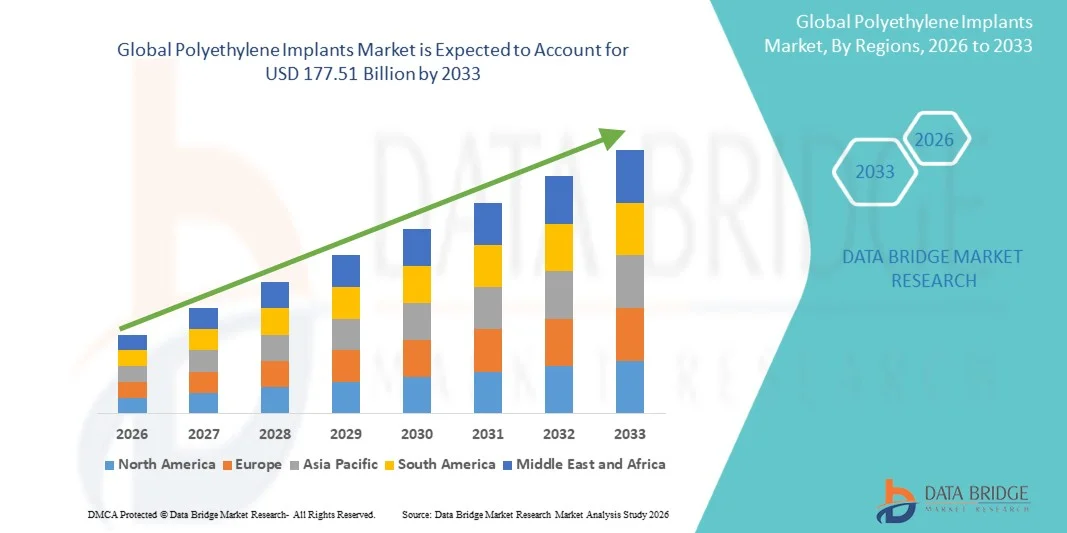
The Polyethylene Implants Market was valued at USD 132.74 billion in 2025 and is projected to reach USD 177.51 billion by 2033, growing at a CAGR of 3.70% from 2026 to 2033. The market is experiencing steady growth driven by the rising prevalence of orthopedic disorders, increasing volume of joint replacement procedures, and continuous advancements in implant-grade polyethylene materials that enhance durability and clinical outcomes.
The growing burden of osteoarthritis, rheumatoid arthritis, and age-related musculoskeletal conditions worldwide, coupled with expanding geriatric populations, is accelerating demand for hip, knee, shoulder, and other joint reconstruction implants. Highly cross-linked polyethylene and vitamin E-stabilized polyethylene technologies are increasingly being adopted due to their superior wear resistance, reduced revision rates, and improved implant longevity. In addition, ongoing investments in orthopedic innovation, favorable healthcare infrastructure development, and increasing access to advanced surgical treatments are supporting broader adoption of polyethylene implants across hospitals, specialty orthopedic centers, and ambulatory surgical facilities.
Key Market Trends & Insights
- North America dominated the Polyethylene Implants Market with the largest revenue share of 38.42% in 2025, supported by a high volume of joint replacement procedures, advanced healthcare infrastructure, and strong adoption of premium orthopedic implant technologies.
- The Knee Implants segment led the market with a 43.18% share in 2025, driven by the high prevalence of osteoarthritis and increasing volume of primary and revision knee arthroplasty procedures globally.
- Asia-Pacific is expected to be the fastest-growing region at a CAGR of 7.4% from 2026 to 2033, fueled by expanding healthcare access, increasing orthopedic procedure volumes, and growing investments in medical infrastructure across China, India, and Southeast Asia.
- Shoulder Implants are the fastest-growing product type, projected to register a CAGR of 6.8%, reflecting the surge in incidence of rotator cuff injuries and degenerative shoulder conditions
- The Jaw Line Reconstruction segment dominated the usage category with a 42.56% revenue share in 2025, led by the rising demand for facial reconstructive surgeries following trauma, congenital deformities, and oncological resections.
- Tissue Application accounted for 44.73% of the market, preferred by the extensive use of polyethylene implants in orthopedic and reconstructive tissue replacement procedures.
- The Small Incision segment is the fastest-growing application category, with a CAGR of 6.7%, driven by the rising adoption of minimally invasive surgical techniques.
Market Size & Forecast
- Global Market Value (2025): USD 132.74 Billion
- Expected Market Value (2033): USD 177.51 Billion
- Forecast CAGR (2026–2033): 3.70%
- Leading Region in 2025: North America
- Fastest Growing Region: Asia Pacific
Report Scope and Polyethylene Implants Market Segmentation
|
Attributes |
Polyethylene Implants Key Market Insights |
|
Segments Covered |
|
|
Countries Covered |
North America · U.S. · Canada · Mexico Europe · Germany · France · U.K. · Netherlands · Switzerland · Belgium · Russia · Italy · Spain · Turkey · Rest of Europe Asia-Pacific · China · Japan · India · South Korea · Singapore · Malaysia · Australia · Thailand · Indonesia · Philippines · Rest of Asia-Pacific Middle East and Africa · Saudi Arabia · U.A.E. · South Africa · Egypt · Israel · Rest of Middle East and Africa South America · Brazil · Argentina · Rest of South America |
|
Key Market Players |
· Zimmer Biomet (U.S.) · Stryker (U.S.) · Smith & Nephew (U.K.) · DePuy Synthes, Inc. (U.S.) · Medtronic (Ireland) · Arthrex, Inc. (U.S.) · B. Braun SE (Germany) · MicroPort Scientific Corporation (China) · Orthofix Medical Inc. (U.S.) · Globus Medical, Inc. (U.S.) · Exactech, Inc. (U.S.) · CONMED Corporation (U.S.) · Integra LifeSciences Holdings Corporation (U.S.) · Corin Group (U.K.) · aap Implantate AG (Germany) · Waldemar Link GmbH & Co. KG (Germany) · Beijing Chunli Technology Development Co., Ltd. (China) · AK Medical Holdings Limited (China) · Meril Life Sciences Pvt. Ltd. (India) · MicroPort Orthopedics Inc. (China) |
|
Market Opportunities |
· Expansion of outpatient joint replacement procedures · Rising adoption of vitamin E-stabilized and highly cross-linked polyethylene materials · Increasing orthopedic procedure volumes in emerging economies |
|
Value Added Data Infosets |
In addition to the insights on market scenarios such as market value, growth rate, segmentation, geographical coverage, and major players, the market reports curated by the Data Bridge Market Research also include in-depth expert analysis, patient epidemiology, pipeline analysis, pricing analysis, and regulatory framework. |
Polyethylene Implants Market Trends
Trend: Advancements in Material Innovation & Implant Longevity
Orthopedic manufacturers are increasingly adopting highly cross-linked polyethylene and vitamin E-stabilized variants to improve wear resistance, reduce particle-induced osteolysis, and extend implant lifespan in joint replacement procedures. These advanced materials are being integrated into hip and knee arthroplasty systems to minimize revision surgeries and enhance long-term patient outcomes. Surgeons and implant developers are also focusing on optimizing surface engineering and articulation performance to replicate natural joint movement more effectively, while supporting higher implant durability under long-term load-bearing conditions in real-world clinical settings.
For instance, global orthopedic companies are expanding the use of next-generation UHMWPE liners in hip and knee systems to improve long-term implant survivorship.
Polyethylene Implants Market Dynamics
Key Market Driver: Rising Burden of Degenerative Joint Disorders & Aging Population
The increasing prevalence of osteoarthritis, rheumatoid arthritis, and age-related joint degeneration is significantly driving demand for polyethylene-based orthopedic implants across hip, knee, and shoulder replacement procedures. Growing geriatric populations, combined with higher obesity rates and lifestyle-related joint stress, are leading to a rising number of surgical interventions globally. Hospitals and orthopedic centers are witnessing higher patient inflow for primary and revision arthroplasty procedures, supported by improved surgical techniques and expanding healthcare access in both developed and emerging economies.
For instance, large-scale orthopedic registries in Europe and North America continue to report rising annual volumes of knee and hip replacement surgeries.
Key Restraint/Challenge: Implant Wear, Revision Burden & Clinical Longevity Concerns
Despite material advancements, polyethylene implants still face challenges related to long-term wear, oxidative degradation, and particle-induced inflammation, which can lead to implant loosening and revision surgeries. These clinical limitations increase the overall treatment burden and healthcare costs, particularly in younger and more active patient populations requiring long-lasting implant performance. In addition, stringent regulatory approval processes and the need for extensive long-term clinical validation further slow product commercialization and adoption in cost-sensitive healthcare systems.
For instance, revision arthroplasty cases continue to represent a significant portion of orthopedic surgical workloads in high-volume hospitals globally.
Key Market Opportunity: Expansion of Minimally Invasive & Outpatient Joint Replacement Procedures
The growing shift toward minimally invasive surgeries and ambulatory joint replacement procedures is creating new opportunities for polyethylene implant manufacturers focused on faster recovery and improved procedural efficiency. Demand is increasing for implant systems compatible with short-stay surgeries, enabling reduced hospitalization costs and improved patient throughput. Integration of advanced biomaterials and pre-coated implant designs is further supporting adoption in outpatient surgical centers and emerging healthcare markets with limited inpatient capacity.
For instance, ambulatory surgical centers in the U.S. are increasingly performing same-day knee and hip replacement procedures using advanced polyethylene implant systems.
Polyethylene Implants Market Scope
The polyethylene implants market is segmented on the basis of product type, usage, application, and end-user.
- By Product Type
On the basis of product type, the Polyethylene Implants Market is segmented into hip implants, knee implants, shoulder implants, ankle implants, elbow implants, and other polyethylene implants. The Knee Implants segment dominated the market with a 43.18% share in 2025, driven by the high prevalence of osteoarthritis and increasing volume of primary and revision knee arthroplasty procedures globally. These implants are widely preferred due to improved functional outcomes, long clinical history, and strong procedural standardization across hospitals and orthopedic centers. Rising geriatric populations and obesity-related joint degeneration are further reinforcing demand. Continuous advancements in highly cross-linked polyethylene liners are improving wear resistance and implant longevity. Strong adoption in both developed and emerging healthcare systems continues to strengthen this segment’s leadership.
The Shoulder Implants segment is projected to register the fastest growth at a CAGR of 6.8% from 2026 to 2033, driven by increasing incidence of rotator cuff injuries and degenerative shoulder conditions. These implants are gaining traction due to improved surgical techniques and expanding indications for shoulder arthroplasty. Rising sports injuries and trauma cases are further contributing to demand growth. Innovations in implant design and polyethylene articulation are improving functional recovery outcomes. Expanding access to orthopedic care in emerging economies is accelerating adoption. Increasing preference for minimally invasive shoulder replacement procedures is also supporting segment expansion.
- By Usage
On the basis of usage, the Polyethylene Implants Market is segmented into chin, cheek, and jaw line reconstruction. The Jaw Line Reconstruction segment dominated the market with a 42.56% share in 2025, driven by rising demand for facial reconstructive surgeries following trauma, congenital deformities, and oncological resections. This segment benefits from strong adoption in maxillofacial surgery due to superior structural stability and aesthetic outcomes provided by polyethylene implants. Increasing awareness of facial reconstruction procedures and advancements in surgical techniques are further supporting demand. Growing availability of specialized cosmetic and reconstructive surgical centers is enhancing procedural volumes. Improved biocompatibility and reduced complication rates are strengthening clinical preference. Rising patient focus on facial symmetry and aesthetics continues to reinforce segment dominance.
The Chin Reconstruction segment is projected to register the fastest growth at a CAGR of 6.5% from 2026 to 2033, driven by increasing cosmetic enhancement procedures and rising demand for facial augmentation surgeries. These implants are widely used in aesthetic surgery due to predictable outcomes and long-term stability. Growing influence of social media and beauty standards is accelerating patient interest in cosmetic facial modifications. Advances in implant customization and 3D modeling are improving procedural precision. Expanding availability of outpatient cosmetic surgery clinics is further boosting adoption. Increasing affordability of elective aesthetic procedures in emerging markets is also supporting growth.
- By Application
On the basis of application, the Polyethylene Implants Market is segmented into antiseptic solution, anaesthetic, small incision, and tissue applications. The Tissue Application segment dominated the market with a 44.73% share in 2025, driven by extensive use of polyethylene implants in orthopedic and reconstructive tissue replacement procedures. This segment benefits from high procedural volumes in hip, knee, and shoulder reconstruction surgeries. Strong clinical preference for durable and wear-resistant materials is supporting sustained adoption. Advances in surgical techniques and biomaterial engineering are improving integration with surrounding tissue structures. Increasing incidence of degenerative bone and cartilage disorders is further strengthening demand. Expanding hospital infrastructure and surgical capabilities are reinforcing segment leadership.
The Small Incision segment is projected to register the fastest growth at a CAGR of 6.7% from 2026 to 2033, driven by the rising adoption of minimally invasive surgical techniques. These procedures reduce patient recovery time, post-operative complications, and hospital stay duration. Growing preference for outpatient orthopedic surgeries is significantly supporting demand. Advances in surgical instrumentation and imaging technologies are enabling higher precision in small incision procedures. Increasing healthcare cost optimization strategies are further encouraging adoption. Rising patient awareness of minimally invasive treatment options is also accelerating segment growth.
- By End-User
On the basis of end-user, the Polyethylene Implants Market is segmented into hospitals, ambulatory surgical centers, orthopedic clinics, and others. The Hospitals segment dominated the market with a 61.24% share in 2025, driven by high patient inflow for complex orthopedic surgeries and availability of advanced surgical infrastructure. Hospitals remain the primary centers for hip and knee replacement procedures due to the need for specialized surgical teams and post-operative care facilities. Strong reimbursement frameworks in developed markets further support hospital-based procedures. Continuous investments in orthopedic departments and operating room technologies are strengthening procedural efficiency. Rising prevalence of degenerative joint disorders is increasing hospital admissions. Established referral systems continue to reinforce hospital dominance.
The Ambulatory Surgical Centers segment is projected to register the fastest growth at a CAGR of 7.2% from 2026 to 2033, driven by increasing shift toward same-day discharge and cost-efficient surgical care models. These centers are gaining popularity for minimally invasive orthopedic procedures with shorter recovery times. Advancements in implant design and surgical techniques are enabling safe outpatient joint replacement surgeries. Lower procedural costs compared to hospitals are attracting patients and insurers. Expanding healthcare infrastructure in emerging economies is supporting ASC development. Rising demand for faster recovery and reduced hospitalization is further accelerating segment growth.
Polyethylene Implants Market Regional Analysis
North America dominated the Polyethylene Implants Market with the largest revenue share of 38.42% in 2025, supported by a high volume of joint replacement procedures, advanced healthcare infrastructure, and strong adoption of premium orthopedic implant technologies. The region also benefits from well-established reimbursement systems, rising prevalence of osteoarthritis and obesity-related joint disorders, and the presence of leading orthopedic device manufacturers. Increasing demand for hip and knee arthroplasty, along with continuous advancements in highly cross-linked polyethylene implants, further strengthens regional leadership in the global market.
U.S. Polyethylene Implants Market Insight
The U.S. polyethylene implants market is witnessing strong growth due to high volumes of orthopedic procedures, rising prevalence of osteoarthritis and obesity-related joint disorders, and advanced healthcare infrastructure supporting joint replacement surgeries. The country’s well-established reimbursement framework, along with strong adoption of highly cross-linked polyethylene and vitamin E-stabilized implants, is driving demand across hospitals and orthopedic centers. In addition, increasing focus on outpatient arthroplasty procedures and continuous innovation by leading medical device companies are accelerating market expansion across hip and knee replacement applications.
Europe Polyethylene Implants Market Insight
The Europe polyethylene implants market remains a major contributor to global revenue, driven by strong healthcare systems, aging populations, and high adoption of advanced orthopedic implant technologies. The widespread use of hip and knee arthroplasty procedures, supported by national healthcare programs and structured clinical guidelines, is sustaining market growth across the region. Increasing investments in biomaterial innovation and surgical training, coupled with strict regulatory standards ensuring implant safety and performance, continue to strengthen the adoption of polyethylene implants throughout Europe.
U.K. Polyethylene Implants Market Insight
The U.K. polyethylene implants market is experiencing steady growth, supported by rising demand for joint replacement surgeries and increasing prevalence of age-related musculoskeletal disorders. The National Health Service (NHS) plays a key role in driving procedural volumes, particularly for hip and knee replacements. Growing adoption of advanced implant materials, along with focus on reducing revision surgeries and improving patient outcomes, is contributing to market expansion. Furthermore, continuous improvements in orthopedic surgical techniques and expanding use of minimally invasive procedures are supporting market development in the country.
Germany Polyethylene Implants Market Insight
The Germany polyethylene implants market is expanding steadily due to the country’s strong orthopedic care infrastructure, high surgical expertise, and increasing aging population. Hospitals and specialized orthopedic clinics are widely adopting advanced polyethylene-based implants for hip, knee, and reconstructive procedures. Strong emphasis on medical innovation, combined with robust reimbursement systems and high patient awareness, is further driving market growth. In addition, Germany’s focus on high-quality manufacturing and clinical research is supporting continuous advancement in implant materials and surgical outcomes.
Asia-Pacific Polyethylene Implants Market Insight
The Asia-Pacific polyethylene implants market is expected to witness rapid growth, driven by rising healthcare expenditure, increasing orthopedic procedure volumes, and improving access to advanced surgical care across emerging economies. Growing awareness of joint replacement surgeries, along with expanding hospital infrastructure in countries such as China, India, and Japan, is supporting regional market expansion. In addition, increasing adoption of cost-effective implant solutions and growing medical tourism are further accelerating demand for polyethylene-based orthopedic implants.
Japan Polyethylene Implants Market Insight
The Japan polyethylene implants market is witnessing consistent growth due to a rapidly aging population, high prevalence of degenerative joint diseases, and advanced healthcare infrastructure. Orthopedic surgeons and hospitals are increasingly adopting high-performance polyethylene implants to improve long-term surgical outcomes and reduce revision rates. Strong focus on minimally invasive procedures and continuous innovation in implant materials and surgical technologies are further contributing to market growth. In addition, government support for elderly care is reinforcing demand for joint replacement surgeries.
China Polyethylene Implants Market Insight
The China polyethylene implants market is growing rapidly, driven by rising healthcare investments, expanding hospital infrastructure, and increasing prevalence of orthopedic disorders associated with aging and lifestyle changes. Growing adoption of advanced joint replacement procedures, particularly hip and knee arthroplasty, is significantly boosting market demand. In addition, increasing access to modern surgical technologies, rising medical awareness, and strong government support for healthcare modernization are positioning China as one of the fastest-growing markets for polyethylene implants globally.
Polyethylene Implants Market Share
The polyethylene implants industry is primarily led by well-established companies, including:
- Zimmer Biomet (U.S.)
- Stryker (U.S.)
- Smith & Nephew (U.K.)
- DePuy Synthes, Inc. (U.S.)
- Medtronic (Ireland)
- Arthrex, Inc. (U.S.)
- Braun SE (Germany)
- MicroPort Scientific Corporation (China)
- Orthofix Medical Inc. (U.S.)
- Globus Medical, Inc. (U.S.)
- Exactech, Inc. (U.S.)
- CONMED Corporation (U.S.)
- Integra LifeSciences Holdings Corporation (U.S.)
- Corin Group (U.K.)
- aap Implantate AG (Germany)
- Waldemar Link GmbH & Co. KG (Germany)
- Beijing Chunli Technology Development Co., Ltd. (China)
- AK Medical Holdings Limited (China)
- Meril Life Sciences Pvt. Ltd. (India)
- MicroPort Orthopedics Inc. (China)
Latest Developments in Polyethylene Implants Market
- In February 2025, Zimmer Biomet announced expansion of its ROSA Knee System capabilities for enhanced knee arthroplasty procedures, aimed at improving precision in total knee replacement surgeries that utilize polyethylene tibial inserts for joint articulation. The advancement focuses on better implant alignment accuracy, reduced revision risks, and improved long-term patient outcomes in knee replacement procedures. This development highlights the growing integration of robotic-assisted technologies with polyethylene-based implant systems. It also supports wider adoption of minimally invasive orthopedic surgeries across hospitals and surgical centers
- In June 2024, Stryker highlighted advancements in its Mako SmartRobotics platform for hip and knee replacement procedures, enhancing surgical precision in operations involving polyethylene components such as acetabular liners and tibial inserts. The system enables improved implant positioning, which contributes to reduced wear and longer implant lifespan. This development reflects the increasing convergence of robotics and polyethylene implant technologies in joint reconstruction. It also supports growing global demand for high-accuracy orthopedic procedures
- In September 2023, Johnson & Johnson (DePuy Synthes) advanced its ATTUNE Knee System portfolio with improved polyethylene insert designs for total knee arthroplasty procedures. The enhancements are focused on improving implant kinematics, reducing wear, and extending functional implant life. This development aligns with increasing demand for durable knee replacement solutions in aging populations. It also supports better long-term clinical outcomes and reduced revision surgery rates
- In March 2022, Enovis completed the acquisition of LimaCorporate to strengthen its orthopedic implant portfolio, including advanced reconstructive systems that integrate polyethylene-based components. The acquisition expanded its presence in hip and knee replacement markets and enhanced its capability in patient-specific and 3D-printed implant solutions. This development supports rising global demand for durable and customized orthopedic implants. It also strengthens innovation in reconstructive surgery technologies
- In July 2021, Smith+Nephew expanded its LEGION Knee System portfolio with improved polyethylene insert options designed to enhance wear resistance and long-term joint performance. The update aims to improve articulation in total knee replacement procedures and reduce revision risks. This development reflects growing demand for high-performance UHMWPE-based implant materials in orthopedic surgery. It also supports improved patient mobility and recovery outcomes

- Interactive Data Analysis Dashboard
- Company Analysis Dashboard for high growth potential opportunities
- Research Analyst Access for customization & queries
- Competitor Analysis with Interactive dashboard
- Latest News, Updates & Trend analysis
- Harness the Power of Benchmark Analysis for Comprehensive Competitor Tracking
Data collection and base year analysis are done using data collection modules with large sample sizes. The stage includes obtaining market information or related data through various sources and strategies. It includes examining and planning all the data acquired from the past in advance. It likewise envelops the examination of information inconsistencies seen across different information sources. The market data is analysed and estimated using market statistical and coherent models. Also, market share analysis and key trend analysis are the major success factors in the market report. To know more, please request an analyst call or drop down your inquiry.
The key research methodology used by DBMR research team is data triangulation which involves data mining, analysis of the impact of data variables on the market and primary (industry expert) validation. Data models include Vendor Positioning Grid, Market Time Line Analysis, Market Overview and Guide, Company Positioning Grid, Patent Analysis, Pricing Analysis, Company Market Share Analysis, Standards of Measurement, Global versus Regional and Vendor Share Analysis. To know more about the research methodology, drop in an inquiry to speak to our industry experts.
Data Bridge Market Research is a leader in advanced formative research. We take pride in servicing our existing and new customers with data and analysis that match and suits their goal. The report can be customized to include price trend analysis of target brands understanding the market for additional countries (ask for the list of countries), clinical trial results data, literature review, refurbished market and product base analysis. Market analysis of target competitors can be analyzed from technology-based analysis to market portfolio strategies. We can add as many competitors that you require data about in the format and data style you are looking for. Our team of analysts can also provide you data in crude raw excel files pivot tables (Fact book) or can assist you in creating presentations from the data sets available in the report.













