Global Preventable Vaccines Market
Market Size in USD Billion
CAGR :
% 
 USD
76.07 Billion
USD
120.33 Billion
2025
2033
USD
76.07 Billion
USD
120.33 Billion
2025
2033
 Forecast Period Forecast Period |
2026 –2033 |
 Market Size (Base Year) Market Size (Base Year) |
USD 76.07 Billion |
 Market Size (Forecast Year) Market Size (Forecast Year) |
USD 120.33 Billion |
 CAGR CAGR |
% |
| Major Markets Players |
|
Preventable Vaccines Market Size
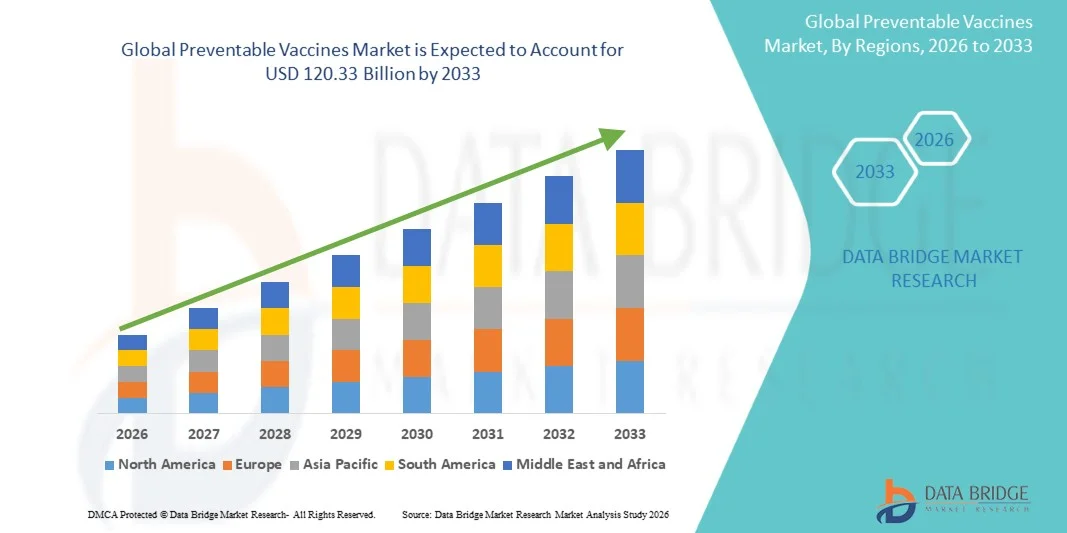
- The global preventable vaccines market size was valued at USD 76.07 billion in 2025 and is expected to reach USD 120.33 billion by 2033, at a CAGR of 5.90% during the forecast period
- The market growth is largely fueled by increasing awareness of immunization programs, rising prevalence of vaccine-preventable diseases, and strong governmental and international initiatives promoting routine vaccination across both developed and developing regions
- Furthermore, growing investments in vaccine research and development, expanding pediatric and adult immunization coverage, and advancements in vaccine delivery technologies are strengthening accessibility and adoption, making preventable vaccines a critical component of global public health strategies. These converging factors are accelerating the uptake of vaccines, thereby significantly boosting the industry's growth
Preventable Vaccines Market Analysis
- Preventable vaccines, developed using various technologies such as inactivated vaccines, live attenuated vaccines, toxoid vaccines, and others, play a crucial role in preventing infectious diseases across all age groups by stimulating active immunity and forming a cornerstone of global immunization strategies in both developed and emerging healthcare systems
- The escalating demand for preventable vaccines is primarily driven by increasing prevalence of infectious diseases, expanding immunization coverage under national health programs, growing public awareness about disease prevention, and continuous advancements in vaccine technologies and formulations that enhance safety and efficacy
- North America dominated the preventable vaccines market with a significant revenue share of 38.6% in 2025, supported by strong healthcare infrastructure, high vaccination rates, robust regulatory frameworks, and the presence of leading vaccine manufacturers, with the U.S. witnessing consistent demand driven by routine immunization schedules and adoption of advanced vaccine technologies
- Asia-Pacific is expected to be the fastest growing region in the preventable vaccines market during the forecast period due to rising population, increasing government initiatives for universal immunization, improving healthcare infrastructure, and greater awareness about preventive healthcare in developing economies
- The parenteral segment dominated the preventable vaccines market with a substantial market share of 72.4% in 2025, owing to its widespread use in delivering vaccines via intramuscular or subcutaneous injections, ensuring higher immunogenicity, precise dosing, and established clinical acceptance across healthcare settings
Report Scope and Preventable Vaccines Market Segmentation
|
Attributes |
Preventable Vaccines Key Market Insights |
|
Segments Covered |
|
|
Countries Covered |
North America
Europe
Asia-Pacific
Middle East and Africa
South America
|
|
Key Market Players |
|
|
Market Opportunities |
|
|
Value Added Data Infosets |
In addition to the insights on market scenarios such as market value, growth rate, segmentation, geographical coverage, and major players, the market reports curated by the Data Bridge Market Research also include in-depth expert analysis, patient epidemiology, pipeline analysis, pricing analysis, and regulatory framework |
Preventable Vaccines Market Trends
“Advancements in mRNA and Next-Generation Vaccine Technologies”
- A significant and accelerating trend in the global preventable vaccines market is the growing adoption of mRNA and next-generation vaccine platforms, alongside digital immunization tracking systems, enhancing vaccine development speed, efficacy, and population-level monitoring
- For instance, mRNA-based vaccines such as those developed for COVID-19 have demonstrated rapid scalability and are being adapted for other infectious diseases, enabling faster response to emerging health threats
- Integration of advanced technologies enables improved antigen design, stronger immune responses, and shorter development timelines, while digital platforms support real-time surveillance, cold-chain monitoring, and vaccination compliance tracking
- The convergence of biotechnology innovation and digital health infrastructure is enabling centralized immunization management across healthcare systems, improving accessibility, transparency, and coordination of vaccination programs
- This trend toward technologically advanced, rapidly deployable, and data-driven vaccine solutions is reshaping global immunization strategies and strengthening preparedness against future outbreaks
- The demand for next-generation vaccines and digitally enabled immunization systems is growing rapidly across both developed and emerging regions, as governments and healthcare providers prioritize efficiency, scalability, and comprehensive disease prevention
- Rising adoption of needle-free and alternative delivery methods such as oral and intranasal vaccines is further enhancing patient comfort and expanding accessibility in mass immunization campaigns
Preventable Vaccines Market Dynamics
Driver
“Rising Immunization Awareness and Government-Led Vaccination Programs”
- The increasing awareness regarding the importance of preventive healthcare, combined with large-scale government immunization initiatives, is a key driver accelerating the demand for preventable vaccines globally
- For instance, the expansion of national immunization schedules and global health programs supported by organizations such as WHO and UNICEF has significantly improved vaccine coverage in developing regions
- As populations become more conscious of disease prevention, vaccines are increasingly viewed as essential healthcare interventions rather than optional treatments, driving higher uptake across pediatric and adult segments
- Furthermore, growing incidences of infectious diseases and periodic outbreaks are prompting governments to strengthen vaccination policies, stockpiling, and public health campaigns
- The integration of vaccines into routine healthcare services, along with increasing healthcare expenditure and improved access to vaccination facilities, continues to propel market growth in both urban and rural areas
- Expanding private sector participation and public–private partnerships in vaccine distribution and manufacturing are further strengthening supply chains and improving availability across regions
- Increasing investment in healthcare infrastructure, including cold storage facilities and vaccination centers, is enabling broader outreach and higher immunization coverage
Restraint/Challenge
“Cold Chain Logistics Constraints and Vaccine Hesitancy Issues”
- Challenges related to stringent cold chain storage requirements and vaccine hesitancy among certain population groups pose significant barriers to the widespread adoption of preventable vaccines
- For instance, many vaccines require temperature-controlled storage and transportation, and any disruption in cold chain logistics can compromise vaccine efficacy, particularly in remote or resource-limited regions
- Ensuring reliable infrastructure, consistent power supply, and efficient distribution networks remains critical for maintaining vaccine integrity and availability across geographies
- In addition, misinformation, lack of awareness, and cultural or social resistance contribute to vaccine hesitancy, impacting immunization rates in certain communities
- While governments and health organizations are implementing awareness campaigns and strengthening logistics systems, overcoming these operational and behavioral challenges is essential for achieving optimal vaccination coverage and sustained market growth
- High costs associated with advanced vaccines and limited reimbursement policies in certain regions can also restrict accessibility, particularly in low- and middle-income countries
- Regulatory complexities and lengthy approval processes for new vaccines may delay market entry, posing additional challenges for manufacturers seeking rapid commercialization
Preventable Vaccines Market Scope
The market is segmented on the basis of technology, indication, route of administration, end-users, and distribution channel.
- By Technology
On the basis of technology, the preventable vaccines market is segmented into inactivated vaccines, live attenuated vaccines, toxoid vaccines, and others. The inactivated vaccines segment dominated the market with the largest market revenue share of 42.5% in 2025, driven by their established safety profile, stability, and suitability for a wide range of populations including immunocompromised individuals. These vaccines do not contain live pathogens, reducing the risk of infection while still eliciting a strong immune response. They are widely used in routine immunization programs for diseases such as influenza and hepatitis, supported by strong regulatory approvals and manufacturing scalability. In addition, their compatibility with combination formulations and ease of storage further supports their widespread adoption across global healthcare systems. Governments and healthcare providers prefer inactivated vaccines due to their predictable efficacy and long-standing clinical track record.
The mRNA and other next-generation vaccines segment within “others” is anticipated to witness the fastest growth rate of 18.9% from 2026 to 2033, fueled by rapid advancements in genetic engineering and biotechnology. These platforms enable faster vaccine development timelines and high adaptability to emerging infectious diseases and variants. Increasing investments from pharmaceutical companies and public-private partnerships are accelerating research and commercialization of these advanced technologies. mRNA vaccines have demonstrated strong efficacy and scalability, particularly during recent global health emergencies, driving confidence in their broader application. Furthermore, ongoing clinical trials targeting multiple infectious diseases are expected to expand their use beyond pandemic scenarios.
- By Indication
On the basis of indication, the preventable vaccines market is segmented into pneumococcal disease, influenza, polio, hepatitis, and others. The influenza segment dominated the market with the largest market revenue share of 35.8% in 2025, driven by the high global prevalence of seasonal flu and the need for annual vaccination updates due to viral mutations. Influenza vaccines are widely recommended across all age groups, particularly for high-risk populations such as the elderly and individuals with chronic conditions. Strong government-backed immunization campaigns and workplace vaccination programs further support demand. The recurring nature of influenza vaccination ensures consistent market revenue, while continuous strain updates maintain ongoing demand. Public awareness and accessibility through retail and hospital channels also contribute to its dominance.
The pneumococcal disease segment is expected to witness the fastest CAGR of 17.2% from 2026 to 2033, driven by rising incidence of pneumonia and related complications, especially among infants and older adults. Increasing adoption of pneumococcal conjugate vaccines (PCVs) in national immunization programs is significantly boosting uptake. Governments and global health organizations are prioritizing pneumococcal vaccination to reduce morbidity and mortality associated with respiratory infections. Expanding pediatric vaccination coverage and inclusion in routine immunization schedules are further accelerating growth. In addition, growing awareness among healthcare providers and caregivers regarding preventive measures against bacterial infections is contributing to increased demand.
- By Route of Administration
On the basis of route of administration, the market is segmented into oral and parenteral. The parenteral segment dominated the market with the largest revenue share of 72.4% in 2025, primarily due to its widespread use for delivering vaccines via intramuscular or subcutaneous injections. This route ensures higher immunogenicity, controlled dosing, and proven clinical effectiveness across a broad range of vaccines. Most widely used vaccines, including those for influenza, hepatitis, and pneumococcal diseases, are administered parenterally. Established healthcare infrastructure and trained medical personnel further support its dominance. Regulatory approvals and long-standing clinical acceptance also reinforce the preference for injectable vaccines in immunization programs worldwide.
The oral segment is anticipated to witness the fastest growth rate of 16.5% from 2026 to 2033, driven by its non-invasive nature and ease of administration without the need for trained healthcare professionals. Oral vaccines improve patient compliance, especially among pediatric populations, by eliminating needle-related discomfort and fear. They are particularly effective in mass immunization campaigns and in regions with limited healthcare infrastructure. Advancements in oral vaccine formulations and delivery systems are enhancing stability and efficacy. Increasing focus on improving accessibility and convenience in vaccination programs is further supporting the growth of this segment.
- By End-Users
On the basis of end-users, the market is segmented into hospitals, homecare, specialty clinics, and others. The hospitals segment dominated the market with the largest revenue share of 48.3% in 2025, driven by the availability of advanced healthcare infrastructure, trained professionals, and comprehensive vaccination services. Hospitals serve as primary centers for routine immunization, emergency care, and management of complex cases requiring supervised vaccine administration. They are equipped to handle large patient volumes and maintain proper storage and handling conditions for vaccines. Government vaccination programs and institutional healthcare initiatives are often implemented through hospitals, further strengthening their dominance. In addition, hospitals offer integrated healthcare services, making them a preferred choice for both pediatric and adult immunizations.
The specialty clinics segment is expected to witness the fastest CAGR of 15.8% from 2026 to 2033, driven by the increasing preference for personalized and focused healthcare services. Specialty clinics often provide dedicated immunization services with shorter wait times and specialized care, attracting patients seeking convenience and efficiency. The rise in outpatient care and decentralized healthcare delivery models is further supporting this segment’s growth. These clinics are also increasingly participating in vaccination drives and preventive healthcare initiatives. Growing urbanization and accessibility to specialized healthcare facilities are contributing to higher adoption of vaccination services through specialty clinics.
- By Distribution Channel
On the basis of distribution channel, the market is segmented into hospital pharmacy, online pharmacy, and retail pharmacy. The hospital pharmacy segment dominated the market with the largest revenue share of 52.1% in 2025, driven by the direct administration of vaccines within hospital settings and the need for controlled storage and handling. Hospital pharmacies ensure proper cold chain management and immediate availability of vaccines during patient visits. They play a central role in government immunization programs and institutional vaccination initiatives. Integration with healthcare providers allows seamless coordination between diagnosis, prescription, and administration. The reliability and regulatory compliance of hospital pharmacies make them the primary distribution channel for most vaccines globally.
The online pharmacy segment is anticipated to witness the fastest CAGR of 19.4% from 2026 to 2033, fueled by the growing digitization of healthcare services and increasing consumer preference for convenience and home delivery options. Online platforms enable easier access to information, prescription services, and vaccine-related products, particularly in urban areas. The expansion of e-commerce infrastructure and digital health ecosystems is supporting this growth. Increasing adoption of telemedicine and online consultations is further facilitating vaccine awareness and accessibility. In addition, technological advancements in secure logistics and cold chain delivery are enhancing the feasibility of vaccine distribution through online channels.
Preventable Vaccines Market Regional Analysis
- North America dominated the preventable vaccines market with a significant revenue share of 38.6% in 2025, supported by strong healthcare infrastructure, high vaccination rates, robust regulatory frameworks, and the presence of leading vaccine manufacturers
- Consumers and healthcare providers in the region highly prioritize preventive healthcare, supported by widespread awareness of vaccine benefits, advanced healthcare delivery systems, and the availability of a broad range of vaccines across pediatric and adult populations
- This widespread adoption is further supported by robust R&D investments, the presence of leading vaccine manufacturers, favorable reimbursement policies, and increasing demand for advanced and combination vaccines, establishing vaccines as a critical component of public health strategy across both residential and institutional healthcare settings
U.S. Preventable Vaccines Market Insight
The U.S. preventable vaccines market captured the largest revenue share of 81% in 2025 within North America, fueled by strong immunization programs and widespread adoption of preventive healthcare practices. Consumers are increasingly prioritizing routine vaccination schedules and advanced immunization coverage across pediatric and adult populations. The growing preference for combination vaccines, combined with robust healthcare infrastructure, government support, and presence of leading vaccine manufacturers, further propels the vaccines industry. Moreover, the increasing integration of advanced vaccine technologies and efficient cold chain systems is significantly contributing to the market’s expansion.
Europe Preventable Vaccines Market Insight
Europe preventable vaccines market is projected to expand at a substantial CAGR throughout the forecast period, primarily driven by stringent public health regulations and well-established vaccination frameworks across countries. The increase in urbanization, coupled with rising awareness of preventive healthcare, is fostering the adoption of vaccines. European consumers are also drawn to structured immunization programs and accessibility through public healthcare systems. The region is experiencing significant growth across routine immunization, booster doses, and travel vaccines, with vaccines being widely administered across hospitals, clinics, and government-led initiatives.
U.K. Preventable Vaccines Market Insight
U.K. preventable vaccines market is anticipated to grow at a noteworthy CAGR during the forecast period, driven by strong national immunization programs and increasing emphasis on disease prevention. In addition, concerns regarding infectious disease outbreaks are encouraging both individuals and healthcare providers to adopt vaccines as a primary preventive measure. The U.K.’s well-developed healthcare system, alongside public awareness campaigns and accessible vaccination services, is expected to continue to stimulate market growth.
Germany Preventable Vaccines Market Insight
Germany preventable vaccines market is expected to expand at a considerable CAGR during the forecast period, fueled by rising awareness of preventive healthcare and strong regulatory support for immunization initiatives. Germany’s advanced healthcare infrastructure, combined with structured vaccination schedules and high standards of medical care, promotes consistent vaccine uptake. The integration of vaccines into routine healthcare services and increasing demand for advanced and combination vaccines are also becoming increasingly prevalent, aligning with local preferences for safety, efficiency, and innovation.
Asia-Pacific Preventable Vaccines Market Insight
Asia-Pacific preventable vaccines market is poised to grow at the fastest CAGR of 17.9% during the forecast period of 2026 to 2033, driven by increasing population, rising healthcare awareness, and expanding government-led immunization initiatives. The region’s growing inclination towards preventive healthcare, supported by improving healthcare infrastructure and public health investments, is accelerating vaccine adoption. Furthermore, Asia-Pacific is emerging as a key manufacturing hub for vaccines, enhancing affordability and accessibility across a wider consumer base.
Japan Preventable Vaccines Market Insight
Japan preventable vaccines market is gaining momentum due to the country’s advanced healthcare system, aging population, and strong emphasis on preventive medicine. The Japanese market places significant importance on routine immunization, particularly among elderly populations, to reduce disease burden and healthcare costs. Integration of vaccines with healthcare systems and efficient distribution networks is fueling growth. Moreover, increasing awareness of infectious disease prevention continues to support sustained vaccine uptake across healthcare settings.
India Preventable Vaccines Market Insight
India preventable vaccines market accounted for the largest market revenue share of Asia-Pacific in 2025, attributed to the country’s large population base, expanding immunization programs, and strong government-led vaccination initiatives. Rising awareness of preventive healthcare, improving access to medical services, and growing participation of both public and private healthcare providers are driving vaccine adoption. In addition, the availability of affordable vaccines, strong domestic manufacturing capabilities, and large-scale immunization campaigns are key factors propelling the market in India.
Preventable Vaccines Market Share
The Preventable Vaccines industry is primarily led by well-established companies, including:
- Merck & Co., Inc. (U.S.)
- Sanofi (France)
- Pfizer Inc. (U.S.)
- GSK plc (U.K.)
- Moderna, Inc. (U.S.)
- Johnson & Johnson Services, Inc. (U.S.)
- AstraZeneca plc (U.K.)
- Novavax, Inc. (U.S.)
- Serum Institute of India Pvt. Ltd. (India)
- Bharat Biotech International Ltd (India)
- Biological E. Limited (India)
- Bio Farma (Indonesia)
- CanSino Biologics Inc. (China)
- BioNTech SE (Germany)
- Sinopharm Group Co., Ltd. (China)
- Zydus Lifesciences Ltd (India)
- Takeda Pharmaceutical Company Limited (Japan)
- Bavarian Nordic A/S (Denmark)
- Valneva SE (France)
- Eubiologics Co., Ltd. (South Korea)
What are the Recent Developments in Global Preventable Vaccines Market?
- In March 2026, a meningitis outbreak in Kent, England led to a noticeable surge in vaccination demand, particularly among teenagers seeking protection through routine immunization programs. Health authorities responded by expanding vaccine access and encouraging uptake to control the spread of infection. The situation highlighted how localized outbreaks of preventable diseases can significantly influence public awareness and drive immediate increases in vaccine adoption
- In November 2025, regulatory changes in the United States drew attention when the FDA introduced stricter vaccine approval protocols, prompting debate among healthcare experts and industry stakeholders. The updated framework was intended to enhance safety oversight but raised concerns about potential delays in vaccine development and approvals. Analysts noted that such regulatory shifts could influence innovation timelines and impact the introduction of new preventable vaccines in the market
- In June 2025, global health coverage discussions reported stagnation in childhood immunization programs, with millions of children missing routine vaccines for diseases such as polio, tuberculosis, and diphtheria. The Associated Press noted that disruptions in healthcare access, vaccine hesitancy, and logistical challenges have contributed to reduced immunization rates across multiple regions. This has raised alarms among public health authorities regarding the resurgence of preventable infectious diseases
- In June 2025, a major Phase 3 clinical trial for a tuberculosis (TB) vaccine candidate, M72/AS01E, was initiated across multiple countries, marking a significant advancement in the development of vaccines targeting one of the world’s most persistent infectious diseases. The trial aims to evaluate the vaccine’s efficacy in preventing pulmonary TB among adolescents and adults. This milestone reflects continued global efforts by researchers and organizations to expand the portfolio of preventable vaccines and address unmet medical
- In April 2025, the World Health Organization (WHO), along with UNICEF and Gavi, highlighted a global rise in vaccine-preventable disease outbreaks such as measles and meningitis, warning that immunization progress is being reversed in several regions. The report emphasized gaps in routine vaccination coverage and the urgent need to strengthen immunization systems worldwide, particularly in low- and middle-income countries. This development underscores growing global concern around declining vaccine uptake and its impact on public health outcomes
SKU-
Get online access to the report on the World's First Market Intelligence Cloud

- Interactive Data Analysis Dashboard
- Company Analysis Dashboard for high growth potential opportunities
- Research Analyst Access for customization & queries
- Competitor Analysis with Interactive dashboard
- Latest News, Updates & Trend analysis
- Harness the Power of Benchmark Analysis for Comprehensive Competitor Tracking
Research Methodology
Data collection and base year analysis are done using data collection modules with large sample sizes. The stage includes obtaining market information or related data through various sources and strategies. It includes examining and planning all the data acquired from the past in advance. It likewise envelops the examination of information inconsistencies seen across different information sources. The market data is analysed and estimated using market statistical and coherent models. Also, market share analysis and key trend analysis are the major success factors in the market report. To know more, please request an analyst call or drop down your inquiry.
The key research methodology used by DBMR research team is data triangulation which involves data mining, analysis of the impact of data variables on the market and primary (industry expert) validation. Data models include Vendor Positioning Grid, Market Time Line Analysis, Market Overview and Guide, Company Positioning Grid, Patent Analysis, Pricing Analysis, Company Market Share Analysis, Standards of Measurement, Global versus Regional and Vendor Share Analysis. To know more about the research methodology, drop in an inquiry to speak to our industry experts.
Customization Available
Data Bridge Market Research is a leader in advanced formative research. We take pride in servicing our existing and new customers with data and analysis that match and suits their goal. The report can be customized to include price trend analysis of target brands understanding the market for additional countries (ask for the list of countries), clinical trial results data, literature review, refurbished market and product base analysis. Market analysis of target competitors can be analyzed from technology-based analysis to market portfolio strategies. We can add as many competitors that you require data about in the format and data style you are looking for. Our team of analysts can also provide you data in crude raw excel files pivot tables (Fact book) or can assist you in creating presentations from the data sets available in the report.