


Self-fusing Silicone Tape Market Size
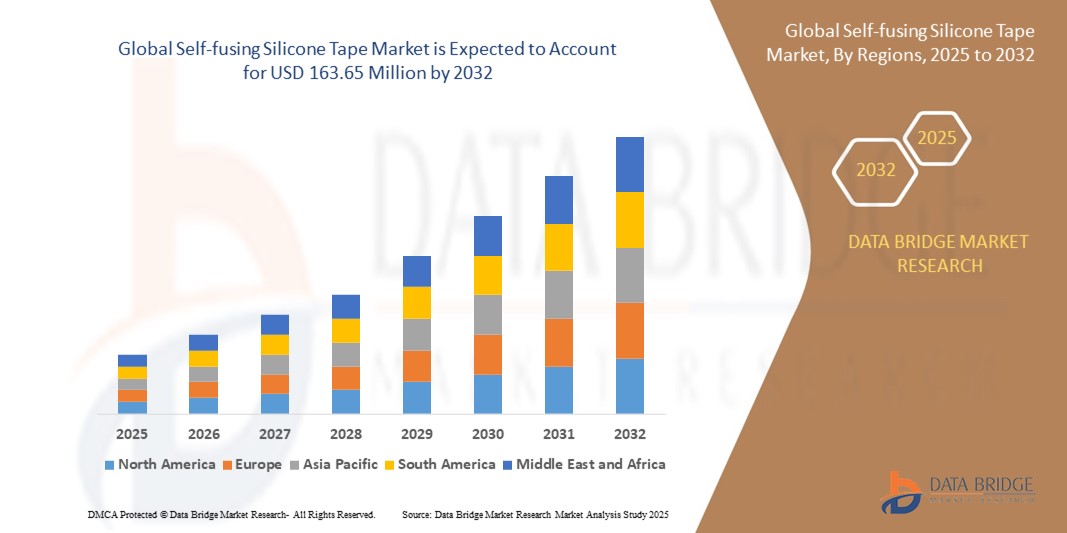
- The global self-fusing silicone tape market size was valued at USD 111.61 million in 2024 and is expected to reach USD 163.65 million by 2032, at a CAGR of 4.90% during the forecast period
- The market growth is primarily driven by increasing demand for durable, versatile, and high-performance sealing and insulation solutions across various industries, coupled with advancements in silicone-based technologies
- Growing awareness of the tape’s superior properties, such as weather resistance, electrical insulation, and ease of application, is boosting its adoption in both industrial and consumer applications, further propelling market expansion
Self-fusing Silicone Tape Market Analysis
- Self-fusing silicone tape, known for its ability to bond to itself without adhesive, is widely used for sealing, insulating, and repairing applications in industries such as electrical, automotive, and aerospace due to its flexibility, high dielectric strength, and resistance to extreme temperatures and chemicals
- The rising demand is fueled by the tape’s reliability in harsh environments, increasing infrastructure development, and growing applications in DIY home repair and maintenance
- Asia-Pacific dominated the self-fusing silicone tape market with the largest revenue share of 42.5% in 2024, driven by rapid industrialization, robust manufacturing sectors, and high demand in electrical and electronics applications, particularly in countries such as China and India
- North America is expected to be the fastest-growing region during the forecast period due to increasing adoption in automotive, aerospace, and DIY home improvement sectors, supported by technological advancements and rising consumer awareness
- The rectangular tapes segment dominated the largest market revenue share of 52% in 2024, driven by its widespread use in electrical insulation, corrosion resistance, and automotive wiring harness bundling. Its uniform thickness and high compatibility with industrial applications make it the preferred choice across multiple sectors
Report Scope and Self-fusing Silicone Tape Market Segmentation
|
Attributes |
Self-fusing Silicone Tape Key Market Insights |
|
Segments Covered |
|
|
Countries Covered |
North America
Europe
Asia-Pacific
Middle East and Africa
South America
|
|
Key Market Players |
|
|
Market Opportunities |
|
|
Value Added Data Infosets |
In addition to the insights on market scenarios such as market value, growth rate, segmentation, geographical coverage, and major players, the market reports curated by the Data Bridge Market Research also include import export analysis, production capacity overview, production consumption analysis, price trend analysis, climate change scenario, supply chain analysis, value chain analysis, raw material/consumables overview, vendor selection criteria, PESTLE Analysis, Porter Analysis, and regulatory framework. |
Self-fusing Silicone Tape Market Trends
“Increasing Demand for High-Performance and Sustainable Materials”
- The global self-fusing silicone tape market is experiencing a notable trend toward the adoption of high-performance and eco-friendly materials to meet the growing needs of various industries
- Advanced formulations of self-fusing silicone tapes are being developed to enhance properties such as temperature resistance, dielectric strength, and durability, making them suitable for demanding applications in automotive, aerospace, and electronics sectors
- Manufacturers are leveraging innovations to create tapes with improved chemical and UV resistance, enabling their use in harsh environments, such as marine and industrial settings
- For instances, companies such as 3M have introduced advanced self-fusing silicone tapes, such as the Scotch Self-Fusing Silicone Rubber Electrical Tape, designed for applications in high-temperature and corrosive environments, including automotive and industrial repairs
- The push for sustainability is driving the development of recyclable and non-toxic silicone tapes, appealing to environmentally conscious consumers and industries
- These advancements are expanding the application scope of self-fusing silicone tapes, making them a preferred choice for both industrial and household uses
Self-fusing Silicone Tape Market Dynamics
Driver
“Growing Applications across Diverse Industries”
- The rising demand for reliable, flexible, and durable sealing solutions across multiple sectors, including electrical and electronics, plumbing, automotive, aerospace, and home and garden, is a key driver for the global self-fusing silicone tape market
- Self-fusing silicone tapes provide critical features such as waterproof sealing, high-temperature resistance, and corrosion protection, making them ideal for applications such as electrical insulation, pipe sealing, and automotive wiring harnesses
- Government regulations and industry standards, particularly in regions such as Europe and North America, are promoting the use of high-performance insulation materials, further boosting market growth
- The rapid industrialization and infrastructure development in the Asia-Pacific region, which dominates the market with a 25% share in 2024, are significantly increasing the demand for self-fusing silicone tapes in construction, electronics, and automotive manufacturing
- Manufacturers are increasingly offering customized tape solutions tailored to specific industry needs, enhancing their market appeal and adoption
Restraint/Challenge
“High Production Costs and Regulatory Compliance Issues”
- The high cost of raw materials, such as silicone, and the complex manufacturing processes required for self-fusing silicone tapes can be a significant barrier to market growth, particularly in cost-sensitive regions such as Latin America and parts of Asia-Pacific
- Integrating self-fusing silicone tapes into specialized applications, such as aerospace or medical devices, often requires precise customization, adding to production and implementation costs
- Data privacy and environmental regulations pose challenges, as the production and disposal of silicone-based products must comply with stringent standards, particularly in Europe, where sustainability is a priority
- The fragmented regulatory landscape across countries, especially concerning environmental impact and material safety, creates operational complexities for manufacturers and suppliers operating globally
- These factors may deter smaller players and limit market expansion in emerging economies where cost and regulatory awareness are significant concerns
Self-fusing Silicone Tape market Scope
The market is segmented on the basis of product, thickness, and end-use.
- By Product
On the basis of product, the global self-fusing silicone tape market is segmented into rectangular tapes, triangular tapes, and sinusoidal rectangular tapes. The rectangular tapes segment dominated the largest market revenue share of 52% in 2024, driven by its widespread use in electrical insulation, corrosion resistance, and automotive wiring harness bundling. Its uniform thickness and high compatibility with industrial applications make it the preferred choice across multiple sectors.
The triangular tapes segment is expected to witness the fastest growth rate of 4.8% from 2025 to 2032, attributed to its multi-functional ability and high-performance characteristics. Triangular tapes are increasingly adopted in applications requiring precise sealing and insulation, particularly in plumbing and telecommunications.
- By Thickness
On the basis of thickness, the global self-fusing silicone tape market is segmented into up to 0.25 mm, 0.26 mm to 0.50 mm, 0.51 mm to 0.75 mm, and above 0.75 mm. The 0.26 mm to 0.50 mm segment dominated the largest market revenue share of 44% in 2024, owing to its optimal balance of flexibility, durability, and insulation properties. This thickness range is widely used in electrical, plumbing, and automotive applications for strong adhesion and leak-tight sealing.
The 0.51 mm to 0.75 mm segment is anticipated to experience the fastest growth rate from 2025 to 2032, driven by increasing demand in heavy-duty applications such as aerospace and industrial sectors. The thicker tapes provide enhanced strength and durability, making them suitable for high-pressure and high-temperature environments.
- By End-Use
On the basis of end-use, the global self-fusing silicone tape market is segmented into electrical and electronics, plumbing, automotive, industrial, aerospace, home and garden, and others. The electrical and electronics segment dominated the market with a revenue share of 44% in 2024, fueled by its extensive use in insulation, moisture protection, and sealing in telecom and consumer electronics. The segment's growth is supported by the rising demand for reliable and durable sealing solutions.
The automotive segment is projected to witness the fastest growth rate of 5.2% from 2025 to 2032, driven by increasing adoption in vehicle manufacturing for wiring harness protection, corrosion prevention, and battery terminal sealing. The trend toward lightweight materials and complex electronic systems in vehicles further boosts demand for self-fusing silicone tapes.
Self-fusing Silicone Tape Market Regional Analysis
- Asia-Pacific dominated the self-fusing silicone tape market with the largest revenue share of 42.5% in 2024, driven by rapid industrialization, robust manufacturing sectors, and high demand in electrical and electronics applications, particularly in countries such as China and India
- Consumers prioritize self-fusing silicone tapes for their versatility, durability, and resistance to extreme temperatures and moisture, particularly in regions with diverse industrial and environmental conditions
- Growth is supported by advancements in tape technology, including high-performance formulations for electrical insulation and corrosion protection, alongside rising adoption in OEM and aftermarket applications across various industries
U.S. Self-fusing Silicone Tape Market Insight
The U.S. self-fusing silicone tape market is expected to witness significant growth, fueled by strong demand in the electrical, automotive, and aerospace sectors. Growing awareness of the tape’s benefits, such as waterproofing and insulation, drives aftermarket sales. Regulatory emphasis on safety standards and increasing adoption in industrial maintenance further boost market expansion.
Europe Self-fusing Silicone Tape Market Insight
The Europe self-fusing silicone tape market is expected to witness significant growth, supported by stringent regulations on electrical safety and industrial efficiency. Consumers seek tapes that provide reliable insulation and environmental resistance. Growth is prominent in both OEM applications and retrofit projects, with countries such as Germany and France showing notable uptake due to advanced manufacturing and infrastructure development.
U.K. Self-fusing Silicone Tape Market Insight
The U.K. market for self-fusing silicone tape is expected to witness rapid growth, driven by demand in electrical, plumbing, and automotive applications. Increased focus on infrastructure maintenance and environmental resilience encourages adoption. Evolving safety and performance standards influence consumer preferences, balancing functionality with compliance.
Germany Self-fusing Silicone Tape Market Insight
Germany is expected to witness significant growth in the self-fusing silicone tape market, attributed to its robust industrial and automotive manufacturing sectors. German consumers prefer advanced tapes that offer superior insulation, durability, and energy efficiency. Integration in high-performance industrial and automotive applications supports sustained market growth.
Asia-Pacific Self-fusing Silicone Tape Market Insight
The Asia-Pacific region dominates the global self-fusing silicone tape market share of 77.8% in 2024, driven by expanding industrial production, growing electronics and automotive sectors, and rising disposable incomes in countries such as China, India, and Japan. Increasing awareness of insulation, waterproofing, and corrosion protection benefits boosts demand. Government initiatives promoting industrial safety and energy efficiency further encourage adoption of advanced self-fusing silicone tapes.
Japan Self-fusing Silicone Tape Market Insight
Japan’s self-fusing silicone tape market is expected to witness rapid growth due to strong consumer preference for high-quality, technologically advanced tapes that enhance safety and durability. The presence of major electronics and automotive manufacturers, along with integration in OEM applications, accelerates market penetration. Rising interest in aftermarket maintenance solutions also contributes to growth.
China Self-fusing Silicone Tape Market Insight
China holds the largest share of the Asia-Pacific self-fusing silicone tape market, propelled by rapid urbanization, growing industrial and automotive sectors, and increasing demand for reliable sealing and insulation solutions. The country’s expanding middle class and focus on advanced manufacturing support adoption. Strong domestic production capabilities and competitive pricing enhance market accessibility.
Self-fusing Silicone Tape Market Share
The self-fusing silicone tape industry is primarily led by well-established companies, including:
- 3M (U.S.)
- Advance Tapes International (U.K.)
- Berry Global Inc. (U.S.)
- NITTO DENKO CORPORATION (Japan)
- Scapa Group plc (U.K.)
- Illinois Tool Works Inc. (U.S.)
- AVERY DENNISON CORPORATION (U.S.)
- Denka Company Limited (Japan)
- Midsun Specialty Products, Inc. (U.S.)
- Cardinal Health (U.S.)
- Beiersdorf AG (Germany)
- 3A Associates Incorporated (U.S.)
- Intertape Polymer Group (Canada)
- CS Hyde Company (U.S.)
- PHARMA PACKAGING TECHNOLOGY (India)
- Freudenberg Group (Germany)
What are the Recent Developments in Global Self-fusing Silicone Tape Market?
- In February 2025, 3M strengthened its commitment to the semiconductor industry by joining the US-JOINT Consortium, a strategic partnership of 12 leading semiconductor suppliers. This collaboration focuses on next-generation semiconductor advanced packaging and back-end processing technologies, anchored by a cutting-edge R&D facility in Silicon Valley. While not directly related to self-fusing silicone tapes, 3M’s expertise in materials science could indirectly influence future developments in high-tech electronics applications
- In December 2024, 3M and US Conec Ltd. entered a strategic licensing agreement for 3M™ Expanded Beam Optical Interconnect technology, designed to meet the performance and scalability needs of next-generation data centers and advanced network architectures. This collaboration merges 3M’s optical innovations with US Conec’s expertise in high-density connectivity solutions, ensuring reliable, scalable technologies for modern networks. The non-contact optical coupling minimizes wear and contamination sensitivity, reducing maintenance costs while enhancing signal integrity
- In April 2024, 3M launched the Scotch Self-Fusing Silicone Rubber Electrical Tape, engineered for high-performance applications across automotive, marine, construction, mining, solar, utility, and wind power industries. This arc- and track-resistant tape features self-fusing inorganic silicone rubber, ensuring durability, flexibility, and superior insulation. Designed for high-voltage cable protection, it withstands temperatures up to 356°F (180°C) and offers outstanding resistance to ozone, weathering, and electrical stress
- In March 2024, the consumer durables and electronics market experienced strong growth, fueled by rising demand in telecommunications and industrial applications. Self-fusing silicone tapes gained popularity for sealing and insulating electrical components, providing high-quality protection against moisture, heat, and electrical currents—especially for power cables and circuit boards in consumer electronics. This trend aligns with the expansion of smart devices and energy-efficient solutions, driving innovation in electrical insulation technologies
- In October 2023, self-fusing silicone tapes gained significant traction in the aerospace and defense sectors, primarily for sealing and insulating electrical components in aircraft and spacecraft. These tapes are valued for their ability to withstand extreme temperatures and harsh environmental conditions, ensuring reliable insulation and protection in high-performance aerospace applications. The global aerospace industry’s expansion has fueled demand for advanced materials, reinforcing the role of self-fusing silicone tapes in critical electrical systems

- Interactive Data Analysis Dashboard
- Company Analysis Dashboard for high growth potential opportunities
- Research Analyst Access for customization & queries
- Competitor Analysis with Interactive dashboard
- Latest News, Updates & Trend analysis
- Harness the Power of Benchmark Analysis for Comprehensive Competitor Tracking
Global Self Fusing Silicone Tape Market, Supply Chain Analysis and Ecosystem Framework
To support market growth and help clients navigate the impact of geopolitical shifts, DBMR has integrated in-depth supply chain analysis into its Global Self Fusing Silicone Tape Market research reports. This addition empowers clients to respond effectively to global changes affecting their industries. The supply chain analysis section includes detailed insights such as Global Self Fusing Silicone Tape Market consumption and production by country, price trend analysis, the impact of tariffs and geopolitical developments, and import and export trends by country and HSN code. It also highlights major suppliers with data on production capacity and company profiles, as well as key importers and exporters. In addition to research, DBMR offers specialized supply chain consulting services backed by over a decade of experience, providing solutions like supplier discovery, supplier risk assessment, price trend analysis, impact evaluation of inflation and trade route changes, and comprehensive market trend analysis.
Data collection and base year analysis are done using data collection modules with large sample sizes. The stage includes obtaining market information or related data through various sources and strategies. It includes examining and planning all the data acquired from the past in advance. It likewise envelops the examination of information inconsistencies seen across different information sources. The market data is analysed and estimated using market statistical and coherent models. Also, market share analysis and key trend analysis are the major success factors in the market report. To know more, please request an analyst call or drop down your inquiry.
The key research methodology used by DBMR research team is data triangulation which involves data mining, analysis of the impact of data variables on the market and primary (industry expert) validation. Data models include Vendor Positioning Grid, Market Time Line Analysis, Market Overview and Guide, Company Positioning Grid, Patent Analysis, Pricing Analysis, Company Market Share Analysis, Standards of Measurement, Global versus Regional and Vendor Share Analysis. To know more about the research methodology, drop in an inquiry to speak to our industry experts.
Data Bridge Market Research is a leader in advanced formative research. We take pride in servicing our existing and new customers with data and analysis that match and suits their goal. The report can be customized to include price trend analysis of target brands understanding the market for additional countries (ask for the list of countries), clinical trial results data, literature review, refurbished market and product base analysis. Market analysis of target competitors can be analyzed from technology-based analysis to market portfolio strategies. We can add as many competitors that you require data about in the format and data style you are looking for. Our team of analysts can also provide you data in crude raw excel files pivot tables (Fact book) or can assist you in creating presentations from the data sets available in the report.













