


Sialorrhea Market Size
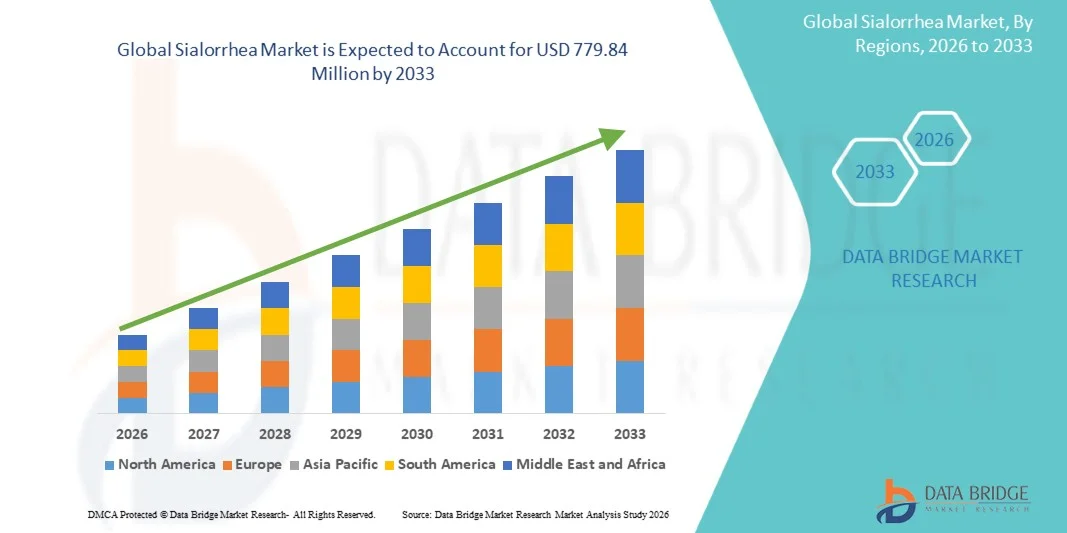
- The global Sialorrhea market size was valued at USD 450.50 million in 2025and is expected to reach USD 779.84 million by 2033, at a CAGR of 7.1% during the forecast period
- The market growth is largely driven by the increasing prevalence of neurological disorders such as Parkinson’s disease, cerebral palsy, and amyotrophic lateral sclerosis (ALS), which significantly contribute to excessive drooling and demand for effective treatment options
- Furthermore, rising adoption of pharmacological therapies, including anticholinergic drugs and botulinum toxin injections, along with growing awareness of patient quality-of-life management, is establishing advanced sialorrhea treatments as the preferred therapeutic approach. These converging factors are accelerating the uptake of sialorrhea management solutions, thereby significantly boosting the industry’s growth
Sialorrhea Market Analysis
- Sialorrhea, characterized by excessive drooling due to impaired saliva control, is increasingly recognized as a significant complication in neurological disorders such as Parkinson’s disease, cerebral palsy, stroke, and amyotrophic lateral sclerosis, making it a key focus area in symptomatic and supportive care management
- The growing burden of neurodegenerative and neurodevelopmental disorders, along with rising clinical awareness and improved diagnosis rates, is primarily driving the demand for effective treatment options, including botulinum toxin therapies and other targeted pharmacological interventions
- North America dominated the Sialorrhea market with the largest revenue share of 38.6% in 2025, supported by advanced healthcare infrastructure, high diagnosis rates of neurological conditions, strong adoption of injectable therapies, and presence of leading pharmaceutical players, with the U.S. witnessing strong treatment uptake driven by specialist neurology care and improved reimbursement access
- Asia-Pacific is expected to be the fastest growing region in the Sialorrhea market during the forecast period due to rising healthcare expenditure, increasing prevalence of neurological disorders, improving diagnostic awareness, and expanding access to advanced treatment options across emerging economies
- Posterior sialorrhea segment dominated the Sialorrhea market with a market share of 54.1% in 2025, driven by its strong association with neurological swallowing dysfunction and higher clinical recognition
Report Scope and Sialorrhea Market Segmentation
|
Attributes |
Sialorrhea Key Market Insights |
|
Segments Covered |
|
|
Countries Covered |
North America · U.S. · Canada · Mexico Europe · Germany · France · U.K. · Netherlands · Switzerland · Belgium · Russia · Italy · Spain · Turkey · Rest of Europe Asia-Pacific · China · Japan · India · South Korea · Singapore · Malaysia · Australia · Thailand · Indonesia · Philippines · Rest of Asia-Pacific Middle East and Africa · Saudi Arabia · U.A.E. · South Africa · Egypt · Israel · Rest of Middle East and Africa South America · Brazil · Argentina · Rest of South America |
|
Key Market Players |
|
|
Market Opportunities |
· Expanding use of botulinum toxin therapies in pediatric neurological conditions · Increasing integration of tele-neurology and remote patient monitoring |
|
Value Added Data Infosets |
In addition to the insights on market scenarios such as market value, growth rate, segmentation, geographical coverage, and major players, the market reports curated by the Data Bridge Market Research also include in-depth expert analysis, patient epidemiology, pipeline analysis, pricing analysis, and regulatory framework |
Sialorrhea Market Trends
“Growing Shift Toward Botulinum Toxin–Based Precision Therapy”
- A significant and accelerating trend in the global sialorrhea market is the increasing clinical preference for targeted botulinum toxin injections such as IncobotulinumtoxinA and RimabotulinumtoxinB, offering precise and long-lasting control of excessive salivation in neurological patients
- For instance, IncobotulinumtoxinA is widely used in adult and pediatric neurological care settings for managing chronic drooling associated with Parkinson’s disease and cerebral palsy, due to its localized mechanism and reduced systemic side effects
- This therapeutic approach allows physicians to directly target salivary glands, improving symptom control while minimizing complications such as dry mouth or cognitive side effects commonly associated with oral anticholinergic drugs
- The growing use of ultrasound-guided injection techniques is further improving treatment accuracy, enabling better dosing precision and enhanced patient outcomes in both hospital and specialty neurology clinics
- Expanding research into long-acting formulations and novel toxin delivery methods is further enhancing treatment durability, reducing the frequency of repeat interventions required for chronic patients
- Increasing inclusion of sialorrhea management in neurology treatment guidelines is strengthening standardized adoption of botulinum toxin therapies across clinical practice settings worldwide
Sialorrhea Market Dynamics
Driver
“Rising Neurological Disease Burden and Expanding Treatment Awareness”
- The increasing prevalence of neurological disorders such as Parkinson’s disease, cerebral palsy, stroke, and amyotrophic lateral sclerosis is a major driver accelerating demand for effective sialorrhea management therapies worldwide
- For instance, growing diagnosis rates of Parkinson’s disease in aging populations have significantly increased the number of patients experiencing chronic drooling, thereby boosting clinical adoption of botulinum toxin and supportive drug therapies
- As awareness among healthcare professionals improves, sialorrhea is increasingly recognized as a treatable condition rather than a secondary symptom, leading to earlier intervention and higher treatment uptake
- Expanding access to specialist neurology care and rehabilitation services is further supporting the integration of pharmacological and injectable therapies into standard treatment protocols
- The increasing focus on improving patient quality of life, particularly in long-term neurological care, is making sialorrhea management an essential component of comprehensive disease management strategies
- Rising investment in clinical studies evaluating efficacy and safety of new formulations is further strengthening evidence-based adoption of advanced treatment options
Restraint/Challenge
“Limited Diagnosis Rates and Treatment Accessibility Barriers”
- Challenges related to underdiagnosis and underreporting of sialorrhea, particularly in early-stage neurological conditions, pose a significant barrier to broader market penetration and timely treatment adoption
- For instance, many patients with Parkinson’s disease or cerebral palsy remain untreated for excessive drooling due to lack of awareness among caregivers and delayed clinical evaluation in routine neurology practice
- Limited availability of specialized treatment centers capable of administering botulinum toxin injections further restricts access, especially in low- and middle-income regions
- In addition, the need for repeated injections and associated procedural costs can limit patient adherence and create affordability concerns for long-term management
- Lack of standardized screening protocols for sialorrhea in general clinical practice further contributes to inconsistent diagnosis and delayed therapeutic intervention
- Overcoming these challenges through improved diagnostic awareness, expanded specialist training, and broader healthcare access will be critical for sustained market growth
Sialorrhea Market Scope
The market is segmented on the basis of type, drugs, end-users, and distribution channel.
- By Type
On the basis of type, the global sialorrhea market is segmented into posterior sialorrhea and anterior sialorrhea. The posterior sialorrhea segment dominated the market with the largest revenue share of 54.1% in 2025, driven by its strong association with neurological swallowing dysfunction in conditions such as Parkinson’s disease, cerebral palsy, and ALS. Posterior sialorrhea is clinically more complex as saliva is not effectively cleared into the oral cavity, increasing aspiration risk and requiring more intensive medical management. It is more frequently diagnosed in moderate to severe neurological cases, leading to higher treatment uptake. The segment also benefits from stronger physician focus due to its association with respiratory complications and aspiration pneumonia. Growing use of botulinum toxin injections for gland-targeted control further strengthens its dominance. In addition, increased hospitalization and specialist neurology consultations contribute to higher detection and treatment rates for posterior cases.
The anterior sialorrhea segment is expected to witness the fastest growth rate of 8.3% from 2026 to 2033, driven by rising awareness of early-stage drooling symptoms and increasing outpatient diagnosis rates. Anterior sialorrhea is more visible and socially distressing, prompting patients to seek earlier medical intervention compared to posterior cases. Growing use of non-invasive therapies and behavioral interventions in mild cases is supporting segment expansion. Increasing pediatric diagnosis, especially in cerebral palsy patients, is also contributing to demand growth. Furthermore, improved caregiver awareness and routine neurological screening are enabling earlier identification of anterior symptoms. The segment is gaining traction as healthcare systems emphasize early-stage symptom management to improve patient quality of life.
- By Drugs
On the basis of drugs, the market is segmented into IncobotulinumtoxinA, RimabotulinumtoxinB, and Others. The IncobotulinumtoxinA segment dominated the market with the largest revenue share of 49.3% in 2025, driven by its strong clinical efficacy, favorable safety profile, and long duration of action in managing chronic sialorrhea. It is widely preferred by neurologists due to its high precision in salivary gland targeting and reduced risk of antibody formation compared to other formulations. Its approval for neurological conditions such as Parkinson’s disease-related drooling further supports its adoption. The drug’s effectiveness in both adult and pediatric populations enhances its market dominance. Increasing use in hospital-based neurology and specialty clinics also contributes to strong demand. In addition, expanding clinical evidence supporting repeated use in chronic cases strengthens physician confidence.
The RimabotulinumtoxinB segment is expected to witness the fastest growth rate of 7.9% from 2026 to 2033, driven by its rapid onset of action and effectiveness in patients who respond poorly to other toxin formulations. It is increasingly used as an alternative therapy in refractory sialorrhea cases where first-line treatments are insufficient. Growing clinical adoption in specialized neurology centers is supporting its expansion. The drug’s suitability for patients requiring faster symptomatic relief is also boosting demand. In addition, ongoing research into optimized dosing strategies is improving its therapeutic acceptance. Rising physician awareness of alternative botulinum toxin types is further accelerating segment growth.
- By End-Users
On the basis of end-users, the market is segmented into hospitals, homecare, specialty clinics, and others. The hospitals segment dominated the market with the largest revenue share of 58.6% in 2025, driven by the high volume of neurological disorder diagnoses and access to advanced treatment facilities. Hospitals are the primary centers for administering botulinum toxin injections, which require specialized expertise and clinical monitoring. The presence of multidisciplinary neurology teams enhances treatment accuracy and patient outcomes. Hospitals also manage severe cases of posterior sialorrhea that require immediate medical intervention. Strong reimbursement frameworks and access to advanced diagnostic tools further support hospital dominance. In addition, increasing inpatient admissions for neurodegenerative conditions contributes to higher treatment demand.
The specialty clinics segment is expected to witness the fastest growth rate of 9.1% from 2026 to 2033, driven by rising preference for outpatient neurological care and minimally invasive procedures. Specialty clinics offer faster access to botulinum toxin treatments without long hospital stays, improving patient convenience. Increasing establishment of neurology-focused clinics in urban regions is supporting market expansion. These centers provide personalized treatment plans and follow-up care for chronic sialorrhea patients. Growing affordability and reduced waiting times compared to hospitals are also driving adoption. In addition, increasing physician specialization in movement disorders is strengthening clinic-based care delivery.
- By Distribution Channel
On the basis of distribution channel, the market is segmented into hospital pharmacy, retail pharmacy, and online pharmacy. The hospital pharmacy segment dominated the market with the largest revenue share of 63.4% in 2025, driven by the direct administration of botulinum toxin therapies within hospital settings. Most sialorrhea treatments, especially injectable formulations, are dispensed and used under clinical supervision, reinforcing hospital pharmacy dominance. Strong integration with inpatient and outpatient neurology departments supports consistent demand. Hospitals also maintain controlled storage and handling requirements for biologic drugs, ensuring safety and compliance. The availability of specialized pharmacists and clinical staff further supports this channel. In addition, reimbursement-linked hospital treatment pathways strengthen its leading position.
The online pharmacy segment is expected to witness the fastest growth rate of 10.4% from 2026 to 2033, driven by increasing digitalization of healthcare and rising demand for home-delivered medications. Patients with chronic neurological conditions are increasingly preferring online platforms for oral supportive therapies and follow-up prescriptions. Growing telemedicine adoption is further facilitating remote prescriptions and digital drug access. Improved regulatory frameworks for e-pharmacy operations are supporting market expansion. Convenience, lower costs, and doorstep delivery are key growth drivers. In addition, increasing awareness of digital healthcare platforms is accelerating adoption in urban and semi-urban regions.
Sialorrhea Market Regional Analysis
- North America dominated the Sialorrhea market with the largest revenue share of 38.6% in 2025, supported by advanced healthcare infrastructure, high diagnosis rates of neurological conditions, strong adoption of injectable therapies, and presence of leading pharmaceutical players
- Patients and healthcare providers in the region increasingly prioritize advanced therapeutic options such as botulinum toxin injections and anticholinergic drugs, supported by well-established neurology care infrastructure and specialist treatment centers
- This widespread adoption is further supported by a strong presence of leading pharmaceutical companies, continuous clinical research activities, and frequent regulatory approvals for innovative neurological treatments
U.S. Sialorrhea Market Insight
The U.S. Sialorrhea market captured the largest revenue share in North America in 2025, driven by the high prevalence of neurological disorders such as Parkinson’s disease, cerebral palsy, stroke, and ALS, along with strong clinical awareness and early diagnosis rates. Patients and healthcare providers increasingly prioritize advanced treatment options such as IncobotulinumtoxinA and RimabotulinumtoxinB injections, supported by well-established neurology care infrastructure and access to specialist movement disorder clinics. The presence of strong reimbursement frameworks, high healthcare spending, and widespread availability of FDA-approved botulinum toxin therapies further supports market expansion. In addition, ongoing clinical research activities and continuous innovation in injectable neuromodulators are strengthening treatment adoption. Increasing patient awareness regarding quality-of-life improvement and symptom management is also driving early intervention and sustained therapy uptake. Integration of multidisciplinary neurology care continues to reinforce the U.S. as the leading market within the region.
Europe Sialorrhea Market Insight
The Europe Sialorrhea market is projected to expand at a steady CAGR during the forecast period, primarily driven by an aging population and increasing prevalence of neurodegenerative diseases such as Parkinson’s disease. The region benefits from strong public healthcare systems and standardized treatment guidelines that support consistent diagnosis and management of sialorrhea. Patients are increasingly adopting botulinum toxin–based therapies due to their long-lasting efficacy and reduced systemic side effects compared to oral medications. Growing investment in neurology research and rehabilitation services is further supporting the adoption of advanced treatment protocols. Expansion of specialty neurology clinics and improved access to injectable therapies are also contributing to market growth across both developed and emerging European countries. In addition, rising focus on patient-centered care and quality-of-life improvement is strengthening demand for effective treatment solutions.
U.K. Sialorrhea Market Insight
The U.K. Sialorrhea market is anticipated to grow at a notable CAGR during the forecast period, driven by increasing awareness of neurological conditions and growing demand for effective symptom management therapies. Rising prevalence of Parkinson’s disease and stroke-related complications is contributing to higher diagnosis and treatment rates. The country’s strong public healthcare system supports access to advanced therapies such as botulinum toxin injections in hospital and specialty clinic settings. In addition, growing emphasis on improving patient comfort and quality of life is encouraging adoption of minimally invasive treatment options. Increasing clinical familiarity with IncobotulinumtoxinA is further supporting market expansion. The presence of well-developed neurology care pathways and structured referral systems continues to strengthen treatment uptake.
Germany Sialorrhea Market Insight
The Germany Sialorrhea market is expected to expand at a considerable CAGR during the forecast period, driven by rising awareness of neurological disorders and demand for advanced, evidence-based treatment options. Germany’s strong healthcare infrastructure and emphasis on clinical precision support the adoption of botulinum toxin–based therapies for sialorrhea management. Increasing prevalence of Parkinson’s disease and other neurodegenerative conditions is further boosting demand for effective symptom control solutions. The integration of neurology care with rehabilitation services is enhancing treatment accessibility across hospital and specialty clinic settings. In addition, patient preference for safe and long-acting therapies is encouraging the use of IncobotulinumtoxinA and related formulations. Strong focus on innovation and healthcare quality continues to support market growth in both residential care and clinical environments.
Asia-Pacific Sialorrhea Market Insight
The Asia-Pacific Sialorrhea market is poised to grow at the fastest CAGR of 9.8% during the forecast period of 2026 to 2033, driven by rising healthcare expenditure, increasing urbanization, and growing prevalence of neurological disorders in countries such as China, India, and Japan. Expanding awareness of conditions such as Parkinson’s disease and cerebral palsy is leading to improved diagnosis rates and higher treatment adoption. The region is witnessing rapid expansion of specialty neurology care services and improved access to advanced therapies. Government initiatives supporting healthcare infrastructure development and neurological disease management are further accelerating market growth. Increasing presence of global pharmaceutical companies is improving affordability and availability of botulinum toxin–based treatments. In addition, rising preference for minimally invasive and long-acting therapies is significantly driving market expansion across Asia-Pacific.
Japan Sialorrhea Market Insight
The Japan Sialorrhea market is gaining momentum due to its advanced healthcare system, aging population, and high prevalence of neurodegenerative disorders such as Parkinson’s disease. Strong emphasis on patient comfort and precision medicine is driving adoption of botulinum toxin–based therapies for sialorrhea management. The integration of neurology care with advanced diagnostic and rehabilitation services is supporting early diagnosis and effective treatment. Increasing use of minimally invasive procedures is also contributing to market growth in both hospital and outpatient settings. In addition, Japan’s technological advancement in healthcare is enhancing treatment accuracy and delivery methods. Growing demand for supportive care in elderly populations is further strengthening the market outlook.
India Sialorrhea Market Insight
The India Sialorrhea market accounted for the largest revenue share in Asia-Pacific in 2025, attributed to rapid urbanization, expanding healthcare access, and increasing awareness of neurological disorders. Rising prevalence of cerebral palsy, stroke, and Parkinson’s disease is driving demand for effective symptom management therapies. Growing adoption of advanced neurological treatments in urban hospitals and specialty clinics is supporting market expansion. Increasing availability of botulinum toxin injections and improving affordability are further accelerating treatment uptake. Government focus on strengthening healthcare infrastructure and expanding neurological care services is also contributing to growth. In addition, rising patient awareness regarding quality-of-life improvement is encouraging early diagnosis and treatment adoption.
Sialorrhea Market Share
The Sialorrhea industry is primarily led by well-established companies, including:
- Merz Pharmaceuticals GmbH (Germany)
- Ipsen Pharma (France)
- AbbVie Inc. (U.S.)
- Teijin Limited (Japan)
- Revance Therapeutics, Inc. (U.S.)
- Eisai Co., Ltd. (Japan)
- Novartis AG (Switzerland)
- Bausch Health Companies Inc. (Canada)
- Medtronic plc (Ireland)
- Pfizer Inc. (U.S.)
- H. Lundbeck A/S (Denmark)
- Sun Pharmaceutical Industries Ltd. (India)
- Dr. Reddy’s Laboratories Ltd. (India)
- Abbott (U.S.)
- GALDERMA (Switzerland)
- Allergan Aesthetics (U.S.)
- Merz Therapeutics GmbH (Germany)
- Eli Lilly and Company (U.S.)
What are the Recent Developments in Global Sialorrhea Market?
- In August 2025, a clinical study evaluating long-term outcomes of IncobotulinumtoxinA in chronic sialorrhea patients demonstrated sustained efficacy across repeated treatment cycles, including patients with Parkinson’s disease and amyotrophic lateral sclerosis. The findings confirmed continued reduction in salivary flow and improved patient-reported drooling severity scores, with a favorable safety profile over extended use. This reinforced the role of repeat botulinum toxin injections as a durable treatment strategy for chronic neurological sialorrhea management
- In June 2025, Merz Therapeutics and Teijin Pharma announced that Japan’s Ministry of Health, Labour and Welfare (MHLW) approved XEOMIN (IncobotulinumtoxinA) for the treatment of chronic sialorrhea, making it the first drug approved for this indication in Japan. The approval was supported by Phase III clinical trial data demonstrating significant reduction in salivary secretion and improved drooling severity scores in patients with neurological disorders such as Parkinson’s disease and stroke
- In June 2025, results from the OPTIMYST Phase III trial highlighted the long-term safety and efficacy of repeated cycles of RimabotulinumtoxinB in adults with chronic sialorrhea caused by Parkinson’s disease and ALS. The study showed sustained improvement in salivary flow reduction across multiple treatment cycles, with consistent tolerability and predictable safety outcomes. This development further strengthened the clinical position of botulinum toxin type B as an alternative therapeutic option for patients who may not respond optimally to type A formulations
- In January 2025, a multicenter clinical study evaluating RimabotulinumtoxinB (Myobloc) confirmed its sustained efficacy and safety for the treatment of chronic sialorrhea in adults with neurological disorders such as Parkinson’s disease and amyotrophic lateral sclerosis (ALS). The study demonstrated significant reductions in unstimulated salivary flow rate along with consistent improvement in drooling severity scores across multiple treatment cycles
- In December 2023, updated international clinical recommendations highlighted the standardized use of botulinum neurotoxin type A (BoNT/A) for the management of sialorrhea in both adults and pediatric populations. The consensus emphasized optimized injection techniques, dosing strategies, and patient selection criteria to improve therapeutic outcomes in neurological conditions. This update reinforced the growing clinical acceptance of botulinum toxin therapies as a first-line minimally invasive treatment for chronic drooling disorders

- Interactive Data Analysis Dashboard
- Company Analysis Dashboard for high growth potential opportunities
- Research Analyst Access for customization & queries
- Competitor Analysis with Interactive dashboard
- Latest News, Updates & Trend analysis
- Harness the Power of Benchmark Analysis for Comprehensive Competitor Tracking
Data collection and base year analysis are done using data collection modules with large sample sizes. The stage includes obtaining market information or related data through various sources and strategies. It includes examining and planning all the data acquired from the past in advance. It likewise envelops the examination of information inconsistencies seen across different information sources. The market data is analysed and estimated using market statistical and coherent models. Also, market share analysis and key trend analysis are the major success factors in the market report. To know more, please request an analyst call or drop down your inquiry.
The key research methodology used by DBMR research team is data triangulation which involves data mining, analysis of the impact of data variables on the market and primary (industry expert) validation. Data models include Vendor Positioning Grid, Market Time Line Analysis, Market Overview and Guide, Company Positioning Grid, Patent Analysis, Pricing Analysis, Company Market Share Analysis, Standards of Measurement, Global versus Regional and Vendor Share Analysis. To know more about the research methodology, drop in an inquiry to speak to our industry experts.
Data Bridge Market Research is a leader in advanced formative research. We take pride in servicing our existing and new customers with data and analysis that match and suits their goal. The report can be customized to include price trend analysis of target brands understanding the market for additional countries (ask for the list of countries), clinical trial results data, literature review, refurbished market and product base analysis. Market analysis of target competitors can be analyzed from technology-based analysis to market portfolio strategies. We can add as many competitors that you require data about in the format and data style you are looking for. Our team of analysts can also provide you data in crude raw excel files pivot tables (Fact book) or can assist you in creating presentations from the data sets available in the report.












