Global Small Lymphocytic Lymphoma Market
Market Size in USD Billion
CAGR :
% 
 USD
3.46 Billion
USD
4.38 Billion
2025
2033
USD
3.46 Billion
USD
4.38 Billion
2025
2033
 Forecast Period Forecast Period |
2026 –2033 |
 Market Size (Base Year) Market Size (Base Year) |
USD 3.46 Billion |
 Market Size (Forecast Year) Market Size (Forecast Year) |
USD 4.38 Billion |
 CAGR CAGR |
% |
| Major Markets Players |
|
Small Lymphocytic Lymphoma Market Size
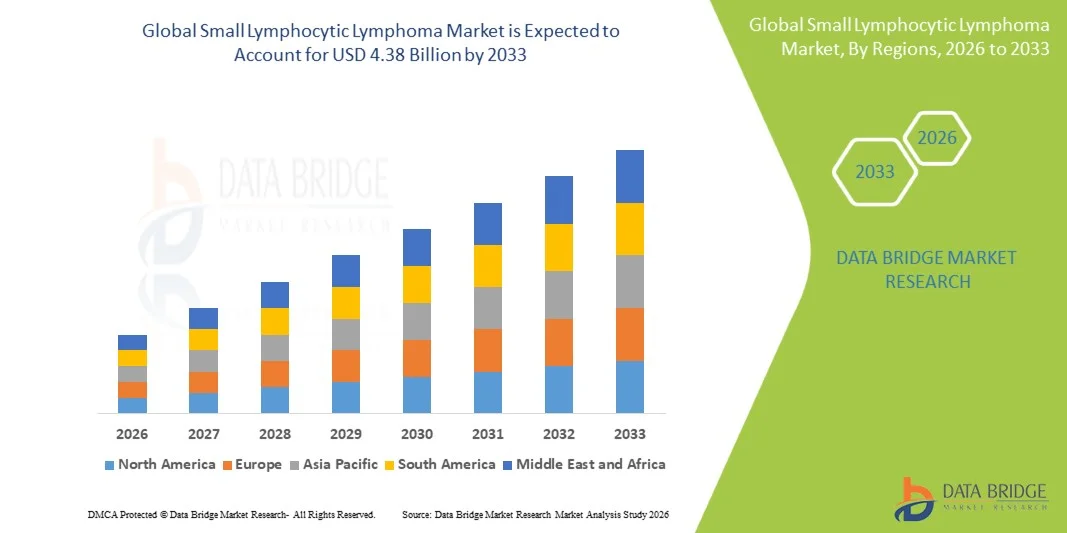
- The global small lymphocytic lymphoma market size was valued at USD 3.46 billion in 2025and is expected to reach USD 4.38 billion by 2033, at a CAGR of 3.00% during the forecast period
- The market growth is largely driven by the increasing incidence of hematological malignancies, particularly among the aging population, along with improved diagnostic capabilities such as flow cytometry and molecular testing, leading to earlier and more accurate detection of disease cases
- Furthermore, the rising adoption of targeted therapies, including Bruton tyrosine kinase (BTK) inhibitors and BCL-2 inhibitors, along with expanding access to advanced oncology treatments and ongoing clinical research in precision medicine, is establishing more effective and personalized treatment approaches. These converging factors are accelerating the uptake of innovative therapeutic options, thereby significantly boosting the industry's growth
Small Lymphocytic Lymphoma Market Analysis
- Small lymphocytic lymphoma (SLL), a slow-progressing B-cell non-Hodgkin lymphoma closely related to chronic lymphocytic leukemia, is increasingly managed through targeted therapies, immunotherapy, and precision oncology approaches across hospital and specialty care settings due to improved understanding of disease biology and treatment pathways
- The escalating demand for SLL treatment is primarily driven by the rising incidence of hematological malignancies, growing geriatric population globally, and increasing adoption of novel targeted therapies such as BTK and BCL-2 inhibitors that are improving long-term disease control and patient survival outcomes
- North America dominated the small lymphocytic lymphoma market with the largest revenue share of 42.6% in 2025, supported by advanced oncology infrastructure, early diagnosis rates, strong clinical trial activity, and rapid adoption of innovative therapies, particularly in the U.S., where precision medicine is widely integrated into hematology practice
- Asia-Pacific is expected to be the fastest growing region in the small lymphocytic lymphoma market during the forecast period due to improving healthcare infrastructure, rising cancer awareness and diagnosis rates, increasing healthcare expenditure, expanding access to advanced oncology treatments, and growing investment in cancer care across emerging economies
- Targeted therapy segment dominated the small lymphocytic lymphoma market with the largest share of 58.3% in 2025, driven by superior efficacy compared to traditional chemotherapy, better safety and tolerability profiles, and the growing preference for oral, long-term treatment regimens in chronic lymphoma management
Report Scope and Small Lymphocytic Lymphoma Market Segmentation
|
Attributes |
Small Lymphocytic Lymphoma Key Market Insights |
|
Segments Covered |
|
|
Countries Covered |
North America · U.S. · Canada · Mexico Europe · Germany · France · U.K. · Netherlands · Switzerland · Belgium · Russia · Italy · Spain · Turkey · Rest of Europe Asia-Pacific · China · Japan · India · South Korea · Singapore · Malaysia · Australia · Thailand · Indonesia · Philippines · Rest of Asia-Pacific Middle East and Africa · Saudi Arabia · U.A.E. · South Africa · Egypt · Israel · Rest of Middle East and Africa South America · Brazil · Argentina · Rest of South America |
|
Key Market Players |
|
|
Market Opportunities |
· The expansion of combination regimens integrating BTK inhibitors with BCL-2 inhibitors · Growing development of next-generation, highly selective oral targeted therapies with reduced resistance |
|
Value Added Data Infosets |
In addition to the insights on market scenarios such as market value, growth rate, segmentation, geographical coverage, and major players, the market reports curated by the Data Bridge Market Research also include in-depth expert analysis, patient epidemiology, pipeline analysis, pricing analysis, and regulatory framework |
Small Lymphocytic Lymphoma Market Trends
“Rising Adoption of Targeted Oral Therapies and Precision Oncology”
- A significant and accelerating trend in the global small lymphocytic lymphoma market is the increasing shift toward targeted oral therapies and precision oncology approaches, including BTK and BCL-2 inhibitors, which are transforming treatment from traditional chemotherapy-based regimens to more personalized and long-term disease control strategies
- For instance, BTK inhibitors such as ibrutinib are widely used in first-line and relapsed SLL cases, while venetoclax-based combinations are increasingly adopted to improve depth of remission and progression-free survival outcomes
- The adoption of targeted therapies is enabling improved clinical outcomes with reduced toxicity, as these drugs specifically act on malignant B-cells, minimizing damage to healthy cells and supporting better patient tolerability over long treatment cycles
- The growing integration of molecular diagnostics and genomic profiling is further enabling clinicians to select more effective, individualized treatment pathways, improving response rates and reducing treatment resistance in SLL patients
- This trend towards highly personalized, oral, and continuously optimized treatment regimens is fundamentally reshaping clinical expectations in hematology care, with companies such as AbbVie and AstraZeneca advancing next-generation targeted oncology pipelines
- The demand for advanced targeted treatment strategies is growing rapidly across both developed and emerging healthcare systems, as physicians increasingly prioritize efficacy, safety, and long-term disease management in SLL care
- The rising expansion of home-based oral oncology treatment models is also improving patient convenience and reducing hospital dependency, supporting long-term adherence and improved quality of life
Small Lymphocytic Lymphoma Market Dynamics
Driver
“Growing Burden of Hematological Malignancies and Expanding Treatment Access”
- The increasing global burden of hematological malignancies, coupled with rising awareness and improved diagnostic capabilities, is a significant driver for the growing demand for small lymphocytic lymphoma treatment across hospital and specialty oncology settings
- For instance, in April 2025, several oncology programs expanded access to next-generation sequencing-based diagnostics, enabling earlier and more accurate identification of SLL and related lymphoproliferative disorders
- As patient populations age and cancer incidence rises, there is increasing need for effective long-term therapies that can manage disease progression while improving quality of life in chronic lymphoma cases
- Furthermore, expanding availability of targeted therapies and increasing inclusion of SLL patients in clinical trials are improving treatment accessibility and driving higher adoption of innovative oncology drugs globally
- The convenience of oral targeted therapies, outpatient treatment models, and improved survival outcomes are key factors propelling the adoption of advanced SLL treatment options in both developed and emerging healthcare markets
- The growing investment in oncology research and development by pharmaceutical companies is accelerating the introduction of next-generation therapies with improved efficacy and safety profiles
Restraint/Challenge
“High Treatment Costs and Limited Early Diagnosis in Emerging Regions”
- Concerns surrounding the high cost of novel targeted therapies and limited early-stage diagnosis in low- and middle-income regions pose a significant challenge to broader market penetration in the small lymphocytic lymphoma market
- For instance, advanced BTK and BCL-2 inhibitor-based regimens can be expensive, limiting patient access in cost-sensitive healthcare systems and restricting widespread adoption outside major oncology centers
- Addressing affordability barriers through biosimilars, insurance coverage expansion, and government-supported oncology programs is crucial for improving treatment accessibility and patient outcomes
- In addition, underdiagnosis or delayed diagnosis due to lack of specialized hematology infrastructure in developing regions can result in late-stage treatment initiation, reducing overall therapy effectiveness
- While awareness and diagnostic capabilities are gradually improving, disparities in healthcare access and high treatment expenditure continue to hinder uniform global adoption of advanced SLL therapies
- The limited availability of experienced hematologists and advanced diagnostic laboratories in rural and semi-urban areas further delays accurate disease identification and treatment initiation
Small Lymphocytic Lymphoma Market Scope
The market is segmented on the basis of symptoms, diagnosis, treatment, dosage, route of administration, end-users, and distribution channel.
- By Symptoms
On the basis of symptoms, the market is segmented into painless swelling in neck, armpit, or groin, fever, fatigue, night sweats, weight loss, and loss of appetite. The painless swelling in neck, armpit, or groin segment dominated the market with the largest share of 32.8% in 2025, as lymph node enlargement is one of the earliest and most commonly observed clinical signs of small lymphocytic lymphoma. Patients often present during routine physical examination or incidental imaging findings, making this symptom the primary trigger for diagnosis. The high clinical visibility of lymph node swelling leads to earlier detection compared to systemic symptoms. In addition, it is strongly associated with disease progression monitoring, further reinforcing its dominance in clinical evaluation pathways.
The fatigue segment is expected to witness the fastest growth rate of 19.6% from 2026 to 2033, driven by increasing recognition of non-specific systemic symptoms in early-stage hematological malignancies. Fatigue is often underdiagnosed but is now gaining attention due to improved patient-reported outcome tracking in oncology care. Growing awareness among clinicians regarding cancer-related fatigue as a key diagnostic indicator is supporting earlier suspicion of SLL. Furthermore, rising adoption of digital health monitoring tools and symptom-tracking applications is improving detection of subtle disease-related fatigue patterns, contributing to its rapid growth.
- By Diagnosis
On the basis of diagnosis, the market is segmented into physical exam, blood tests, imaging studies, immunophenotyping, and biopsy. The blood tests segment dominated the market with the largest share of 35.4% in 2025, as complete blood count and lymphocyte analysis are the first-line diagnostic tools used in suspected SLL cases. Blood tests are widely accessible, cost-effective, and routinely performed in both primary and specialty healthcare settings, enabling early detection of abnormal lymphocyte counts. They are often followed by confirmatory diagnostic procedures, making them the most frequently used initial screening method. The increasing availability of automated hematology analyzers has further strengthened their dominance in early disease identification.
The immunophenotyping segment is expected to witness the fastest growth rate of 22.1% from 2026 to 2033, driven by its critical role in accurately distinguishing SLL from other lymphoproliferative disorders. This technique enables precise characterization of B-cell markers, improving diagnostic accuracy and supporting personalized treatment decisions. Rising adoption of flow cytometry in oncology laboratories and expanding use of advanced molecular diagnostic platforms are further accelerating its uptake. In addition, increasing emphasis on precision medicine and targeted therapy selection is making immunophenotyping an essential diagnostic standard in modern hematology practice.
- By Treatment
On the basis of treatment, the market is segmented into chemotherapy, targeted therapy, stem cell transplant, monoclonal antibody therapy, and others. The targeted therapy segment dominated the market with the largest share of 58.3% in 2025, driven by strong clinical efficacy, improved safety profiles, and widespread adoption of BTK inhibitors and BCL-2 inhibitors in both frontline and relapsed SLL treatment. Targeted therapies are increasingly preferred over chemotherapy due to better tolerability and long-term disease control benefits. Their oral administration and suitability for outpatient management further enhance patient compliance. The growing integration of precision oncology has firmly established targeted therapies as the standard of care in SLL management.
The monoclonal antibody therapy segment is expected to witness the fastest growth rate of 20.8% from 2026 to 2033, fueled by increasing use of anti-CD20 antibodies in combination regimens. These therapies enhance immune-mediated cancer cell destruction and are widely used alongside targeted agents to improve treatment response. Expanding clinical evidence supporting combination immunotherapy approaches is driving adoption in both newly diagnosed and relapsed cases. Furthermore, ongoing pipeline development and increasing approvals of next-generation antibody therapies are contributing to rapid market expansion.
- By Dosage
On the basis of dosage, the market is segmented into tablet, capsule, injections, and others. The tablet segment dominated the market with the largest share of 46.3% in 2025, driven by the widespread use of oral targeted therapies in SLL treatment. Tablets offer convenience, improved adherence, and suitability for long-term outpatient management, which is critical in chronic lymphoma care. Patients prefer oral dosage forms due to reduced hospital visits and easier administration. The increasing shift toward home-based cancer therapy is further strengthening the dominance of tablet formulations.
The injections segment is expected to witness the fastest growth rate of 18.9% from 2026 to 2033, driven by increasing use of monoclonal antibodies and biologic therapies administered intravenously or subcutaneously. Injectable therapies are essential for combination treatment regimens and are often used in hospital or specialty clinic settings. Rising adoption of advanced immunotherapies requiring parenteral delivery is boosting segment growth. In addition, expanding pipeline biologics and supportive care therapies are contributing to increased reliance on injectable formulations.
- By Route of Administration
On the basis of route of administration, the market is segmented into oral, parenteral, and others. The oral segment dominated the market with the largest share of 61.5% in 2025, driven by the strong adoption of oral targeted therapies such as BTK and BCL-2 inhibitors. Oral administration allows long-term outpatient treatment, reduces hospitalization needs, and significantly improves patient quality of life. The convenience of self-administration and growing preference for home-based oncology care further support its dominance. In addition, oral therapies align well with chronic disease management strategies in SLL.
The parenteral segment is expected to witness the fastest growth rate of 19.7% from 2026 to 2033, driven by increasing use of monoclonal antibodies, chemotherapy infusions, and combination regimens requiring intravenous administration. Parenteral therapies are essential in achieving rapid disease control in aggressive or relapsed cases. Growing hospital-based oncology infrastructure and infusion center expansion are further supporting segment growth. In addition, ongoing development of novel biologics delivered via injection is strengthening demand for parenteral treatment routes.
- By End-Users
On the basis of end-users, the market is segmented into hospitals, specialty clinics, homecare, and others. The hospitals segment dominated the market with the largest share of 52.9% in 2025, driven by the availability of advanced diagnostic facilities, oncology specialists, and comprehensive treatment infrastructure. Hospitals serve as the primary point for SLL diagnosis, treatment initiation, and administration of complex therapies such as chemotherapy and immunotherapy. The presence of multidisciplinary oncology teams ensures integrated patient care. In addition, increasing hospitalization for advanced-stage and relapsed cases reinforces hospital dominance in the market.
The homecare segment is expected to witness the fastest growth rate of 21.3% from 2026 to 2033, driven by the rising adoption of oral targeted therapies and patient preference for home-based treatment management. Homecare settings support long-term medication adherence and reduce the burden of frequent hospital visits. Technological advancements in remote monitoring and tele-oncology are further enabling safe outpatient care. In addition, the shift toward patient-centric healthcare models is accelerating the expansion of home-based oncology treatment services.
- By Distribution Channel
On the basis of distribution channel, the market is segmented into hospital pharmacy, retail pharmacy, online pharmacy, and others. The hospital pharmacy segment dominated the market with the largest share of 48.6% in 2025, driven by the high volume of oncology drug dispensing within hospital settings. Most targeted therapies and injectable treatments are initiated and dispensed through hospital pharmacies under specialist supervision. The need for controlled distribution of high-cost oncology drugs further strengthens this segment. In addition, integration with inpatient and outpatient oncology services ensures consistent dominance.
The online pharmacy segment is expected to witness the fastest growth rate of 23.4% from 2026 to 2033, driven by increasing digitalization of healthcare and rising demand for convenient medication access. Patients on long-term oral therapies increasingly prefer home delivery services for chronic disease management. Expansion of e-pharmacy platforms and telemedicine integration is further boosting adoption. In addition, growing comfort with digital health ecosystems and subscription-based drug delivery models is accelerating segment growth.
Small Lymphocytic Lymphoma Market Regional Analysis
- North America dominated the small lymphocytic lymphoma market with the largest revenue share of 42.6% in 2025, supported by advanced oncology infrastructure, early diagnosis rates, strong clinical trial activity, and rapid adoption of innovative therapies
- Patients and healthcare providers in the region highly benefit from early diagnostic capabilities, widespread availability of novel BTK and BCL-2 inhibitors, and strong clinical trial activity supporting continuous treatment innovation in SLL management
- This widespread adoption is further supported by high healthcare expenditure, strong presence of leading pharmaceutical companies, and well-established reimbursement frameworks, establishing North America as the key hub for advanced small lymphocytic lymphoma treatment and research
U.S. Small Lymphocytic Lymphoma Market Insight
The U.S. small lymphocytic lymphoma market captured the largest revenue share of 81% within North America in 2025, driven by high adoption of advanced oncology therapies, strong clinical research infrastructure, and rapid integration of precision medicine in hematology care. Patients in the country benefit from early access to BTK inhibitors, BCL-2 inhibitors, and combination immunotherapy regimens that improve long-term disease control. The strong presence of leading pharmaceutical companies and oncology-focused biotech firms further accelerates innovation and treatment availability. In addition, widespread insurance coverage, high healthcare spending, and robust hospital networks support early diagnosis and continuous management of SLL, reinforcing the U.S. as the primary growth engine of the global market.
Europe Small Lymphocytic Lymphoma Market Insight
The Europe small lymphocytic lymphoma market is projected to expand at a substantial CAGR throughout the forecast period, primarily driven by strong public healthcare systems, increasing cancer awareness, and structured screening programs for hematological malignancies. The region benefits from rising adoption of precision oncology and growing access to novel targeted therapies across major economies such as Germany, France, and the U.K. European patients are also supported by favorable reimbursement frameworks, improving affordability of advanced treatment options. Furthermore, expanding clinical research collaborations and hospital-based oncology networks are accelerating the uptake of innovative SLL therapies across both urban and semi-urban populations.
U.K. Small Lymphocytic Lymphoma Market Insight
The U.K. small lymphocytic lymphoma market is anticipated to grow at a noteworthy CAGR during the forecast period, driven by increasing focus on early cancer diagnosis, strong National Health Service (NHS) support, and rising adoption of targeted oncology therapies. Concerns regarding rising hematological cancer incidence are encouraging earlier screening and specialist referrals for SLL detection. The country’s strong clinical trial infrastructure and participation in global oncology research further enhance treatment access. In addition, growing use of precision medicine and digital pathology solutions is improving diagnostic accuracy and supporting more personalized treatment strategies in both hospital and specialty care settings.
Germany Small Lymphocytic Lymphoma Market Insight
The Germany small lymphocytic lymphoma market is expected to expand at a considerable CAGR during the forecast period, fueled by strong healthcare infrastructure, high investment in oncology research, and increasing demand for advanced biologic therapies. Germany’s emphasis on innovation and precision medicine is supporting early adoption of BTK inhibitors and combination immunotherapy approaches. The country’s well-established hospital network ensures broad access to specialized hematology care and diagnostic services. Moreover, increasing integration of molecular diagnostics and strong focus on evidence-based treatment guidelines are further strengthening the adoption of advanced SLL therapies across clinical settings.
Asia-Pacific Small Lymphocytic Lymphoma Market Insight
The Asia-Pacific small lymphocytic lymphoma market is poised to grow at the fastest CAGR of 23.7% during the forecast period of 2026 to 2033, driven by rising cancer incidence, improving diagnostic infrastructure, and increasing access to advanced oncology treatments in emerging economies such as China, Japan, and India. The region is witnessing rapid expansion of healthcare facilities and growing awareness of hematological malignancies. Government initiatives supporting cancer care modernization and rising healthcare expenditure are further accelerating market growth. In addition, increasing availability of cost-effective targeted therapies is expanding treatment access across a broader patient population base.
Japan Small Lymphocytic Lymphoma Market Insight
The Japan small lymphocytic lymphoma market is gaining momentum due to its advanced healthcare system, strong focus on precision medicine, and high adoption of innovative oncology therapies. The country’s aging population is significantly contributing to rising lymphoma incidence, increasing demand for effective long-term treatment options. Integration of molecular diagnostics and AI-based pathology tools is improving early detection and disease classification. Furthermore, strong pharmaceutical R&D capabilities and participation in global clinical trials are enhancing access to next-generation targeted therapies, supporting improved patient outcomes in both hospital and specialty care environments.
India Small Lymphocytic Lymphoma Market Insight
The India small lymphocytic lymphoma market accounted for the largest market revenue share in Asia Pacific in 2025, attributed to rapid urbanization, expanding healthcare infrastructure, and increasing awareness of blood cancers. The country is witnessing growing adoption of diagnostic services such as immunophenotyping and advanced imaging, improving early detection rates of SLL. Rising availability of affordable generic and biosimilar oncology drugs is enhancing treatment accessibility. Furthermore, government initiatives focused on cancer care expansion and the growth of private oncology networks are significantly supporting market development across both urban and semi-urban regions.
Small Lymphocytic Lymphoma Market Share
The Small Lymphocytic Lymphoma industry is primarily led by well-established companies, including:
- AbbVie Inc. (U.S.)
- Bristol-Myers Squibb Company (U.S.)
- Pfizer Inc. (U.S.)
- Merck & Co., Inc. (U.S.)
- Amgen Inc. (U.S.)
- Gilead Sciences, Inc. (U.S.)
- Eli Lilly and Company (U.S.)
- Regeneron Pharmaceuticals, Inc. (U.S.)
- Incyte Corporation (U.S.)
- AstraZeneca PLC (U.K.)
- Novartis AG (Switzerland)
- Sanofi (France)
- Bayer AG (Germany)
- Takeda Pharmaceutical Company Limited (Japan)
- Daiichi Sankyo Company, Limited (Japan)
- Teva Pharmaceutical Industries Ltd. (Israel)
- GSK plc (U.K.)
- BeiGene, Ltd. (China)
What are the Recent Developments in Global Small Lymphocytic Lymphoma Market?
- In February 2026, the U.S. FDA approved the combination of acalabrutinib (Calquence) with venetoclax for the treatment of adult patients with chronic lymphocytic leukemia or small lymphocytic lymphoma (CLL/SLL), marking a major shift toward fixed-duration, all-oral combination therapy in first-line treatment settings
- In December 2025, Eli Lilly announced full FDA approval of Jaypirca (pirtobrutinib) for relapsed or refractory CLL/SLL patients previously treated with BTK inhibitors, following strong Phase III BRUIN trial results showing improved progression-free survival and durable response rates
- In March 2024, the U.S. FDA expanded approval of Bristol Myers Squibb’s CAR-T therapy Breyanzi for relapsed or refractory chronic lymphocytic leukemia and small lymphocytic lymphoma after multiple prior therapies. This expansion introduced a cell-based immunotherapy option for advanced SLL cases
- In December 2023, the FDA granted accelerated approval to pirtobrutinib for relapsed or refractory SLL patients who had received at least two prior lines of therapy, including BTK and BCL-2 inhibitors. This introduced the first non-covalent BTK inhibitor in the SLL treatment landscape
- In January 2023, the U.S. FDA approved zanubrutinib (Brukinsa) for treatment of chronic lymphocytic leukemia and small lymphocytic lymphoma, expanding BTK inhibitor options in first-line and relapsed settings. This approval strengthened competition in the BTK inhibitor class
SKU-
Get online access to the report on the World's First Market Intelligence Cloud

- Interactive Data Analysis Dashboard
- Company Analysis Dashboard for high growth potential opportunities
- Research Analyst Access for customization & queries
- Competitor Analysis with Interactive dashboard
- Latest News, Updates & Trend analysis
- Harness the Power of Benchmark Analysis for Comprehensive Competitor Tracking
Research Methodology
Data collection and base year analysis are done using data collection modules with large sample sizes. The stage includes obtaining market information or related data through various sources and strategies. It includes examining and planning all the data acquired from the past in advance. It likewise envelops the examination of information inconsistencies seen across different information sources. The market data is analysed and estimated using market statistical and coherent models. Also, market share analysis and key trend analysis are the major success factors in the market report. To know more, please request an analyst call or drop down your inquiry.
The key research methodology used by DBMR research team is data triangulation which involves data mining, analysis of the impact of data variables on the market and primary (industry expert) validation. Data models include Vendor Positioning Grid, Market Time Line Analysis, Market Overview and Guide, Company Positioning Grid, Patent Analysis, Pricing Analysis, Company Market Share Analysis, Standards of Measurement, Global versus Regional and Vendor Share Analysis. To know more about the research methodology, drop in an inquiry to speak to our industry experts.
Customization Available
Data Bridge Market Research is a leader in advanced formative research. We take pride in servicing our existing and new customers with data and analysis that match and suits their goal. The report can be customized to include price trend analysis of target brands understanding the market for additional countries (ask for the list of countries), clinical trial results data, literature review, refurbished market and product base analysis. Market analysis of target competitors can be analyzed from technology-based analysis to market portfolio strategies. We can add as many competitors that you require data about in the format and data style you are looking for. Our team of analysts can also provide you data in crude raw excel files pivot tables (Fact book) or can assist you in creating presentations from the data sets available in the report.