


Global Specialty Enzymes Market
Market Size in USD Billion
CAGR :
% 
 USD
97.83 Billion
USD
200.14 Billion
2025
2033
USD
97.83 Billion
USD
200.14 Billion
2025
2033
 Forecast Period Forecast Period |
2026 –2033 |
 Market Size (Base Year) Market Size (Base Year) |
USD 97.83 Billion |
 Market Size (Forecast Year) Market Size (Forecast Year) |
USD 200.14 Billion |
 CAGR CAGR |
% |
| Major Markets Players |
|
Specialty Enzymes Market Overview
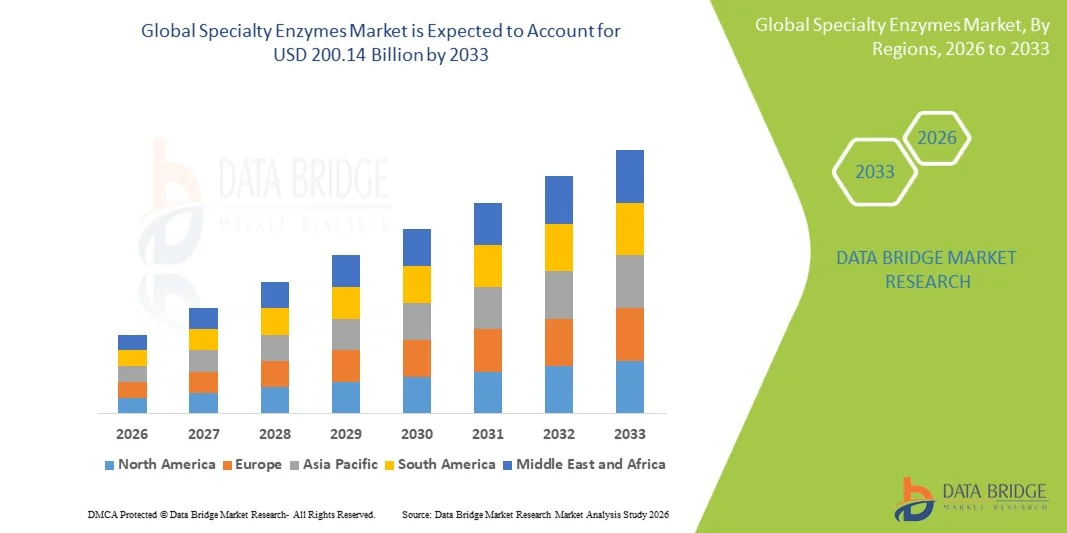
The Specialty Enzymes Market was valued at USD 97.83 billion in 2025 and is projected to reach USD 200.14 billion by 2033, growing at a CAGR of 9.36% from 2026 to 2033. The market is witnessing strong growth driven by increasing demand for enzyme-based solutions across pharmaceuticals, diagnostics, biotechnology, food processing, and industrial applications, along with continuous advancements in enzyme engineering and biocatalysis technologies.
The growing preference for sustainable and high-efficiency biological processing methods, combined with rising investments in healthcare and industrial biotechnology, is accelerating the adoption of specialty enzymes globally. Specialty enzymes are increasingly being utilized in pharmaceutical manufacturing, molecular diagnostics, personalized medicine, and food quality enhancement due to their high specificity, operational efficiency, and environmentally friendly properties. In addition, the expansion of the biopharmaceutical sector, increasing prevalence of chronic diseases, and rising focus on green chemistry and bio-based industrial production are further supporting market expansion across developed and emerging economies.
Key Market Trends & Insights
- North America dominated the specialty enzymes market with the largest revenue share of 38.6% in 2025, supported by strong biotechnology infrastructure, rising investments in biopharmaceutical production, and growing utilization of specialty enzymes in precision medicine and diagnostic testing applications.
- Asia-Pacific is expected to be the fastest-growing region, recording a CAGR of 10.8% from 2026 to 2033. Growth is driven by expanding pharmaceutical manufacturing capabilities, increasing healthcare investments, rising biotechnology research activities, and growing adoption of advanced diagnostic technologies across China, Japan, and India.
- The Polymerases segment held the largest market revenue share of approximately 21.7% in 2025 driven by its extensive utilization in PCR testing, genomic sequencing, molecular diagnostics, and biopharmaceutical research applications. Rising adoption of precision medicine, infectious disease diagnostics, and next-generation sequencing technologies continues to accelerate demand for polymerase enzymes across healthcare and biotechnology industries.
- The Proteases segment is projected to register the fastest growth at a CAGR of 10.9% from 2026 to 2033, driven by increasing applications in pharmaceutical manufacturing, protein processing, wound care formulations, and industrial biotechnology. Growing investments in biologics production and enzyme-based therapeutic development are supporting rapid segment expansion globally.
- The Liquid segment accounted for the largest market revenue share of nearly 58.4% in 2025 driven by its superior solubility, rapid reaction capability, and widespread adoption across pharmaceutical manufacturing, diagnostics, and biotechnology laboratories. Liquid formulations are preferred in high-throughput industrial and research processes due to easier handling and improved process consistency.
- The Dry segment is expected to witness the fastest CAGR of 9.8% from 2026 to 2033 driven by increasing demand for stable, long shelf-life enzyme products suitable for transportation, storage, and incorporation into powdered pharmaceutical and industrial formulations. Advancements in freeze-drying and enzyme stabilization technologies are further accelerating segment growth.
- The Microorganisms segment dominated the market with a revenue share of around 67.3% in 2025 driven by high production efficiency, scalability, cost-effectiveness, and broad applicability across pharmaceutical, food processing, and biotechnology industries. Microbial enzymes are increasingly preferred due to their higher stability, faster fermentation cycles, and ease of genetic modification for industrial-scale applications.
- The Plants segment is anticipated to register the fastest growth at a CAGR of 9.7% during the forecast period driven by increasing demand for natural and plant-based enzyme products in food processing, nutraceuticals, and sustainable biotechnology applications. Growing consumer preference for clean-label and vegan-friendly products is supporting segment expansion globally.
- The Pharmaceutical segment held the highest market revenue share of approximately 39.6% in 2025 driven by rising utilization of specialty enzymes in drug formulation, biologics manufacturing, therapeutic development, and vaccine production processes. Increasing prevalence of chronic diseases and expanding investments in advanced biopharmaceutical manufacturing are supporting strong segment demand worldwide.
- The Diagnostic segment is projected to witness the fastest CAGR of 11.2% from 2026 to 2033 driven by growing adoption of enzyme-based molecular diagnostics, PCR testing, infectious disease screening, and genomic analysis technologies. Rising global focus on early disease detection and personalized healthcare solutions is accelerating segment growth across developed and emerging healthcare markets.
Market Size & Forecast
- Global Market Value (2025): USD 97.83 Billion
- Expected Market Value (2033): USD 200.14 Billion
- Forecast CAGR (2026–2033): 9.36%
- Leading Region in 2025: North America
- Fastest Growing Region: Asia-Pacific
Report Scope and Specialty Enzymes Market Segmentation
|
Attributes |
Specialty Enzymes Key Market Insights |
|
Segments Covered |
· By Type: Acylases, Hydratases, Humulin, Oxidase, Lyases, Restriction enzymes, Ligases, Polymerases, Lipases, Amylases, Proteases, Dehydrogenases, Glucouronidse, and Others · By Form: Dry and Liquid · By Source: Microorganisms, Plants, and Animals · By Application: Pharmaceutical, Biotechnology Research and Development, Diagnostic, and Bio-Catalyst |
|
Countries Covered |
North America · U.S. · Canada · Mexico Europe · Germany · France · U.K. · Netherlands · Switzerland · Belgium · Russia · Italy · Spain · Turkey · Rest of Europe Asia-Pacific · China · Japan · India · South Korea · Singapore · Malaysia · Australia · Thailand · Indonesia · Philippines · Rest of Asia-Pacific Middle East and Africa · Saudi Arabia · U.A.E. · South Africa · Egypt · Israel · Rest of Middle East and Africa South America · Brazil · Argentina · Rest of South America |
|
Key Market Players |
• Thermo Fisher Scientific Inc. (U.S.) |
|
Market Opportunities |
• Rising Adoption Of Enzyme-Based Biopharmaceutical Manufacturing |
|
Value Added Data Infosets |
In addition to the insights on market scenarios such as market value, growth rate, segmentation, geographical coverage, and major players, the market reports curated by the Data Bridge Market Research also include depth expert analysis, patient epidemiology, pipeline analysis, pricing analysis, and regulatory framework. |
Specialty Enzymes Market Trends
Trend: Rising Adoption Of Precision Biocatalysis And Sustainable Bio-Based Manufacturing
Increasing demand for highly efficient, selective, and environmentally sustainable biological processing technologies across pharmaceutical, food processing, diagnostics, and biotechnology industries. Conventional chemical synthesis and processing methods often involve high energy consumption, toxic by-products, and complex purification stages, encouraging manufacturers to adopt specialty enzyme-based alternatives with improved process efficiency and lower environmental impact.
In modern biopharmaceutical manufacturing, companies are increasingly integrating specialty enzymes, For instance proteases, polymerases, and lipases, into drug synthesis, vaccine production, and molecular diagnostics workflows to improve reaction precision and reduce production timelines. In food and beverage processing, enzymes are being utilized to enhance product quality, extend shelf life, and optimize lactose-free and protein-modified product manufacturing while reducing raw material wastage.
The rapid expansion of personalized medicine, genomics, and advanced diagnostic testing is also increasing demand for highly specific enzymes capable of supporting rapid and accurate biomolecular analysis. In addition, industrial biotechnology companies continue investing in enzyme engineering technologies to improve thermal stability, catalytic efficiency, and substrate specificity for large-scale industrial applications. Growing commercialization of AI-assisted enzyme discovery platforms during 2025 enabled biotechnology firms to reduce specialty enzyme development timelines by nearly 30–40% for targeted pharmaceutical and industrial applications
Specialty Enzymes Market Dynamics
Key Market Driver: Expanding Demand From Biopharmaceutical And Molecular Diagnostics Industries
Healthcare and biotechnology industries worldwide are witnessing increasing pressure to improve drug manufacturing efficiency, diagnostic accuracy, and production scalability while complying with stringent regulatory standards. Specialty enzymes play a critical role in modern pharmaceutical synthesis, genomic sequencing, PCR diagnostics, and biologics manufacturing due to their ability to deliver highly selective and reproducible biochemical reactions.
Pharmaceutical and biotechnology companies are increasingly deploying specialty enzymes to support large-scale biologics production, precision medicine, and rapid diagnostic kit development to reduce operational complexity and improve product consistency. Biopharmaceutical manufacturers are actively utilizing recombinant enzymes, For instance in monoclonal antibody production and mRNA vaccine processing, to support growing global demand for advanced therapeutics and personalized healthcare solutions.
Similarly, molecular diagnostics laboratories and genomic research institutes are expanding enzyme adoption for next-generation sequencing, PCR amplification, and infectious disease detection applications to support rising testing volumes globally. Real-world investments by leading biotechnology firms in the U.S. and Europe during 2024 increased commercial enzyme manufacturing capacities by nearly 20–25% to address rising demand from biologics and diagnostic testing markets
Key Restraint/Challenge: High Production Costs And Stability Limitations
Specialty enzyme manufacturing involves complex fermentation, purification, and stabilization processes requiring advanced biotechnological infrastructure and strict quality control standards. Many enzymes also demonstrate sensitivity to temperature fluctuations, pH variations, and storage conditions, limiting operational stability in certain industrial environments and increasing handling requirements.
In addition, expensive raw materials, sophisticated bioprocessing equipment, and high research and development expenditures significantly increase overall production costs, creating affordability concerns for small-scale manufacturers and emerging biotechnology companies. Regulatory approval procedures for pharmaceutical-grade enzymes further increase commercialization timelines and compliance expenses across healthcare applications.
Commercial manufacturing assessments indicate that high-purity specialty enzyme production facilities can require capital investments exceeding USD 100 million, while certain pharmaceutical enzymes may lose more than 15–20% catalytic activity under non-optimized storage and transport conditions, increasing operational risks across global supply chains
Key Market Opportunity: Growing Integration In Personalized Medicine And Industrial Biotechnology
Modern healthcare systems, precision diagnostics platforms, and sustainable industrial manufacturing processes increasingly require highly selective biological catalysts capable of improving efficiency, scalability, and environmental performance. Conventional chemical processing methods are often energy-intensive and less compatible with advanced biologics and precision healthcare applications, creating strong demand for enzyme-based alternatives with superior specificity and reduced environmental impact.
Biotechnology and pharmaceutical companies are increasingly exploring specialty enzymes, For instance in gene therapy manufacturing, companion diagnostics, and RNA-based therapeutics, to improve production accuracy and support next-generation precision medicine initiatives. In industrial biotechnology, rising demand for sustainable processing technologies is accelerating enzyme adoption across biofuel production, biodegradable materials manufacturing, and green chemical synthesis applications.
In addition, advancements in protein engineering, synthetic biology, and AI-driven enzyme optimization platforms are improving enzyme performance characteristics, opening opportunities across pharmaceutical, food technology, and environmental biotechnology markets in Asia-Pacific and North America. Clinical-scale implementation programs conducted during 2025 reported that advanced engineered enzymes improved reaction efficiency by nearly 25–35% in selected biologics manufacturing processes while reducing processing time and chemical waste generation significantly
Specialty Enzymes Market Scope
The market is segmented on the basis of type, form, source, and application.
- By Type
On the basis of type, the specialty enzymes market is segmented into Acylases, Hydratases, Humulin, Oxidase, Lyases, Restriction Enzymes, Ligases, Polymerases, Lipases, Amylases, Proteases, Dehydrogenases, Glucouronidse, and Others. The Polymerases segment held the largest market revenue share of approximately 21.7% in 2025 driven by its extensive utilization in PCR testing, genomic sequencing, molecular diagnostics, and biopharmaceutical research applications. Rising adoption of precision medicine, infectious disease diagnostics, and next-generation sequencing technologies continues to accelerate demand for polymerase enzymes across healthcare and biotechnology industries.
The Proteases segment is projected to register the fastest growth at a CAGR of 10.9% from 2026 to 2033, driven by increasing applications in pharmaceutical manufacturing, protein processing, wound care formulations, and industrial biotechnology. Growing investments in biologics production and enzyme-based therapeutic development are supporting rapid segment expansion globally.
- By Form
On the basis of form, the specialty enzymes market is segmented into Dry and Liquid. The Liquid segment accounted for the largest market revenue share of nearly 58.4% in 2025 driven by its superior solubility, rapid reaction capability, and widespread adoption across pharmaceutical manufacturing, diagnostics, and biotechnology laboratories. Liquid formulations are preferred in high-throughput industrial and research processes due to easier handling and improved process consistency.
The Dry segment is expected to witness the fastest CAGR of 9.8% from 2026 to 2033 driven by increasing demand for stable, long shelf-life enzyme products suitable for transportation, storage, and incorporation into powdered pharmaceutical and industrial formulations. Advancements in freeze-drying and enzyme stabilization technologies are further accelerating segment growth.
- By Source
On the basis of source, the specialty enzymes market is segmented into Microorganisms, Plants, and Animals. The Microorganisms segment dominated the market with a revenue share of around 67.3% in 2025 driven by high production efficiency, scalability, cost-effectiveness, and broad applicability across pharmaceutical, food processing, and biotechnology industries. Microbial enzymes are increasingly preferred due to their higher stability, faster fermentation cycles, and ease of genetic modification for industrial-scale applications.
The Plants segment is anticipated to register the fastest growth at a CAGR of 9.7% during the forecast period driven by increasing demand for natural and plant-based enzyme products in food processing, nutraceuticals, and sustainable biotechnology applications. Growing consumer preference for clean-label and vegan-friendly products is supporting segment expansion globally.
- By Application
On the basis of application, the specialty enzymes market is segmented into Pharmaceutical, Biotechnology Research and Development, Diagnostic, and Bio-Catalyst. The Pharmaceutical segment held the highest market revenue share of approximately 39.6% in 2025 driven by rising utilization of specialty enzymes in drug formulation, biologics manufacturing, therapeutic development, and vaccine production processes. Increasing prevalence of chronic diseases and expanding investments in advanced biopharmaceutical manufacturing are supporting strong segment demand worldwide.
The Diagnostic segment is projected to witness the fastest CAGR of 11.2% from 2026 to 2033 driven by growing adoption of enzyme-based molecular diagnostics, PCR testing, infectious disease screening, and genomic analysis technologies. Rising global focus on early disease detection and personalized healthcare solutions is accelerating segment growth across developed and emerging healthcare markets.
Specialty Enzymes Market Regional Analysis
North America Specialty Enzymes Market Insight
North America dominated the specialty enzymes market with the largest revenue share of 38.6% in 2025, supported by strong biotechnology infrastructure, rising investments in biopharmaceutical manufacturing, and increasing adoption of enzyme-based diagnostics and therapeutic technologies. The region benefits from the presence of major pharmaceutical and biotechnology companies, advanced healthcare systems, and extensive research activities in genomics and precision medicine. Growing demand for sustainable bio-processing technologies and high utilization of specialty enzymes across pharmaceutical, diagnostic, and industrial biotechnology applications are further strengthening market growth across the region.
U.S. Specialty Enzymes Market Insight
The U.S. specialty enzymes market captured the largest revenue share in 2025 within North America, fueled by rapid expansion of biologics manufacturing, molecular diagnostics, and personalized medicine applications. Biotechnology companies are increasingly utilizing specialty enzymes in mRNA vaccine production, genomic sequencing, and advanced therapeutic development to improve process efficiency and product precision. The growing adoption of PCR-based diagnostics, coupled with increasing investments in synthetic biology and enzyme engineering technologies, continues to support strong market expansion. Moreover, the presence of advanced research institutions and favorable biotechnology funding initiatives is significantly contributing to industry growth.
Europe Specialty Enzymes Market Insight
The Europe specialty enzymes market is expected to witness significant growth from 2026 to 2033, primarily driven by increasing demand for sustainable industrial biotechnology solutions and expanding pharmaceutical research activities. Stringent environmental regulations encouraging green chemistry and bio-based manufacturing are accelerating enzyme adoption across food processing, healthcare, and industrial applications. European manufacturers are increasingly integrating specialty enzymes into pharmaceutical synthesis, diagnostics, and biodegradable material production to improve sustainability and operational efficiency. The region is also witnessing rising investments in biotechnology innovation and advanced life sciences research infrastructure.
U.K. Specialty Enzymes Market Insight
The U.K. specialty enzymes market is expected to witness substantial growth from 2026 to 2033, driven by increasing biotechnology research investments and growing demand for precision diagnostics and biologics manufacturing. The country’s expanding pharmaceutical and life sciences industries are encouraging greater adoption of specialty enzymes in drug development, clinical testing, and genomic sequencing applications. In addition, rising focus on sustainable manufacturing technologies and increasing collaboration between biotechnology firms and academic research institutions are expected to continue stimulating market growth.
Germany Specialty Enzymes Market Insight
The Germany specialty enzymes market is expected to witness strong growth from 2026 to 2033, fueled by increasing industrial biotechnology adoption and rising demand for advanced pharmaceutical manufacturing technologies. Germany’s well-established biotechnology and chemical industries are promoting large-scale utilization of specialty enzymes in sustainable chemical synthesis, diagnostics, and industrial bio-processing applications. The country’s emphasis on innovation, environmental sustainability, and high-quality pharmaceutical production is further supporting specialty enzyme demand across healthcare and industrial sectors.
Asia-Pacific Specialty Enzymes Market Insight
The Asia-Pacific specialty enzymes market is expected to witness the fastest growth rate from 2026 to 2033, supported by rapid expansion of pharmaceutical manufacturing, increasing healthcare investments, and growing biotechnology research activities in countries such as China, Japan, and India. Rising demand for advanced diagnostics, biologics production, and sustainable industrial processing technologies is accelerating enzyme adoption across the region. Furthermore, expanding government support for biotechnology innovation and increasing local manufacturing capabilities are improving accessibility and affordability of specialty enzyme products across emerging Asia-Pacific economies.
Japan Specialty Enzymes Market Insight
The Japan specialty enzymes market is expected to witness strong growth from 2026 to 2033 due to the country’s advanced biotechnology sector, growing aging population, and increasing demand for precision healthcare solutions. Japanese pharmaceutical and diagnostic companies are increasingly integrating specialty enzymes into genomic testing, biologics production, and molecular diagnostics applications to improve healthcare efficiency and diagnostic accuracy. In addition, the country’s strong focus on research innovation and high adoption of advanced medical technologies are supporting continued market expansion.
China Specialty Enzymes Market Insight
The China specialty enzymes market accounted for the largest market revenue share in Asia Pacific in 2025, attributed to the country’s rapidly expanding biopharmaceutical industry, rising healthcare expenditures, and strong biotechnology manufacturing capabilities. China has emerged as a major production hub for enzyme-based pharmaceutical ingredients, diagnostics, and industrial biotechnology products, supported by increasing domestic investments and government-led biotechnology development initiatives. The growing adoption of molecular diagnostics, large-scale biologics manufacturing, and sustainable industrial processing technologies is further propelling market growth across China.
Specialty Enzymes Market Share
The Specialty Enzymes industry is primarily led by well-established companies, including:
• Thermo Fisher Scientific Inc. (U.S.)
• BBI Solutions (U.K.)
• NAGASE & CO., LTD. (Japan)
• Advanced Enzyme Technologies (India)
• F. Hoffmann-La Roche Ltd (Switzerland)
• Sanofi (France)
• Codexis (U.S.)
• Amano Enzyme Inc. (Japan)
• BASF SE (Germany)
• DSM (Netherlands)
• DuPont (U.S.)
• AB Enzymes (Germany)
• Novozymes (Denmark)
• Chr. Hansen Holding A/S (Denmark)
• Soufflet (France)
• Shandong Longda Bio-Products Co., Ltd. (China)
• Specialty Enzymes & Probiotics (U.S.)
• Biovet Private Limited. (India)
• Aum Enzymes (India)
• Ultra Bio-Logics Inc. (U.S.)
• Advanced Enzyme Technologies (India)
Latest Developments in Specialty Enzymes Market
- In January 2021, Advanced Enzyme Technologies Limited acquired a 51% controlling stake in SciTech Specialties Private Limited, a company specializing in animal health, pharmaceuticals, and nutraceuticals, to strengthen its specialty product portfolio and expand effervescent technology capabilities. The acquisition enabled the company to diversify its enzyme-based healthcare offerings and enhance its formulation expertise across pharmaceutical and nutraceutical applications. Through this strategic investment, Advanced Enzyme Technologies also aimed to improve market penetration in the rapidly growing health and wellness sector. The integration of SSPL’s manufacturing capabilities and specialized product technologies further supported the company’s long-term expansion strategy within the specialty enzymes market
- In March 2021, Univar Solutions Inc. and Novozymes expanded their strategic partnership across the U.S. and Canada to strengthen enzyme distribution capabilities in homecare, industrial cleaning, and beverage applications. The collaboration focused on improving customer access to sustainable biological solutions and expanding the commercial reach of Novozymes’ enzyme portfolio in North America. Both companies emphasized the growing demand for eco-friendly cleaning formulations and energy-efficient industrial processing technologies supported by enzyme innovation. The partnership also enhanced technical support, supply chain efficiency, and customized formulation capabilities for industrial and consumer product manufacturers
- In October 2024, Novo Nordisk Pharmatech introduced TrypsiNNex, a new recombinant enzyme designed for pharmaceutical manufacturing applications, strengthening the company’s specialty enzymes portfolio and supporting bioprocessing efficiency improvements. The recombinant enzyme was developed to enhance consistency, purity, and scalability across biologics manufacturing and advanced pharmaceutical processing operations. The launch reflected increasing industry demand for high-performance enzymes capable of supporting next-generation therapeutic production and precision bioprocessing requirements. The company also focused on improving regulatory compliance and manufacturing reliability for pharmaceutical customers utilizing enzyme-assisted production systems
- In May 2024, Biocatalysts Ltd launched two advanced protease enzymes for efficient hydrolysis of extracted collagen, enabling production of neutral-tasting and low molecular weight collagen peptides with improved processing performance. The newly introduced enzymes were specifically engineered to enhance collagen extraction efficiency while reducing bitterness, unwanted coloration, and processing time during peptide production. The launch supported rising global demand for collagen-based nutraceuticals, functional foods, and beauty supplements. The company also highlighted the enzymes’ ability to improve yield optimization and production consistency for food and nutraceutical manufacturers operating at commercial scale
- In March 2025, Novonesis introduced Progress Beyond and Progress Go, a protease enzyme portfolio for liquid laundry detergents designed to improve removal efficiency of protein-based stains during quick-wash and cold-water cycles. The product portfolio was developed to support growing consumer demand for energy-efficient and environmentally sustainable laundry solutions with lower water and electricity consumption. The advanced enzyme formulations improved stain removal performance for substances such as blood, dairy, and eggs without requiring high-temperature wash cycles. Novonesis also emphasized the compatibility of these enzymes with modern concentrated detergent formulations and evolving sustainable homecare product standards
- In October 2024, AB Enzymes launched VERON POLARUM, a specialized baking lipase for butter-rich dough applications such as croissants, brioche, and panettone, improving dough strength, crumb structure, and flavor stability. The enzyme was engineered to optimize polar lipid conversion while minimizing affinity toward short-chain fatty acids that can negatively impact flavor quality in premium baked products. The launch addressed increasing demand from industrial bakeries for high-quality enzyme solutions capable of improving texture, consistency, and shelf stability in laminated dough products. The company also focused on supporting clean-label bakery formulations and reducing dependency on chemical dough improvers across commercial baking operations
- In September 2024, Biocatalysts Ltd introduced Lipomod™ 70MDP, a lipase enzyme developed for plant-based oil hydrolysis applications in the oleochemicals industry to improve glycerol and fatty acid production efficiency. The enzyme was specifically designed to support sustainable industrial manufacturing processes across food processing, biofuel production, and specialty chemical applications. The launch reflected increasing industry demand for bio-based processing technologies capable of improving reaction efficiency while reducing operational waste and energy consumption. Biocatalysts also highlighted the enzyme’s suitability for high-throughput industrial operations requiring improved hydrolysis performance and process scalability
- In May 2024, Biocatalysts Ltd launched Promod™ 327L and Promod™ 295L protease enzymes for collagen peptide manufacturing, improving extraction yield, reducing processing time, and minimizing unwanted coloration and flavor formation. These enzyme solutions were developed to address growing demand for premium collagen ingredients across nutraceutical, functional beverage, and cosmetic applications. The products enabled manufacturers to achieve more efficient hydrolysis of collagen substrates while maintaining desirable sensory characteristics and product consistency. The launch further strengthened Biocatalysts Ltd’s position in specialty food enzyme innovation and advanced protein processing technologies for commercial-scale manufacturing applications
SKU-
Get online access to the report on the World's First Market Intelligence Cloud

- Interactive Data Analysis Dashboard
- Company Analysis Dashboard for high growth potential opportunities
- Research Analyst Access for customization & queries
- Competitor Analysis with Interactive dashboard
- Latest News, Updates & Trend analysis
- Harness the Power of Benchmark Analysis for Comprehensive Competitor Tracking
Research Methodology
Data collection and base year analysis are done using data collection modules with large sample sizes. The stage includes obtaining market information or related data through various sources and strategies. It includes examining and planning all the data acquired from the past in advance. It likewise envelops the examination of information inconsistencies seen across different information sources. The market data is analysed and estimated using market statistical and coherent models. Also, market share analysis and key trend analysis are the major success factors in the market report. To know more, please request an analyst call or drop down your inquiry.
The key research methodology used by DBMR research team is data triangulation which involves data mining, analysis of the impact of data variables on the market and primary (industry expert) validation. Data models include Vendor Positioning Grid, Market Time Line Analysis, Market Overview and Guide, Company Positioning Grid, Patent Analysis, Pricing Analysis, Company Market Share Analysis, Standards of Measurement, Global versus Regional and Vendor Share Analysis. To know more about the research methodology, drop in an inquiry to speak to our industry experts.
Customization Available
Data Bridge Market Research is a leader in advanced formative research. We take pride in servicing our existing and new customers with data and analysis that match and suits their goal. The report can be customized to include price trend analysis of target brands understanding the market for additional countries (ask for the list of countries), clinical trial results data, literature review, refurbished market and product base analysis. Market analysis of target competitors can be analyzed from technology-based analysis to market portfolio strategies. We can add as many competitors that you require data about in the format and data style you are looking for. Our team of analysts can also provide you data in crude raw excel files pivot tables (Fact book) or can assist you in creating presentations from the data sets available in the report.












