




Global Sperm Separation System Market
Market Size in USD Billion
CAGR :
% 
 USD
6.90 Billion
USD
10.28 Billion
2025
2033
USD
6.90 Billion
USD
10.28 Billion
2025
2033
 Forecast Period Forecast Period |
2026 –2033 |
 Market Size (Base Year) Market Size (Base Year) |
USD 6.90 Billion |
 Market Size (Forecast Year) Market Size (Forecast Year) |
USD 10.28 Billion |
 CAGR CAGR |
% |
| Major Markets Players |
|
Sperm Separation System Market Size
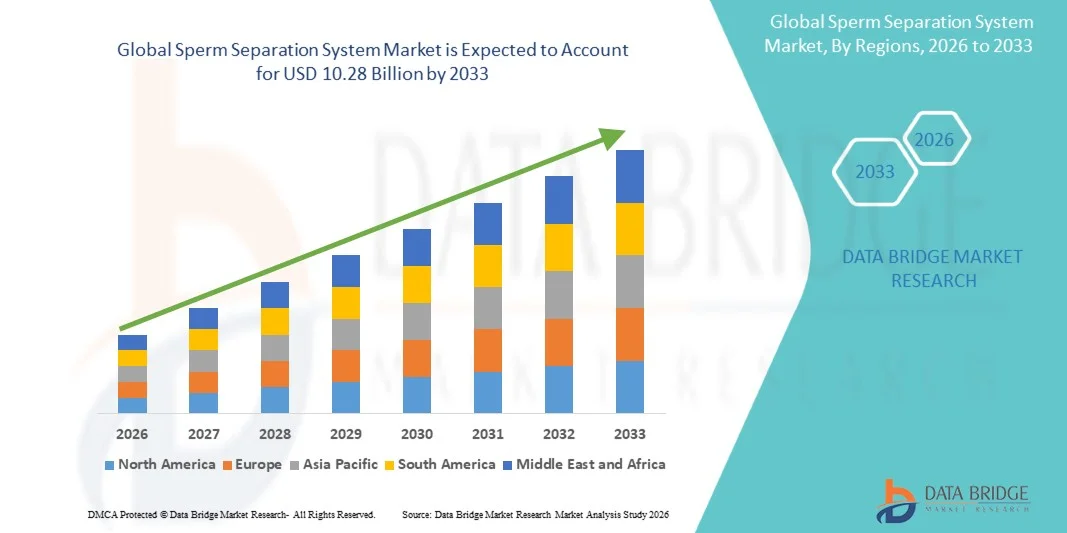
- The global sperm separation system market size was valued at USD 6.90 billion in 2025 and is expected to reach USD 10.28 billion by 2033, at a CAGR of 5.11% during the forecast period
- The market growth is largely fueled by the rising prevalence of infertility worldwide and the increasing use of assisted reproductive technologies (ART) such as in vitro fertilization (IVF) and intrauterine insemination (IUI), which rely heavily on advanced sperm separation and preparation techniques
- Furthermore, growing awareness about fertility treatments, improvements in sperm selection technologies such as microfluidic sperm sorting and density gradient methods, and expanding fertility clinics globally are establishing sperm separation systems as essential tools in modern reproductive medicine. These converging factors are accelerating the adoption of sperm separation technologies, thereby significantly boosting the industry's growth
Sperm Separation System Market Analysis
- Sperm separation systems, designed to isolate highly motile and structurally healthy sperm cells for use in assisted reproductive procedures, are increasingly vital components of modern fertility treatment processes in fertility clinics, hospitals, and research laboratories due to their ability to improve fertilization efficiency and enhance reproductive outcomes
- The escalating demand for sperm separation systems is primarily fueled by the rising global prevalence of infertility, increasing adoption of assisted reproductive technologies (ART) such as IVF and IUI, and growing awareness about advanced fertility treatment solutions among couples seeking fertility assistance
- North America dominated the sperm separation system market with the largest revenue share of 37.85% in 2025, characterized by advanced healthcare infrastructure, high utilization of assisted reproductive technologies, and a strong presence of leading fertility clinics and biotechnology companies, with the U.S. witnessing notable growth in fertility procedures supported by technological innovations and favorable healthcare services
- Asia-Pacific is expected to be the fastest growing region in the sperm separation system market during the forecast period due to increasing infertility rates, expanding fertility treatment centers, improving healthcare infrastructure, and rising awareness regarding reproductive health services in emerging economies
- Microfluidic segment dominated the sperm separation system market with a market share of 39.4% in 2025, driven by its ability to efficiently sort high-quality sperm with minimal damage, improved accuracy, and increasing adoption in advanced fertility laboratories
Report Scope and Sperm Separation System Market Segmentation
|
Attributes |
Sperm Separation System Key Market Insights |
|
Segments Covered |
|
|
Countries Covered |
North America
Europe
Asia-Pacific
Middle East and Africa
South America
|
|
Key Market Players |
|
|
Market Opportunities |
|
|
Value Added Data Infosets |
In addition to the insights on market scenarios such as market value, growth rate, segmentation, geographical coverage, and major players, the market reports curated by the Data Bridge Market Research also include in-depth expert analysis, patient epidemiology, pipeline analysis, pricing analysis, and regulatory framework |
Sperm Separation System Market Trends
“Advancements in Microfluidic Technology for Precise Sperm Selection”
- A significant and accelerating trend in the global sperm separation system market is the increasing adoption of advanced microfluidic technologies that enable precise, non-invasive sorting of highly motile and morphologically healthy sperm cells for assisted reproductive procedures. This integration of innovative laboratory technologies is significantly improving the efficiency and accuracy of sperm selection in fertility treatments
- For instance, microfluidic-based sperm sorting platforms developed by companies such as CooperSurgical and Hamilton Thorne Ltd. allow laboratories to isolate high-quality sperm without the mechanical stress associated with traditional centrifugation techniques. Similarly, advanced sperm separation devices utilize microchannel structures that mimic natural reproductive pathways to improve the selection of viable sperm cells
- Microfluidic integration in sperm separation systems enables features such as improved sperm motility selection, reduced DNA fragmentation risk, and minimal cellular damage during processing. For instance, some advanced microfluidic platforms guide sperm cells through precisely engineered channels, allowing only the most motile and structurally healthy sperm to reach the collection chamber for fertilization procedures. Furthermore, these technologies offer higher consistency and efficiency compared with conventional methods used in fertility laboratories
- The seamless integration of advanced sperm separation systems with modern fertility laboratory workflows facilitates improved handling of reproductive samples and supports more accurate preparation for procedures such as IVF and IUI. Through automated or semi-automated systems, laboratory professionals can perform sperm selection more efficiently while maintaining high laboratory standards and improving clinical outcomes
- This trend toward more precise, automated, and laboratory-friendly sperm selection technologies is fundamentally reshaping expectations in reproductive medicine. Consequently, companies such as Hamilton Thorne Ltd. are developing advanced sperm separation systems that emphasize microfluidic technology, improved sperm quality selection, and compatibility with modern assisted reproductive laboratory practices
- The demand for sperm separation systems that offer higher precision, reduced processing time, and improved reproductive outcomes is growing rapidly across fertility clinics and research laboratories, as healthcare providers increasingly prioritize advanced laboratory technologies to enhance assisted reproductive treatment success rates
- In addition, increasing research activities in reproductive biology and fertility preservation are encouraging the development of innovative sperm sorting technologies, further supporting the adoption of advanced sperm separation systems in both clinical and research environments
Sperm Separation System Market Dynamics
Driver
“Growing Demand Due to Rising Infertility Rates and Expanding Assisted Reproductive Technologies”
- The increasing prevalence of infertility among couples worldwide, coupled with the expanding adoption of assisted reproductive technologies, is a significant driver for the heightened demand for sperm separation systems
- For instance, in June 2024, CooperSurgical expanded its fertility laboratory solutions portfolio by strengthening its assisted reproductive technology offerings, focusing on improving laboratory efficiency and reproductive outcomes. Such strategies by key companies are expected to drive the sperm separation system industry growth in the forecast period
- As infertility awareness increases and more couples seek medical assistance for conception, sperm separation systems play a crucial role in identifying the most viable sperm cells, thereby improving fertilization success rates and supporting more effective reproductive treatments
- Furthermore, the growing number of fertility clinics and specialized reproductive centers across developed and emerging economies is making advanced sperm preparation technologies an essential component of fertility laboratory infrastructure
- The increasing use of IVF, IUI, and other assisted reproductive techniques, along with improvements in reproductive medicine and diagnostic capabilities, is significantly propelling the adoption of sperm separation systems in clinical and research settings. The trend toward advanced fertility treatment solutions and improved reproductive healthcare access further contributes to market growth
- Rising government initiatives and healthcare investments aimed at supporting fertility treatment services are further strengthening the adoption of advanced reproductive technologies, including sperm separation systems
- In addition, growing public awareness regarding male infertility diagnostics and treatment is encouraging early fertility evaluation and increasing the demand for advanced sperm preparation technologies in fertility laboratories
Restraint/Challenge
“High Cost of Advanced Fertility Technologies and Limited Accessibility in Developing Regions”
- Concerns surrounding the high cost of advanced fertility technologies, including specialized sperm separation systems and associated laboratory equipment, pose a significant challenge to broader market penetration. As fertility treatments can be expensive, many potential patients face financial barriers when accessing assisted reproductive services
- For instance, fertility treatment procedures such as IVF often require multiple laboratory processes and specialized devices, increasing overall treatment expenses and limiting affordability for patients in several regions
- Addressing these cost-related concerns through improved healthcare reimbursement policies, technological cost reductions, and expanded fertility treatment awareness programs is crucial for improving accessibility. Companies such as CooperSurgical and Hamilton Thorne Ltd. emphasize developing efficient laboratory systems and scalable fertility technologies to support wider adoption among fertility clinics. In addition, limited availability of specialized reproductive healthcare facilities in certain developing regions can restrict access to advanced sperm separation technologies
- While the number of fertility clinics is gradually increasing globally, many regions still face shortages of trained embryologists and advanced laboratory infrastructure required for sophisticated sperm preparation techniques
- Overcoming these challenges through improved healthcare infrastructure, expanded fertility treatment coverage, professional training programs for reproductive specialists, and the development of cost-effective sperm separation systems will be vital for sustained market growth
- Regulatory complexities related to fertility treatments and reproductive laboratory equipment approvals in certain countries may also slow the introduction of innovative sperm separation technologies into clinical practice
- In addition, limited awareness about advanced sperm selection technologies among patients and smaller fertility clinics can hinder the adoption of modern sperm separation systems in some emerging markets
Sperm Separation System Market Scope
The market is segmented on the basis of tube type, tube size, technology, and end use.
- By Tube Type
On the basis of tube type, the sperm separation system market is segmented into standard, oblique, and coil. The standard tube segment dominated the market with the largest market revenue share in 2025, primarily due to its widespread use in conventional sperm preparation techniques across fertility laboratories. Standard tubes are commonly utilized in procedures such as density gradient centrifugation and washing methods, making them a familiar and reliable option for embryologists and laboratory technicians. Their compatibility with commonly used laboratory centrifuges and equipment further strengthens their adoption in fertility clinics and hospitals. In addition, standard tubes are cost-effective and easy to handle, which supports their extensive usage in routine sperm processing workflows. Many fertility centers prefer standard tubes due to their proven efficiency and consistent laboratory performance. As assisted reproductive procedures continue to grow globally, the demand for standard tube systems is expected to remain strong.
The oblique tube segment is anticipated to witness the fastest growth rate during the forecast period, driven by increasing interest in improved sperm sorting efficiency and laboratory workflow optimization. Oblique tubes are designed to facilitate more efficient separation of motile sperm cells by improving the angle and flow of sperm migration during processing. These tubes help minimize contamination from immotile sperm and debris, leading to higher-quality sperm samples for fertilization procedures. Fertility laboratories are increasingly adopting oblique tube designs to enhance the accuracy and consistency of sperm preparation techniques. Furthermore, advancements in reproductive laboratory technologies are encouraging the development of specialized tube structures such as oblique tubes. The increasing emphasis on improving fertilization outcomes and laboratory efficiency is expected to accelerate the growth of this segment.
- By Tube Size
On the basis of tube size, the sperm separation system market is segmented into small, medium, and large. The medium tube size segment dominated the market with the largest revenue share in 2025, primarily because it offers an optimal balance between sample handling capacity and laboratory efficiency. Medium-sized tubes are widely used in fertility clinics for routine sperm preparation procedures, including IVF and IUI treatments. Their moderate capacity allows laboratory technicians to process sperm samples efficiently without compromising separation accuracy. In addition, medium tubes are compatible with standard laboratory centrifuges and sperm preparation systems commonly used in reproductive medicine laboratories. The convenience and practicality of medium-sized tubes make them the preferred option for a wide range of fertility procedures. Their adaptability to various sperm processing techniques further strengthens their dominance in the market. As fertility clinics continue to expand their treatment volumes, the demand for medium-sized tubes remains consistently strong.
The small tube size segment is expected to witness the fastest growth rate during the forecast period, driven by the increasing use of advanced microfluidic sperm sorting technologies. Small tubes are particularly useful for handling limited-volume samples and for highly precise sperm selection procedures in advanced reproductive laboratories. Their compact design allows better control of sperm flow and separation, especially in microfluidic-based systems. Fertility specialists are increasingly utilizing smaller tubes for specialized fertility treatments that require higher accuracy and minimal sample loss. In addition, the growing adoption of miniaturized laboratory devices and microfluidic platforms is supporting the demand for smaller tube sizes. These tubes also help reduce reagent usage and improve laboratory efficiency. As reproductive technologies become more advanced and precise, the adoption of small-sized tubes is expected to increase significantly.
- By Technology
On the basis of technology, the sperm separation system market is segmented into microfluidic and photonic. The microfluidic technology segment dominated the market with the largest revenue share of 39.4% in 2025, driven by its ability to perform highly precise and non-invasive sperm sorting. Microfluidic systems mimic natural sperm selection processes by allowing only the most motile and healthy sperm cells to navigate through microchannels. This method reduces mechanical stress on sperm compared to traditional centrifugation-based techniques, helping preserve sperm integrity and DNA quality. Fertility clinics increasingly prefer microfluidic technology because it improves fertilization outcomes and reduces the risk of sperm damage during processing. In addition, microfluidic platforms offer enhanced accuracy and reproducibility in sperm selection procedures. Their compatibility with advanced assisted reproductive technologies further supports their widespread adoption. As fertility laboratories seek more efficient and reliable sperm preparation methods, microfluidic technology continues to dominate the market.
The photonic technology segment is anticipated to witness the fastest growth rate during the forecast period, supported by increasing research and development in advanced sperm analysis and sorting technologies. Photonic systems utilize optical or laser-based techniques to identify and separate sperm cells based on their physical and biological characteristics. These technologies enable highly accurate evaluation of sperm quality, including motility, morphology, and viability. Researchers and fertility specialists are increasingly exploring photonic technologies for improved sperm diagnostics and separation processes. The integration of photonic technologies with advanced imaging systems and artificial intelligence is further enhancing their potential in reproductive medicine. In addition, ongoing innovations in biomedical optics are encouraging the development of next-generation sperm separation devices. As research institutions and fertility laboratories invest in advanced reproductive technologies, the photonic segment is expected to grow rapidly.
- By End Use
On the basis of end use, the sperm separation system market is segmented into fertility clinics and surgical centres, hospitals and research laboratories, and cryobanks. The fertility clinics and surgical centres segment dominated the market with the largest revenue share in 2025, primarily due to the high volume of assisted reproductive procedures performed in these facilities. Fertility clinics are the primary users of sperm separation systems, as these devices are essential for preparing sperm samples for IVF, IUI, and other fertility treatments. The increasing number of specialized fertility centers worldwide is further driving the demand for advanced sperm preparation technologies. These clinics rely on efficient sperm separation systems to improve fertilization success rates and enhance patient outcomes. In addition, fertility clinics continuously adopt advanced laboratory technologies to remain competitive and deliver improved treatment results. The rising prevalence of infertility and the growing demand for fertility services are strengthening the dominance of this segment.
The cryobanks segment is expected to witness the fastest growth rate during the forecast period, driven by the increasing demand for fertility preservation and sperm banking services. Cryobanks store and preserve sperm samples for future reproductive use, requiring high-quality sperm preparation before cryopreservation. The rising awareness of fertility preservation among individuals undergoing medical treatments such as chemotherapy is contributing to the growth of sperm banking services. Furthermore, the growing acceptance of assisted reproduction and donor sperm programs is expanding the role of cryobanks globally. Advanced sperm separation systems are increasingly being used to ensure the quality and viability of sperm samples before freezing and storage. The expansion of fertility preservation services and reproductive health programs is also supporting this segment’s growth. As more individuals seek long-term reproductive planning options, the cryobank segment is expected to expand significantly.
Sperm Separation System Market Regional Analysis
- North America dominated the sperm separation system market with the largest revenue share of 37.85% in 2025, characterized by advanced healthcare infrastructure, high utilization of assisted reproductive technologies, and a strong presence of leading fertility clinics and biotechnology companies
- Fertility specialists and healthcare institutions in the region highly value the efficiency, precision, and improved reproductive outcomes offered by advanced sperm separation systems in procedures such as IVF and intrauterine insemination
- This widespread adoption is further supported by advanced healthcare infrastructure, a strong presence of fertility clinics and reproductive research laboratories, and increasing awareness of fertility treatments, establishing sperm separation systems as essential laboratory tools in modern reproductive medicine for both clinical and research applications
U.S. Sperm Separation System Market Insight
The U.S. sperm separation system market captured the largest revenue share of 79% in 2025 within North America, fueled by the rising prevalence of infertility and the increasing adoption of assisted reproductive technologies such as IVF and intrauterine insemination. Fertility clinics and reproductive health centers across the country are increasingly investing in advanced sperm preparation technologies to improve treatment outcomes. The growing number of fertility clinics, along with increasing awareness of reproductive health services, further propels the sperm separation system industry. Moreover, continuous technological advancements in microfluidic sperm sorting systems and laboratory automation are significantly contributing to the market's expansion.
Europe Sperm Separation System Market Insight
The Europe sperm separation system market is projected to expand at a substantial CAGR throughout the forecast period, primarily driven by growing awareness regarding fertility treatments and the increasing demand for assisted reproductive technologies. The rise in delayed parenthood and lifestyle-related infertility is fostering the adoption of advanced sperm separation technologies. European healthcare institutions and fertility centers are also investing in modern reproductive laboratory equipment to improve fertilization success rates. The region is experiencing significant growth across fertility clinics, hospitals, and reproductive research laboratories, with sperm separation systems being increasingly integrated into modern assisted reproduction procedures.
U.K. Sperm Separation System Market Insight
The U.K. sperm separation system market is anticipated to grow at a noteworthy CAGR during the forecast period, driven by the rising demand for fertility treatments and the increasing awareness regarding reproductive health. In addition, the growing number of fertility clinics and supportive healthcare services are encouraging individuals and couples to seek advanced reproductive technologies. The country’s strong healthcare infrastructure and emphasis on reproductive research are expected to continue to stimulate market growth. Increasing adoption of innovative sperm preparation techniques is also contributing to the development of the sperm separation system market in the United Kingdom.
Germany Sperm Separation System Market Insight
The Germany sperm separation system market is expected to expand at a considerable CAGR during the forecast period, fueled by increasing research activities in reproductive medicine and the demand for technologically advanced fertility treatment solutions. Germany’s well-developed healthcare infrastructure, combined with its strong focus on medical innovation and biotechnology development, promotes the adoption of advanced sperm separation technologies in fertility clinics and hospitals. The integration of modern laboratory equipment with assisted reproductive technologies is also becoming increasingly prevalent, with healthcare providers prioritizing high-quality sperm selection techniques to improve treatment success rates.
Asia-Pacific Sperm Separation System Market Insight
The Asia-Pacific sperm separation system market is poised to grow at the fastest CAGR of 8.4% during the forecast period of 2026 to 2033, driven by increasing infertility rates, rising healthcare awareness, and expanding fertility treatment services in countries such as China, Japan, and India. The region's growing demand for assisted reproductive technologies, supported by improving healthcare infrastructure and medical tourism, is driving the adoption of sperm separation systems. Furthermore, as Asia-Pacific emerges as a key region for reproductive healthcare development, the availability of modern fertility clinics and advanced laboratory technologies is expanding access to fertility treatments for a broader population base.
Japan Sperm Separation System Market Insight
The Japan sperm separation system market is gaining momentum due to the country’s advanced healthcare system, growing aging population, and increasing demand for fertility support services. The Japanese healthcare sector places strong emphasis on reproductive health research, and the adoption of sperm separation technologies is driven by the increasing use of assisted reproductive procedures. The integration of advanced laboratory technologies with fertility treatment programs is fueling growth. Moreover, Japan's declining birth rate is likely to spur demand for improved fertility solutions, including advanced sperm preparation and separation technologies in both clinical and research environments.
India Sperm Separation System Market Insight
The India sperm separation system market accounted for the largest market revenue share in Asia Pacific in 2025, attributed to the country's growing population, increasing infertility cases, and expanding fertility clinic networks. India stands as one of the rapidly growing markets for assisted reproductive technologies, and sperm separation systems are becoming increasingly important in fertility clinics and reproductive laboratories. The push towards improved healthcare services and the rising awareness regarding fertility treatments, alongside the development of advanced fertility centers, are key factors propelling the market in India.
Sperm Separation System Market Share
The Sperm Separation System industry is primarily led by well-established companies, including:
- Hamilton Thorne Inc. (U.S.)
- CooperSurgical, Inc. (U.S.)
- Merck KGaA (Germany)
- Promega Corporation (U.S.)
- Menicon Co., Ltd. (Japan)
- Nidacon International AB (Sweden)
- Memphasys Limited (Australia)
- Bonraybio Co., Ltd. (Taiwan)
- SAR Healthline Pvt Ltd. (India)
- Sperm Processor Pvt. Ltd. (India)
- DxNow, Inc. (U.S.)
- Genea Biomedx Pty Ltd (Australia)
- FUJIFILM Irvine Scientific, Inc. (U.S.)
- IVFtech ApS (Denmark)
- Proiser R+D, S.L. (Spain)
- Microptic S.L. (Spain)
- Gynotec s.r.o. (Czech Republic)
- Zander Scientific, Inc. (U.S.)
- IVF Bioscience Ltd (U.K.)
- Micronit Microtechnologies B.V. (Netherlands)
What are the Recent Developments in Global Sperm Separation System Market?
- In December 2025, IVFmicro, a fertility technology spin-out from the University of Leeds, secured £3.5 million in funding to further develop its innovative microfluidic device designed to improve assisted reproduction procedures. The device mimics the natural reproductive environment using micro-channels to better handle embryos and reproductive cells during IVF procedures
- In February 2025, Melbourne IVF announced results from a study evaluating a new sperm sorting device designed to select healthier sperm cells for fertilization procedures. The technology aims to isolate sperm with improved motility and genetic integrity, which can significantly increase the chances of successful IVF treatment. Researchers indicated that using advanced sperm sorting technologies may help couples with male-factor infertility improve fertilization success rates
- In October 2024, Hamilton Thorne announced a partnership with Alife Health to integrate advanced artificial intelligence technologies into IVF laboratory systems. The collaboration aims to improve embryo and reproductive cell evaluation through AI-driven analysis integrated into fertility laboratory equipment. Such integration of AI with laboratory technologies supports more accurate reproductive cell assessment and enhances the efficiency of assisted reproductive procedures
- In January 2023, researchers reported the development of a microfluidic device featuring parallel microchannels designed to isolate motile sperm cells for assisted reproductive treatments. The technology mimics natural reproductive conditions to allow healthy sperm to migrate through microchannels while separating them from immotile or damaged cells
- In March 2022, engineering researchers at Florida Atlantic University developed an inexpensive microfluidic chip designed to separate healthy sperm based on their natural ability to swim against fluid flow. The device efficiently isolates motile sperm while reducing contamination from non-viable or abnormal sperm cells. Researchers highlighted that the technology is easy to operate and suitable for assisted reproduction laboratories seeking affordable sperm selection methods
SKU-
Get online access to the report on the World's First Market Intelligence Cloud

- Interactive Data Analysis Dashboard
- Company Analysis Dashboard for high growth potential opportunities
- Research Analyst Access for customization & queries
- Competitor Analysis with Interactive dashboard
- Latest News, Updates & Trend analysis
- Harness the Power of Benchmark Analysis for Comprehensive Competitor Tracking
Research Methodology
Data collection and base year analysis are done using data collection modules with large sample sizes. The stage includes obtaining market information or related data through various sources and strategies. It includes examining and planning all the data acquired from the past in advance. It likewise envelops the examination of information inconsistencies seen across different information sources. The market data is analysed and estimated using market statistical and coherent models. Also, market share analysis and key trend analysis are the major success factors in the market report. To know more, please request an analyst call or drop down your inquiry.
The key research methodology used by DBMR research team is data triangulation which involves data mining, analysis of the impact of data variables on the market and primary (industry expert) validation. Data models include Vendor Positioning Grid, Market Time Line Analysis, Market Overview and Guide, Company Positioning Grid, Patent Analysis, Pricing Analysis, Company Market Share Analysis, Standards of Measurement, Global versus Regional and Vendor Share Analysis. To know more about the research methodology, drop in an inquiry to speak to our industry experts.
Customization Available
Data Bridge Market Research is a leader in advanced formative research. We take pride in servicing our existing and new customers with data and analysis that match and suits their goal. The report can be customized to include price trend analysis of target brands understanding the market for additional countries (ask for the list of countries), clinical trial results data, literature review, refurbished market and product base analysis. Market analysis of target competitors can be analyzed from technology-based analysis to market portfolio strategies. We can add as many competitors that you require data about in the format and data style you are looking for. Our team of analysts can also provide you data in crude raw excel files pivot tables (Fact book) or can assist you in creating presentations from the data sets available in the report.












