Global Spina Bifida Treatment Market
Market Size in USD Billion
CAGR :
% 
 USD
3.34 Billion
USD
6.36 Billion
2025
2033
USD
3.34 Billion
USD
6.36 Billion
2025
2033
 Forecast Period Forecast Period |
2026 –2033 |
 Market Size (Base Year) Market Size (Base Year) |
USD 3.34 Billion |
 Market Size (Forecast Year) Market Size (Forecast Year) |
USD 6.36 Billion |
 CAGR CAGR |
% |
| Major Markets Players |
|
Spina Bifida Treatment Market Size
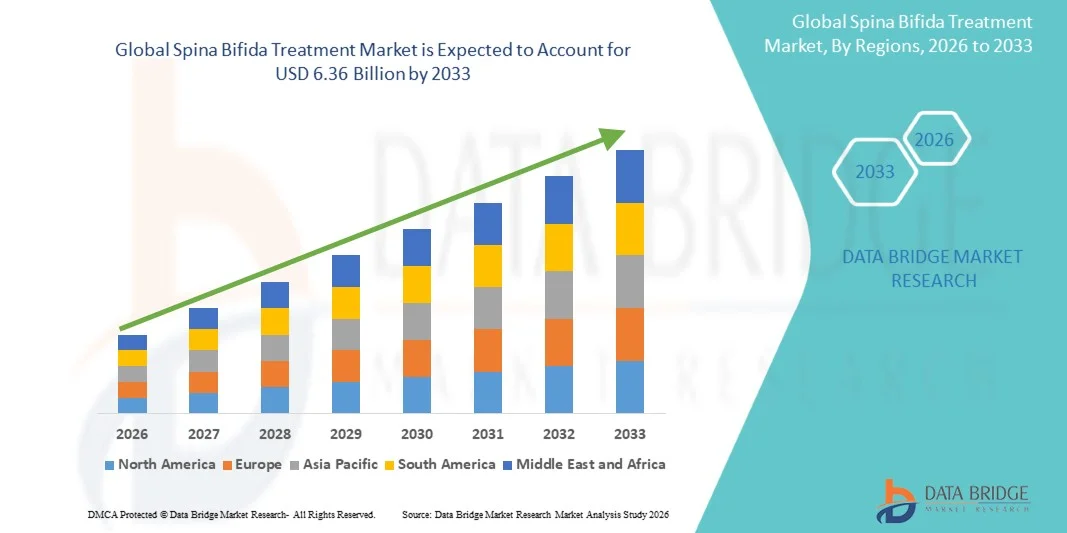
- The global spina bifida treatment market size was valued at USD 3.34 billion in 2025and is expected to reach USD 6.36 billion by 2033, at a CAGR of 8.40% during the forecast period
- The market growth is largely fueled by the increasing prevalence of neural tube defects, rising awareness regarding early prenatal diagnosis, and advancements in surgical and postnatal care, leading to improved treatment outcomes for Spina Bifida patients
- Furthermore, growing adoption of multidisciplinary treatment approaches, increasing availability of advanced rehabilitation therapies, and rising healthcare investments in congenital disorder management are establishing Spina Bifida treatment solutions as essential components of modern pediatric and neurological care. These converging factors are accelerating the uptake of Spina Bifida Treatment solutions, thereby significantly boosting the industry's growth
Spina Bifida Treatment Market Analysis
- Spina Bifida treatment solutions, including surgical repair procedures, physical rehabilitation therapies, assistive devices, and multidisciplinary long-term care approaches, are increasingly vital components of modern pediatric and neurological healthcare systems due to their role in improving mobility, neurological function, and overall quality of life in affected patients
- The escalating demand for Spina Bifida treatment is primarily fueled by rising incidence of neural tube defects, growing awareness regarding prenatal screening and early diagnosis, and increasing adoption of advanced surgical and rehabilitation technologies for improved patient outcomes
- North America dominated the spina bifida treatment market with the largest revenue share of 41.2% in 2025, characterized by advanced healthcare infrastructure, strong neonatal screening programs, and high adoption of advanced surgical and rehabilitation care, with the U.S. experiencing substantial growth in Spina Bifida treatment procedures driven by rising healthcare expenditure and improved access to specialized pediatric care services
- Asia-Pacific is expected to be the fastest growing region in the spina bifida treatment market during the forecast period due to increasing healthcare investments, improving access to maternal and child healthcare services, rising awareness regarding birth defect prevention, and expanding availability of advanced treatment and rehabilitation facilities
- The spina bifida cystica segment held the largest market revenue share of 61.3% in 2025, driven by the higher clinical severity and need for surgical and long-term therapeutic interventions
Report Scope and Spina Bifida Treatment Market Segmentation
|
Attributes |
Spina Bifida Treatment Key Market Insights |
|
Segments Covered |
|
|
Countries Covered |
North America · U.S. · Canada · Mexico Europe · Germany · France · U.K. · Netherlands · Switzerland · Belgium · Russia · Italy · Spain · Turkey · Rest of Europe Asia-Pacific · China · Japan · India · South Korea · Singapore · Malaysia · Australia · Thailand · Indonesia · Philippines · Rest of Asia-Pacific Middle East and Africa · Saudi Arabia · U.A.E. · South Africa · Egypt · Israel · Rest of Middle East and Africa South America · Brazil · Argentina · Rest of South America |
|
Key Market Players |
· Novartis AG (Switzerland) · F. Hoffmann-La Roche Ltd (Switzerland) · Pfizer Inc. (U.S.) · Johnson & Johnson Services, Inc. (U.S.) · Abbott Laboratories (U.S.) · Medtronic plc (Ireland) · Siemens Healthineers AG (Germany) · GE HealthCare Technologies Inc. (U.S.) · Boston Scientific Corporation (U.S.) · Stryker Corporation (U.S.) · B. Braun SE (Germany) · Baxter International Inc. (U.S.) · Sanofi S.A. (France) · GlaxoSmithKline plc (U.K.) · AstraZeneca plc (U.K.) · Takeda Pharmaceutical Company Limited (Japan) · Merck & Co., Inc. (U.S.) · Teva Pharmaceutical Industries Ltd. (Israel) · Sun Pharmaceutical Industries Ltd. (India) · Dr. Reddy’s Laboratories Ltd. (India) |
|
Market Opportunities |
· Increasing advancements in prenatal screening, early diagnosis techniques · Rising healthcare investments in pediatric and neurological care |
|
Value Added Data Infosets |
In addition to the insights on market scenarios such as market value, growth rate, segmentation, geographical coverage, and major players, the market reports curated by the Data Bridge Market Research also include in-depth expert analysis, patient epidemiology, pipeline analysis, pricing analysis, and regulatory framework. |
Spina Bifida Treatment Market Trends
“Advancements in Multidisciplinary Care and Personalized Therapeutic Approaches”
- A significant and accelerating trend in the global spina bifida treatment market is the growing adoption of multidisciplinary care models and personalized therapeutic approaches aimed at improving long-term patient outcomes and quality of life
- For instance, treatment strategies are increasingly combining neurosurgery, urology care, orthopedics, physiotherapy, and rehabilitation services to address the complex and lifelong complications associated with spina bifida
- The rising use of prenatal diagnosis and early surgical intervention techniques, including fetal surgery in selected cases, is improving neurological outcomes and reducing disease severity in newborns diagnosed with spina bifida
- Furthermore, advancements in neuroimaging, surgical techniques, and post-operative care are enhancing precision in treatment planning and reducing complications such as hydrocephalus, mobility impairment, and bladder dysfunction
- The growing integration of rehabilitation technologies, including assistive mobility devices, physical therapy programs, and neuro-rehabilitation strategies, is significantly improving functional independence among patients
- This trend toward comprehensive, patient-centric, and multidisciplinary treatment approaches is reshaping clinical management practices and driving innovation in the Spina Bifida Treatment market globally
Spina Bifida Treatment Market Dynamics
Driver
“Rising Incidence of Neural Tube Defects and Increasing Awareness of Early Diagnosis”
- The increasing prevalence of neural tube defects, including spina bifida, is a major factor driving the growth of the Spina Bifida Treatment market worldwide
- For instance, nutritional deficiencies such as inadequate folic acid intake during pregnancy remain a key risk factor contributing to the incidence of spina bifida in newborns across several regions
- Improving awareness among healthcare professionals and expecting mothers regarding the importance of prenatal screening and folic acid supplementation is leading to earlier detection and better disease management outcomes
- Furthermore, advancements in maternal healthcare services and expanding access to prenatal diagnostic facilities are enabling early identification of spinal abnormalities, allowing timely medical intervention
- The growing demand for specialized pediatric neurology and rehabilitation services is also contributing to increased utilization of long-term treatment and care solutions
- In addition, government initiatives focused on maternal and child health, nutritional awareness programs, and improved healthcare infrastructure are further supporting market growth globally
Restraint/Challenge
“High Treatment Complexity and Long-Term Care Burden”
- The complex, lifelong nature of spina bifida management remains a significant challenge for the market, as patients often require continuous medical, surgical, and rehabilitative care throughout their lives
- For instance, complications such as mobility impairment, bladder and bowel dysfunction, and neurological deficits necessitate ongoing multidisciplinary treatment, increasing both clinical complexity and caregiver burden
- In addition, the high cost associated with long-term treatment, repeated surgeries, assistive devices, and rehabilitation therapies can place a significant financial strain on patients and healthcare systems
- Limited access to specialized neurosurgical and rehabilitation services in low- and middle-income regions may further restrict optimal treatment outcomes for affected populations
- Furthermore, variability in disease severity and patient response to treatment makes standardized care planning challenging, requiring highly individualized treatment strategies
- Addressing these challenges through improved healthcare accessibility, expanded rehabilitation infrastructure, early intervention programs, and supportive healthcare funding mechanisms will be essential for sustained growth in the global Spina Bifida Treatment market
Spina Bifida Treatment Market Scope
The market is segmented on the basis of disorder, type, treatment, end-users, and distribution channel.
- By Disorder
On the basis of disorder, the Spina Bifida Treatment market is segmented into meningocele, occulta, myelomeningocele, and closed neural tube defects. The myelomeningocele segment dominated the largest market revenue share of 46.8% in 2025, driven by its higher clinical severity and increased need for long-term medical and surgical management. Myelomeningocele is the most serious form of spina bifida, often associated with neurological complications, mobility impairment, and bladder/bowel dysfunction, requiring multidisciplinary treatment approaches. Rising incidence of neural tube defects globally and improved survival rates due to advanced neonatal care have significantly contributed to segment growth. In addition, increasing prenatal screening and early diagnosis through ultrasound and fetal imaging are supporting timely intervention strategies. Healthcare providers are increasingly focusing on corrective surgeries and long-term rehabilitation therapies for affected patients. Expanding access to pediatric neurology and neurosurgery services is further strengthening market demand. Furthermore, rising awareness regarding folic acid supplementation and preventive care is expected to support gradual reduction in incidence but continued treatment demand for existing cases.
The meningocele segment is anticipated to witness the fastest CAGR of 21.6% from 2026 to 2033, driven by increasing early detection and surgical correction outcomes. Although less severe than myelomeningocele, meningocele still requires medical intervention to prevent complications and ensure normal neurological development. Advancements in minimally invasive surgical techniques and neonatal care are improving treatment success rates. Rising awareness regarding congenital disorder management and increasing prenatal screening programs are significantly contributing to segment growth.
- By Type
On the basis of type, the Spina Bifida Treatment market is segmented into spina bifida cystica and spina bifida occulta. The spina bifida cystica segment held the largest market revenue share of 61.3% in 2025, driven by the higher clinical severity and need for surgical and long-term therapeutic interventions. This type includes conditions such as myelomeningocele and meningocele, which often require immediate postnatal surgery, rehabilitation, and lifelong care. Increasing incidence of neural tube defects and growing demand for advanced neurosurgical procedures have significantly contributed to segment growth. In addition, rising awareness regarding congenital spinal disorders and improved diagnostic capabilities are supporting early detection and treatment initiation. Healthcare systems are increasingly focusing on multidisciplinary care involving neurosurgeons, pediatric specialists, and rehabilitation experts. Expanding healthcare infrastructure and improved access to specialized pediatric care centers are further strengthening market demand. Furthermore, advancements in fetal surgery and postnatal corrective procedures are improving survival outcomes and long-term quality of life.
The spina bifida occulta segment is expected to witness the fastest CAGR of 20.8% from 2026 to 2033, driven by increasing incidental diagnosis during imaging for unrelated conditions. Although often asymptomatic, rising awareness and improved diagnostic imaging technologies are leading to higher identification rates. Healthcare providers are focusing on early monitoring and preventive management to avoid long-term neurological complications. In addition, increasing use of advanced MRI and spinal screening techniques is improving detection accuracy even in mild or hidden cases. Growing emphasis on pediatric preventive healthcare and routine neurological check-ups is further supporting early diagnosis trends. Furthermore, rising patient awareness regarding spinal health and availability of specialist consultations is expected to contribute to steady segment growth over the forecast period.
- By Treatment
On the basis of treatment, the Spina Bifida Treatment market is segmented into medicines, medical procedures, surgeries, and others. The surgeries segment dominated the largest market revenue share of 52.4% in 2025, driven by the critical need for corrective surgical interventions in moderate to severe spina bifida cases. Surgical procedures, including prenatal and postnatal repair, are essential for reducing neurological damage and improving long-term patient outcomes. Increasing availability of advanced neurosurgical techniques and fetal surgery procedures has significantly contributed to segment growth. Healthcare providers are increasingly adopting minimally invasive and robotic-assisted surgical methods to improve precision and recovery outcomes. Rising incidence of congenital spinal defects and improved survival rates among infants have further boosted surgical demand. In addition, growing investments in pediatric neurosurgery infrastructure and specialized treatment centers are strengthening market expansion. Expanding healthcare coverage and reimbursement support for surgical procedures are also contributing to segment dominance. Furthermore, advancements in postoperative rehabilitation and multidisciplinary care approaches are expected to sustain strong market growth during the forecast period.
The medical procedures segment is anticipated to witness the fastest CAGR of 22.1% from 2026 to 2033, driven by increasing demand for supportive interventions such as physiotherapy, bladder management, and orthopedic care. These procedures play a crucial role in improving mobility, functional independence, and quality of life for spina bifida patients. Rising adoption of long-term rehabilitation programs and assistive care technologies is significantly supporting segment growth. In addition, increasing integration of multidisciplinary rehabilitation approaches involving neurologists, physiotherapists, and urologists is enhancing treatment outcomes. Growing availability of advanced assistive devices and mobility support systems is further improving patient recovery and independence. Furthermore, rising healthcare awareness and expanding access to specialized rehabilitation centers are expected to strengthen segment growth during the forecast period.
- By End-Users
On the basis of end-users, the Spina Bifida Treatment market is segmented into hospitals, homecare, specialty clinics, and others. The hospitals segment accounted for the largest market revenue share of 58.6% in 2025, driven by the high number of surgical interventions, neonatal care services, and multidisciplinary treatment approaches required for spina bifida management. Hospitals serve as primary care centers for diagnosis, surgery, and long-term monitoring of affected patients. Increasing incidence of congenital neural tube defects and rising demand for specialized pediatric neurosurgery have significantly contributed to segment growth. In addition, hospitals are equipped with advanced imaging technologies, neonatal intensive care units, and rehabilitation services that are critical for patient management. Expanding healthcare infrastructure and increasing investments in pediatric care facilities globally are further strengthening market demand. Rising awareness regarding early intervention and improved survival rates are also contributing to higher hospital admissions. Furthermore, supportive government healthcare initiatives and insurance coverage for congenital disorder treatments are expected to sustain strong segment dominance.
The homecare segment is expected to witness the fastest CAGR of 21.9% from 2026 to 2033, driven by the increasing preference for long-term rehabilitation and supportive care at home. Patients requiring mobility assistance, physiotherapy, and bladder/bowel management increasingly opt for homecare services due to convenience and cost-effectiveness. In addition, rising availability of trained home healthcare professionals and specialized nursing services is further supporting segment expansion. Growing adoption of remote patient monitoring devices and telehealth platforms is enabling continuous clinical supervision outside hospital settings. Furthermore, increasing caregiver burden and preference for family-centered care are encouraging the shift toward home-based treatment models, improving patient comfort and quality of life
- By Distribution Channel
On the basis of distribution channel, the Spina Bifida Treatment market is segmented into hospital pharmacy, online pharmacy, and retail pharmacy. The hospital pharmacy segment held the largest market revenue share of 50.7% in 2025, driven by the high volume of prescription-based medications and post-surgical drug requirements in hospital settings. Hospital pharmacies play a crucial role in ensuring timely access to antibiotics, pain management drugs, and neurological support medications. Increasing number of surgical procedures and neonatal care admissions has significantly contributed to segment growth. In addition, hospital pharmacies are integrated with inpatient care systems, ensuring controlled and accurate drug dispensing. Expanding healthcare infrastructure and rising demand for specialized pediatric treatment are further supporting market growth. Furthermore, advancements in hospital pharmacy management systems and digital healthcare integration are improving efficiency and medication safety.
The online pharmacy segment is anticipated to witness the fastest CAGR of 24.2% from 2026 to 2033, driven by the rapid expansion of digital healthcare platforms and increasing adoption of home-based long-term treatment solutions. Online pharmacies provide convenient access to prescription medications, rehabilitation supplies, and supportive care products for spina bifida patients. Growing telemedicine adoption and increasing internet penetration are significantly supporting segment growth. In addition, rising preference for homecare treatment and digital prescription services is accelerating e-pharmacy adoption. Regulatory advancements and improved online prescription verification systems are expected to further strengthen future market expansion.
Spina Bifida Treatment Market Regional Analysis
- North America dominated the spina bifida treatment market with the largest revenue share of 41.2% in 2025, characterized by advanced healthcare infrastructure, strong neonatal screening programs, and high adoption of advanced surgical and rehabilitation care
- The region benefits from well-established pediatric neurosurgery capabilities, increasing healthcare expenditure, and strong availability of multidisciplinary treatment approaches for spina bifida management
- Furthermore, early diagnosis through improved prenatal and neonatal screening, rising awareness of congenital disorders, and growing access to specialized care centers are significantly contributing to market growth across North America
U.S. Spina Bifida Treatment Market Insight
The U.S. spina bifida treatment market captured the largest revenue share within North America in 2025, driven by rising healthcare expenditure, improved access to specialized pediatric care services, and increasing adoption of advanced surgical and long-term rehabilitation therapies. The country is witnessing substantial growth in spina bifida treatment procedures supported by strong neonatal screening programs and early intervention strategies. In addition, advancements in neurosurgical techniques, multidisciplinary care models, and strong healthcare infrastructure are further supporting market expansion in the U.S.
Europe Spina Bifida Treatment Market Insight
Europe spina bifida treatment market is projected to expand at a substantial CAGR throughout the forecast period, primarily driven by well-established healthcare systems, increasing focus on congenital disorder management, and strong neonatal screening initiatives. The region benefits from rising awareness regarding birth defect prevention and early diagnosis, along with growing availability of advanced surgical and rehabilitation services. Moreover, supportive healthcare policies and increasing investments in pediatric neurology care are contributing significantly to market growth across Europe.
U.K. Spina Bifida Treatment Market Insight
The U.K. spina bifida treatment market is anticipated to grow at a noteworthy CAGR during the forecast period, driven by strong neonatal screening programs and increasing access to specialized pediatric healthcare services. The country’s advanced public healthcare system and emphasis on early diagnosis and intervention are supporting improved treatment outcomes. Furthermore, growing awareness of congenital neurological disorders and increasing availability of multidisciplinary care services are expected to further stimulate market growth in the U.K.
Germany Spina Bifida Treatment Market Insight
The Germany spina bifida treatment market is expected to expand at a considerable CAGR during the forecast period, fueled by advanced healthcare infrastructure, strong pediatric care capabilities, and increasing focus on congenital disorder management. Germany’s emphasis on medical innovation and early diagnosis is promoting the adoption of advanced surgical and rehabilitation treatments for spina bifida. In addition, rising healthcare investments and growing access to specialized neurological care services are positively influencing market growth in the country.
Asia-Pacific Spina Bifida Treatment Market Insight
Asia-Pacific spina bifida treatment market is expected to be the fastest growing region in the Spina Bifida Treatment market during the forecast period due to increasing healthcare investments, improving access to maternal and child healthcare services, rising awareness regarding birth defect prevention, and expanding availability of advanced treatment and rehabilitation facilities. Rapid improvements in healthcare infrastructure, growing government initiatives focused on maternal health, and increasing adoption of prenatal screening programs are further accelerating market growth. In addition, the region’s large birth population and improving access to specialized pediatric care are contributing significantly to the adoption of spina bifida treatment solutions.
Japan Spina Bifida Treatment Market Insight
The Japan spina bifida treatment market is gaining momentum due to the country’s advanced healthcare system, strong neonatal screening programs, and aging but highly developed medical infrastructure. Increasing adoption of advanced surgical interventions and long-term rehabilitation therapies is supporting market growth. Furthermore, Japan’s focus on early diagnosis and high-quality pediatric care services is contributing to improved management of spina bifida cases across healthcare facilities.
China Spina Bifida Treatment Market Insight
The China spina bifida treatment market accounted for the largest market revenue share in Asia-Pacific in 2025, attributed to expanding healthcare infrastructure, rising awareness regarding birth defects, and increasing access to maternal and child healthcare services. The country is witnessing growing adoption of prenatal screening programs and improved pediatric care services supported by healthcare modernization initiatives. In addition, increasing government focus on maternal health, rising healthcare investments, and expanding availability of specialized treatment facilities are key factors propelling market growth in China.
Spina Bifida Treatment Market Share
The Spina Bifida Treatment industry is primarily led by well-established companies, including:
- Novartis AG (Switzerland)
- Hoffmann-La Roche Ltd (Switzerland)
- Pfizer Inc. (U.S.)
- Johnson & Johnson Services, Inc. (U.S.)
- Abbott Laboratories (U.S.)
- Medtronic plc (Ireland)
- Siemens Healthineers AG (Germany)
- GE HealthCare Technologies Inc. (U.S.)
- Boston Scientific Corporation (U.S.)
- Stryker Corporation (U.S.)
- Braun SE (Germany)
- Baxter International Inc. (U.S.)
- Sanofi S.A. (France)
- GlaxoSmithKline plc (U.K.)
- AstraZeneca plc (U.K.)
- Takeda Pharmaceutical Company Limited (Japan)
- Merck & Co., Inc. (U.S.)
- Teva Pharmaceutical Industries Ltd. (Israel)
- Sun Pharmaceutical Industries Ltd. (India)
- Reddy’s Laboratories Ltd. (India)
Latest Developments in Global Spina Bifida Treatment Market
- In March 2021, UC Davis Health initiated the FDA-approved CuRe Trial, the world’s first clinical study evaluating stem cell–based fetal surgery for spina bifida (myelomeningocele). The trial marked a major shift toward regenerative in-utero therapies aimed at repairing spinal cord damage before birth, supported by funding from the California Institute for Regenerative Medicine (CIRM)
- In August 2021, the U.S. FDA granted clearance for continued Phase I/II evaluation of the CuRe Trial using placenta-derived mesenchymal stem cells in combination with standard fetal surgery. The study aimed to improve neurological outcomes beyond conventional spina bifida surgical repair
- In November 2022, interim clinical observations from ongoing CuRe Trial cohorts indicated early functional improvements in infants treated with in-utero stem cell patches, reinforcing the potential of regenerative therapy in reducing long-term neurological complications associated with spina bifida
- In February 2024, researchers expanded clinical guidelines and transition-care protocols for spina bifida management, emphasizing multidisciplinary lifelong care and increasing integration of advanced fetal surgery techniques into standard treatment pathways for myelomeningocele patients
- In February 2026, results published in The Lancet confirmed that the CuRe Trial (first-in-human study) successfully demonstrated the safety of placenta-derived stem cell therapy combined with fetal surgery in spina bifida patients. The study reported no stem cell–related adverse effects and showed improved neurological indicators such as reduced hindbrain herniation
- In February 2026, additional clinical reporting confirmed that infants treated under the CuRe Trial showed improved mobility outcomes and no evidence of tumor formation or surgical complications related to stem cell application, marking a major milestone in regenerative spina bifida therapy development
- In February 2026, media and scientific reports highlighted that the in-utero stem cell therapy for spina bifida could become a future standard-of-care treatment, as early results demonstrated improved quality of life and potential reversal of neurological damage when compared with conventional fetal surgery alone
SKU-
Get online access to the report on the World's First Market Intelligence Cloud

- Interactive Data Analysis Dashboard
- Company Analysis Dashboard for high growth potential opportunities
- Research Analyst Access for customization & queries
- Competitor Analysis with Interactive dashboard
- Latest News, Updates & Trend analysis
- Harness the Power of Benchmark Analysis for Comprehensive Competitor Tracking
Research Methodology
Data collection and base year analysis are done using data collection modules with large sample sizes. The stage includes obtaining market information or related data through various sources and strategies. It includes examining and planning all the data acquired from the past in advance. It likewise envelops the examination of information inconsistencies seen across different information sources. The market data is analysed and estimated using market statistical and coherent models. Also, market share analysis and key trend analysis are the major success factors in the market report. To know more, please request an analyst call or drop down your inquiry.
The key research methodology used by DBMR research team is data triangulation which involves data mining, analysis of the impact of data variables on the market and primary (industry expert) validation. Data models include Vendor Positioning Grid, Market Time Line Analysis, Market Overview and Guide, Company Positioning Grid, Patent Analysis, Pricing Analysis, Company Market Share Analysis, Standards of Measurement, Global versus Regional and Vendor Share Analysis. To know more about the research methodology, drop in an inquiry to speak to our industry experts.
Customization Available
Data Bridge Market Research is a leader in advanced formative research. We take pride in servicing our existing and new customers with data and analysis that match and suits their goal. The report can be customized to include price trend analysis of target brands understanding the market for additional countries (ask for the list of countries), clinical trial results data, literature review, refurbished market and product base analysis. Market analysis of target competitors can be analyzed from technology-based analysis to market portfolio strategies. We can add as many competitors that you require data about in the format and data style you are looking for. Our team of analysts can also provide you data in crude raw excel files pivot tables (Fact book) or can assist you in creating presentations from the data sets available in the report.