




Global Streptococcus Infection Market
Market Size in USD Million
CAGR :
% 
 USD
212.80 Million
USD
368.37 Million
2025
2033
USD
212.80 Million
USD
368.37 Million
2025
2033
 Forecast Period Forecast Period |
2026 - 2033 |
 Market Size (Base Year) Market Size (Base Year) |
USD 212.80 Million |
 Market Size (Forecast Year) Market Size (Forecast Year) |
USD 368.37 Million |
 CAGR CAGR |
% |
| Major Markets Players |
|
Streptococcus Infection Market Overview
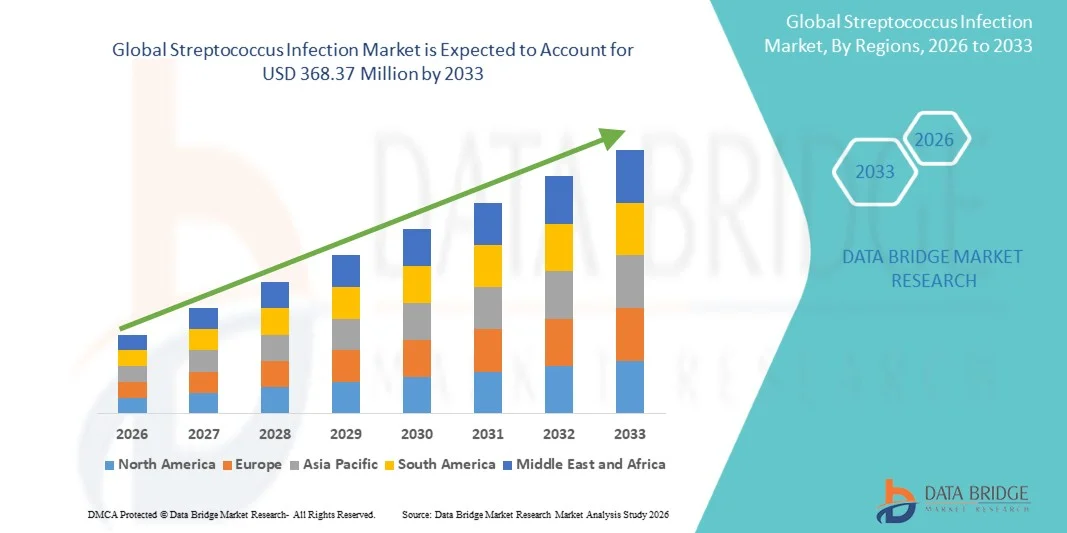
The Streptococcus Infection Market was valued at USD 212.80 million in 2025 and is projected to reach USD 368.37 million by 2033, growing at a CAGR of 7.1% from 2026 to 2033. The market is witnessing steady development driven by increasing incidence of streptococcal infections, rising global burden of infectious diseases, and growing demand for rapid diagnostic testing and effective antibiotic therapies.
The increasing prevalence of conditions such as strep throat, scarlet fever, invasive group A streptococcal disease, and rheumatic fever, combined with improving healthcare access and diagnostic awareness, is encouraging early detection and treatment adoption across hospitals and diagnostic laboratories. Advancements in molecular diagnostics, rapid antigen detection tests, and point-of-care testing technologies are further supporting market expansion by enabling faster and more accurate identification of Streptococcus infections, thereby improving patient outcomes and reducing transmission risks.
Key Market Trends & Insights
- North America dominated the Streptococcus Infection Market with the largest revenue share of 38.26% in 2025, supported by high disease awareness, advanced diagnostic infrastructure, and strong adoption of rapid testing and antibiotic treatment protocols.
- The Group A segment led the market with a 44.2% share in 2025, driven by its high prevalence in respiratory tract infections such as pharyngitis, tonsillitis, and scarlet fever.
- Asia-Pacific is expected to be the fastest-growing region at a CAGR of 7.6% from 2026 to 2033, fueled by a high burden of infectious diseases, improving healthcare access, and expanding diagnostic laboratory networks across India, China, and Southeast Asia.
- Group G are the fastest-growing bacterial type, projected to register a CAGR of 6.8%, reflecting the surge in recognition of its role in invasive infections such as bacteremia, cellulitis, and endocarditis.
- The throat culture segment dominated the diagnosis category with a 46.5% revenue share in 2025, led by its high diagnostic accuracy and long-standing clinical acceptance as the gold standard for Streptococcus detection.
- Antibiotics accounted for 72.6% of the market, preferred by physicians and healthcare providers as the first-line standard therapy due to their high efficacy, rapid bacterial eradication, and strong clinical guideline recommendations for Streptococcus infections.
- The antibody test segment is the fastest-growing diagnosis category, with a CAGR of 7.2%, driven by increasing demand for rapid and point-of-care diagnostic solutions.
Market Size & Forecast
- Global Market Value (2025): USD 212.80 Million
- Expected Market Value (2033): USD 368.37 Million
- Forecast CAGR (2026–2033): 7.1%
- Leading Region in 2025: North America
- Fastest Growing Region: Asia Pacific
Report Scope and Streptococcus Infection Market Segmentation
|
Attributes |
Streptococcus Infection Key Market Insights |
|
Segments Covered |
|
|
Countries Covered |
North America · U.S. · Canada · Mexico Europe · Germany · France · U.K. · Netherlands · Switzerland · Belgium · Russia · Italy · Spain · Turkey · Rest of Europe Asia-Pacific · China · Japan · India · South Korea · Singapore · Malaysia · Australia · Thailand · Indonesia · Philippines · Rest of Asia-Pacific Middle East and Africa · Saudi Arabia · U.A.E. · South Africa · Egypt · Israel · Rest of Middle East and Africa South America · Brazil · Argentina · Rest of South America |
|
Key Market Players |
· Merck & Co., Inc. (U.S.) · Pfizer Inc. (U.S.) · GSK plc (U.K.) · Sanofi (France) · Johnson & Johnson Services, Inc. (U.S.) · Novartis AG (Switzerland) · Roche Holding AG (Switzerland) · Abbott (U.S.) · BD (U.S.) · Thermo Fisher Scientific Inc. (U.S.) · BioMérieux (France) · Siemens Healthineers AG (Germany) · Danaher (U.S.) · Hologic, Inc. (U.S.) · Cepheid (U.S.) · AstraZeneca (U.K.) · Teva Pharmaceutical Industries Ltd. (Israel) · Eli Lilly and Company (U.S.) · F. Hoffmann-La Roche Ltd (Switzerland) · Gilead Sciences, Inc. (U.S.) |
|
Market Opportunities |
· Rising adoption of rapid point-of-care diagnostics in primary care and rural clinics · Expansion of antimicrobial resistance (AMR) surveillance programs · Increasing focus on vaccine development for Group A Streptococcus |
|
Value Added Data Infosets |
In addition to the insights on market scenarios such as market value, growth rate, segmentation, geographical coverage, and major players, the market reports curated by the Data Bridge Market Research also include in-depth expert analysis, patient epidemiology, pipeline analysis, pricing analysis, and regulatory framework. |
Streptococcus Infection Market Trends
Trend: Rising Demand for Rapid Point-of-Care Diagnostics in Primary Care Settings
Healthcare providers are increasingly adopting rapid antigen detection tests and molecular point-of-care platforms to enable immediate identification of streptococcal infections, reducing diagnostic delays and improving treatment initiation. This shift is particularly strong in outpatient clinics and emergency departments, where early differentiation between viral and bacterial sore throat cases is critical for antibiotic stewardship. Integration of digital reporting systems and lab connectivity is further enhancing real-time surveillance of infection outbreaks and improving clinical decision-making across healthcare networks, while improving patient management efficiency globally for faster clinical response workflows and reduced unnecessary antibiotic use in routine care settings worldwide.
Streptococcus Infection Market Dynamics
Key Market Driver: Increasing Burden of Infectious Diseases and Antibiotic Demand
The rising global incidence of streptococcal infections, including pharyngitis, scarlet fever, and invasive Group A Streptococcus disease, is significantly driving demand for diagnostics and antibiotic therapies across healthcare systems. Growing population density, seasonal infection outbreaks, and improving healthcare access in developing regions are further accelerating diagnosis and treatment rates. Public health initiatives promoting early screening and treatment adherence are also strengthening market growth, while increasing awareness among patients and clinicians is supporting higher testing volumes and timely therapeutic intervention strategies across both developed and emerging healthcare markets globally for improved disease control outcomes and reduced transmission rates in communities.
Key Restraint/Challenge: Antibiotic Resistance and Diagnostic Limitations in Low-Resource Settings
A major challenge in the Streptococcus infection market is the growing concern of antimicrobial resistance, which is reducing the effectiveness of commonly used antibiotics such as penicillin alternatives in certain patient populations. In addition, limited access to advanced diagnostic infrastructure in low- and middle-income countries results in delayed or inaccurate detection of infections, increasing the risk of complications and inappropriate antibiotic use. High dependency on empirical treatment practices further complicates clinical outcomes, while inadequate laboratory capacity restricts surveillance of resistant strains, making disease management more complex and limiting optimal therapeutic decision-making across underserved healthcare regions globally for sustained infection control challenges in routine clinical practice. For instance, rising macrolide resistance trends observed in several regions highlight the growing clinical complexity.
Key Market Opportunity: Expansion of Rapid Molecular Diagnostics and Vaccine Development Initiatives
The Streptococcus Infection market presents strong growth opportunities through the expansion of rapid molecular diagnostic platforms, particularly PCR-based and multiplex testing systems that enable highly accurate and early detection of multiple Streptococcus strains in a single test. Increasing integration of these technologies into point-of-care settings is improving clinical efficiency and supporting faster treatment decisions. At the same time, rising global investment in vaccine research for Group A Streptococcus is opening long-term preventive care opportunities aimed at reducing infection recurrence and disease burden. For instance, ongoing clinical-stage vaccine development programs targeting invasive streptococcal infections highlight the shift toward preventive healthcare strategies and next-generation immunization solutions.
Streptococcus Infection Market Scope
The Streptococcus Infection market is segmented on the basis of bacterial type, diagnosis, treatment, end-users, and distribution channel.
- By Bacterial Type
On the basis of bacterial type, the Streptococcus Infection Market is segmented into Group A, Group B, Group C, Group D and Group G Streptococcus. The Group A Streptococcus segment dominated the market with a 44.2% share in 2025, owing to its high prevalence in respiratory tract infections such as pharyngitis, tonsillitis, and scarlet fever. These infections are highly contagious and spread rapidly in community settings, especially among children and young adults. It is also associated with severe invasive conditions such as necrotizing fasciitis and streptococcal toxic shock syndrome, which increases clinical urgency. Strong diagnostic protocols and rapid treatment guidelines support early identification and intervention. Widespread antibiotic responsiveness further strengthens its dominance across global healthcare systems. Its consistently high incidence rate makes it the most clinically and commercially significant segment.
The Group G Streptococcus segment is projected to register the fastest growth rate at a CAGR of 6.8% from 2026 to 2033, driven by increasing recognition of its role in invasive infections such as bacteremia, cellulitis, and endocarditis. It is more commonly observed in elderly and immunocompromised populations, which are expanding globally. Advancements in molecular diagnostics and sequencing technologies are improving detection rates of previously underreported cases. Rising hospital-acquired infection burden is also contributing to its growing clinical importance. Increased awareness among clinicians is leading to better reporting and diagnosis. The expanding aging population further accelerates susceptibility, driving strong market growth.
- By Diagnosis
On the basis of diagnosis, the Streptococcus Infection Market is segmented into antibody test, physical examination, throat culture and others. The throat culture segment dominated the market in 2025 with a 46.5% share due to its high diagnostic accuracy and long-standing clinical acceptance as the gold standard for Streptococcus detection. It is widely used in hospitals and diagnostic laboratories to confirm bacterial presence before initiating antibiotic therapy. Throat culture helps reduce false-positive results and ensures precise treatment decisions. Established laboratory infrastructure and standardized testing protocols support its widespread adoption. Despite longer turnaround time, its reliability makes it the preferred confirmatory test globally. It remains central to clinical guidelines for streptococcal infection management.
The antibody test segment is expected to grow at the fastest rate with a CAGR of 7.2% during the forecast period due to increasing demand for rapid and point-of-care diagnostic solutions. These tests provide quicker results compared to culture methods, enabling faster clinical decision-making. Technological improvements have enhanced their sensitivity and specificity. Growing adoption in outpatient clinics and emergency care settings is driving usage. Rising focus on early diagnosis and antibiotic stewardship is further supporting demand. Expanding accessibility in low-resource healthcare systems is accelerating growth.
- By Treatment
On the basis of treatment, the Streptococcus Infection Market is segmented into antibiotics, surgery and others. The antibiotics segment dominated the market in 2025 with a 72.6% share as Streptococcus infections are primarily bacterial and highly responsive to antibiotic therapy. Penicillin and amoxicillin remain the first-line treatment options globally. High prescription rates across hospitals and clinics ensure strong market penetration. Standard treatment guidelines strongly recommend antibiotics as the primary intervention for both mild and severe infections. Early antibiotic administration helps prevent complications such as rheumatic fever and sepsis. Wide availability and affordability further reinforce its dominance in global healthcare systems.
The others segment is projected to register the fastest growth rate at a CAGR of 6.5% from 2026 to 2033 due to increasing interest in alternative and adjunct therapies. Rising concerns about antimicrobial resistance are driving demand for non-traditional treatment approaches. Research into bacteriophage therapy and immunomodulatory agents is expanding rapidly. Severe and invasive infections often require combination treatment strategies beyond antibiotics alone. Increasing clinical trials are supporting innovation in this segment. Hospitals are gradually adopting supportive therapies to improve treatment outcomes in resistant cases.
- By End-Users
On the basis of end-users, the Streptococcus Infection Market is segmented into hospitals, homecare, specialty clinics and others. The hospitals segment dominated the market in 2025 with a 58.3% share due to the high volume of moderate to severe Streptococcus infection cases requiring inpatient care. Hospitals are equipped with advanced diagnostic laboratories and intensive care units necessary for managing life-threatening infections. Conditions such as sepsis and necrotizing fasciitis require immediate hospitalization and continuous monitoring. Standardized treatment protocols and antimicrobial stewardship programs ensure consistent clinical outcomes. High patient inflow and emergency admissions further strengthen hospital dominance. Reimbursement policies in many regions also support hospital-based treatment.
The homecare segment is expected to grow at the fastest rate with a CAGR of 7.0% during the forecast period due to increasing shift toward outpatient management of mild infections. Many Streptococcus cases are effectively treated with oral antibiotics at home. Telemedicine services are enabling remote diagnosis and prescription support. Rising healthcare costs are encouraging patients to choose home-based treatment options. Patient preference for comfort and reduced hospital exposure is driving adoption. Expansion of digital healthcare infrastructure is further accelerating segment growth.
- By Distribution Channel
On the basis of distribution channel, the Streptococcus Infection Market is segmented into hospital pharmacy, online pharmacy and retail pharmacy. The hospital pharmacy segment dominated the market in 2025 with a 52.9% share as most prescriptions originate from hospital-based diagnosis and treatment settings. Hospital pharmacies ensure immediate availability of antibiotics and injectable drugs for acute infections. They operate under strict regulatory oversight to ensure safe and controlled dispensing. Integration with inpatient and emergency departments improves efficiency in critical care situations. Bulk procurement systems further strengthen supply chain efficiency and cost management. Their strong linkage with hospital treatment pathways ensures continued dominance.
The online pharmacy segment is projected to register the fastest growth rate at a CAGR of 8.1% from 2026 to 2033 due to increasing digitalization of healthcare services. Teleconsultations are driving higher adoption of online prescription fulfillment. Patients prefer home delivery of medicines due to convenience and time savings. Rising internet penetration and smartphone usage are expanding access globally. Competitive pricing and discount models are further attracting consumers. Improved regulatory frameworks for e-prescriptions are supporting rapid market expansion.
Streptococcus Infection Market Regional Analysis
North America dominated the Streptococcus Infection Market with the largest revenue share of 38.26% in 2025, supported by high disease awareness, advanced diagnostic infrastructure, and strong adoption of rapid testing and antibiotic treatment protocols. The region benefits from widespread adoption of rapid diagnostic testing, well-established clinical guidelines, and high awareness among healthcare professionals regarding early detection and treatment. Strong presence of leading pharmaceutical companies and advanced antibiotic stewardship programs further supports market dominance. Increasing hospital admissions for severe infections such as sepsis and necrotizing fasciitis also contribute significantly to demand. Continuous investments in infectious disease surveillance and public health initiatives strengthen regional leadership in the global market.
U.S. Streptococcus Infection Market Insight
The U.S. Streptococcus Infection Market is witnessing strong growth due to high incidence of Group A Streptococcus infections, advanced diagnostic capabilities, and strong healthcare infrastructure. The country benefits from widespread adoption of rapid diagnostic tests, throat cultures, and molecular testing methods that enable early and accurate detection. High awareness among physicians and patients regarding complications such as rheumatic fever and sepsis is driving timely treatment adoption. Strong presence of leading pharmaceutical companies and well-established antibiotic stewardship programs further support market growth. Increasing hospital admissions for invasive streptococcal infections is also contributing to rising demand. Continuous investments in infectious disease surveillance and public health initiatives are strengthening overall market expansion.
Europe Streptococcus Infection Market Insight
The Europe Streptococcus Infection Market remains a major contributor to global revenue, supported by strong healthcare systems, high diagnostic standards, and strict infectious disease control regulations. The region shows high adoption of culture-based diagnostics and antibiotic treatment protocols across hospitals and laboratories. Government-backed public health programs and surveillance systems are improving early detection and infection management. Increasing awareness of antibiotic resistance is also driving rational antibiotic usage across healthcare settings. Rising geriatric population and hospital-acquired infections are further supporting market demand. Continuous focus on clinical research and advanced diagnostic technologies is enhancing regional market growth.
U.K. Streptococcus Infection Market Insight
The U.K. Streptococcus Infection Market is experiencing steady growth due to rising cases of respiratory tract infections and strong adoption of evidence-based clinical practices. The National Health Service (NHS) plays a key role in ensuring standardized diagnosis and treatment across the country. Increasing use of rapid antigen tests and throat cultures is improving early detection rates. Growing awareness regarding invasive streptococcal infections is driving timely medical intervention. Expansion of laboratory infrastructure and infection control programs is further supporting market development. Continuous focus on antibiotic stewardship and patient safety is strengthening overall market performance.
Germany Streptococcus Infection Market Insight
The Germany Streptococcus Infection Market is expanding steadily due to strong healthcare infrastructure, advanced diagnostic laboratories, and high focus on infection prevention. The country’s well-developed hospital network supports efficient diagnosis and treatment of streptococcal infections. Increasing adoption of molecular diagnostic techniques is improving detection accuracy and turnaround time. Strong emphasis on antibiotic regulation and resistance control is shaping treatment practices. Rising elderly population and associated vulnerability to infections are further driving demand. Continuous investments in healthcare innovation and clinical research are supporting long-term market growth.
Asia-Pacific Streptococcus Infection Market Insight
The Asia-Pacific Streptococcus Infection Market is expected to witness rapid growth due to rising population density, increasing infection burden, and improving healthcare infrastructure. Growing awareness regarding bacterial infections and expanding access to diagnostic services are driving early detection rates. Countries such as China, India, and Japan are investing heavily in hospital expansion and laboratory modernization. Increasing adoption of rapid diagnostic tests is supporting timely treatment decisions. Rising healthcare expenditure and government-led infection control initiatives are further boosting market growth. Expanding pharmaceutical distribution networks are also enhancing treatment accessibility across the region.
Japan Streptococcus Infection Market Insight
The Japan Streptococcus Infection Market is witnessing steady growth due to advanced healthcare systems, high diagnostic accuracy, and strong emphasis on preventive care. The country’s aging population significantly increases susceptibility to streptococcal infections, supporting market demand. Hospitals and laboratories widely use throat cultures and molecular diagnostics for precise detection. Strong integration of digital healthcare technologies is improving disease monitoring and management. Increasing awareness of invasive infections is driving early medical intervention. Continuous healthcare innovation and strong regulatory standards are further strengthening market development.
China Streptococcus Infection Market Insight
The China Streptococcus Infection Market is growing rapidly due to increasing urbanization, rising healthcare access, and high incidence of infectious diseases. Expanding hospital infrastructure and diagnostic laboratory networks are improving detection and treatment rates. Growing adoption of rapid diagnostic tools and molecular testing is enhancing clinical efficiency. Government initiatives focused on infection control and public health awareness are supporting early diagnosis. Increasing healthcare expenditure and pharmaceutical production capacity are further driving market expansion. Rising awareness about antibiotic treatment and disease prevention is positioning China as a key growth market globally.
Streptococcus Infection Market Share
The Streptococcus Infection industry is primarily led by well-established companies, including:
- Merck & Co., Inc. (U.S.)
- Pfizer Inc. (U.S.)
- GSK plc (U.K.)
- Sanofi (France)
- Johnson & Johnson Services, Inc. (U.S.)
- Novartis AG (Switzerland)
- Roche Holding AG (Switzerland)
- Abbott (U.S.)
- BD (U.S.)
- Thermo Fisher Scientific Inc. (U.S.)
- BioMérieux (France)
- Siemens Healthineers AG (Germany)
- Danaher (U.S.)
- Hologic, Inc. (U.S.)
- Cepheid (U.S.)
- AstraZeneca (U.K.)
- Teva Pharmaceutical Industries Ltd. (Israel)
- Eli Lilly and Company (U.S.)
- Hoffmann-La Roche Ltd (Switzerland)
- Gilead Sciences, Inc. (U.S.)
Latest Developments in Streptococcus Infection Market
- In January 2024, the U.S. Centers for Disease Control and Prevention (CDC) issued an updated advisory highlighting a continued rise in invasive Group A Streptococcus (iGAS) infections among children and older adults across the United States. The update emphasized increased hospitalization rates, early detection needs, and reinforced clinical guidance for rapid testing and antibiotic treatment. It also encouraged stronger surveillance and reporting across healthcare facilities to control outbreaks. The advisory reflected growing public health concern over severe streptococcal disease burden. This development strengthened awareness and diagnostic adoption across hospitals and laboratories in the U.S.
- In March 2023, the CDC reinforced its surveillance and clinical guidance following a noticeable increase in invasive Group A Streptococcus infections across multiple U.S. states. The update emphasized the importance of rapid diagnostic testing, early antibiotic intervention, and infection control in healthcare settings. It also highlighted higher risks among elderly populations and individuals with underlying conditions. Hospitals were encouraged to strengthen reporting systems and clinical response protocols. This development contributed to improved awareness and strengthened diagnostic adoption in critical care settings
- In December 2022, the U.S. Food and Drug Administration (FDA) reported a nationwide shortage of amoxicillin, largely driven by a surge in pediatric Streptococcus infections, particularly Group A Streptococcus. The shortage impacted outpatient treatment availability and highlighted increased seasonal demand for first-line antibiotics. Healthcare providers were advised to manage antibiotic allocation carefully and consider alternative formulations where necessary. This event underscored the direct link between rising streptococcal infection cases and pharmaceutical supply chain pressure
- In November 2022, the UK Health Security Agency (UKHSA) issued an alert regarding a significant increase in scarlet fever and invasive Group A Streptococcus infections across England. The report highlighted unusually high infection rates in children and rising hospital admissions. Public health authorities recommended early recognition of symptoms and prompt antibiotic treatment to reduce complications. Enhanced surveillance measures were introduced in schools and healthcare facilities to control transmission. This development reflected the seasonal surge pattern of streptococcal infections in Europe and strengthened infection control policies
- In October 2021, the World Health Organization (WHO) continued to emphasize the global burden of streptococcal diseases, particularly Group A Streptococcus, as part of its broader infectious disease monitoring framework. The organization highlighted the importance of early diagnosis, antibiotic access, and surveillance systems in reducing complications such as rheumatic heart disease. It also reinforced the need for improved healthcare access in low- and middle-income countries to control disease progression. This guidance supported global efforts toward better infection management and prevention strategies. It also strengthened international focus on bacterial infection control programs
SKU-
Get online access to the report on the World's First Market Intelligence Cloud

- Interactive Data Analysis Dashboard
- Company Analysis Dashboard for high growth potential opportunities
- Research Analyst Access for customization & queries
- Competitor Analysis with Interactive dashboard
- Latest News, Updates & Trend analysis
- Harness the Power of Benchmark Analysis for Comprehensive Competitor Tracking
Research Methodology
Data collection and base year analysis are done using data collection modules with large sample sizes. The stage includes obtaining market information or related data through various sources and strategies. It includes examining and planning all the data acquired from the past in advance. It likewise envelops the examination of information inconsistencies seen across different information sources. The market data is analysed and estimated using market statistical and coherent models. Also, market share analysis and key trend analysis are the major success factors in the market report. To know more, please request an analyst call or drop down your inquiry.
The key research methodology used by DBMR research team is data triangulation which involves data mining, analysis of the impact of data variables on the market and primary (industry expert) validation. Data models include Vendor Positioning Grid, Market Time Line Analysis, Market Overview and Guide, Company Positioning Grid, Patent Analysis, Pricing Analysis, Company Market Share Analysis, Standards of Measurement, Global versus Regional and Vendor Share Analysis. To know more about the research methodology, drop in an inquiry to speak to our industry experts.
Customization Available
Data Bridge Market Research is a leader in advanced formative research. We take pride in servicing our existing and new customers with data and analysis that match and suits their goal. The report can be customized to include price trend analysis of target brands understanding the market for additional countries (ask for the list of countries), clinical trial results data, literature review, refurbished market and product base analysis. Market analysis of target competitors can be analyzed from technology-based analysis to market portfolio strategies. We can add as many competitors that you require data about in the format and data style you are looking for. Our team of analysts can also provide you data in crude raw excel files pivot tables (Fact book) or can assist you in creating presentations from the data sets available in the report.












