Global Transdermal Drug Delivery System Market
Market Size in USD Billion
CAGR :
% 
 USD
6.12 Billion
USD
8.63 Billion
2025
2033
USD
6.12 Billion
USD
8.63 Billion
2025
2033
 Forecast Period Forecast Period |
2026 –2033 |
 Market Size (Base Year) Market Size (Base Year) |
USD 6.12 Billion |
 Market Size (Forecast Year) Market Size (Forecast Year) |
USD 8.63 Billion |
 CAGR CAGR |
% |
| Major Markets Players |
|
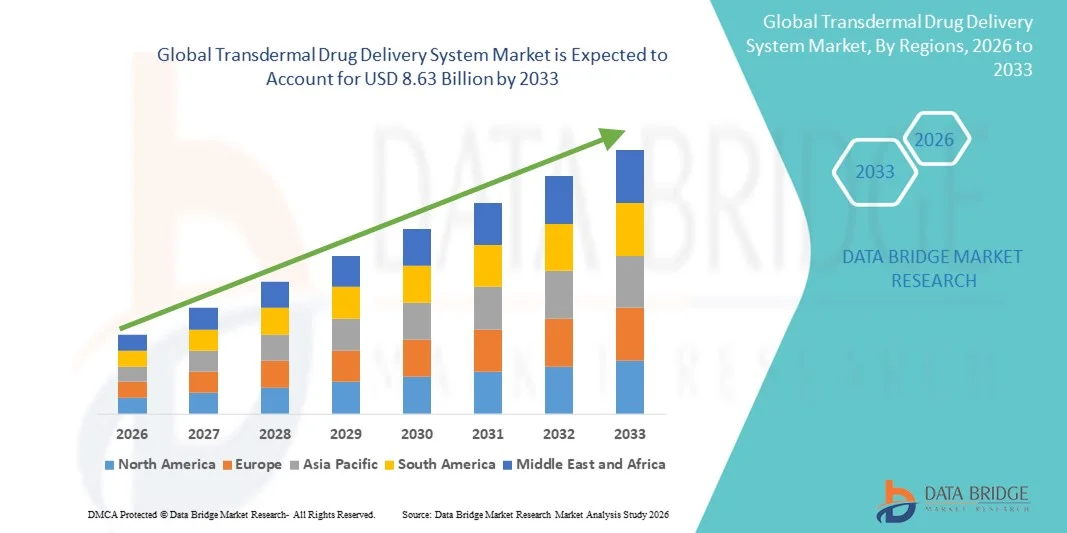
Transdermal Drug Delivery System Market Size
- The global transdermal drug delivery system market size was valued at USD 6.12 billion in 2025 and is expected to reach USD 8.63 billion by 2033, at a CAGR of 4.39% during the forecast period
- The market growth is largely fueled by the rising prevalence of chronic diseases, increasing demand for patient-friendly drug administration methods, and continuous technological advancements in transdermal patch design, leading to improved drug absorption, controlled release, and enhanced therapeutic efficacy
- Furthermore, growing preference for non-invasive drug delivery, improved patient compliance, reduced dosing frequency, and expanding application of transdermal drug delivery systems in pain management, hormone therapy, cardiovascular diseases, and neurological disorders are accelerating the uptake of Transdermal Drug Delivery System solutions, thereby significantly boosting the industry’s growth
Transdermal Drug Delivery System Market Analysis
- Transdermal drug delivery systems, which enable controlled and non-invasive administration of drugs through the skin, are increasingly becoming integral to modern pharmaceutical treatment strategies due to their ability to improve patient compliance, provide sustained drug release, and reduce systemic side effects compared to oral and injectable therapies
- The escalating demand for transdermal drug delivery systems is primarily fueled by the growing prevalence of chronic diseases, rising preference for non-invasive and patient-friendly drug delivery methods, and continuous technological advancements in patch design, microneedles, and permeation enhancers
- North America dominated the transdermal drug delivery system market with the largest revenue share of approximately 38.4% in 2025, supported by a well-established pharmaceutical industry, high healthcare expenditure, strong presence of leading drug manufacturers, and early adoption of advanced drug delivery technologies. The U.S. accounted for a major share of regional demand due to widespread use of transdermal patches for pain management, hormone replacement therapy, cardiovascular disorders, and neurological conditions
- Asia-Pacific is expected to be the fastest-growing region in the transdermal drug delivery system market during the forecast period, registering a robust CAGR, driven by a large patient population, rising incidence of chronic diseases, increasing healthcare access, expanding pharmaceutical manufacturing base, and growing adoption of advanced drug delivery technologies across emerging economies such as China and India
- The transdermal patches segment dominated the largest market revenue share of approximately 68.4% in 2025, driven by their proven clinical efficacy, ease of use, and controlled drug release capabilities
Report Scope and Transdermal Drug Delivery System Market Segmentation
|
Attributes |
Transdermal Drug Delivery System Key Market Insights |
|
Segments Covered |
|
|
Countries Covered |
North America
Europe
Asia-Pacific
Middle East and Africa
South America
|
|
Key Market Players |
• Novartis AG (Switzerland) |
|
Market Opportunities |
|
|
Value Added Data Infosets |
In addition to the insights on market scenarios such as market value, growth rate, segmentation, geographical coverage, and major players, the market reports curated by the Data Bridge Market Research also include in-depth expert analysis, patient epidemiology, pipeline analysis, pricing analysis, and regulatory framework. |
Transdermal Drug Delivery System Market Trends
Advancements in Controlled and Patient-Centric Drug Delivery Technologies
- A significant and accelerating trend in the global transdermal drug delivery system market is the increasing focus on advanced, patient-centric drug delivery technologies that enable controlled, sustained, and non-invasive administration of therapeutics
- These systems are gaining traction as they improve treatment adherence, reduce dosing frequency, and enhance overall patient comfort compared to conventional oral or injectable routes
- For instance, several pharmaceutical companies have expanded the use of transdermal patches for pain management, hormone replacement therapy, and cardiovascular treatments, leveraging their ability to deliver consistent drug doses over extended periods while minimizing gastrointestinal side effects
- Ongoing innovations in patch design, polymer matrices, and permeation enhancers are further improving drug absorption through the skin, enabling a wider range of active pharmaceutical ingredients to be delivered transdermally. These technological improvements are supporting the development of next-generation patches with better adhesion, reduced skin irritation, and improved efficacy
- The growing interest in personalized medicine is also influencing this trend, as transdermal systems can be tailored to specific dosing requirements, offering flexibility in drug delivery and supporting long-term therapy management
- This shift toward more efficient, reliable, and patient-friendly drug delivery solutions is reshaping treatment protocols across multiple therapeutic areas, encouraging pharmaceutical manufacturers to invest in transdermal platforms as part of their product portfolios
- As healthcare systems worldwide increasingly emphasize patient compliance and long-term disease management, the demand for innovative transdermal drug delivery systems continues to rise across both developed and emerging markets
Transdermal Drug Delivery System Market Dynamics
Driver
Rising Prevalence of Chronic Diseases and Demand for Non-Invasive Therapies
- The growing global burden of chronic diseases such as diabetes, cardiovascular disorders, neurological conditions, and chronic pain is a major driver for the Transdermal Drug Delivery System market
- Patients and healthcare providers are increasingly seeking non-invasive, easy-to-use drug delivery options that support long-term treatment regimens
- For instance, in 2024, several pharmaceutical companies expanded clinical development and commercialization of transdermal patches for chronic pain and hormone therapies, reflecting the rising demand for alternatives to oral and injectable medications
- Transdermal drug delivery systems offer clear advantages, including reduced dosing frequency, steady plasma drug levels, and avoidance of first-pass metabolism, making them particularly suitable for long-term and maintenance therapies
- Furthermore, the aging global population is driving demand for user-friendly drug delivery solutions, as elderly patients often face challenges with swallowing pills or managing complex medication schedules
- Increasing healthcare awareness, improved access to advanced therapies, and the expansion of pharmaceutical manufacturing capacities worldwide are further supporting the adoption of transdermal drug delivery systems across hospitals, clinics, and home-care settings
Restraint/Challenge
Limited Drug Compatibility and High Development Costs
- Despite strong growth prospects, the transdermal drug delivery system market faces challenges related to limited drug compatibility and high research and development costs
- Not all drugs are suitable for transdermal delivery due to molecular size, solubility, or skin permeability constraints, which can restrict the range of applicable therapies
- For instance, certain high-dose or large-molecule drugs have shown limited effectiveness in transdermal formulations, leading manufacturers to continue relying on injectable or oral delivery methods for these treatments
- The development of effective transdermal systems requires extensive formulation research, clinical testing, and regulatory approval, which can significantly increase development timelines and overall costs for pharmaceutical companies
- In addition, skin irritation, variability in drug absorption among patients, and challenges related to patch adhesion can affect product performance and patient acceptance if not adequately addressed
- Overcoming these limitations through continued technological innovation, improved formulation strategies, and investment in advanced materials will be critical to ensuring sustained growth of the global Transdermal Drug Delivery System market
Transdermal Drug Delivery System Market Scope
The market is segmented on the basis of type, application, end user, and technology.
- By Type
On the basis of type, the Transdermal Drug Delivery System market is segmented into transdermal patches and transdermal semisolids. The transdermal patches segment dominated the largest market revenue share of approximately 68.4% in 2025, driven by their proven clinical efficacy, ease of use, and controlled drug release capabilities. Transdermal patches offer consistent plasma drug levels, reducing dosing frequency and improving patient compliance. Their widespread use in pain management, hormonal therapy, and smoking cessation significantly supports market dominance. The availability of matrix, reservoir, and drug-in-adhesive patch designs further enhances therapeutic flexibility. Strong regulatory approvals and large-scale commercial availability also contribute to adoption. Pharmaceutical companies favor patches due to well-established manufacturing processes. Increased geriatric population further drives demand. Reduced gastrointestinal side effects strengthen preference. High physician acceptance supports revenue leadership.
The transdermal semisolids segment is anticipated to witness the fastest CAGR of around 9.8% from 2026 to 2033, driven by growing demand for topical drug delivery alternatives. Semisolids such as gels and creams offer flexible dosing and rapid onset of action. Rising adoption in dermatological and localized pain treatments supports growth. Increased patient preference for non-occlusive formulations fuels demand. Advancements in permeation enhancers improve drug absorption efficiency. Expansion of OTC and prescription topical therapies accelerates market penetration. Growing R&D investment in novel semisolid formulations further boosts growth. Improved aesthetic appeal increases patient acceptance. Emerging markets contribute to rapid expansion.
- By Application
On the basis of application, the Transdermal Drug Delivery System market is segmented into pain management, hormonal applications, central nervous system disorders, cardiovascular diseases, smoking cessation, contraception, and other applications. The pain management segment dominated the market with a revenue share of approximately 34.7% in 2025, driven by high global prevalence of chronic pain conditions. Transdermal systems provide sustained analgesic delivery, minimizing systemic side effects. Opioid and non-opioid patches are widely prescribed for long-term pain control. Growing elderly population increases pain-related disorders. Preference for non-invasive administration enhances adoption. Reduced risk of gastrointestinal complications supports clinical usage. Strong reimbursement policies in developed markets contribute to dominance. Continuous product approvals reinforce leadership. Hospital and home-care usage further drives demand.
The central nervous system (CNS) disorders segment is expected to grow at the fastest CAGR of about 10.6% from 2026 to 2033, driven by increasing incidence of neurological disorders. Transdermal delivery bypasses hepatic first-pass metabolism, improving CNS drug bioavailability. Rising cases of Parkinson’s disease and Alzheimer’s disease support growth. Improved patient compliance enhances therapeutic outcomes. Innovation in patch-based CNS treatments accelerates adoption. Growing mental health awareness supports demand. Technological advancements improve drug penetration through the skin barrier. Expansion of CNS pipelines boosts future growth. Increased investment in neurological R&D fuels expansion.
- By End User
On the basis of end user, the Transdermal Drug Delivery System market is segmented into home care settings and hospitals & clinics. The home care settings segment accounted for the largest market revenue share of approximately 57.9% in 2025, driven by the convenience of self-administration. Transdermal systems reduce hospital visits and improve patient independence. Rising prevalence of chronic diseases supports long-term home therapy adoption. Aging population increases demand for home-based care solutions. Ease of use and minimal training requirements enhance acceptance. Reduced healthcare costs favor home settings. Strong patient preference for non-invasive treatments drives growth. Technological advancements improve device reliability. Pandemic-driven home healthcare trends continue to support dominance.
The hospitals and clinics segment is projected to register the fastest CAGR of around 8.9% from 2026 to 2033, driven by increased adoption during acute and controlled treatments. Hospitals utilize transdermal systems for postoperative pain and hormone therapies. Growing outpatient services support usage. Improved clinician familiarity enhances prescription rates. Expansion of specialty clinics fuels growth. Rising surgical procedures increase demand. Clinical trials conducted in hospital settings boost utilization. Improved regulatory approvals encourage institutional adoption. Growing healthcare infrastructure in emerging economies accelerates growth.
- By Technology
On the basis of technology, the Transdermal Drug Delivery System market is segmented into electroporation, electric current, iontophoresis, radio frequency, microporation, thermal, mechanical arrays, ultrasound, and others. The iontophoresis segment dominated the market with a revenue share of approximately 31.6% in 2025, driven by its ability to enhance drug penetration using mild electrical currents. This technology improves delivery of charged drug molecules through the skin. High precision dosing supports clinical effectiveness. Strong adoption in pain management and dermatology drives demand. Technological maturity supports reliability. Reduced skin irritation enhances patient safety. Regulatory approvals support commercialization. Increased R&D adoption sustains dominance. Compatibility with multiple drug classes strengthens market position.
The microporation segment is expected to witness the fastest CAGR of about 11.4% from 2026 to 2033, driven by advancements in microneedle technologies. Microporation allows painless and minimally invasive drug delivery. High efficiency in macromolecule delivery boosts adoption. Growing demand for biologics supports growth. Improved patient comfort enhances acceptance. Expansion of wearable drug delivery devices accelerates use. Technological innovation reduces manufacturing costs. Strong pipeline development fuels adoption. Emerging healthcare applications support rapid expansion.
Transdermal Drug Delivery System Market Regional Analysis
- North America dominated the transdermal drug delivery system market with the largest revenue share of approximately 38.4% in 2025
- Supported by a well-established pharmaceutical industry, high healthcare expenditure, strong presence of leading drug manufacturers, and early adoption of advanced drug delivery technologies
- The market accounted for a major share of regional demand due to widespread use of transdermal patches for pain management, hormone replacement therapy, cardiovascular disorders, and neurological conditions
U.S. Transdermal Drug Delivery System Market Insight
The U.S. transdermal drug delivery system market captured the largest revenue share within North America, driven by high adoption of transdermal therapies, growing prevalence of chronic diseases, and the increasing preference for non-invasive drug administration. The rising investments in research and development, coupled with expanding insurance coverage for advanced therapies, are further propelling market growth.
Europe Transdermal Drug Delivery System Market Insight
The Europe transdermal drug delivery system market is projected to expand at a substantial CAGR, driven by advanced healthcare infrastructure, stringent regulatory frameworks, and increasing awareness of non-invasive treatment options. Countries like the U.K. and Germany are witnessing significant adoption of transdermal patches in therapeutic areas such as pain management and hormone therapy.
U.K. Transdermal Drug Delivery System Market Insight
The U.K. transdermal drug delivery system market is expected to grow steadily due to growing healthcare expenditure, well-developed pharmaceutical industry, and increasing patient preference for non-invasive therapies.
Germany Transdermal Drug Delivery System Market Insight
Germany’s transdermal drug delivery system market growth is supported by technological innovation in transdermal formulations, a strong pharmaceutical manufacturing base, and increasing awareness of patient-friendly drug delivery solutions.
Asia Pacific Transdermal Drug Delivery System Market Insight
Asia-Pacific transdermal drug delivery system market is expected to be the fastest-growing region in the transdermal drug delivery system market during the forecast period, driven by a large patient population, rising incidence of chronic diseases, increasing healthcare access, expanding pharmaceutical manufacturing base, and growing adoption of advanced drug delivery technologies across emerging economies such as China and India.
Japan Transdermal Drug Delivery System Market Insight
Japan’s transdermal drug delivery system market growth is fueled by an aging population, rising prevalence of chronic conditions, and government initiatives promoting non-invasive therapies. The demand for patient-friendly, efficient drug delivery systems is rapidly increasing across hospitals and clinics.
China Transdermal Drug Delivery System Market Insight
China transdermal drug delivery system market accounted for the largest revenue share in Asia-Pacific in 2025, attributed to a rapidly expanding healthcare infrastructure, high prevalence of chronic diseases, and strong domestic pharmaceutical manufacturing. The government’s focus on improving access to advanced drug delivery solutions is driving the adoption of transdermal systems in hospitals, clinics, and home healthcare settings.
Transdermal Drug Delivery System Market Share
The Transdermal Drug Delivery System industry is primarily led by well-established companies, including:
• Novartis AG (Switzerland)
• Teikoku Pharma USA (U.S.)
• Hisamitsu Pharmaceutical Co., Inc. (Japan)
• Johnson & Johnson (U.S.)
• Pfizer Inc. (U.S.)
• Medtronic plc (Ireland)
• Glenmark Pharmaceuticals Ltd. (India)
• Bayer AG (Germany)
• Watson Pharmaceuticals (U.S.)
• Endo Pharmaceuticals Inc. (U.S.)
• Lupin Limited (India)
• Strides Pharma Science Limited (India)
• Mederma Pharma (U.S.)
• Cadila Healthcare Ltd. (India)
• Sun Pharmaceutical Industries Ltd. (India)
• Biocon Ltd. (India)
• Amgen Inc. (U.S.)
Latest Developments in Global Transdermal Drug Delivery System Market
- In February 2024, the U.S. FDA approved ZILBRYSQ, a transdermal patch for the treatment of generalized myasthenia gravis, representing a significant regulatory milestone for transdermal therapy in neurology and expanding the therapeutic role of transdermal systems beyond traditional indications. This marks one of the first transdermal neurology applications approved by a major regulatory body, underscoring broader acceptance of patch‑based drug delivery in complex chronic conditions and encouraging further innovation in transdermal formats
- In February 2023, Mylan (now part of Viatris) introduced advanced nicotine transdermal patches with prolonged efficacy of up to 48 hours, aimed at supporting smoking cessation efforts with improved patient compliance and convenience compared to older formats. These next‑generation patches provide multi‑day coverage that can enhance adherence in public health cessation programs
- In August 2023, Yaral Pharma — the U.S. generics division of IBSA — unveiled a 5% lidocaine transdermal patch (AB‑rated substitute for Lidoderm) as a prescription option for pain management, enhancing market choice for non‑opioid analgesic patches. This launch demonstrates the growing role of generics in expanding access to effective transdermal therapies and reducing treatment costs in pain indications
SKU-
Get online access to the report on the World's First Market Intelligence Cloud

- Interactive Data Analysis Dashboard
- Company Analysis Dashboard for high growth potential opportunities
- Research Analyst Access for customization & queries
- Competitor Analysis with Interactive dashboard
- Latest News, Updates & Trend analysis
- Harness the Power of Benchmark Analysis for Comprehensive Competitor Tracking
Research Methodology
Data collection and base year analysis are done using data collection modules with large sample sizes. The stage includes obtaining market information or related data through various sources and strategies. It includes examining and planning all the data acquired from the past in advance. It likewise envelops the examination of information inconsistencies seen across different information sources. The market data is analysed and estimated using market statistical and coherent models. Also, market share analysis and key trend analysis are the major success factors in the market report. To know more, please request an analyst call or drop down your inquiry.
The key research methodology used by DBMR research team is data triangulation which involves data mining, analysis of the impact of data variables on the market and primary (industry expert) validation. Data models include Vendor Positioning Grid, Market Time Line Analysis, Market Overview and Guide, Company Positioning Grid, Patent Analysis, Pricing Analysis, Company Market Share Analysis, Standards of Measurement, Global versus Regional and Vendor Share Analysis. To know more about the research methodology, drop in an inquiry to speak to our industry experts.
Customization Available
Data Bridge Market Research is a leader in advanced formative research. We take pride in servicing our existing and new customers with data and analysis that match and suits their goal. The report can be customized to include price trend analysis of target brands understanding the market for additional countries (ask for the list of countries), clinical trial results data, literature review, refurbished market and product base analysis. Market analysis of target competitors can be analyzed from technology-based analysis to market portfolio strategies. We can add as many competitors that you require data about in the format and data style you are looking for. Our team of analysts can also provide you data in crude raw excel files pivot tables (Fact book) or can assist you in creating presentations from the data sets available in the report.