Global Trichiasis Treatment Market
Market Size in USD Million
CAGR :
% 
 USD
830.50 Million
USD
1,426.95 Million
2025
2033
USD
830.50 Million
USD
1,426.95 Million
2025
2033
 Forecast Period Forecast Period |
2026 –2033 |
 Market Size (Base Year) Market Size (Base Year) |
USD 830.50 Million |
 Market Size (Forecast Year) Market Size (Forecast Year) |
USD 1,426.95 Million |
 CAGR CAGR |
% |
| Major Markets Players |
|
Trichiasis Treatment Market Size
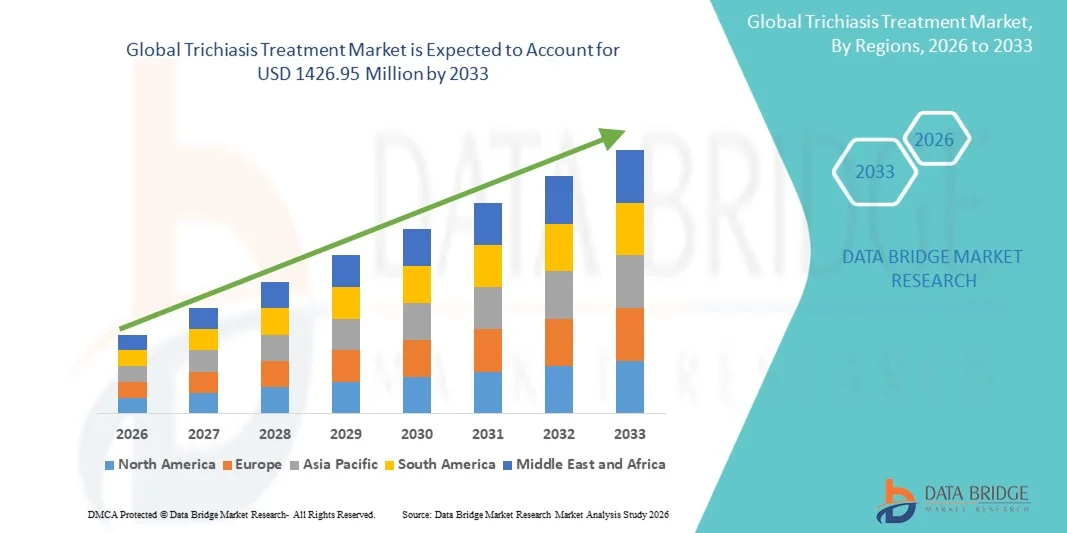
- The global trichiasis treatment market size was valued at USD 830.50 Million in 2025 and is expected to reach USD 1426.95 Million by 2033, at a CAGR of 7.00% during the forecast period
- The market growth is largely fueled by increasing prevalence of eyelid disorders, growing awareness of ophthalmic health, and advancements in minimally invasive surgical and non-surgical treatment options across healthcare systems and eye care centers
- Furthermore, rising demand for effective, patient-friendly, and long-term corrective solutions for eyelash misdirection and associated corneal complications is establishing Trichiasis Treatment as an essential component of modern ophthalmic care. These converging factors are accelerating the uptake of Trichiasis Treatment solutions, thereby significantly boosting the industry's growth
Trichiasis Treatment Market Analysis
- Trichiasis treatment solutions, including epilation, electrolysis, cryotherapy, laser therapy, and surgical eyelid correction procedures, are increasingly vital components of modern ophthalmic care systems due to their effectiveness in preventing corneal damage, visual impairment, and chronic eye irritation caused by misdirected eyelashes
- The escalating demand for Trichiasis Treatment is primarily fueled by rising prevalence of eyelid margin disorders, increasing awareness of eye health, growing geriatric population, and expanding access to advanced ophthalmic surgical and non-surgical treatment options
- North America dominated the Trichiasis Treatment market with the largest revenue share of approximately 38.5% in 2025, characterized by advanced ophthalmic healthcare infrastructure, high awareness of eye disorders, strong presence of specialized eye care professionals, and broad access to surgical and minimally invasive treatment options, with the U.S. witnessing significant growth in treatment adoption across hospitals and eye specialty clinics
- Asia-Pacific is expected to be the fastest-growing region in the Trichiasis Treatment market during the forecast period, projected to register a CAGR of approximately 9.2%, due to rising healthcare expenditure, increasing prevalence of eye disorders, improving access to ophthalmic care services, and growing awareness of early treatment options
- The oral segment accounted for the largest market revenue share of 68.1% in 2025, driven by ease of administration and high patient compliance
Report Scope and Trichiasis Treatment Market Segmentation
|
Attributes |
Trichiasis Treatment Key Market Insights |
|
Segments Covered |
|
|
Countries Covered |
North America
Europe
Asia-Pacific
Middle East and Africa
South America
|
|
Key Market Players |
|
|
Market Opportunities |
|
|
Value Added Data Infosets |
In addition to the insights on market scenarios such as market value, growth rate, segmentation, geographical coverage, and major players, the market reports curated by the Data Bridge Market Research also include in-depth expert analysis, patient epidemiology, pipeline analysis, pricing analysis, and regulatory framework. |
Trichiasis Treatment Market Trends
“Rising Emphasis on Early Detection, Surgical Precision, and Expanded Access to Ophthalmic Care”
- A significant and accelerating trend in the global Trichiasis Treatment market is the growing focus on early diagnosis and timely intervention to prevent corneal damage and vision impairment. Healthcare systems are increasingly prioritizing ophthalmic screening programs, particularly in trachoma-endemic regions where trichiasis remains a major cause of avoidable blindness
- For instance, community-based eye screening initiatives led by public health organizations are helping identify patients at earlier stages, enabling timely referral for corrective procedures such as eyelash epilation or surgical correction (bilamellar tarsal rotation)
- Advances in ophthalmic surgical techniques are improving treatment outcomes, with minimally invasive procedures reducing recovery time, postoperative complications, and recurrence rates. This is particularly important in rural healthcare settings where follow-up access may be limited
- Increasing deployment of mobile eye clinics and outreach programs is expanding access to trichiasis treatment in underserved populations, especially in Africa and South Asia, where disease burden remains higher
- In addition, growing training programs for ophthalmologists and mid-level eye care workers are improving procedural capacity and strengthening healthcare infrastructure for eyelid disorder management
- These developments collectively are enhancing treatment accessibility and improving long-term visual outcomes for patients affected by trichiasis
Trichiasis Treatment Market Dynamics
Driver
“High Burden of Trachoma-Related Eye Disorders and Expanding Global Eye Health Initiatives”
- The increasing global burden of trachoma-related complications, including trichiasis, is a major driver of the Trichiasis Treatment market. It remains one of the leading infectious causes of preventable blindness in several low- and middle-income regions
- For instance, international health initiatives such as the WHO-led SAFE strategy (Surgery, Antibiotics, Facial cleanliness, and Environmental improvement) are actively supporting the elimination of trachoma, thereby driving demand for surgical and non-surgical trichiasis treatments
- Government health programs and non-governmental organizations are increasing funding for eye care services, including mass screening and corrective surgical camps in endemic regions
- In addition, expansion of healthcare infrastructure and integration of ophthalmology services into primary healthcare systems are improving access to diagnosis and treatment
- These factors are collectively expected to sustain strong growth in the Trichiasis Treatment market over the forecast period
Restraint/Challenge
“Limited Healthcare Access, Surgical Skill Gaps, and Post-Treatment Recurrence Risks”
- One of the key challenges in the Trichiasis Treatment market is limited access to specialized ophthalmic care in rural and resource-constrained regions, where disease prevalence is often highest
- A shortage of trained ophthalmic surgeons and healthcare professionals capable of performing corrective eyelid procedures can delay treatment and reduce procedural availability
- For instance, In some cases, recurrence of trichiasis after surgical intervention remains a concern, requiring repeat procedures and long-term follow-up care, which may not always be feasible in low-resource settings
- Patient awareness regarding early symptoms is also limited, leading to delayed diagnosis and more advanced disease presentation at the time of treatment
- In addition, logistical challenges such as lack of infrastructure, transportation barriers, and limited healthcare funding can restrict access to timely care
- Addressing these challenges through expanded training programs, improved surgical outreach initiatives, and strengthened eye care infrastructure will be essential for improving outcomes and supporting market growth
Trichiasis Treatment Market Scope
The market is segmented on the basis of drug classification, route of administration, end-users, and distribution channel.
• By Drug Classification
On the basis of drug classification, the Trichiasis Treatment market is segmented into azithromycin and other antibiotics. The azithromycin segment dominated the largest market revenue share of 62.4% in 2025, driven by its strong efficacy against Chlamydia trachomatis infections, which are a leading cause of trichiasis. Its single-dose or short-course regimen improves patient compliance significantly. Azithromycin is widely recommended in mass drug administration programs for trachoma control. Its broad-spectrum antibacterial activity supports faster symptom relief and reduced recurrence risk. The drug’s favorable safety profile further enhances its adoption across pediatric and adult populations. Government-led elimination programs in endemic regions strongly rely on azithromycin distribution. Increasing awareness campaigns by WHO also support its dominance. Easy oral administration improves accessibility in rural and underserved areas. Strong procurement by public health agencies further drives volume demand. Overall, azithromycin remains the first-line therapeutic choice globally.
The other antibiotics segment is expected to witness the fastest growth rate of 8.9% CAGR from 2026 to 2033, driven by rising resistance concerns and need for alternative therapies. Drugs such as doxycycline and tetracycline are increasingly used in refractory cases. Combination antibiotic regimens are gaining traction for improved clinical outcomes. Physicians are exploring alternatives for patients intolerant to azithromycin. Expanding research into multi-drug resistance in ocular infections supports segment growth. Improved diagnostic capabilities are enabling more targeted antibiotic selection. Hospital protocols are increasingly incorporating diversified antibiotic options. Growing pharmaceutical pipeline activity is enhancing treatment availability. Awareness of personalized antibiotic therapy is increasing globally. Rising investment in ophthalmic infection management further boosts demand.
• By Route of Administration
On the basis of route of administration, the market is segmented into injectable, oral, and parenteral. The oral segment accounted for the largest market revenue share of 68.1% in 2025, driven by ease of administration and high patient compliance. Oral azithromycin remains the preferred first-line treatment in most trichiasis cases. It eliminates the need for hospital-based administration, reducing healthcare burden. Oral formulations are widely available in both public and private healthcare systems. They are particularly effective in large-scale community treatment programs. Lower cost compared to injectable therapies supports widespread adoption. Oral drugs are suitable for outpatient and home-based care settings. Strong WHO endorsement of oral mass treatment programs reinforces dominance. Pediatric-friendly formulations improve treatment adherence. Overall accessibility in rural regions strengthens market penetration.
The injectable segment is projected to witness the fastest CAGR of 9.4% from 2026 to 2033, driven by rising use in severe and complicated infections. Injectable antibiotics ensure rapid systemic drug delivery. Hospitals prefer injectable routes for high-risk and non-compliant patients. Increasing hospitalization rates for advanced ocular infections support growth. Injectable therapy is gaining traction in post-surgical infection prevention. Improved hospital infrastructure in developing regions boosts adoption. Emergency treatment protocols rely heavily on injectable formulations. Pharmaceutical advancements are improving injectable safety profiles. Demand is rising in specialty ophthalmology centers. Faster clinical response time is a key growth driver.
• By End-Users
On the basis of end-users, the market is segmented into hospitals, homecare, specialty clinics, ambulatory surgical centers, and others. The hospital segment dominated with a market share of 45.6% in 2025, driven by high patient inflow for diagnosis and surgical correction of trichiasis. Hospitals provide comprehensive ophthalmic treatment facilities. Availability of trained ophthalmologists supports strong adoption. Advanced diagnostic tools enable accurate disease management. Government healthcare programs are primarily hospital-based. Large-scale antibiotic distribution is managed through hospitals. Surgical interventions for severe cases are predominantly performed in hospitals. Better reimbursement frameworks support patient preference. Hospitals also serve as referral centers for complex cases. Increasing healthcare infrastructure expansion strengthens dominance.
The specialty clinics segment is expected to witness the fastest CAGR of 10.1% from 2026 to 2033, driven by growing preference for focused ophthalmic care. Specialty clinics offer personalized and faster treatment services. Rising patient awareness is shifting preference toward outpatient care centers. Advanced equipment availability improves treatment outcomes. Reduced waiting times attract more patients. Increasing number of private ophthalmology clinics supports growth. Cost-effective treatment compared to hospitals enhances adoption. Clinics are expanding in semi-urban and urban regions. Growing investment in eye care infrastructure fuels demand. Rising medical tourism in eye care further accelerates growth.
• By Distribution Channel
On the basis of distribution channel, the Trichiasis Treatment market is segmented into hospital pharmacy, retail pharmacy, and online pharmacy. The hospital pharmacy segment dominated the largest market revenue share of 52.7% in 2025, driven by the high volume of prescriptions generated in hospitals and ophthalmic clinics. Hospital pharmacies play a critical role in distributing antibiotics like azithromycin during mass treatment and surgical care programs. Strong integration with government healthcare initiatives supports large-scale procurement through hospital channels. Availability of specialized ophthalmic drugs in hospital settings ensures treatment accuracy and safety. Physicians prefer hospital pharmacies due to better drug monitoring and controlled dispensing systems. High patient inflow in hospitals further strengthens demand. Emergency and post-surgical medication needs are largely fulfilled through this channel. Public health campaigns for trachoma elimination rely heavily on hospital-based drug distribution. Overall, hospitals remain the primary and most trusted supply point for trichiasis treatment drugs.
The online pharmacy segment is expected to witness the fastest growth rate of 11.3% CAGR from 2026 to 2033, driven by increasing digital healthcare adoption and teleophthalmology services. Rising smartphone penetration and e-prescription systems are boosting online drug purchases. Patients prefer online platforms due to convenience and home delivery options. Expanding digital health infrastructure in developing regions supports growth. Discount pricing and availability of generic antibiotics further attract consumers. Online pharmacies improve access in remote and underserved areas. Integration with teleconsultation platforms enhances treatment accessibility. Growing awareness of ocular health management through digital channels supports demand. Regulatory improvements in e-pharmacy frameworks are encouraging market expansion. Overall, digital transformation is rapidly reshaping drug distribution in trichiasis care.
Trichiasis Treatment Market Regional Analysis
- North America dominated the Trichiasis Treatment market with the largest revenue share of approximately 38.5% in 2025, driven by advanced ophthalmic healthcare infrastructure, high awareness of eye disorders, strong presence of specialized eye care professionals, and broad access to both surgical and minimally invasive treatment options
- The region benefits from well-established eye care systems, early diagnosis practices, and increasing adoption of modern treatment techniques for managing trichiasis, particularly across the U.S. and Canada
- Patients in the region show strong preference for early intervention and advanced clinical care, supported by high healthcare expenditure and widespread availability of ophthalmology specialty services. This, combined with continuous advancements in surgical correction procedures and outpatient care settings, reinforces North America’s leading position in the global Trichiasis Treatment market.
U.S. Trichiasis Treatment Market Insight
The U.S. Trichiasis Treatment market captured the largest revenue share of approximately 81% in 2025 within North America, supported by a strong network of ophthalmology clinics, hospitals, and specialized eye care centers. High disease awareness, routine eye screening programs, and advanced surgical capabilities contribute significantly to early diagnosis and effective treatment adoption. Additionally, continuous improvements in minimally invasive corrective procedures and strong insurance coverage for eye care services further drive market expansion across the country.
Europe Trichiasis Treatment Market Insight
The Europe Trichiasis Treatment market is projected to expand at a substantial CAGR throughout the forecast period, driven by strong healthcare systems, increasing awareness of ocular diseases, and improving access to ophthalmic care services. The region benefits from well-developed hospital infrastructure and a growing emphasis on preventive eye care. Rising adoption of advanced surgical techniques and expanding availability of specialized eye care professionals are further supporting market growth across major European countries.
U.K. Trichiasis Treatment Market Insight
The U.K. Trichiasis Treatment market is anticipated to grow at a noteworthy CAGR during the forecast period, supported by the National Health Service’s structured eye care programs and increasing awareness of preventable vision disorders. Growing access to ophthalmology specialists and improved diagnostic pathways are enabling timely treatment of trichiasis. Additionally, advancements in outpatient surgical procedures are enhancing patient outcomes and driving market growth.
Germany Trichiasis Treatment Market Insight
The Germany Trichiasis Treatment market is expected to expand at a considerable CAGR during the forecast period, fueled by advanced healthcare infrastructure, strong ophthalmic research capabilities, and high patient awareness. Germany’s focus on precision medical care and early intervention in eye disorders supports widespread adoption of surgical and minimally invasive treatment options. The availability of well-trained ophthalmic specialists further strengthens the market landscape.
Asia-Pacific Trichiasis Treatment Market Insight
The Asia-Pacific Trichiasis Treatment market is poised to grow at the fastest CAGR of approximately 9.2% during the forecast period of 2026 to 2033, driven by rising healthcare expenditure, increasing prevalence of eye disorders, improving access to ophthalmic care services, and growing awareness of early treatment options. Expanding healthcare infrastructure and gradual improvements in rural eye care access are also contributing to regional growth.
Japan Trichiasis Treatment Market Insight
The Japan Trichiasis Treatment market is gaining momentum due to its advanced healthcare system, high standards of ophthalmic care, and strong focus on early diagnosis and treatment of eye conditions. The country’s aging population also contributes to a higher incidence of ocular disorders, increasing demand for effective treatment solutions. Well-established eye specialty clinics and advanced surgical techniques support continued market growth.
China Trichiasis Treatment Market Insight
The China Trichiasis Treatment market accounted for the largest market revenue share in Asia Pacific in 2025, attributed to improving healthcare infrastructure, rising awareness of eye health, and increasing access to ophthalmology services. Expanding hospital networks, growing availability of specialized eye care professionals, and government initiatives to improve vision care are key factors driving market growth. Additionally, rising patient volume and improving affordability of treatment options are supporting continued expansion in China.
Trichiasis Treatment Market Share
The Trichiasis Treatment industry is primarily led by well-established companies, including:
- Novartis AG (Switzerland)
- Roche Holding AG (Switzerland)
- Pfizer Inc. (U.S.)
- Merck & Co., Inc. (U.S.)
- Johnson & Johnson (U.S.)
- AbbVie Inc. (U.S.)
- Bausch + Lomb Corporation (U.S.)
- Alcon Inc. (Switzerland)
- Santen Pharmaceutical Co., Ltd. (Japan)
- Sun Pharmaceutical Industries Ltd. (India)
- Cipla Limited (India)
- Dr. Reddy’s Laboratories Ltd. (India)
- Lupin Limited (India)
- Aurobindo Pharma Limited (India)
- Bausch Health Companies Inc. (Canada)
- Teva Pharmaceutical Industries Ltd. (Israel)
- Viatris Inc. (U.S.)
- Allergan (AbbVie) (U.S.)
- GlaxoSmithKline plc (U.K.)
- Zydus Lifesciences Limited (India)
Latest Developments in Global Trichiasis Treatment Market
- In March 2021, global ophthalmology programs continued implementing the WHO SAFE strategy (Surgery, Antibiotics, Facial cleanliness, Environmental improvement) to eliminate trachoma-related trichiasis, reinforcing surgery (bilamellar tarsal rotation) as the standard treatment for advanced trichiasis cases. This strengthened global surgical intervention programs in endemic regions
- In October 2021, clinical studies in endemic regions reported increasing adoption of bilamellar tarsal rotation (BLTR) surgery improvements, focusing on reducing postoperative recurrence rates and improving eyelid alignment outcomes in trichiasis patients
- In June 2022, public health programs expanded mass antibiotic administration (azithromycin campaigns) alongside trichiasis surgical outreach, reducing progression of trachoma cases that lead to trichiasis and blindness, particularly in Africa and South Asia
- In December 2022, WHO-supported initiatives intensified community-based trichiasis screening camps, improving early detection and surgical referral rates in rural endemic regions
- In April 2023, clinical research emphasized standardization of trichiasis surgery quality indicators, including surgeon certification, postoperative follow-up, and recurrence monitoring, improving long-term surgical outcomes globally
- In October 2023, global eye health programs reported expanded training of non-physician ophthalmic personnel (NPOs) to perform trichiasis surgery in underserved regions, addressing surgeon shortages and improving surgical coverage
- In May 2024, updated ophthalmology studies highlighted growing use of refined surgical techniques such as posterior lamella advancement and modified BLTR, aimed at reducing scarring and recurrence in severe trichiasis cases
- In November 2024, WHO-endorsed reports confirmed continued expansion of the Global Trachoma Elimination Programme, with improved surgical outreach increasing access to trichiasis corrective surgery in remote endemic areas
- In January 2025, global trachoma elimination data showed major progress, with people requiring trachoma interventions dropping significantly due to expanded surgical and antibiotic programs, reflecting long-term decline in trichiasis burden worldwide
SKU-
Get online access to the report on the World's First Market Intelligence Cloud

- Interactive Data Analysis Dashboard
- Company Analysis Dashboard for high growth potential opportunities
- Research Analyst Access for customization & queries
- Competitor Analysis with Interactive dashboard
- Latest News, Updates & Trend analysis
- Harness the Power of Benchmark Analysis for Comprehensive Competitor Tracking
Research Methodology
Data collection and base year analysis are done using data collection modules with large sample sizes. The stage includes obtaining market information or related data through various sources and strategies. It includes examining and planning all the data acquired from the past in advance. It likewise envelops the examination of information inconsistencies seen across different information sources. The market data is analysed and estimated using market statistical and coherent models. Also, market share analysis and key trend analysis are the major success factors in the market report. To know more, please request an analyst call or drop down your inquiry.
The key research methodology used by DBMR research team is data triangulation which involves data mining, analysis of the impact of data variables on the market and primary (industry expert) validation. Data models include Vendor Positioning Grid, Market Time Line Analysis, Market Overview and Guide, Company Positioning Grid, Patent Analysis, Pricing Analysis, Company Market Share Analysis, Standards of Measurement, Global versus Regional and Vendor Share Analysis. To know more about the research methodology, drop in an inquiry to speak to our industry experts.
Customization Available
Data Bridge Market Research is a leader in advanced formative research. We take pride in servicing our existing and new customers with data and analysis that match and suits their goal. The report can be customized to include price trend analysis of target brands understanding the market for additional countries (ask for the list of countries), clinical trial results data, literature review, refurbished market and product base analysis. Market analysis of target competitors can be analyzed from technology-based analysis to market portfolio strategies. We can add as many competitors that you require data about in the format and data style you are looking for. Our team of analysts can also provide you data in crude raw excel files pivot tables (Fact book) or can assist you in creating presentations from the data sets available in the report.